Camping in Kobuk Valley National Park is a true backcountry trip, not a traditional national-park campground experience. There are no roads, maintained trails, designated campgrounds, restrooms, food services, or other developed facilities inside the park. Reaching a campsite usually requires a bush flight or a longer river journey, and once you arrive, you need the skills and equipment to be self-sufficient in remote Arctic wilderness.
Quick Answer
Camping in Kobuk Valley National Park is dispersed backcountry camping. There are no developed campgrounds or marked trails. Most visitors reach the park by air taxi, choose their own low-impact campsite, carry navigation and emergency gear, protect food from bears, treat natural water, and prepare for rapidly changing Arctic weather.
Key Takeaways
- Kobuk Valley has no roads, maintained trails, designated campgrounds, or public facilities inside the park.
- Most camping trips begin with an authorized air taxi from Kotzebue or Bettles, and weather can delay both arrival and pickup.
- Bring a topographic map, compass, GPS, emergency communicator, adequate food, warm layers, rain protection, insect protection, and a wilderness-ready shelter.
- Current regulations require secure food storage because this is bear country.
- Treat all natural drinking water and follow current park rules for fires, sanitation, pets, and campsite use.
At a Glance
| Time Required | Typically several days; NPS suggests 1–5 days for a Great Kobuk Sand Dunes visit, while longer river and wilderness trips require additional time. |
| Difficulty | Advanced backcountry travel; strong wilderness navigation and self-rescue skills are recommended. |
| Tools Needed | Backcountry shelter, sleep system, stove, water-treatment system, bear-resistant food storage, topo map, compass, GPS, emergency communicator, first-aid kit, rain gear, warm layers and insect protection. |
| Cost | The park does not charge an entrance or camping fee. Flights, air taxis, guides, equipment and other transportation are separate costs that vary by provider. |
Warning: Kobuk Valley is exceptionally remote. Cell phones do not work in the backcountry, weather can prevent aircraft from reaching you, and outside help may be many hours away. Build extra days into your schedule, leave a detailed itinerary with a responsible person, and carry an appropriate satellite communication device or personal locator beacon.
Overview of Kobuk Valley National Park
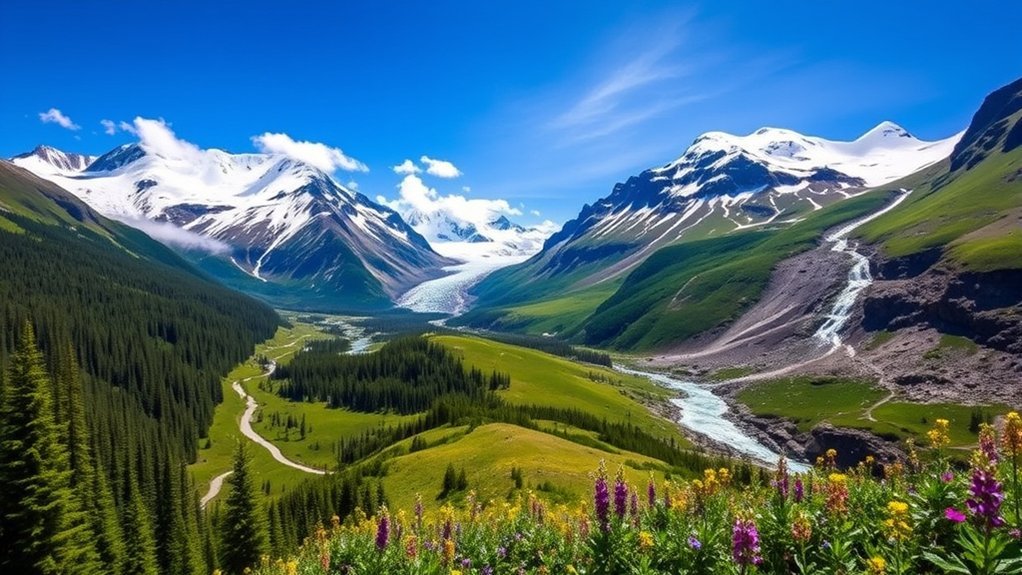
Kobuk Valley National Park protects a vast part of northwestern Alaska centered on the Kobuk River, the Baird and Waring mountain areas, tundra, boreal forest, wetlands, and the remarkable Great Kobuk Sand Dunes.
The park is unusual even by Alaska standards because it has essentially no conventional visitor infrastructure. According to the National Park Service, there are no roads, maintained trails, or campgrounds inside the park. You choose your own route and campsite while respecting regulations, private inholdings, cultural resources, wildlife and subsistence users.
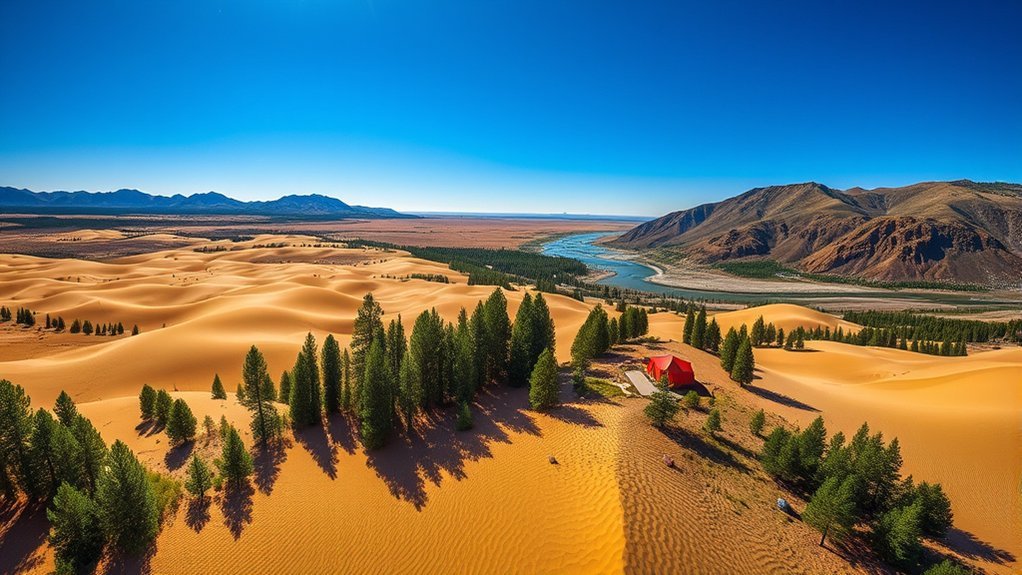
The park’s active dune fields are remnants of Ice Age processes. The Great Kobuk Sand Dunes are the largest and most accessible of the park’s three active dune areas and include dunes rising more than 100 feet above the surrounding landscape.
Wildlife can include caribou, grizzly bears, moose, wolves, Dall sheep, Arctic foxes, wolverines and numerous birds. The Western Arctic Caribou Herd passes through the region during its seasonal migration, although the location and timing of wildlife sightings are never guaranteed.
Where to Camp: No Established Campgrounds
There is no developed “Kobuk Valley Campground” and there are no campground amenities such as picnic tables, flush toilets, designated fire rings or maintained tent pads inside the park.
Instead, camping is dispersed across undeveloped federally managed land where camping is otherwise permitted. The NPS backpacking and camping guide identifies the Great Kobuk Sand Dunes and Onion Portage as popular backcountry destinations.
The Great Kobuk Sand Dunes provide broad areas of sand where a suitable level campsite can sometimes be found. Visitors may arrive by wheeled aircraft landing on suitable sand or land near the Kobuk River and travel overland to the dunes. Any aircraft landing plan must be worked out with an authorized pilot because conditions and usable landing areas change.
Along the Kobuk River, gravel bars and sandbars can also provide useful camping surfaces when water level, weather and landing conditions are suitable. Avoid low areas that could flood and never assume a gravel bar will remain safe if river levels rise.
Onion Portage is another well-known location on the north bank of the Kobuk River. It is culturally and archeologically important, so camp and travel carefully, leave artifacts and cultural features untouched, and respect local subsistence activity.
Note: The 2026 Western Arctic Parklands rules allow camping for up to 14 consecutive days at one location. After that, the camp must be moved at least 2 miles unless the superintendent authorizes otherwise.
Getting to Kobuk Valley National Park
There are no highways leading into Kobuk Valley. For most visitors, reaching the park is one of the most important parts of trip planning.
The NPS transportation guidance describes commercial air service from Anchorage to Kotzebue or from Fairbanks to Bettles. From those communities, visitors commonly arrange an authorized air taxi into the backcountry.
Some river travelers instead arrange transportation to nearby villages and begin or end a float trip outside the park. Summer travel can involve aircraft, motorized or nonmotorized watercraft, or demanding travel on foot.
Talk to your pilot before finalizing a route. Backcountry landing sites can change with river levels, weather, sand conditions and vegetation. Your pilot can also explain baggage limits, pickup procedures and what happens if weather prevents your scheduled extraction.
Pro Tip: Do not schedule an important flight or appointment immediately after your planned pickup from the park. NPS recommends allowing extra time because northwest Alaska weather can delay bush-plane operations.
Backcountry Camping Essentials
When you’re heading into the backcountry of Kobuk Valley, your equipment must support several days of independent travel without relying on a ranger station, campground store or nearby road.
Pack for cold rain, strong sun, insects, soft tundra, exposed sand and rapid weather changes. Your exact equipment depends on whether you are hiking, camping on the dunes, floating the river or combining several activities.
Essential Gear Checklist
- Backcountry tent: Choose a shelter that handles wind and rain well. Sand or loose ground may require suitable sand anchors, deadman anchors or another secure staking method.
- Warm sleep system: Bring a sleeping bag and insulated pad suitable for colder conditions than the average forecast suggests.
- Waterproof layers: Carry a waterproof shell and warm insulating layers even during summer.
- Topographic map and compass: These are primary navigation tools in a landscape with no maintained trails.
- GPS device: Useful as a navigation backup, but carry spare power and do not make electronics your only navigation system.
- Satellite communicator, satellite phone or PLB: Cell-phone service is not available in the backcountry.
- Water-treatment equipment: Carry enough capacity for dry stretches and a reliable treatment method.
- Stove and fuel: A backpacking stove gives you a dependable cooking option even when a campfire is undesirable or temporarily restricted.
- Bear-resistant food storage: Use a method that complies with current park regulations.
- First-aid and repair kits: Include supplies appropriate for a remote trip where self-rescue may be necessary.
- Headlamp: Particularly useful later in the season as nights return.
- Sun protection: Bring sunglasses, sunscreen and a brimmed hat; exposed dunes can be surprisingly hot and bright.
- Insect protection: Head nets, protective clothing and repellent are especially useful during mosquito season.
- Footwear: Choose footwear appropriate for sand, wet tundra and uneven backcountry terrain.
Safety and Navigation Tips
Kobuk Valley does not have a trail network to keep you on course. The NPS safety guidance recommends that travelers know how to use a topographic map, compass and GPS.
- Plot important waypoints before leaving camp: Mark your campsite, landing area, pickup location and any planned river crossing or destination.
- Carry redundant navigation tools: A compass and paper map still work when electronics fail or batteries die.
- Check your position regularly: Do not wait until you feel lost before checking your map and GPS.
- Leave a detailed itinerary: Include your air-taxi operator, route, campsite area and expected return date.
- Know your turnaround point: Weather, fatigue, river conditions and visibility can make continuing unsafe.
- Prepare for self-rescue: Help may not arrive quickly even after an emergency signal is received.
Navigating the Sand Dunes
The Great Kobuk Sand Dunes look open and easy to cross, but their scale and lack of trails can make navigation deceptive. Wind can also erase tracks that might otherwise help you retrace your route.
If you are traveling between the Kobuk River and the dunes, NPS describes the approximately two- to three-mile route as an off-trail orienteering challenge. Use a topographic map, compass and GPS rather than relying on footprints, the sun, or the apparent shape of the dunes.
Before walking away from camp, save a precise waypoint for your tent and aircraft pickup location. Keep track of time and distance, especially if clouds, rain, smoke or changing light could reduce visibility.
Warning: NPS warns that sand near creeks, streams, springs and other water sources can become water-saturated and unstable. Test questionable ground before stepping onto it and avoid areas where the sand appears unusually wet, soft or fluid.
The dunes can also become very hot in direct summer sun even though they are north of the Arctic Circle. Carry water, sun protection and layers because hot exposed sand can be followed by cold wind or rain within the same trip.
Wildlife Viewing Opportunities
Kobuk Valley protects habitat for a wide range of Arctic and subarctic wildlife. Sightings are possible, but animals are wild, mobile and often far from visitor routes.
- Caribou: The Western Arctic Caribou Herd travels through the region during seasonal migration.
- Grizzly bears: Bears occur throughout the park and require careful food storage and campsite practices.
- Moose: Often associated with willow, wetland and river habitats.
- Wolves: Present in the ecosystem but not commonly seen at close range.
- Dall sheep: More likely in upland and mountainous terrain.
- Arctic foxes and wolverines: Present but sightings can be uncommon.
- Birds: Eagles, waterfowl and migratory species use the park’s river, wetland, tundra and forest habitats.
Use binoculars rather than approaching animals. Never feed wildlife, block an animal’s travel route or position yourself between a bear and its cubs.
Kobuk Valley is best treated as wildlife habitat first and a viewing destination second: give animals space and let them choose where they move.
Bear Safety and Food Storage
Kobuk Valley is bear country. Good food storage protects both visitors and wildlife by reducing the chance that bears learn to associate camps with food.
Under the current Western Arctic National Parklands regulations, food, beverages, garbage, harvested fish, food containers and equipment used to cook or store food must be secured using an approved method when they are not actively being transported, prepared or consumed.
An approved bear-resistant container is the most practical option for many campers. The Northwest Arctic Heritage Center in Kotzebue has bear-resistant food containers available for temporary loan.
- Keep food and scented items secured whenever they are not in use.
- Keep garbage secured with the same care as food.
- Maintain a clean cooking area and remove food scraps.
- Do not store food in your sleeping tent.
- Watch for fresh bear tracks, scat or other signs of animal activity when selecting a campsite.
- Learn current NPS bear-encounter procedures before departure.
Safety Tips for Camping in the Wilderness
Remote travel changes the consequences of small mistakes. A soaked sleeping bag, navigation error or missed aircraft pickup can become a serious problem when no road or ranger station is nearby.
| Safety Priority | What to Do |
|---|---|
| Navigation | Carry topo maps, compass and GPS and know how to use all three. |
| Bear Awareness | Store food correctly, stay alert, make your presence known where visibility is poor and give bears plenty of room. |
| Weather | Carry warm layers and high-quality rain protection even during summer. |
| Emergency Communication | Carry a satellite-capable communication device or PLB and leave your itinerary with someone outside the park. |
| First Aid | Bring a wilderness-appropriate first-aid kit and know how to manage common injuries until help arrives. |
| Aircraft Delays | Carry reserve food and medication and allow extra schedule time in case your pickup is delayed by weather. |
Water Sources and Purification Methods
There are rivers, streams, ponds and other natural water sources throughout parts of Kobuk Valley, but the park does not provide treated public drinking water. Availability also varies by route and season, so plan carrying capacity before your trip rather than assuming water will always be nearby.
Natural water that looks clear can still contain microorganisms. The CDC recommends treating water of uncertain safety.
- Boiling: Bring clear water to a rolling boil for 1 minute. Above 6,500 feet, boil for 3 minutes.
- Filter plus disinfection: If boiling is not practical, CDC recommends filtering the water and then disinfecting it according to the treatment product’s directions.
- Chemical disinfectants: Chlorine dioxide and other products can be useful when used exactly as directed, including the required contact time.
- UV treatment: UV devices can work with clear water when used correctly, but they depend on batteries and proper exposure.
- Cloudy water: Pre-filter sediment before disinfection whenever possible.
Do not assume that a standard backpacking filter removes every type of pathogen. Many filters are effective against protozoa and some bacteria but are not designed to remove viruses, which is why combined treatment provides a stronger margin of protection when water quality is uncertain.
Sanitation and Human Waste
There are no public toilets in the backcountry, so campers must manage human waste correctly.
Under the current Western Arctic Parklands regulations, when the ground is not frozen, human feces must be packed out or placed in a cathole approximately 6–8 inches deep and at least 100 feet from water sources, shorelines, campsites and trails. When the ground is frozen, waste must be placed more than 100 feet from a water source and covered with snow or packed out.
Packing out toilet paper and sanitary products is the lowest-impact approach and prevents visible litter from accumulating at commonly used camping locations.
Local Flora and Fauna
Kobuk Valley lies where Arctic and boreal environments meet. Tundra, spruce forest, river corridors, wetlands and active dunes create several very different habitats within the same park.
| Landscape / Flora | Wildlife You May Encounter | What Makes It Distinctive |
|---|---|---|
| Tundra, sedges and low shrubs | Caribou, foxes and migratory birds | Open habitat shaped by short growing seasons and permafrost. |
| Willows and wetlands | Moose, birds and bears | Productive habitat around river and wetland systems. |
| Spruce forest and lichens | Bears, wolves, small mammals and birds | Boreal forest reaches unusually far north along the Kobuk Valley. |
| Active sand dunes | Caribou tracks and occasional other wildlife | Large Arctic dune fields formed from glacially produced sand. |
Avoid trampling fragile vegetation when durable sand, gravel or other low-impact surfaces are available.
Planning Your Itinerary
Planning a Kobuk Valley camping trip starts with transportation rather than a trailhead. Decide where you want to be dropped off, how many days you can remain self-sufficient and how you will communicate if weather prevents pickup.
Before departure, contact your air-taxi operator and review current NPS alerts. The Northwest Arctic Heritage Center in Kotzebue can also provide current information about weather, fire conditions, wildlife concerns, backcountry safety and bear-resistant food-container loans.
Best Time to Visit
Most recreational backcountry trips take place in summer or early fall, but there is no guaranteed period of easy weather.
NPS reports that summer daytime temperatures are often moderate, yet snow, near-freezing temperatures, strong wind, rain and prolonged cloud cover can occur even in summer. On sunny days the exposed sand dunes can become dramatically hotter than the surrounding landscape.
- June: Very long daylight, but river ice can linger in some years and mosquitoes can be intense.
- July: Long daylight and generally favorable summer access, with mosquitoes often active.
- August: Often appealing for river and backcountry travel, with fewer mosquitoes than early summer in many years.
- Early September: Cooler conditions, increasing darkness and possible caribou-migration opportunities, but weather becomes less forgiving and freezing conditions can return.
- Later fall and winter: Appropriate only for travelers with serious Arctic cold-weather experience and equipment.
Caribou migration timing varies from year to year, so do not build a safety-critical itinerary around seeing the herd on one exact date.
Must-See Attractions
Kobuk Valley does not have roadside overlooks or short developed trails. Its major destinations require wilderness travel.
| Destination | Typical Activity | Why Visit |
|---|---|---|
| Great Kobuk Sand Dunes | Backcountry hiking and camping | The largest active dune field in Arctic North America, with dunes exceeding 100 feet in places. |
| Kobuk River | Canoeing, kayaking, fishing and river camping | A major travel corridor through the park with expansive scenery and wildlife habitat. |
| Onion Portage | Backcountry visit and wildlife observation | An important cultural landscape and a well-known caribou crossing area. |
Weather and Insects
Weather should influence your shelter, clothing, route and flight schedule. The NPS weather guide notes that exposure and hypothermia are real concerns at any time of year.
Bring warm layers that stay useful when damp, dependable rain gear and dry storage for your sleeping system. Do not judge the next day’s weather only by current conditions.
Mosquitoes are often most active in June and July. NPS notes that their numbers generally taper later in summer, although black flies can remain. A head net, long sleeves and repellent can make camp life much more manageable.
Private Land and Subsistence Use
Not every parcel inside or near the park boundary is public land. Private inholdings occur in the region, particularly along travel corridors such as the Kobuk River.
If you see cabins, buildings, camps or other signs of occupation, give them space and do not assume you have permission to camp there.
Local rural residents also use the area for subsistence hunting, fishing and gathering. These practices are an important part of life in northwest Alaska. Give subsistence users room to work and avoid interfering with boats, nets, hunting activity or camps.
Leave No Trace Principles
Because Kobuk Valley has no established trail-and-campground system, low-impact behavior is especially important. Repeated use can create informal trails, fire scars, litter and campsite damage even in an enormous wilderness.
- Plan ahead: Know your route, regulations, weather risks and emergency plan before your flight.
- Travel on durable surfaces: Use sand, gravel and other durable ground when practical rather than repeatedly trampling fragile vegetation.
- Choose camps carefully: Avoid cultural sites, wildlife travel corridors and visibly impacted private property.
- Pack out trash: Remove food scraps, foil, cans, plastics and all other garbage.
- Dispose of human waste correctly: Follow current Western Arctic Parklands sanitation rules.
- Leave what you find: Do not disturb archeological objects, natural features or historic materials.
- Respect wildlife: Observe animals from a distance and never feed them.
- Respect other users: Give local residents and subsistence activities plenty of space.
Frequently Asked Questions
Are campfires allowed in Kobuk Valley National Park?
Yes, campfires are generally allowed under the 2026 Western Arctic Parklands Superintendent’s Compendium, but not within 200 feet of NPS-managed structures, historic objects or facilities. State or local burn bans can apply, and the superintendent may prohibit campfires during high fire danger. Check current park alerts before relying on a fire and carry a stove for cooking.
What are the best times of year to camp in Kobuk Valley?
Summer through early fall is the most practical period for most backcountry visitors. July and August are common choices, while early September can bring cooler weather and possible migration activity. Even in summer, freezing temperatures, rain, strong wind and flight delays are possible.
Are there any entrance or camping fees?
Kobuk Valley National Park does not collect an entrance fee or a standard backcountry camping fee. Transportation, air taxis, guides and other commercial services have separate charges.
Can I bring my pet camping with me?
Pets are not categorically banned from the park. Under the current Western Arctic Parklands rules, pets must remain leashed or otherwise physically restrained. Owners also need to consider wildlife conflicts, aircraft-operator requirements and the difficulty of managing an animal safely in remote bear country.
What type of gear is recommended for sandy terrain?
Use a wind-resistant tent with a staking system that works in loose sand, gaiters if you find them helpful, sun protection, trekking poles and footwear comfortable for soft surfaces. A GPS, compass and map are more important than following footprints because wind can erase tracks.
Is there an established campground in Kobuk Valley National Park?
No. There are no designated campgrounds or developed campground facilities inside Kobuk Valley National Park. Camping is dispersed backcountry camping on appropriate land where camping is otherwise permitted.
Do I need a permit for a normal independent camping trip?
A normal independent visitor does not need an entry permit for Kobuk Valley National Park. Some organized groups, commercial activities, research, special events and other activities can require permits, so those trips should be checked against current NPS requirements.
Will my cell phone work in the backcountry?
Do not depend on cellular service. NPS states that cell phones do not work in the park’s backcountry. A satellite phone, satellite communicator or personal locator beacon can provide an additional emergency option, but you still need the supplies and skills to remain self-sufficient.
Conclusion
Camping in Kobuk Valley National Park offers an unusually undeveloped wilderness experience, but that freedom comes with a high level of personal responsibility. There are no established campgrounds or trails to simplify your trip, so transportation, navigation, food storage, water treatment, weather preparation and emergency planning all need to be settled before you arrive.
For experienced backcountry travelers who prepare carefully, destinations such as the Great Kobuk Sand Dunes, the Kobuk River and Onion Portage can provide days of remarkable solitude. Travel conservatively, follow current park regulations, respect private land and subsistence users, and leave each campsite as close as possible to the way you found it.
Sources
- National Park Service — Backpacking in Kobuk Valley — backcountry camping, destinations, navigation, wildlife and food-storage guidance.
- National Park Service — Directions and Transportation — roadless access, Kotzebue/Bettles connections and air-taxi planning.
- National Park Service — Kobuk Valley Safety — weather, wildlife, insects and wilderness navigation.
- National Park Service — Great Kobuk Sand Dunes — dune access, camping, navigation and water-saturated sand hazards.
- National Park Service — Current Alaska Superintendent’s Compendiums — current Western Arctic camping, fire, food-storage, sanitation and pet regulations.
- CDC — Water Treatment While Hiking, Camping or Traveling — boiling, filtration and disinfection guidance for natural water.