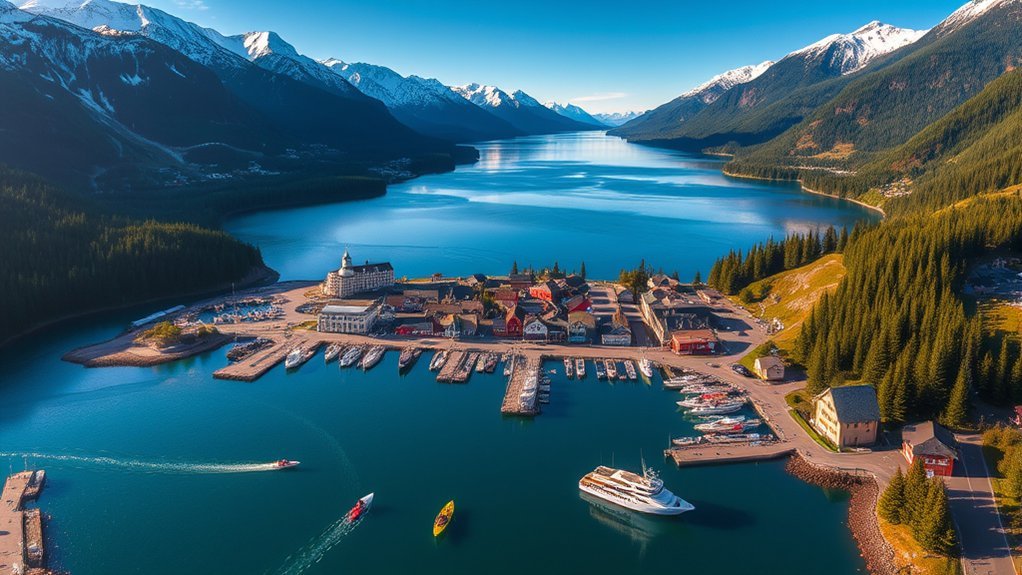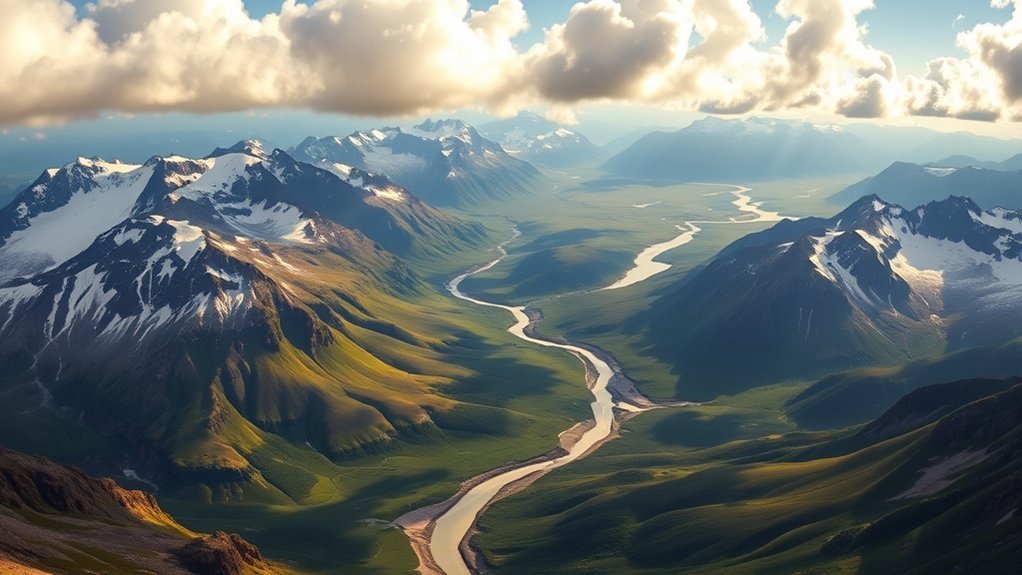
Wrangell-St. Elias National Park and Preserve is a rewarding choice if you want a remote Alaska trip built around mountain scenery, glaciers, mining history, wildlife, and long stretches of wilderness. The park covers 13.2 million acres, but most first-time visits focus on Copper Center, the Nabesna Road, or the McCarthy Road and Kennecott area. Good planning matters because roads are rough, services are limited, distances are long, and conditions can change quickly.
Last updated: July 23, 2026
Quick Answer
For an easy first visit, begin at Copper Center, then choose McCarthy and Kennecott for history and glacier access or Nabesna Road for quieter scenery and road-access hiking. Visit in summer, carry emergency supplies, download maps, check road and park alerts, and reserve private lodging, shuttles, flights, or tours early.
Current safety alert: On July 21, 2026, the National Park Service closed a hazardous area beneath an unstable hill on the Root Glacier access trail north of Kennecott. Do not enter the signed closure. Check current park conditions and ask a ranger about the latest route before hiking near Root Glacier.
Key Takeaways
- Choose one main gateway: Copper Center is best for orientation, McCarthy and Kennecott are best for history and glacier activities, and Nabesna Road is best for a quieter road-based wilderness trip.
- Allow more travel time than the mileage suggests: The two park roads are unpaved, and weather, potholes, stream crossings, dust, and roadwork can slow you down.
- Summer is the practical season: Most visitor services operate from May into September, with exact dates varying by facility.
- Prepare for limited services: Carry fuel, food, water, warm layers, navigation, a spare tire, and emergency gear.
- Check official updates twice: Review NPS alerts and Alaska 511 before leaving your lodging and again before entering an area with weak or no cell service.
At a Glance
| Time Required | One day for Copper Center; two to three days for one road district; five to seven days to combine major areas without rushing. |
| Difficulty | Moderate for a road-based summer trip; difficult for winter, glacier, river, or backcountry travel. |
| Tools Needed | Offline maps, paper map, full-size spare, jack, first-aid kit, layers, rain gear, food, water, and backup communication for remote trips. |
| Cost | No park entrance fee. Budget separately for fuel, private parking, camping, lodging, shuttles, air taxis, guides, and tours. |
Wrangell-St. Elias Quick Facts
| Planning question | What to know |
|---|---|
| Park size | About 13.2 million acres, making it the largest national park unit in the United States. |
| Entrance fee | No entrance fee. Private parking, camping, shuttles, lodging, flights, and tours may cost extra. |
| Main road access | The 42-mile Nabesna Road and roughly 60-mile McCarthy Road are the two unpaved roads that enter the park area. |
| Best season for most visitors | Mid-May through mid-September, when roads, visitor centers, lodging, tours, and transportation are generally easier to use. |
| Fuel | There are no gas stations along the Nabesna or McCarthy Roads. Fill up before entering and confirm where the next reliable fuel stop is. |
| Cell service | Expect limited or no reliable service in many areas. Save maps and park information offline before leaving a connected area. |
| Pets | Dogs are allowed on trails and in the backcountry but must be physically restrained on a leash no longer than six feet. |
| Backcountry permit | A general backcountry permit is not required, but an optional itinerary form is strongly recommended. Some cabins, group trips, ORV uses, and special activities have separate rules. |
Wrangell-St. Elias has more than 3,000 glaciers covering over three million acres, so glaciers influence the park’s scenery, roads, rivers, weather, and hiking conditions.
What Are the 2026 Visitor Center Hours?
Public lands in Wrangell-St. Elias are open year-round, but visitor centers and ranger stations operate seasonally. The National Park Service announced the following 2026 summer schedule. Hours can still change because of staffing, weather, emergencies, or local conditions, so check the official operating-hours page before your visit.
| Facility | 2026 operating dates | Hours |
|---|---|---|
| Wrangell-St. Elias Visitor Center, Copper Center | May 11 to September 20 | Daily, 9 a.m. to 5 p.m. |
| Kennecott Visitor Center | May 23 to September 13 | Daily, 9 a.m. to 5 p.m. |
| Slana Ranger Station | May 23 to September 20 | Daily, 9 a.m. to 5 p.m. |
| Chitina Ranger Station | Summer season | Limited, staffing-dependent hours |
Note: The Copper Center visitor-center entrance and parking gates are locked after operating hours. Do not leave your vehicle inside the gated area after closing.
How Do You Get to Wrangell-St. Elias National Park?
Most visitors fly into Anchorage or Fairbanks, then drive toward the Copper River Basin. The main visitor center is at mile 106.8 of the Richardson Highway, about 200 miles northeast of Anchorage and about 250 miles south of Fairbanks. Some park facilities are separated by very long drives, so choose your district before booking lodging.
| Gateway | Best for | Access notes |
|---|---|---|
| Copper Center | Orientation, exhibits, ranger advice, short walks, Ahtna cultural interpretation, and Wrangell Mountain views. | Reached by paved highway. This is the simplest first stop from Anchorage, Fairbanks, Glennallen, or Valdez. |
| McCarthy and Kennecott | Mining history, Root Glacier area, guided mill tours, glacier activities, lodging, and the park’s best-known first-time experience. | Reached by driving the McCarthy Road from Chitina, then crossing the Kennicott River footbridge and continuing by foot, bicycle, or summer shuttle. |
| Nabesna Road | Quiet scenery, road-access hikes, wildlife viewing, primitive camping, creek valleys, and a less-developed trip. | Reached near Slana from the Tok Cutoff. Stream crossings and rough sections become more serious beyond mile 29. |
| Yakutat and the coast | Coastal wilderness, marine scenery, Hubbard Glacier area trips, and air- or water-based access. | There is no road connection from the main park gateways. Arrange air or water transportation and verify schedules directly with the provider. |
McCarthy Road vs. Nabesna Road
| Route | Distance and timing | Important cautions |
|---|---|---|
| McCarthy Road | About 60 miles from Chitina. Allow at least two to three hours each way in normal summer conditions, plus stops. | Potholes, washboard, dust, soft shoulders, sharp rocks, narrow bridges, limited visibility, and possible old railroad debris. Most rental agreements restrict gravel-road use. |
| Nabesna Road | 42 miles from the Tok Cutoff. Allow about 1.5 hours each way in good conditions, plus stops and hiking time. | Stream crossings near and beyond mile 29 can become impassable after rain or spring runoff. High clearance is recommended beyond mile 29, and vehicle travel on the final unmaintained miles may be unsuitable. |
Warning: Do not start either road with a low fuel level, a temporary spare, or no emergency supplies. The National Park Service does not recommend oversized RVs, buses, or motor coaches on these roads. Confirm your rental agreement in writing before driving on gravel.
Pro Tip: Check both NPS current conditions and Alaska 511 on the morning of your drive. Save screenshots because cell service may disappear before you reach the roughest sections.
Parking and Getting Around McCarthy and Kennecott
The McCarthy Road ends near the Kennicott River footbridge. Private parking areas near the bridge charge for day or overnight parking. Free day-use parking may be available at the state wayside near mile 55 and the unstaffed McCarthy Road Information Station near mile 58.6, but overnight parking is not allowed at the information station.
After crossing the footbridge, McCarthy is about one-half mile away and Kennecott is about five miles away. Summer shuttle companies usually connect the bridge, McCarthy, and Kennecott for a fee. Private vehicles do not drive directly into Kennecott Mill Town. Confirm shuttle hours before arriving, especially if you have luggage, children, limited mobility, or a late tour.
When Is the Best Time to Visit Wrangell-St. Elias?
The best time for most visitors is mid-May through mid-September. Summer offers the broadest combination of road access, ranger contact, lodging, shuttles, air taxis, guided tours, and hiking. By late September, snow can return, services shrink, and road travel becomes less predictable.
| Season | What it is like | Best for |
|---|---|---|
| Late May to June | Very long daylight, reopening services, possible lingering snow, mosquitoes, and variable road conditions. | Travelers who want summer access before the busiest weeks and can handle changing conditions. |
| July to August | The most practical period for first-time visitors, with the widest range of services and guided activities. | McCarthy and Kennecott trips, ranger programs, glacier tours, hiking, camping, and family travel. |
| September | Cooler weather, fall color, fewer visitors, reduced services, shorter days, and increasing snow risk late in the month. | Flexible travelers and photographers who have backup plans. |
| October to April | Winter road conditions, closed visitor contact stations, minimal services, and limited daylight. | Experienced winter travelers with suitable vehicles, equipment, communication, and local condition checks. |
How Many Days Do You Need in Wrangell-St. Elias?
You can get a first impression in one day, but the park rewards slower travel. Long distances, gravel roads, weather, shuttle schedules, and flight delays make rushed itineraries frustrating. Do not plan to drive both park roads and meaningfully explore them in one day.
One-Day Visit
- Stop at the Copper Center visitor complex for maps, exhibits, ranger advice, and current conditions.
- Walk the nearby Boreal Forest Trail and enjoy views from the Richardson Highway corridor.
- If you are already staying near Slana or Chitina, use the day for a short out-and-back drive on one park road rather than attempting its full length.
Two- to Three-Day Visit
- McCarthy and Kennecott plan: Drive the McCarthy Road, stay near the bridge, McCarthy, or Kennecott, spend a full day on history, ranger programs, and a guided glacier or mill-town activity, then return without rushing.
- Nabesna plan: Drive the road slowly, camp or stay nearby, choose one or two day hikes, and leave time for wildlife viewing and weather-related delays.
Five- to Seven-Day Visit
- Combine Copper Center with McCarthy and Kennecott, then add Nabesna Road only if you are comfortable with long transfer days.
- Add a weather-buffer day for flightseeing, air taxi travel, glacier activities, or a remote cabin.
- Use extra days for backpacking, rafting, packrafting, mountaineering, or a guided backcountry trip only when your skills and equipment match the route.
Where Can You Camp or Stay?
Most lodging, paid camping, shuttle services, and guided activities are operated by private businesses. Book early for July and August, and verify cancellation rules because weather can delay roads and flights.
Nabesna Road Camping
Kendesnii Campground near mile 27.8 is the park’s only developed NPS campground. It is primitive, first-come, first-served, and does not accept reservations. Other pullouts along the Nabesna Road may suit tents, pickup campers, and some small or medium RVs. There is no potable water after leaving Slana, so bring water or treat natural water before drinking.
McCarthy Road and Kennecott Camping
Private campgrounds and parking areas operate along the McCarthy Road and near the Kennicott River bridge. Jumbo Creek is a primitive NPS camping area reached on foot beyond Kennecott. It has no regular amenities, although bear-resistant storage is available. Respect private property and do not camp on land unless you know it is open to public use.
Public-Use Cabins
The park manages remote public-use cabins. Most are rustic, reached by aircraft or long backcountry travel, and available first-come, first-served. Four cabins require reservations. Bring a tent and full camping equipment even when you plan to use a cabin because weather or another visitor may change your plan.
What Should You Pack for Wrangell-St. Elias?
Pack as though help may be delayed. The park has limited services, weak cell coverage, few maintained trails, and weather that can change quickly between valleys, mountains, rivers, and glaciers.
- Navigation: paper map, downloaded NPS maps, offline GPS data, compass, and a power bank.
- Clothing: moisture-wicking base layers, warm mid-layer, waterproof jacket and pants, hat, gloves, and extra socks.
- Footwear: sturdy hiking boots with traction for mud, gravel, roots, wet vegetation, and uneven moraine.
- Food and water: more than you expect to need, plus a reliable treatment method for natural water.
- Safety gear: first-aid kit, headlamp, emergency blanket, fire-starting supplies, whistle, insect repellent, and bear spray when appropriate.
- Vehicle gear: full-size spare, tire repair kit, jack, lug wrench, full fuel tank, food, water, warm layers, and a shovel during shoulder seasons.
- Communication: a satellite messenger or satellite phone for serious backcountry travel.
Note: Do not assume you can carry bear spray on an aircraft or train. Confirm transportation rules before departure and arrange a legal local option when necessary.
Do You Need a Backcountry Permit or Bear-Resistant Container?
According to the NPS backcountry FAQs, a general backcountry permit is not required for ordinary backcountry travel in Wrangell-St. Elias. However, the park strongly recommends completing an optional backcountry itinerary form and leaving a detailed trip plan with someone who will request help if you are overdue. Some activities, cabins, commercial operations, large groups in specific areas, and recreational ORV routes have separate permit or registration rules.
Bear-resistant food containers are required for backcountry camping. Store food, drinks, trash, cookware with food odor, toiletries, sunscreen, lip balm, and other scented items correctly. Do not rely on a tent, soft cooler, dry bag, or ordinary plastic tote as bear-resistant storage. Review the official food-storage requirements before leaving a developed area.
What Are the Best Things to Do in Wrangell-St. Elias National Park?
The best activities depend on your district. A strong first trip combines one orientation stop, one scenic road, one history or glacier experience, and one wildlife-focused outing.
Start at Copper Center
The Wrangell-St. Elias Visitor Center near Copper Center is the best first stop if you arrive from Anchorage, Fairbanks, Glennallen, or Valdez. Use it to confirm road conditions, discuss your vehicle, collect maps, learn about land ownership, and understand how far apart park services are. The visitor complex also includes exhibits, an Ahtna cultural center, short trails, and mountain viewpoints.
Explore McCarthy and Kennecott
McCarthy and Kennecott are the most popular areas for first-time visitors who want history, scenery, and guided activities. Kennecott Mines National Historic Landmark preserves the remains of a major copper-mining operation. Summer ranger programs explain the landscape and community, while the concessioner’s guided mill tour is the only public way to enter parts of the Concentration Mill and Leaching Plant.
Check the official ranger-program and guided-tour page for current schedules. Reserve private mill tours, glacier walks, climbing trips, flightseeing, and backcountry guides directly with permitted operators.
Drive the Nabesna Road
Nabesna Road offers a quieter northern approach with views of the Wrangell, Mentasta, and Nutzotin Mountains. It is a good choice for road-access scenery, primitive camping, wildlife scanning, creek valleys, and day hikes such as Caribou Creek, Trail Creek, Lost Creek, Skookum Volcano, and Rambler Mine routes. Ask at Slana Ranger Station about creek levels and the condition of the road beyond mile 29.
Go Hiking, But Choose the Right Area
Wrangell-St. Elias is not filled with short, manicured trails. Many maintained trails become unmaintained routes after the first few miles, and the true backcountry has no maintained trail system. McCarthy and Kennecott have the best-known glacier-viewing hikes, while Nabesna Road provides several road-access day hikes. The Yakutat area has nearby trails outside the park in the Tongass National Forest.
Warning: A signed area on the Root Glacier access trail is closed because of unstable ground and falling-rock risk. Glacier edges and moraine routes can shift quickly. Follow current signs and ranger instructions rather than an old map, blog post, or GPS track.
Consider Guided Glacier Experiences
Glaciers are one of the park’s defining features. A guided glacier walk can add safe instruction, route knowledge, traction equipment, and local awareness of changing ice conditions. Do not enter crevassed terrain, ice caves, moulins, steep glacier margins, or unstable moraine without the skills and equipment needed for glacier travel.
Try Flightseeing or Air-Taxi Access
Flightseeing can reveal the park’s scale in a way road travel cannot. Air taxis also provide access to remote trailheads, cabins, rivers, and backcountry routes. Build at least one weather-buffer day into any flight-dependent itinerary, and carry two to three extra days of food for a remote pickup that could be delayed.
Where Can You See Wildlife in Wrangell-St. Elias?
Wildlife viewing takes patience because the park is vast and roadside brush can hide animals. Moose may appear near willow wetlands and lakes. Dall sheep can look like small white dots on high ridges. Bears, caribou, wolves, beavers, trumpeter swans, waterfowl, shorebirds, bald eagles, and golden eagles also live in or move through the region.
Use binoculars, stop only in safe pullouts, scan ridgelines and wetlands, and keep a safe distance. Never approach, feed, crowd, or block wildlife. Keep food secure and give moose and bears extra space, especially when young animals are present.
What Should Families and Travelers With Limited Mobility Know?
Copper Center is the easiest area for a lower-logistics visit. The visitor complex has accessible facilities, short trails, exhibits, and ranger contact without requiring a gravel-road commitment. The official NPS app can be saved for offline use and includes audio descriptions for several park exhibits.
Kennecott has accessible entrances or viewing areas at some buildings, but the historic district has gravel, uneven approaches, old rail lines, stairs, and limited paved surfaces. Arrange bridge transportation and local shuttles before arrival if walking five miles from the footbridge to Kennecott would be difficult. Review the NPS accessibility page and contact the park for current conditions.
Families can ask for a free Junior Ranger booklet at a staffed visitor center. Keep children close near rivers, road shoulders, mine structures, glacier edges, steep terrain, and wildlife.
How Do You Stay Safe in Wrangell-St. Elias?
Wrangell-St. Elias requires more self-reliance than many developed national parks. Rescue can take time, cell service is unreliable, and a short road or day hike can become a longer outing because of weather, water, wildlife, injury, or vehicle trouble.
- Leave a trip plan: Give someone your route, vehicle description, backup plan, expected return, and instructions for reporting you overdue.
- Check alerts and roads: Review NPS current conditions and Alaska 511 immediately before travel.
- Respect private property: Park boundaries include private and Native corporation lands. Use public land and legal access easements only.
- Prepare for no signal: Download the NPS app, maps, and key pages. Carry satellite communication for remote travel.
- Use safe river judgment: Water is cold and levels can change quickly. If a crossing looks unsafe, turn around.
- Be bear aware: Make noise in brush, carry and know how to use bear spray when appropriate, and store food and scented items correctly.
- Expect delayed rescue: Carry enough gear to stay warm, dry, hydrated, and fed if roads, weather, or transportation delay you.
Emergency information: Call 911 for emergencies. To report a missing or overdue person traveling on national park lands in Alaska, call the Alaska Region Communication Center at 907-683-9555. Do not use that number for routine trip planning.
Frequently Asked Questions
Are there entry fees for Wrangell-St. Elias National Park?
No. Wrangell-St. Elias does not charge an entrance fee and has no entrance station on either park road. You may still pay for private parking, camping, lodging, shuttles, flights, tours, or other services.
Can I bring my pet to Wrangell-St. Elias?
Yes. Dogs are allowed on trails and in the backcountry but must be physically restrained on a leash no longer than six feet. Pets are not allowed in public buildings except where service-animal rules apply. Keep pets away from wildlife and be aware of legal trapping activity from fall through spring.
Are guided tours available in the park?
Yes. Rangers offer free talks, walks, and programs during the summer at select visitor areas. A park concessioner runs guided Kennecott mill tours, and permitted private operators offer glacier walks, climbing, rafting, flightseeing, air taxis, and backcountry trips.
What are the park hours?
Public lands are open year-round, but visitor centers and ranger stations operate seasonally. In 2026, Copper Center is scheduled from May 11 through September 20, Kennecott from May 23 through September 13, and Slana from May 23 through September 20, generally from 9 a.m. to 5 p.m. Chitina has limited staffing-dependent summer hours.
Is there cell service in Wrangell-St. Elias?
Do not count on reliable cell service. Coverage is limited on the park roads and absent in much of the backcountry. Download maps and park information before leaving town, and carry satellite communication for serious remote travel.
Do I need four-wheel drive for McCarthy Road or Nabesna Road?
Not always. Many passenger vehicles can travel the roads in normal summer conditions, but high clearance is recommended beyond mile 29 of Nabesna Road, and four-wheel drive may be needed after heavy rain or during high stream flow. Check current conditions and your rental agreement before driving.
Do I need reservations or a backcountry permit?
There is no general entrance reservation or ordinary backcountry permit. Reserve private lodging, shuttles, flights, and tours directly with providers. Four remote public-use cabins require reservations, and some ORV uses, group trips, and special activities have separate requirements.
Can I camp inside Wrangell-St. Elias?
Yes. Kendesnii Campground on Nabesna Road is the park’s only developed NPS campground and is first-come, first-served. Primitive camping, private campgrounds, remote cabins, and backcountry camping are also available, but land ownership and food-storage rules require careful planning.
Sources
- National Park Service: Root Glacier access-trail closure — current July 2026 closure and falling-rock hazard.
- National Park Service: Operating Hours and Seasons — 2026 visitor-center dates, hours, and seasonal access.
- National Park Service: Driving Park Roads — road lengths, vehicle guidance, fuel, rental restrictions, and stream crossings.
- Alaska 511 Traveler Information — current state road conditions, closures, weather, and travel alerts.
- National Park Service: Backcountry Safety — river, glacier, communication, weather, and emergency guidance.
- National Park Service: Food Storage Requirements — bear-resistant storage rules for food and scented items.
Conclusion
Wrangell-St. Elias National Park is unforgettable because it is remote, immense, and still genuinely wild. Plan it like an Alaska expedition rather than a casual roadside stop. Choose one gateway, confirm current hours and alerts, prepare your vehicle, carry offline navigation and emergency supplies, and leave room for weather or road delays. With that preparation, you can enjoy the park’s history, glaciers, wildlife, and mountain scenery with far less stress and much better safety.