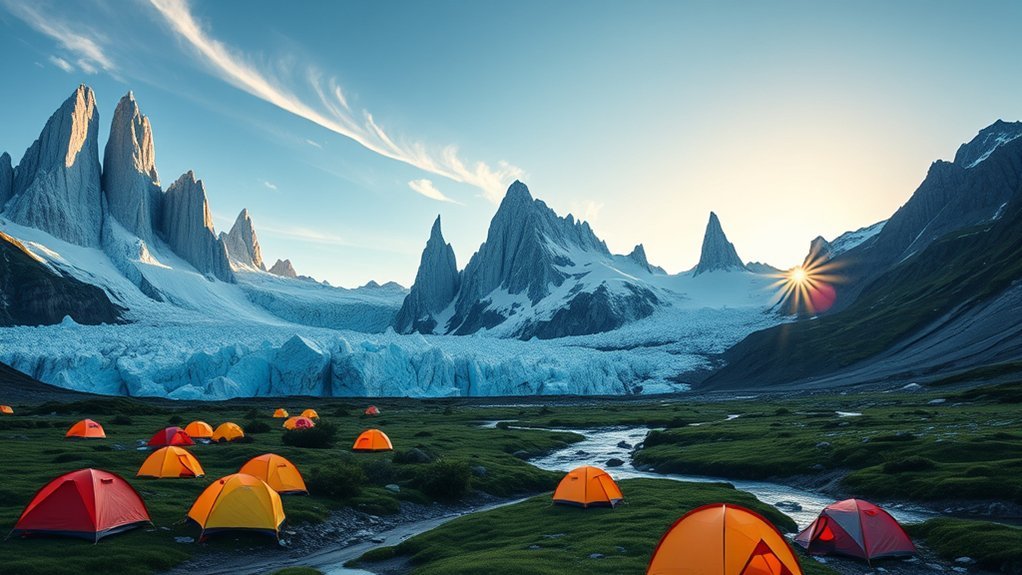
Camping near Mendenhall Glacier gives you glacier views, forest trails, wildlife, and easy access to one of Juneau’s best-known outdoor areas. The practical overnight base is Mendenhall Campground on Mendenhall Lake, about 13 miles from downtown Juneau—not a collection of campgrounds on the glacier itself. Come prepared for rain, bears, cold water, and changing conditions, and check current alerts before your trip.
Quick Answer
The best established place to camp near Mendenhall Glacier is Mendenhall Campground on Mendenhall Lake. It has 67 sites, including RV hookups and seven walk-to backpacker sites. Campfires are normally allowed in provided fire rings, bears frequent the area, and campers should check reservations, weather, fire restrictions, and flood alerts before arriving.
Key Takeaways
- Mendenhall Campground is the main developed campground beside Mendenhall Lake, with views toward the glacier.
- The campground has 67 sites, including full-service and partial-service RV sites plus seven walk-to backpacker sites.
- The normal camping season is approximately May 15 through September 15, but current closures and conditions can change.
- Campfires are normally permitted in provided fire rings unless a temporary fire restriction or closure says otherwise.
- Bears frequent the area, so food, garbage, toiletries, and other scented items must be secured properly.
- Check weather and Suicide Basin glacier-outburst flood alerts shortly before your visit.
Overview of Mendenhall Glacier Campground
Mendenhall Campground sits on the shore of Mendenhall Lake in the Tongass National Forest. From the campground, you can enjoy forest scenery, lake access, and views toward Mendenhall Glacier without having to camp on glacier ice or travel deep into the backcountry.
Current Recreation.gov information lists 67 campsites, including 54 accessible sites. Nine are full-service RV sites with electric, water, and sewer hookups; nine have electric and water hookups; and seven are in a separate walk-to backpacker area.
Campground facilities include tent pads, picnic tables, fire rings with grills, water faucets, vault toilets, flush toilets, showers, a dump station, and a trash dumpster. Facilities can change with maintenance, weather, or seasonal operations, so confirm the current listing when you reserve.
Mendenhall Campground combines a developed campground setup with direct access to the forests, lake, wildlife, and trails of the Mendenhall Glacier area.
Campground Season, Reservations, and Gate Hours
The Forest Service lists the normal campground season as May 15 through September 15. Recreation.gov allows reservations when sites are available, including same-day reservations in some cases. Campsite fees depend on the type of site, so check the current rate during booking rather than relying on an old published price.
Current campground information lists 3:00 p.m. check-in and 2:00 p.m. checkout. The entrance gate is normally closed from 10:00 p.m. to 7:00 a.m., while the exit remains open. Plan late arrivals carefully.
Pro Tip: Reserve the site type you actually need. A walk-to backpacker site gives tent campers a more separated experience, while the RV loops provide different levels of utility hookups.
Essential Gear for Camping Near Mendenhall Glacier
Juneau is wet, and conditions near the lake can feel cool even during summer. Pack for rain and changing weather rather than assuming a clear forecast will last all day.
- Waterproof tent and rainfly: Use a tent that handles steady rain well, and make sure the rainfly covers the sleeping area properly.
- Warm sleeping system: Bring an insulated sleeping pad and a sleeping bag suitable for the temperatures forecast during your stay.
- Waterproof outer layers: A rain jacket, rain pants, and quick-drying clothing are more useful than heavy cotton layers that stay wet.
- Sturdy waterproof footwear: Trails may be wet, muddy, rocky, or slick.
- Navigation tools: Carry an offline trail map or paper map, especially if you plan longer hikes such as West Glacier Trail.
- Headlamp: Even during long summer days, a headlamp is useful around camp and during unexpected delays.
- Bear-safe storage plan: Be prepared to secure food, garbage, toothpaste, soap, pet food, and other scented items.
- Bear deterrent: If you carry bear spray, keep it accessible and learn how to use it before entering bear country.
- Insect protection: Repellent and a head net can make damp summer camps much more comfortable.
- Dry bags or waterproof stuff sacks: Protect sleeping clothes, electronics, and other gear from persistent rain.
Safety Tips for Mendenhall Glacier Camping
Camping beside Mendenhall Lake is much more accessible than a true glacier expedition, but the area still has hazards that deserve serious planning.
Prepare for Bears
Black bears frequent the Mendenhall area. Recreation.gov specifically tells campers to keep food and scented items in vehicles or bear-resistant storage. Do not leave food, garbage, soap, toothpaste, coolers, pet food, or dirty cooking equipment unsecured when you leave your site.
Do not store food in your tent. Keep your campsite clean, avoid surprising wildlife on trails, and never approach a bear for a photograph. If you carry bear spray, it should be where you can reach it quickly rather than buried in a backpack.
Warning: Never feed a bear or intentionally leave food where wildlife can reach it. A bear that learns to obtain human food can become dangerous to both visitors and itself.
Do Not Confuse Hiking Trails With Glacier Routes
The recreation area has established land trails, but that does not mean there is a marked safe hiking route across Mendenhall Glacier. Glacier ice can contain crevasses, unstable ice, meltwater channels, steep sections, and other hazards that change over time.
If your goal is simply to hike near the glacier, use maintained recreation-area trails. Going onto glacier ice is a different activity that requires appropriate equipment, experience, current route knowledge, and careful risk assessment. Visitors without glacier-travel experience should use a qualified local guide rather than treating the ice as a normal hiking trail.
Check Suicide Basin Flood Conditions
Suicide Basin, beside Mendenhall Glacier, has produced recurring glacier-lake outburst floods that raise water levels in Mendenhall Lake and River. These events can affect roads, trails, the campground, and other parts of the recreation area.
Before an overnight trip, check the latest National Weather Service monitoring information and any Forest Service closure notices. Do not enter a closed campground, trail, lake-access area, or flood zone even if conditions appear calm when you arrive.
Note: Flood conditions and temporary closures can change much faster than a general travel article can be updated. Current agency alerts should always override trip plans described here.
Use Extra Care on Mendenhall Lake
Mendenhall Lake is glacier-fed. Cold water, wind, floating ice, changing weather, and activity near the glacier can make paddling more serious than an ordinary calm-water outing.
Wear an appropriate personal flotation device, dress for cold-water conditions, and keep your distance from large floating ice. Forest Service guidance establishes a safety buffer of at least 100 yards from the glacier face. Do not approach the face for a closer photograph.
Walk-To and Backcountry Camping Guidelines
Mendenhall Campground has seven walk-to backpacker sites. These give tent campers a more backpacking-style setup while still keeping them inside the developed campground system.
These sites should not be confused with unregulated camping anywhere around the glacier. If you intend to camp outside Mendenhall Campground on National Forest land, verify the rules for your exact destination with the Juneau Ranger District because restrictions, closures, and permitted uses vary by location.
Where camping is allowed, follow these basic low-impact practices:
- Use established sites when available: Avoid creating a new campsite when a durable or previously used surface is available.
- Pack out your waste: Remove garbage, food scraps, packaging, and hygiene products.
- Protect wildlife: Keep food and scented items secured so bears and other animals cannot obtain them.
- Keep sleeping areas clean: Do not take food or strongly scented products into your tent.
- Avoid wildlife travel corridors: Do not set up beside obvious animal trails or where bears are actively feeding.
- Respect closures and signs: Seasonal wildlife management, flooding, trail damage, or other hazards can change where visitors are allowed.
Must-See Attractions Near Mendenhall Glacier
Camping at Mendenhall Lake gives you easy access to several worthwhile hikes and viewpoints. Choose activities according to the weather, trail conditions, daylight, and your fitness level.
| Attraction | What to Expect |
|---|---|
| Mendenhall Lake | Glacier views, shoreline scenery, and paddling opportunities for properly equipped cold-water boaters. |
| Nugget Falls Trail | About 2 miles round trip according to the Forest Service brochure, leading to a powerful waterfall beside Mendenhall Lake. |
| East Glacier Trail | A challenging 3.5-mile loop with gravel, rock, stairs, forest scenery, and elevated views. |
| Steep Creek | A short boardwalk area known for salmon and seasonal black-bear viewing. Follow ranger instructions and seasonal closures. |
| Mendenhall Glacier Visitor Center | Glacier observation, exhibits, films, ranger information, and access to several nearby trails. |
| West Glacier Trail | A longer, more demanding hike near the campground. Recreation.gov estimates about 5–6 hours round trip with roughly 1,300 feet of elevation gain. |
Wildlife sightings may include black bears, bald eagles, spawning salmon, beavers, porcupines, and other Southeast Alaska species. Observe animals from a respectful distance and never change an animal’s behavior just to get a better photograph.
Frequently Asked Questions
Are campfires allowed at Mendenhall Campground?
Yes. Campsites normally have combination fire rings and grills, and Recreation.gov lists campfires as allowed at individual sites. Temporary fire restrictions or emergency closures can override that rule, so check current Forest Service notices before lighting a fire. Campers are encouraged to bring their own firewood.
What wildlife should campers be aware of?
Black bears are the most important campground safety concern. Bald eagles, salmon, beavers, porcupines, and other wildlife also occur in the Mendenhall area. Keep food, garbage, toiletries, and other scented items secured and never approach wildlife.
Is there a fee for camping at Mendenhall Glacier?
Yes. Mendenhall Campground is a fee campground, and the amount varies by site type. Check the current Recreation.gov listing when booking because fees can change and RV sites with hookups may cost more than basic or walk-to sites.
How do I obtain a camping permit for the walk-to or backcountry sites?
The seven walk-to backpacker sites are part of Mendenhall Campground, so use the campground reservation system rather than looking for a separate glacier backcountry permit. If you plan to camp outside the developed campground, contact the Juneau Ranger District or check current Forest Service rules for your exact destination before setting up camp.
What is the best time of year to camp near Mendenhall Glacier?
For developed camping, plan around Mendenhall Campground’s normal May 15–September 15 operating season. June through August usually offers the longest daylight and easiest access, but rain and cool conditions remain possible throughout summer. Always confirm current opening dates and closures before traveling.
Can I walk onto Mendenhall Glacier from the campground?
Do not assume there is a marked, maintained route from the campground onto safe glacier ice. Established hiking trails are different from glacier travel. Crevasses, unstable ice, meltwater, and changing routes make glacier travel a specialized activity. Visitors without suitable experience and equipment should use a qualified guide.
Conclusion
Camping near Mendenhall Glacier can give you glacier views, lake access, forest hiking, and wildlife experiences without requiring a remote Alaska expedition. Mendenhall Campground provides developed tent and RV sites plus walk-to backpacker options, but the surroundings still deserve respect. Pack for rain, secure every bear attractant, follow current fire rules, stay off unfamiliar glacier ice, and check weather and Suicide Basin flood information before your trip. With those basics covered, you can focus on the reason for coming: enjoying one of Juneau’s most striking landscapes safely.
Sources
- Recreation.gov — Mendenhall Campground — campground size, facilities, campsite types, bear precautions, gate hours, reservations, and check-in information.
- U.S. Forest Service — Mendenhall Lake Campground — campground season and official Tongass National Forest recreation information.
- U.S. Forest Service — Mendenhall Glacier Visitor Center Brochure and Map — trail distances, difficulty, visitor-center information, and local bear guidance.
- National Weather Service — Suicide Basin Monitoring — current glacier-lake outburst flood conditions affecting Mendenhall Lake and River.
- Alaska Department of Fish and Game — Traveling in Bear Country — food storage, bear encounters, and bear-deterrent guidance.