When I plan how to handle money in Switzerland, I focus less on trying to predict the perfect exchange rate and more on controlling the costs I can actually see. Switzerland uses the Swiss franc (CHF), cards are accepted almost everywhere, and cash remains useful for some purchases and as a backup. For most trips, I therefore use a low-fee card for everyday spending and keep a modest amount of CHF in cash.
Quick Answer
For currency exchange in Switzerland, I normally pay by card in Swiss francs and keep some CHF cash as a backup. I compare the full exchange rate and all fees before exchanging money or using an ATM. When a card terminal or ATM offers home-currency conversion, I normally choose CHF unless the displayed conversion is clearly better.
Key Takeaways
- The Swiss franc (CHF) is Switzerland’s national currency.
- Credit and debit cards are accepted almost everywhere, but carrying some CHF is still useful.
- Many businesses accept euros, but change is generally returned in Swiss francs.
- Compare the total CHF you receive after exchange-rate markups, commissions and card or ATM fees.
- When a terminal or ATM offers home-currency conversion, compare it with paying in CHF before accepting.
- Banks are only one exchange option. Exchange offices, airports, major hotels and participating SBB Travel Centres also offer currency exchange.
- If you carry CHF 10,000 or more across the Swiss border, special information requirements can apply if customs officers question you during a check.
Understanding the Swiss Franc (CHF)
The Swiss franc is Switzerland’s national currency. Prices are normally quoted in CHF, and using CHF gives me the clearest way to understand what I am actually paying.
The franc also has an unusual role in global financial markets. The Swiss National Bank describes its reputation as a safe-haven currency, particularly during periods of high global uncertainty. Interest rates, inflation, economic conditions and global risk can all affect exchange rates.
That matters because the value of my home currency against CHF can change before or during a trip. However, I do not treat small day-to-day or intraday movements as something I can reliably predict. For normal travel spending, comparing fees and avoiding poor conversion offers is usually more practical than waiting for a supposedly perfect moment to exchange money.
Cash is still important in Switzerland. In the Swiss National Bank’s 2025 payment survey, cash accounted for 30% of in-person transactions at physical points of sale, making it the second-most-used method after debit cards.
Current Swiss Franc Banknotes
The Swiss National Bank lists six current banknote denominations: CHF 10, 20, 50, 100, 200 and 1,000. For normal travel spending, I do not assume that every small merchant will find a very large note convenient to change, so I prefer practical denominations for everyday purchases.
Finding the Best Exchange Rates
When I compare currency exchange options, I look beyond the large rate displayed on a board or screen. The useful question is simple: How many Swiss francs will I actually receive after every fee?
Two providers can advertise similar exchange rates while producing different final amounts because one may add a commission, service fee or conversion markup. Switzerland Tourism specifically recommends comparing both exchange rates and fees before changing money.
I compare these items before committing to an exchange:
- Quoted exchange rate: How much CHF I receive for one unit of my home currency.
- Commission: A percentage or flat charge added to the exchange.
- Service fee: Any separate charge imposed by the provider.
- Card or bank fee: A fee my own card issuer or bank may charge for international transactions.
- ATM fee: A charge from my bank, the ATM operator or both.
- Currency conversion choice: Whether I am being charged in CHF or offered conversion into my home currency.
Pro Tip: I compare the final amount of CHF I will receive, not just the headline exchange rate. A slightly better advertised rate can become a worse deal after commissions, spreads or conversion fees are added.
Should I Exchange Swiss Francs Before I Arrive?
I do not need to exchange my entire travel budget before reaching Switzerland. If my debit or credit card has reasonable international fees, I can pay directly in CHF for many expenses and obtain cash after arrival when needed.
I may still bring a small amount of CHF if I want immediate backup cash for arrival. If I plan to exchange a larger amount of physical currency, I compare the total cost at home with current Swiss options rather than assuming that exchanging before departure or after arrival is automatically cheaper.
Avoiding High Fees
One of my biggest concerns when exchanging money is allowing fees to quietly reduce my travel budget. A poor conversion can come from an obvious commission, an unfavorable exchange-rate spread, a card issuer’s foreign-transaction fee, an ATM charge, or a combination of several costs.
Before I exchange money at a counter, I ask for the total amount of CHF I will receive. Before I travel, I also check my debit and credit card agreements for foreign-transaction and international ATM charges. Mastercard notes that a cardholder’s bank may impose additional fees on foreign-currency transactions, so the card itself matters just as much as the place where I use it.
Watch for Dynamic Currency Conversion
A particularly important cost to understand is Dynamic Currency Conversion (DCC). This occurs when a merchant or ATM offers to convert a Swiss purchase or withdrawal into my home currency at the point of sale.
Visa’s DCC guidance says the offer should display the transaction amount in the local and cardholder currencies, the exchange rate and any additional fees or markup. I should also be given a choice to accept or decline the conversion.
Warning: If an ATM or payment terminal asks whether I want to be charged in CHF or my home currency, I do not choose my home currency simply because the amount looks familiar. Merchant or ATM conversion can include its own exchange rate and markup. When I want my card network or issuer to handle the conversion, I select CHF.
Mastercard’s currency converter guidance similarly explains that Mastercard’s conversion rate does not apply when a merchant or ATM operator performs the conversion instead.
Credit Cards vs. Cash in Switzerland
For most of my spending in Switzerland, I do not need to choose exclusively between cards and cash. A combination is more practical.
According to Switzerland Tourism, credit and debit cards are accepted almost everywhere, with Visa, Mastercard, American Express and Maestro among the common card types. Contactless options such as Apple Pay and Google Pay are also available.
Cards can therefore be convenient for hotels, restaurants, shops, transportation and larger purchases. They also reduce the amount of physical cash I need to carry. The cost depends on my own card, though, so I check whether it charges foreign-transaction or international usage fees.
I still carry some Swiss francs. Cash remains widely used, and it gives me a backup if a card terminal is unavailable, my card is declined, or I encounter a place where my preferred payment method is not accepted.
Can I Pay With Euros?
Euros are accepted by many department stores, shops, hotels, restaurants and tourist businesses, but I do not treat the euro as a substitute for CHF everywhere. Switzerland Tourism notes that when euros are accepted, change is generally returned in Swiss francs.
If I pay in euros, I check the merchant’s conversion rate rather than assuming it matches the rate I would receive elsewhere. For straightforward budgeting, paying in CHF is usually easier because the price and the payment currency are the same.
Note: Exchange rates, ATM fees and card fees change by provider and account. The examples and strategies here are general travel information, not financial advice or a guarantee that one payment method will always be cheapest.
Exchanging Currency at Banks
Banks can be reliable places to exchange money, but I do not assume that a bank automatically offers the best rate. Switzerland Tourism lists banks alongside exchange offices, airports, major hotels and SBB railway stations as currency-exchange options. It also says that general bureaux de change generally offer better rates than banks and that airport rates may be slightly higher than rates in a city center.
That makes comparison more useful than choosing a provider based on its category alone.
| Exchange option | Useful for | What I compare |
| Bank | Traditional counter service | Rate, commission, availability and customer requirements |
| Exchange office | Comparing cash exchange quotes | Final CHF received after all fees |
| Airport or hotel | Convenience on arrival | Rate and convenience cost versus alternatives |
| SBB Travel Centre | Travelers already using major railway stations | Current rate, fees, currency availability and opening hours |
| ATM | Obtaining CHF directly | ATM fee, issuer fee, exchange rate and DCC choice |
Participating SBB Travel Centres are another option. Switzerland Tourism says around 115 Travel Centres at Swiss railway stations, including locations at Zurich and Geneva airports, can exchange currencies from more than 100 countries into Swiss francs and back.
If I need a less common foreign currency, I check availability ahead of time rather than assuming every bank, hotel or exchange counter will have it in stock.
Using ATMs in Switzerland
ATMs are a convenient way for me to obtain Swiss francs without carrying a large amount of foreign cash into the country. However, the cheapest ATM for one traveler may not be the cheapest for another because the final cost can depend on both the machine and the traveler’s own bank or card issuer.
Before confirming a withdrawal, I check:
- whether the ATM displays my card network;
- the amount of CHF I am withdrawing;
- any ATM operator fee shown on screen;
- my bank’s international ATM or foreign-transaction fee;
- whether the machine is offering to convert the withdrawal into my home currency; and
- my own daily withdrawal limit.
If I am offered a choice between being billed in CHF and having the ATM convert the transaction into my home currency, I review the displayed exchange rate and markup. When I want my own card issuer or network to perform the conversion, I choose CHF.
I also avoid withdrawing a series of very small amounts if my bank charges a fixed fee every time. At the same time, I do not withdraw far more cash than I expect to use simply to reduce transaction frequency. The goal is to balance fees against the security and inconvenience of carrying excess cash.
Debit Card vs. Credit Card at an ATM
Before using a credit card to withdraw cash, I check the issuer’s terms. An ATM withdrawal can be treated differently from an ordinary card purchase and may be subject to cash-advance fees, interest or other charges depending on the card. When I have a debit card with reasonable overseas ATM fees, I normally consider that option first for obtaining cash.
I also avoid assuming that an ATM will always be nearby on a rural or mountain itinerary. The Swiss National Bank reported in 2026 that access to cash points such as ATMs has been declining, so I obtain the backup cash I expect to need before heading somewhere remote.
Carrying Large Amounts of Cash Across the Swiss Border
If I travel with a large amount of physical money, I check the border rules separately from ordinary exchange-counter rules. The Swiss Federal Office for Customs and Border Security says unrestricted amounts of cash, foreign currencies and certain bearer instruments may be carried into, through or out of Switzerland without a general declaration requirement.
However, if customs officers question me during a check and I am carrying, or am suspected of carrying, CHF 10,000 or more, I may be asked to provide truthful information about my identity, the source and intended use of the money and its beneficial owner. Amounts of CHF 10,000 or more are recorded in the customs information system when identified during such checks.
Warning: Switzerland’s rules do not replace the cash-reporting rules of another country on my route. If I am entering or leaving another jurisdiction with substantial cash, I check that country’s requirements separately.
Planning Ahead for Currency Exchange
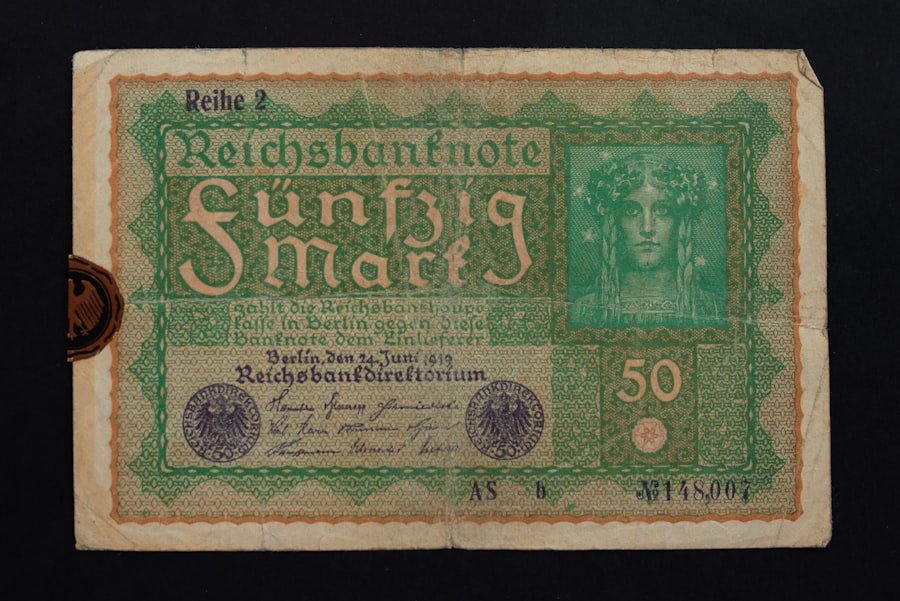
Planning ahead makes currency exchange much easier. Before traveling to Switzerland, I check current exchange information and decide which payment methods I expect to use most often.
My pre-trip checklist is simple:
- Check card fees. I review foreign-transaction and international ATM charges for each card I may carry.
- Know my PIN. I make sure I can use the card at an ATM if I need CHF cash.
- Carry a backup. I avoid relying on one card or one payment method for the entire trip.
- Plan some CHF cash. I consider whether my itinerary includes smaller businesses, markets, rural stops or situations where a cash backup would be helpful.
- Compare exchange options. If I intend to exchange physical currency, I compare the final CHF amount rather than assuming the airport, bank or hotel is cheapest.
I also consider my itinerary and spending habits. If I expect to spend most of my time in cities and established tourist businesses, cards may cover almost everything. If I am heading into more remote areas or want an emergency fallback, I carry enough CHF for a reasonable portion of a day’s spending.
I do not try to forecast exactly where CHF will trade on a particular travel day. The franc can move with economic conditions, interest-rate expectations and global uncertainty, but short-term exchange-rate changes are not something I can reliably predict. My preparation therefore focuses on costs I can verify before pressing “confirm.”
Tips for Managing Currency Exchange While Traveling
Once I am in Switzerland, I keep track of spending in both CHF and my home currency. That helps me understand how quickly I am using my budget without repeatedly converting every small purchase in my head.
I also familiarize myself with typical prices for my itinerary before arriving. This makes it easier to judge whether a purchase fits my budget and prevents the exchange rate from distracting me from the actual price of the item or service.
A few habits make travel-money management easier:
- Keep a modest amount of CHF separate from my main wallet as backup cash.
- Use cards whose international fees I understand.
- Read ATM and terminal screens before accepting a currency conversion.
- Keep receipts for transactions where a conversion choice was involved.
- Check my banking app periodically for unexpected charges.
- Do not assume a “0% commission” sign automatically means the best overall exchange rate.
- Use CHF as the reference currency when comparing Swiss prices.
Staying aware of economic news can explain why the franc is moving, but I do not let short-term market headlines control ordinary travel spending. For most trips, careful fee management has a clearer and more immediate benefit than attempting to trade around currency fluctuations.
The original article also included a cultural link to Exploring the Delightful World of Asian Melon. I treat that as separate cultural reading rather than a source for Swiss exchange rates, payment rules or financial decisions.
Frequently Asked Questions
What is the currency used in Switzerland?
Switzerland’s national currency is the Swiss franc, abbreviated CHF. Prices are generally quoted in CHF, and paying in CHF makes it easier to compare the listed price with what you are actually charged.
Where can I exchange currency in Switzerland?
Currency exchange is available through banks, exchange offices, airports, some major hotels and participating SBB Travel Centres. ATMs are another way to obtain CHF directly. Compare both the exchange rate and all fees before choosing.
What foreign currencies can I exchange in Switzerland?
Availability depends on the provider and location, so there is no universal list that applies to every counter. Switzerland Tourism says participating SBB Travel Centres exchange currencies from more than 100 countries. Check the specific provider before traveling with a less common currency.
Are there identification requirements for exchanging currency?
Requirements can vary by provider, transaction and compliance checks, so I check the chosen exchange provider’s current rules rather than assuming every transaction has the same identification requirement. Border controls are separate: if Swiss customs questions a traveler carrying or suspected of carrying CHF 10,000 or more, official rules require truthful information including identity, source and intended use of the money.
What is a typical exchange rate for Swiss francs?
There is no fixed travel exchange rate. CHF exchange rates change over time, and banks, exchange offices, card networks and other providers may use different rates or add fees. Compare the final amount you will receive or pay rather than relying on a static rate quoted in an article.
Can I use my credit or debit card in Switzerland?
Yes. Switzerland Tourism says credit and debit cards are accepted almost everywhere. Before traveling, check whether your card charges foreign-transaction or international ATM fees and carry some CHF as a backup.
Should I choose CHF or my home currency at a card terminal or ATM?
If the alternative is Dynamic Currency Conversion, paying or withdrawing in CHF lets your card network or issuer handle the currency conversion instead of the merchant or ATM operator. Review the displayed rate and fees before confirming because your own card may also have international transaction charges.
How much cash should I carry in Switzerland?
There is no single correct amount. Because cards are accepted almost everywhere, I normally carry only enough CHF for small purchases, a payment-system problem or another short-term backup. Travelers expecting more rural stops or cash-oriented purchases may want a larger reserve.
Does every business in Switzerland have to accept cash?
Not necessarily. Swiss banknotes and coins are legal tender, but the Swiss National Bank explains that the statutory cash-acceptance rule is dispositive law, meaning parties can agree to another payment arrangement. I therefore check a merchant’s accepted payment methods instead of assuming cash must be accepted in every situation.
Can I still use old Swiss franc banknotes?
It depends on the series. The eighth Swiss banknote series was recalled in 2021 and is no longer legal tender, but the Swiss National Bank says recalled notes from the sixth series onward can be exchanged at the SNB for an unlimited period at full nominal value. Current notes should be used for ordinary purchases.
Sources
- Swiss National Bank: Payment Methods Survey of Private Individuals 2025 — current cash, debit-card and payment-behavior data.
- Swiss National Bank: Questions and Answers on Banknotes — current denominations, legal-tender rules and recalled banknotes.
- Switzerland Tourism: Money Exchange Places — exchange locations, SBB Travel Centres and exchange-rate comparison guidance.
- Switzerland Tourism: Credit Cards — card acceptance, common card networks and contactless payments.
- Visa: Dynamic Currency Conversion — DCC disclosure, currency choice, exchange-rate and markup guidance.
- Swiss Federal Office for Customs and Border Security: Cash and Foreign Currency — rules for carrying cash into, through and out of Switzerland.