Geneva combines a remarkably compact historic center with lakefront landmarks, international institutions, museums, watchmaking heritage, and easy escapes into the surrounding mountains. You can walk from the Flower Clock and Jet d’Eau to the Old Town in the same day, then use public transport for attractions such as the United Nations, CERN, and the Botanical Garden.
Geneva is one of Switzerland’s largest cities and an important center for diplomacy, humanitarian work, finance, and science. According to the Geneva Cantonal Statistical Office, Geneva city had 210,601 residents at the end of 2025. For visitors, its manageable size makes it possible to combine historic streets, museums, the lake, and international landmarks without spending most of the day in transit.
Quick Answer
The best things to do in Geneva include exploring the Old Town and St. Peter’s Cathedral, seeing the Jet d’Eau, visiting the Palais des Nations, touring the Red Cross and Patek Philippe museums, exploring CERN, strolling through Carouge and the Botanical Garden, taking a lake cruise, and riding up Mont Salève.
Key Takeaways
- The Old Town, St. Peter’s Cathedral, Reformation Wall, Flower Clock, and lakefront are easy to combine on foot.
- The Jet d’Eau reaches 140 meters, but its operating and lighting hours vary by season, weather, and maintenance schedule.
- UN Geneva tours should be booked ahead, and renovation work can change the route or rooms you see.
- CERN Science Gateway is one of the strongest family and science attractions currently open in Geneva.
- As of September 2026, Geneva’s Natural History Museum is closed for major renovation, with reopening currently scheduled for 2028.
- Guests staying in approved Geneva accommodation can receive a Geneva Transport Card for free local public transport during their stay.
Explore Geneva’s Old Town
Geneva’s Old Town is the historic heart of the city, with cobbled lanes, small squares, museums, centuries-old buildings, and landmarks connected to the Protestant Reformation. It is one of the best areas to explore on foot because many important sights are only a few minutes apart.
Follow the Story of John Calvin and the Reformation
John Calvin was not born in Geneva. He was born in Noyon, France, in 1509 and arrived in Geneva in 1536. Geneva nevertheless became the city most closely associated with his work as a Protestant reformer. Walking through the Old Town lets you see places connected with that period and understand why Geneva became such an important center of the Reformation.
Climb St. Peter’s Cathedral
St. Peter’s Cathedral was built in the 12th century and later became a major symbol of the Reformation. One of the highlights is the climb up 157 steps to the north tower, where you get a broad view across Geneva and the lake.
The archaeological site beneath the cathedral adds another layer to the visit, with remains documenting earlier periods of religious occupation on the site. If you are comfortable with stairs, the tower is one of the most rewarding viewpoints in central Geneva.
Stop at Place du Bourg-de-Four and Maison Tavel
Nearby Place du Bourg-de-Four is one of the Old Town’s best places to slow down for coffee or lunch. Geneva Tourism describes it as the city’s oldest square, and its terraces and surrounding historic buildings make it a natural stop while walking between the cathedral and nearby museums.
Maison Tavel, a short walk from the cathedral, occupies the oldest surviving private residence in Geneva. Today it presents Geneva’s urban history and daily life through maps, models, furniture, artwork, and historical objects.
See the Reformation Wall
The Reformation Wall in Parc des Bastions is an important companion stop to the Old Town. Large statues depict John Calvin, William Farel, Theodore Beza, and John Knox, while reliefs and inscriptions commemorate the international influence of the Reformation.
The wall is outdoors and easy to include after St. Peter’s Cathedral. Parc des Bastions also gives you a pleasant walking route toward Place de Neuve and central Geneva.
Visit the Flower Clock and Jardin Anglais
At the edge of Jardin Anglais near the lake, Geneva’s Flower Clock combines the city’s watchmaking identity with seasonal horticulture. Created in 1955, the display is replanted as the seasons change and is free to see at any time.
The Flower Clock makes an easy first stop before walking along the waterfront toward the Jet d’Eau. Jardin Anglais itself is a relaxing place for a short lakeside break.
Visit the Jet d’Eau
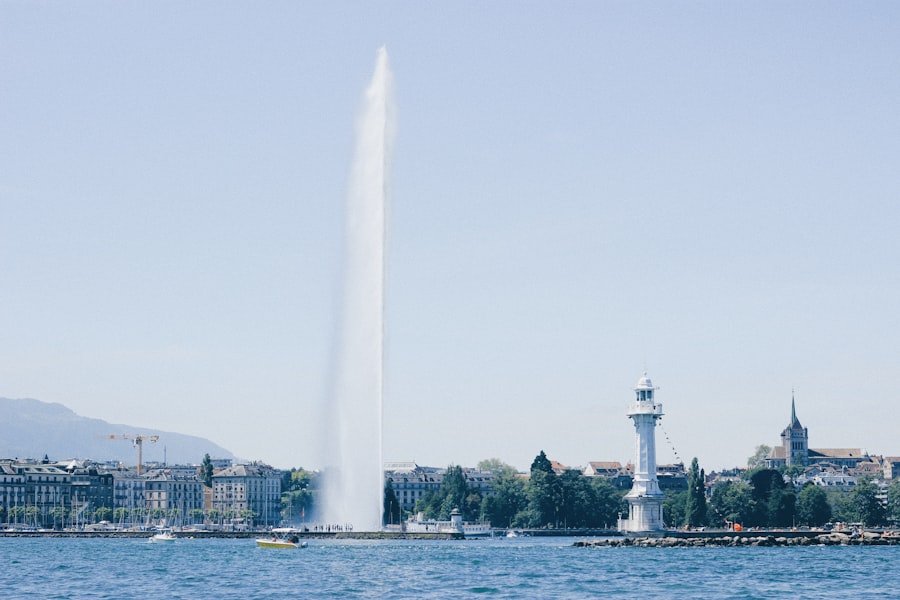
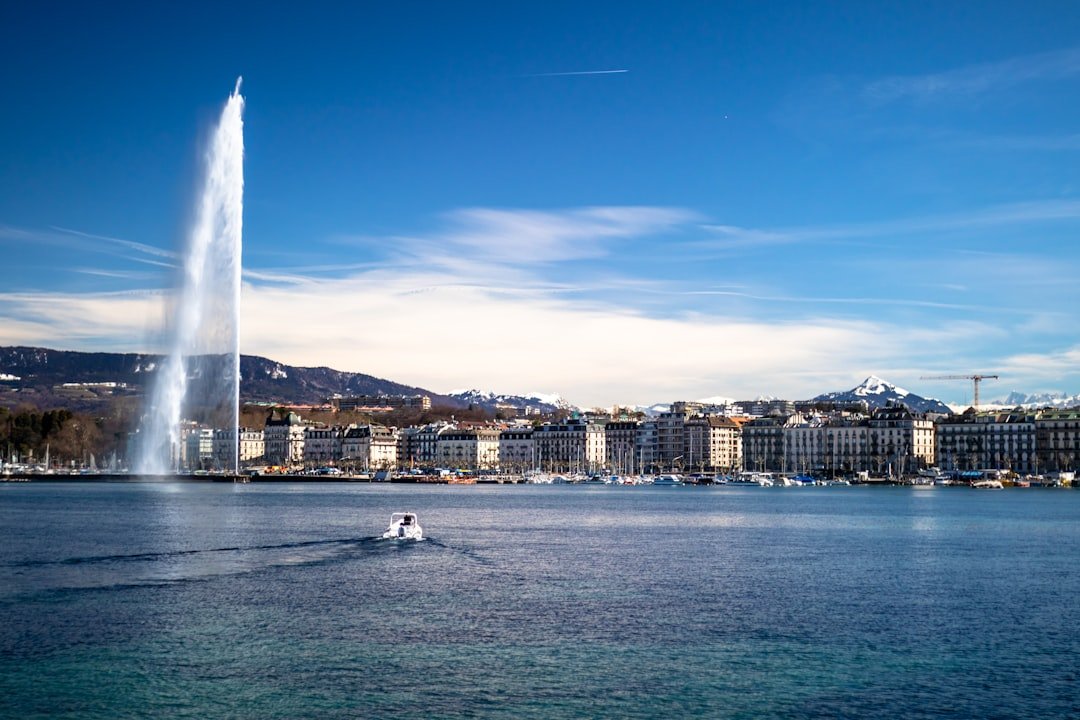
The Jet d’Eau is Geneva’s best-known lakefront landmark. The fountain projects water to a height of 140 meters and can be seen from many parts of the waterfront.
Its history began in 1886, when an outlet was created to relieve excess pressure in a hydraulic network. A new Jet d’Eau was installed in its present harbor location in 1891, and the modern installation reached its current 140-meter height in 1951.
The closest views are from the lakeside promenade and the jetty leading toward the fountain. Be prepared for spray when the wind changes direction.
Note: The Jet d’Eau does not simply operate without interruption all year. SIG publishes seasonal operating and illumination hours, and the fountain can also stop because of strong wind, near-freezing temperatures, or maintenance. Check the official SIG Jet d’Eau schedule before making a special trip to see it.
Discover the International Red Cross and Red Crescent Museum
The International Red Cross and Red Crescent Museum is one of Geneva’s most distinctive museums. Located on Avenue de la Paix in the international district, it examines humanitarian action through objects, testimony, art, interactive experiences, and stories connected with conflict, displacement, dignity, and relief work.
| Regular opening days | Tuesday to Sunday |
| Regular hours | 10 a.m. to 5 p.m.; Thursday late opening to 8 p.m. |
| Adult admission | CHF 15 at the time of this update |
| Current change | Permanent exhibition is being progressively renewed under Vision 2028 while the museum remains open |
The museum’s current Vision 2028 project is gradually redesigning its permanent exhibition between 2026 and 2028. This means repeat visitors may encounter changes as the project progresses.
Allow enough time to engage with the personal stories rather than treating this as a quick collection of objects. The museum’s strength is the way it connects historical humanitarian work with questions that remain relevant today.
Take a Lake Geneva Cruise
A boat trip gives you a different view of Geneva’s waterfront, the surrounding hills, and the Alpine landscape. Cruise length varies from short sightseeing loops to longer regional journeys.
CGN operates the main scheduled passenger services on Lake Geneva. Routes vary by season. In the 2026 timetable, services from Geneva include itineraries toward places such as Yvoire, Nyon, and Lausanne, while other CGN routes serve destinations elsewhere around the lake.
Do not assume that every lakeside town has a convenient direct boat from Geneva on your chosen day. Montreux and Évian-les-Bains are worthwhile destinations, but reaching them entirely by boat may involve different departure points or connections depending on the timetable.
Some cruises include or offer onboard dining. If you want a sunset, lunch, or longer regional cruise, check the day’s departure and return times before arranging the rest of your sightseeing.
Explore the United Nations Office at Geneva
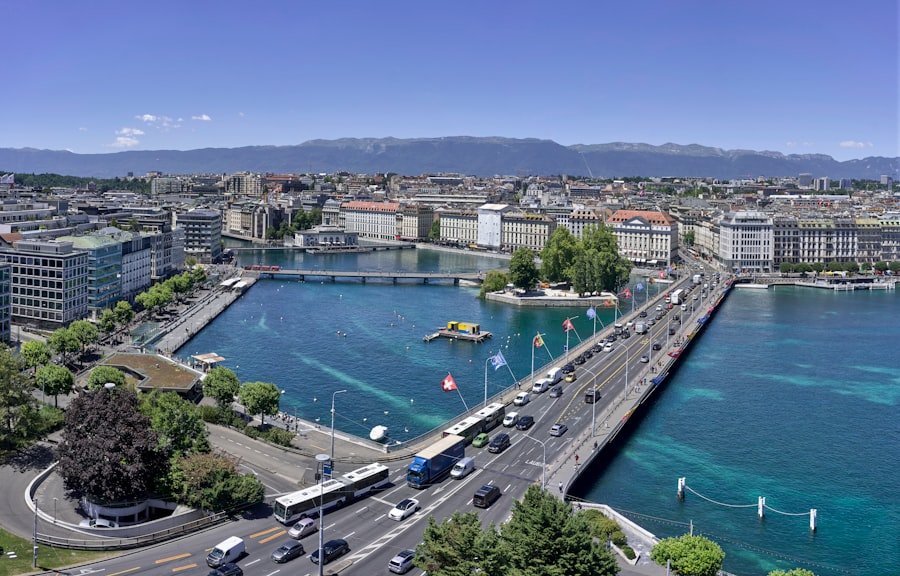
The Palais des Nations, formerly the headquarters of the League of Nations, is one of Geneva’s defining international landmarks. Guided visits introduce the history of the complex and the work carried out by the United Nations in Geneva.
Book a Guided Tour of the Palais des Nations
Use the official UN Geneva visitor website to check availability and reserve a tour. Individual tours can sell out, and UN Geneva notes that renovation work, conferences, and security requirements can affect both schedules and the rooms included.
The visit involves substantial walking, and the official visitor information estimates the Palais tour at roughly 2 kilometers. Plan additional time for security screening before the scheduled start.
Understand the Assembly Hall and UN Art
The Assembly Hall is the Palais des Nations’ largest conference room and has a long history stretching back to the League of Nations era. It should not be confused with the Human Rights and Alliance of Civilizations Room, formerly Room XX.
The famous multicolored ceiling associated with UN Geneva is a sculptural installation by Spanish artist Miquel Barceló in the Human Rights and Alliance of Civilizations Room. It is not a Marc Chagall mural in the Assembly Hall.
Check Security and Identification Rules
UN Geneva advises visitors to carry an accepted valid identity document and allow approximately 30 minutes for security screening. Large luggage is restricted, and individual rooms can become inaccessible at short notice because of official meetings or renovation work.
Pro Tip: Combine the Palais des Nations with the Red Cross Museum and Botanical Garden. They are all in the same broader part of Geneva, making this a more efficient sightseeing day than repeatedly crossing the city.
Visit the Patek Philippe Museum
The Patek Philippe Museum is one of Geneva’s strongest attractions for anyone interested in watchmaking, decorative arts, engineering, or craftsmanship. Its collections span roughly five centuries of European and Genevan horology.
The company’s history requires a little precision. Antoine Norbert de Patek founded Patek, Czapek & Co. in Geneva in 1839. Jean Adrien Philippe later joined him, and the company became Patek, Philippe & Cie in 1851. The business has been owned by the Stern family since 1932.
The Patek Philippe Museum presents around 2,500 watches, automatons, precious objects, miniature enamel works, and other pieces, as well as Patek Philippe creations dating from 1839 onward.
Opening days vary across the week, and the museum recommends advance online ticketing during busy periods. Check the official schedule before visiting, particularly around public holidays.
Know Before You Go: Natural History Museum of Geneva
Geneva’s Natural History Museum is the largest natural history museum in Switzerland and is known for major scientific collections covering animals, fossils, minerals, and biodiversity. Historically, its exhibition galleries have made it especially popular with families.
Important: As of September 2026, the Natural History Museum is closed for major renovation and remediation. The current Museums of Geneva listing says reopening to the public is scheduled for 2028. Do not build a current Geneva itinerary around visiting its main galleries.
The museum’s scientific collections remain important, but travelers visiting during the closure should choose another science-focused attraction. CERN Science Gateway is the strongest current alternative for most families.
Visit CERN Science Gateway
CERN adds a completely different dimension to a Geneva trip. The Science Gateway is an education and visitor center where exhibits, demonstrations, workshops, and tours introduce particle physics, the universe, and CERN’s research.
CERN Science Gateway is normally open Tuesday through Sunday and closed Monday. Admission is free, but registration is required. Some guided tours and activities depend on daily availability, so reserve or check the day’s program rather than assuming a particular tour will be offered.
CERN works particularly well for families with older children, science enthusiasts, and travelers who want something beyond Geneva’s historic and diplomatic attractions. Tram 18 connects central Geneva with the CERN area.
Enjoy a Day Trip to Mont Salève
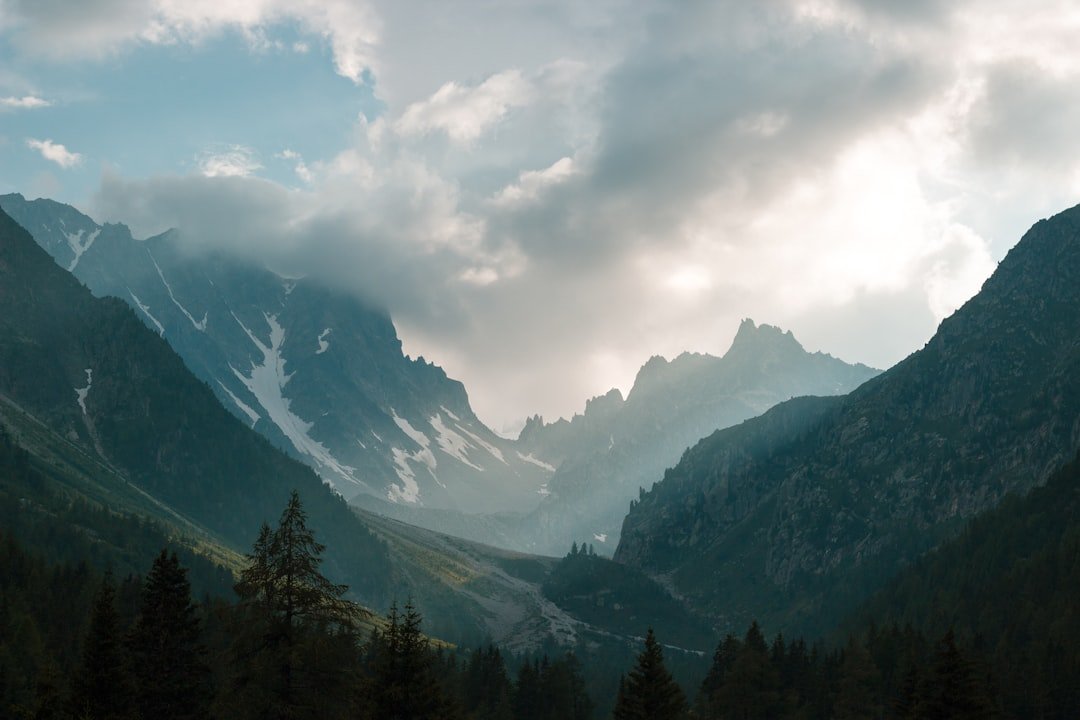
Mont Salève rises just across the border in France and is often called Geneva’s local mountain because of its close relationship with the city. The upper area provides views toward Geneva, Lake Geneva, and the Mont Blanc range when visibility is good.
The Salève cable car reaches an altitude of about 1,100 meters in under five minutes. Once at the top, you can enjoy viewpoints, walking routes, exhibitions, and seasonal activities.
Hiking and paragliding are among the mountain’s best-known outdoor activities. The summit area also has family facilities, and a nature playground for children aged 2 to 12 opened in 2026.
Cable-car hours vary by season. During the 2026 summer season, the service operates daily through November 1, with extended evening hours on selected days. Check the operator’s latest schedule before crossing the border.
Discover the Botanical Gardens
The Conservatory and Botanical Garden of Geneva offers a quieter break from museums and historic streets. Its grounds extend across about 28 hectares and combine landscaped areas with scientifically managed living plant collections.
Visitors can explore alpine plants, ethnobotanical displays, greenhouses, trees, and collections representing plants from different environments. The garden also plays an active role in botanical research, education, and plant conservation.
The Conservatoire et Jardin botaniques de Genève is near the international district, so it pairs naturally with the Palais des Nations and Red Cross Museum.
Explore the Carouge District
Carouge feels different from central Geneva. Its Sardinian roots shaped an urban landscape of lower buildings, courtyards, shaded terraces, independent shops, workshops, restaurants, and Mediterranean-influenced architecture.
Geneva Tourism has long compared Carouge with Greenwich Village because of its bohemian and creative atmosphere. You can browse artisan shops and galleries during the day, stop at a café, or return later for its bars and restaurants.
Carouge is a good choice when you want time away from the city’s headline monuments. Rather than rushing through it as another checklist attraction, allow yourself to wander through its smaller streets and courtyards.
How to Plan 1, 2, or 3 Days in Geneva
If You Have One Day
Start at Jardin Anglais and the Flower Clock, walk along the lake to see the Jet d’Eau, then head uphill into the Old Town. Visit St. Peter’s Cathedral, Place du Bourg-de-Four, and the Reformation Wall. Finish with Carouge, the Patek Philippe Museum, or a relaxed lakeside evening depending on your interests.
If You Have Two Days
Use the first day for the central lakefront and Old Town. On day two, focus on the international district: tour the Palais des Nations, visit the Red Cross Museum, and walk through the Botanical Garden. A shorter lake cruise can also fit into a two-day stay if departure times work with your schedule.
If You Have Three Days or More
Add CERN Science Gateway or Mont Salève. CERN is better for science and family activities, while Mont Salève is better for panoramic views, hiking, and outdoor time. A longer Lake Geneva excursion is another option when weather and seasonal boat schedules are favorable.
Pro Tip: If you stay in approved accommodation in Geneva, you are entitled to a digital Geneva Transport Card. It provides unlimited use of participating local buses, trains, and Mouettes shuttle boats in the Geneva network for the duration of your stay.
Geneva works best when you mix its different sides rather than spending the entire trip inside museums or only around the lake. Historical Geneva is concentrated around the Old Town, international Geneva lies around the Palais des Nations, Carouge offers a more neighborhood-focused experience, and CERN and Mont Salève provide worthwhile excursions beyond the central sightseeing circuit.
Frequently Asked Questions
What are the most popular tourist attractions in Geneva?
Popular Geneva attractions include the Jet d’Eau, St. Peter’s Cathedral and the Old Town, the Reformation Wall, Flower Clock, Palais des Nations, International Red Cross and Red Crescent Museum, Patek Philippe Museum, CERN Science Gateway, Carouge, and Lake Geneva.
How many days do you need in Geneva?
Two days is a comfortable amount of time for the major central attractions plus the international district. With three days, you can add CERN, Mont Salève, or a longer Lake Geneva excursion without rushing.
What outdoor activities can I do in Geneva?
You can walk or cycle along the lakefront, take a boat cruise, explore Geneva’s parks and Botanical Garden, and use Geneva as a base for hiking or other outdoor activities on Mont Salève.
What cultural experiences can I have in Geneva?
Explore the Old Town and Reformation heritage, visit the Red Cross and Patek Philippe museums, tour the Palais des Nations, experience Geneva’s watchmaking history, or spend time in the artisan-oriented Carouge district.
What are some family-friendly activities in Geneva?
CERN Science Gateway, the lakefront, Mouettes shuttle boats, Botanical Garden, Old Town, and Mont Salève are strong family choices. Geneva’s Natural History Museum would normally be another major option, but it is currently closed for renovation.
Is Geneva’s Natural History Museum open in 2026?
No. As of September 2026, the main Natural History Museum is closed for renovation and remediation. The current Museums of Geneva information lists reopening to the public for 2028.
Is public transport free for tourists in Geneva?
Visitors staying in approved Geneva accommodation are entitled to a free digital Geneva Transport Card for the duration of their stay. It covers participating local buses, trains, and Mouettes shuttle boats within the Geneva network.
What are some popular day trips from Geneva?
Popular choices include Mont Salève, Yvoire, Lausanne, Montreux, the Lavaux wine region, and Chamonix. Travel times and Lake Geneva boat connections vary, so compare train, bus, and CGN schedules for your chosen day.
Sources
- Geneva Tourism — Top Things to Do — official information on Geneva’s principal landmarks and attractions.
- SIG — Jet d’Eau — official history, technical specifications, operating hours, illumination, and weather guidance.
- International Red Cross and Red Crescent Museum — Vision 2028 — current permanent-exhibition transformation information.
- United Nations Office at Geneva — Visiting UN Geneva — guided-tour, security, renovation, and visitor information.
- Patek Philippe Museum — Plan Your Visit — official museum opening, ticket, and visitor information.
- Museums of Geneva — Natural History Museum — current renovation closure and reopening information.