Lokum, known in English as Turkish delight, is a soft, chewy confection traditionally made by cooking sugar, starch, water, and a small amount of acid until the mixture forms a dense gel. It can be flavored with rosewater, citrus, mastic, nuts, fruit, or other ingredients. Although lokum is strongly associated with Ottoman and Turkish food culture, its exact origin is more complicated than the simple claim that one person invented it on one specific date.
Quick Answer
Lokum, or Turkish delight, is a starch-and-sugar confection with a soft, elastic texture. Traditional varieties include rose, lemon, mastic, pistachio, hazelnut, and walnut. In Istanbul, historic confectioners and the Spice Bazaar are popular places to try it, while homemade lokum requires careful cooking and several hours of setting time.
Key Takeaways
- Traditional lokum gets its characteristic gel from starch rather than gelatin.
- Its exact origin is debated, but lokum developed within Ottoman-era confectionery traditions and reached its familiar sugar-and-starch form over time.
- Rose, lemon, mastic, pistachio, hazelnut, walnut, pomegranate, and coconut are common flavors or additions.
- Homemade lokum needs patient cooking, careful handling of hot sugar syrup, and several hours to set.
- In Istanbul, Hacı Bekir, other established confectioners, and the Spice Bazaar are useful places to compare styles and flavors.
- Lokum is still candy: nut-filled varieties may contain useful nutrients, but the sweet itself is high in sugar and is best enjoyed in modest portions.
The History of Lokum and Turkish Delight
The history of lokum stretches across several stages of Ottoman confectionery rather than one perfectly documented invention. A review published in Food Research International notes that forms of lokum have been associated with the Ottoman period for centuries, while the sweet developed toward its familiar modern form as refined sugar and starch became more important in confectionery production. Food-science research on lokum production describes sugar, starch, and water as the core of the modern product.
Older confectionery could use ingredients such as honey, molasses, and flour. During the late Ottoman period, refined sugar and starch helped confectioners create the clearer, smoother, more elastic texture now associated with Turkish delight.
One name closely connected with Istanbul lokum is Hacı Bekir. According to the confectioner’s official history, Hacı Bekir Effendi came to Istanbul from Araç in Kastamonu and opened a small confectionery shop in Bahçekapı in 1777. The business later became closely connected with Ottoman confectionery culture and remains active today.
Lokum has also historically been associated with the Ottoman expression rahatü’l-hulküm, derived from Arabic and commonly translated as something close to “ease” or “comfort of the throat.” Türkiye’s Istanbul Provincial Directorate of Culture and Tourism notes this traditional name and lokum’s long connection with festive treats and Turkish coffee. The exact linguistic route to the modern word “lokum,” however, is more complex than a simple one-word derivation.
The Ingredients That Give Lokum Its Texture
At its simplest, traditional lokum is built around sugar, water, starch, and acid. The starch is especially important because it creates the gel structure responsible for lokum’s soft but resilient bite. This is one of the main differences between traditional lokum and many gelatin-based gummy candies.
A typical process begins with a sugar syrup and a separate starch mixture. The two are cooked together long enough for the starch to gelatinize and for excess water to evaporate. Small amounts of citric acid, lemon juice, or cream of tartar may be used depending on the recipe. Careful cooking helps reduce unwanted sugar crystallization while creating the correct texture.
Flavorings are usually added toward the end. Rosewater is one of the best-known options, but lemon, orange, bergamot, mastic, mint, cinnamon, and other aromas are also used. Pistachios, walnuts, hazelnuts, coconut, dried fruit, and fruit concentrates can give lokum a very different texture and flavor from plain varieties.
Note: Traditional lokum is starch-set. Some commercial products sold as Turkish delight may use different formulations, so check the ingredient label if you specifically need a gelatin-free, vegan, dairy-free, or allergen-controlled product.
The Different Flavors and Varieties of Lokum to Try
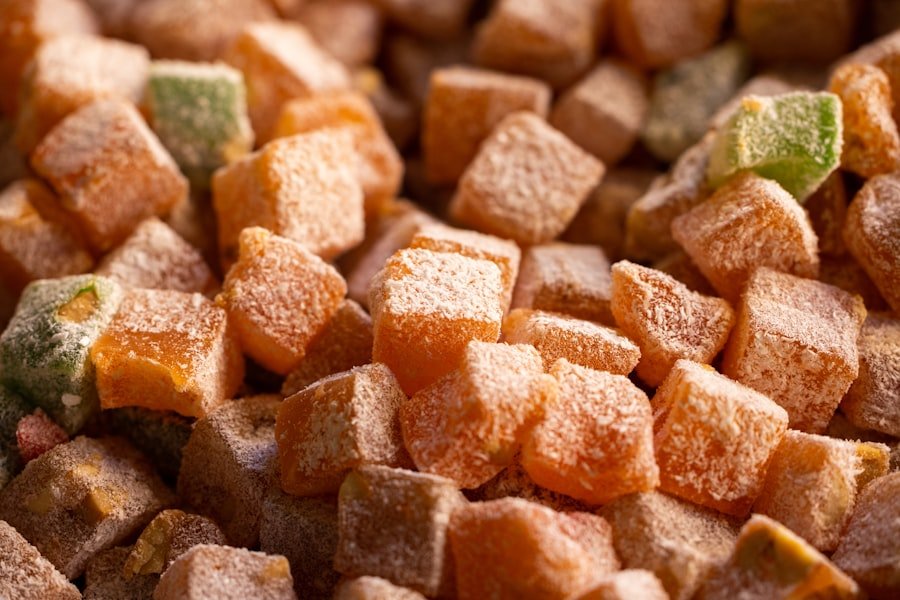
Lokum comes in enough styles that two boxes can taste completely different. Plain rosewater lokum remains one of the most recognizable versions, with a floral aroma and soft sweetness. Lemon and orange varieties bring sharper citrus notes, while mastic gives the confection a distinctive resinous fragrance.
Nut-filled lokum is another major category. Pistachio is particularly popular, but hazelnuts and walnuts are also widely used. Nuts create contrast between the yielding starch gel and a firmer crunch.
Coconut-coated lokum replaces or supplements the usual powdered-sugar-and-starch coating with desiccated coconut. Fruit-flavored versions may use pomegranate, orange, sour cherry, fig, or other fruit ingredients. Chocolate-covered, coffee-flavored, and other contemporary variations can also be found, although they are less traditional than rose, citrus, mastic, or nut-based varieties.
When comparing several types, start with one plain or lightly flavored piece before moving to heavily nut-filled or chocolate-covered versions. This makes it easier to judge the basic texture and freshness of the lokum itself.
How to Make Lokum at Home: Step-by-Step
At a Glance
| Time Required | About 60 minutes cooking, plus at least 4 hours to set; overnight is better |
| Difficulty | Intermediate — the mixture requires patience and frequent stirring |
| Tools Needed | Heavy saucepan, second saucepan or bowl, whisk, heatproof spatula, 20 cm/8-inch pan, parchment paper, knife; candy thermometer recommended |
| Cost | Low to moderate; plain rose lokum costs less to make than versions packed with pistachios or other nuts |
Ingredients
- 500 g granulated sugar
- 100 ml water for the sugar syrup
- 75 g cornstarch
- 375 ml water for the starch mixture
- 1 teaspoon cream of tartar
- 1 to 2 teaspoons food-grade rosewater, or another flavoring to taste
- A few drops of food coloring, optional
- 40 g powdered sugar for coating
- 40 g cornstarch for coating
- Optional: chopped pistachios, walnuts, or hazelnuts
Warning: Hot sugar syrup can cause serious burns and may stick to skin. Use a deep saucepan, keep children away from the stove, avoid splashing the mixture, and do not touch or taste it until it has cooled.
1. Prepare the pan
Line a 20 cm or 8-inch square pan with parchment paper. Lightly dust the base with some of the cornstarch-and-powdered-sugar coating mixture.
2. Make the sugar syrup
Put the sugar and 100 ml water in a heavy saucepan. Heat gently while stirring just until the sugar dissolves. Once dissolved, bring the syrup to a steady simmer. If you have a candy thermometer, cook it to about 112°C/234°F, then remove it from the heat.
3. Cook the starch base
In another heavy saucepan, whisk the cornstarch, cream of tartar, and 375 ml water until completely smooth. Place over medium heat and stir continuously. The mixture will thicken from a cloudy liquid into a heavy paste.
4. Combine the syrup and starch
Slowly add the hot sugar syrup to the starch paste while stirring continuously. Add it gradually rather than all at once so the mixture remains smooth.
5. Cook until thick, glossy, and elastic
Reduce the heat to low. Continue cooking for roughly 35 to 45 minutes, stirring regularly and scraping the bottom and sides so the mixture does not scorch. It should become very thick, glossy, and slightly golden. Food-science research on lokum production confirms that cooking time, starch concentration, water, sugar, and acid all affect the final texture.
6. Add flavor and nuts
Remove the pan from the heat. Stir in rosewater and optional coloring. If you want nut-filled lokum, fold in chopped pistachios, walnuts, or hazelnuts at this stage.
7. Pour and set
Transfer the mixture to the prepared pan and spread it evenly with a lightly dampened or heat-safe spatula. Leave it at room temperature for at least four hours. Overnight setting usually makes cutting easier.
8. Cut and coat
Mix the powdered sugar and cornstarch together. Turn the set lokum onto a dusted surface, cut it into bite-size squares with a lightly dusted knife, and coat every side to reduce sticking.
Pro Tip: Do not rush the final cooking stage. Lokum that is removed from the heat too early can remain loose and sticky, while excessive cooking can make it unusually firm or rubbery.
Troubleshooting Homemade Lokum
- Too soft: The mixture probably retained too much water or was not cooked long enough.
- Very sticky: Allow more setting time and coat the cut surfaces thoroughly with starch and powdered sugar.
- Grainy: Sugar may have crystallized. Avoid excessive stirring of the sugar syrup once it begins boiling.
- Rubbery or extremely firm: The mixture may have been cooked too long or contained too much starch.
- Lumpy: Whisk the starch into cold water completely before heating and combine the syrup gradually.
Where to Find Good Lokum in Istanbul
Istanbul offers everything from historic confectioners to market stalls selling dozens of varieties. Instead of assuming that one shop is universally “the best,” compare freshness, texture, ingredient quality, and flavor before buying a large box.
Hacı Bekir
Hacı Bekir is one of Istanbul’s most historically significant confectioners. Its official history dates the original Bahçekapı shop to 1777. It remains a useful stop if you want classic lokum and a direct connection with the city’s confectionery history.
Hafız Mustafa
Hafız Mustafa traces its confectionery history to 1864 and operates established Istanbul locations. Its range extends beyond lokum to baklava and other Ottoman-style sweets, making it useful for visitors who want to compare several Turkish desserts in one stop.
Koska
Koska traces its roots to the early 1900s and later established itself in Istanbul. Its production includes lokum as well as halva and other confectionery.
What about Mendel’s Lokum in Kadıköy?
Some older recommendations mention Mendel’s Lokum in Kadıköy, but I could not verify it through a reliable current official source. Kadıköy itself remains an excellent food-shopping district, but it is better not to make a special trip based only on an unverified shop listing.
The Cultural Significance of Lokum in Turkish Cuisine
Lokum is more than a tourist souvenir. Türkiye’s Ministry of Culture and Tourism describes it as an important part of traditional sweet culture and connects it with festive hospitality and Turkish coffee. Boxes of lokum are also commonly exchanged or offered when people visit relatives and friends.
This connection with hospitality helps explain why lokum is often presented in small portions rather than eaten like a large dessert. A piece beside coffee or tea becomes part of the social ritual surrounding the drink.
Lokum also appears in regional customs connected with celebrations and visits. Practices differ by family and region, so it is better to describe it as a widely used festive and hospitality sweet rather than suggesting that every Turkish household follows one identical custom.
Pairing Lokum with Turkish Tea and Coffee
Lokum pairs well with unsweetened Turkish tea because the drink’s tannic, slightly bitter character cuts through the confection’s sweetness. Floral rose lokum works particularly well when you want a fragrant pairing, while citrus flavors give the combination a brighter finish.
Turkish coffee is another traditional partner. GoTürkiye notes that Turkish coffee is traditionally served with water and a piece of lokum. The intense coffee provides a strong contrast to the sweet, chewy confection.
If you are serving several varieties, arrange small portions of plain rose or citrus lokum first, followed by richer pistachio, hazelnut, or chocolate-covered pieces. This keeps the stronger flavors from overwhelming the more delicate ones.
Is Lokum a Healthy or Guilt-Free Treat?
Lokum is best understood as confectionery rather than a health food. Türkiye’s national food-composition database lists plain Istanbul lokum at about 359 kcal and 89.3 g of carbohydrate per 100 g. Most of those calories come from carbohydrates and sugars rather than significant amounts of protein, fiber, or fat.
Plain lokum is primarily a sugar-and-starch confection. Nuts can change its nutritional profile, but they do not turn the sweet into a low-sugar food.
Nut-filled lokum can provide some protein, fats, minerals, and other nutrients from pistachios, walnuts, or hazelnuts. Even so, the surrounding lokum remains sweet and energy-dense.
The World Health Organization’s sugars guideline recommends limiting free sugars to less than 10% of total energy intake, with a further reduction below 5% potentially offering additional benefits. That does not mean lokum must be avoided completely; it means portion size matters.
Claims that rosewater-flavored lokum itself meaningfully improves digestion, reduces stress, or provides other therapeutic effects are not well supported. Enjoy rosewater primarily for flavor and aroma rather than treating the confection as medicine.
The Art of Gifting Lokum
Lokum’s compact size, long-standing cultural role, and decorative presentation make it a natural gift. Historic confectioners and market sellers commonly package assorted pieces in boxes that are easy to share with relatives, hosts, friends, or coworkers.
When buying a gift box, think about the recipient. A mixed selection is useful when you do not know their preferences. Pistachio and hazelnut varieties suit people who enjoy richer textures, while rose, lemon, or mastic offer more traditional flavors.
If the recipient has allergies or dietary restrictions, check the ingredient label. Nut assortments can create obvious allergen concerns, while cream-filled, chocolate-coated, or specialty versions may contain milk. Some nontraditional products may also use gelatin or other additives.
Exploring Lokum Shops and Markets in Istanbul
The Spice Bazaar, or Mısır Çarşısı, is one of the most practical places for visitors who want to see many Turkish sweets in one area. GoTürkiye’s Spice Bazaar guide specifically notes Turkish sweet shops, homemade lokum, and vendors who often offer tastes of their products.
Sampling before buying can help you compare texture and flavor, although samples are not guaranteed at every shop. Fresh lokum should generally feel soft and elastic rather than dried out, excessively hard, or wet on the surface.
How to Choose Better Lokum
- Check texture: Look for a soft, springy piece that holds its shape without becoming rubbery.
- Check aroma: Rose, citrus, or mastic should smell clear but not harsh or perfume-like.
- Inspect nuts: Pistachios, walnuts, and hazelnuts should taste fresh rather than stale or rancid.
- Ask what is fresh: In a busy confectionery, recently made or recently opened trays are often the better choice.
- Read the label: This matters for allergens, dairy, gelatin, artificial colors, and other additions.
- Buy a small amount first: Taste quality can vary greatly even among products that look similar.
Note: Çiçek Pasajı in Beyoğlu is a historic place for food, drinks, and atmosphere, but official tourism information does not position it as Istanbul’s main lokum-shopping destination. For a concentrated food-market experience, the Spice Bazaar is the stronger choice.
Storing Lokum After You Buy It
Keep lokum in a cool, dry place inside a well-sealed container. Excess humidity can make the coating sticky, while prolonged exposure to air can dry the pieces out. Follow the manufacturer’s date and storage instructions on packaged products because shelf life varies by formulation, filling, and packaging.
For a travel souvenir, choose a sealed box and protect it from heat during transport. Nut- or cream-filled products may have different storage needs from plain lokum, so follow the label rather than assuming every variety keeps in the same way.
Is Lokum Vegan, Vegetarian, or Gluten-Free?
Classic lokum made from sugar, starch, water, acid, flavoring, and nuts is generally free from gelatin and can therefore fit a vegan diet. The important point is that traditional lokum relies on starch as its gel-forming ingredient; gelatin is not required to create its classic texture.
However, “Turkish delight” is now used for many commercial variations. Cream-filled, milk-chocolate-coated, or otherwise enriched versions may contain dairy. Some manufacturers may also use gelatin or other ingredients in nontraditional formulations. Vegans should therefore read the label rather than relying only on the product name.
Plain cornstarch-based lokum does not inherently require wheat flour, but this does not automatically make every product safe for someone with celiac disease or a wheat allergy. Ingredients, coatings, fillings, and cross-contact conditions vary. Anyone who needs strict gluten avoidance should choose a product specifically labeled and produced for that requirement.
The Future of Lokum: Modern Flavors and New Techniques
Lokum continues to evolve without losing its basic starch-and-sugar structure. Contemporary confectioners use ingredients such as pomegranate, sour cherry, coffee, chocolate, matcha, dried fruit, and different nut combinations to create new flavor profiles.
Food researchers have also studied changes to traditional formulations, including alternative syrups, fruit concentrates, natural color sources, and different starch systems. These experiments show that lokum remains an active area of product development rather than a confection frozen in one historical recipe.
Activated charcoal occasionally appears in novelty foods, but it is not a traditional lokum ingredient and should not be promoted as a “superfood.” Color, visual novelty, and modern presentation are different from proven health benefits.
It is also misleading to suggest that vegan lokum requires replacing traditional gelatin with agar or pectin. Classic lokum is already a starch-gelled sweet. The more useful modern development is clearer labeling and a wider choice of versions designed for people avoiding particular animal-derived ingredients or allergens.
If you’re a fan of exploring unique and delicious foods, you may also enjoy reading about the delightful world of Asian melon. This article from Tagline Today explores different varieties of Asian melon and how they are used in dishes and desserts. Check it out here for another look at regional food traditions.
Sources
- Hacı Bekir — History — documents the company’s 1777 Istanbul origins and its account of Ottoman confectionery development.
- Istanbul Provincial Directorate of Culture and Tourism — Lokum — supports lokum’s cultural role, traditional terminology, and connection with Turkish coffee and festive hospitality.
- GoTürkiye — Spice Bazaar — supports Istanbul market-shopping and sampling guidance.
- Food Research International — Production of Turkish Delight (Lokum) — supports traditional ingredients, historical development, and production methods.
- TürKomp National Food Composition Database — Plain Istanbul Lokum — supports nutritional information.
- World Health Organization — Guideline: Sugars Intake for Adults and Children — supports the moderation guidance for free sugars.
Frequently Asked Questions
What is lokum?
Lokum, also known as Turkish delight, is a soft confection traditionally made by cooking sugar, starch, water, and acid into a dense gel. It may be flavored with rosewater, lemon, mastic, fruit, nuts, or other ingredients and is commonly cut into small pieces and dusted with powdered sugar and starch or coconut.
Where can I find good lokum in Istanbul?
Historic confectioners such as Hacı Bekir are strong choices for classic lokum, while Hafız Mustafa and Koska offer broad selections of Turkish sweets. The Spice Bazaar is useful if you want to compare products from several vendors in one food-focused market.
What flavors of lokum are available in Istanbul?
Common choices include rose, lemon, orange, mastic, mint, pistachio, hazelnut, walnut, pomegranate, coconut, and assorted fruit varieties. Contemporary shops may also sell coffee, chocolate-covered, or other specialty versions.
Can I buy lokum as a souvenir in Istanbul?
Yes. Sealed boxes of lokum are widely sold as gifts and travel souvenirs. For easier transport, choose sturdy packaging, keep the box away from excessive heat and moisture, and follow any storage instructions printed by the producer.
Can I sample lokum before buying it in Istanbul?
Often, yes. GoTürkiye notes that many vendors around the Spice Bazaar allow shoppers to taste products before buying. Sampling policies vary, though, so it should not be assumed that every shop provides free samples.
Is traditional lokum vegan?
Traditional starch-set lokum can be vegan because its basic ingredients do not require gelatin. However, cream-filled, milk-chocolate-coated, or modified commercial products may contain animal-derived ingredients, so check the label when vegan suitability matters.
Is lokum gluten-free?
Traditional lokum made with cornstarch does not inherently need wheat flour, but ingredients and manufacturing conditions vary. People with celiac disease or severe wheat allergy should choose products specifically labeled gluten-free and suitable for their dietary requirements.
How should lokum be stored?
Keep lokum sealed in a cool, dry place away from direct sunlight and humidity. Follow the manufacturer’s storage and use-by guidance because plain, nut-filled, cream-filled, and other varieties can have different shelf lives.