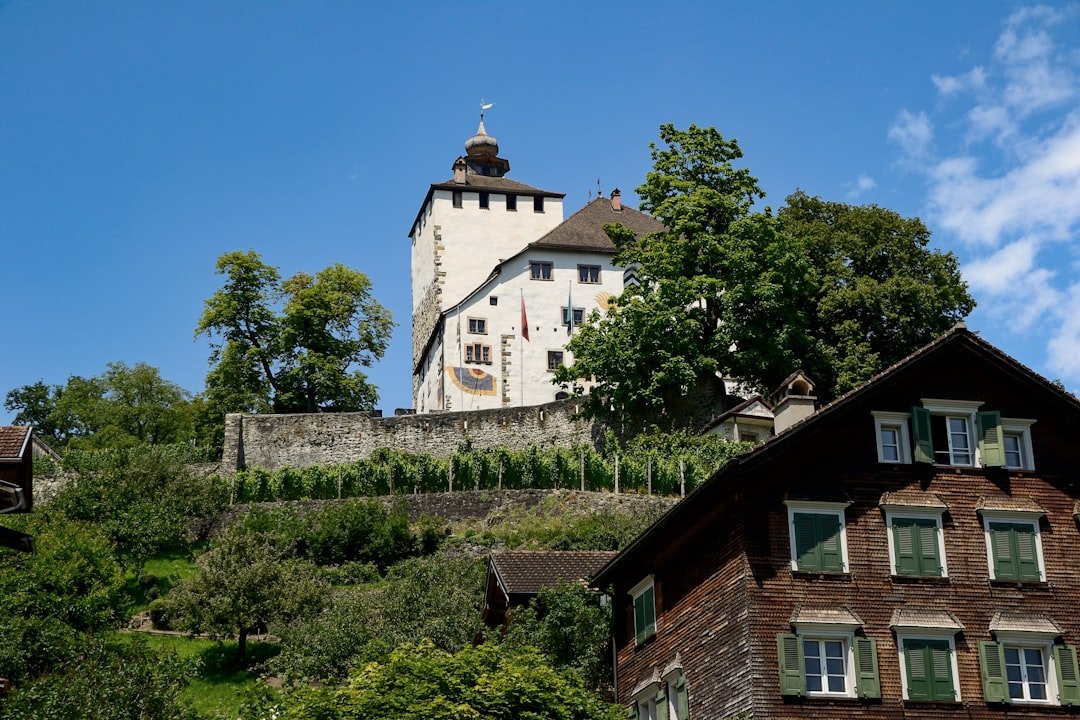
Lenzburg Castle is one of Switzerland’s best-known hilltop castles and a rewarding stop for travelers interested in medieval history, family-friendly museums, architecture, and the story of the Aargau region. Its history stretches back almost 1,000 years, but today’s visitor experience also includes interactive exhibitions, a children’s museum, a castle bistro, gardens, guided tours, and practical links to the town of Lenzburg below.
Quick Answer
Visit Lenzburg Castle for almost 1,000 years of Swiss castle history, family-friendly exhibitions, a historic prison, the Knight’s House, gardens, and hilltop views. In 2026, the castle is open April 1 to November 1, Tuesday through Sunday from 10 a.m. to 5 p.m.; adult museum admission is CHF 14.
Key Takeaways
- Lenzburg Castle was first documented in 1077 and later passed through the hands of the Counts of Lenzburg, Kyburgs, Habsburgs, Bernese bailiffs, the Canton of Aargau, and private owners.
- The complex reflects many periods of construction, including an early residential tower, the 14th-century Knight’s House, Bernese administrative buildings, defensive bastions, and later restorations.
- Current exhibitions cover domestic life, the historic prison, knighthood and nobility, the castle dragon Fauchi, and a children’s museum.
- The 2026 museum season runs from April 1 to November 1, with regular opening Tuesday through Sunday and public holidays from 10 a.m. to 5 p.m.
- The castle is only partially barrier-free. The courtyard and bistro are wheelchair accessible, while the main exhibition rooms are not suitable for wheelchair users.
History of Lenzburg Castle
Lenzburg Castle’s exact foundation date is unknown. According to Museum Aargau’s official castle history, the first written reference dates to 1077. The oldest surviving residential tower was built by the Counts of Lenzburg around 1100 and was enlarged later in the 12th century.
The Counts of Lenzburg were an influential noble family whose castle became their ancestral seat. When Ulrich IV, the last count of the dynasty, died in 1173, he left the castle to Emperor Frederick I Barbarossa. The property later passed to the Kyburg dynasty and, in 1273, was purchased by Rudolf I of Habsburg.
The Habsburg period left an important architectural mark. Around 1340, Duke Frederick II of Habsburg had the Knight’s House built, while the South Tower was raised by two additional floors during the same general period.
After the Swiss Confederation’s conquest of Aargau in 1415, the castle entered a long Bernese phase. Bernese bailiffs used Lenzburg Castle as an administrative seat from the 15th century until 1798. They constructed and altered several buildings and strengthened the defenses. A double-gate system was added in 1625, while major earthworks in the 1640s helped form the Eastern Bastion.
The earliest written reference to Lenzburg Castle dates to 1077, giving the site almost 1,000 years of documented history.
The political role of the castle changed after the end of Bernese rule. The newly established Canton of Aargau took ownership in the early 19th century. Educator Christian Lippe later operated a boys’ educational institution in the complex.
Private ownership followed. The Wedekind family, whose children included future playwright Frank Wedekind, bought the castle in the 19th century. American owner Augustus E. Jessup later modernized it with amenities such as central heating, electricity, and running water. In 1911, ownership passed to James Ellsworth, father of polar explorer Lincoln Ellsworth.
In 1956, the castle was transferred to a foundation established by the Canton of Aargau and the municipality of Lenzburg. A major restoration took place from 1978 to 1986. The Historical Museum of the Canton of Aargau opened exhibitions there in 1987, and the institution became part of Museum Aargau under its present name in 2007.
Architecture and Design
Lenzburg Castle is best understood as a complex that developed gradually rather than as a building created in one architectural campaign. Its stone towers, residential spaces, administrative buildings, defensive works, courtyard, and gardens reflect changing needs over many centuries.
The residential tower is considered the oldest surviving building and dates from around 1100. A South Tower and small courtyard were added during the 12th century. The castle also once had a chapel dating from the 11th or 12th century, but Museum Aargau records that this structure was dismantled in the 18th century. Visitors therefore should not expect to find an intact medieval chapel with the stained-glass interior sometimes associated with generic castle descriptions.
The Habsburg-era Knight’s House, built around 1340, is one of the major surviving medieval additions. Later Bernese administrators reshaped the complex with administrative buildings and stronger defenses. During the 17th century, the castle was increasingly fortified with a double entrance system, raised earthworks, and the Eastern Bastion.
Later private owners adapted the historic complex for comfortable residential use, adding modern utilities while also restoring and reshaping parts of the grounds. Twentieth-century renovation work prepared the castle for public museum use and created garden areas that visitors can still enjoy today.
Note: Lenzburg Castle contains architecture from many periods. Describing the entire site simply as Romanesque, Gothic, or Renaissance overlooks the centuries of additions, fortification work, residential modernization, and restoration that created the present complex.
Key Attractions and Exhibits
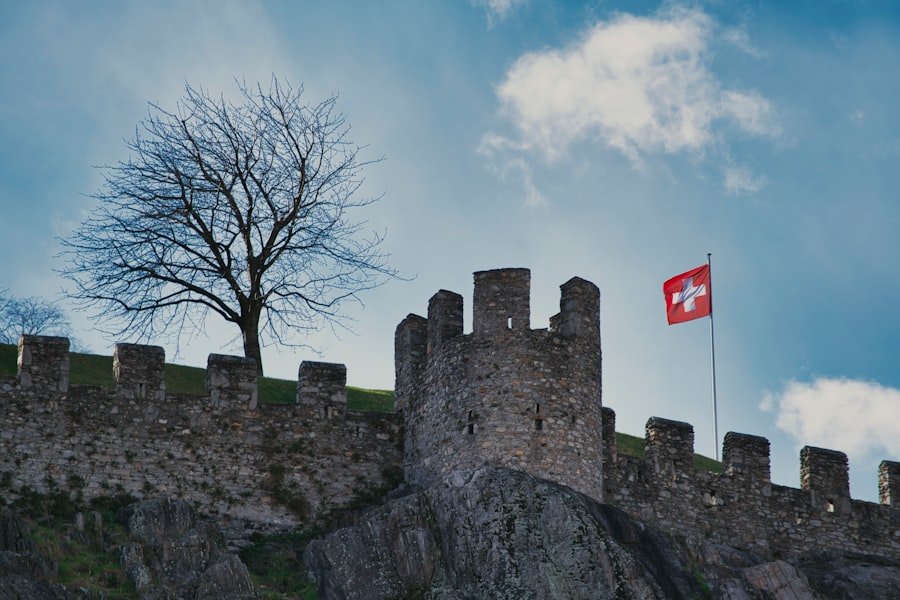
The museum experience at Lenzburg Castle focuses on the people who lived, worked, governed, and were imprisoned there. According to the official Museum Aargau exhibition guide, the displays explore around 1,000 years of castle history, and exhibition texts are translated into English.
Domestic Life Museum and Prison
The domestic-life exhibition follows changing ways of living from the Middle Ages into the 19th century. Visitors can also see original prison cells, adding a less romantic side of castle life to the visit. Lenzburg Castle served legal and administrative functions for centuries, so imprisonment and punishment are important parts of its history.
Knighthood and Nobility
The Knighthood and Nobility exhibition focuses on medieval aristocratic culture and the lives associated with castles such as Lenzburg. It provides useful context for understanding the counts, dukes, officials, and other residents connected to the site.
Fauchi and the Dragon Research Station
Families with younger children can visit Fauchi, the castle dragon, and the dragon research station. The playful exhibition gives children another way to explore the castle without turning the whole visit into a conventional display of artifacts and labels.
Children’s Museum and PLIRRK!
The children’s museum includes spaces designed for exploration and imaginative play. Museum Aargau specifically promotes Lenzburg Castle as a family destination, and the permanent children’s experiences complement the more traditional historical exhibitions.
The castle’s elevated position also gives visitors broad views over Lenzburg and the surrounding landscape. The courtyard, historic rooms, defensive structures, and garden areas provide additional reasons to explore beyond the formal museum displays.
Guided Tours and Visitor Information
Visitors can explore the regular museum exhibitions independently, while public guided tours and special events are scheduled through Museum Aargau. Groups can also reserve dedicated tours and workshops. English-language group tours are available on request.
The unsupported monthly tour statistics previously associated with this section should not be used for planning. The table below instead summarizes verified visitor information published for the 2026 season.
| 2026 season | April 1 to November 1, 2026 |
| Regular opening hours | Tuesday-Sunday and designated public holidays, 10 a.m.-5 p.m.; Monday closed |
| Adult museum admission | CHF 14 |
| Vocational trainees / students | CHF 10, up to age 26 |
| Children | CHF 8 for ages 4-16 |
| Family tickets | CHF 35 for 2 adults plus up to 5 children; CHF 25 for 1 adult plus up to 5 children |
Tickets are available at the ticket office and online. Museum Aargau also lists several admission discounts and free-entry programs, including the Swiss Museum Pass and selected museum or membership programs. Prices can differ for special events, so check the official opening-hours and admission page shortly before traveling.
Pro Tip: Check the event calendar before buying tickets. A public guided tour or special program can add context to the castle, while major events may also affect prices, stroller rules, or crowd levels.
Events and Activities
Lenzburg Castle functions as both a museum and a cultural venue. Museum Aargau schedules events and public guided tours throughout the operating season. Programming changes from year to year, so specific medieval markets, concerts, demonstrations, workshops, or family activities should be confirmed against the current calendar rather than treated as permanently scheduled annual events.
Educational programs are also available for schools, families, and organized groups. Depending on the program, activities can focus on medieval life, castle history, crafts, or other themes connected to the museum collections.
The castle’s courtyard and historic rooms are also used for cultural and private events. This gives the site a continuing role as a gathering place rather than leaving it as a static monument.
Dining and Shopping at Lenzburg Castle
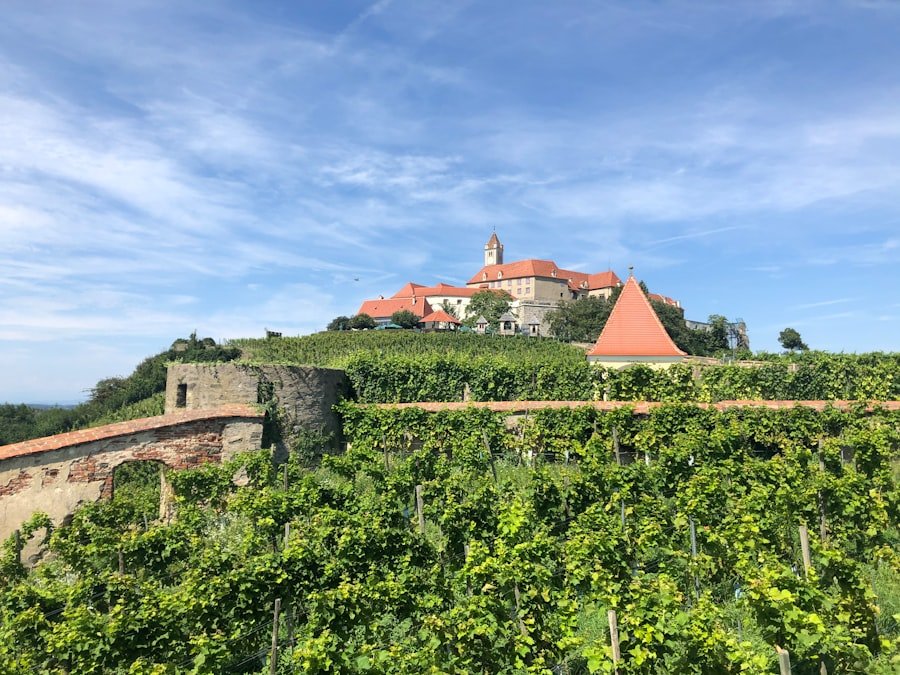
Lenzburg Castle has a self-service bistro rather than a formal restaurant devoted exclusively to traditional Swiss dishes. The official castle bistro page describes hot dishes, cakes, coffee, and snacks. The bistro is operated by Mercure Hotel Krone and is located in the renovated Bernese House near the garden.
The bistro is open during museum opening hours to visitors holding either a courtyard ticket or a full museum ticket. Because menus can change, visitors who specifically want fondue, rösti, or another Swiss specialty should check the current menu rather than assuming a particular dish will be offered.
A museum shop is also available on site. Instead of expecting a fixed selection of artisanal cheeses or specific locally made products, treat the shop as a place to look for museum-related books, gifts, and souvenirs available during your visit.
Nearby Accommodations and Transportation
Lenzburg Castle sits above the town of Lenzburg in the canton of Aargau. Visitors who want to stay overnight can look for hotels and other accommodations in Lenzburg and the surrounding area, while the town’s rail connections also make the castle practical as a day trip.
Getting There by Train, Bus, or on Foot
According to Museum Aargau’s official directions, the walk from Lenzburg railway station to the castle takes about 20 to 30 minutes. The marked walking route passes through the old town before climbing the castle hill.
Bus line 391 connects Lenzburg railway station with the “Lenzburg, Schloss” stop approximately once per hour. The bus ride takes about eight minutes, followed by an uphill walk of roughly 10 minutes from the castle parking area to the entrance.
Driving and Parking
The castle is a short drive from the Lenzburg exit of the A1 motorway. Paid parking is available below the castle. From the parking area, allow approximately 10 minutes to walk uphill to the castle.
Warning: The climb from the regular bus stop and parking area to the castle is steep and is not suitable for wheelchair users. Visitors with reduced mobility should arrange accessible arrival with the castle in advance.
Accessibility
Lenzburg Castle is only partially barrier-free because of its historic architecture. The official accessibility information states that visitors with reduced mobility can arrange arrival at the rear entrance, where a lift provides access to the courtyard.
The gravel courtyard is wheelchair accessible, as is the castle bistro. An accessible toilet is available in the Ritterhaus. However, major exhibition rooms and parts of the historic complex are reached only by stairs and are not suitable for wheelchair users.
Visitors who need step-free access should contact the castle before traveling because parking near the accessible rear entrance is limited and requires prior arrangement.
Tips for Planning Your Visit
A little preparation will make a visit to Lenzburg Castle easier, especially because the hilltop setting and historic buildings affect transport and mobility.
- Check the season first: For 2026, regular museum operation runs from April 1 through November 1.
- Avoid Monday: Monday is the regular closing day.
- Review the event calendar: Special events and public guided tours can change what is available on a particular day.
- Wear comfortable shoes: The approach to the castle includes an uphill walk, and historic areas contain stairs and uneven surfaces.
- Allow time for family exhibits: Travelers with children may want extra time for Fauchi, the dragon research station, and the children’s museum.
- Plan wheelchair access in advance: The normal uphill approach and museum exhibition rooms are not fully accessible.
- Know the dog rule: Museum Aargau states that dogs are not permitted on the castle grounds and may be tethered in front of the castle.
- Check stroller rules: Strollers can normally be taken into the courtyard, but larger events may require them to be left below the castle.
- Travel light: Small bags up to A4 size are allowed in the museum, and free lockers are available at reception.
- Bring a camera or phone: The hilltop position, courtyard, architecture, and surrounding landscape offer plenty of photographic viewpoints.
Spring, summer, and early autumn each create a different atmosphere around the castle. Rather than relying on a fixed “best” month, choose your date according to the current weather forecast, event calendar, and the type of visit you prefer.
Staff and guides can also add useful context to what you see. Lenzburg Castle has changed from aristocratic residence to administrative center, fortress, school, private home, and museum, so many details make more sense once their historical period is identified.
If you also browse TaglineToday’s food content, the existing article about Asian melon is a separate culinary read rather than a source for planning a visit to Lenzburg Castle. For current castle information, use the official references listed below.
Frequently Asked Questions
What is Lenzburg Castle?
Lenzburg Castle is a historic hilltop castle and Museum Aargau site in Lenzburg, in the Swiss canton of Aargau. Its documented history reaches back to 1077, and the complex has served as a noble residence, administrative center, fortress, school, private home, and museum.
When was Lenzburg Castle built?
The exact foundation date is unknown. The castle was first mentioned in writing in 1077, while Museum Aargau dates its oldest surviving residential tower to around 1100.
What can visitors see at Lenzburg Castle?
Visitors can explore exhibitions on domestic life, the historic prison, knighthood and nobility, the castle’s long history, Fauchi and the dragon research station, and the children’s museum. The castle complex also includes historic buildings, a courtyard, garden areas, and hilltop views.
Is Lenzburg Castle open to the public?
Yes. For the 2026 season, Lenzburg Castle is open from April 1 to November 1. Regular hours are Tuesday through Sunday and designated public holidays from 10 a.m. to 5 p.m. Monday is closed. Special closures and event schedules should be checked before travel.
How much does Lenzburg Castle cost in 2026?
Regular admission to the full castle complex and museum is CHF 14 for adults, CHF 10 for vocational trainees and students up to age 26, and CHF 8 for children ages 4 to 16. Family and group rates are also available, and some museum passes provide free admission.
Are there guided tours and special events at Lenzburg Castle?
Yes. Museum Aargau schedules public guided tours and events, while groups can book dedicated tours and workshops. Group tours can also be arranged in English on request. Dates and themes vary, so check the current event calendar.
Is Lenzburg Castle wheelchair accessible?
Only partly. The courtyard and bistro are wheelchair accessible, and an accessible toilet is available. Visitors with reduced mobility can arrange access through a rear entrance and lift. However, the main museum exhibition rooms and several historic areas are reached by stairs and are not suitable for wheelchair users.
How do you get to Lenzburg Castle from the railway station?
You can walk from Lenzburg railway station in about 20 to 30 minutes through the old town, or take bus line 391 to the “Lenzburg, Schloss” stop. The bus ride takes about eight minutes, followed by an approximately 10-minute uphill walk to the castle.
Sources
- Museum Aargau – History of Lenzburg Castle – construction history, owners, Habsburg and Bernese periods, private ownership, and museum development.
- Museum Aargau – Opening Hours and Entrance Fees – 2026 season, regular hours, admission prices, discounts, ticket rules, dogs, strollers, and lockers.
- Museum Aargau – Museum and Exhibitions – permanent exhibitions, prison, children’s museum, and English-language exhibition information.
- Museum Aargau – Getting Here – train, bus, walking, driving, and parking information.
- Museum Aargau – Accessibility – wheelchair access, rear entrance arrangements, lift, accessible toilet, and exhibition limitations.
- Museum Aargau – Castle Bistro – current food-service format, location, opening access, and payment information.