Planning a trip to Switzerland’s bilingual cultural capital requires matching your itinerary with its distinct seasons. The best time to visit Fribourg depends on whether you seek sun-drenched medieval strolls along the Sarine River, vibrant film screenings, or magical winter traditions centered on Saint Nicholas.
Quick Answer
The best time to visit Fribourg is from June to September for warm temperatures (19°C–24°C), riverside dining, and open-air hiking. For a distinct cultural trip, visit during the first weekend of December to experience the historic Saint-Nicolas celebrations, or in March for the prestigious Fribourg International Film Festival.
Last checked: September 30, 2026. Dates and figures were verified against official sources.
Key Takeaways
- Summer (June–August): Best for outdoor sightseeing, kayaking the Sarine River, and lingering on terrace cafes.
- Shoulder Seasons (April–May & September–October): Lower hotel rates, mild weather, and vibrant spring blossoms or autumn vineyard colors.
- Winter (December–February): Cold weather with nearby skiing at Moléson and Schwarzsee, highlighted by the massive Saint-Nicolas festival in early December.
- Tower Access: The tower of Saint Nicholas Cathedral welcomes climbers only from March 1 through November 30.
Fribourg Weather and Climate by Season
Fribourg rests on the Swiss Plateau at an elevation of roughly 610 to 627 meters above sea level, nestled within a dramatic bend of the Sarine River. This pre-Alpine geographic position gives the city four well-defined seasons with significant variation in temperature and sunshine.
According to long-term MeteoSwiss climate normals recorded at the nearby Posieux station, July is the warmest month with average daily highs of 24.3°C, while January is the coldest with average lows dipping to -2.0°C. Summer afternoons frequently reach 25°C to 28°C during dry spells, though passing convective thunderstorms bring short bursts of rain. Winter brings freezing conditions and periodic snowfall that covers the historic ramparts, while low stratus fog (known locally as bise cloud cover) can blanket the plateau in November and December.
| Season | Months | Avg High / Low (°C) | Conditions | Best For |
|---|---|---|---|---|
| Spring | March to May | 10°C to 18°C / 1°C to 8°C | Crisp, blossoming gardens, moderate rain | Film festival, walking tours, quiet museums |
| Summer | June to August | 22°C to 24°C / 12°C to 14°C | Warm, sunny days, occasional summer storms | River swimming, terrace dining, outdoor sports |
| Autumn | September to November | 8°C to 19°C / 2°C to 10°C | Cool mornings, gold foliage, valley fog | Alpine cattle descents, fondue dining, hiking |
| Winter | December to February | 3°C to 5°C / -2°C to -1°C | Cold, occasional snow, cloudy spells | Saint-Nicolas festivities, Carnival, skiing |
Festivals and Cultural Events in Fribourg
Fribourg celebrates its heritage through distinctive local traditions throughout the year. The city’s cultural calendar blends medieval patron saint traditions with contemporary cinema, music, and vibrant street carnivals.
The city’s signature winter spectacle is the Fête de la Saint-Nicolas, held annually on the first Saturday of December. Honoring the patron saint of Fribourg, Saint Nicholas rides his donkey, Babichon, in a twilight procession from St. Michael College to the cathedral. Saint Nicholas addresses an audience of over 25,000 onlookers from the balcony, while his helpers hand out traditional gingerbread treats (biscômes) and roasted peanuts amid bustling Christmas craft markets.
In February or early March, the historic lower town (Basse-Ville) hosts the boisterous Carnaval des Bolzes. This multi-day pre-Lenten carnival features spirited Guggenmusik brass bands, costumed night parades, and the ceremonial trial and burning of the giant winter effigy, the Rababou.
Cinema lovers should target March for the renowned Fribourg International Film Festival (FIFF). Spanning ten days in late March, this festival showcases groundbreaking international feature films, shorts, and documentaries with workshops and filmmaker discussions across downtown venues.
Summer brings two major citywide gatherings. On June 21, the open-air Fête de la Musique fills public squares, courtyards, and riverside terraces with free live concerts by regional and international musicians. On August 1, Fribourg celebrates Swiss National Day with traditional bell ringing, family entertainment, and evening fireworks illuminating the medieval bridges.
Outdoor Activities in Fribourg
The winding Sarine River and surrounding rolling foothills make Fribourg a prime base for outdoor recreation across all seasons. In warm weather, travelers take to the river corridors, while snowy winters shift the focus toward the nearby Pre-Alps.
During summer, the Sarine River provides gentle waters for canoeing and kayaking directly below the city’s dramatic sandstone cliffs. Paddlers can rent equipment locally to navigate scenic stretches winding toward Lake Schiffenen. The historic riverside public baths, Bains des la Motta, offer heated open-air pools with cliffside views from mid-May through mid-September.
Hikers can explore the extensive trail system of the nearby Gantrisch Nature Park, located just 30 minutes northeast of the city. The summit trail of Mount Gantrisch provides panoramic views extending across the Bernese and Fribourg Alps. For a gentler walk, the historic Sentier des Falaises meanders along the medieval town ramparts and river meanders within the city boundaries.
Cycling enthusiasts can follow well-marked national routes such as Route 4 (Panorama Bike) and regional trails connecting Fribourg to Morat and Lake Neuchâtel. During the winter months from December to March, the nearby ski areas of Moléson (30 km of slopes up to 2,002 meters) and Schwarzsee offer family-friendly downhill skiing, snowshoe trails, and lit night-sledding runs.
Cultural Attractions in Fribourg
Fribourg boasts one of Europe’s best-preserved medieval old towns, featuring more than 200 Gothic facades dating from the 12th to the 16th centuries. Its walkable core offers access to world-class art collections, religious landmarks, and historic bridges.
| Cultural Attraction | Key Highlights | Opening Hours |
|---|---|---|
| Cathedral of Saint Nicholas | Gothic portal, 74m tower (365 steps), Mehoffer stained glass | Nave: Daily 7:30–19:00; Tower: Daily 10:00–17:00 (Mar 1–Nov 30) |
| Musée d’Art et d’Histoire (MAHF) | Renaissance Ratzé Palace, medieval religious sculpture, Roman antiquities | Tue–Sun 11:00–18:00 (Thu until 20:00); Closed Mondays |
| Swiss Puppet Museum | Over 3,000 historic marionettes and shadow figures worldwide | Wed–Sun 13:00–17:00; Closed Mon–Tue |
The Cathedral of Saint Nicholas (Cathédrale Saint-Nicolas) is Fribourg’s spiritual and architectural centerpiece. Constructed between 1283 and 1490, it features Art Nouveau stained glass windows designed by Polish artist Józef Mehoffer and an 18th-century organ played by Franz Liszt. Visitors can climb the 365 spiral steps to the 74-meter tower platform for sweeping views of the Sarine gorge and pre-Alpine ridges.
Across the square, the Musée d’Art et d’Histoire (MAHF) occupies the stately 16th-century Hôtel Ratzé, housing the largest collection of upper-Rhenish sculpture in Switzerland. Just steps away in a former tram depot, the Espace Jean Tinguely – Niki de Saint Phalle exhibits kinetic mechanical sculptures created by Fribourg native Jean Tinguely and vibrant pop art by his wife, Niki de Saint Phalle.
Pro Tip: Buy the 24-hour or 48-hour Fribourg City Card at the tourist office or railway station. It grants free access to all city public transport (TPF Zone 10), entry to the cathedral tower, and admission to the MAHF, Espace Jean Tinguely, and the Swiss Puppet Museum.
Peak Tourist Seasons in Fribourg: Summer and December
Fribourg experiences two separate peak tourist windows: the warm summer months of July and August, and the festive holiday period in early December. Both periods offer a lively ambiance, though they appeal to different travel styles.
From late June through August, warm sunshine brings extended daylight hours with sunset arriving after 21:00. Outdoor restaurant seating fills up across Place de l’Hôtel-de-Ville, and families flock to the riverbanks. Summer coincides with Swiss and European school vacations, so central hotels in the Old Town often sell out several weeks in advance. While Fribourg remains far less crowded than Lucerne or Interlaken, booking hotel accommodations ahead is strongly advised for weekend stays.
The second peak occurs during the first week of December for Saint-Nicolas. Tens of thousands of regional visitors arrive for the Saturday procession and artisan markets, making hotel rooms in the city center scarce. If you plan to attend Saint-Nicolas, reserve your lodging at least three to four months ahead.
Off-Peak and Shoulder Seasons in Fribourg: Spring and Autumn
Travelers seeking fewer crowds, moderate prices, and pleasant weather should consider Fribourg’s shoulder seasons: April to May in the spring, and September to October in the fall.
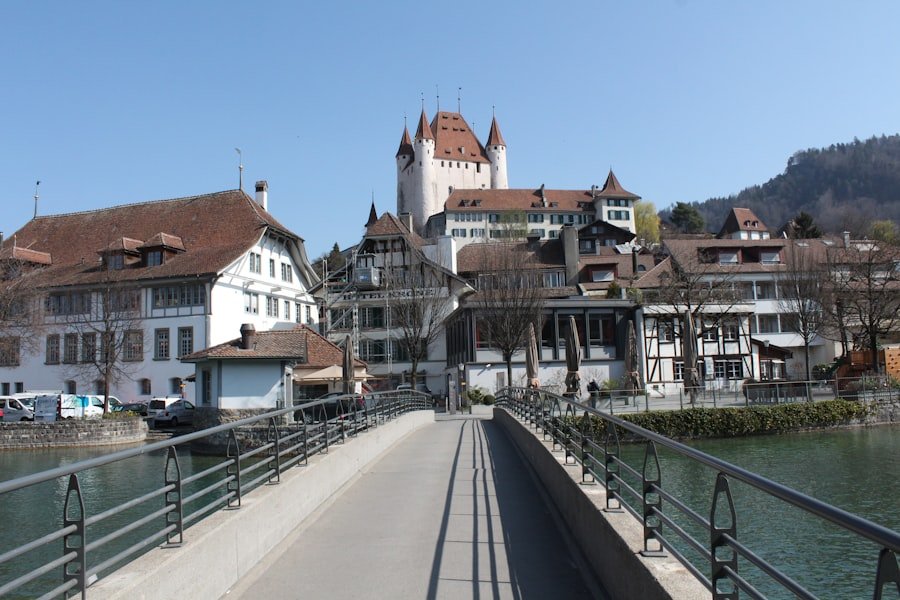
Springtime sees the melting of winter snow and the return of outdoor greenery along the riverbanks. Temperatures rise from an average high of 14°C in April to 18°C in May. You can stroll through the Old Town and botanical gardens without crowds. In addition, the cathedral tower reopens for the season on March 1.
Autumn is equally scenic as hillside beech trees turn vibrant shades of amber and gold across the Sarine canyon. September offers comfortable daily highs around 19°C, perfect for long hikes and cycling trips. Late September and October also mark the traditional Désalpe cattle descents in nearby villages such as Charmey, followed by the festive autumnal Bénichon feasts celebrating local culinary specialties.
Practical Tips for Traveling to Fribourg
Planning practical logistical details before you arrive ensures an efficient and enjoyable visit to Fribourg.
- Rail Connectivity: Swiss Federal Railways (SBB) connects Fribourg directly to Bern in 22 minutes, Lausanne in 45 minutes, and Geneva Airport in approximately 80 minutes. The central train station is a short walk from the historic center.
- Language Dynamics: Fribourg is situated right on the Swiss language border (the Röstigraben). French is the primary language spoken in the city center, while Swiss German is common across the river in the Schönberg district. English is widely understood in hotels, restaurants, and museums.
- Local Transit & The Funicular: The historic Neuveville-Saint-Pierre funicular railway, in operation since 1899, uses filtered wastewater to counterbalance carriages between the upper town and the medieval Basse-Ville.
- Culinary Staples: Fribourg is the birthplace of traditional Fondue moitié-moitié, made with equal parts Gruyère AOP and Vacherin Fribourgeois AOP. Round out your meal with double cream from the Gruyère region paired with crisp meringues.
- Footwear: The medieval district features steep hills and uneven cobblestones. Pack supportive walking shoes with rubber soles rather than smooth leather shoes or thin sandals.
The Ideal Time to Visit Fribourg: How to Choose
Fribourg is an inviting, year-round destination whose distinct seasons suit diverse travel priorities. For sunny weather, open-air river swimming, and cycling, visit between June and August. If you value quiet medieval cobblestones, autumn foliage, and lower room rates, plan your stay for September or October.
For more detailed planning on regional highlights and day trips, check out our related article covering Swiss heritage routes. Whatever time of year you choose, Fribourg’s dramatic Gothic architecture and warm Swiss hospitality provide a memorable experience.
Frequently Asked Questions
What is the best time to visit Fribourg?
The best time to visit Fribourg is from June through September when warm temperatures (19°C to 24°C) support outdoor hiking, river sports, and open-air dining. Early December is also an exceptional time to experience the traditional Saint-Nicolas festival.
What is the weather like in Fribourg during the summer?
Summer weather in Fribourg is pleasantly warm, with average daytime highs ranging between 22°C and 24°C, occasionally climbing above 28°C during heatwaves. Thunderstorms occur periodically in the late afternoon, giving way to clear evening skies.
Does it snow in Fribourg during the winter?
Yes, Fribourg experiences periodic snowfall between December and February, with winter temperatures averaging between -2°C and 4°C. Nearby mountain resorts such as Moléson and Schwarzsee offer reliable snow for skiing and snowshoeing throughout the season.
When is the tower of Saint Nicholas Cathedral open for climbing?
The cathedral tower is open to visitors daily from March 1 through November 30 between 10:00 and 17:00 (from 12:00 on Sundays and holidays). It remains closed to climbers during the cold winter months from December through February.
What major festivals take place in Fribourg?
Major annual festivals include the pre-Lenten Carnaval des Bolzes in February, the Fribourg International Film Festival in March, the Fête de la Musique on June 21, Swiss National Day on August 1, and the historic Saint-Nicolas celebrations on the first weekend of December.
Sources
- MeteoSwiss: Climatological normals and seasonal climate trends for the Swiss Plateau and Fribourg region.
- Fribourg Tourism (FIFF): Official event schedule and programming for the Fribourg International Film Festival.
- Carnaval des Bolzes: Traditional dates, procession schedules, and history of the Basse-Ville pre-Lenten carnival.
- St-Nicholas Cathedral Visit Guide: Official visitor hours, religious service schedules, and tower climbing season dates.
- Musée d’Art et d’Histoire (MAHF): Museum collections, seasonal exhibition schedules, and opening times.