Balat colorful houses are among Istanbul’s most recognizable street scenes, but the neighborhood is more than a row of painted facades. In Balat and neighboring Fener, historic homes, religious landmarks, steep lanes, cafés, and workshops reflect layers of Jewish, Greek Orthodox, Armenian, Muslim, and Bulgarian heritage. This guide shows you where to find the best-known houses, what the architecture means, how to photograph the area respectfully, and the easiest ways to get there.
Quick Answer
For the classic Balat colorful houses, start around Kiremit Caddesi and Merdivenli Yokuş, then continue through the side streets toward Fener. The houses are private residences on public streets, so there is no ticket to see their exteriors. Combine the photo stops with Ahrida Synagogue, St. Stephen Church, and the Ecumenical Patriarchate.
Key Takeaways
- Kiremit Caddesi and Merdivenli Yokuş are the most useful named streets for finding colorful historic houses.
- Balat is closely linked with Jewish heritage, while neighboring Fener is especially associated with Greek Orthodox institutions.
- The bright facades are part of a living historic neighborhood, not a theme park; many photographed buildings are private homes.
- Ahrida Synagogue requires advance arrangements for visitors, while access at churches can vary around worship and events.
- The T5 tram now serves both Fener and Balat, and City Lines ferries also stop along this stretch of the Golden Horn.
History Behind Balat’s Colorful Houses
Balat’s appeal comes from a real historic neighborhood rather than a purpose-built attraction. The area sits in Istanbul’s Fatih district beside the Golden Horn, and official tourism sources describe Balat and Fener as adjoining quarters shaped by several religious and ethnic communities over centuries.
Balat is strongly associated with Istanbul’s Jewish heritage, while Fener next door became a major center of Greek Orthodox life. The two are often grouped together in travel guides because you can walk between them in minutes, but they are not exactly the same neighborhood.
The residential streets are especially important. GoTürkiye’s architectural guide highlights Balat and Fener’s historic residential fabric, including projecting bay windows and 19th-century terraced buildings. Individual structures still vary in age, material, and condition.
Preservation has also shaped what you see now. Municipal rehabilitation projects have focused on repairing buildings and improving façades while keeping the neighborhood’s historic character. That means Balat’s present appearance is a mix of old urban fabric, repaired façades, newer paint, active homes, and contemporary businesses.
What Makes Balat’s Architecture Distinctive?
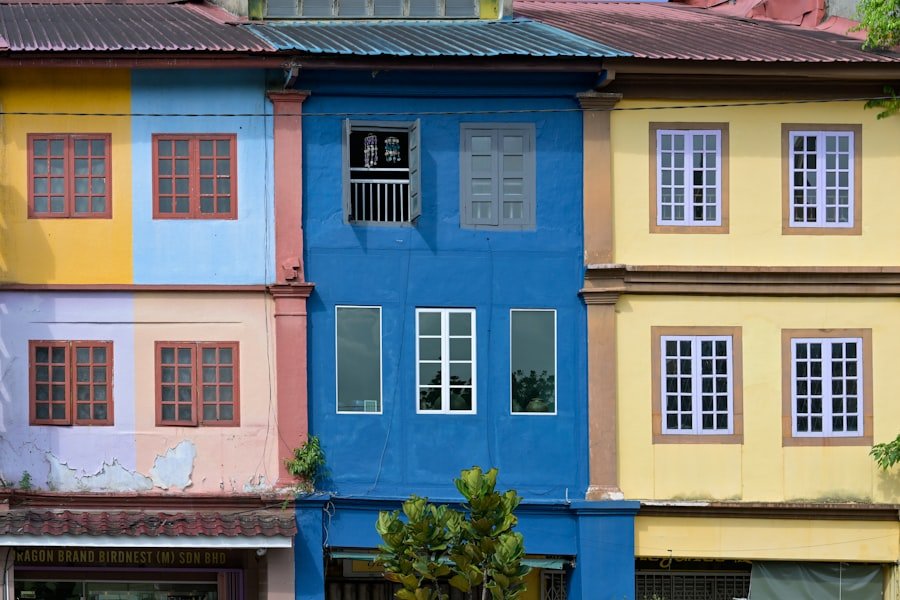
Balat’s architecture stands out because narrow plots, steep streets, projecting upper floors, and closely packed façades create strong vertical views. You will see timber, masonry, plastered surfaces, bay windows, shutters, ironwork, and later repairs side by side rather than one perfectly uniform style.
One of the most recognizable features is the cumba, a projecting enclosed bay window on an upper floor. These windows helped expand interior space while giving residents a view along the street. On Balat’s sloping lanes, repeated cumbas create the layered look that photographs so well.
The buildings also show how Istanbul changed over time. Fires, repairs, changes in ownership, and modern needs altered many houses, so not every colorful façade is preserved exactly as it first appeared. That mix is part of the neighborhood’s story rather than a flaw.
Look beyond paint color when you walk. Door proportions, timber detailing, masonry courses, rooflines, balconies, and how one house meets the next often reveal more about the historic streetscape than the newest coat of paint.
Why Are Balat’s Houses So Colorful?
The colors are now part of Balat’s visual identity, but there is no well-documented neighborhood-wide code in the official sources reviewed that assigns fixed meanings such as red for passion or blue for status. What is documented is a long-running effort to repair façades, remove unsightly additions, and repaint buildings in ways intended to suit the historic streetscape.
| Feature | What It Means in Balat |
|---|---|
| Bright façade colors | A major part of the neighborhood’s modern visual identity, reinforced by recent façade rehabilitation. |
| Cumba bay windows | Projecting upper-floor windows that add depth and rhythm to the narrow residential streets. |
| Timber and masonry | Historic homes use different materials and construction periods rather than one single building type. |
| Steep lanes | Slopes stack the façades visually, producing many of Balat’s best-known street views. |
| Private residences | Many famous façades are lived-in homes, so visitors should stay in public areas and respect residents. |
Fatih Municipality has documented façade rehabilitation on Kiremit Caddesi that includes cleaning, painting, organizing visible equipment, and regulating signs. The municipality describes the aim as protecting the area’s historic texture while improving the street environment.
This helps explain why Balat can look both historic and freshly colorful at the same time. The buildings may be old, but some exterior finishes are much newer. It is more accurate to view the palette as part of preservation, maintenance, and contemporary neighborhood identity than as a fixed historic color code.
Must-See Attractions in Balat and Fener
The houses are only one part of the visit. The strongest itinerary combines Balat’s residential streets with religious and civic landmarks in both Balat and neighboring Fener, because those sites explain the communities that shaped the area.
Ahrida Synagogue
Ahrida Synagogue is one of Balat’s most important Jewish landmarks and dates to the 15th century. Its best-known interior feature is the boat-shaped tevah, or prayer platform, which has inspired more than one traditional interpretation.
This is not a walk-in photo stop. Istanbul’s official tourism site says visitors need an advance appointment and should follow the synagogue’s dress requirements, including head covering. Plan this part of the day before you arrive rather than assuming you can enter when you pass the door.
Ecumenical Patriarchate and the Patriarchal Church of St. George
The Ecumenical Patriarchate is in Fener, immediately beside the wider Balat sightseeing area. The official Ecumenical Patriarchate site identifies the Patriarchal Church of St. George as the central church within the complex.
Visit quietly and remember that this is an active religious institution, not simply a museum. Services, ceremonies, and religious observance can affect access, so give worshippers priority and follow on-site instructions.
Bulgarian St. Stephen Church
On the Golden Horn waterfront, the Bulgarian Orthodox St. Stephen Church is one of the area’s easiest landmarks to recognize. The Türkiye Culture Portal describes the present church as an iron structure assembled from components cast in Vienna and opened in 1898.
Its location makes it a useful bridge between the waterfront and the uphill lanes. Even if you are mainly visiting for the colorful houses, the church adds important context about the Bulgarian community in Ottoman Istanbul.
Church of St. Mary of the Mongols
The Church of St. Mary of the Mongols, also known as Panagia Mouchliotissa, sits higher in Fener. Dijital İstanbul records the surviving church as dating to 1281 and notes its continued Greek Orthodox use through the Ottoman period.
Access can be limited because the church stands within a walled courtyard and entrances may be closed. Even when you cannot enter, the climb toward this part of Fener gives you a better sense of the district’s topography and historic religious landscape.
Fener Greek High School
The large red-brick Fener Greek High School is one of the most visible buildings above the Golden Horn. It is best treated as an architectural landmark to view from the surrounding streets rather than a standard tourist attraction.
Together, these sites make the area more meaningful. Instead of treating Balat as a single photo location, you see a neighborhood connected to wider stories of faith, migration, education, trade, and urban change.
Where to Find the Most Photogenic Balat Colorful Houses
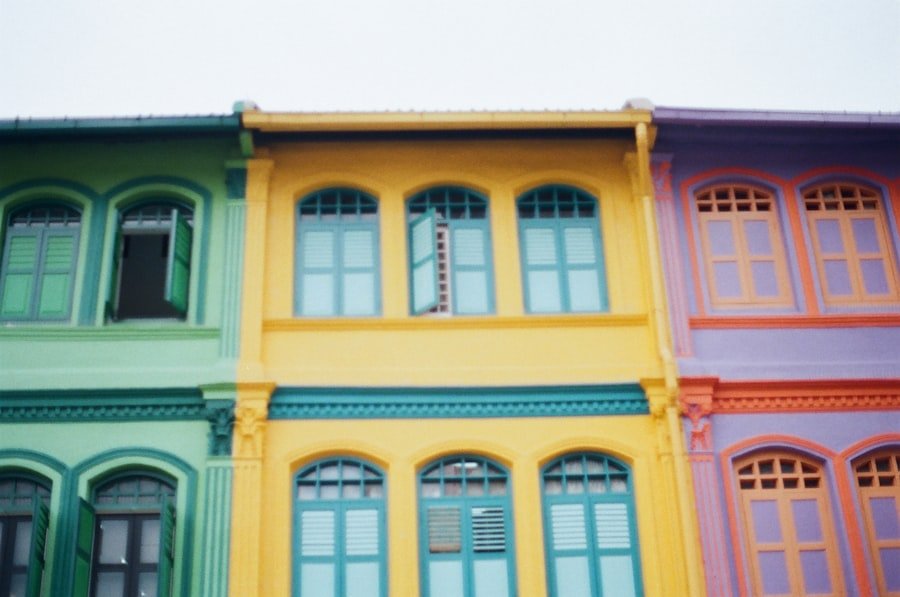
For the most recognizable Balat colorful houses, focus on Kiremit Caddesi, Merdivenli Yokuş, and the surrounding side streets rather than expecting every block to look like a postcard. These locations are close enough to combine on foot, but the slopes can make the short distances feel longer.
Kiremit Caddesi
Kiremit Caddesi is the strongest first stop for rows of colorful façades. A Fatih Municipality rehabilitation update specifically identifies Kiremit Caddesi as one of Balat’s colorful, heavily photographed streets and documents façade restoration work there.
For a cleaner photograph, frame along the slope instead of standing directly in front of one doorway. This shows the rhythm of several houses together and keeps you from crowding a resident’s entrance.
Merdivenli Yokuş
Merdivenli Yokuş is another useful named location. GoTürkiye’s architectural guide points to this stepped slope as a notable place to see Balat and Fener’s colorful cumba houses.
The stairs and grade create strong leading lines, but they also demand careful footing. Stop before taking a photograph instead of watching your screen while walking uphill or downhill.
Vodina Caddesi and the Side Streets
Vodina Caddesi and nearby lanes add shops, cafés, restored fronts, and ordinary neighborhood life to the visual mix. The most satisfying walk usually comes from using the famous streets as anchors, then exploring connecting lanes rather than trying to chase one exact “Instagram house.”
Facades change over time as buildings are repaired or repainted. If a specific color combination is important to your photo plan, treat older social-media images as inspiration rather than a guarantee that the street will look identical.
How to Photograph Balat’s Colorful Houses Respectfully
The best Balat photos come from good light, clean composition, and patience, not from taking over a doorway. A weekday morning is often easier for photography because streets are calmer and the light is softer, but conditions vary by lane and season.
- Photograph from public space. Do not enter private steps, courtyards, or doorways without permission.
- Ask before photographing people. A colorful façade does not make the resident part of the attraction.
- Keep entrances clear. Move if a resident needs to pass, and avoid setting bags or tripods in narrow walkways.
- Use the slope. Shoot along the street to layer several façades instead of trying to fit everything into an extreme wide-angle frame.
- Watch vertical lines. Keep the camera level when you can so tall houses do not appear to lean unnaturally.
- Protect your footing. Cobbles, stairs, rain, and steep grades can be slippery, so stop walking before composing a shot.
Pro Tip: Start with the famous row while the street is calm, then spend more time on the connecting lanes. The quieter side streets often give you better details—windows, textures, signs, stairs, and everyday street scenes—without blocking the same doorway as everyone else.
You also do not need to photograph every house straight on. Details such as bay windows, iron railings, door frames, flowerpots, and the way colors repeat down a slope can tell the neighborhood’s story more naturally than a single posed portrait.
Practical Information for Visiting Balat
Balat is straightforward to reach by public transport, and the T5 tram is now the simplest option for many visitors coming from central Istanbul. Once you arrive, expect steep walking and allow enough time to explore both Balat and Fener rather than rushing between photo stops.
Getting to Balat by Tram
Metro İstanbul’s T5 Eminönü–Alibeyköy line includes both Fener and Balat stations. The operator currently lists service from 06:00 to 00:00 and shows an interchange at Eminönü with the T1 Kabataş–Bağcılar tram.
From Sultanahmet, that makes a practical route: take T1 to Eminönü, then transfer to T5 for Fener or Balat. If your first priority is the Patriarchate, Fener is a logical stop; for the western side of the colorful-house area, Balat may be more convenient.
Getting to Balat by Ferry
For a more scenic approach, Şehir Hatları’s current Golden Horn timetable includes both Fener and Balat piers on its Üsküdar–Haliç service. Ferry times can change, so use the operator’s live timetable when planning the day.
Walking, Accessibility, and What to Wear
The waterfront is relatively flat, but many of the streets leading to the colorful houses climb sharply. Comfortable shoes with grip are a better choice than smooth soles. Metro İstanbul says T5 stations use low-floor vehicles and ramped entrances, but the historic neighborhood itself includes steep grades, stairs, and uneven surfaces that can be difficult for some visitors.
Note: Balat’s most photographed buildings are part of a residential neighborhood. Treat doors, steps, windows, balconies, laundry, and personal belongings as private space even when they are visible from the street.
How Much Time to Allow
A few hours is enough to see the main colorful streets, walk through Fener, and stop at several landmarks without racing. Add more time if you have an appointment at Ahrida Synagogue, want to enter churches when they are open, or plan to sit for a meal or coffee.
Safety and Visitor Etiquette
Balat is a busy urban neighborhood rather than a controlled attraction. Use normal big-city precautions with phones and bags, pay attention when crossing roads, and be especially careful on wet stairs and cobbles. Around places of worship, dress respectfully, keep voices low, and follow any posted photography or entry rules.
Frequently Asked Questions
What is Balat?
Balat is a historic neighborhood in Istanbul’s Fatih district beside the Golden Horn. It is known for colorful houses, steep streets, Jewish heritage, cafés, workshops, and nearby religious landmarks. Travel guides often pair it with adjoining Fener, which is especially important to Istanbul’s Greek Orthodox history.
Where exactly are the colorful houses in Balat?
The most reliable named streets are Kiremit Caddesi and Merdivenli Yokuş, with more colorful façades on nearby lanes around Balat and Fener. The houses are spread through a real residential area rather than one gated attraction, so expect a mix of restored, painted, weathered, and ordinary buildings.
Why are Balat’s houses so colorful?
Balat’s bright façades reflect both older residential architecture and more recent maintenance and rehabilitation. Municipal projects have cleaned and repainted façades while trying to preserve the historic streetscape. Official sources reviewed for this guide do not document a fixed neighborhood code assigning a specific social or spiritual meaning to each paint color.
What are the best things to do in Balat?
Walk the colorful streets, study the bay-window architecture, visit or view the area’s religious landmarks, and explore the cafés and small shops between Balat and Fener. Key stops include Ahrida Synagogue, Bulgarian St. Stephen Church, the Ecumenical Patriarchate, and the streets around Kiremit Caddesi and Merdivenli Yokuş.
Is Balat safe to visit?
Balat is a lived-in city neighborhood that receives many visitors, but no urban area is risk-free. Use ordinary precautions with valuables, stay aware of traffic, and take extra care on steep or wet surfaces. Respect residential privacy and follow any instructions at active churches, synagogues, and other religious sites.
How do I get to Balat?
The T5 Eminönü–Alibeyköy tram is one of the easiest routes because it stops at both Fener and Balat. From Sultanahmet, you can take T1 to Eminönü and transfer to T5. City Lines ferries also serve Fener and Balat on the Golden Horn route, depending on the current timetable.
Can I visit Ahrida Synagogue without a reservation?
No. Istanbul’s official tourism information says visitors to Ahrida Synagogue need an advance appointment and must follow the site’s dress requirements. Do not plan on entering simply because you are already in Balat. Arrange access before the visit, confirm the conditions when booking, and follow the instructions you receive.
How long should I spend in Balat?
Plan a few hours for the colorful streets, several landmarks, and a relaxed walk through neighboring Fener. You may want longer if you have a scheduled synagogue visit, enter multiple churches, stop for a full meal, or spend time photographing side streets instead of only the most famous façades.
Related reading from the site: homemade cottage cheese recipe.
Sources
- GoTürkiye: Local Architectural Styles: Balat’s residential architecture, 19th-century terraced houses, and Merdivenli Yokuş.
- Fatih Municipality: Kiremit Caddesi façade rehabilitation: restoration and repainting work on Kiremit Caddesi.
- Visit Istanbul: Ahrida Synagogue: history, visitor arrangements, and dress requirements.
- Ecumenical Patriarchate: The Patriarchal Church: official information on the Patriarchal Church of St. George.
- Türkiye Culture Portal: Sveti Stefan Kilisesi: construction, architecture, and historical details of the Iron Church.
- Dijital İstanbul: Meryem Ana Greek Orthodox Church: history and access context for St. Mary of the Mongols.
- Metro İstanbul: T5 Eminönü–Alibeyköy Tram Line: stations, operating hours, and T1 integration.
- Şehir Hatları: Üsküdar–Haliç Line: current ferry stops and timetable for Fener and Balat.