Thun makes an easy and rewarding day trip from Interlaken when you want a mix of medieval streets, castle views, Lake Thun scenery, local food, and relaxed walking. I found that the best way to enjoy the town is to keep the day simple: arrive by train, explore the Old Town and castle first, then slow down beside the Aare and lake before returning to Interlaken.
Quick Answer
Thun is an excellent day trip from Interlaken. A direct train from Interlaken Ost gets you there in roughly half an hour, while the much slower Lake Thun boat from Interlaken West turns the journey itself into a scenic experience. Once there, focus on the Old Town, Thun Castle, the Aare, and the lakeside.
Key Takeaways
- The fastest and simplest route is usually a direct train from Interlaken Ost to Thun; check the SBB timetable for your exact travel date.
- For a scenic alternative, Lake Thun boats serve Interlaken West and Thun, but the full lake journey takes far longer than the train.
- Thun’s Old Town is known for Rathausplatz, the raised pavements of Obere Hauptgasse, shops, cafés, wooden bridges, and the Aare weirs.
- Thun Castle is more than 800 years old, but its museum hours change by season, so check the official schedule before you go.
- A full day gives you enough time for the Old Town, castle, a lakeside walk, lunch, shopping, and an optional stop around Schadau Park or Thun Panorama.
Thun works especially well as a day trip because its historic center, riverfront, castle, station, and lakeside attractions are concentrated within a relatively compact area.
Getting to Thun from Interlaken
For most travelers, the train is the easiest way to travel from Interlaken to Thun. Direct long-distance services operate between Interlaken Ost and Thun, and a typical journey is roughly half an hour. Because departure times and train patterns can change, I recommend checking the SBB direct-connections information and the live SBB timetable on the day you travel.
One detail is easy to miss: if you take the train, you will normally start from Interlaken Ost, while the Lake Thun boat terminal is beside Interlaken West. They are different stations, so build that distinction into your plan.
The train is the better choice when sightseeing time matters. The boat is the better choice when the journey is part of the experience. According to Interlaken Tourism, the full boat trip between Thun and Interlaken takes about two hours and gives you views of lakeside villages, castles, and the Bernese Alps.
BLS operates Lake Thun services and notes that the Thun and Interlaken West boat terminals are directly beside the train stations. Lake Thun boats operate year-round, although individual departures and frequencies vary.
Pro Tip: For variety, take the fast train to Thun in the morning and return by boat if the timetable suits your day. You get more sightseeing time while still enjoying the lake from the water.
A Simple Interlaken to Thun Day-Trip Itinerary
You do not need to rush through Thun. I would plan the day around a few compact areas rather than trying to fill every hour with another attraction.
| Morning | Travel from Interlaken, walk through Thun Old Town, Rathausplatz, and Obere Hauptgasse. |
| Late morning | Walk up to Thun Castle and visit the museum if it is open. |
| Lunch | Return toward the Old Town or Aare riverfront for Swiss or regional food. |
| Afternoon | Walk toward the lake. If you want another cultural stop, continue toward Schadau Park and Thun Panorama. |
| Late afternoon | Browse shops or the market if your visit matches a market day, then return to Interlaken by train or scheduled boat. |
Note: Treat this as a flexible route rather than a fixed timetable. Castle hours, boat departures, weather, and how long you spend over lunch can all change the pace of the day.
Exploring Thun’s Old Town

As I walked into Thun’s Old Town, the details that stood out most were not a single monument but the way the historic streets, river, shops, and public squares fit together. One of the most distinctive places is Obere Hauptgasse, where raised pavements run along both sides of the street and create an unusual two-level shopping area.
Rathausplatz is another useful landmark. The square dates from around 1500 and sits at the historic heart of the town. From here, you can continue into Obere Hauptgasse, walk toward Mühleplatz beside the Aare, or start climbing toward Thun Castle.
I also enjoyed the wooden bridges and weirs across the Aare. They give the center of Thun a character that is quite different from Interlaken. Depending on water conditions, you may even see river surfers near the weirs.
The official Thun tourism Old Town guide highlights Rathausplatz, the elevated pavements, Mühleplatz, the wooden bridges, and the historic weirs as defining features of this part of town.
Visiting Thun Castle
| Metric | Current Visitor Information |
|---|---|
| Visitor Count | The current official visitor-information page does not publish an annual visitor count, so the previously stated 100,000 figure should not be treated as verified. |
| Opening Hours | February–March: daily 1–4 pm; April–June: daily 10 am–5 pm; July–August: daily 9:30 am–5:30 pm; September–October: daily 10 am–5 pm; November–January: generally Sundays 1–4 pm, with additional holiday opening periods. Check the official site before travel. |
| Entry Fee | Castle admission: CHF 10 for adults; CHF 3 for children aged 6–16; children under 6 are free. Other discounts and combined tickets are available. |
| Historical Significance | A seat of power existed here in the 12th century. The Dukes of Zähringen built the great keep around 1190, and the historical museum opened in 1888. |
No visit to Thun feels complete without looking up at Thun Castle above the Old Town. The castle’s four-towered silhouette is one of the easiest landmarks to spot as you move around the center.
The site’s history is more nuanced than simply calling it a former royal residence. According to the official Thun Castle history, a fortified seat already existed here in the 12th century. Under Berchtold V of Zähringen, the surviving keep was built around 1190 as a visible statement of territorial power. The castle later served Thun’s authorities under different rulers, and a museum opened in the keep in 1888.
Inside, the museum focuses on the history of the castle, Thun, and the surrounding region. The Knights’ Hall in the keep is one of its most important historic spaces, and the upper parts of the castle provide wide views over the town, lake, and Alps when conditions are clear.
Before climbing the hill, check the official Thun Castle opening-hours and ticket page. The museum does not follow the same hours throughout the year, and last admission is before closing time.
Enjoying the Views from Thun’s Lakeside Promenade
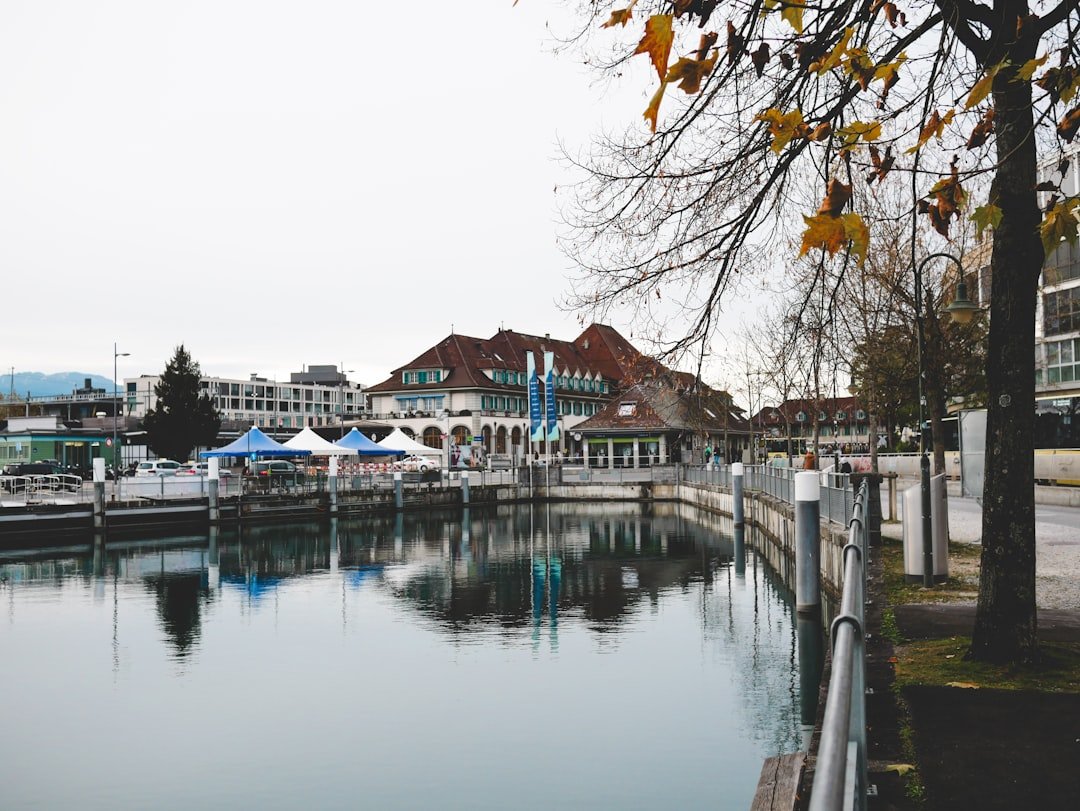
After the castle and Old Town, I found the lakeside part of the day much more relaxing. The Aare leads naturally toward Lake Thun, and the scenery opens up as you move away from the dense historic center.
The water, mountain backdrop, boats, lawns, and walking paths make this a good part of the trip to leave unscheduled. On a clear day, the wider Lake Thun region provides views toward major Bernese Oberland peaks, while boats move between Thun, lakeside villages, and Interlaken West.
If you have enough time, continue toward the Schadau area. The wider Thun tourism guide highlights Schadau Castle and the nearby Thun Panorama as major cultural stops. The panorama is a historic circular painting that gives another perspective on the town and its surroundings.
You can also simply find a bench, watch the boats, and enjoy the lake before turning back toward the station. For me, this quieter part of the day balanced the denser sightseeing around the Old Town and castle.
Trying Local Cuisine in Thun

By lunchtime, I was ready to slow down and enjoy something local. Thun has plenty of cafés and restaurants in and around the Old Town, along the Aare, and near the main shopping streets, so you do not need to build the entire day around one particular restaurant.
Swiss cheese dishes such as fondue can be appealing when they are offered, especially in cooler weather, but I would not treat fondue as the only “authentic” choice. Rösti, regional cheese, baked goods, seasonal dishes, and simple market foods can be just as satisfying.
One of the pleasures of eating in Thun is the setting. A table near the Aare or one of the Old Town squares lets you combine lunch with people-watching rather than treating the meal as a separate activity.
When I do choose fondue, I still enjoy the communal style of dipping bread into melted cheese and sharing the pot. Swiss chocolate or a bakery stop afterward is an easy way to add something sweet without losing much sightseeing time.
Optional Stop at Schadau Park and Thun Panorama
If you have already explored the castle and Old Town and still have a few hours, the Schadau area is a worthwhile extension toward the lake. The route gives you more waterfront scenery and takes you away from the busiest central streets.
Thun tourism highlights Schadau Castle, the historic Scherzligen Church, and Thun Panorama in this part of the city. This makes the area especially useful if you want more culture and architecture instead of additional shopping.
Check current museum opening times before making Thun Panorama a must-do stop. If the attraction is closed or you are short on time, the walk and park surroundings can still fit naturally into a lakeside afternoon.
Outdoor Activities in Thun
Thun is not only about museums and historic streets. The lake and surrounding landscape create opportunities for walking, cycling, boating, and other outdoor activities. On a longer stay, you could easily make the region the starting point for more ambitious rides or hikes.
For a one-day visit from Interlaken, I prefer to keep outdoor activity simple. A walk beside the Aare and lake adds fresh air without committing several hours to a separate excursion. Cycling can also work if it is one of the main goals of your day, but rental logistics and route planning can take time away from the Old Town and castle.
Swimming in Lake Thun can be appealing in warm weather, but I would no longer recommend simply entering the water at an unfamiliar secluded spot. Use an appropriate bathing location, check local conditions, know your swimming ability, and avoid swimming alone in open water.
Warning: Lakes and rivers are open-water environments. Switzerland’s BFU recommends taking extra precautions, including using a swimming buoy in open water and avoiding solo swimming. Never assume a quiet-looking section of lake or river is automatically safe.
For current Swiss guidance, see the BFU bathing and swimming safety information.
Shopping and Souvenirs in Thun
Before leaving Thun, I like to leave some time for the town’s shops rather than rushing straight back to the station. Obere Hauptgasse and the Bälliz area contain a mix of independent shops and larger retailers, while the Old Town setting makes browsing part of the sightseeing experience.
Instead of limiting yourself to generic souvenir shops, look for Swiss food products, local crafts, bakery items, cheese, chocolate, or something small that you will actually use at home.
Market days can make this part of the visit more interesting. Thun’s official tourism information notes a Saturday market on Rathausplatz, while the broader city guide also highlights regional market shopping in the Bälliz area on Wednesdays and Saturdays. Market schedules can change around holidays or special events, so check locally if the market is important to your plans.
I still enjoy handcrafted wooden items and traditional Swiss-style souvenirs when I find something distinctive, but food often makes an easier gift. Chocolate, cheese, bread, or other regional products connect more naturally to the experience of the town.
Practical Tips for Your Day Trip
- Check transport twice: Look at the SBB timetable before leaving Interlaken and again before your return journey.
- Know your station: Trains use Interlaken Ost for the direct rail connection, while Lake Thun boats use the terminal beside Interlaken West.
- Wear comfortable shoes: The Old Town is best explored on foot, and visiting Thun Castle involves an uphill walk and stairs.
- Check castle hours: Thun Castle follows seasonal opening times rather than one year-round schedule.
- Keep a weather backup: The castle museum, shops, cafés, and other cultural attractions make it possible to enjoy Thun even when lake views are limited.
- Do not over-plan: Thun’s appeal comes partly from walking beside the Aare, stopping at a square, or spending longer over lunch.
- Check the last useful boat: If you plan to return by water, make sure the departure works with your sightseeing schedule before committing to that option.
As my time in Thun drew to a close, what stayed with me most was the combination of a compact historic center and an unusually scenic setting. The Old Town, castle, Aare, and lake feel connected rather than scattered across separate parts of the city. That makes it easy to experience several sides of Thun without turning the day into a race from attraction to attraction.
For me, the strongest version of this day trip is simple: arrive quickly, spend most of the day walking, leave room for a good meal and the lake, and choose the scenic boat only when its timetable fits naturally. Thun offers enough history, scenery, food, and outdoor atmosphere to feel like a complete excursion while still being easy to reach from Interlaken.
If you are also browsing separate food-focused travel reading, you can see Exploring the Delightful World of Asian Melon. It is a separate culinary topic rather than a guide to Thun.
Frequently Asked Questions
What is the distance between Interlaken and Thun?
The two towns are relatively close, with roughly 20 kilometers separating them as a general geographic figure. Actual road and rail route distances are longer, so travel time is more useful for planning than the straight-line distance.
How can I travel from Interlaken to Thun?
The easiest options are train or boat. Direct trains run from Interlaken Ost toward Thun, while Lake Thun boats depart from the terminal beside Interlaken West. Driving is also possible, but public transport is usually more convenient for a sightseeing day.
How long does it take to travel from Interlaken to Thun?
A direct train typically takes roughly half an hour. The full Lake Thun boat journey is far slower, at around two hours, so the train is better when you want to maximize sightseeing time.
Is it better to take the train or boat from Interlaken to Thun?
Take the train if speed and sightseeing time matter most. Choose the boat if you want the lake journey itself to be one of the day’s main experiences. A good compromise is to use the train in one direction and the boat in the other when the schedule works.
What are the best attractions to visit in Thun?
Good first-time stops include Thun Old Town, Rathausplatz, Obere Hauptgasse, Thun Castle, the Aare riverfront, Lake Thun, and the Schadau area. If time and opening hours allow, Thun Panorama is another worthwhile cultural stop.
What are the opening hours for Thun Castle?
Hours vary by season. In 2026 the museum castle opens daily for longer hours in spring, summer, and early autumn, while winter access is more limited. Always check the official Thun Castle website shortly before your trip.
Is Thun a good destination for a day trip from Interlaken?
Yes. Thun is close enough to reach quickly by train and compact enough to explore on foot. A day gives you time for the Old Town, castle, lunch, riverfront, lake, and one or two optional stops without needing an overnight stay.
Can I swim in Lake Thun during my visit?
Swimming may be possible in suitable bathing areas during warm weather, but treat the lake as open water. Check local conditions, avoid swimming alone, use an appropriate flotation aid such as a swimming buoy, and follow Swiss water-safety guidance.
Sources
- SBB: Direct connections from Interlaken Ost to Thun — confirms the direct rail connection.
- BLS: Lake Thun and Lake Brienz boat services — supports boat operations, terminals, and transport planning.
- Thun Tourism: Thun Old Town — supports Rathausplatz, Obere Hauptgasse, raised pavements, bridges, weirs, and market information.
- Thun Castle: Opening hours, prices and tickets — supports current seasonal hours and admission prices.
- Thun Castle: More than 800 years of history — supports the castle chronology, keep, and museum history.
- BFU: Bathing and swimming safety — supports open-water safety guidance.