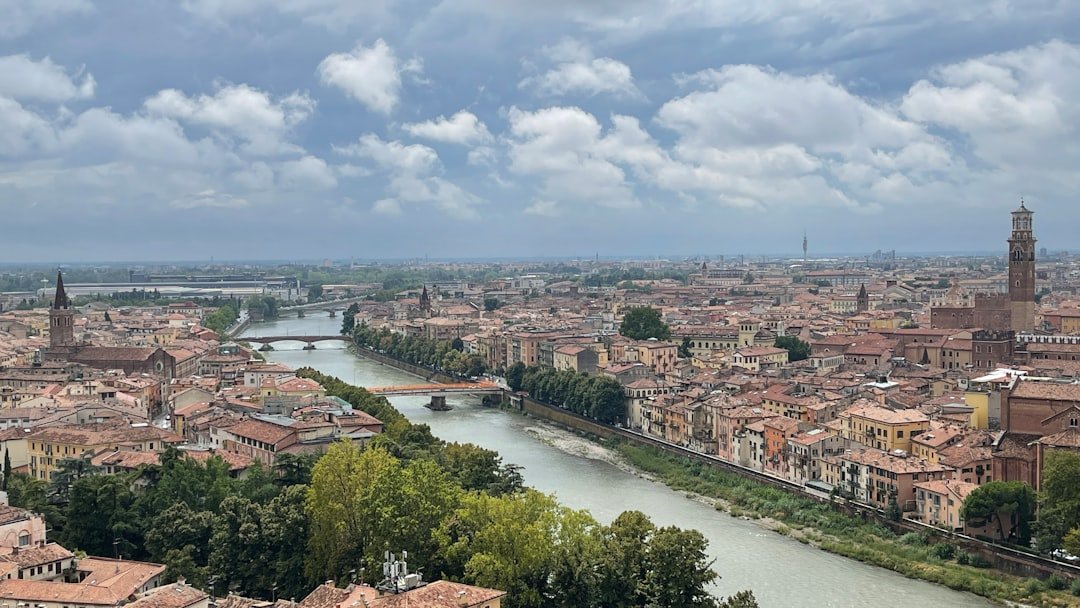
Three days in Verona gives you enough time to see the city’s Roman landmarks, medieval streets, museums, gardens, viewpoints, and food scene without rushing from one attraction to the next. This Verona 3-day itinerary keeps most stops in walkable clusters and adds practical ticket, transport, and timing advice for first-time visitors.
Quick Answer
Spend Day 1 around Piazza Bra, the Arena, Piazza delle Erbe, Torre dei Lamberti, and Juliet’s House. Use Day 2 for Castelvecchio, San Zeno, the Roman Theatre, and Ponte Pietra. On Day 3, slow down at Giardino Giusti, Castel San Pietro, and the Adige River.
Key Takeaways
- Verona’s historic center is compact, so walking is the easiest way to cover most major sights.
- Book Juliet’s House ahead; visitor access changed in April 2026 and now begins through Teatro Nuovo in Piazzetta Navona.
- Check the Arena’s current visitor hours because concerts and Opera Festival performances can affect daytime access.
- Day 2 is best for Verona’s art, churches, Roman Theatre, and riverside heritage.
- Day 3 offers a slower pace with Giardino Giusti, Castel San Pietro, and an Adige riverside walk.
- Traditional foods worth looking for include risotto all’Amarone, risotto al tastasal, pastissada de caval, and pandoro.
Verona’s UNESCO-listed historic city preserves an unusually rich mix of Roman, medieval, Renaissance, and later architecture within a compact center.
Before You Start Your Verona 3-Day Itinerary
Verona is in northern Italy on the Adige River, at the foot of the Lessini Mountains. Its historic center is part of the UNESCO World Heritage property known as the City of Verona. The city developed into an important Roman center and later flourished under the Scaliger family and the Republic of Venice.
You do not need a car for this itinerary. Most attractions in the historic center are close enough to reach on foot, while ATV buses are useful for the railway station, outer neighborhoods, or when you want to reduce your walking.
2026 Visitor Note: Since April 1, 2026, entry to Juliet’s House and courtyard begins through Teatro Nuovo in Piazzetta Navona. The exit remains at Via Cappello 23. Reserve your visit and check the current access instructions before arriving.
If you plan to enter several civic museums and monuments, compare individual admission costs with the Verona Card. The card can include entry to participating attractions and public transportation, but some attractions still require a reservation. Check the current Verona Card rules before buying.
Driving Warning: Much of Verona’s historic center is a restricted traffic zone, or ZTL. If you arrive by car, confirm your hotel’s access procedure or park outside the restricted center rather than following navigation apps blindly into camera-controlled streets.
Day 1: Exploring Verona’s Historic Center
Morning: Piazza Bra and the Arena di Verona
Begin at Piazza Bra, Verona’s large central square and the home of the Arena di Verona. The Arena was built by the Romans in the first century AD and remains one of the city’s defining landmarks.
Allow roughly one hour for an interior visit when it is open. The Arena is still an active performance venue, so public visiting hours can change during concerts, stage preparation, and the summer Opera Festival. Check the official schedule before fixing your day’s timing.
After the Arena, walk through Piazza Bra and continue toward Via Mazzini. This pedestrian shopping street gives you a direct route toward the heart of the historic center.
Late Morning: Piazza delle Erbe and Torre dei Lamberti
Piazza delle Erbe occupies the area of Verona’s ancient Roman forum and remains one of the busiest squares in the center. Look at the frescoed façades, fountain, historic palaces, cafés, and market stalls before continuing toward Piazza dei Signori.
For a high view over the rooftops, climb or take the paid lift at Torre dei Lamberti. The tower rises to 84 meters, and its viewing area gives you a useful sense of how tightly Verona’s historic sights fit together.
Afternoon: Piazza dei Signori, the Scaliger Tombs, and Juliet’s House
Walk into Piazza dei Signori, where palaces associated with Verona’s medieval government surround the square. Nearby, the elaborate Gothic Scaliger Tombs commemorate members of the Della Scala family, who ruled Verona during an important period of the Middle Ages.
Continue to Casa di Giulietta, or Juliet’s House. Treat it as a cultural and literary attraction rather than the historical home of Shakespeare’s Juliet. Juliet is a fictional character, and Verona’s civic museum records show that the famous balcony was added during restoration work in 1939–1940.
The building itself is medieval and became strongly associated with the Romeo and Juliet tradition over time. Today, its museum, courtyard, and balcony remain among Verona’s most popular visitor attractions.
Pro Tip: Reserve Juliet’s House for a specific time and build the rest of Day 1 around that slot. Piazza Bra, Piazza delle Erbe, Piazza dei Signori, and the surrounding streets are easier to adjust if your schedule changes.
Evening: Slow Down in the Historic Center
Use the evening for an unhurried walk rather than adding another major museum. The lanes between Piazza delle Erbe, Corso Porta Borsari, and the Adige are especially pleasant once the busiest daytime sightseeing period begins to ease.
Day 2: Discovering Verona’s Cultural Heritage
Morning: Museo di Castelvecchio
Start Day 2 at the Museo di Castelvecchio. The fourteenth-century Scaliger fortress now holds one of Verona’s most important art collections, with sculpture, paintings, weapons, ceramics, goldwork, and other historic objects.
The collection includes works connected with artists such as Pisanello, Andrea Mantegna, Tintoretto, and Paolo Veronese. The museum is also notable for the twentieth-century exhibition design and restoration work of architect Carlo Scarpa.
Before leaving, walk onto or view the fortified Ponte Scaligero beside the castle. It gives you a strong visual link between Verona’s medieval defenses and the Adige River.
Late Morning: Basilica di San Zeno Maggiore
Continue west to the Basilica di San Zeno Maggiore, one of Verona’s outstanding Romanesque churches and a site dedicated to Saint Zeno, the city’s patron saint. Give yourself time to look at the architecture, carved details, bronze doors, frescoes, and interior artworks rather than treating it as a quick photo stop.
Afternoon: Roman Theatre and Archaeological Museum
Cross back toward the eastern side of the center and visit the Roman Theatre and Archaeological Museum. The theatre was built on the slope of San Pietro Hill toward the end of the first century BC.
The archaeological museum occupies a former convent above the theatre and displays Roman material from Verona and the surrounding area, including sculpture, mosaics, inscriptions, bronzes, and other finds. During summer events, parts of the theatre may contain temporary performance structures, so check current visitor information.
Late Afternoon: Ponte Pietra
Finish the main sightseeing portion of Day 2 at Ponte Pietra. Although commonly called Verona’s Roman bridge, the structure visible today reflects several periods of rebuilding. Roman elements survive, while other sections date from later medieval and Renaissance work. Parts of the bridge were destroyed in 1945 and subsequently reconstructed using recovered material.
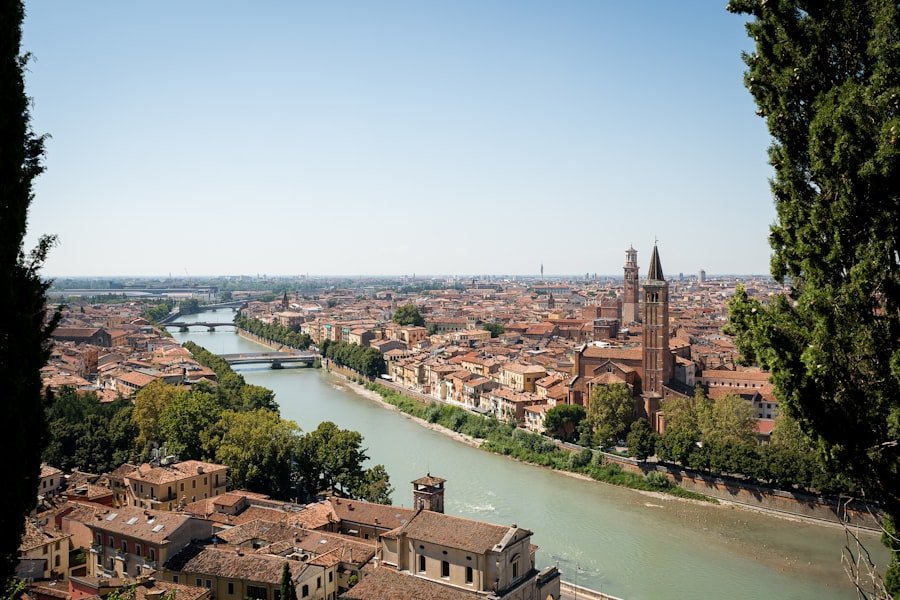
Crossing Ponte Pietra on foot gives you one of Verona’s best river views and places you directly below Castel San Pietro, which you will explore more fully on Day 3.
Day 3: Enjoying Verona’s Natural Beauty
| Location | Activity | Suggested Time |
| Giardino Giusti | Explore the historic garden and belvedere | 1.5–2 hours |
| Ponte Pietra area | River views and photos | 30 minutes |
| Adige River | Relaxed riverside walk | About 1 hour |
Morning: Giardino Giusti
Begin with Giardino Giusti in the Veronetta district. The historic garden preserves the character of a sixteenth-century Italian garden, with clipped greenery, statues, fountains, citrus plants, grottoes, and elevated viewpoints.
Walk through the formal sections rather than rushing directly to the top. The higher part of the garden rewards the climb with views across Verona’s rooftops. The adjoining historic palace may also be open, depending on current arrangements.
Afternoon: Castel San Pietro
Return toward Ponte Pietra and go up to Castel San Pietro for one of the city’s classic panoramas. You can climb the hillside on foot or use the Castel San Pietro funicular.
The present funicular reopened to the public in 2017 after decades out of service. Seasonal operating hours vary, so check them before depending on it for your return journey.
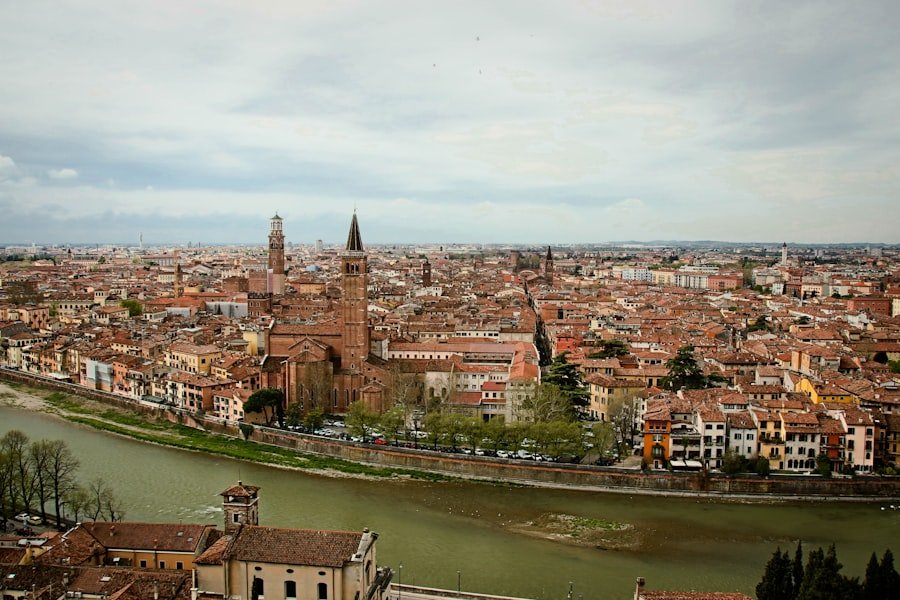
The viewpoint is especially attractive later in the day when the light falls across the historic center, Ponte Pietra, church towers, and bends of the Adige.
Late Afternoon: Walk Along the Adige
Finish your third day with a riverside walk instead of another indoor attraction. Follow the Adige at an easy pace, crossing one of the central bridges when convenient and stopping whenever you find a view you like.
This slower final stretch balances the museum-heavy second day and gives you time to appreciate Verona as a living city rather than simply completing a list of landmarks.
Where to Stay in Verona
For a first visit, the historic center is the most convenient base. Staying around Piazza Bra, Corso Porta Borsari, or the old town reduces your dependence on buses and lets you return to your room between sightseeing and dinner.
Travelers looking for a five-star stay can consider NH Collection Palazzo Verona. The property was formerly known as Palazzo Victoria, so older guides may still use that name. Its central location works well for reaching the Arena, Piazza delle Erbe, Castelvecchio, and Juliet’s House on foot.
Residenza La Ricciolina is a different type of option. It offers apartment-style accommodation in Verona Sud, several kilometers from the historic center. It can make sense if you value more space, kitchen facilities, parking, or easier road access, but it is less convenient for travelers who want to step directly into the old town each morning.
If you are arriving by train and carrying heavy luggage, accommodation between Verona Porta Nuova station and Piazza Bra can also provide a useful balance between transport access and sightseeing.
Where to Eat in Verona
Verona’s food is one of the strongest reasons not to rush your itinerary. Traditional dishes include risotto all’Amarone, made with Amarone della Valpolicella wine; risotto al tastasal, made with seasoned pork; and pastissada de caval, a long-cooked horse-meat dish traditionally served with polenta. If you prefer not to eat horse meat, Verona has plenty of other regional pasta, rice, meat, cheese, and vegetable dishes.
Osteria Le Vecete is a traditional restaurant in the historic center and can be considered for a meal near Piazza delle Erbe. Menus can change, so choose based on the dishes offered during your visit rather than relying on an old online menu.
Trattoria Al Pompiere is another long-established central restaurant. Its current restaurant information emphasizes seasonal Italian, Veneto, and Veronese cooking, fresh pasta, regional salumi and cheeses, meat dishes, and an extensive wine cellar.
For something sweet, look for pandoro, the tall star-shaped Veronese cake most closely associated with the Christmas season. Gelaterias and cafés are also easy to find throughout the historic center.
Getting Around Verona
Walking is the simplest way to follow this itinerary. Verona’s main historic attractions sit relatively close together, and moving between them on foot lets you notice small churches, courtyards, façades, bridges, and side streets that are easy to miss from a vehicle.
For longer journeys, Verona’s public transportation is operated by ATV. City buses connect Verona Porta Nuova railway station, the center, and outer neighborhoods. Current ticket options, routes, and schedules can change, so check Verona’s official transport guidance before traveling.
Taxis are also available, but most first-time visitors staying centrally will need them only for luggage, late-night journeys, mobility needs, or destinations outside the main sightseeing area.
If you arrive by car, pay special attention to the ZTL. The historic center restricts normal vehicle access during regulated periods, and cameras monitor entry points.
Must-See Attractions in Verona
If your schedule changes and you need to prioritize, these are the core attractions to protect in a first-time Verona itinerary:
- Arena di Verona: Verona’s landmark Roman amphitheater and an active performance venue.
- Piazza delle Erbe: The historic square occupying the area of the ancient Roman forum.
- Piazza dei Signori and the Scaliger Tombs: A compact introduction to Verona’s medieval political history.
- Juliet’s House: A literary and cultural attraction built around Verona’s association with Romeo and Juliet.
- Castelvecchio Museum: The best choice for travelers interested in medieval history and major art collections.
- Roman Theatre and Archaeological Museum: An important surviving part of Roman Verona.
- Ponte Pietra: A historic bridge with Roman elements and one of the city’s best river settings.
- Giardino Giusti: A peaceful historic garden and useful break from churches and museums.
- Castel San Pietro viewpoint: One of the easiest places to understand Verona’s geography from above.
Hidden Gems in Verona
Verona has worthwhile sights beyond the Arena and Juliet’s House. Basilica di San Fermo Maggiore is an excellent choice if you enjoy historic churches. Its layered history, frescoes, architectural details, and distinctive wooden ceiling reward a slower visit.
The Scaliger Tombs, beside the church of Santa Maria Antica, are another sight that some rushed itineraries pass too quickly. Their elaborate Gothic structures commemorate members of the Della Scala dynasty and fit naturally between Piazza dei Signori and the surrounding medieval streets.
You can also look for surviving Roman features such as Porta Borsari and Arco dei Gavi while walking between larger attractions. These smaller stops help show that Verona’s Roman heritage extends well beyond the Arena.
Shopping in Verona
Via Mazzini is Verona’s best-known central shopping street and connects Piazza Bra with the area around Piazza delle Erbe. It has a mixture of Italian and international fashion brands and is convenient to browse while following the Day 1 route.
For a more historic atmosphere, continue along Corso Porta Borsari and the smaller lanes around the old center. Piazza delle Erbe also has stalls, although the exact mix of merchandise changes and should not be assumed to consist entirely of locally made products.
If you want a meaningful souvenir, look for regional food products, wine from the Verona area, ceramics, books, or goods whose maker and origin are clearly identified rather than buying solely on the basis of a “local” label.
Tips for First-Time Visitors to Verona
- Wear comfortable shoes: You will spend much of the trip on foot, often on stone paving.
- Reserve Juliet’s House: It is one of the attractions where advance planning matters most.
- Check Arena events: Concerts and opera performances can alter normal sightseeing access.
- Start early in warm weather: Summer afternoons can be tiring, especially when climbing viewpoints or walking exposed streets.
- Carry water: It is easy to underestimate your walking distance because the center feels compact.
- Dress appropriately for churches: Keep shoulders and clothing reasonably modest when entering places of worship.
- Do not drive casually into the old center: Check ZTL restrictions and parking before arrival.
- Leave space in the schedule: Verona works better when you have time for a café, aperitivo, market stop, or an unexpected church rather than racing between reservations.
- Try regional wine responsibly: Amarone della Valpolicella is closely associated with the Verona area and appears in both local cooking and wine lists.
Frequently Asked Questions
What is Verona known for?
Verona is known for its Roman monuments, medieval and Renaissance architecture, the Arena di Verona, its association with Shakespeare’s Romeo and Juliet, and its UNESCO-listed historic city. It is also closely linked with Valpolicella wines and Veronese food traditions.
What are the must-see attractions in Verona?
For a first visit, prioritize the Arena di Verona, Piazza delle Erbe, Piazza dei Signori, Juliet’s House, Castelvecchio Museum, the Roman Theatre, Ponte Pietra, Giardino Giusti, and the Castel San Pietro viewpoint.
Is three days enough for Verona?
Yes. Three days gives first-time visitors enough time for Verona’s major historic sights, at least one substantial museum, several churches, a garden, a panoramic viewpoint, and relaxed meals without compressing everything into one long sightseeing day.
What is the best time to visit Verona?
Spring and early autumn are attractive choices for travelers who want comfortable sightseeing weather. Summer brings major events such as the Arena Opera Festival but can also mean higher temperatures and busier attractions. Winter is quieter, although daylight and attraction schedules may be more limited.
What traditional dishes should I try in Verona?
Traditional options include risotto all’Amarone, risotto al tastasal, pastissada de caval with polenta, and seasonal regional dishes made with local rice, meat, cheeses, and vegetables. Pandoro is Verona’s famous Christmas cake.
Do I need to book Verona attractions in advance?
Advance booking is especially important for Juliet’s House, where timed access should be planned before your visit. Reservations can also be useful for Torre dei Lamberti and during busy periods. Check the Arena separately because performances and event preparation can change normal visitor access.
Do I need a car in Verona?
No. A car is unnecessary for this three-day city itinerary. The historic center is highly walkable, and ATV buses connect the railway station and areas outside the center. Driving can actually be less convenient because of Verona’s restricted-traffic zone.
Sources
- UNESCO World Heritage Centre — City of Verona — Verona’s UNESCO status, historic development, and surviving Roman and later heritage.
- Visit Verona — Arena Amphitheatre — the Arena’s Roman date, history, accessibility, and visitor information.
- Musei Civici di Verona — Casa di Giulietta — history of Juliet’s House, the twentieth-century balcony, and current visitor access information.
- Musei Civici di Verona — Museo di Castelvecchio — castle history and museum collections.
- Visit Verona — Roman Theatre and Archaeological Museum — Roman Theatre history, collections, and visitor guidance.
- Visit Verona — Getting Around Verona — walking, public transportation, parking, and ZTL planning.