Rhine Falls near Schaffhausen is Europe’s largest waterfall and one of Switzerland’s easiest major natural attractions to visit independently. The falls are about 150 meters wide and 23 meters high, with viewing areas on both the Neuhausen and Schloss Laufen sides. A good visit combines the viewpoints, riverside paths, and, when operating, a boat trip toward the central rock.
Quick Answer
Rhine Falls is easy to visit by train or car from Zurich and Schaffhausen. The Neuhausen side is free to enter, while Schloss Laufen charges for access to its Historama and close viewing platforms. Allow about two to four hours for viewpoints and walking, adding extra time if you take a boat trip.
Key Takeaways
- Rhine Falls is approximately 150 meters wide and 23 meters high and is promoted by Switzerland Tourism as Europe’s largest waterfall.
- For public transport, use Neuhausen Rheinfall for the north bank or Schloss Laufen am Rheinfall for the south bank instead of automatically traveling first to central Schaffhausen.
- The Neuhausen/Schlössli Wörth side has no entrance fee to the falls. Schloss Laufen currently charges CHF 5 for adults and CHF 3 for children ages 6–15 for its Historama and viewing platforms.
- Boat trips, riverside walks, close viewpoints, the central rock, and nearby Schaffhausen can turn a short stop into a half-day outing.
- Spring and early summer often bring impressive water volume, while July and August bring warm weather and larger crowds. Actual flow varies, so check the official live discharge before visiting if water volume matters to you.
Rhine Falls stretches about 150 meters across and drops roughly 23 meters, creating one of Switzerland’s most powerful and recognizable natural sights.
Getting to Rhine Falls
Rhine Falls is in northern Switzerland near Schaffhausen and Neuhausen am Rheinfall. Zurich is the nearest major international gateway, and the falls can be reached conveniently by train or car.
Getting There by Train
The most useful railway station depends on which side of the waterfall you want to visit. The official Rhine Falls arrival guide lists two particularly convenient options:
- Schloss Laufen am Rheinfall: Best for the south bank, Laufen Castle, Historama, and the close paid viewing platforms.
- Neuhausen Rheinfall: Best for the north bank and Schlössli Wörth. The official visitor information places the walk from this station at about eight minutes.
Travelers already staying in Schaffhausen can also use local public transport. Bus No. 1 connects Schaffhausen with Neuhausen, followed by a short walk to the Rhine Falls area.
Pro Tip: When searching a Swiss rail timetable, enter “Neuhausen Rheinfall” or “Schloss Laufen am Rheinfall” as your destination. This usually gives you a more useful route than traveling to Schaffhausen station and walking the entire remaining distance.
Getting There by Car and Parking
Drivers can approach Rhine Falls using the road network around Schaffhausen and Dachsen. For Schloss Laufen, the official GPS destination is Areal Schloss Laufen, 8447 Dachsen. For the Neuhausen side, use Rheinfallquai 32, 8212 Neuhausen am Rheinfall.
According to the current official Rhine Falls parking information, cars up to 2.90 meters are charged CHF 5 for the first hour and CHF 2 for each additional hour. The site currently lists free parking from 6 p.m. to 9 a.m., except P4. Prices and parking rules can change, so confirm them before a future visit.
Which Side of Rhine Falls Should You Visit?
Rhine Falls can be experienced from both sides of the river, and each bank offers a different experience.
| Neuhausen / Schlössli Wörth | Free access to the Rhine Falls area, convenient access from Neuhausen Rheinfall station, riverside viewpoints, boat departures, restaurants, and visitor facilities. |
| Schloss Laufen / Dachsen | Paid access to Historama and dramatic viewing platforms close to the falling water, plus Laufen Castle and direct rail access at Schloss Laufen am Rheinfall station. |
If you have enough time, seeing both sides gives you the most complete experience. Walking routes and seasonal boat connections make it possible to combine viewpoints rather than choosing only one.
Activities at Rhine Falls
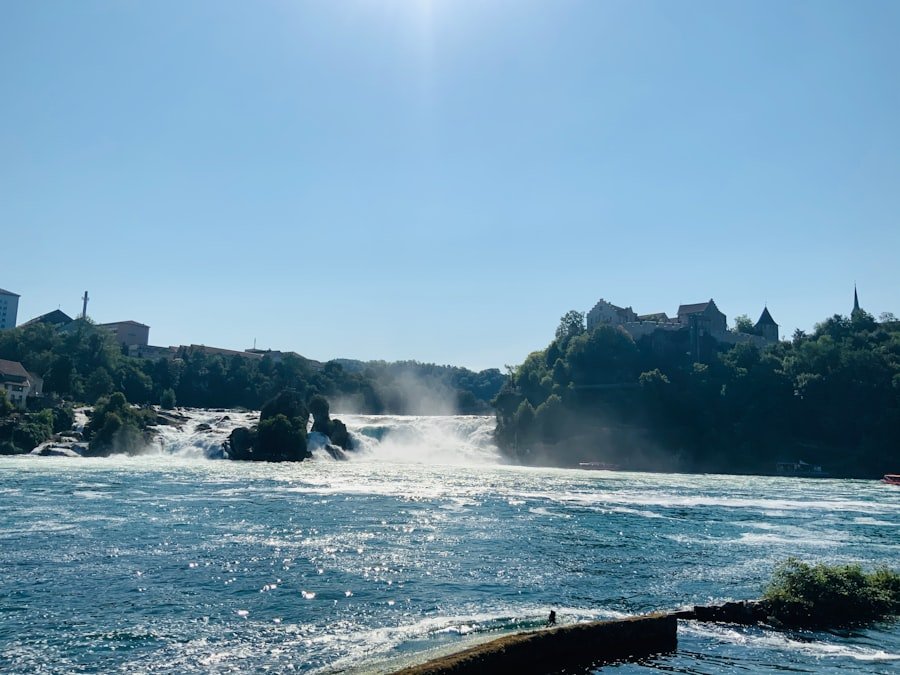
The main attraction is the waterfall itself, but the site offers several ways to experience it. Viewing platforms range from broad panoramic positions to close viewpoints where the spray, sound, and force of the water are much more noticeable.
Take a Rhine Falls Boat Trip
Boat operators offer several excursions in the Rhine Falls basin. Routes and operating periods differ, so not every boat trip has the same duration or destination. One of the signature experiences is a boat ride toward the central Rhine Falls rock, followed by a short climb for a dramatic view surrounded by rushing water.
Other options include sightseeing cruises in the basin and ferry-style connections. A 30-minute sightseeing cruise is among the products promoted by Schaffhauserland Tourism, but visitors should check the current schedule and route before arriving because boat operations are seasonal and weather or water conditions can affect service.
Warning: Expect spray, wet steps, and slippery surfaces around close viewpoints and boat landings. Wear shoes with reliable grip, supervise children closely, and follow crew or site instructions around the river.
Walk the Viewpoints and Riverside Paths
Walking is one of the best ways to appreciate how the scenery changes around the falls. Paths connect viewpoints, wooded areas, riverbanks, and nearby attractions. Switzerland Tourism also promotes a Rhine Falls circular walking route of about 7 kilometers for visitors who want a longer outing.
The central rock, sometimes simply called the Rhine Falls rock, provides one of the most memorable viewpoints when the boat service is operating. Photographers may prefer early or later daylight when the contrast is softer and busy viewpoints can be easier to frame.
How Long Should You Spend at Rhine Falls?
Allow roughly two hours for a straightforward visit focused on one bank and several viewpoints. Three to four hours gives you more time for both banks, walking, photographs, food, and a boat ride. A half day works well if you also want to explore Laufen Castle or combine the falls with Schaffhausen.
Admission, Opening and Accessibility
The waterfall itself is generally accessible 24 hours a day, 365 days a year, according to the official Rhine Falls visitor information. Individual attractions, restaurants, shops, boat services, lifts, and visitor facilities have their own operating times.
| Neuhausen / Schlössli Wörth | No entrance fee to the Rhine Falls area. |
| Schloss Laufen adult admission | CHF 5 per person, including Historama and the viewing platforms. |
| Children ages 6–15 at Schloss Laufen | CHF 3 per child. |
| Boat trips | Separate ticket; price depends on the operator and route. |
Accessibility
The two banks have different accessibility characteristics. On the Neuhausen side, the official site describes access from Neuhausen Rheinfall station and facilities for visitors with reduced mobility, including access arrangements for the pier and boats. On the Schloss Laufen side, the castle grounds, Panorama Trail, Belvedere observation area, Historama, visitor center, and restaurant include accessible features and a panorama lift, but the site states that the Rhine Falls basin and shipping pier on that side are not wheelchair accessible.
Lift maintenance and other temporary restrictions can change access conditions. Visitors who rely on step-free routes should check the official accessibility information shortly before traveling.
Visiting With Dogs
Dogs are allowed on the Rhine Falls site, but rules differ between boat routes. The official visitor information allows leashed dogs on several boat services while excluding them from certain experiences, including the central-rock trip. Check the route-specific rule before buying a boat ticket.
Best Times to Visit Rhine Falls
| Period | Typical Experience | Crowds | Water Flow |
| April–June | Mild spring conditions, fresh greenery, and increasing seasonal activity. | Low to medium, increasing toward summer. | Often strong, particularly around late spring and early summer, but varies by year. |
| July–August | Warm weather, long daylight, and the widest choice of visitor activities. | High. | Variable. Do not assume midsummer is the annual peak. |
| September–October | Cooler temperatures and attractive autumn scenery. | Usually lower than midsummer. | Variable and often lower than the spring/early-summer high-water period. |
| November–March | Cold, quiet atmosphere with possible snow or ice around the landscape. | Low. | Generally lower; seasonal boat and attraction schedules may also be limited. |
The best time depends on your priorities. Late spring and early summer are particularly attractive if strong water flow and green scenery matter most. July and August provide warm weather and a broad range of visitor services but are also the busiest months.
September and October can be excellent for travelers who prefer cooler temperatures and lighter crowds. Winter creates a quieter experience, sometimes with snow and ice around the landscape, but visitors should not expect the entire waterfall to freeze solid.
Note: Rhine Falls water volume changes significantly with weather and hydrological conditions. If seeing especially powerful flow is important to you, check the live discharge on the official Rhine Falls website shortly before your visit.
Nearby Attractions and Accommodations
The Rhine Falls area works well as part of a wider Schaffhausen day trip. Schaffhausen’s historic center is known for decorative facades, bay windows, narrow streets, and its well-preserved old-town atmosphere.
The Munot fortress overlooks the town and offers broad views across Schaffhausen and the surrounding countryside. Visitors with additional time can combine the falls, the old town, and Munot in the same day.
Accommodation ranges from hotels and guesthouses around Neuhausen to a larger selection in Schaffhausen and the surrounding region. Hotel Rheinfall in Neuhausen is one nearby option, but travelers who specifically want a waterfall view should confirm the view category directly rather than assuming every nearby hotel room overlooks the falls.
Camping is available in the wider region, but the official Rhine Falls visitor information states that there are no motorhome or camping pitches for overnight stays directly at the falls. Travelers seeking a more rustic stay should therefore book a designated campsite elsewhere in the Schaffhausen or Winterthur region.
Tips for Visiting Rhine Falls
Arriving earlier in the morning or later in the day can make popular viewpoints more comfortable, especially during the summer travel season. These periods can also give photographers more flexibility than the busiest middle hours of the day.
Wear comfortable footwear suitable for stairs, riverside paths, and wet surfaces. Close viewpoints can receive significant mist and spray, so a light waterproof jacket can be useful even when the wider weather forecast is dry.
If you plan to take a boat, protect phones and cameras from spray. Families should keep younger children close around steep steps, viewing areas, riverbanks, and boat landings.
Bringing snacks or a picnic can be convenient, and the Rhine Falls area includes places to sit and enjoy the river scenery. Restaurants and refreshments are also available around the main visitor areas.
If Rhine Falls is part of a broader trip focused on discovering regional foods and unusual ingredients, you may also enjoy learning about different varieties of fruit through this article on Exploring the Delightful World of Asian Melon.
History and Fun Facts about Rhine Falls
Rhine Falls is a product of Ice Age geology. Switzerland Tourism places its formation at about 15,000 years ago, when changes in the Rhine’s course and the landscape left the river crossing resistant rock at the present waterfall site.
The High Rhine has shaped settlement, transport, trade, and industry in the Schaffhausen region for centuries. Today, the waterfall is valued primarily as a natural and cultural landmark rather than simply as an industrial water resource.
One of the most striking facts about Rhine Falls is how dramatically its discharge can change. Rather than relying on a single supposed “maximum” for trip planning, visitors can use the live discharge information published by the official Rhine Falls website using data sourced from Switzerland’s Federal Office for the Environment.
Historical hydrological records demonstrate just how variable the river can be. During major flooding in June 2016, discharge exceeded 950 cubic meters per second. A BAFU hydrological report lists an absolute maximum of 1,173 cubic meters per second in May 1999 for the referenced measurement series.
The central rock also makes Rhine Falls unusual from a visitor’s perspective. When the appropriate boat route is operating, travelers can approach it by boat and climb upward for a viewpoint surrounded by the sound and spray of the waterfall.
Conservation Efforts at Rhine Falls
Rhine Falls is more than a tourism attraction. Parts of the landscape around the waterfall are subject to formal landscape and nature protections. On the Zurich side, the Rhine bank around the falls, Schloss Laufen, and its surroundings are covered by regulations designed to protect the river, shoreline, landscape, settlement appearance, and surrounding environment.
The Canton of Schaffhausen has likewise stated that landscape and nature protection at Rhine Falls has a high priority and that tourism development must be balanced with those protection goals.
For visitors, responsible tourism is straightforward: remain on designated paths and viewing areas, use official boat landings, dispose of waste properly, avoid disturbing wildlife, and follow local restrictions. These actions help protect the landscape while allowing large numbers of people to experience the falls.
Frequently Asked Questions
What are the Rhine Falls?
Rhine Falls is a major waterfall on the High Rhine near Neuhausen am Rheinfall and Schaffhausen in northern Switzerland. Switzerland Tourism describes it as Europe’s largest waterfall.
How tall and wide are the Rhine Falls?
The waterfall is approximately 23 meters, or 75 feet, high and about 150 meters, or 490 feet, wide.
Can visitors get close to the Rhine Falls?
Yes. Close viewing platforms are available around the falls, particularly at Schloss Laufen. When the relevant boat service is operating, visitors can also travel to the central rock and climb it for a dramatic close-up perspective.
What activities can you do at Rhine Falls?
Popular activities include boat rides, viewing platforms, photography, riverside walking, longer hiking routes, visiting Schloss Laufen, and combining the falls with Schaffhausen. Adventure-park activities are also available near Neuhausen, subject to their own operating schedules.
What is the best time to visit Rhine Falls?
Late spring and early summer are excellent for strong seasonal flow and green scenery. July and August are warm and convenient but busy. Autumn is quieter, while winter offers a peaceful atmosphere with fewer seasonal activities.
Is there an entrance fee to visit Rhine Falls?
It depends on the side. There is no entrance fee to the Rhine Falls at Neuhausen/Schlössli Wörth. Schloss Laufen currently charges CHF 5 for adults and CHF 3 for children ages 6–15, including access to Historama and its viewing platforms. Boat trips cost extra.
How do I get to Rhine Falls?
By public transport, use Schloss Laufen am Rheinfall station for the south bank or Neuhausen Rheinfall station for the north bank. Drivers can park near both main visitor areas. Local bus connections are also available from Schaffhausen.
How much time do you need at Rhine Falls?
Two hours is enough for a basic visit to the main viewpoints. Three to four hours is better if you want both banks, a boat ride, photographs, and time for food. Allow a half day if you are also visiting nearby attractions.
Is Rhine Falls wheelchair accessible?
Parts of both banks have accessible facilities, but not every viewpoint or boat landing is step-free. The north bank has accessibility arrangements around Neuhausen Rheinfall and the pier, while Schloss Laufen provides a panorama lift and accessible castle-area facilities but does not offer wheelchair access to its Rhine Falls basin and shipping pier. Check current lift status before traveling.
Can I bring a dog to Rhine Falls?
Dogs are allowed around the Rhine Falls site, but individual boat routes have different rules. Some allow dogs on a lead, while the central-rock experience and certain other trips do not. Confirm the rule for your chosen boat before boarding.
Sources
- Official Rhine Falls Website — official visitor information, live discharge data, attractions, and Rhine Falls access.
- Rhine Falls Opening Hours and Prices — year-round access, current Schloss Laufen admission, Neuhausen free access, accessibility, and visitor rules.
- Official Rhine Falls Arrival Information — railway stations, bus access, driving directions, and practical arrival details.
- Official Rhine Falls Parking Information — current parking charges and parking facilities.
- Switzerland Tourism: Rhine Falls — waterfall status, visitor experiences, and official destination information.
- Canton Zurich: Rhine Falls Landscape Protection Regulation — legal landscape-protection framework around the Zurich bank and Schloss Laufen area.