Lauterbrunnen Valley is known for steep cliffs, alpine meadows and dozens of waterfalls, making the valley-floor walk one of the easiest ways to combine sightseeing with landscape photography in the Jungfrau Region. You can photograph the 297-meter Staubbach Falls, follow the White Lütschine toward Stechelberg and add Trümmelbach Falls when it is open.
Quick Answer
The best Lauterbrunnen Valley Walk photo spots include Staubbach Falls, the village-and-waterfall views near Lauterbrunnen, the riverside valley path, Trümmelbach Falls and the open valley near Stechelberg. For elevated panoramas, take separate side trips to Wengen or Mürren rather than treating them as stops on the valley-floor walk.
Key Takeaways
- An official SwitzerlandMobility route between Stechelberg and Lauterbrunnen is about 8.7 km and takes roughly 2 hours 14 minutes before photography stops or attraction visits.
- Staubbach Falls is the easiest iconic waterfall to photograph from the Lauterbrunnen end of the walk.
- Trümmelbach Falls is a separate seasonal attraction inside the mountain, so allow additional time if you plan to enter.
- Wengen and Mürren provide excellent elevated views but are side trips above the valley, not stops on the valley-floor route.
- Early and late light can be attractive, but high valley walls create deep shadows, so the best light depends on season, weather and the exact viewpoint.
- Stay on public paths and respect private farmland when setting up photographs.
At a Glance
| Time Required | About 2 to 2.5 hours of walking for the valley route, plus photography stops; allow another 1 to 2 hours if visiting Trümmelbach Falls |
| Difficulty | Generally easy on the valley floor; individual attractions and detours may involve stairs, wet surfaces or steeper paths |
| Tools Needed | Phone or camera, spare battery, lens cloth and comfortable footwear; tripod and filters are optional |
| Cost | Walking the valley is free; Trümmelbach Falls and transport for optional Wengen or Mürren side trips require separate tickets |
Planning the Lauterbrunnen Valley Walk for Photography
The phrase “Lauterbrunnen Valley Walk” can refer to slightly different valley-floor routes, so the exact distance depends on where you start, where you finish and whether you detour to waterfalls. As a reliable baseline, SwitzerlandMobility lists a Stechelberg-Lauterbrunnen hiking route at about 8.7 km with a walking time of approximately 2 hours 14 minutes.
Switzerland Tourism also describes the walk from Lauterbrunnen toward Stechelberg as roughly a two-hour hike. Photography will make your outing longer, especially if you wait for changing light, use a tripod or enter Trümmelbach Falls.
The simplest plan is to start around Lauterbrunnen village, photograph Staubbach Falls and then continue south along the valley floor toward Trümmelbach and Stechelberg. You can also walk in the opposite direction. Public transport in the valley makes it possible to combine walking with a bus ride rather than retracing every step.
Note: Wengen and Mürren belong to the wider Lauterbrunnen area but sit above the valley floor. Treat them as separate photography excursions rather than waypoints on this walk.
Iconic Photo Spots Along the Lauterbrunnen Valley Walk
Staubbach Falls and Lauterbrunnen Village
Staubbach Falls is the natural starting point for many photographers. Lauterbrunnen Tourism lists the waterfall at 297 meters and describes it as Switzerland’s highest free-falling waterfall.
Instead of filling the frame with only the waterfall, step back from the scene and use the village, path, church, cliffs or meadow edges as foreground and middle-ground layers. A vertical composition suits the height of the waterfall, while a wider horizontal frame can show how the waterfall sits within the valley.
Water volume and visibility can change with weather and season, and wind can turn the falling water into drifting spray. Take several frames because the shape of the waterfall can change noticeably within minutes.
The Valley Path and White Lütschine
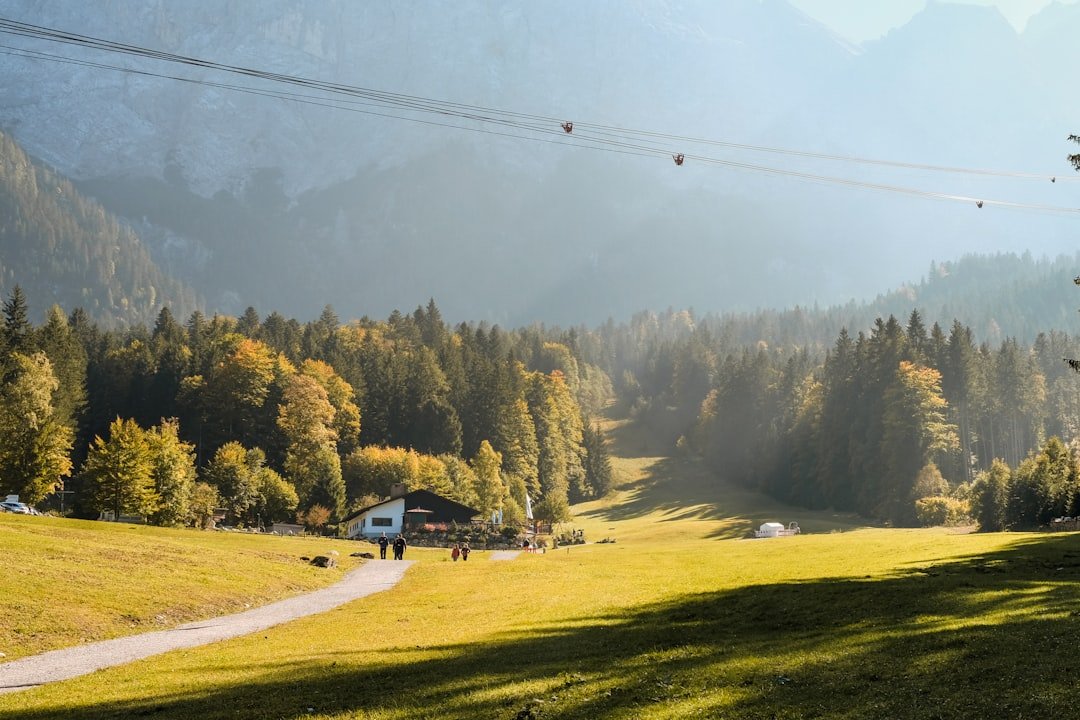
As you leave the village area, the walk opens into broader views of the valley. The White Lütschine, farm buildings, paths, cliffs and waterfalls provide useful leading lines and foreground elements. These scenes often communicate the scale of Lauterbrunnen better than a tightly framed waterfall photograph.
Use bends in the path or river to guide the viewer into the image. If clouds obscure the highest peaks, concentrate on the cliffs, farms, water and layered valley walls rather than waiting for a completely clear sky.
Trümmelbach Falls
Trümmelbach is very different from Staubbach. Instead of dropping openly from a cliff, the glacier water passes through a system of ten falls inside the mountain. The official Trümmelbach site says the system drains the glacier walls of the Eiger, Mönch and Jungfrau and can carry up to 20,000 liters of water per second.
Inside, the visual challenge is the contrast between bright moving water and dark rock. Stabilize your stance, watch your highlights and experiment with shutter speed rather than assuming every waterfall should look silky. A faster shutter can communicate the violence and texture of the water; a slower exposure can smooth it.
Warning: Trümmelbach Falls is a seasonal attraction and conditions can be wet and slippery. Switzerland Tourism advises sturdy shoes, and children under four are not admitted. Check current opening information before planning your photography session.
Stechelberg and the Upper Valley
Continuing toward Stechelberg gives you broader views back along the valley and additional waterfalls descending from the surrounding cliffs. This end of the walk is useful when you want landscape compositions with fewer village buildings and more emphasis on the scale of the valley walls.
Look behind you regularly as you walk. A scene that seems ordinary in one direction can become much stronger when photographed back toward the cliffs, river, farms or distant peaks.
Hidden Gems and Elevated Photo Side Trips
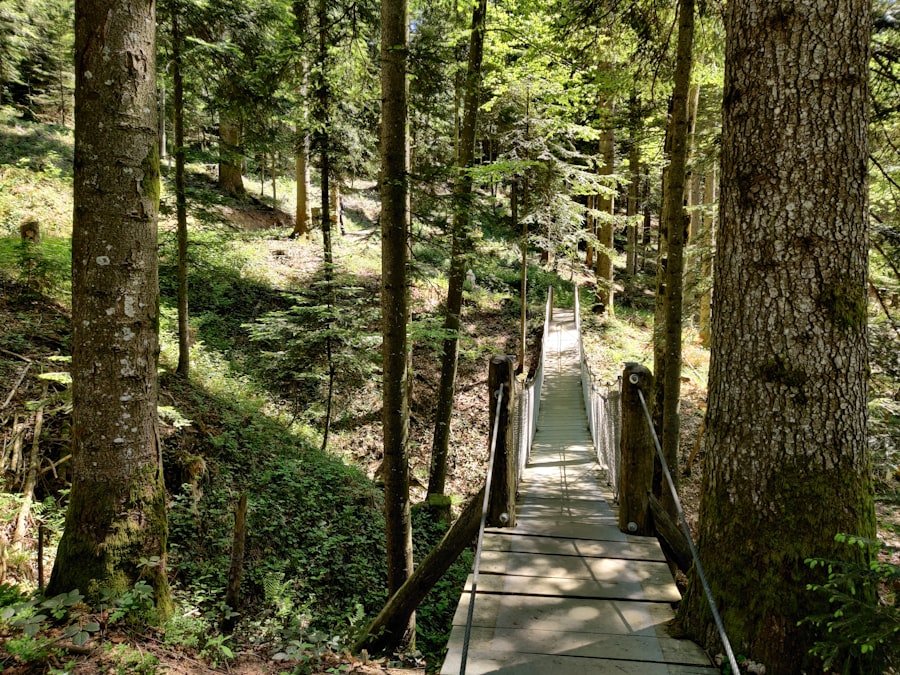
The valley floor has plenty of quieter compositions away from the most photographed waterfall viewpoints. Farm buildings, fences, river bends, roadside details and openings between trees can all provide stronger photographs than simply repeating the same famous composition.
For a very different perspective, consider Wengen as a separate side trip. The car-free village sits above Lauterbrunnen and provides elevated views across and down the valley. It is reached by rail rather than by continuing along the flat valley walk. Wooden chalets, balconies and the surrounding slopes can provide both architectural and landscape compositions.
Mürren is another worthwhile elevated side trip. It is also car-free and sits on the opposite side of the valley. From Lauterbrunnen, the Jungfrau Railways route uses the cableway to Grütschalp followed by the mountain railway to Mürren. From Mürren and the surrounding walking routes, photographers can look across toward the Eiger, Mönch and Jungfrau.
In summer, alpine meadows around the higher villages can add color and foreground interest. Photograph them from established paths rather than walking into working fields simply to improve a composition.
Pro Tip: If your main goal is a classic valley-floor photograph, spend your best light around Lauterbrunnen and Staubbach first. Save Wengen or Mürren for a separate session because reaching either village changes both your elevation and the direction of the view.
Tips for Capturing the Best Photos on the Lauterbrunnen Valley Walk
| Tip | How to Use It |
|---|---|
| Time of Day | Try early morning or later afternoon for softer light, but remember that the high valley walls can put the valley floor into shade well before sunset. |
| Use a Wide-Angle View | Show the scale of the cliffs, waterfall and valley together. A phone’s main or wide camera can also work well. |
| Focus on Waterfalls | Photograph both the full waterfall and tighter details showing spray, water texture or its relationship with the surrounding rock. |
| Include Foreground Interest | Use paths, rocks, fences, flowers or the river to create depth without leaving public paths. |
| Experiment with Shutter Speed | Use a faster shutter for detailed water and a slower shutter for smoother movement when conditions and camera support allow. |
| Check the Background | Move slightly left or right to prevent poles, signs or other distracting elements from intersecting waterfalls and mountain edges. |
Natural light matters, but there is no single setting that works throughout the valley. The cliffs create strong differences between bright sky, waterfalls and shaded ground. Check your exposure after moving between open meadows, wooded sections and enclosed waterfall areas.
Composition is equally important. Paths and the river can act as leading lines, while foreground rocks or flowers create depth. A low camera position can make nearby foreground elements more prominent, while a longer focal length can visually compress waterfalls, chalets and cliffs.
When the sky is much brighter than the landscape, expose carefully so important highlights are not lost. Modern phones and cameras can often recover shadow detail more successfully than completely overexposed sky or water.
The strongest Lauterbrunnen photograph is not always the widest one. A simple frame using one waterfall, one foreground element and the cliff behind it can communicate the scale of the valley more clearly than trying to include everything.
Seasonal Considerations for Photography
Lauterbrunnen changes substantially through the year, so the season affects water flow, vegetation, daylight, access and the appearance of the cliffs.
Spring
Snowmelt can make waterfalls more prominent, while the valley gradually turns greener. Conditions may change quickly, so protect your camera from spray and rain. Trümmelbach generally begins its visitor season in spring, but opening dates depend on conditions.
Summer
Summer brings long daylight hours, green meadows and strong contrast between vegetation and exposed rock. It is also a popular period for visitors, so starting earlier can make it easier to photograph well-known viewpoints without large groups in the frame.
Wildflowers can provide foreground color, but avoid stepping into meadows or crossing fences for a photograph. Agricultural fields are part of the working landscape.
Autumn
Autumn can bring warmer foliage colors, shorter days and lower-angle light. Watch the forecast carefully because changing cloud can alternately hide and reveal the surrounding peaks, creating very different photographs within a short period.
Winter
Snow can simplify compositions and create strong contrast around dark cliffs and buildings. However, do not assume that the same summer walking route, waterfall access or attraction opening applies in winter. Trümmelbach is generally closed outside its April-to-early-November visitor season, so verify current conditions before setting out.
Best Times of Day for Photography on the Lauterbrunnen Valley Walk
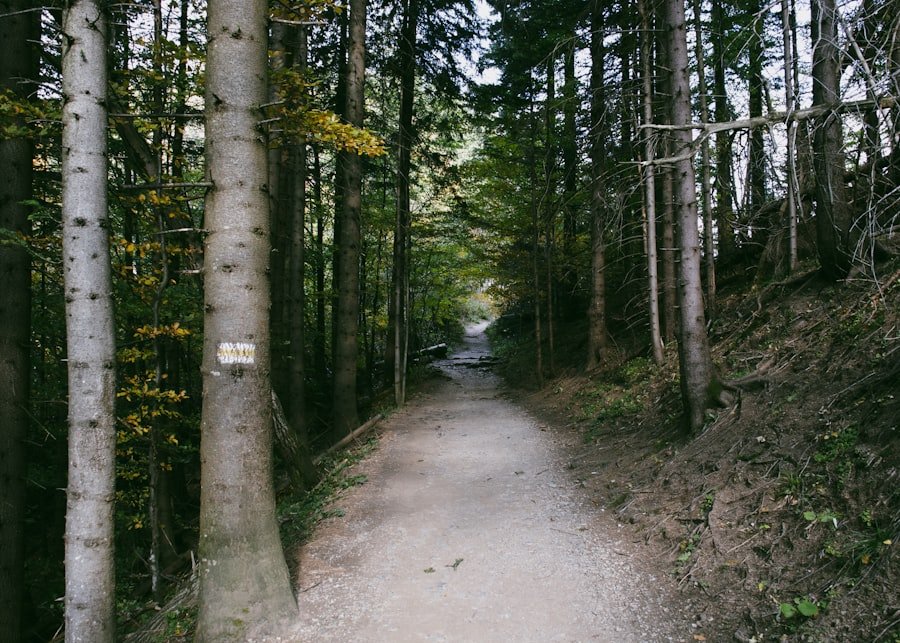
Early morning is useful for quiet streets, paths and popular viewpoints before the busiest part of the day. Depending on season and cloud cover, the upper mountains may receive light while parts of the valley floor remain shaded by the cliffs.
Late afternoon can also produce attractive directional light, especially on mountain faces and elevated viewpoints. However, a deep alpine valley does not behave like an open landscape. The sun can disappear behind a ridge or cliff long before the published sunset time at your location.
Midday should not automatically be dismissed. Bright conditions can work for graphic compositions, waterfall details, flowers and scenes in which the valley itself is evenly illuminated. Overcast weather can be especially useful for waterfalls because the softer light reduces extreme highlights and shadows.
Note: Check both the weather forecast and the sun’s position before committing to a sunrise or sunset session. Mountain ridges can block direct light even when the sky remains bright.
Photography Equipment Recommendations for the Lauterbrunnen Valley Walk
You do not need professional equipment to photograph Lauterbrunnen. A recent smartphone can handle wide valley scenes, waterfalls and travel photographs well, while a mirrorless or DSLR camera gives you more control over focal length, shutter speed and low-light exposure.
Wide-Angle Lens
A wide-angle lens is useful for the valley walls, village-and-waterfall compositions and large foreground elements. On a full-frame camera, something around 16-35 mm is a versatile range, but the exact focal length matters less than choosing a composition that does not make distant waterfalls look insignificant.
Standard Zoom
A normal zoom is often more useful than photographers expect. It can isolate Staubbach Falls while retaining enough of the village or cliff to provide context.
Telephoto Lens
A telephoto lens such as a 70-200 mm can isolate waterfalls, chalets, cliff details and distant peaks. It can also compress layers of the landscape, creating compositions that look very different from the familiar wide-angle photographs of Lauterbrunnen.
Tripod
A sturdy tripod helps with slower shutter speeds and low-light landscape work. It is optional for most daytime photographs, so consider whether the extra weight is worthwhile for your shooting style.
Polarizer and Neutral-Density Filter
A polarizing filter can reduce some reflections and deepen certain colors when used at an effective angle to the light. A neutral-density filter can help you use longer exposures in brighter conditions when you intentionally want blurred water movement.
Small Essentials
- Spare battery or power bank
- Lens cloth for waterfall spray and rain
- Rain cover or dry bag in unsettled weather
- Enough storage space for photos and video
- Comfortable footwear with useful grip
- Water and an extra layer for changing alpine conditions
How to Make the Most of Your Photography Experience on the Lauterbrunnen Valley Walk
Start with a simple route plan rather than a long list of exact compositions. Identify the locations you most want to photograph, then leave enough time between them to respond to weather and changing light.
At each stop, take a few seconds to look in several directions before raising the camera. Photograph the obvious view, then move to a different legal position and look for a second composition. Changing height, focal length or foreground can produce a meaningfully different photograph without needing to leave the path.
Keep your camera or phone accessible while walking because changing cloud, drifting waterfall spray and brief sunlight can transform a scene quickly. At the same time, avoid walking while looking through a screen or viewfinder, especially near wet surfaces, roads, stairs or waterfall areas.
If photography is your main reason for visiting, avoid trying to combine the valley walk, Trümmelbach, Wengen and Mürren into one rushed session. The valley floor alone offers enough subject variety for several hours.
Photography Safety, Etiquette and Drone Rules
Lauterbrunnen’s scenery includes working farms, homes, roads, public paths and natural attractions. A good photograph is not a reason to cross a fence, enter a field, block traffic or stand where other visitors cannot pass.
- Stay on established public paths and respect signs, fences and private property.
- Give farm vehicles and local traffic room to pass.
- Do not position tripods where they create a trip hazard.
- Keep a secure grip on cameras and phones near waterfalls and wet surfaces.
- Wear footwear with suitable grip if entering Trümmelbach.
- Keep children closely supervised around water, roads, stairs and steep terrain.
Drone photography requires additional planning. The Swiss Federal Office of Civil Aviation sets national drone rules, including a maximum open-category height of 120 meters above ground and restrictions involving people and other aircraft. Pilots must also check geographical flight restrictions before flying.
Before every planned flight, consult the official FOCA geographical flight-restrictions guidance and drone map. Local restrictions, temporary airspace measures and other conditions can change, so a location that appears suitable in a photograph should not automatically be assumed to be legal for a drone.
Warning: Do not launch a drone solely because you have seen other drone footage from Lauterbrunnen. Check the current official airspace restrictions and applicable operating rules for your exact location before every flight.
For readers browsing the site’s broader travel-and-food content, there is also a separate article on Asian melon. That article is unrelated to the Lauterbrunnen Valley Walk and is not part of this photography itinerary.
Frequently Asked Questions
What is the Lauterbrunnen Valley Walk?
It is a commonly used name for walking through the floor of Lauterbrunnen Valley between Lauterbrunnen and the Stechelberg area. Exact routes vary. SwitzerlandMobility lists one Stechelberg-Lauterbrunnen route at about 8.7 km and roughly 2 hours 14 minutes of walking.
What are the best photo spots along the Lauterbrunnen Valley Walk?
Good walk-accessible subjects include Staubbach Falls, Lauterbrunnen village, the White Lütschine and surrounding valley scenery, Trümmelbach Falls when open, and the broader landscapes toward Stechelberg. Wengen and Mürren offer excellent elevated views but require separate transport or additional hiking.
How long does the Lauterbrunnen Valley Walk take?
Allow roughly 2 to 2.5 hours for continuous walking on a Lauterbrunnen-Stechelberg valley route. Photographers should allow considerably longer for compositions, changing light and breaks. Add another 1 to 2 hours if you plan to visit Trümmelbach Falls.
Are early morning and late afternoon best for photography?
They often provide softer or more directional light and fewer visitors, but the tall valley walls can block direct sunlight. Overcast conditions can also work very well for waterfalls, and midday can be useful when more of the valley floor is illuminated.
What should I bring for a photography walk in Lauterbrunnen?
A phone or camera, spare battery, lens cloth, comfortable footwear and suitable clothing are enough for most visitors. A wide-angle lens is useful for the valley, a telephoto lens helps isolate waterfalls and peaks, and a tripod or neutral-density filter is optional for slower exposures.
Is Trümmelbach Falls open all year?
No. The official attraction generally operates from early April to early November, depending on weather and conditions. Opening hours vary by season, so check the official Trümmelbach website shortly before your visit.
Can young children visit Trümmelbach Falls?
Switzerland Tourism states that children under four are not permitted at Trümmelbach Falls. Visitors should also expect wet and potentially slippery walking surfaces inside the attraction.
Can I fly a drone in Lauterbrunnen?
Do not assume that drone flights are permitted everywhere in the valley. Swiss FOCA requires pilots to follow national operating rules and check geographical flight restrictions for the exact location before each flight. Temporary restrictions and local conditions can also matter.
Sources
- Switzerland Tourism: Lauterbrunnen — official destination information on the valley, waterfalls and surrounding villages.
- Lauterbrunnen Tourism: Staubbach Falls — official Staubbach Falls height and visitor information.
- Switzerland Tourism: Trümmelbach Falls — visitor access, approximate visit time and safety information.
- Trümmelbach Falls Official Site — seasonal opening information and facts about the ten glacier-water falls.
- SwitzerlandMobility: Stechelberg-Lauterbrunnen — route distance, walking time and elevation data.
- Swiss Federal Office of Civil Aviation: Drone Flight Rules — official Swiss operating and geographical-restriction requirements for drones.