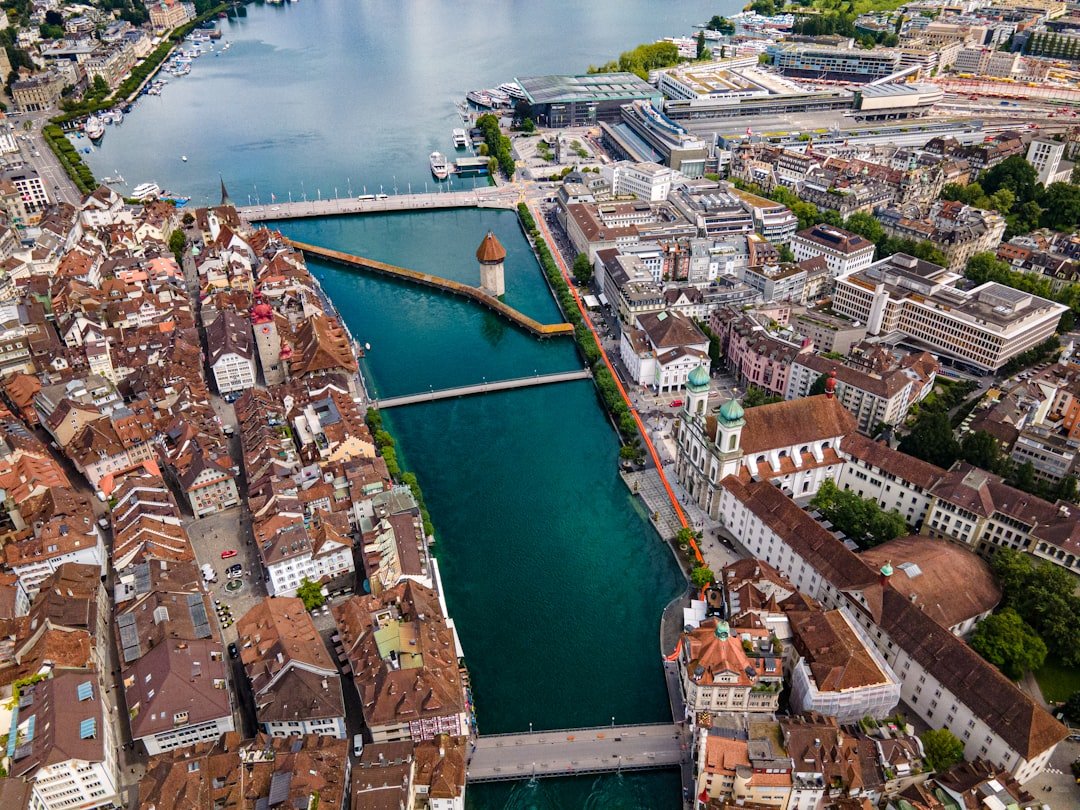
Switzerland offers extraordinary opportunities for drone photography, from Alpine peaks and turquoise lakes to historic villages and modern cities. I enjoy the creative freedom that an aerial viewpoint gives me, but getting the shot is only part of the job. Before every flight, I also need to know which Swiss drone rules apply to my aircraft, location and planned operation.
Quick Answer
Drone photography is legal in Switzerland, but the rules depend on the drone and the operation. In the open category, the usual ceiling is 120 m above ground, visual line of sight is required, crowds cannot be overflown, and operator registration is usually required for camera drones. Check FOCA’s drone map and DABS before every flight.
Key Takeaways
- The normal maximum altitude in Switzerland’s open category is 120 m above ground level.
- Commercial photography does not automatically require a FOCA operational authorization. The planned operation determines whether the open or specific category applies.
- Camera-drone operators normally need to register, even when the drone weighs less than 250 g.
- Safety distances depend on the drone class and whether the flight is in subcategory A1, A2 or A3.
- Liability insurance with at least CHF 1 million coverage is required when operating a drone weighing 250 g or more.
- Before every flight, check both the official Swiss drone map and the Daily Airspace Bulletin Switzerland for geographical and temporary restrictions.
Note: This guide was checked against official Swiss guidance on 17 August 2026. Drone maps, temporary airspace restrictions and regulations can change, so always verify the current rules before flying. This article is general information, not legal advice.
Swiss Drone Regulations and Restrictions
The Swiss Federal Office of Civil Aviation (FOCA) is the main federal aviation authority for drone operations. For most photographers, the first question is whether a planned flight can stay within the open category.
Open-category flights do not require a FOCA operational authorization when all applicable conditions are met. Important general rules include staying within visual line of sight, remaining within the permitted altitude, respecting uninvolved people, avoiding assemblies of people, obeying geographical flight restrictions and giving way to manned aircraft.
| Rule | What It Means |
| Maximum altitude | In the open category, the normal maximum is 120 m above ground level. |
| Visual line of sight | The remote pilot must normally keep the drone within visual line of sight in the open category. |
| Assemblies of people | Flying over an assembly of people is prohibited in the open category. |
| Distance from people | The required separation depends on subcategory A1, A2 or A3. There is no universal 5 m rule. |
| Registration | Operators generally register with the relevant EASA member state. The exemption applies only when the drone is under 250 g and has no camera, microphone or similar personal-data sensor. |
| Insurance | Liability insurance with at least CHF 1 million coverage is required for drones weighing 250 g or more. |
| Restricted areas | Check the official drone map and DABS before each flight. Airports are only one type of restricted area. |
A1, A2 and A3 Safety Distances
The open category is divided into A1, A2 and A3. The applicable subcategory depends largely on the drone’s class identification label, weight and operating conditions.
- A1: Class C0 drones and qualifying legacy or privately built drones under 250 g may fly over individual uninvolved people, although deliberately lingering over people should be avoided. For C1 drones, overflight of uninvolved people should be avoided and ended immediately if it happens unexpectedly.
- A2: Uninvolved people may not be overflown. The horizontal separation is normally at least 30 m, or 5 m when an eligible drone is using low-speed mode, and the distance must also satisfy the 1:1 rule. If the drone is 40 m high, for example, it should be at least 40 m horizontally from an uninvolved person.
- A3: Flights must be well separated from uninvolved people and populated activity. FOCA applies additional separation requirements, including the A3 rules concerning residential, commercial, industrial and recreational areas.
Warning: Do not choose a distance simply because your drone app allows the aircraft to fly there. Your legal separation requirement depends on the drone class, operating subcategory, people on the ground and any geographical restriction covering the location.
Operator Registration and Pilot Certificates
One of the most important corrections to older advice is that Switzerland generally registers the drone operator, not each individual drone. FOCA explains the current process on its drone operator registration page.
Registration is generally required for individuals and organisations flying drones in Switzerland. The main exemption applies when the aircraft satisfies both conditions below:
- It weighs less than 250 g.
- It has no camera, microphone or other sensor capable of recording personal data.
That means a small camera drone weighing less than 250 g will normally still require operator registration. After registration, the operator receives a UAS operator number that must be used as required by FOCA.
Pilot-certificate requirements are separate from operator registration. According to FOCA’s remote-pilot guidance, pilots using C0 drones, qualifying legacy drones under 250 g or privately built drones under 250 g in A1 do not need a remote-pilot certificate. Other operations may require an A1/A3, A2 or specific-category qualification.
Remote ID and Operator Identification
FOCA also requires Remote ID to be active when it applies to the aircraft and operation. Class C0 drones, legacy drones and privately built drones are among the exemptions listed by FOCA. For equipped drones, the operator number is entered into the Remote ID settings so the aircraft can be identified digitally.
Do Commercial Drone Photographers Need a FOCA Permit?
Being paid to take drone photographs does not by itself mean that every flight needs a FOCA operational authorization. The more useful question is whether the flight can satisfy all requirements of the open category.
If it can, the operation can generally remain in the open category without a FOCA operational authorization. If it cannot, the operation may fall into the specific category. FOCA lists examples that normally require specific-category treatment, including:
- Operating a drone weighing 25 kg or more.
- Flying above 120 m where an open-category exception does not apply.
- Flying beyond visual line of sight.
- Flying over an assembly of people.
- Carrying dangerous goods.
Specific-category operations can involve an STS declaration or an authorization process based on another approved method, depending on the operation. Photographers planning unusual or higher-risk work should use FOCA’s specific-category guidance rather than assuming that a generic “commercial photography permit” exists.

Pro Tip: For paid photography, plan the shot around open-category limits whenever practical. Changing the launch point, camera angle, time of day or drone class may allow the same photograph without moving into a more complex authorization process.
Rules for Visitors and Foreign Drone Operators
Visitors should sort out registration and certificates before arriving at the launch site. Operators who are resident or established in an EASA member state register in that member state, and that registration is recognised across the other EASA member states, including Switzerland.
If I live outside the EASA member states and want to operate a drone in Switzerland, FOCA says I must register in Switzerland unless I have already registered as an operator in another EASA member state.
Remote-pilot certificates issued by an EASA member state are recognised in Switzerland. Certificates issued by non-EASA countries are not automatically recognised, so a visitor relying on a certificate from another country should check FOCA’s current qualification requirements before flying.
Drone Classes and Legacy Drones
The class label on a drone matters because it helps determine where and how the aircraft may operate. Switzerland uses class identification labels such as C0, C1, C2, C3 and C4 for open-category drones.
Older aircraft without a class identification label may qualify as legacy drones if they were placed on the market before 1 January 2024. Their operating possibilities depend on weight and other conditions. FOCA’s consumer information for drones explains the current class and legacy-drone rules.
Safety Guidelines for Drone Photography in Switzerland
Before every flight, I treat the legal check and physical pre-flight inspection as one process. A beautiful location is not useful if the airspace is restricted, the aircraft cannot maintain enough separation from people or the weather makes VLOS unreliable.
Pre-Flight Checklist
- Confirm the drone class, weight and operating subcategory.
- Confirm that operator registration and any required pilot certificate are valid.
- Make sure the required operator identification is on the drone.
- Activate Remote ID when it applies.
- Check the official Swiss drone map.
- Check the latest DABS for temporary airspace restrictions.
- Confirm that the planned altitude remains within the applicable limit.
- Identify uninvolved people, roads, buildings and possible escape routes.
- Check batteries, propellers, control links, GPS/navigation status and camera settings.
- Check wind, precipitation, visibility and changing mountain weather.
- Make sure the drone can remain within visual line of sight.
- Plan a safe landing area and an immediate landing procedure if manned aircraft or emergency services appear.
In the open category, keeping the drone within visual line of sight is both a legal requirement and one of the most important ways to detect approaching aircraft, terrain and unexpected hazards early.
Manned aircraft always take priority. This is particularly important in mountain areas where helicopters, gliders, paragliders and other aircraft may appear quickly or operate close to terrain.
If police, firefighters or other emergency services begin operating near my flight, I land immediately rather than trying to finish the photograph. FOCA specifically requires drone pilots not to interfere with emergency operations.
Understanding No-Fly Zones and Restricted Areas
A location that looks empty on the ground can still sit inside restricted or temporarily changed airspace. FOCA therefore instructs drone pilots to check current geographical restrictions before each flight.
The FOCA geographical flight restrictions page links to the official interactive drone map. Restricted areas can include:
- Aerodrome control zones and aerodrome perimeters.
- Prisons.
- Wildlife protection areas.
- Nuclear power plants.
- Military areas.
- Energy and gas infrastructure.
- Restrictions created by individual cantons.
The map is not the only check. FOCA also tells pilots to consult the Daily Airspace Bulletin Switzerland (DABS). DABS displays important current aviation notices and restrictions, and it can be updated during the day.
Warning: Do not rely only on a manufacturer’s flight app or an old screenshot of the Swiss drone map. FOCA says the official map changes continuously, and temporary restrictions may appear in DABS.
When the official drone map shows a geographical restriction, the required permission is not necessarily issued by FOCA. The responsible authority is identified in the map information for that restriction.
Privacy and Private Property
Drone photography also involves Swiss privacy and property rights. FOCA’s privacy and third-party guidance explains that images, voices and other information can be personal data when an individual can be identified.
Public-space photography is not automatically unlawful merely because a person appears somewhere in an image. Context matters, including whether the person is singled out, whether the recording is intrusive and how the image will be stored or used.
Private spaces require greater caution. I should not use a drone to look into windows, fenced gardens, terraces, courtyards or other areas that people reasonably expect to remain private. When identifiable people in a private area will be photographed or filmed, express consent may be necessary.
Low-altitude flight over another person’s property can also interfere with property rights or create an unreasonable nuisance. Permission from the people concerned may therefore be required, particularly when the drone flies low over a garden or similar private area.
Insurance Requirements for Drone Photography in Switzerland

Insurance is an important part of responsible drone operation, but the rule is more specific than saying that every drone requires the same policy.
FOCA states that operators must have third-party liability insurance with a guaranteed coverage amount of at least CHF 1 million before operating a drone weighing 250 g or more. FOCA recommends insurance for lighter drones as well.
I also check the wording of the policy rather than assuming ordinary household liability coverage automatically includes every drone activity. This is especially important if the aircraft is used for paid photography, higher-value equipment or activities outside ordinary recreational use.
Penalties for Violating Drone Photography Rules in Switzerland
Swiss drone requirements are enforceable rules, not optional photography guidelines. Depending on the violation and the law involved, non-compliance can result in fines or other legal consequences.
It is not useful to publish one generic fine range because the consequences vary with the offense. A registration or identification violation is different from an unsafe airspace incursion, privacy violation or operation that required an authorization.
Privacy disputes can also lead to separate civil or criminal issues. For example, an affected person may seek deletion or destruction of images, make a data-protection complaint or pursue other remedies when the legal requirements are met.
The simplest way I reduce this risk is to confirm the operating category, registration, qualification, insurance, location and airspace restrictions before the aircraft leaves the ground.
Resources for Staying Updated on Drone Regulations in Switzerland
For current rules, I use official sources rather than relying on forum posts or old travel articles. My pre-flight research starts with FOCA’s drone information and then moves to the location-specific map and DABS checks.
- FOCA flight rules for drones for altitude, VLOS, people and operating-category rules.
- FOCA operator registration for registration requirements and foreign operators.
- FOCA remote-pilot guidance for A1/A3, A2 and other certificate requirements.
- FOCA geographical flight restrictions for the current drone map.
- Daily Airspace Bulletin Switzerland for current airspace changes.
- FOCA privacy and third-party guidance for photography, private property and data-protection considerations.
Drone photography in Switzerland can still be an exceptional creative experience. The difference is that I now plan the legal side with the same care as composition, weather and light. Checking the aircraft category, people on the ground, privacy, the drone map and DABS before takeoff gives me a much stronger foundation for capturing the landscape safely and responsibly.
Frequently Asked Questions
What are the main rules for drone photography in Switzerland?
For an open-category flight, the main rules include a normal maximum altitude of 120 m above ground, visual line of sight, no flight over assemblies of people, the required A1/A2/A3 separation from uninvolved people, operator registration when required, appropriate pilot qualifications and compliance with geographical flight restrictions. Check the official drone map and DABS before every flight.
Do I need a permit for commercial drone photography in Switzerland?
Not simply because the photography is commercial. If the operation complies with all open-category conditions, a FOCA operational authorization is generally not required. Flights outside open-category limits may fall into the specific category and require an authorization or another applicable specific-category process.
Do I need to register a camera drone that weighs less than 250 g?
Usually yes. The operator-registration exemption applies only when the drone is under 250 g and has no camera, microphone or other sensor capable of recording personal data. A typical sub-250 g camera drone therefore still requires operator registration.
What is the maximum drone altitude in Switzerland?
The normal maximum in the open category is 120 m above ground level. Operations above that limit generally require specific-category treatment unless a particular rule or exception applies.
Can I fly a drone in a Swiss city?
A city is not automatically a blanket no-fly zone, but urban flights can be difficult because of uninvolved people, assemblies, buildings and geographical restrictions. The drone’s class and A1/A2/A3 operating conditions determine the required separation. Always check the official drone map and DABS as well.
What insurance do I need for a drone in Switzerland?
FOCA requires third-party liability insurance with at least CHF 1 million coverage when operating a drone weighing 250 g or more. FOCA recommends insurance for lighter drones too. Confirm with the insurer that the policy covers the way you plan to use the drone.
Can a foreign visitor fly a drone in Switzerland?
Yes, provided the applicable Swiss requirements are met. Operators resident in an EASA member state normally register in that state. Someone resident outside the EASA member states generally needs Swiss registration unless already registered in another EASA member state. Non-EASA pilot certificates are not automatically recognised in Switzerland.
Are there specific privacy rules for drone photography in Switzerland?
Yes. Identifiable images and recordings can involve personal-data and personality rights. Public-space photography is assessed according to context, while private spaces such as enclosed gardens, terraces and areas visible only from the air require much greater caution. Avoid intrusive recording and obtain consent when required.
What are the consequences of breaking Swiss drone rules?
Depending on the violation, consequences can include fines or other administrative, civil or criminal measures under the applicable law. There is no single fine that applies to every drone violation, so it is better to verify the exact requirement before flying rather than rely on a generic penalty estimate.
Sources
- Swiss Federal Office of Civil Aviation: Flight Rules for Drones — altitude, VLOS, people, A1/A2/A3, Remote ID and specific-category triggers.
- Swiss Federal Office of Civil Aviation: Registration as a Drone Operator — registration exemptions and foreign-operator requirements.
- Swiss Federal Office of Civil Aviation: Training and Certificates for Remote Pilots — certificate requirements and foreign certificates.
- Swiss Federal Office of Civil Aviation: Geographical Flight Restrictions — drone map, DABS and restricted-area checks.
- Swiss Federal Office of Civil Aviation: Drone FAQ — liability-insurance requirement and minimum coverage.
- Swiss Federal Office of Civil Aviation: Respect for Privacy and Third Parties — identifiable people, private spaces, consent and property considerations.