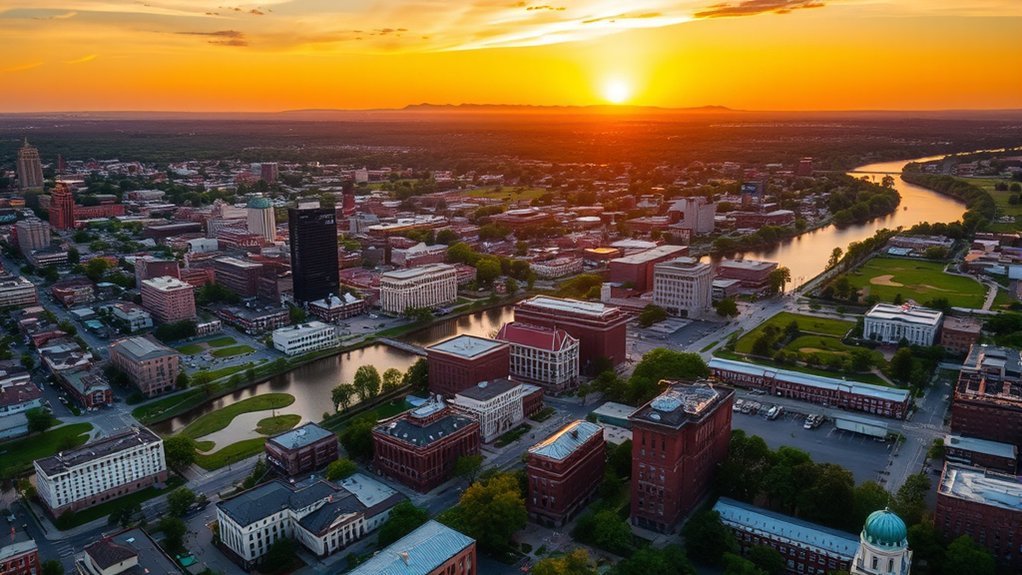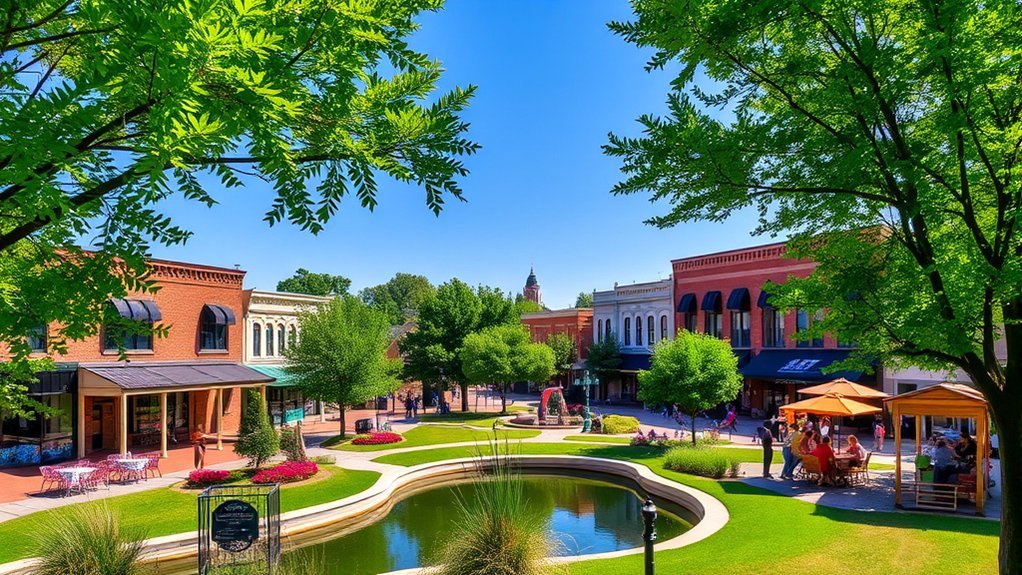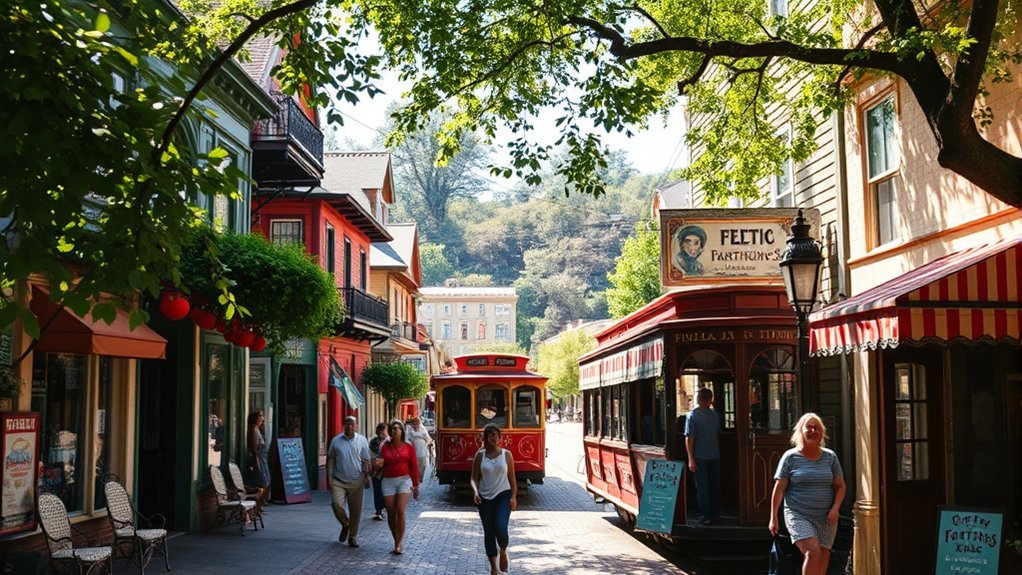
Eureka Springs, Arkansas, packs historic architecture, art galleries, natural springs, wooded trails, unusual attractions, and a lively dining scene into a small Ozark mountain town. The winding streets and steep terrain make planning more important than the town’s size suggests. With the right mix of walking, trolley rides, scenic drives, and advance reservations, you can see the highlights without spending your trip searching for parking or backtracking across town.
Quick Answer
The best things to do in Eureka Springs include exploring the historic downtown, visiting Thorncrown Chapel, walking around the town’s natural springs, touring Quigley’s Castle, enjoying Lake Leatherwood and nearby Ozark trails, and trying local restaurants. For most visitors, two or three days provides enough time for both downtown attractions and outdoor activities.
Key Takeaways
- Historic downtown is compact, but its steep streets and limited parking make the trolley useful.
- Thorncrown Chapel, the historic district, local springs, Quigley’s Castle, and Lake Leatherwood are among the strongest first-visit attractions.
- Admission prices, tour schedules, trolley routes, and restaurant hours can change, so current first-party information matters.
- Families, travelers with mobility needs, and visitors bringing pets should check individual attraction policies before arrival.
- Allow at least a full day for the highlights; a weekend gives you enough time to add outdoor recreation and nearby attractions without rushing.
Overview of Eureka Springs
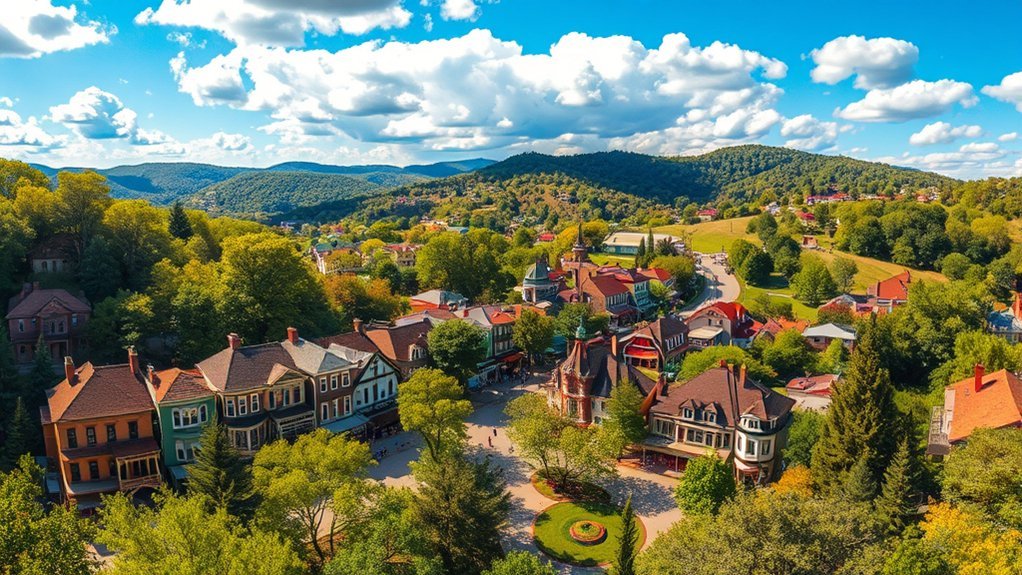
Nestled in the Ozark Mountains of Northwest Arkansas, Eureka Springs is best known for its unusual street plan, Victorian-era buildings, galleries, locally owned shops, wooded surroundings, and natural springs. In 1970, Eureka Springs became Arkansas’s first historic district placed on the National Register of Historic Places, giving the town an unusually large concentration of protected historic character. You can learn more through the City of Eureka Springs Historic District Commission.
The official tourism organization currently describes Eureka Springs as home to about 60 natural springs. These springs are part of the town’s history and landscape, although visitors today are more likely to encounter them as small parks, stone grottoes, and roadside landmarks than as large swimming or soaking areas.
Downtown is highly walkable in distance, but not always easy walking. Streets rise sharply, sidewalks can be uneven, and stairs connect different levels of the historic district. Comfortable shoes and a flexible schedule make a noticeable difference.
Getting Around Eureka Springs
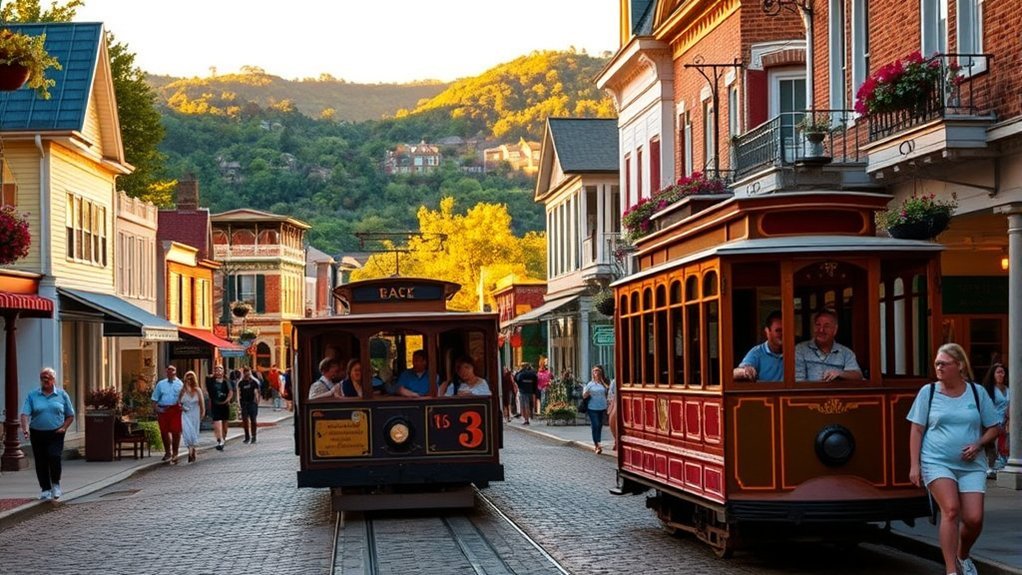
You do not need to move your car every time you change attractions. Eureka Springs Transit operates trolley routes connecting downtown with parking areas and destinations around town. Walking works well within the historic core, while a car remains useful for Thorncrown Chapel, Blue Spring Heritage Center, Lake Leatherwood, Quigley’s Castle, Beaver Lake, and other attractions outside the center.
Trolley Services Overview
Eureka Springs Transit operates Red, Blue, Yellow, and Purple routes, although route availability and operating hours vary by season and day. Before relying on a specific line, check the current trolley schedule.
For 2026, the official fare page lists an adult all-day pass at $6, an adult two-day pass at $10, a one-ride pass at $4, and a $2 child pass for ages 7 through 11. These fares can change after publication, so confirm them on the Eureka Springs Transit fare page before your trip.
Pro Tip: If you plan to spend several hours downtown, parking once and using the trolley can be easier than repeatedly searching for a closer space on the town’s narrow, steep streets.
Parking Availability Insights
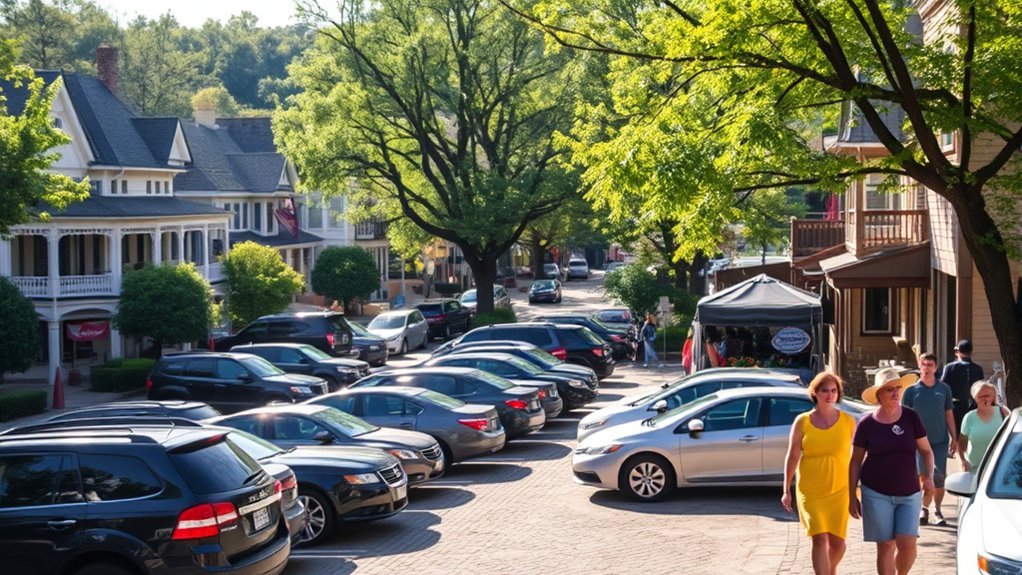
Parking includes both city-operated and private facilities. Current local guidance lists more than 600 spaces along the Main Street corridor between Planer Hill and the railway depot. Rates and payment systems can differ by location.
| Parking Option | Current Planning Notes |
|---|---|
| North Main City Lot | Free city parking; connected to trolley service. |
| Planer Hill Park & Ride | Listed at $5 for all-day parking in current Chamber guidance. |
| Transit & Welcome Center | Listed at $5 all day; all trolley routes stop at the center. |
| Spring Street City Meters | City guidance identifies PassPort Payment for these meters. |
| Private Lots | Rates and payment methods are set by the individual operator; read the posted sign before parking. |
The Greater Eureka Springs Chamber parking guide is a useful source for current city lots and trolley connections.
Note: Do not assume one parking app works everywhere. City meters and private lots may use different systems, so follow the instructions displayed at the exact space or lot you use.
Accessibility and Walking
Eureka Springs’ historic setting creates accessibility challenges that are easy to underestimate. Downtown includes steep grades, steps, uneven surfaces, and older buildings that may not provide the same access as newer properties. Visitors with mobility limitations should plan individual stops rather than assuming every downtown attraction is wheelchair accessible.
Some destinations provide specific accessible options. For example, Blue Spring Heritage Center states that its tour is handicap accessible. When accessibility is essential, contact the attraction or transportation provider directly before arrival and ask about entrances, restrooms, parking, slopes, stairs, and seating.
Parking and Accommodation Options
Where you stay can change how much driving you need to do. A room in or immediately around historic downtown puts restaurants, galleries, Basin Spring Park, and many shops within walking distance, but downtown properties may have limited on-site parking and can require more climbing on foot.
Hotels and motels along East Van Buren and Highway 62 generally make vehicle access easier. Cabins, cottages, treehouses, campgrounds, and RV properties around the outskirts appeal to travelers who value privacy or outdoor space, but you will usually rely more heavily on a car.
- Best for walking: historic downtown lodging.
- Best for easier vehicle access: Highway 62 and East Van Buren properties.
- Best for a quiet nature-focused stay: cabins, cottages, treehouses, and campgrounds outside the center.
- Best for motorcycles: a property with convenient, level parking and easy highway access.
Before booking, confirm whether parking is included, whether the room requires stairs, and whether the property is actually on a trolley route if you plan to use transit.
Arts & History Attractions
Eureka Springs’ historic district is an attraction in its own right. Instead of treating downtown only as a place to shop, allow time to notice the stone walls, stairways, narrow lots, historic storefronts, springs, public art, and buildings fitted into the steep terrain.
- Local art galleries: Downtown galleries feature work by local and regional artists in a range of media.
- Historical walking tours: A guided tour can add context to buildings, springs, hotels, and the way the town developed around its unusual topography.
- Public art: Murals, sculptures, installations, and creative storefronts reinforce the town’s long-standing arts identity.
- Local events: Concerts, exhibitions, festivals, parades, and seasonal celebrations regularly bring activity to downtown.
If an event matters to your trip, check the official Eureka Springs events calendar before choosing your dates. Event schedules vary from year to year.
Unique Architectural Sites
Thorncrown Chapel is the architectural highlight for many first-time visitors. Architect E. Fay Jones designed the woodland chapel, which he described as “Ozark Gothic.” The structure rises 48 feet and incorporates 425 windows and more than 6,000 square feet of glass. Its scale, timber framework, and wooded setting make it dramatically different from a conventional church. Visit the official Thorncrown Chapel site for current visitor information.
Quigley’s Castle, south of town, provides a very different architectural experience. The family-built home is known for rock-covered surfaces, gardens, collections, and plants incorporated into the interior. As of August 15, 2026, the attraction lists admission at $10 per adult, while children 14 and under are free with a parent. Hours are limited and seasonal, so check the official Quigley’s Castle information before driving out.
The Flatiron Building is another downtown landmark worth spotting while you walk through the historic district. Its narrow shape follows the unusual street layout and helps illustrate how Eureka Springs architecture adapts to tight, steep sites.
The Mildred B. Cooper Memorial Chapel is often mentioned by architecture fans because it was also designed by E. Fay Jones, but it is in Bella Vista rather than Eureka Springs. Consider it a separate Northwest Arkansas side trip rather than part of a downtown walking route.
Anthony Chapel at Garvan Woodland Gardens belongs in a broader Arkansas architecture itinerary, not a normal Eureka Springs sightseeing day. It is located at Garvan Woodland Gardens in Hot Springs, Arkansas, well outside the Eureka Springs area.
Note: Thorncrown Chapel and Quigley’s Castle fit naturally into a Eureka Springs trip. Cooper Chapel and Anthony Chapel require separate drives and should not be grouped into a short downtown itinerary.
Outdoor Activities and Scenic Views
The surrounding Ozarks give you several ways to balance downtown sightseeing with time outdoors.
- Lake Leatherwood City Park: A convenient choice close to town for hiking, mountain biking, lake scenery, and a quieter break from downtown.
- Beaver Lake: The large reservoir east and west of the surrounding road network supports boating, paddling, fishing, shoreline recreation, and scenic drives.
- Hobbs State Park-Conservation Area: Arkansas’s largest state park has a 54-mile multi-use trail system for hiking, mountain biking, and horseback riding along with Beaver Lake access. Check Hobbs State Park-Conservation Area for current trail conditions and closures.
- Natural springs: Downtown and nearby spring sites make an easy scavenger-hunt-style activity while walking through town.
- Razorback Observation Tower: The observation tower provides an elevated view over the Ozark landscape. Check current access details when you arrive because operating conditions can change.
Warning: Ozark weather and trail conditions can change quickly. Carry water, wear shoes with good traction, and check park notices before longer hikes. Hobbs State Park also closes specified trails and facilities during certain regulated hunting periods; the park publishes the affected dates and trails.
Local Dining Experiences
Eureka Springs has a surprisingly varied restaurant scene for a small town. You can find breakfast cafés, casual patios, health-focused menus, bars, and reservation-worthy dinner restaurants within a relatively short area. Hours often vary by day and season, so avoid assuming every restaurant serves lunch and dinner seven days a week.
Eclectic Restaurant Options
- Grotto Wood-Fired Grill and Wine Cave: A dinner-oriented restaurant built around a wood-fired grill, with dishes such as steaks, seafood, pork, and seasonal plates rather than the pizza-focused description in the original article.
- So Good Kitchen: A casual option for travelers looking for fresh, creative dishes and alternatives to heavier Ozark comfort food.
- Le Stick Nouveau: A more formal, multi-course dining choice that works well for a date night or special occasion.
- Eureka Springs Coffee House: A downtown coffee stop to consider when its current operating hours fit your schedule.
- Mud Street Cafe: A long-running downtown choice for breakfast, coffee, and lunch.
Outdoor Dining Experiences
Patios and outdoor tables can be especially enjoyable in spring and fall, when temperatures are comfortable enough to linger downtown. Seating arrangements change with weather and season, however, so choose a restaurant for its menu first and treat a patio as a bonus rather than a guarantee.
Pro Tip: Make reservations for destination dinner restaurants on busy weekends. For breakfast and lunch, arriving outside the busiest late-morning and noon periods can reduce waiting.
Family-Friendly Attractions
Families can combine short attractions, outdoor stops, and downtown exploring without turning the day into one long museum visit. Prices below were checked for August 15, 2026, but admission can change.
- Blue Spring Heritage Center: Gardens, walking paths, cultural history, and a powerful natural spring make this a slower-paced family stop. Current admission is $17.75 for adults, $9.75 for children ages 6–15, and free for children 5 and under. The attraction states that its tour is accessible. See Blue Spring Heritage Center visitor information.
- Hidden Eureka: A Downtown Walking Tour: The current version of the former underground-focused tour is a 75–90 minute guided walk covering springs, hotels, public art, local history, and remnants of Eureka Springs’ lower-level downtown spaces. As of August 15, 2026, general admission is $19.50, and children 12 and under are free with a paid adult.
- Razorback Observation Tower: A quick sightseeing stop for elevated Ozark views. Families with young children should consider the stairs before adding it to the day.
- Onyx Cave Park: A self-guided cave experience offers a different setting from the town’s outdoor trails. Allow extra layers of clothing for the cooler cave environment and check current operating information before visiting.
- Quigley’s Castle: Its unusual house, rocks, gardens, and collections can be an engaging stop for older children who enjoy eccentric places. Children 14 and under are currently free with a parent.
A good family strategy is to alternate one structured attraction with one flexible stop such as a park, spring, short walk, snack break, or trolley ride.
Motorcycle Rides and Scenic Drives
Eureka Springs is popular with motorcycle riders because the surrounding Ozarks provide winding roads, wooded hills, lake views, and numerous small-town stops. Instead of treating distant scenic byways as if they run directly through downtown, use Eureka Springs as a base for loops through Northwest Arkansas.
Depending on how much riding you want, routes can incorporate Arkansas Highway 23, roads toward Beaver Lake, Highway 21, and longer connections toward the Buffalo National River region. Choose the loop according to road conditions, daylight, weather, and your riding experience rather than trying to cover the maximum mileage.
Drivers can enjoy the same roads at a slower pace, stopping at overlooks, lake access points, cafés, and nearby communities.
Warning: Ozark roads can include sharp curves, steep grades, wildlife, wet leaves, loose gravel near shoulders, and rapidly changing weather. Ride or drive conservatively, especially on unfamiliar roads and after rain.
Suggested Itineraries and Local Secrets
The easiest way to plan Eureka Springs is to group attractions by location. Keep downtown activities together, pair south-of-town attractions with the same drive, and give lakes or state parks their own block of time.
Must-See Attractions for a First Visit
- Thorncrown Chapel: Make this one of your first driving stops, then continue into town.
- Historic downtown: Walk Spring Street, Main Street, Basin Spring Park, galleries, shops, and spring sites.
- Hidden Eureka walking tour: Add the guided tour if you want more historical context than a self-guided downtown walk provides.
- Quigley’s Castle: Add it when seasonal hours line up with your visit.
- Crescent Hotel: Explore the historic property or book a ghost-focused experience if that interests you. Reserve ticketed tours in advance on busy dates.
- Lake Leatherwood: Use the park for a hike, bike ride, or nature break away from downtown.
Hidden Gems Exploration
Many of Eureka Springs’ smaller discoveries are scattered between the major attractions. Look for spring sites such as Sweet Spring and Grotto Spring while walking, browse side streets rather than staying only on the main shopping route, and pay attention to stairways, retaining walls, lower-level storefronts, and public art that reveal how the town was built into the hills.
The current Hidden Eureka tour discusses remnants of the town’s underground and lower-level spaces. It is more accurate to think of these as surviving pieces of Eureka Springs’ complicated street-grading and building history rather than a single continuous underground city.
For a quieter nature-and-history stop, Blue Spring Heritage Center reports that approximately 38 million gallons of water flow from Blue Spring each day into its lagoon. The landscaped grounds and historic bluff shelter make it substantially different from the small springs tucked into downtown.
Local Dining Recommendations
Build meals around where you already plan to be instead of driving across town for every restaurant. Mud Street Cafe fits naturally into a downtown breakfast or lunch. So Good Kitchen can work for a casual meal, while Grotto Wood-Fired Grill and Wine Cave and Le Stick Nouveau are better suited to a planned dinner. Current hours and reservation policies should determine the final choice.
One-Day Eureka Springs Itinerary
Morning: Start at Thorncrown Chapel before heading into downtown. Park once, then explore Basin Spring Park, Spring Street, shops, galleries, historic buildings, and several small spring sites on foot.
Lunch: Eat downtown so you do not lose time retrieving the car.
Afternoon: Choose either Hidden Eureka for local history or Lake Leatherwood for outdoor time. Families may prefer Blue Spring Heritage Center if the operating schedule works with the day.
Evening: Have dinner downtown or at a reservation-focused restaurant, then enjoy an evening walk, performance, live music, or ghost tour if one is scheduled.
Weekend Eureka Springs Itinerary
Day 1: Spend most of the day in the historic district. Explore downtown, ride the trolley, visit springs and galleries, take Hidden Eureka if desired, and finish with dinner and an evening activity.
Day 2: Begin with Thorncrown Chapel, then choose Quigley’s Castle and Blue Spring Heritage Center for architecture and history, or spend several hours at Lake Leatherwood for hiking or mountain biking. Finish with a scenic drive and a relaxed dinner.
Three-Day Eureka Springs Itinerary
Follow the weekend plan for your first two days. On day three, dedicate the morning and early afternoon to a larger outdoor destination such as Hobbs State Park-Conservation Area or Beaver Lake. That extra day keeps you from squeezing a long hike or lake outing between downtown attractions.
If architecture is your priority, you could instead use the third day for a Northwest Arkansas detour such as Mildred B. Cooper Memorial Chapel in Bella Vista. Anthony Chapel in Hot Springs belongs on a separate central-Arkansas trip rather than this three-day Eureka Springs schedule.
Frequently Asked Questions
What is the best time to visit Eureka Springs?
Spring and fall are especially appealing for mild temperatures, outdoor walking, and seasonal scenery. Summer brings more heat and busy event weekends, while winter can be quieter and may have reduced attraction or trolley schedules. Check the current event calendar and attraction hours when choosing exact dates.
Are pets allowed in accommodations and attractions?
Pet policies vary by hotel, rental, restaurant patio, park, and attraction. Some Eureka Springs lodging is pet-friendly, but never assume attractions allow animals. Blue Spring Heritage Center, for example, states that pets are not allowed and only service animals are permitted. Confirm each property’s current rules before arriving.
What festivals and events take place in Eureka Springs?
The calendar changes each year and includes concerts, arts events, vehicle gatherings, holiday programming, and long-running festivals. In 2026, examples include the Basin Park Concert Series, the Volkswagen and Ozark Euro Festival weekend, and the Original Ozark Folk Festival. Use the official Eureka Springs events calendar for dates that match your trip.
How accessible is Eureka Springs for visitors with disabilities?
Accessibility varies considerably. Historic downtown has steep grades, stairs, uneven surfaces, and older buildings, so it should not be described as uniformly wheelchair accessible. Some attractions and transportation services provide accessible options; Blue Spring Heritage Center, for example, states that its tour is accessible. Verify each important stop before your visit.
Is there a local guide or tour service available?
Yes. Guided options include historical walks, ghost-focused experiences, and other local tours. Hidden Eureka: A Downtown Walking Tour is one current option that combines springs, hotels, public art, downtown history, and remnants of lower-level historic spaces.
How many days do you need in Eureka Springs?
One full day is enough for downtown and one or two major attractions, but a two-night weekend is more comfortable. Three days is ideal if you want to add substantial hiking, mountain biking, Beaver Lake, Hobbs State Park, or a Northwest Arkansas side trip.
Conclusion
Eureka Springs works best when you resist the urge to treat every attraction as another quick stop. Spend time walking the historic district, use the trolley when it saves a climb or parking search, and reserve part of the trip for the forests, lakes, and unusual architecture outside downtown. One day covers the essentials, while a weekend or three-day stay gives the town’s history, food, art, and Ozark setting enough room to stand out.
Sources
- City of Eureka Springs Historic District Commission — National Register and historic-district background.
- Eureka Springs Transit — current trolley fares and transit information.
- Greater Eureka Springs Chamber of Commerce — parking locations, current posted rates, and trolley connections.
- Visit Eureka Springs — official tourism information on attractions, springs, arts, and trip planning.
- Arkansas State Parks: Hobbs State Park-Conservation Area — trail system, recreation, accessibility, and seasonal closure information.
- Blue Spring Heritage Center — admission, visitor policies, accessibility, and operating information.