Siena is one of Italy’s easiest historic cities to enjoy without spending much. Its UNESCO-listed medieval center, shell-shaped Piazza del Campo, old fountains, narrow lanes, public gardens, markets, historic gates, and several panoramic walks can all be explored for free. The key is knowing which famous sights are genuinely free and which require a ticket.
Quick Answer
The best free things to do in Siena include exploring Piazza del Campo and the UNESCO-listed historic center, seeing Fonte Gaia and Fontebranda, walking through Piazza Salimbeni, relaxing at La Lizza and the Fortezza Medicea, following the old city-wall route, browsing the Wednesday market, and watching the Palio from the free standing area when access is available.
Key Takeaways
- Piazza del Campo, Siena’s medieval streets, fountains, historic gates, La Lizza gardens, and the Fortezza Medicea are among the strongest no-cost experiences.
- The exterior of Siena Cathedral is free to admire, but ordinary sightseeing inside the Duomo complex is ticketed.
- Torre del Mangia is also a paid attraction; for a free panoramic alternative, walk the public ramparts and bastions of the Fortezza Medicea.
- Siena’s regular Wednesday market is held around Viale XXV Aprile and La Lizza rather than Piazza del Mercato.
- You can follow Siena’s historic walls and gates on foot, but do not expect a continuous public walkway along the top of the medieval city walls.
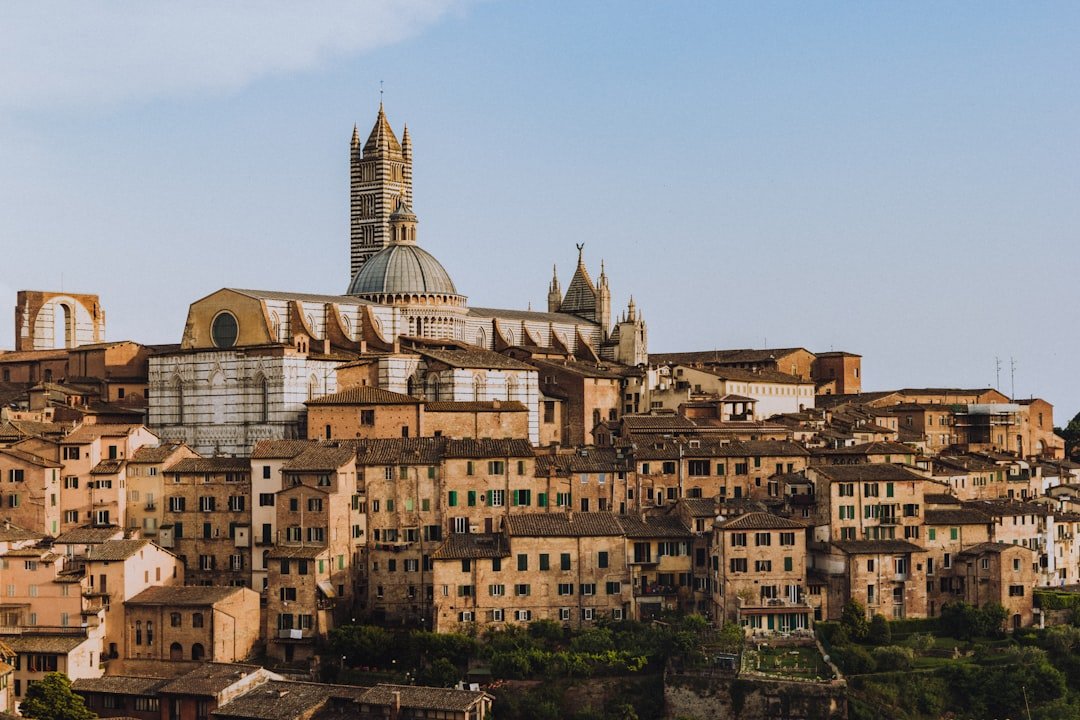
The Historic Centre of Siena has been a UNESCO World Heritage Site since 1995. UNESCO describes a remarkably preserved medieval city shaped around Piazza del Campo and enclosed by its historic fortifications. Walking through the center costs nothing and is one of the best ways to appreciate Siena’s Gothic buildings, brick streets, steep alleys, neighborhood identities, and views across the Tuscan landscape.
Start in Piazza del Campo and wander into streets such as Banchi di Sopra, Via di Città, Casato di Sotto, and the smaller lanes branching away from the main tourist routes. Siena’s medieval layout rewards slow exploration, and many of its best architectural details can be seen from public streets and squares without entering a museum.
UNESCO notes that Siena’s historic center remains enclosed by kilometres of fortified walls, while its medieval street plan, fountains, palaces, churches, and public spaces preserve the character of the city.
Exploring Siena’s Piazzas and Fountains for Free
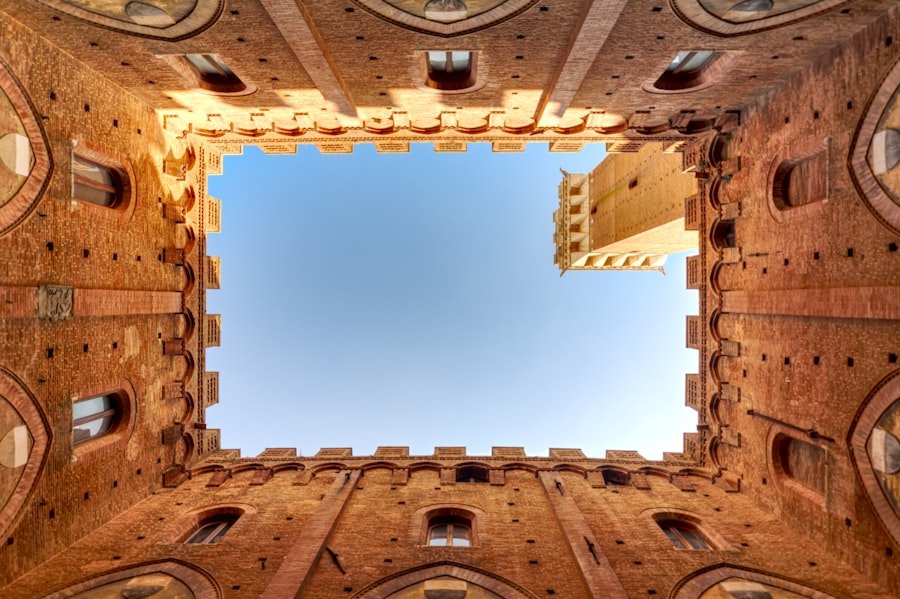
Piazza del Campo is the natural starting point for a free visit. The shell-shaped square is Siena’s civic heart, surrounded by the Palazzo Pubblico, Torre del Mangia, historic palaces, cafés, and the Fonte Gaia. Sitting or walking in the square is free during normal access, and it is an ideal place for people-watching and studying the city’s medieval urban design.
Discovering Piazza Salimbeni
Piazza Salimbeni offers a quieter contrast to Piazza del Campo. The square is associated with Monte dei Paschi di Siena, whose origins date to 1472. The Fondazione Monte dei Paschi di Siena traces the institution to the Monte di Pietà established by the Republic of Siena that year.
You can freely walk through the piazza and admire Palazzo Salimbeni, Palazzo Tantucci, Palazzo Spannocchi, and the monument to Sallustio Bandini. The square’s present appearance was heavily reshaped in the 19th century, so it should not be described as an untouched medieval piazza even though it incorporates older buildings and institutions.
The Significance of Fountains in Siena
Fountains are an important part of Siena’s history because the hilltop city depended on an extensive network of underground channels known as the bottini. Exploring the fountains is an easy way to add free historical stops to a walking route through the center.
The Iconic Fonte Gaia
Fonte Gaia sits at the upper side of Piazza del Campo. Water had reached the square before Jacopo della Quercia received the commission for the monumental sculptural fountain, which he completed in 1419.
The marble sculpture you see in Piazza del Campo today is not Jacopo della Quercia’s surviving original. Because the original had deteriorated, Tito Sarrocchi created the 19th-century replacement now displayed in the square. The surviving original sculptures are preserved at Santa Maria della Scala.
Add Fontebranda to a Free Walking Route
Another worthwhile free stop is Fontebranda, one of Siena’s oldest and best-known medieval fountains. Its Gothic arches and water basins reflect the city’s historic water system and its connection to crafts such as dyeing and tanning. The fountain is also closely associated with Saint Catherine of Siena, who grew up in the surrounding Fontebranda area.
Visiting Siena’s Churches and Cathedral Area
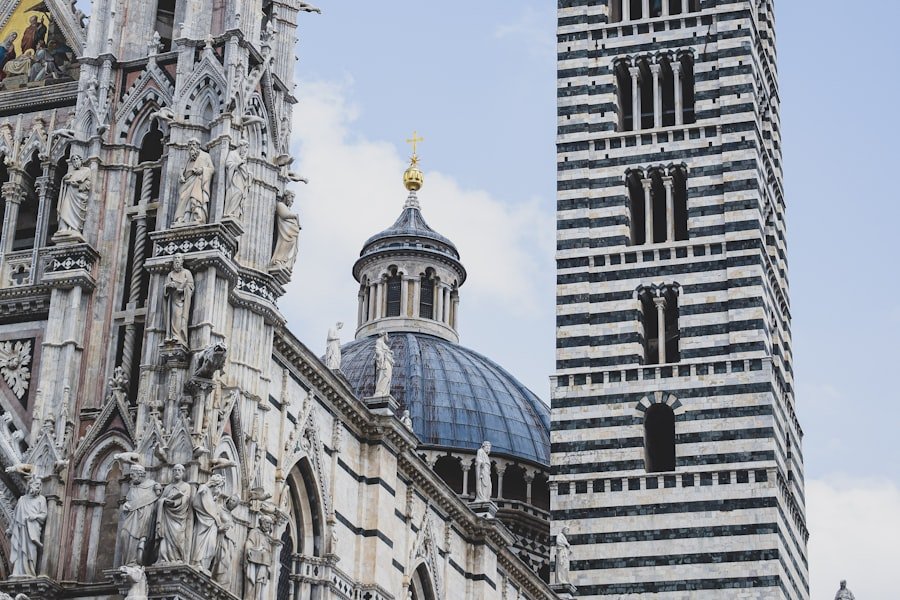
Siena’s religious buildings are among its most important landmarks, but visitors looking specifically for free things to do need to distinguish free exterior sightseeing and places of worship from ticketed museum attractions.
Admire Siena Cathedral’s Exterior for Free
The Duomo di Siena has a striking façade of white, dark green-black, and reddish marble, richly carved portals, statues, mosaics, and a Romanesque-Gothic design that can be admired from Piazza del Duomo without buying a ticket.
Ordinary tourist sightseeing inside the Cathedral is not generally free. According to the Opera della Metropolitana di Siena, the Cathedral and the wider monumental complex operate with paid admission in 2026, with prices varying according to the season and whether the famous marble floor is uncovered. The Piccolomini Library, Baptistery, Museo dell’Opera, Crypt, and other parts of the complex should not be described as generally free attractions.
Note: The Duomo complex provides free admission for certain eligible visitors, including specified age groups and other categories listed by the operator. These exemptions are different from general free admission, so check the official rules before visiting.
Visit the Basilica of San Domenico
The Basilica of San Domenico offers a very different atmosphere from the ornate Duomo. Its large brick exterior and austere interior are closely connected with Saint Catherine of Siena.
The church preserves important relics of Saint Catherine. The Basilica’s official site describes the relic of her head in the Chapel of Saint Catherine and her thumb among the relics kept in the church. The original article’s reference to a vial said to contain her blood was inaccurate.
Walk Through the Sanctuary-House of Saint Catherine Area
The Fontebranda neighborhood is also home to the Sanctuary-House of Saint Catherine, created around buildings associated with her family. Even if you are primarily interested in outdoor sightseeing, the surrounding lanes, courtyards, religious architecture, and Fontebranda area make this an excellent addition to a free walking route.
Enjoying Siena’s Public Gardens and Parks
Siena’s dense medieval center still contains and borders several green spaces where you can slow down without paying an admission fee. The original article included unsupported annual visitor numbers and acreage figures, so the table below replaces them with practical information.
| Place | Cost | Why Visit |
| Orto de’ Pecci and Porta Giustizia valley | Outdoor area can be explored without an attraction ticket | A green valley just below the historic center with an unusually rural feel close to Piazza del Campo. |
| Giardini La Lizza | Free public garden | Shaded paths and open space beside the Fortezza Medicea. |
| Fortezza Medicea | Free public access | Tree-lined ramparts, exercise areas, benches, and some of Siena’s best free panoramic views. |
Orto de’ Pecci and the Porta Giustizia valley sit only a short distance below Piazza del Campo and preserve an unusual pocket of countryside inside the historic city.
Giardini La Lizza is a public green space between the city center and the Fortezza Medicea. It is useful for a shaded break, especially if you are combining the historic center with the fortress.
The Comune di Siena states that entrance to the Fortezza Medicea is free and does not require a reservation. Its interior and ramparts function as a public park, with tree-lined paths, benches, and elevated views.
Pro Tip: If you want a panoramic view but do not want to pay to climb Torre del Mangia, walk to the San Domenico bastion of the Fortezza Medicea. It provides an excellent free view toward Siena’s historic skyline.
Walking Siena’s Ancient City Walls and Gates
Siena’s fortifications are an important part of the UNESCO-listed city, but the experience is better described as following the walls and gates rather than walking along a continuous medieval wall-top path.
The official Visit Siena guide to the city walls explains that the historic defensive route can be traced by walking around the city. Along the way you can see gates and sections of masonry connected with different phases of Siena’s expansion.
A free walking route can include landmarks such as Porta Romana, Porta Pispini, Porta Ovile, Porta Camollia, and Porta San Marco. This gives you changing views of both the historic center and the countryside while helping you understand how Siena developed beyond its earliest medieval core.
Do not confuse these city walls with the Fortezza Medicea. At the fortress, broad paths along the ramparts are publicly accessible and provide a much more literal elevated wall walk.
Experiencing Siena’s Local Markets and Street Performers
Experience Siena’s Wednesday Market
Siena’s regular Wednesday market is not held in Piazza del Mercato. The municipality’s 2026 market plan places the weekly goods market along Viale XXV Aprile, Viale Cesare Maccari, Via della Vecchia, and part of Viale Rinaldo Franci near La Lizza and the Fortezza.
The official schedule lists Wednesday trading from 7:00 a.m. to 2:00 p.m. The market includes a large non-food section as well as food, flowers, and other stalls. Browsing costs nothing and provides a more local experience than simply shopping in the busiest streets around Piazza del Campo.
Savoring Local Flavors
Looking at food stalls is free, although tasting and buying obviously are not. Siena is known for sweets such as panforte, a dense traditional cake made with ingredients such as nuts, candied fruit, spices, and honey or sugar. If you are keeping the day completely free, treat the market as a cultural stop rather than a food purchase.
Street Performers Add to the City’s Charm
Musicians and other performers sometimes appear in Siena’s piazzas and pedestrian streets, especially during busy periods and public events. Watching a street performance costs nothing, although performers may welcome voluntary tips.
Street entertainment is not a fixed attraction, so it is better treated as a possible bonus rather than something visitors should expect on a particular day.
Participating in Siena’s Cultural Festivals and Events
Siena’s most famous event is the Palio di Siena. The traditional races are scheduled for July 2 and August 16 in Piazza del Campo, although bad weather or other conditions can postpone the actual running of a race.
The Palio is much more than the short horse race. The Contrade, historical procession, flags, drums, neighborhood traditions, rehearsals, and transformation of Piazza del Campo make the surrounding days an important part of the experience.
According to the official Palio visitor information, spectators can watch the trials and Palio free of charge from the interior of Piazza del Campo when they enter before access closes and capacity has not been reached. Seats on grandstands and views from many private windows or balconies are paid.
Warning: Palio access rules are stricter than normal sightseeing rules. Entry points close, the central area can reach capacity, and age or safety restrictions may apply. Check the Comune di Siena’s current Palio notices before bringing children or anyone who may struggle with heat, long periods of standing, or dense crowds.
Siena Jazz also organizes concerts and educational events during its summer program. The schedule changes from year to year, and visitors should not assume that every concert or event is free. Check the official program for the exact event, venue, and admission conditions.
The same applies to outdoor concerts, exhibitions, neighborhood celebrations, and temporary cultural events around the city. Siena regularly hosts public activity in its piazzas and fortress, but individual events can be free, paid, invitation-only, or capacity-controlled.
Taking in Siena’s Panoramic Views: Torre del Mangia and Free Alternatives
Torre del Mangia is one of Siena’s most famous viewpoints, but it is not a free attraction. The tower rises almost 87 metres above the level of Piazza del Campo and approximately 102 metres to the lightning rod. The Comune di Siena states that reaching the top involves roughly 400 steps and that there is no elevator.
The climb rewards visitors with wide views across Siena and the surrounding Tuscan countryside, but anyone building a zero-cost itinerary should skip the ticket and choose one of Siena’s public viewpoints instead.
The Fortezza Medicea is the best substitute covered in this guide. Its San Domenico bastion looks toward the historic skyline, including the Torre del Mangia, Cathedral, and Basilica of San Domenico. You can also find attractive public views while walking around Camporegio and the edges of the historic center.
If your goal is to spend a full day in Siena without paying attraction fees, combine Piazza del Campo, Piazza Salimbeni, Fonte Gaia, Fontebranda, the medieval streets, the Cathedral exterior, San Domenico area, La Lizza, the Fortezza Medicea, and the city’s gates. On Wednesday, add the market; around Palio season, check whether any free public events or trials fit your dates.
Frequently Asked Questions
What are some of the best free things to do in Siena?
Good free choices include Piazza del Campo, the UNESCO-listed historic streets, Piazza Salimbeni, Fonte Gaia, Fontebranda, the exterior of Siena Cathedral, the San Domenico area, Giardini La Lizza, the Fortezza Medicea, Siena’s historic gates, and the Wednesday market. The Palio can also be watched free from the standing area inside Piazza del Campo when access is available.
Is Siena Cathedral free to visit?
The Cathedral’s exterior and Piazza del Duomo are free to enjoy. Ordinary tourist sightseeing inside the Cathedral is normally ticketed. In 2026, the official operator lists paid admission, with prices varying according to the period and the unveiling of the marble floor. Certain eligible visitor categories receive free admission, so check the official Opera Duomo rules for current details.
Are there any free museums in Siena?
Do not assume Siena’s major museums are normally free. Museo dell’Opera del Duomo belongs to the ticketed Cathedral complex. Santa Maria della Scala normally charges admission, but it offers free admission to specific categories and currently opens free to the public on the first Sunday of each month. Temporary exhibitions and special initiatives can have separate rules.
Can I explore Siena’s city walls for free?
Yes, you can follow the historic wall line, gates, and surrounding streets without buying an attraction ticket. However, Siena does not offer one continuous public walkway along the top of its medieval city walls. For a free elevated rampart walk, visit the Fortezza Medicea, where public paths run along the fortress walls.
Can you watch the Palio di Siena for free?
Yes. Official Palio guidance states that spectators can watch from the interior of Piazza del Campo free of charge, provided they enter before access closes and the area has not reached capacity. Grandstands, balconies, and many window viewpoints are paid. Safety and age restrictions can change, so check the current Palio instructions before attending.
What free events or activities can I find in Siena?
Possible free activities include public celebrations connected with the Contrade, portions of Palio festivities, occasional concerts, street performances, markets, and seasonal civic events. Admission varies by event, so check official Comune di Siena, Palio, or organizer listings rather than assuming every festival or concert is free.
Sources
- UNESCO World Heritage Centre — Historic Centre of Siena — supports Siena’s World Heritage status, historic urban form, and fortifications.
- Visit Siena Official — The Walls of Siena — supports the history and walkable route around Siena’s defensive walls.
- Opera Duomo Siena — Cathedral visitor information — supports current Cathedral access, ticketing, and free-entry categories.
- Comune di Siena — 2026 municipal market plan — supports the Wednesday market’s location, schedule, and official layout.
- Il Palio di Siena — Official visitor information — supports free standing access to Piazza del Campo and paid seating alternatives.
- Comune di Siena — Fortezza Medicea — supports free public access and the fortress’s walkable ramparts.