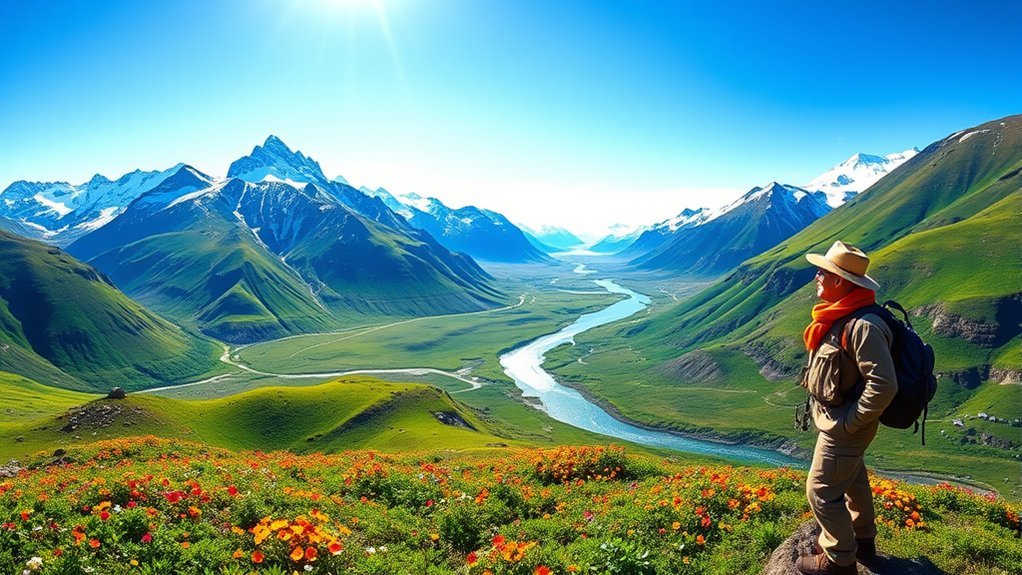
Gates of the Arctic National Park and Preserve is one of the most remote wilderness destinations in the United States. Spread across about 8.4 million acres of Alaska’s Brooks Range, it has no roads, maintained trails, established campsites, or dependable cell service. A visit can be extraordinary, but it requires far more planning and wilderness skill than a typical national park trip.
Quick Answer
Most visitors reach Gates of the Arctic by flying from Fairbanks to a gateway community and then using an air taxi into the backcountry. There are no maintained trails or designated campsites, so you need strong navigation, camping, bear-safety, and self-rescue skills. Mid-June through August is generally the easiest period for first-time summer visits.
Key Takeaways
- There are no roads, maintained trails, or designated campsites inside Gates of the Arctic.
- Most visitors use an air taxi, although experienced wilderness travelers can hike in from Anaktuvuk Pass or the Dalton Highway corridor.
- For most summer backpackers, mid-June through August offers the most practical conditions; July and August are generally best for float trips.
- Cell phones do not work in the park. Carry reliable satellite communication and leave a detailed trip plan with someone you trust.
- Approved bear-resistant food storage is required for overnight backcountry travel.
- There is no entrance fee and normal individual backcountry camping does not require a standard camping permit, although special and organized activities may require authorization.
At a Glance
| Time Required | Most backcountry trips take several days; build extra weather days into your itinerary. |
| Difficulty | Advanced wilderness travel; there are no maintained trails and rescue may be delayed. |
| Tools Needed | Topographic maps, compass, GPS backup, satellite communication, approved bear-resistant food storage, bear spray, water treatment, shelter, and cold/wet-weather gear. |
| Cost | No park entrance fee. Flights, air taxis, guide services, gear rental, and other transportation are separate and vary by itinerary. |
Overview of Gates of the Arctic National Park
Gates of the Arctic protects a vast stretch of Alaska’s central Brooks Range north of the Arctic Circle. Its landscapes include tundra, boreal forest, rugged mountains, lakes, broad river valleys, and six federally designated Wild and Scenic Rivers.
The park’s most important characteristic is its undeveloped wilderness. You will not find a road network, marked hiking trails, front-country campgrounds, restaurants, or the usual national park services after you enter the backcountry.
Gates of the Arctic is defined by what it does not have: no roads into the park, no maintained trail system, and no designated backcountry campsites.
Wildlife includes caribou, moose, Dall sheep, wolves, wolverines, grizzly bears, black bears, smaller mammals, and many migratory birds. Wildlife sightings are never guaranteed, but the park protects large areas of intact habitat, including important range used by caribou.
This combination of scale, isolation, and lack of infrastructure makes Gates of the Arctic very different from a national park that you can explore by driving between overlooks. Here, the trip itself is a wilderness expedition.
Getting There: Access and Transportation
Reaching Gates of the Arctic requires advance planning because no road enters the park. The National Park Service identifies Fairbanks as the main starting point for most visitors. Small commercial aircraft connect Fairbanks with gateway communities, and many visitors continue into the park by air taxi.
You can review current access information on the National Park Service directions page.
- Begin in Fairbanks: Fairbanks is the main transportation and logistical hub for most trips into Gates of the Arctic.
- Choose a gateway: Common staging points include Bettles, Anaktuvuk Pass, and Coldfoot. Your choice depends on the route, aircraft availability, and whether you plan to fly or hike into the park.
- Coordinate an air taxi: Most backcountry visitors use small aircraft equipped for remote landings. Arrange your drop-off and pickup locations with the operator before finalizing your route.
- Consider hike-in access only if you have the skills: Experienced travelers can enter from Anaktuvuk Pass or from the Dalton Highway corridor, but there is no maintained trail into the park and river crossings may be required.
- Build in weather days: Bush flights can be delayed by low clouds, wind, rain, smoke, or other conditions. Carry additional food and avoid scheduling a tight connection immediately after your planned pickup.
Pro Tip: Discuss your proposed route with your air-taxi operator before you commit to it. Pilots have specific locations where they can safely land and pick up passengers, and weather can make some sites unusable.
Best Times to Visit
The best time to visit depends on what you plan to do. Gates of the Arctic can experience freezing conditions during any month, so seasonal labels should never replace a current weather forecast and appropriate cold-weather equipment.
The National Park Service weather guidance generally identifies mid-June through September as the main backpacking and hiking period, with July and August normally best for float trips.
Summer: Mid-June Through August
This is the most practical season for many first-time visitors. Days are very long, most lower-elevation snow has melted, and rivers are generally open. July and August are commonly favored for river travel.
Summer still brings cold rain, boggy ground, high water, mosquitoes, and sudden temperature changes. Freezing conditions can occur even in summer, particularly as August progresses.
Early Fall: Late August Through September
Fall colors can be beautiful and insect pressure may decline, but conditions change quickly. Freezing temperatures become increasingly common, early snow can cover higher elevations, and rivers may begin freezing from mid-September into early October.
If your trip depends on a floatplane or river travel, confirm late-season operating limits directly with your transporter rather than assuming summer access will continue.
Winter: November Through March
November through March generally offers the best chance for viewing the aurora because of the long, dark nights. However, winter travel is not simply a colder version of a summer trip. Extreme temperatures, deep snow, avalanche terrain, frozen rivers, short daylight, and equipment failure can become life-threatening.
Winter trips are best suited to people with proven Arctic or sub-Arctic travel experience and properly rated equipment.
Spring Breakup
May is typically the river-breakup period. Ice becomes unstable and river crossings can become impossible or extremely dangerous. This makes May a poor choice for many normal backpacking routes.
Warning: Do not plan a route around a river crossing simply because the crossing looks easy on a map. Water level, current speed, snowmelt, and rain can completely change a crossing before you arrive.
Recommended Route Ideas: No Maintained Trails
Gates of the Arctic does not have a maintained trail network. Instead of choosing a marked trail, experienced visitors design a wilderness route around terrain, rivers, aircraft access, weather, skill level, and the locations where a pilot can safely drop off and retrieve them.
Dense brush, tussocks, bogs, steep slopes, and frequent stream crossings can make mileage much slower than it appears on a map. The National Park Service notes that experienced hikers may consider about six miles a good day’s progress in some conditions.
- North Fork of the Koyukuk River area: This famous valley passes through the mountains associated with the park’s name. It can form part of a cross-country backpacking or river-based itinerary, but it is not a maintained hiking trail.
- Alatna River and Arrigetch Peaks area: The Alatna provides access to dramatic mountain scenery and the Arrigetch region. Side trips into the mountains require demanding off-trail navigation and, for technical objectives, appropriate mountaineering experience.
- Wild and Scenic River trips: The Alatna, John, Kobuk, Noatak, North Fork Koyukuk, and Tinayguk are designated Wild and Scenic Rivers. River trips vary greatly in difficulty and require cold-water, swift-water, and remote-expedition skills.
- Anaktuvuk Pass or Dalton Highway hike-in: Strong backpackers can enter on foot, but there is no marked trail into the park. Routes may involve private or Native lands, rough tundra, and significant river crossings.
Topographic maps, a compass, route-planning experience, and a GPS backup are essential. Never rely on a phone map as your only navigation system.
River Crossing Safety
River crossings are among the most serious hazards in the park. If a crossing looks unsafe, waiting for water levels to fall or changing your route is usually better than forcing the crossing.
Cold water adds another danger. A fall into a fast river can quickly lead to loss of coordination and hypothermia. For boating trips, wear an appropriate personal flotation device, secure your craft and gear, and understand hazards such as sweepers, strainers, and deceptive rapids before attempting remote river travel.
Wildlife Spotting Opportunities
Gates of the Arctic protects large, connected ecosystems where you may see caribou, moose, Dall sheep, wolves, grizzly bears, black bears, wolverines, foxes, raptors, waterfowl, and many other species.
Wildlife is genuinely wild here. Animals are not concentrated around roads or developed viewpoints, and sightings depend on your route, season, habitat, weather, and luck.
Best Viewing Seasons
- Late spring and early summer: Migratory birds return, plant growth accelerates, and many animals become more active. Travel conditions may still be difficult during river breakup.
- Summer: Long daylight provides more time to observe wildlife. Caribou, bears, Dall sheep, birds, and smaller mammals may be encountered across suitable habitat.
- Fall: Wildlife prepares for winter as vegetation changes color and temperatures drop. Be prepared for rapidly deteriorating weather and shorter operating seasons for some transportation services.
- Winter: Tracks in snow can reveal animal activity, but severe cold and limited daylight make winter wildlife trips much more demanding.
Notable Animal Species
Caribou are among the park’s best-known animals. Large parts of the Brooks Range provide habitat and migration corridors used by caribou. Moose tend to favor areas with suitable willow and riparian habitat, while Dall sheep are associated with steep mountain terrain.
Both grizzly and black bears occur in the park. Wolves and wolverines also inhabit the region, although seeing either can be difficult. Golden eagles, ptarmigan, waterfowl, and long-distance migratory birds add to the park’s diversity.
Observe all wildlife from a generous distance. Never approach an animal for a photograph, never feed wildlife, and avoid blocking feeding, nesting, resting, or travel areas.
Camping Options and Backcountry Guidelines
There are no designated backcountry campsites in Gates of the Arctic National Park and Preserve. You select your own campsite while minimizing your impact on fragile tundra and keeping yourself away from flood, wildlife, and other hazards.
Current camping guidance is available on the National Park Service camping page.
Campsite Selection Tips
- Use durable ground: Gravel bars and hardy vegetation such as grasses and sedges usually tolerate use better than fragile lichens and mosses.
- Reuse an impacted site when appropriate: If a location is already visibly impacted, using that spot may cause less additional damage than creating a new campsite nearby.
- Stay above flood level: Gravel bars can make practical campsites, but rivers can rise quickly after rain. Camp well above the current waterline.
- Look for bear sign: Avoid obvious animal trails, feeding areas, carcasses, heavily used rub trees, and other locations where wildlife encounters are more likely.
- Move before damage becomes obvious: NPS guidance recommends moving camp every two or three days or sooner if your presence is beginning to affect the site.
Backcountry Safety Practices
Approved bear-resistant food storage is required for overnight travel. Store food, trash, toiletries, petroleum products, and other scented items securely whenever they are not in use.
NPS camping guidance recommends a backcountry triangle: keep your sleeping area, cooking/eating area, and bear-resistant food-storage area roughly 100 yards apart.
Carry bear spray where you can reach it quickly and know how to use it before entering the backcountry. Avoid surprising bears in thick brush or beside noisy water, where animals may not hear you approaching.
Note: Bear-resistant food containers are available on a first-come, first-served loan basis at several NPS visitor facilities. Confirm availability before depending on a loaner for your trip.
Safety Tips for Adventurers
Safety planning should begin before you leave Fairbanks or your gateway community. Gates of the Arctic has no dependable cell service, limited infrastructure, and potentially long delays before outside help can reach you.
The National Park Service safety guidance emphasizes self-reliance, detailed trip planning, satellite communication, bear safety, and preparation for transportation delays.
- Leave a detailed itinerary: Give a dependable person your route, air-taxi information, intended camps, pickup plan, and instructions for what to do if you are overdue.
- Carry two communication options when practical: A satellite phone or two-way satellite messenger provides much more useful coverage than a cellular phone in this environment.
- Carry extra food: Aircraft can be grounded by weather. Plan for several additional days instead of carrying food only until your scheduled pickup.
- Navigate independently: Carry topographic maps and a compass even if you also use GPS.
- Expect difficult terrain: Tussocks, brush, wetlands, loose rock, steep slopes, and stream crossings can reduce your travel speed dramatically.
- Treat water: Carry a filter, purifier, or other reliable treatment method rather than assuming backcountry water is safe to drink untreated.
- Carry first-aid supplies: Your kit should match the length and remoteness of the trip, and at least one member of the group should know how to use it.
Warning: Cell phones should not be considered an emergency-communication plan in Gates of the Arctic. Rescue may be delayed by weather, distance, and the time required for someone to realize that you are overdue.
Essential Gear for Your Trip
Your gear must support independent travel through cold, wet, trail-less terrain. Pack for the conditions you could encounter, not only the forecast you hope to receive.
In Gates of the Arctic, navigation, shelter, food protection, communication, and cold-weather protection are core safety equipment rather than optional conveniences.
- Shelter: A reliable tent suitable for wind and prolonged rain.
- Sleeping system: A sleeping bag and insulated pad rated for the temperatures you may encounter.
- Layered clothing: Moisture-managing base layers, insulating layers, rain protection, warm hat, gloves, and spare dry clothing.
- Footwear: Durable boots or wilderness footwear appropriate for wet tundra, rough ground, and frequent stream crossings.
- Navigation: Printed topographic maps, compass, GPS or mapping device, and spare batteries or power.
- Communication: Satellite messenger or satellite phone, ideally with a second independent emergency option.
- Bear safety: Approved bear-resistant food storage and readily accessible bear spray.
- Water treatment: Filter, purifier, or another reliable treatment method.
- Cooking: A compact stove and sufficient fuel. Stoves usually create less impact and are more reliable than depending on a campfire.
- First aid and repair: First-aid kit, blister care, repair tape, cord, and tools appropriate to your equipment.
- Insect protection: Head net, repellent, and clothing coverage can be extremely useful during summer mosquito season.
Cultural Significance and History
Gates of the Arctic is not an empty or historically untouched landscape. People have lived in the Brooks Range for more than 13,000 years, and thousands of archaeological sites document long relationships between people, wildlife, rivers, and seasonal travel routes.
Today, Inupiat and Athabascan descendants and other local residents continue strong cultural and subsistence connections with the region. Visitors should treat cabins, camps, traps, archaeological sites, private property, and subsistence activities with respect.
Indigenous Peoples’ Heritage
The cultural history of the central Brooks Range includes Inupiat and Athabascan peoples whose communities developed detailed knowledge of seasonal resources, animal migrations, rivers, passes, and changing Arctic conditions.
Nunamiut Iñupiat people have a particularly strong connection with the Anaktuvuk Pass area, while Koyukon Athabascan people and other communities have longstanding relationships with lands and waters in and around what is now the park and preserve.
Subsistence remains a living practice rather than simply a historical topic. Local residents continue to harvest fish, wildlife, and plants under applicable laws and traditions.
Historical Exploration Routes
Long before Euro-American explorers arrived, Indigenous people traveled throughout the Brooks Range using knowledge developed over generations.
One of the best-known figures in the park’s later wilderness history is Robert “Bob” Marshall, a forester and wilderness advocate who began exploring the central Brooks Range in 1929. Marshall named Frigid Crags and Boreal Mountain the “Gates of the Arctic,” and his writings helped build later interest in protecting the region.
The park’s history also includes prospectors, trappers, scientists, residents, conservation advocates, and later recreational travelers. Their stories should be understood alongside, not in place of, the much longer history of Indigenous use and occupation.
Cultural Preservation Efforts
Preservation work includes archaeological research, museum collections, documentation of historic places, collaboration with local communities, and protection of cultural resources.
As a visitor, you contribute to preservation by leaving artifacts, historic structures, archaeological remains, and other cultural features exactly where you find them. Do not remove, rearrange, carve, or disturb them.
Respecting the Environment and Leave No Trace Principles
Minimum-impact travel is especially important in Arctic and sub-Arctic environments because tundra vegetation can recover slowly from repeated damage.
- Travel on durable surfaces when possible: Gravel bars, rock, and hardy vegetation usually tolerate use better than fragile mosses and lichens.
- Avoid creating new trails: There are no designated hiking trails. Spread out when appropriate in fragile trail-less terrain rather than repeatedly trampling a new single path.
- Pack out trash: Do not bury or leave garbage, food scraps, packaging, or hygiene products.
- Manage human waste carefully: Where a cathole is appropriate, NPS guidance calls for a hole about 6–8 inches deep and at least 200 feet from water. Pack out paper products when practical and follow current park guidance.
- Wash away from water: Keep washing and dish-cleaning activities away from streams and lakes and prevent food particles from entering waterways.
- Use a stove: Firewood can be scarce and slow-growing. A stove is usually easier and produces less impact.
- Respect wildlife: Do not feed, approach, follow, or intentionally displace animals.
- Respect local communities: Do not disturb traps, subsistence camps, private property, or Native lands. Ask permission before camping where permission is required.
- Leave cultural resources untouched: Historic and archaeological objects should stay exactly where you find them.
Permits, Fees, and Important Rules
Gates of the Arctic currently has no entrance fee. Normal individual visitors do not need a general permit simply to enter the park or camp in the backcountry.
However, special-use activities, some large or organized groups, commercial operations, research, and other activities may require permits or additional coordination. Review the current NPS permits and reservations information before your trip.
Launching, landing, or operating drones is prohibited under current park rules. A backcountry orientation is strongly recommended, and visitors can also complete the park’s voluntary trip registration.
For entrance-fee information and current visitor guidance, see the NPS Fees & Passes page.
Sources
- National Park Service — Directions — roadless access, gateway communities, air taxis, and hike-in options.
- National Park Service — Weather — seasonal travel windows, breakup, freezing conditions, river season, and winter conditions.
- National Park Service — Backpacking and Hiking — trail-less travel, navigation, river crossings, communication, Leave No Trace, pets, and BRFC guidance.
- National Park Service — Camping — campsite selection, food storage, bear safety, and the 100-yard backcountry triangle.
- National Park Service — Permits & Reservations — permit requirements, organized groups, commercial activity, and drone rules.
- National Park Service — Fees & Passes — no entrance fee, backcountry orientation, group considerations, and voluntary registration.
Frequently Asked Questions
Are there any fees to enter Gates of the Arctic National Park?
No. Gates of the Arctic currently charges no entrance fee. You will still need to budget for transportation, air taxis, guides if used, equipment, lodging, and other trip expenses.
What permits are required for backcountry camping?
Normal individual visitors do not need a standard permit simply to enter the park or camp in the backcountry. A backcountry orientation and voluntary trip registration are strongly recommended. Special-use activities, commercial operations, research, and some organized or larger groups may require permits or advance coordination.
Can I bring my pet to the park?
Yes, but pets must be controlled and physically restrained according to park regulations. A pet can attract or provoke wildlife, so bringing one into this remote bear country adds risk. Bettles and Anaktuvuk Pass also have leash requirements that visitors should follow.
Is there cell phone reception in the park?
Do not expect cellular service in Gates of the Arctic. Carry a satellite messenger or satellite phone for backcountry communication, and leave a detailed trip plan with someone outside the park who knows when to report you overdue.
Are there guided tours available in Gates of the Arctic?
Yes. Authorized guides, outfitters, air taxis, and other commercial operators provide services in and around the park. A guided trip can be a sensible option if you lack experience with remote Alaska navigation, river travel, bear country, or self-supported wilderness camping.
Are there hiking trails in Gates of the Arctic?
No maintained trail system exists in the park. Backpackers travel cross-country using topographic maps, terrain features, game trails where appropriate, rivers, and preplanned aircraft drop-off and pickup locations.
Do I need a bear-resistant food container?
Yes. Approved bear-resistant food storage is required for overnight backcountry travel. Food, trash, toiletries, and other scented items must be stored properly, and your cooking, sleeping, and food-storage areas should be widely separated.
Conclusion
Gates of the Arctic National Park rewards careful preparation more than a packed sightseeing schedule. Its lack of roads, maintained trails, campgrounds, cell service, and quick rescue access is exactly what preserves its wilderness character. Choose a realistic season and route, coordinate transportation carefully, carry independent navigation and satellite communication, protect your food from bears, and be willing to change plans when weather or rivers make travel unsafe.
Just as important, remember that this landscape has supported people for more than 13,000 years and remains connected to living communities and subsistence traditions. Travel lightly, respect wildlife and local land use, leave cultural resources untouched, and give yourself enough time to experience the Brooks Range without forcing your itinerary.