A day trip from London to Stonehenge is straightforward, but the best travel method depends on whether you value speed, flexibility, simplicity, or price. You can drive, take a direct train from London Waterloo to Salisbury and continue by bus or taxi, or book an organised coach tour from central London. Planning your transport and Stonehenge admission together will make the day much easier.
Quick Answer
For most independent travellers, the easiest public-transport route from London to Stonehenge is a direct train from London Waterloo to Salisbury, followed by the Stonehenge Tour Bus or a taxi. Driving takes about two hours in normal conditions, while organised coach tours are the simplest option if you want transport and sightseeing arranged for you.
Key Takeaways
- Allow most of a day for a relaxed London-to-Stonehenge trip, especially when using public transport.
- The main independent public-transport route is London Waterloo to Salisbury, followed by the Stonehenge Tour Bus or a taxi.
- Salisbury railway station is about 12 miles/19 km from Stonehenge.
- Driving from central London normally takes around two hours, but A303 and London traffic can add significant time.
- Organised coach tours can be convenient, but check whether Stonehenge admission is included before booking.
- Advance online admission can cost less than buying on arrival, and opening hours vary by date.
- Normal admission does not mean unrestricted access inside the stone circle; special inner-circle visits require a separate limited-capacity booking.
- Check your return train, bus, parking and admission arrangements before leaving London.
At a Glance
| Time Required | Usually 7–10 hours for a relaxed round trip from London; less is possible on a tightly scheduled tour. |
| Difficulty | Easy to moderate. Guided tours are simplest; independent train travel requires one connection in Salisbury. |
| Tools Needed | Admission confirmation, transport tickets, phone with live travel information, comfortable shoes and weather protection. |
| Cost | Varies by train fare, bus/taxi or tour price and Stonehenge admission. Non-member on-site parking is currently £4; always check live prices before travelling. |
Transportation Options from London to Stonehenge
Stonehenge is in Wiltshire, roughly 85–90 miles by road from central London depending on your starting point and route. There is no railway station at Stonehenge itself, so independent public-transport travellers normally change from train to bus or taxi in Salisbury.
The four practical choices are driving, train plus local transport, an organised coach tour, or a private transfer. Each works well for a different type of visitor.
| Option | Typical travel pattern | Best for |
| Train + bus | Waterloo → Salisbury → Stonehenge Tour Bus | Independent travellers without a car |
| Driving | About two hours from central London in normal traffic | Flexibility and additional Wiltshire stops |
| Guided coach tour | Central London departure → Stonehenge → London or additional attractions | Visitors who want minimal planning |
| Private transfer | Door-to-door road transport | Families, groups and travellers prioritising convenience |
English Heritage’s official visitor information confirms that Salisbury is the nearest railway station and that the direct train from London Waterloo takes around 1 hour 30 minutes. From Salisbury, visitors can continue by taxi or the Stonehenge Tour Bus.
Driving from London to Stonehenge
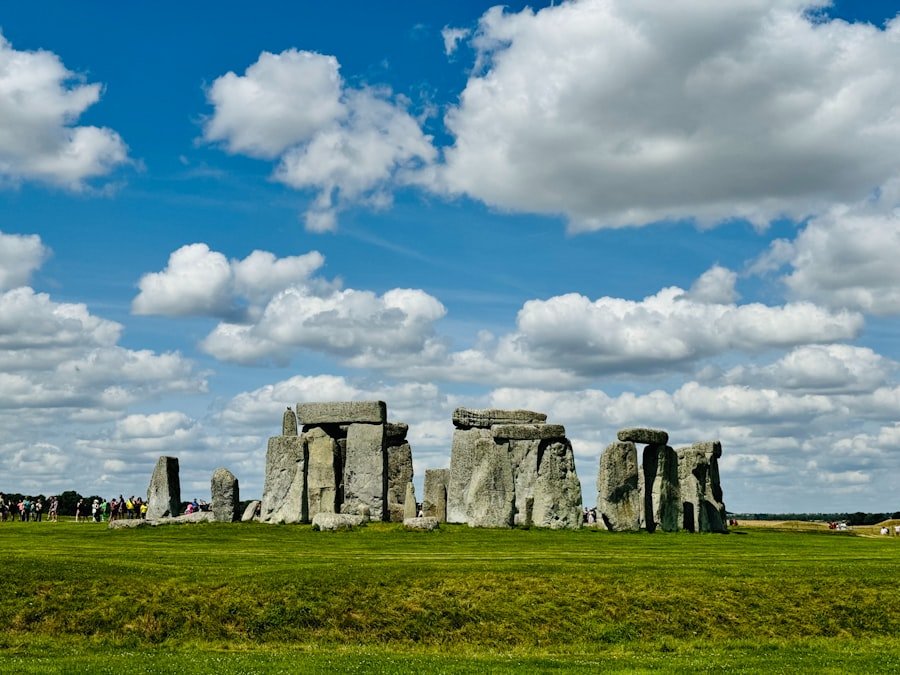
Driving from London to Stonehenge gives you the greatest flexibility. English Heritage advises allowing around two hours from central London, although traffic leaving London and congestion on the A303 can make the trip considerably longer.
Stonehenge is signposted from the A303, with access to the Visitor Centre from the A360. For navigation, English Heritage lists the Stonehenge Visitor Centre postcode as SP4 7DE.
The Visitor Centre has on-site parking. As of September 2026, English Heritage lists a £4 parking charge for non-members. Parking arrangements and prices can change, so check the official visitor information before setting out.
Pro Tip: If you are comfortable driving in Britain, a car is particularly useful when you want to combine Stonehenge with Salisbury, Old Sarum, Avebury or another Wiltshire stop. Remember that traffic can erase much of the time advantage during busy periods.
Visitors from countries where traffic drives on the right should also remember that UK traffic drives on the left. Allow extra concentration at roundabouts, junctions and when leaving parking areas.
Taking a Guided Tour from London to Stonehenge
An organised tour is usually the easiest choice when you do not want to manage train connections, parking or the return journey yourself. English Heritage notes that numerous coach-tour companies operate from London, with many departures from the Victoria area.
Tour formats vary. Some focus only on Stonehenge, while others combine it with destinations such as Bath, Windsor, Salisbury or Oxford. Before booking, compare the amount of time actually spent at Stonehenge rather than judging the tour only by the number of attractions included.
Check exactly what the advertised price covers. Depending on the operator, a package may include Stonehenge admission, an audio guide or live guide, while cheaper transport-only products may require you to buy admission separately.
Note: Do not assume that every London coach tour includes priority or “skip-the-line” access. Read the operator’s current inclusions and Stonehenge admission terms before paying.
A tour is especially useful for first-time visitors who want one booking for the day’s transport. The trade-off is less flexibility: the coach normally has a fixed departure time from Stonehenge, so you cannot simply stay longer if you want to explore more of the landscape.
Public Transportation from London to Stonehenge
For independent travellers, the clearest public-transport route starts at London Waterloo. Take a direct train to Salisbury. English Heritage estimates the rail journey at around 1 hour 30 minutes, although exact schedules and journey times vary.
Salisbury is the nearest railway station to Stonehenge and is approximately 12 miles/19 km from the monument. From the station, you can continue by taxi or use the Stonehenge Tour Bus operated by Salisbury Reds.
The Stonehenge Tour Bus picks up from Salisbury railway station and also serves Salisbury city centre. Current schedules generally provide regular departures, but the timetable changes by date and season. Check the service on the morning of your trip rather than relying on an old timetable.
A typical public-transport journey therefore looks like this:
- Travel to London Waterloo.
- Take a direct train from Waterloo to Salisbury.
- Leave Salisbury station and locate the Stonehenge Tour Bus stop on or near the station forecourt, or take a taxi.
- Travel to the Stonehenge Visitor Centre.
- Visit the exhibition and monument.
- Return to Salisbury with enough time to catch your booked or planned train back to Waterloo.
Warning: The Salisbury-to-Stonehenge bus and the London train are separate services. Leave a sensible buffer for your return connection, particularly late in the day, on weekends, during rail disruption or around major Stonehenge events.
Public transport is a good option if you do not want to drive in the UK. It also lets you spend part of the day in Salisbury if your schedule allows.
Stonehenge Tickets, Opening Hours and Entry
Stonehenge admission is managed by English Heritage. Opening times change during the year, so use the date-specific official calendar rather than assuming the monument operates on the same schedule every day.
As of September 2026, the normal seasonal schedule is around 9:30am to 5:00pm during this part of the year, but last-entry rules and special-event arrangements can differ. Summer and winter solstice periods can have completely different access, parking and traffic arrangements.
Buying admission online in advance can also save money. English Heritage currently advertises savings of up to 15% for early online booking compared with the full on-the-day price.
Your general-admission visit includes access to the visitor experience and the normal monument viewing route. If your goal is to enter the immediate stone-circle area outside normal general-admission conditions, look specifically at the separately booked Stone Circle Experience. Availability is limited and advance booking is essential.
Stonehenge was not built in a single moment: work began roughly 5,000 years ago, while the central stone settings were erected around 2500 BC.
What to See and Do at Stonehenge
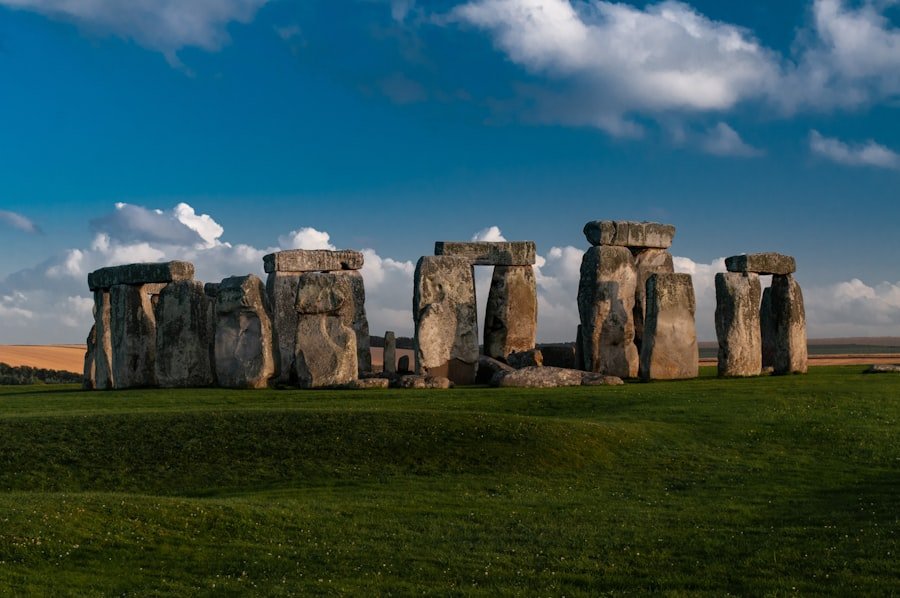
The stone circle is the main attraction, but the site makes more sense when you visit the exhibition and surrounding landscape as well. Stonehenge was built and modified over many generations, and its precise original purpose is still debated.
The largest stones are the sarsens. English Heritage states that the sarsens weigh about 25 tons on average, with the largest around 30 tons. Stonehenge also contains smaller bluestones, generally weighing about 2–5 tons. The stones were shaped and joined using sophisticated techniques, including joints similar to those used in woodworking.
Archaeologists know that the monument is deliberately aligned with the movements of the sun, particularly the solstices, but that does not prove one simple purpose for the entire complex. Stonehenge also sits within a much larger ceremonial and funerary prehistoric landscape.
Visit the Stonehenge Exhibition
The Visitor Centre exhibition displays more than 250 archaeological objects and uses multimedia interpretation to explain the people, tools, burials and landscape connected with Stonehenge.
Explore the Reconstructed Neolithic Houses
Near the Visitor Centre, reconstructed Neolithic houses help visitors picture domestic life thousands of years ago. Demonstrations may also take place at certain times.
Walk or Use the Visitor Shuttle
The monument is separated from the main Visitor Centre. Depending on operating arrangements and mobility needs, visitors can use the visitor transport service or explore the walking route through the wider landscape.
Use the Audio Guide
English Heritage offers an official Stonehenge audio guide for smartphones. Downloading it before travelling can be useful if your mobile connection is weak on arrival.
The Visitor Centre also includes a café, shop, toilets and picnic areas. If you want to explore further, the wider World Heritage landscape contains many prehistoric monuments, while Old Sarum and Salisbury are convenient additional stops for travellers using the Salisbury route.
Tips for Visiting Stonehenge from London
A little preparation makes a large difference because this is both an archaeological site and a transport-dependent day trip.
- Book admission in advance: Advance online booking can be cheaper and helps you plan the rest of the journey around your visit.
- Check opening hours for your exact date: Hours are seasonal and special events can change normal access.
- Check train engineering works: Weekend rail work can substantially change a Waterloo–Salisbury journey.
- Check the Stonehenge Tour Bus timetable: Do not assume an old online schedule is still valid.
- Wear comfortable footwear: You may spend considerable time outside and walking across the visitor site.
- Bring weather protection: Salisbury Plain is exposed. Rain, wind and strong sun can all affect the experience.
- Avoid excessive luggage: English Heritage states that there are no general cloakroom or left-luggage facilities.
- Allow more time than the monument alone requires: The exhibition, Neolithic Houses, walking routes and transport connections are part of the visit.
Accessibility
English Heritage says the visitor facilities have been designed to accommodate a range of access needs, and a companion or carer can accompany an eligible visitor. Travellers with specific mobility requirements should review the site’s current accessibility information before travelling, particularly if they intend to use walking routes rather than visitor transport.
Special Events and the Solstices
Stonehenge can operate very differently around major solstice events. Road restrictions, parking rules, visitor hours and access arrangements may change, so a normal day-trip itinerary should not be reused for a solstice visit without checking the dedicated event information.
A Simple London-to-Stonehenge Day-Trip Plan
If you are travelling independently by train, a relaxed itinerary could work like this:
- Morning: Leave London Waterloo early enough to reach Salisbury well before your planned Stonehenge visit.
- Late morning: Connect from Salisbury station to the Stonehenge Visitor Centre.
- Midday to early afternoon: Visit the exhibition, Neolithic Houses and stone circle.
- Afternoon: Return to Salisbury. If your timetable allows, spend a short period in the city before your train.
- Late afternoon or evening: Take the train from Salisbury back to London Waterloo.
This is only a planning framework. Base your actual schedule on the live train timetable, Stonehenge Tour Bus departures and the official opening hours for your date.
Returning from Stonehenge to London
Your return journey is simple if you plan it before arriving. Drivers normally return toward the A303 and continue toward London, but should check live traffic because congestion near London can add substantial time.
If you are using public transport, check the final practical Salisbury connection before you enter the attraction. Work backward from the train you want to take from Salisbury and choose a Stonehenge bus or taxi departure that gives you a reasonable transfer buffer.
Guided coach tours have fixed return times, so note your meeting point and be back at the vehicle before the stated departure. A multi-stop tour may spend less time at Stonehenge than an independent visit, which is why checking the itinerary before booking matters.
If you have extra time and want more prehistoric history, consider planning a separate visit to Avebury or exploring Old Sarum and Salisbury rather than following an unrelated sightseeing recommendation. Stonehenge, Avebury and their associated prehistoric landscapes together form a UNESCO World Heritage property.
Frequently Asked Questions
What are the transportation options from London to Stonehenge?
You can drive, take a direct train from London Waterloo to Salisbury and continue by bus or taxi, book an organised coach tour, or arrange a private transfer. There is no railway station directly at Stonehenge.
How long does it take to travel from London to Stonehenge?
Driving from central London takes around two hours in normal conditions. The direct train from Waterloo to Salisbury takes around 1 hour 30 minutes, after which you need additional time for the bus or taxi to Stonehenge. For a relaxed round trip, allow most of a day.
Can I take a train from London to Stonehenge?
You cannot take a train directly to Stonehenge. Take a direct train from London Waterloo to Salisbury, the nearest railway station, then continue approximately 12 miles/19 km by Stonehenge Tour Bus or taxi.
Are there guided tours available from London to Stonehenge?
Yes. Numerous operators run coach and small-group tours from London. Some include Stonehenge admission and some do not, so compare the inclusions, time at the monument and any additional destinations before booking.
Is it possible to drive from London to Stonehenge?
Yes. English Heritage estimates around two hours from central London in normal conditions. Stonehenge is reached from the A303/A360 area, and the Visitor Centre provides parking. Non-member parking is currently £4.
Are there bus services from London to Stonehenge?
Commercial coach tours travel from London to Stonehenge, but the standard independent public-transport route normally involves a train from London Waterloo to Salisbury followed by the Salisbury Reds Stonehenge Tour Bus. Do not confuse a London sightseeing coach with the local Salisbury bus service.
Can you walk inside the Stonehenge stone circle?
Normal general admission does not provide unrestricted access among the stones. English Heritage offers a separate limited-capacity Stone Circle Experience outside normal general-admission conditions for visitors who want closer access.
Is Stonehenge worth visiting as a day trip from London?
Yes, particularly if you are interested in archaeology, prehistoric Britain or UNESCO World Heritage sites. The trip is easiest when you allow enough time for the Visitor Centre and landscape rather than travelling several hours only for a brief look at the stones.
Sources
- English Heritage — Plan Your Visit at Stonehenge — London train route, approximate journey time and visitor planning.
- English Heritage — Stonehenge Directions — Salisbury station distance, parking, road access and local bus information.
- English Heritage — Prices and Opening Times — advance-booking information and current admission planning.
- English Heritage — Building Stonehenge — stone types, weights, construction and archaeological evidence.
- Salisbury Reds — The Stonehenge Tour — Salisbury railway station to Stonehenge bus service and current timetable.
- UNESCO World Heritage Centre — Stonehenge, Avebury and Associated Sites — World Heritage status and prehistoric significance.