London is one of the easiest cities in the world to explore through food, with choices ranging from Michelin-starred tasting menus to historic markets, British classics, South Asian cooking, vegan restaurants, and traditional afternoon tea. The best places to eat in London depend on your budget, neighborhood, and the kind of experience you want. This guide helps you narrow those choices without wasting a meal.
Quick Answer
For a special meal, The Ledbury is one of London’s standout fine-dining choices. Borough Market works well when you want variety in one place, while Dishoom is a useful pick for accessible Bombay-inspired food. London also excels at British cooking, vegan dining, afternoon tea, and unusual restaurant experiences.
Last checked: October 1, 2026. Dates and figures were verified against official sources.
Key Takeaways
- Book high-end restaurants and famous afternoon teas ahead, especially for evenings and weekends.
- Borough Market is one of the simplest choices when a group wants different foods in the same area.
- For international food, explore neighborhoods such as Brick Lane, Chinatown, Tooting, Southall, New Malden, and Green Lanes.
- Mildreds is a convenient London option for fully plant-based dining.
- Traditional British food in London goes well beyond fish and chips, with roasts, pies, steaks, offal, and afternoon tea all part of the experience.
Best Places to Eat in London at a Glance
There is no single restaurant that suits every London visitor. A better approach is to match the place to the meal you want, whether that is fine dining, street food, British cooking, international cuisine, vegan food, or afternoon tea.
| Type of meal | Good option | Area | Why go |
|---|---|---|---|
| Fine dining | The Ledbury | Notting Hill | Three Michelin stars in the 2026 guide |
| Food market | Borough Market | London Bridge | Many traders and cuisines in one place |
| British cooking | St. John or Hawksmoor | Smithfield or several London locations | British meat, steak, and traditional flavors |
| Indian/Bombay-inspired | Dishoom | Multiple London locations | Breakfast, curries, grills, biryani, and chai |
| Plant-based | Mildreds | Several London locations | Fully plant-based, internationally inspired menu |
| Afternoon tea | The Ritz or Claridge’s | Mayfair | Traditional tea starts from £95 per person |
| Unusual experience | Dans le Noir? | Farringdon | A surprise meal served in complete darkness |
Michelin-Starred Restaurants in London
London is a major fine-dining destination, and its top restaurants cover modern British, French, Indian, and other styles. In the 2026 Michelin Guide for London, The Ledbury and Sketch’s Lecture Room & Library are among the restaurants holding three Michelin stars.
The Ledbury
The Ledbury in Notting Hill is one of the strongest choices for travelers planning a serious tasting-menu meal. Chef-patron Brett Graham’s cooking centers on high-quality seasonal ingredients, with much of the restaurant’s produce connected to its own farms and suppliers.
This is the kind of restaurant to plan around rather than add spontaneously to a sightseeing day. If fine dining is one of the main reasons for your London visit, reserve before the rest of your meal schedule fills up.
Sketch
Sketch offers several different dining spaces at its Mayfair address, but the Lecture Room & Library is its three-Michelin-starred restaurant. The experience combines modern French cooking with the highly distinctive interiors for which Sketch is known.
That makes it particularly suitable for a celebration where atmosphere matters almost as much as the food. London also has many less formal Michelin-recognized restaurants, so a star does not automatically mean every meal needs to feel ceremonial.
Trendy Street Food Markets
For variety, Borough Market is one of the most useful places to eat in London. You can move between prepared food, produce, baked goods, cheese, meat, and specialty traders without committing a whole group to one restaurant.
Borough Market’s official visitor information lists free entry and regular opening hours of 10am–5pm Tuesday to Friday, 9am–5pm Saturday, and 10am–4pm Sunday. The market is normally closed on Monday, although holiday schedules can differ.
It sits beside London Bridge station at 8 Southwark Street, making it easy to combine with sightseeing around the Thames. The range also makes it practical for groups whose members want different cuisines or have different budgets.
Iconic British Food, Pubs, and Restaurants
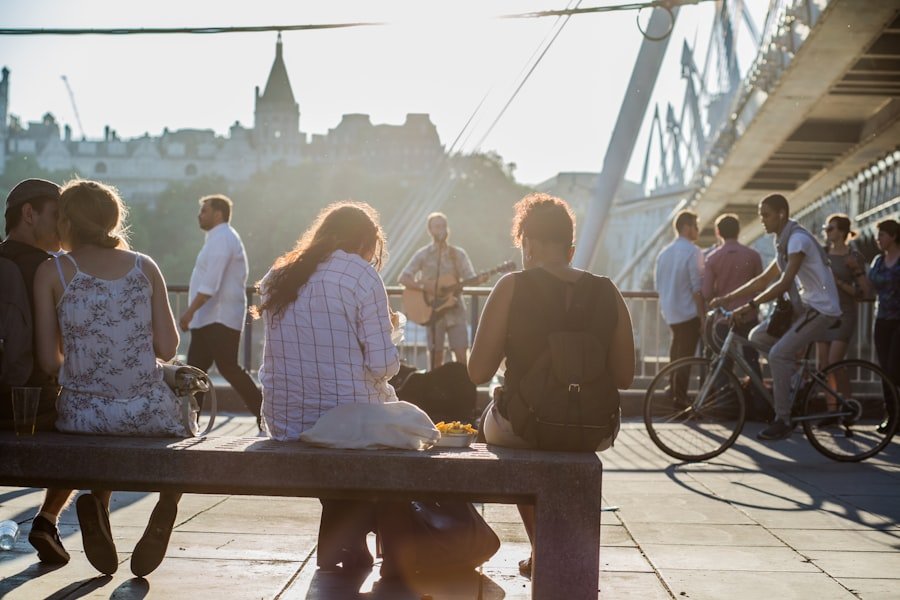
British food in London is broader than the familiar fish-and-chips stereotype. A visitor can build several meals around Sunday roast, pie and mash, steak, traditional puddings, a full English breakfast, or restaurants that reinterpret older British cooking.
St. John in Smithfield is particularly associated with nose-to-tail British cooking, while Hawksmoor is known for steak and Sunday roast. Both appear among the established restaurants highlighted in the official Visit London restaurant guide.
If your priority is the pub experience itself, look for a place where food remains part of the attraction rather than an afterthought. A Sunday roast is particularly tied to British weekend dining, while fish and chips, pies, and local beer make easier choices on a casual sightseeing day.
Ethnic Cuisine Hotspots
Some of London’s most rewarding food choices come from choosing a neighborhood before choosing a restaurant. Different parts of the city have long-standing communities and concentrations of restaurants specializing in particular regional cuisines.
Brick Lane is closely associated with South Asian restaurants, including many with Bangladeshi roots. London’s official food-hub guide also highlights Chinatown for Chinese and East Asian food, Tooting for South Asian cooking, New Malden for Korean food, Southall for Indian and Pakistani restaurants, Brixton for Caribbean food, and Green Lanes for Turkish dining.
Dishoom for Bombay-Inspired Food
Dishoom is another accessible choice for travelers who want Indian food without building an entire meal around a tasting menu. Its menu draws on Bombay cafés, grills, street snacks, homes, and comfort food, with dishes such as biryani and masala chai.
Because Dishoom has several London locations, it can fit naturally around sightseeing. That flexibility is useful when your priority is a dependable meal near places such as Covent Garden, Shoreditch, King’s Cross, Kensington, or Canary Wharf.
Hidden Gems for Foodies
The best way to find less obvious London meals is often to move beyond the most famous central streets. Neighborhood dining areas can give you a wider mix of family-run restaurants, specialist cuisines, casual counters, and places that primarily serve local residents.
Instead of crossing the city for every meal, choose one food neighborhood that fits your itinerary. Tooting, Southall, New Malden, Brixton, Brick Lane, and Green Lanes each offer enough concentration of restaurants to make the area itself part of the experience.
This approach is also useful when a famous restaurant is fully booked. London has enough depth that missing one reservation does not mean settling for a poor meal; changing neighborhood can often give you an entirely different style of dining.
Vegetarian and Vegan-Friendly Eateries
London’s Plant-Based Pioneers
London has strong options for vegetarian and vegan travelers, from casual meals to more ambitious dining. Mildreds is one of the city’s established names for globally inspired plant-based food and has several locations across London.
According to the Mildreds official site, its menus change with the seasons and are designed around plant-based dishes rather than treating meat-free food as a small side menu. This makes it especially useful for mixed groups where vegan diners want a full choice of starters, mains, and desserts.
Plan Around Dietary Needs
Plant-based dining is widely available in London, but vegan, vegetarian, gluten-free, halal, and allergy requirements are not interchangeable. If a dietary restriction is medically important, confirm the restaurant’s allergen policy and cross-contamination procedures before booking.
For ordinary vegetarian or vegan preferences, central London usually provides enough choice that you do not need to organize an entire day around one restaurant. Areas with dense restaurant scenes, including Soho, Covent Garden, Shoreditch, and King’s Cross, make it easier to keep backup options nearby.
Classic Afternoon Tea Spots
Afternoon tea is one of London’s most recognizable food experiences, and The Ritz and Claridge’s remain two of its best-known settings. Both combine finger sandwiches, scones, pastries, and a large tea selection with a formal hotel atmosphere.
The Ritz London
The Ritz afternoon tea starts from £95 for adults. Current sittings are offered daily at 11.30am, 1.30pm, 3.30pm, 5.30pm, and 7.30pm.
The Ritz also has a dress code for afternoon tea, so this is not the meal to schedule immediately after a muddy park visit or a very casual travel day. Advance booking is sensible because the experience is a destination in its own right.
Claridge’s
Claridge’s afternoon tea also starts from £95 per person for the traditional menu. Champagne afternoon tea starts from £110, while the Rosé Champagne version starts from £125.
Claridge’s serves a separate festive afternoon tea from November 3 to January 3, excluding December 25. The published 2026 festive prices start at £120 per person on weekdays and £130 on weekends, making the date of your visit important when budgeting.
Unique Dining Experiences
London also has restaurants where the experience changes how you perceive the food itself. Dans le Noir? in Farringdon is one of the clearest examples because guests eat a surprise menu in complete darkness.
The official Dans le Noir? London site says the restaurant has operated in London since 2006 and that visually impaired hosts guide diners during the experience. Without visual cues, guests pay more attention to aroma, texture, temperature, and flavor.
This is quite different from choosing a restaurant purely for its cuisine. It suits travelers who want the meal itself to become an activity rather than simply a stop between attractions.
How to Choose Where to Eat in London
The easiest way to avoid disappointing meals is to decide what matters most before choosing a restaurant. London has enough options that location, budget, atmosphere, and booking difficulty can be just as important as cuisine.
- For one major splurge: prioritize Michelin-starred dining such as The Ledbury or Sketch.
- For a flexible lunch: Borough Market lets different people choose different foods.
- For British classics: consider a roast, pie, fish and chips, steak, or traditional British restaurant.
- For international food: choose a neighborhood with a strong culinary identity rather than staying only around major tourist attractions.
- For plant-based dining: Mildreds provides a dedicated plant-based menu rather than a few substitute dishes.
- For a traditional occasion: book afternoon tea and check the venue’s dress code, price, and sitting time before planning the rest of the day.
If London’s plant-based and dairy-focused food ideas inspire you to cook after your trip, you can also try this simple homemade cottage cheese recipe.
Frequently Asked Questions
What are some of the best places to eat in London?
London has excellent choices across many styles. The Ledbury and Sketch stand out for Michelin-starred fine dining, while St. John, Hawksmoor, Dishoom, Mildreds, and Borough Market cover British food, steak, Indian-inspired dishes, plant-based dining, and casual market eating.
What type of cuisine can I expect to find in London?
London offers an unusually broad mix of cuisines, including British, Indian, Bangladeshi, Chinese, Korean, Turkish, Caribbean, Italian, French, Japanese, and many more. Exploring food neighborhoods such as Brick Lane, Chinatown, Southall, Tooting, New Malden, and Green Lanes can be as rewarding as choosing individual famous restaurants.
Are there affordable dining options in London?
Yes. London has street-food markets, casual restaurants, neighborhood eateries, bakeries, and quick-service counters across a wide range of budgets. Borough Market is useful when people in the same group want different foods, although individual trader prices vary and the market should not be assumed to be the cheapest option.
Do I need to make reservations at popular restaurants in London?
Reservations are strongly recommended for famous fine-dining restaurants, popular dinner spots, and traditional afternoon tea. Booking matters most for evenings, weekends, celebrations, and restaurants with limited seating. Markets and many casual places offer more flexibility, making them useful backups when a formal restaurant is unavailable.
What are some iconic dishes to try in London?
Fish and chips, Sunday roast, pie and mash, and a full English breakfast are classic choices. Afternoon tea is another distinctly British food experience, while London’s modern identity is equally shaped by dishes from its South Asian, East Asian, Caribbean, Middle Eastern, African, and European communities.
Are there vegetarian and vegan options available in London?
Yes. London has dedicated vegan restaurants as well as restaurants that provide vegetarian and plant-based choices alongside other food. Mildreds is a fully plant-based option with several London locations, while many hotels and restaurants can also accommodate vegetarian or vegan requests when arranged in advance.
Sources
- MICHELIN Guide: 2026 Michelin-star status for London restaurants.
- Borough Market: regular opening hours, location, and free entry.
- Visit London restaurant guide: London restaurant categories and established dining options.
- Visit London food hubs: London neighborhoods associated with different cuisines.
- Mildreds: plant-based dining and restaurant information.
- The Ritz London: afternoon tea prices and sitting times.
- Claridge’s: traditional, Champagne, and festive afternoon tea pricing.
- Dans le Noir? London: dining-in-the-dark concept and London location.