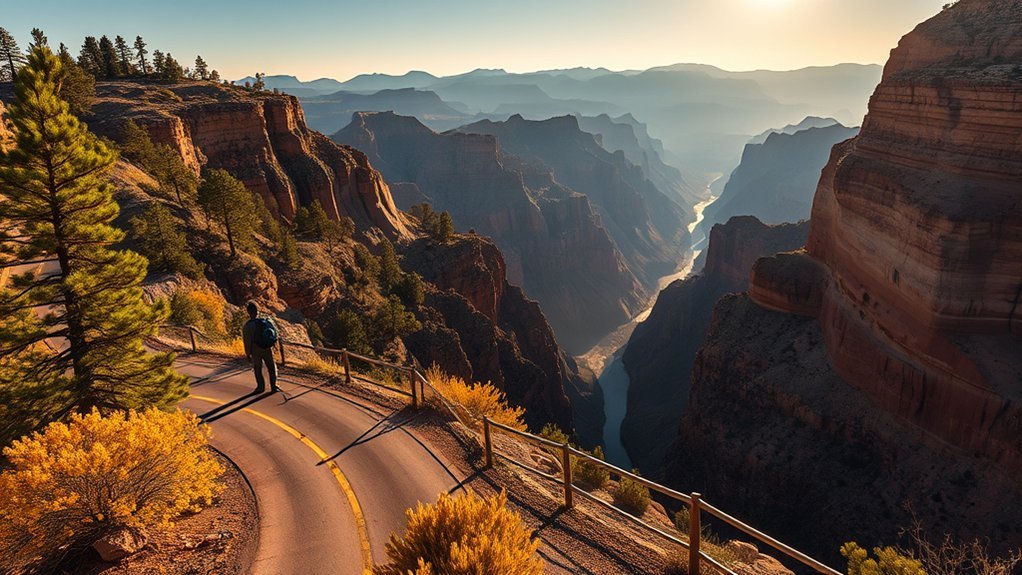
The Grand Canyon North Rim is the park’s higher, more remote side, averaging about 8,000 feet in elevation and offering forested roads, broad canyon views, and a quieter feel than the South Rim. In 2026, though, visiting requires extra planning because the area is still recovering from the 2025 Dragon Bravo Fire. Roads and several viewpoints are open, but lodging, water, trails, and visitor services are more limited than in past years.
Quick Answer
The North Rim is open for the 2026 season, with Highway 67, Cape Royal Road, Point Imperial Road, the North Rim Campground, and much of the North Kaibab Trail available. However, there is no in-park lodging or potable tap water, several popular trails remain closed, and services are limited during ongoing fire recovery.
Key Takeaways
- 2026 is a recovery year: the historic Grand Canyon Lodge and former North Rim Visitor Center were destroyed in the 2025 Dragon Bravo Fire, so overnight lodging is outside the park.
- Bring water: potable tap water is not available on the North Rim in 2026. Bottled and gallon water may be available for purchase at the General Store during operating hours.
- Check trail status: Bright Angel Point, Widforss, Transept, Uncle Jim, and the western Ken Patrick Trail are closed, while Cape Royal, Cape Final, Roosevelt Point, Point Imperial, and the North Kaibab Trail are among the open options.
- Know the vehicle limit: vehicles and vehicle-trailer combinations longer than 22 feet are not allowed on the Cape Royal and Point Imperial scenic roads.
- Plan a full day: a half-day works for a few viewpoints, but a full day gives you time for the scenic drive, short hikes, photography, and recovery-related delays.
At a Glance
| Time Required | Half-day for major overlooks; one full day for the scenic drive plus short hikes |
| Difficulty | Easy for roadside viewpoints; moderate to strenuous for hiking below the rim |
| Tools Needed | Offline map, plenty of water, food, sun protection, layers, sturdy footwear, and a full fuel tank |
| Cost | Standard entrance: $35 private vehicle, $30 motorcycle, or $20 per person entering on foot or bicycle, valid for 7 days; other fees may apply |
Warning: North Rim conditions can change quickly during fire recovery and monsoon weather. Check the official North Rim status page on the day you travel, and do not depend on old maps, old lodging listings, or pre-2025 trail guides.
North Rim Vs South Rim: Which Side Is Right for You?
Choose the North Rim if you want a more remote visit, cooler high-elevation conditions, forest scenery, and a slower pace. Choose the South Rim if you want year-round access, more lodging and dining, shuttle service, and the park’s most developed visitor infrastructure. The North Rim averages about 8,000 feet in elevation, roughly 1,000 feet higher than the South Rim, which helps explain its cooler summer weather.
The biggest difference in 2026 is services. The North Rim is open, but the Dragon Bravo Fire destroyed the historic Grand Canyon Lodge, former visitor center, guest cabins, and important utility systems. That means no overnight hotel lodging inside the North Rim developed area this season, no potable tap water, and a smaller set of open trails and facilities. The South Rim remains the easier choice for travelers who want maximum convenience.
Note: The rims look close across the canyon, but driving between them is a major detour. The National Park Service says the drive between the South Rim Village and North Rim area is about 215 miles and usually takes 4 to 5 hours.
When to Visit: Seasons, Crowds, and Weather
For the 2026 season, North Rim road access resumed on May 15, while the North Rim Campground reopened June 1. The General Store and several seasonal services are scheduled through October 15, but road access and individual facilities can change because of weather, construction, fire recovery, and early snow. Instead of relying on a fixed “mid-May to mid-October” rule, check the park’s current status before every trip.
Best Time to Go
Late May through June and September into early October are strong choices if you prefer cooler hiking weather and lighter crowds. July and August offer long daylight, but they also bring monsoon thunderstorms, lightning, and flash-flood risk. North Rim summer highs are typically in the 70s°F because of the roughly 8,000-foot elevation, while temperatures become much hotter as you descend into the canyon.
Fall can be especially attractive when aspens change color, but cold nights and early-season snow become more likely as autumn advances. If your plans include a long hike, check trail conditions separately from road conditions because a road can be open while a specific trail is closed.
Weather and Crowds
The North Rim is usually less crowded than the South Rim, but 2026 visitor patterns are unusual because services and trails are limited. Arrive early for small parking areas and popular viewpoints, especially Cape Royal and Point Imperial. Weather can shift from warm sun to wind, hail, lightning, or cold rain in a short time.
- Pack layers even on warm summer days.
- Avoid exposed overlooks when thunder is nearby.
- Do not shelter under isolated trees during lightning.
- Expect burn-scar hazards, including falling trees, rockfall, debris flows, and flash flooding after storms.
- Carry enough water for the entire day instead of relying on fountains or refill stations.
How to Get There: Driving Routes and Flight Options
The North Rim is reached by Arizona Highway 67 from Jacob Lake. The North Rim entrance station is about 31 miles south of Jacob Lake, and the developed area lies farther inside the park. Fuel, food, and water options are limited, so top off before entering the park even though the North Rim gas station is currently operating as a 24-hour pay-at-the-pump facility.
If you are coming from the South Rim, allow about 4 to 5 hours for the roughly 215-mile drive around the canyon. The route uses US 89, US 89A, and Highway 67, and it passes through a large, sparsely serviced area. Las Vegas is one of the closest major-airport gateways, but the North Rim is still several hours away by road. The 2026 NPS pocket map lists Las Vegas at about 253 miles from the North Rim entrance station, before the additional drive to the developed area.
Download the 2026 North Rim Pocket Map and Services Guide before leaving reliable cell service. The map shows open and closed trails, services, parking, vehicle restrictions, and driving distances.
Park Passes, Permits, and Entrance Tips
Normal North Rim entry does not require a timed-entry reservation. The standard Grand Canyon entrance fee is currently $35 per private vehicle, $30 per motorcycle, or $20 per person for visitors age 16 or older entering on foot or bicycle. Standard passes are valid for seven days and cover both rims. Entrance stations are cashless, so bring a credit or debit card or a valid qualifying pass. Check the official NPS fees page for current pass rules.
Required Park Pass
A Grand Canyon standard entrance pass or qualifying interagency pass covers ordinary sightseeing access. In 2026, NPS also lists an additional nonresident fee for many non-U.S. residents age 16 and older unless they are admitted under an eligible annual or America the Beautiful pass. Because this policy is new and eligibility details matter, international visitors should review the official fee page before arrival.
Special Permits Needed
You do not need a special permit for ordinary North Rim scenic driving or day hiking on open trails. Backcountry permits are required for many overnight trips below the rim or outside developed campgrounds. Tuweep and Toroweap are separate, remote areas on the park’s northwest side, not stops on the normal North Rim scenic drive. Tuweep day visitors need an advance vehicle day-use permit, a park entrance pass, photo ID, and the vehicle license plate information. Recreation.gov currently charges a $2 reservation fee per vehicle permit.
If Tuweep is part of your trip, read the NPS Tuweep guidance before leaving pavement. There is no water, gas, food, lodging, Wi-Fi, or reliable cell service there, and access roads can be difficult or impassable in wet weather.
Entrance Timing Tips
Arrive with daylight, a full fuel tank, offline directions, and enough food and water for delays. The North Rim has no surviving visitor center in the developed area in 2026. For maps and trip-planning help before entering the park, the Kaibab Plateau Visitor Center at Jacob Lake is a useful stop during its seasonal operating period.
- Check the North Rim status page the morning of your visit.
- Use the entrance station or official online pages for current fee information.
- Expect limited parking at the North Kaibab Trailhead.
- Keep vehicles longer than 22 feet off Cape Royal and Point Imperial Roads.
- Allow extra time for storm repairs, construction, or temporary closures.
Where to Stay: In-Park Lodging and Nearby Accommodations
There is no overnight lodging inside the North Rim developed area in 2026. The historic Grand Canyon Lodge and many cabins were destroyed in the July 2025 Dragon Bravo Fire. Travelers who want a room or cabin need to stay outside the park, while campers can use the reopened North Rim Campground if they have a site.
The North Rim Campground reopened June 1, 2026, and reservations are available through October 15. It accepts tents and RVs, but there are no RV hookups and no potable-water hookups. Temporary restrooms are available, while showers, laundry facilities, and the dump station remain closed. The adjacent General Store sells dry goods, camping supplies, grab-and-go food, and packaged water during operating hours.
Nearby alternatives include Kaibab Lodge, about 4 miles north of the North Rim entrance station, and Jacob Lake Inn, about 31 miles north of the entrance. Kanab, Utah, provides a wider range of hotels and restaurants but requires a longer drive. Reserve early if you are visiting on a weekend or during fall color season.
Pro Tip: If you stay outside the park, pack your vehicle the night before with water, breakfast, lunch, layers, and a full day’s supplies. That makes an early start easier and reduces your dependence on limited North Rim services.
Scenic Drives and Must-See Viewpoints
The 2026 scenic-drive network includes Cape Royal Road and Point Imperial Road, giving you access to several of the North Rim’s best viewpoints. NPS recommends allowing at least three hours to drive both roads with a few stops, and a half-day to full day is better if you want short hikes and photography.
- Point Imperial: the highest major North Rim viewpoint at 8,803 feet, with views toward Marble Canyon and the Painted Desert. It is a strong sunrise location.
- Vista Encantada: an easy roadside stop with picnic space and broad canyon views.
- Roosevelt Point: a quieter viewpoint with access to a short woodland trail.
- Walhalla Overlook: a viewpoint near the Walhalla Glades Pueblo cultural site.
- Cape Royal: a classic sunset stop with the paved Cape Royal Trail, Angels Window, and wide east-west views.
Vehicles longer than 22 feet in total length are not allowed on Cape Royal and Point Imperial Roads because of tight turns, narrow pavement, and limited parking. There is also no food or potable water along the scenic drive, so carry what you need.
Best Hikes, Mule Rides, and Guided Activities
Trail planning is one of the most important 2026 updates. Several famous North Rim hikes are closed because of fire damage, while others are open. Do not use an older hiking list without checking current conditions.
Open options include:
- Cape Royal Trail: about 0.8 mile round trip on a paved route to Cape Royal and Angels Window.
- Roosevelt Point Trail: about 0.2 mile round trip, a short woodland loop with benches and views.
- Cape Final Trail: about 4.2 miles round trip through forest to a canyon viewpoint.
- Point Imperial Trail: about 4 miles round trip from Point Imperial toward the park boundary.
- North Kaibab Trail: open for foot traffic in 2026, but it is steep, strenuous, and affected by ongoing repair work and burn-scar hazards.
Closed in 2026: Bright Angel Point Trail, Widforss Trail, Transept Trail, Uncle Jim Trail, and the western section of the Ken Patrick Trail. The NPS day-hiking page and North Rim status page should be your final check before starting.
Warning: Do not attempt to hike from the North Rim to the Colorado River and back in one day. Beginning October 15, 2026 at 11:59 p.m., the North Kaibab Trail section between Redwall Bridge and Cottonwood Campground is scheduled to close for Transcanyon Waterline work, preventing a traditional rim-to-rim hike after that date.
Mule rides are not operating on the North Rim during the 2026 season. NPS has suspended North Rim stock use for the season, and the commercial North Rim mule operator also states it will not operate Grand Canyon mule rides in 2026. Guided options may still be available outside the park or through authorized tour companies, but confirm that any operator is currently authorized before booking.
Photography Tips: Sunrise, Sunset, and Hidden Vistas
For 2026, build your photography plan around open viewpoints rather than older recommendations. Point Imperial is the strongest sunrise choice, while Cape Royal is the classic sunset location. Roosevelt Point and Vista Encantada can work well when you want a quieter composition or softer side light.
Bright Angel Point Trail is closed, so do not plan a sunrise walk there this season. Toroweap can produce dramatic photographs, but it is a separate remote destination requiring its own permit and high-clearance-road planning, not a quick detour from the North Rim developed area.
For the simplest 2026 photo plan, shoot sunrise at Point Imperial, spend the day along the scenic drive, and reach Cape Royal well before sunset.
- Carry a headlamp if you will be out near dawn or after sunset.
- Use layers because high-elevation temperatures can drop quickly.
- Keep a safe distance from edges and stay behind railings where provided.
- Watch the sky for lightning and leave exposed viewpoints before storms arrive.
- Remember that launching, landing, or operating a drone is prohibited inside Grand Canyon National Park.
Safety, Accessibility, and Practical Visitor Advice
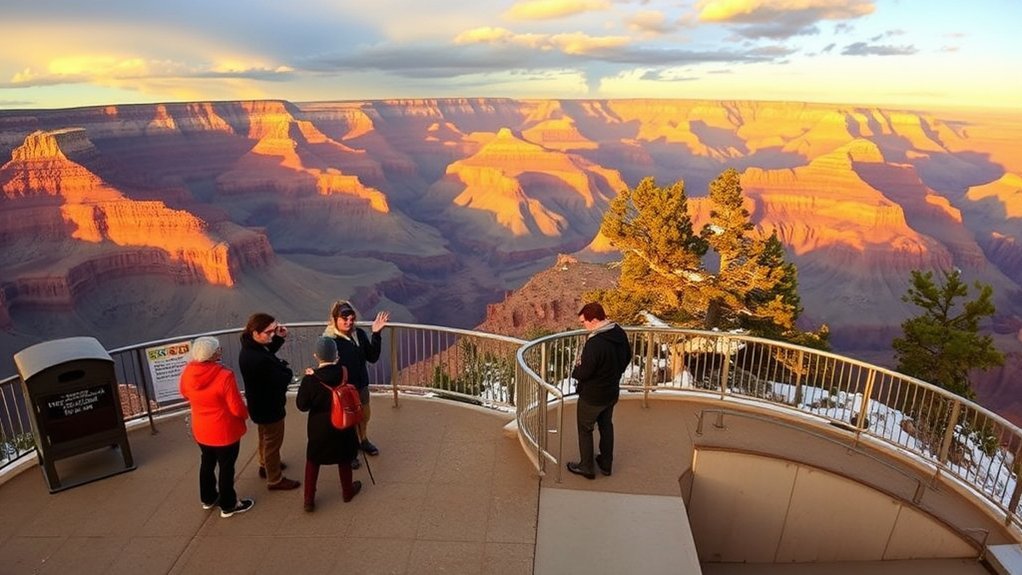
The North Rim’s 8,000-foot elevation, remote roads, limited services, and 2025 burn scar make preparation especially important in 2026. No potable tap water is available on the North Rim this season. Bring enough water for everyone in your group, including extra for delays. Pack food, sun protection, rain protection, warm layers, and basic vehicle supplies.
Summer heat becomes more dangerous as you hike below the rim. The National Park Service advises hikers to avoid strenuous inner-canyon hiking during the hottest part of the day, and temperatures near the river can be dramatically higher than on the rim. Turn around early if anyone develops dizziness, headache, confusion, unusual fatigue, nausea, or loss of coordination.
Post-fire areas can produce rockfall, falling trees, unstable slopes, debris flows, and flash floods, particularly during or after rain. Stay on open trails, obey closure signs, and be ready to change plans. Check the NPS safety guidance and the live North Rim status page before hiking.
Accessibility varies by location. Point Imperial includes an accessible portion of the viewpoint area, but the wider 2026 recovery environment has reduced services and some routes remain closed. Travelers using wheelchairs or mobility devices should use the current NPS map and status information to choose stops with appropriate parking, restrooms, and paved access.
Stage 2 fire restrictions are in effect for the 2026 North Rim season. Wood and charcoal fires are prohibited, along with outdoor smoking except within an enclosed vehicle. Liquid-petroleum or LPG devices that can be turned off may be allowed when used according to current park restrictions. Pets must be leashed and are limited to specific areas and trails.
Frequently Asked Questions
How much time do you need to see the Grand Canyon North Rim?
A half-day is enough for a few major overlooks, but one full day is better. With a full day, you can drive to Point Imperial and Cape Royal, stop at several pullouts, take one or two short hikes, and stay for sunrise or sunset without rushing.
How do you see the Grand Canyon North Rim in 2026?
Drive Highway 67 from Jacob Lake, enter the park, then use the Cape Royal and Point Imperial scenic roads for the main overlooks. Bring your own water and food, download the 2026 NPS map, and check the current status page because some trails and facilities are closed.
Is it worth seeing the North Rim of the Grand Canyon?
Yes, especially if you value forest scenery, high-elevation viewpoints, scenic driving, and a quieter atmosphere. In 2026, the experience is more rustic than usual, so it is best for visitors who are comfortable bringing their own supplies and adapting to limited services.
When is the best time to visit the Grand Canyon North Rim?
Late May through June and September into early October usually offer a good balance of cooler weather and lighter crowds. July and August can be pleasant on the rim but bring monsoon thunderstorms, lightning, and flash-flood risk. Always confirm current road and facility status before traveling.
Is Grand Canyon Lodge open on the North Rim in 2026?
No. The historic Grand Canyon Lodge and many surrounding cabins were destroyed in the 2025 Dragon Bravo Fire. The National Park Service says there is no overnight lodging inside the North Rim developed area during the 2026 season.
Is Bright Angel Point Trail open in 2026?
No. Bright Angel Point Trail is closed in 2026. Other popular closures include Widforss, Transept, Uncle Jim, and the western Ken Patrick Trail. Open alternatives include Cape Royal, Cape Final, Roosevelt Point, Point Imperial, and the North Kaibab Trail, subject to temporary closures.
Is drinking water available on the North Rim in 2026?
Potable tap water is not available on the North Rim in 2026. Bring enough water for your full visit. The General Store may sell packaged water during operating hours, but you should not depend on store inventory as your primary water plan.
Do you need a reservation to enter the North Rim?
No timed-entry reservation is required for normal park entry. You still need a valid entrance pass, and separate reservations or permits may be required for camping, backcountry overnight trips, or Tuweep day use.
Are North Rim mule rides operating in 2026?
No. North Rim stock use is suspended for the 2026 season, and the North Rim mule-ride operator states that Grand Canyon mule rides will not operate this year.
Conclusion
The North Rim is still one of the Grand Canyon’s most rewarding places for solitude, forest scenery, and wide-open viewpoints, but 2026 requires a different plan from earlier years. Build your day around open scenic roads and trails, stay outside the park if you need a room, carry your own water and food, respect the 22-foot vehicle restrictions, and check live conditions before you leave. With those adjustments, Point Imperial, Cape Royal, the open short trails, and the quieter high-country setting can still make the trip memorable.
Sources
- National Park Service: North Rim Status and Closures: 2026 roads, trails, campground, services, fire restrictions, and lodging status.
- National Park Service: 2026 North Rim Pocket Map and Services Guide: current services, distances, vehicle limits, trail map, and safety information.
- National Park Service: Fees and Passes: current entrance fees, pass rules, and payment information.
- National Park Service: Day Hiking: North Rim trail distances and current hiking options.
- National Park Service: Tuweep: permit requirements, access, vehicle rules, and remote-area safety.
- National Park Service: Grand Canyon Safety: heat, lightning, elevation, and hiking safety guidance.