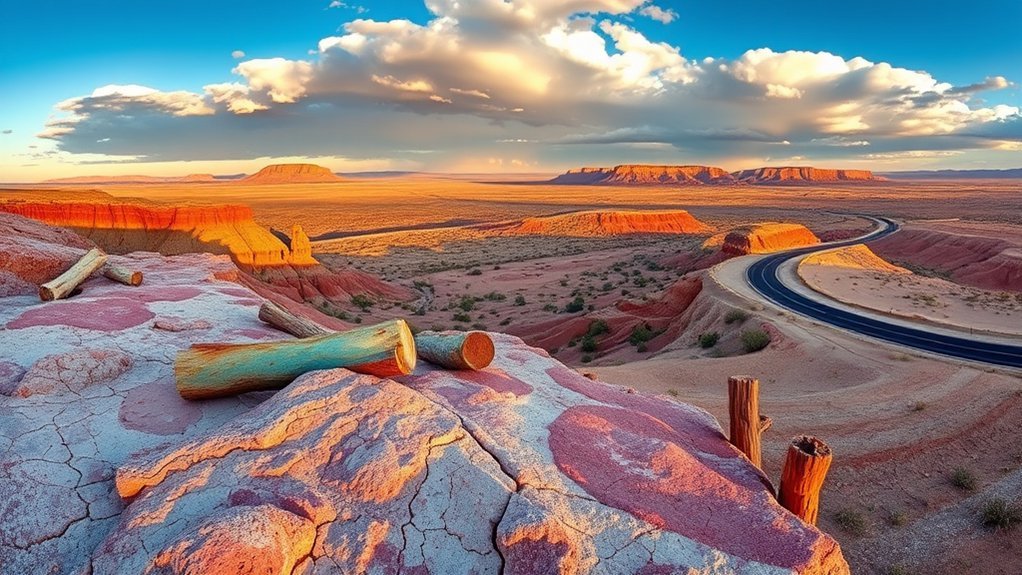
If you’re planning a trip to Petrified Forest National Park, a little preparation makes it much easier to see the Painted Desert, petrified wood, ancient cultural sites, and historic Route 66 in one visit. This guide covers the best entrance routes, current hours and fees, must-see stops, hikes, weather, accessibility, camping, safety, and practical ways to plan your time without damaging the park’s protected resources.
Quick Answer
Petrified Forest National Park is best explored by driving its 28-mile park road and stopping for Painted Desert viewpoints, Blue Mesa, Crystal Forest, Puerco Pueblo, and Rainbow Forest. Allow at least 2-3 hours, or half a day for several walks. Spring and fall usually provide the most comfortable conditions.
Key Takeaways
- The main park road runs 28 miles between Interstate 40 at the north end and Highway 180 at the south end.
- A private-vehicle entrance pass currently costs $25 and is valid for seven days; entrance stations are cashless.
- Allow about one hour to drive through without meaningful stops, 2-3 hours for a typical visit, or half a day for several trails.
- Crystal Forest, Blue Mesa, Giant Logs, Painted Desert viewpoints, Puerco Pueblo, and the historic Route 66 alignment are among the most rewarding stops.
- Never collect petrified wood, pottery, plants, rocks, or other natural or cultural resources.
- Check official NPS alerts before leaving because weather, construction, facilities, and access conditions can change.
At a Glance
| Time Required | About 2-3 hours for a typical visit; 4-6 hours for several trails and museums |
| Difficulty | Easy by car; easy to moderate on developed trails, with some steep grades |
| Tools Needed | Vehicle, water, sun protection, walking shoes, weather check, and park map or NPS app |
| Cost | $25 per private non-commercial vehicle for seven days; qualifying federal passes are accepted |
What Is Petrified Forest National Park and Why Visit
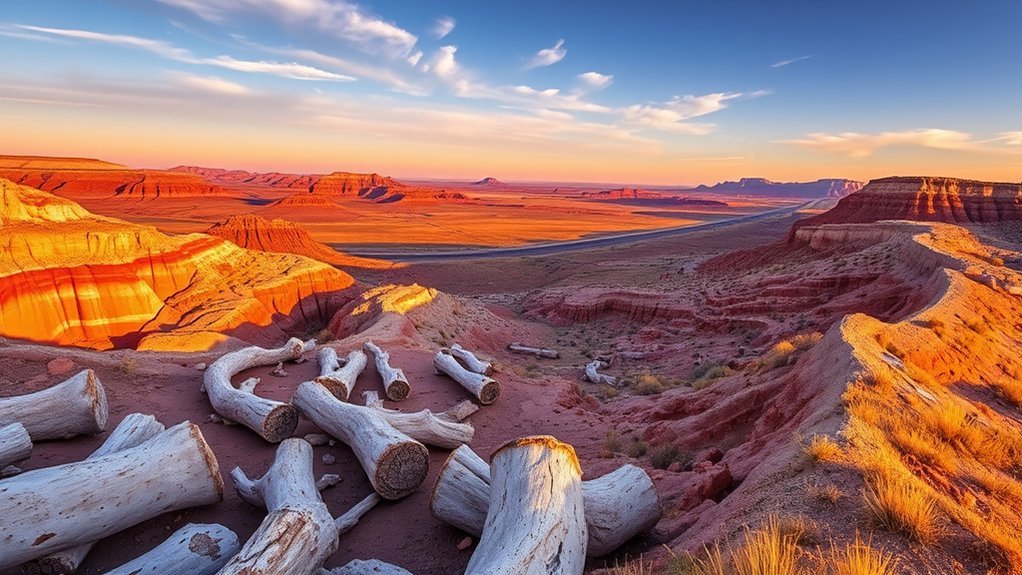
Petrified Forest National Park lies in northeastern Arizona and protects more than 200,000 acres of colorful badlands, native grassland, archeological sites, fossils, historic Route 66, and one of the world’s largest concentrations of petrified wood. Much of the exposed rock records the Late Triassic, with major deposits formed by ancient river systems roughly 208-225 million years ago.
The trees that became petrified wood were transported and buried in ancient river sediments. Silica and other minerals gradually entered the porous wood and crystallized as its organic material broke down. Trace minerals help create the reds, yellows, purples, browns, and other colors you see in many logs. You can learn more through the National Park Service’s Petrified Forest fast facts.
The park also preserves more than geology. Ancestral Puebloan sites, petroglyphs, historic buildings, and a surviving alignment of Route 66 reveal thousands of years of human history. Rainbow Forest Museum near the south entrance is especially useful for understanding the park’s paleontology.
How to Get to Petrified Forest National Park

Petrified Forest National Park has two main entrances, and your direction of travel usually determines the easiest way through. The park stretches between Interstate 40 on the north and Highway 180 on the south.
- Traveling west on I-40: Take Exit 311 directly to the north entrance, drive through the park, then leave from the south entrance onto Highway 180.
- Traveling east on I-40: Take Exit 285 into Holbrook, follow Highway 180 south for about 19 miles to the south entrance, then drive north through the park to I-40.
The main park road is about 28 miles long. Driving from one end to the other without meaningful stops takes roughly one hour, but most visitors should allow substantially longer. See the official NPS directions before your trip.
There is no public transportation to or within the park. The nearest major airports are in Phoenix and Albuquerque, while smaller airports operate in Flagstaff, Show Low, and Gallup. Most fly-in visitors will need a rental vehicle.
Pro Tip: If your road trip allows it, enter at one end and exit at the other instead of backtracking the entire park road. Download the official NPS app or save a park map before arriving because navigation apps can misidentify locations on remote backroads.
Best Time of Year to Visit and Weather Tips

Spring and fall are usually the easiest seasons for hiking because temperatures are more moderate than in midsummer or winter. Spring can also be windy. April and May are generally the best months for spring wildflowers after adequate winter moisture, while another bloom can appear in late summer following strong monsoon rainfall.
Summer temperatures can rise above 100°F (38°C), and the open landscape offers limited shade. July through September can bring thunderstorms, with the strongest monsoon pattern usually concentrated in summer. Winter is much quieter but can bring freezing temperatures, wind, ice, rain, and snow.
| Season | Typical Conditions | Planning Tip |
|---|---|---|
| Spring | Moderate temperatures, wind, possible wildflowers | Carry layers and wind protection |
| Summer | Hot, exposed, thunderstorms possible | Carry plenty of water and avoid unnecessary midday exertion |
| Fall | Generally moderate days and cooler nights | Excellent season for longer walks |
| Winter | Cold, windy, occasional snow or ice | Check road and weather conditions before driving |
Warning: The park is exposed, dry, and often windy. Carry more water than you expect to need, use sun protection, and check the official weather guidance and forecast before hiking. If thunderstorms develop, shorten exposed hikes and follow ranger instructions.
Top Sights and Must-See Stops Along Petrified Forest Road
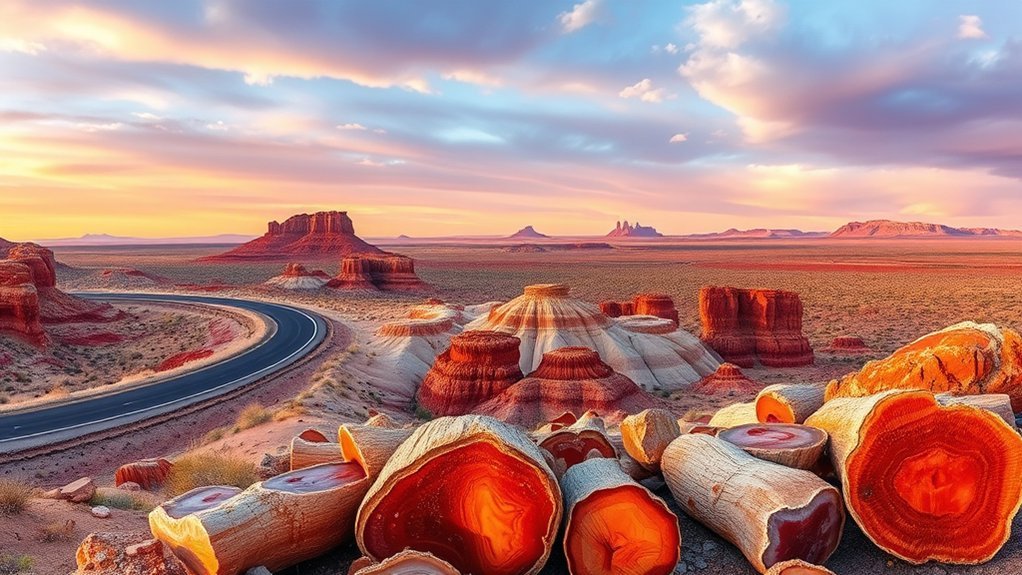
The park road connects dramatically different landscapes, from the red Painted Desert in the north to major petrified-wood deposits farther south. Rather than racing between entrances, choose several viewpoints, one or two cultural-history stops, and at least one trail.
Painted Desert Viewpoints
North-end overlooks such as Tiponi Point, Tawa Point, and Kachina Point provide broad views across the Painted Desert. The Painted Desert Rim Trail is a roughly 1-mile round trip between Tawa and Kachina Points. It has no stairs but includes dirt, gravel, water bars, and steeper grades that can make it unsuitable for some mobility devices.
Painted Desert Inn National Historic Landmark at Kachina Point combines sweeping scenery with Route 66, homesteading, Civilian Conservation Corps, architectural, and Indigenous history.
| Stop | Why Stop |
|---|---|
| Tiponi Point | Wide Painted Desert panoramas |
| Tawa Point | Scenery plus access to walking trails |
| Kachina Point | Painted Desert Inn and rim views |
| Tepees | Striped Triassic badland formations |
| Blue Mesa | Blue, purple, and gray badlands plus a 1-mile trail |
Crystal Forest Trail
Crystal Forest Trail is a 0.75-mile loop and one of the best developed trails for seeing petrified wood at close range. Colorful logs reveal crystalline quartz and trace minerals created during the petrification process. The trail is paved, but NPS measurements show sections with relatively steep grades, so a paved surface does not necessarily mean the entire trail meets every visitor’s accessibility needs.
Stay on the developed trail and leave every fragment where you find it. Removing petrified wood or any other natural or cultural resource is prohibited.
Historic Agate House
Agate House is an eight-room Ancestral Puebloan structure originally built using petrified wood held together with mud mortar. The site was occupied sometime between about 1050 and 1300. Workers reconstructed the structure in the 1930s using original materials, although the National Park Service notes that the reconstruction is not a completely accurate copy of its original appearance.
The Agate House Trail is about 2 miles round trip from Rainbow Forest Museum. Long Logs and Agate House can be combined into a roughly 2.6-mile outing.
Warning: Current NPS trail guidance says Agate House itself is closed for physical-safety reasons and visitors must remain at least 15 feet from the structure. Do not sit, stand, lean, or climb on its walls. Check the current trail information before hiking.
Puerco Pueblo, Newspaper Rock, and Route 66
Do not limit your visit to petrified wood. Puerco Pueblo has a short paved loop through the remains of a large Ancestral Puebloan community, with petroglyphs visible near the trail. Nearby Newspaper Rock provides an overlook onto a major concentration of petroglyphs. View cultural resources without touching, climbing, tracing, or disturbing them.
The park also preserves a segment of the historic Route 66 alignment. A roadside exhibit and vintage automobile help mark the former highway’s path through this landscape.
Best Hikes and Scenic Walks to Experience
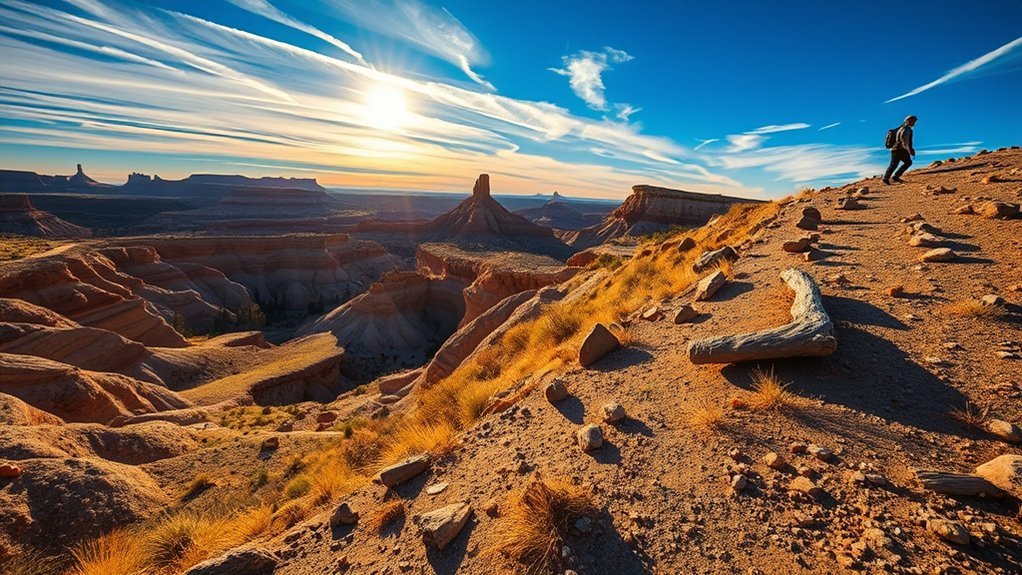
You can see a surprising amount of Petrified Forest on short developed walks. Match the trail to your time, mobility, weather, and interest rather than trying to complete every route in one day.
- Giant Logs Trail: About 0.4 mile behind Rainbow Forest Museum. It contains some of the park’s largest colorful petrified logs but also has stairs and steep sections.
- Crystal Forest Trail: 0.75-mile loop with excellent close views of petrified wood.
- Blue Mesa Trail: 1-mile loop through blue, purple, and gray badlands. Expect a steep grade near the beginning.
- Painted Desert Rim Trail: About 1 mile round trip between Tawa and Kachina Points with expansive northern views.
- Puerco Pueblo Trail: About 0.3 mile, mostly paved, with archeological remains and petroglyphs.
- Long Logs Trail: About 1.6 miles, passing one of the park’s major concentrations of petrified wood.
- Long Logs and Agate House: Roughly 2.6 miles combined for both natural and cultural history.
More adventurous visitors can also investigate the park’s designated Off the Beaten Path routes. These are less developed and require stronger navigation, water planning, weather awareness, and desert hiking skills than the maintained trails.
How to Plan Your Time in the Park
If You Have About One Hour
Driving the entire 28-mile park road without stops takes about an hour, so a one-hour visit is better spent concentrating on one end. For petrified wood, focus on Rainbow Forest Museum, Giant Logs, or Crystal Forest in the south. For Painted Desert scenery, use the north entrance, select a few overlooks, and visit Painted Desert Inn.
If You Have Two to Three Hours
Drive the full park road and combine several short stops. A strong route includes Painted Desert viewpoints, historic Route 66, Puerco Pueblo or Newspaper Rock, Blue Mesa, Crystal Forest, and Rainbow Forest Museum.
If You Have Half a Day or Longer
Add two or three developed trails, spend more time at the museums and cultural sites, or consider Long Logs and Agate House. Experienced hikers with a full day may choose an approved backcountry or Off the Beaten Path route after checking current conditions.
What to Pack and Desert Safety
The landscape may look easy from the road, but exposure, wind, elevation, summer heat, winter cold, and quickly changing thunderstorms can make even short walks demanding. Bring:
- Plenty of drinking water
- Sun hat, sunglasses, and sunscreen
- Comfortable walking or hiking shoes
- Light layers plus wind protection
- Warm clothing in winter and shoulder seasons
- Snacks, especially if you have dietary restrictions
- Downloaded park map or official NPS app information
- Any medications or mobility equipment you require
Tell someone your plans before remote hikes. Stay on designated trails in developed areas, respect closure signs, and never enter areas marked closed. Wildlife should be observed from a distance.
The park road is only 28 miles long, but the experience changes dramatically when you slow down for its geology, archeology, grasslands, viewpoints, and short trails.
Practical Planning: Hours, Fees, Rules, and Accessibility
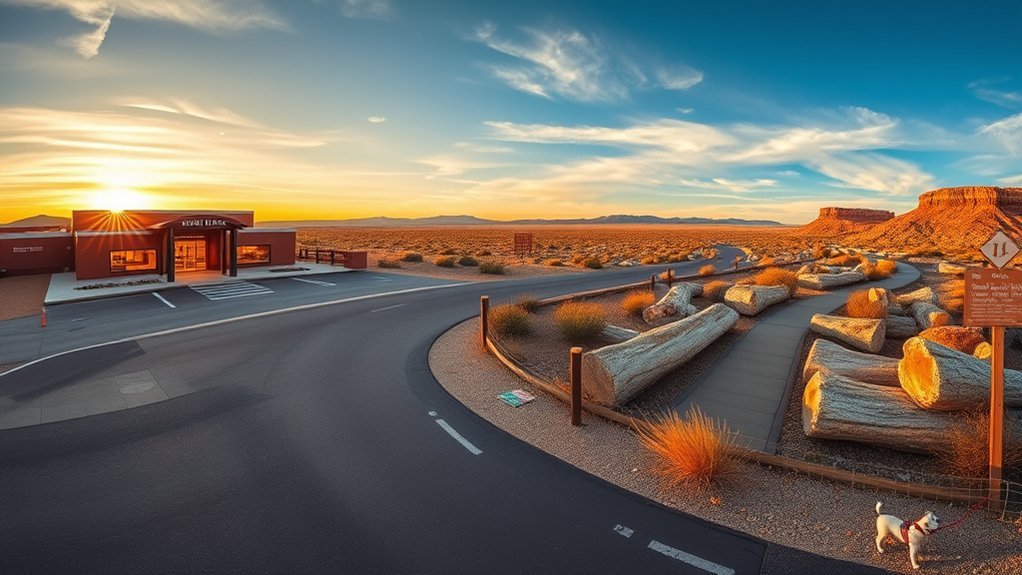
Hours and Fees
Petrified Forest National Park currently lists park road hours of 8 a.m. to 5 p.m. Mountain Standard Time. Most of Arizona remains on Mountain Standard Time throughout the year and does not observe Daylight Saving Time.
The park is normally open year-round except Thanksgiving and Christmas. Do not plan on remaining inside simply because sunset occurs after closing time. At closing, visitors still inside are expected to proceed toward an exit.
The current standard entrance fees include:
- Private vehicle: $25, valid for seven days
- Motorcycle: $20, valid for seven days
- Pedestrian or bicyclist age 16 or older: $15, valid for seven days
- Petrified Forest annual pass: $45
The park is cashless at entrance stations. Valid America the Beautiful passes are accepted, but annual-pass prices and eligibility differ, so check the official NPS fees and passes page before purchasing one.
Note: As of August 2026, the National Park Service lists the Painted Desert Visitor Center as closed for construction. The surrounding Painted Desert Community Complex remains open with amenities including restrooms, a restaurant, gift shop, gas station, picnic area, and dog park. Painted Desert Inn is serving as the north visitor center. Check current visitor-center information before traveling.
Rules and Accessibility
All natural and cultural resources are protected. Do not remove petrified wood, rocks, plants, pottery fragments, artifacts, Route 66 debris, or other park resources. Removing protected material is prohibited and punishable under federal law.
Accessibility varies by location. Many developed areas are paved or barrier-free, but some trails contain grades steeper than accessibility standards. The Tawa Trail meets standards for outdoor developed areas, while Puerco Pueblo is generally suitable for strollers and various mobility devices except for a short spur. Giant Logs contains stairs, and Crystal Forest includes steeper grades despite its paved surface.
If accessibility is important to your visit, review the specific trail measurements on the NPS trails page rather than relying only on descriptions such as “paved.”
Pets, Bicycles, and RVs
Pets are welcome in many areas but must be kept on a leash no longer than six feet. Pets are allowed on paved roads and trails and in designated wilderness, but only service animals may enter park buildings. Owners must clean up pet waste and should never leave animals unattended in hot vehicles. See the official pet rules.
Bicycles and e-bikes are allowed on the park road but generally not on hiking trails, with limited exceptions designated by NPS. Large RVs and trailers can use the main road, although some small parking areas are difficult for large rigs.
Camping and Overnight Stays
There is no RV camping, car camping, front-country campground, boondocking, or roadside overnight camping inside Petrified Forest National Park. Overnight camping in the park requires backpacking into the designated wilderness and obtaining a free wilderness permit.
If you want a conventional campground, RV site, or motel, plan to stay outside the park. Check the official NPS camping information for current permit procedures and nearby public-land options.
Nearby Towns, Lodging, and Day-Trip Extensions
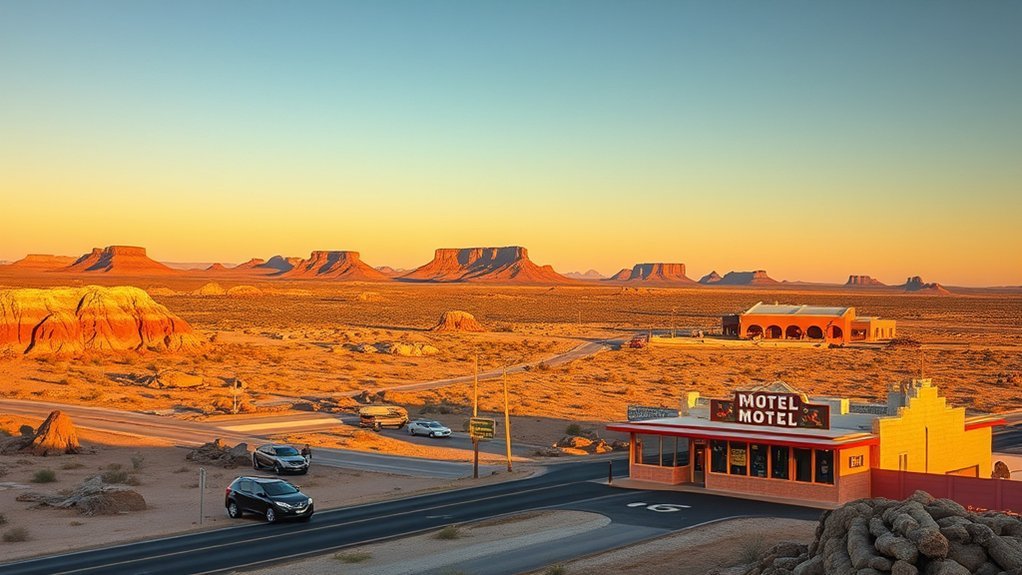
Holbrook is the most practical nearby town for many visitors. It is roughly 18-19 miles from the park’s south entrance by Highway 180 and offers fuel, restaurants, motels, grocery options, and Route 66 history.
Independent Route 66-style properties such as the 66 Motel and Brad’s Desert Inn have operated in Holbrook, while chain lodging provides additional choices. Because hotel ownership, amenities, rates, and availability change frequently, confirm current conditions directly before booking.
The Painted Desert Community Complex near the north entrance also has a restaurant and basic visitor services. Holbrook has additional dining choices, including Swaad Stop and other independent restaurants, but always check current operating hours before relying on a specific business late in the day.
If you are extending a larger Route 66 trip, possible detours include Meteor Crater, the historic Two Guns area, roadside rock shops, and other northern Arizona attractions. Access and operating status can change, especially at privately operated or historic sites, so verify conditions before making a long detour.
Frequently Asked Questions
How Much Time Do You Need at Petrified Forest National Park?
Most visitors can see several major stops in about 2-3 hours. Allow 4-6 hours if you want to walk several trails, explore museums and cultural sites, and spend more time photographing the Painted Desert and petrified wood.
How Long Does It Take to Drive Through Petrified Forest?
The main park road is about 28 miles long, and driving from one end to the other without stops takes roughly one hour. A useful visit takes longer because the viewpoints, trails, museums, Route 66 exhibit, and cultural sites require separate stops.
Can You Just Drive Through Petrified Forest National Park?
Yes. The park road connects Highway 180 at the south entrance with Interstate 40 at the north entrance. You can enjoy many viewpoints from short roadside stops, although walking at least one developed trail gives you a much better look at the landscape and petrified wood.
When Is the Best Time to Visit Petrified Forest National Park?
Spring and fall usually provide the most comfortable temperatures for walking. April and May can produce spring wildflowers after adequate moisture. Summer may exceed 100°F and bring thunderstorms, while winter can bring freezing temperatures, wind, ice, and snow.
Can You Take Petrified Wood From the Park?
No. Petrified wood and all other natural and cultural resources inside the national park are protected. Leave rocks, fossils, plants, pottery fragments, petroglyphs, and other resources exactly where you find them.
Can You Camp Inside Petrified Forest National Park?
There is no developed, RV, car, or front-country camping inside the park. Overnight camping is limited to wilderness backpacking under current NPS rules, and a free wilderness permit is required.
Sources
- National Park Service – Directions – entrance routes, highways, transportation, and airports.
- National Park Service – Operating Hours and Seasons – current park-road and facility hours.
- National Park Service – Fees and Passes – entrance fees, annual pass, cashless payment, and resource-protection rules.
- National Park Service – Trails – trail distances, accessibility measurements, and Agate House restrictions.
- National Park Service – Visitor Centers – current Painted Desert Visitor Center construction closure and available facilities.
- National Park Service – Weather – temperature extremes, winter weather, and summer thunderstorms.
Conclusion
Petrified Forest National Park rewards travelers who slow down rather than treating the 28-mile road as a shortcut. Give yourself time for the Painted Desert, Blue Mesa, Crystal Forest, cultural sites, Route 66 history, and at least one walk among the petrified logs. Check current NPS conditions before leaving, carry plenty of water, respect closures, and leave every natural and cultural object exactly where you find it so this extraordinary landscape remains intact for future visitors.