
A Ryan Bellgardt interview offers a useful look at how an Oklahoma filmmaker moved from radio and commercial production into independent creature features. His comments about The Jurassic Games explain how the film’s unusual death-row game-show premise, humor, local production model, and visual effects were shaped by both creative ideas and practical limits. His story also shows why collaboration became central to his filmmaking process.
Quick Answer
Ryan Bellgardt built his filmmaking career in Oklahoma, moving from radio and commercial production into self-taught camera work, CGI, writing, and directing. The Jurassic Games turned a death-row reality-show premise into a dinosaur-filled VR thriller, using Oklahoma locations, a local crew, humor, and roughly 700 visual-effects shots. Its sequel arrived in 2025.
Last checked: September 30, 2026. Dates and figures were verified against official sources.
Key Takeaways
- Bellgardt’s path into film grew from radio, television, advertising, music, camera work, and self-taught CGI rather than a traditional Hollywood route.
- The Jurassic Games used its virtual-reality premise to combine dinosaurs, survival competition, media satire, action, drama, and comedy.
- The film was made with an all-Oklahoma crew and shot at Oklahoma locations including Little Sahara, Robbers Cave, and the Gloss Mountains.
- Bellgardt’s hoped-for sequel eventually became The Jurassic Games: Extinction, released in 2025.
Ryan Bellgardt Interview: From Oklahoma Broadcasting to Film
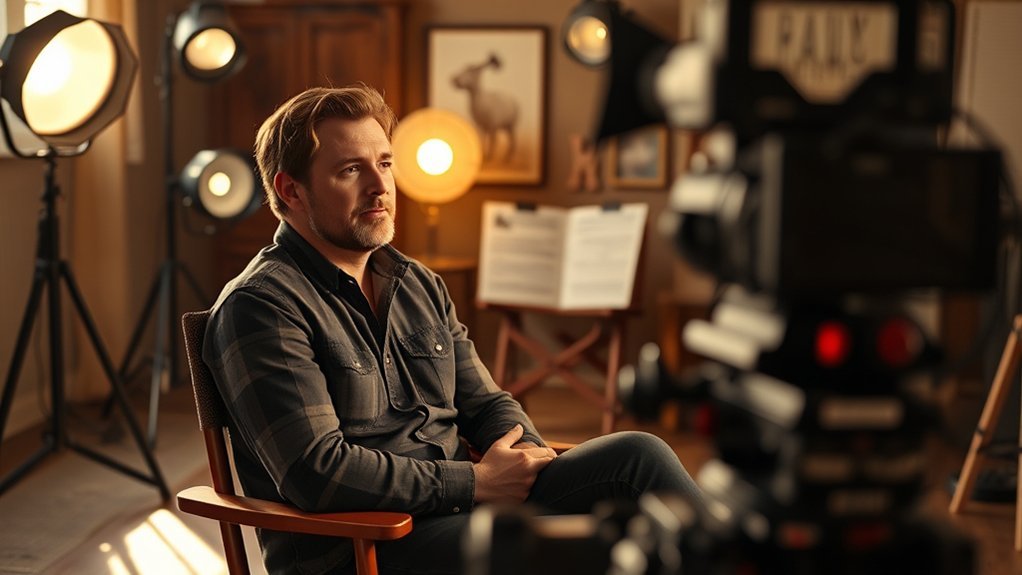
Bellgardt did not begin his career by moving to Los Angeles or entering a traditional film program. According to the Oklahoma Film + Music Office profile of Ryan Bellgardt, he grew up in Oklahoma and started in broadcasting before learning audio production, video production, and computer animation.
In interviews, Bellgardt has described picking up a camera, teaching himself CGI, and gradually moving from radio and commercial work into longer narrative projects. His first major project was a children’s television pilot called Big Magic Book. He said in a 2017 interview about his early filmmaking career that he spent about a year on the puppet-based project and eventually pitched it to the Disney Channel.
Those experiences fed into commercial directing and work at Boiling Point Media. Bellgardt later wrote and directed Army of Frankensteins, followed by Gremlin and then The Jurassic Games. Rather than treating every technical job as a separate discipline, he used his background in writing, music, editing, video, and CGI as parts of the same storytelling process.
Key Themes and Plot Elements in The Jurassic Games
The Jurassic Games is built around a near-future virtual-reality television show in which ten death-row inmates compete against dinosaurs and one another. The premise lets the film mix survival action with commentary on entertainment, competition, and a society willing to turn punishment into spectacle.
Bellgardt told PopGeeks in its Ryan Bellgardt interview that his background in broadcasting and advertising influenced the story. He also acknowledged the influence of The Running Man, while explaining that the virtual-dinosaur format helped the filmmakers work within their visual-effects limitations.
| Theme | Description | Notable Elements |
|---|---|---|
| Survival | Contestants must stay alive inside a deadly virtual game | Dinosaurs, traps, and pressure |
| Competition | The inmates are also competing against one another | A televised game-show structure |
| Media Satire | Violence is packaged as entertainment | Bellgardt drew on broadcasting and advertising experience |
| Character Dynamics | Relationships change as the contestants face danger | Tucker and Joy were written with familiar actors in mind |
| Visual Effects | The virtual setting supports deliberately digital creatures and environments | About 700 VFX shots |
| Tone | Action, drama, and comedy share the same story | Ryan Merriman approached the Host as an “evil Ryan Seacrest” |
The result is more than a simple humans-versus-dinosaurs setup. The game-show structure gives Bellgardt a reason to move between the contestants, the people controlling the program, and the audience watching the spectacle.
Filmmaking Challenges and Advantages in Oklahoma
For Bellgardt, Oklahoma was not simply a cheaper substitute for Hollywood. It was his home, the base of his production company, and a source of crew, locations, studio space, and state production support.
The Oklahoma Film + Music Office’s production account says The Jurassic Games used an all-Oklahoma crew during principal photography. It filmed at Little Sahara State Park, Robbers Cave State Park, the Gloss Mountains, and Boiling Point Media’s Oklahoma City facilities, where a futuristic set was constructed.
The production also used the Oklahoma Film Enhancement Rebate Program that existed at the time. That historical program should not be confused with whatever incentive rules are available to productions today. Additionally, the state’s diverse historical landmarks link from the original article is not a source for Bellgardt or Oklahoma film production.
Local Crew, Studio Resources, and Collaboration
Bellgardt has repeatedly emphasized the value of the people around him. That makes the original idea that Oklahoma left him with little access to experienced collaborators too broad. His own comments instead highlight local talent and the benefits of repeatedly working with many of the same people.
That familiarity mattered on The Jurassic Games. Bellgardt said the role of Tucker was written with Adam Hampton in mind, while Joy was written for Katie Burgess. Both had worked with him before, allowing the production to start from an established working relationship.
The same philosophy appears in Bellgardt’s broader career. He has said that surrounding himself with people who are stronger than he is in individual specialties leads to a better finished project. For an effects-heavy independent film, that team-based approach can matter as much as equipment or location.
How Oklahoma Shaped the Film’s Look
Oklahoma gave the production several visually different environments without leaving the state. Desert-like dunes, rocky landscapes, wooded terrain, and a purpose-built studio set could all appear within the same fictional competition.
The filmmakers did not rely on the locations alone. Bellgardt has explained that the post-production team digitally enhanced some landscapes, adding elements such as mountains and volcanic scenery that were not physically present. This let the film combine recognizable outdoor photography with a more exaggerated game-world appearance.
Why The Jurassic Games Mixes Humor With Dark Material
Bellgardt did not want The Jurassic Games to remain grim simply because its characters face execution and violent creatures. He described his preferred tone as a mixture of action, drama, and comedy, with humor giving the film the feel of escapist genre entertainment.
Humor helps the film stay playful while exposing how casually its fictional society treats televised violence.
Three parts of that approach stand out:
- The Host: Ryan Merriman told Bellgardt that he wanted to play the character as an “evil Ryan Seacrest,” giving the television presenter a cheerful surface and a darker role underneath.
- Deliberately wild action: The raptor maze and Ren’s martial-arts fight with dinosaurs push the premise toward spectacle rather than strict realism.
- Media satire: The comedy makes the fictional audience’s acceptance of a deadly program feel even more unsettling.
Bellgardt said the raptor fight became more elaborate after actor Tiger Sheu explained that he knew chain-style martial arts. The team choreographed the routine on the day it was filmed, showing how an actor’s skills could reshape a scene during production.
Behind the Scenes of The Jurassic Games
Bellgardt describes filmmaking as a collaborative process rather than a director imposing every idea alone. On The Jurassic Games, the writing, performances, cinematography, production design, editing, and visual effects all depended on specialists contributing to the same plan.
That approach was especially useful because the film had to combine physical locations with an extensive digital environment. Bellgardt said he could visualize scenes in finished form, but he also stressed that he relied on the team to solve the many practical and creative problems that appeared during production.
The film’s Oklahoma production also created continuity between departments. Familiar actors and crew members had already worked together on earlier Bellgardt projects, reducing the amount of time needed to establish working relationships from scratch.
Special Effects: Sets, Locations, and About 700 VFX Shots
The effects story in The Jurassic Games is substantially bigger than the original article suggested. Bellgardt said the movie contained about 700 visual-effects shots, with a team of specialists handling the work while he supervised the overall visual direction.
The film combined real Oklahoma locations and a constructed studio set with extensive digital creatures, environments, interfaces, and landscape additions.
A Selling Your Screenplay interview with Bellgardt traces how years of learning CGI prepared him for increasingly ambitious effects work. That progression is important because one number in the original article was attached to the wrong film.
- Gremlin: Bellgardt said this earlier film had about 150 CGI creature shots. Stephanie Roach handled the creature animation while Bellgardt rendered and composited the work.
- The Jurassic Games: Bellgardt described this production as having about 700 visual-effects shots and a larger specialist team.
- Physical production: The movie used real Oklahoma landscapes and a large futuristic studio set, while post-production added dinosaurs, interfaces, environmental extensions, and other digital elements.
The virtual-reality premise also gave the team creative flexibility. Bellgardt explained that because the dinosaurs existed as virtual constructs inside the story, absolute photorealism was not required for the concept to make sense.
How Bellgardt Connects With Genre Audiences
Available interviews support a broader picture of Bellgardt’s audience strategy than the original claims about a specific online dinosaur community. He has spoken repeatedly about creating concepts that get people talking and about making genre ideas that can communicate clearly to audiences in different countries.
Dinosaurs fit that strategy because the threat is visually immediate. A viewer does not need a long explanation to understand people running from a large predator, while the game-show framework gives the concept an additional hook.
Audience and Market Awareness
Bellgardt’s development process combines creative ideas with an awareness of how independent films reach buyers and viewers. In interviews, he has discussed working with collaborators and sales partners while shaping stories that could travel internationally.
- Clear concepts: The central idea can be understood quickly: prisoners, a deadly game, and dinosaurs.
- Memorable set pieces: Raptor fights, traps, and game-show imagery give audiences specific moments to discuss.
- International readability: Bellgardt has said creature-driven science fiction and horror can communicate across language and cultural boundaries more easily than some dialogue-heavy genres.
This does not mean every creative choice came from market research. Bellgardt also stressed that he still wanted an interesting story rather than a formula assembled only for distributors.
Humor as Part of the Audience Connection
Humor gives viewers another way into the film’s deliberately outrageous premise. Instead of pretending that a televised dinosaur death match is completely ordinary, the movie often embraces the absurdity and lets the characters react within that heightened tone.
Bellgardt’s comments about wanting audiences to have fun explain why comic moments sit beside danger. The humor is not separate from the concept; it helps sell the idea of a society so accustomed to spectacle that even a lethal competition can be packaged as television entertainment.
The Sequel Happened: The Jurassic Games: Extinction
The original 2018 interview ended with Bellgardt saying he hoped to make a sequel and already had ideas for one. That possibility is no longer hypothetical: The Jurassic Games: Extinction is now the official follow-up.
The sequel Bellgardt hoped to make after the first film became a completed feature, The Jurassic Games: Extinction.
The Apple TV listing for The Jurassic Games: Extinction identifies it as a 2025 film directed by Bellgardt. The story again centers on ten death-row inmates inside a deadly virtual dinosaur competition, but introduces a new host and a malfunction that changes the nature of the game.
- Bellgardt returned as writer and director: The sequel continues the fictional game-show universe he established in the first movie.
- The scale remained effects-heavy: The official film site says the sequel contains more than 700 visual effects.
- Oklahoma remained central: The official site says the sequel was shot entirely in Oklahoma and produced by Boiling Point Media.
The armored-dinosaur image teased at the end of the original film was intended to leave audiences with an exaggerated final joke. Bellgardt said he told visual-effects artist Matt Gardocki to have fun with the shot rather than confirming it as a specific adaptation of 1980s Dino-Riders toys. The original article also linked to the cultural experiences in an unrelated travel guide; that page should not be treated as evidence about Bellgardt’s films.
Frequently Asked Questions
What inspired Ryan Bellgardt’s interest in dinosaurs?
The interviews reviewed do not establish that Bellgardt had a specific childhood fascination with dinosaurs. For The Jurassic Games, he has said the project developed partly because his sales partners saw strong international demand for dinosaur films, while Bellgardt shaped that commercial starting point into a virtual-reality game-show story.
How did Ryan get started in filmmaking?
Ryan Bellgardt moved into filmmaking through radio, television commercials, video production, and computer animation in Oklahoma. He taught himself camera work and CGI, created longer television projects, made a children’s pilot called Big Magic Book, and eventually moved into feature films with his Boiling Point Media collaborators.
What are Ryan’s favorite dinosaur species?
Bellgardt’s favorite dinosaur species are not established in the reliable interviews and official sources reviewed for this article. The earlier claim that Tyrannosaurus rex and Velociraptor were his personal favorites could not be verified, so it should not be presented as a fact.
Does Ryan have any pets?
The reliable sources reviewed for this article do not document Bellgardt’s current pets. The previous claim that he had multiple pets and specific favorite breeds was not supported by the interviews or official profiles checked, so those details have been removed.
What hobbies does Ryan enjoy outside of filmmaking?
Music is one clearly documented interest in Bellgardt’s background. He has said he studied music, wrote and produced music, and once imagined becoming a film composer. The previous claims about photography, gaming, outdoor adventures, sci-fi reading, and specific music tastes were not verified in the sources reviewed.
Conclusion
Ryan Bellgardt’s career shows how an independent filmmaker can combine local resources, technical skills, collaborators, and a clear genre concept without building a career around Hollywood. The Jurassic Games grew from that approach, and the 2025 sequel confirms that the dinosaur game-show idea continued well beyond the original film.
The most revealing part of Bellgardt’s interviews is his emphasis on collaboration. His self-taught technical background helped him start, but he repeatedly credits actors, writers, production specialists, and visual-effects artists with turning ambitious concepts into finished films.
Sources
- Oklahoma Film + Music Office — Ryan Bellgardt profile: Supports his Oklahoma background, broadcasting career, early features, collaboration philosophy, and view of Oklahoma filmmaking.
- Addicted to Media — Ryan Bellgardt interview: Supports the Big Magic Book pilot, Disney Channel pitch, CGI background, and the approximately 150 creature shots in Gremlin.
- PopGeeks — Ryan Bellgardt interview: Supports the film’s influences, humor, virtual-dinosaur concept, actor collaboration, raptor fight, and original sequel comments.
- Oklahoma Film + Music Office — The Jurassic Games production and release: Supports the Oklahoma locations, all-Oklahoma crew, studio production, film premise, and 2018 deadCenter recognition.
- Selling Your Screenplay — Ryan Bellgardt interview: Supports his radio and production background, self-taught technical path, development process, international-market thinking, and VFX progression.
- The Jurassic Games: Extinction official site: Supports the completed sequel, Oklahoma production, Bellgardt’s role, and its 700-plus visual effects.
- Apple TV — The Jurassic Games: Extinction: Supports the 2025 release year, director, cast, and sequel premise.