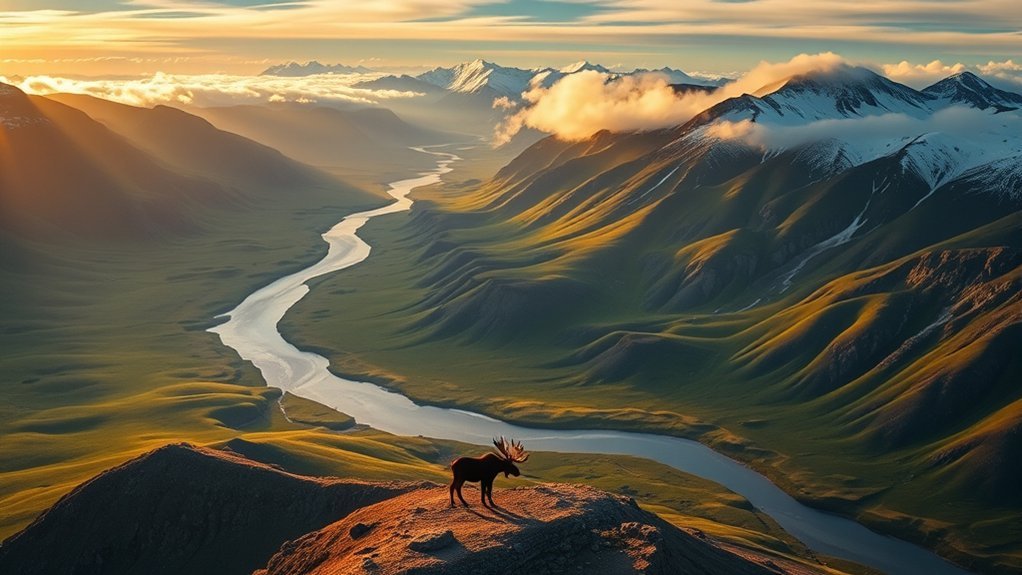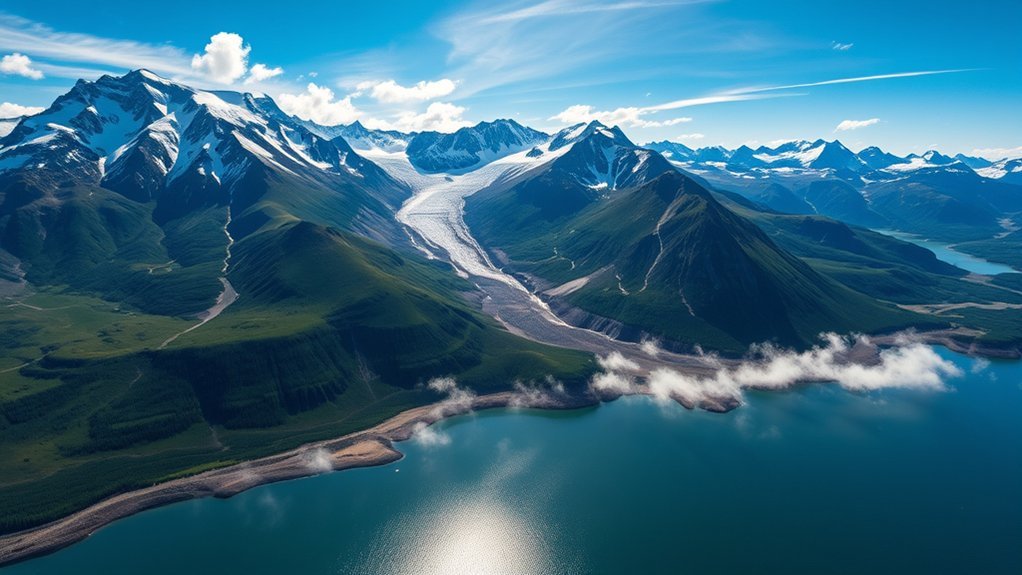
Lake Clark National Park and Preserve is one of Alaska’s most remote wilderness destinations. Its 4,030,006 acres protect mountains, volcanoes, glaciers, tundra, forests, lakes, rivers, salmon habitat, and important Dena’ina cultural landscapes. A visit can include hiking, fishing, paddling, coastal brown-bear viewing, photography, or backcountry camping, but planning is different from a typical national park trip because no road leads into the park.
Quick Answer
Lake Clark National Park and Preserve is a remote, roadless Alaska park best reached by small aircraft. Most trips focus on Port Alsworth and the Tanalian Trails, coastal brown-bear viewing, Twin Lakes, or remote lakes and rivers. Plan transportation first, expect weather delays, carry reliable emergency communication, and follow current bear-safety and food-storage rules.
Key Takeaways
- There is no road into Lake Clark National Park and Preserve; most visitors arrive by small aircraft.
- Port Alsworth is the easiest base for first-time visitors who want a visitor center, lodging, services, and maintained hiking trails.
- Chinitna Bay and Silver Salmon Creek are major coastal brown-bear viewing areas, while Twin Lakes is known for wilderness scenery and the Richard Proenneke historic site.
- Camping is largely primitive, and current bear-resistant food-storage rules apply in many popular areas.
- Weather can delay aircraft for days, so build flexibility into your schedule and carry extra essentials.
Overview of Lake Clark National Park
Lake Clark National Park and Preserve lies southwest of Anchorage and west of Homer on the Alaska Peninsula. According to the National Park Service, the unit covers 4,030,006 acres and protects landscapes stretching from the Cook Inlet coast across the Chigmit Mountains to interior lakes, rivers, forests, and tundra.
The park’s ecosystems support brown bears, black bears, moose, wolves, caribou, Dall sheep, migratory birds, salmon, trout, Arctic grayling, and many other species. Two active volcanoes, Redoubt and Iliamna, also rise within this dynamic landscape.
Unlike parks organized around highways and developed overlooks, Lake Clark rewards visitors who choose a specific destination and build their transportation around it. Port Alsworth is a practical base for hiking and visitor services. The Cook Inlet coast attracts bear watchers. Twin Lakes draws visitors interested in wilderness travel and Richard Proenneke’s cabin. Other lakes and river corridors suit experienced paddlers, anglers, backpackers, and guided travelers.
Lake Clark protects more than four million acres, yet there is no road into the park. Your transportation plan is one of the most important parts of the trip.
Getting There: Transportation Options
Lake Clark is not connected to Alaska’s road system. Most visitors reach the park by small aircraft from communities such as Anchorage, Homer, Kenai, Soldotna, King Salmon, or other regional hubs. Boats and charter services can also reach portions of the Cook Inlet coast.
The NPS Lake Clark transportation page lists authorized air taxis and explains which operators use wheeled aircraft, floatplanes, or other access methods. Contact operators directly because routes, aircraft capacity, prices, luggage limits, and availability vary.
Warning: Alaska weather can delay a flight into or out of Lake Clark. Do not build a tight connection around your pickup time. Carry enough food, medication, fuel, and warm gear to manage an unexpected delay.
Air Travel Options
Port Alsworth is one of the park’s main visitor gateways and is home to the NPS field headquarters and visitor center. Most visitors flying there arrive on a small wheeled aircraft at one of the community’s gravel airstrips. Floatplanes can reach many lakes when conditions permit.
Other travelers fly directly to destinations such as Twin Lakes, Crescent Lake, Chinitna Bay, Silver Salmon Creek, or remote backcountry areas. The appropriate aircraft depends on the landing surface, season, weather, and operator.
Flights can also become part of the experience because they provide aerial views of mountains, glaciers, volcanoes, rivers, lakes, tundra, and Cook Inlet. However, treat flightseeing as a bonus rather than assuming weather will provide clear views.
Pro Tip: Choose your exact destination before booking the flight. “Lake Clark” is enormous, and a flight to Port Alsworth is a different trip from a coastal bear-viewing flight or a Twin Lakes drop-off.
Ground Transportation Choices
Do not plan on renting a conventional four-wheel-drive vehicle to explore the national park. There is no connected highway or park-road network.
In Port Alsworth, local residents use walking, bicycles, ORVs, and vehicles on local routes. Unless you make other arrangements with an air taxi, lodge, or local service, the National Park Service advises visitors to expect to walk where they need to go.
The Tanalian trailhead is in Port Alsworth near the southern airstrip. Because the community has active aircraft runways, follow local signs and use extra care whenever walking near or across an airstrip.
Elsewhere in Lake Clark, continued transportation may involve a floatplane, boat, water taxi, hiking, paddling, or an arranged guide service. Some areas also contain private property, so use current maps and avoid assuming that every cabin, trail, beach access point, or parcel inside the park boundary is public.
Choose the Right Lake Clark Experience
The park is too large and remote to treat as a single sightseeing loop. Choose the area that best matches your goals.
- Port Alsworth: Best starting point for the visitor center, Tanalian Trails, private lodging, air-taxi connections, and a relatively straightforward first visit.
- Cook Inlet coast: Chinitna Bay and Silver Salmon Creek are well known for coastal brown-bear viewing. Guided trips are a practical choice for travelers unfamiliar with bear country.
- Twin Lakes: A remote destination for the Richard Proenneke historic site, wilderness scenery, paddling, camping, and off-trail travel.
- Remote lakes and rivers: Best suited to visitors with backcountry navigation, paddling, fishing, or wilderness-camping experience, or those traveling with an authorized guide.
Best Times to Visit
Lake Clark National Park and Preserve is open year-round, but most visitors arrive between June and October because warmer weather and a wider range of transportation, lodging, and guide services are available during this period.
There is no single best month for every activity. Your ideal dates depend on whether your priority is hiking, bear viewing, fishing, fall scenery, photography, or a specific remote destination.
Summer Months Overview
Summer provides long daylight hours and the broadest access to hiking, fishing, paddling, bear viewing, and backcountry travel. Around Port Alsworth, average summer temperatures are generally cool rather than hot, and weather can change quickly.
Wildflowers, green tundra, open water, and active wildlife make summer visually rewarding. Coastal brown bears may feed on sedges in late spring and early summer, then shift toward salmon and other seasonal foods as conditions change.
Summer is also the busiest period for air taxis and private lodges. Reserve important transportation and accommodation before arriving rather than assuming space will be available after you reach Alaska.
Fall Wildlife Activity
Fall brings changing vegetation, shorter days, colder weather, and fewer visitor services as the season advances. Wildlife activity depends heavily on location and food availability, so sightings should never be treated as guaranteed.
Bears may continue feeding intensively before denning, while migratory birds begin leaving the region. Photographers can find striking autumn colors around tundra, lakeshores, and forests.
Snow and freezing conditions become more likely as fall progresses. NPS weather guidance notes that snow can occur at any time and is most common from September into early June.
Hiking Trails for Different Skill Levels
Lake Clark is mostly trail-free wilderness. The best-established hiking for visitors is the Tanalian Trail system in Port Alsworth, while the Portage Creek Trail provides another maintained option elsewhere along Lake Clark.
The National Park Service day-hiking guide lists these practical Port Alsworth choices:
- Beaver Pond Trail: About 3.2 miles round trip. This is a gentler option through birch forest and past a beaver pond and can be combined with other Tanalian routes.
- Tanalian Falls: About 4 miles round trip. A moderate hike leading to a powerful waterfall and views toward Lake Clark.
- Kontrashibuna Lake: About 5.5 miles round trip from the Tanalian trailhead. The route continues beyond Tanalian Falls to a mountain lake.
- Tanalian Mountain: About 8.6 miles round trip. This steep, strenuous hike generally requires at least eight hours and rewards experienced hikers with broad views over Lake Clark and the surrounding mountains.
The Portage Creek Trail begins near the Joe Thompson Public Use Cabin and climbs from forest toward open tundra. Beyond maintained routes, much of Lake Clark hiking is true backcountry travel without marked trails.
Note: A line drawn on a map does not necessarily mean you will find a built trail. Backcountry travelers should be comfortable with maps, navigation, brush, uneven terrain, river crossings, wildlife, and changing weather.
Wildlife Watching Opportunities
Lake Clark protects habitat for brown and black bears, moose, wolves, caribou, Dall sheep, foxes, marine mammals, and more than 180 observed bird species.
Brown-bear viewing is one of the park’s best-known experiences. The Cook Inlet coast supports high concentrations of bears because sedge meadows, tidal flats, clams, salmon streams, and other foods occur in productive coastal habitats.
Chinitna Bay and Silver Salmon Creek are two major viewing locations. Crescent Lake can also attract bears during salmon runs.
Never approach, crowd, pursue, or block a bear’s route. At established coastal viewing areas, follow current NPS guidance and your authorized guide’s instructions. Stay together with your group and avoid displacing bears from feeding areas.
Good wildlife viewing means allowing the animal to control the encounter. Give bears room to feed, travel, and leave without having to move around you.
Fishing and Water Activities
Lake Clark’s lakes and rivers support salmon, rainbow trout, Arctic char, lake trout, Arctic grayling, Dolly Varden, and other fish species. Exact opportunities vary by drainage and season.
Anglers must have the appropriate Alaska fishing license and follow current state sport-fishing regulations. Do not assume the same season, limit, or method applies throughout the park.
Fishing also requires special care in bear country. If a bear approaches a fishing site, give it the area. If a nearby bear notices a hooked fish, stop fishing and avoid allowing the bear to associate people with an easy meal.
Kayaking and canoeing can provide access to spectacular lakes, but aircraft capacity creates logistical challenges. Ask your air taxi before arriving whether it can carry your boat and gear. Inflatable or folding boats may be easier to transport in small aircraft.
Warning: Lake Clark’s water is extremely cold. Wind can turn a calm lake into rough water quickly. Wear an appropriate personal flotation device, monitor weather, and do not treat calm morning conditions as a guarantee of safe conditions later in the day.
Camping and Accommodations
Lake Clark offers everything from primitive backcountry camping to private lodges, but it does not function like a developed national park with large NPS campgrounds, roads, stores, and centralized lodging.
The current NPS eating and sleeping guidance is especially important because lodging and camping arrangements vary by destination.
Campgrounds Overview
Most camping in Lake Clark is primitive or dispersed. Visitors can generally camp on suitable public land unless an area is closed or a specific restriction applies.
Port Alsworth has a privately owned campground. At Upper Twin Lake, the Hope Creek primitive camping area offers a limited number of hardened tent locations on a first-come, first-served basis and has no conventional campground services.
Camping is prohibited within the Richard L. Proenneke Historic Site itself. Other location-specific closures and time limits also apply, including restrictions around Twin Lakes and portions of the Cook Inlet coast.
Bear-resistant food storage is required in designated areas. Current NPS regulations require approved storage methods within one-half mile of the Cook Inlet coast and several popular lake shorelines. Bear-resistant containers can be borrowed from the Port Alsworth Visitor Center.
For camping within one-half mile of the Cook Inlet coastline, functional bear-resistant electric fencing is required from May 1 through November 1 under current park rules.
Lodging Options Available
| Lodging Type | What to Expect | Reservation |
|---|---|---|
| Backcountry camping | Primitive camping on suitable public land with few or no facilities | NPS recreational reservation generally not required, but regulations apply |
| Hope Creek camping area | Primitive Upper Twin Lake camping near the Proenneke area | First come, first served |
| Private campground | Privately operated camping in Port Alsworth | Contact operator directly |
| NPS public-use cabins | Rustic Priest Rock and Joe Thompson cabins on Lake Clark | Reservation required |
| Private lodges and B&Bs | Private accommodations ranging from simple rooms to guided lodge packages | Reserve directly with the business |
The park does not operate a conventional concession-run hotel or dining complex. Private lodges and other accommodations are located on private property within or near the park and preserve.
Reservation Tips and Guidelines
- Arrange transportation first: Your air taxi or boat connection determines which areas you can realistically visit.
- Reserve private lodging directly: Rates, meals, transfers, activity packages, and cancellation policies differ by operator.
- Reserve NPS public-use cabins: Priest Rock and Joe Thompson cabins require reservations.
- Use authorized commercial providers: Check the current NPS directory for air taxis, guides, bear-viewing operators, fishing guides, and other commercial services.
- Leave schedule flexibility: Weather can change departure and pickup times.
Fees, Permits, Food, and Practical Planning
Lake Clark National Park and Preserve currently has no entrance fee. The National Park Service also does not require ordinary recreational permits or reservations for activities such as general backpacking, camping, river running, or bear viewing.
That does not make a Lake Clark trip free. Air taxis, boats, private lodging, guides, public-use cabins, licenses, equipment, and other private services can all have separate costs.
Fishing requires an appropriate Alaska state license, and special permits are required for certain commercial, research, filming, or other regulated activities.
Independent visitors should also plan food carefully. Port Alsworth has no grocery store. If you are not staying at a lodge that provides meals, arrive with the food and supplies you need and confirm aircraft baggage limits in advance.
Cultural Heritage and Historical Sites
Lake Clark is not an empty wilderness. Qizhjeh Vena, the Dena’ina name associated with Lake Clark, is part of the ancestral homeland of the Dena’ina people, whose relationship with the land extends back thousands of years.
The Kijik (Qizhjeh) National Historic Landmark and Archeological District contains more than a dozen archeological sites and preserves evidence of a long history of settlement and use. Traditional relationships with salmon, wildlife, plants, trails, waterways, and seasonal gathering remain part of a living culture rather than only an archaeological story.
Visitors should respect archaeological resources, subsistence activities, private property, Native corporation lands, fish camps, equipment, and culturally important places. Do not remove artifacts or disturb sites.
The Richard Proenneke historic site at Upper Twin Lake tells another part of the region’s history. Proenneke built his cabin by hand beginning in the late 1960s and documented decades of wilderness living through journals and film.
Photography Tips for Capturing the Landscape
- Use the long light: Early and late daylight can bring texture to mountains, lakes, tundra, and coastal landscapes.
- Protect equipment: Rain, wind, spray, sand, and rapid weather changes are normal possibilities.
- Bring spare power: Remote areas may have no place to recharge batteries.
- Use a telephoto lens for wildlife: Do not move closer simply to fill the frame.
- Stay predictable around bears: Never pursue, surround, or block wildlife for a photograph.
- Photograph the human story respectfully: Ask before photographing residents, camps, or private activities at close range.
Safety Tips for Exploring the Wilderness
Lake Clark is remote enough that help may be hours or days away. Self-sufficiency is part of responsible trip planning.
- Leave a detailed trip plan: Give a trusted person your route, destination, transportation provider, pickup plan, equipment description, and overdue time.
- Plan without cell service: The National Park Service states that there is no cell-phone service in the park. Consider carrying a satellite messenger, satellite phone, or another suitable emergency communication device.
- Prepare for weather delays: Carry extra food, medication, fuel, and clothing.
- Dress for cold and rain: Waterproof footwear and layered clothing are important even in summer.
- Know bear behavior: Make your presence known where visibility is poor, stay together, give bears space, and know how to respond to defensive and non-defensive encounters.
- Carry bear spray where appropriate: Know how to use it and ask your air carrier how it must be transported. Bear spray cannot simply be packed like ordinary luggage.
- Store scented items correctly: Food, garbage, harvested fish, toiletries, and other attractants may require approved bear-resistant storage depending on your location.
- Treat water: Do not assume remote water is safe to drink untreated.
- Use caution at river crossings: Many backcountry routes have no bridges. Turn around when water conditions exceed your ability.
- Wear a PFD on the water: Cold water, wind, and rapidly building waves can make paddling dangerous.
Warning: Do not rely on your phone as your only map, communication device, light source, or emergency plan. Batteries fail, devices get wet, and normal cellular coverage is unavailable in the park.
Accessibility
Lake Clark is a rugged wilderness park, but some visitor facilities and equipment can make particular locations more accessible. The Port Alsworth Visitor Center has an accessible ramp, and the National Park Service offers specialized wheelchairs for use in Port Alsworth and at certain coastal bear-viewing locations.
Because access normally requires a small aircraft, travelers with mobility, medical, or equipment needs should discuss those requirements with both the National Park Service and their transportation provider before booking.
Frequently Asked Questions
Are there entrance fees for Lake Clark National Park?
No entrance pass is currently required for Lake Clark National Park and Preserve. However, transportation, private lodging, guides, public-use cabins, fishing licenses, equipment, and other services can have separate costs.
Can I drive to Lake Clark National Park?
No. Lake Clark is not connected to the road system. Most visitors arrive by small aircraft, while boats can reach portions of the Cook Inlet coast and Lake Clark itself.
Can I bring my pet to Lake Clark National Park?
Leashed pets are permitted in the park and preserve, but the National Park Service strongly encourages visitors to leave pets at home. Loose dogs can provoke bears or moose, chase wildlife, disturb nesting birds, and create risks for both pets and people. Keep any pet leashed at all times and dispose of waste properly.
What are the park’s operating hours?
Lake Clark National Park and Preserve is open 24 hours a day, year-round. The Port Alsworth Visitor Center operates on a separate seasonal schedule, so check current NPS hours before your trip.
Is there cell-phone reception in the park?
Do not plan on cellular service. NPS safety guidance states that there is no cell-phone service in the park. Backcountry travelers should consider a satellite communication device and leave a detailed itinerary with someone who will report them overdue.
Are guided tours available in Lake Clark National Park?
Yes. Authorized commercial operators provide services such as bear viewing, hiking, backpacking, kayaking, boating, photography, sport fishing, winter backcountry trips, air taxi transportation, and water transportation. Check the current National Park Service provider directory before booking.
What is the best time to visit Lake Clark?
Most visitors come between June and October, when transportation, lodging, and guiding services are most available. The best dates depend on your goal: summer suits hiking and broad access, while bear viewing and fishing vary with seasonal food sources and fish runs.
Do I need a backcountry permit?
Ordinary recreational backpacking and camping generally do not require an NPS backcountry permit or reservation in Lake Clark. However, location-specific camping closures, food-storage rules, stay limits, and other regulations still apply. Public-use cabins require reservations.
How many days should I spend at Lake Clark?
A day trip can work for a guided coastal bear-viewing flight, but a Port Alsworth or backcountry visit benefits from multiple days. Whatever itinerary you choose, leave schedule flexibility because weather can delay aircraft departures and pickups.
Conclusion
Lake Clark National Park and Preserve offers the kind of Alaska experience that is difficult to find in a road-accessible park: remote lakes, mountains, salmon streams, coastal brown bears, historic places, and enormous stretches of trail-free wilderness. That remoteness also demands better preparation. Choose your destination first, arrange transportation and lodging early, allow for weather delays, carry the right safety equipment, and follow current bear and camping regulations. With those essentials handled, you can spend less time solving logistics and more time experiencing the landscape responsibly.
Sources
- National Park Service — Lake Clark Park Statistics — park acreage, establishment, wilderness, and natural-resource facts.
- National Park Service — Directions and Transportation — roadless access, air taxis, aircraft types, and boat access.
- National Park Service — Day Hikes — Tanalian Trails, Portage Creek Trail, mileage, and difficulty.
- National Park Service — Eating and Sleeping — camping, private lodging, food planning, Hope Creek, and public-use accommodation information.
- National Park Service — Safety — communications, weather delays, backcountry preparation, and wilderness hazards.
- National Park Service — Food Storage Requirements — current bear-resistant food-storage rules and designated areas.