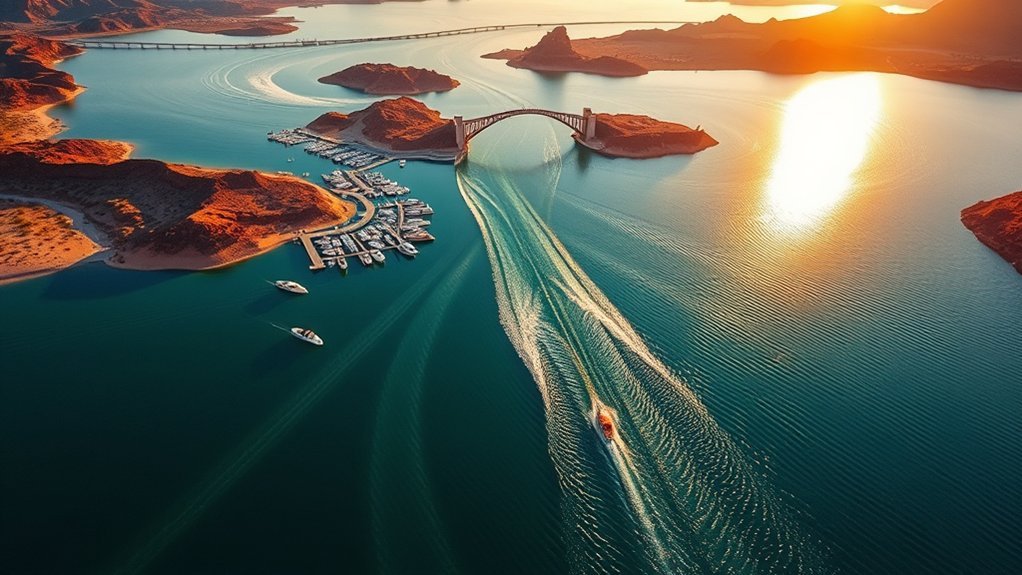
A great day on Lake Havasu can turn stressful fast if you launch without a plan. Strong wind, extreme heat, crowded ramps, changing refuge restrictions, and missing safety gear can affect your trip before you reach your first cove. Use this guide to choose a launch, prepare your boat, understand local rules, plan safer activities, and leave a detailed float plan with someone onshore.
Quick Answer
For a safer Lake Havasu boating trip, check the wind and heat forecast, choose a suitable launch, carry the required safety equipment, brief your passengers, and share a float plan. Site Six is the city’s free public launch, while other ramps may charge fees. Obey posted no-wake zones and Arizona, California, park, and refuge rules.
Key Takeaways
- Check the National Weather Service forecast, ramp status, fuel level, and return route before leaving home.
- Site Six is Lake Havasu City’s free public motorboat launch; Rotary Community Park is mainly for swimming, beach use, and paddling.
- Carry one properly sized USCG-approved wearable life jacket for every person, and know when Arizona law requires it to be worn.
- Follow posted speed and no-wake markers, use a sober operator, and do not exceed the boat’s passenger or weight capacity.
- Topock Gorge has special refuge restrictions, including a ban on recreational towing and wake sports through much of the gorge.
- Share a float plan with someone onshore and carry more than one way to communicate during an emergency.
At a Glance
| Time Required | Allow 20–30 minutes for trip planning and a full pre-launch inspection before joining the ramp line. |
| Difficulty | Easy to moderate. First-time operators should complete a boating-safety course and receive hands-on instruction before renting or launching. |
| Tools Needed | Weather forecast, chart or offline map, registration documents, required safety equipment, dock lines, anchor, charged communications, and a float plan. |
| Cost | Site Six has no launch fee. State-park, marina, campground, parking, rental, and day-use charges vary, so confirm the current price before departure. |
Planning Your Lake Havasu Boating Trip
Start by choosing a route that matches your boat, operating experience, fuel range, weather window, and passenger needs. A short sightseeing loop near the London Bridge and Bridgewater Channel requires different preparation from a long trip toward Topock Gorge or the southern shoreline.
Use this pre-departure sequence:
- Check the National Weather Service forecast for Lake Havasu City, including wind, gusts, heat alerts, and thunderstorm potential.
- Confirm the launch ramp’s current hours, fees, parking limits, construction notices, and event restrictions.
- Check the boat’s registration, fuel, oil, battery, steering, propeller, drain plug, cooling-water flow, lights, blower, and engine-cutoff system.
- Count passengers and gear, then stay within the manufacturer’s capacity-plate limits.
- Choose fuel stops, anchor points, swim areas, shelter options, and a firm turnaround time.
- Brief passengers on life jackets, fire extinguishers, communication equipment, propeller hazards, and person-overboard procedures.
- Send a float plan to a responsible person who will remain onshore.
Choose a rental that fits your plans. A pontoon can suit a relaxed group outing, a bowrider works for general cruising, and a properly equipped watersports boat may be appropriate for towing activities in unrestricted areas. Ask the rental operator about passenger limits, fuel charges, pet rules, security deposits, geographic limits, required training, and the procedure for breakdowns.
Before accepting a rental, photograph existing damage and test the steering, throttle, reverse, horn, navigation lights, bilge pump, cutoff lanyard, anchor, and safety equipment. Make sure every passenger has a correctly sized life jacket rather than accepting a pile of mismatched spares.
Pro Tip: Send your float plan by text or email before launch. Include the operator’s name, passenger names, vehicle and trailer details, boat description and registration number, launch point, planned route, expected return time, and who should be contacted if you are overdue.
Choose a Route That Fits Your Experience
New operators should begin with a short route that stays close to the launch and avoids the busiest channels. Practice slow-speed steering, stopping, reversing, docking, and approaching a person in the water before attempting a long trip.
Topock Gorge is a scenic destination, but it should not be treated like a short casual paddle. Paddlers need a suitable launch and take-out, enough drinking water, sun protection, current and wind awareness, and a plan for sharing the channel with motorized traffic. Guided trips can be a better choice for first-time visitors.
Check Weather, Wind, and Heat
Lake conditions can change quickly when wind builds over open water or thunderstorms develop. The National Weather Service inland-boating guidance recommends checking the forecast before departure and monitoring warnings, radar, and lightning information while on the water.
In hot months, begin early, provide shade, and carry more drinking water than your group normally uses on land. Watch passengers for headache, dizziness, confusion, nausea, unusual fatigue, or reduced sweating. Return to shore when anyone shows signs of heat illness.
Warning: Do not wait for lightning to strike nearby. If clouds build rapidly, wind shifts, thunder is heard, or a warning is issued, head for a safe launch or substantial shelter as soon as conditions allow.
Safe Boating Practices and Equipment Checklist
Required equipment depends on the boat’s size, fuel system, construction, activity, and operating conditions. The following checklist covers common recreational boats, but you should also review the Arizona Game and Fish Department boating guidance for your exact vessel.
Common Required Safety Equipment
| Equipment or Rule | What to Check |
|---|---|
| Wearable life jackets | Carry one USCG-approved, correctly sized, serviceable, and readily accessible wearable PFD for every person. |
| Throwable flotation device | A readily accessible USCG-approved throwable device is generally required on vessels 16 feet or longer, except canoes and kayaks. |
| Sound-producing device | Carry a horn or whistle appropriate for the vessel and test it before departure. |
| Navigation lights | Use approved lights when required after sunset, before sunrise, and during restricted visibility. Test them even if you expect to return in daylight. |
| Fire extinguisher | Required on many motorboats with permanently installed fuel tanks or spaces that can trap fuel vapors. It must be marine-approved, accessible, serviceable, and not expired. |
| Registration and numbering | Carry valid registration documentation and display the assigned numbers and current decals as required. |
| Engine-cutoff link | Use an installed cutoff-switch lanyard or wireless link when federal rules require it, including while many covered boats under 26 feet are on plane or above displacement speed. |
Wear Life Jackets
Arizona requires a properly fitting USCG-approved life jacket to be available for every person. Children 12 years of age and younger must wear one while the vessel is underway. Everyone riding a personal watercraft or being towed behind a boat must also wear an approved life jacket.
| Need | Better Choice | Why It Helps |
|---|---|---|
| Children | Properly sized foam life jacket | Provides dependable flotation when correctly fastened and fitted. |
| Watersports | USCG-approved activity-appropriate vest | Supports movement while meeting the activity’s wear requirement. |
| Personal watercraft | Snug foam vest approved for the activity | Stays secured during acceleration, spray, and falls. |
| Adult cruising | Properly fitted foam or eligible inflatable PFD | Can improve comfort and encourage continuous wear. |
| Guests | Multiple fitted sizes stored in an accessible location | Avoids relying on one-size-fits-all spare jackets. |
Inflatable PFDs are not approved for children under 16 and should not be used by nonswimmers, personal-watercraft riders, or people participating in towed sports. Check each device’s label because its approval and intended activity can differ.
In the latest available U.S. Coast Guard statistics, 87% of recreational-boating drowning victims were not wearing a life jacket when wear status was known.
Recommended Backup Equipment
Beyond the legally required equipment, carry gear that helps you solve small problems before they become emergencies:
- First-aid kit and any passenger-specific medication
- Anchor with suitable line, dock lines, and fenders
- Basic tools, spare fuses, flashlight, and waterproof headlamp
- Paddle or other backup propulsion when practical
- Charged phone in a waterproof case and a power bank
- VHF marine radio or another backup communication method
- Offline map, compass, and written emergency contacts
- Throwable rescue line and boat hook
- Sun protection, drinking water, snacks, and electrolyte drinks
Warning: Do not rely on a phone alone. Coverage can weaken in coves, refuge areas, and remote stretches, and a phone can overheat, lose power, or become wet.
Avoid Carbon Monoxide and Propeller Hazards
Carbon monoxide is colorless and odorless and can collect around cabins, canvas enclosures, stern areas, and swim platforms. Keep swimmers away from exhaust outlets, and never allow anyone to sit, hang, or “teak surf” behind a running boat.
Turn the engine off before anyone enters or exits the water near the stern. Keep the ignition key or cutoff link under the operator’s control, confirm that the propeller has stopped, and count every swimmer before restarting.
Popular Launch Points and Marina Services
Choose a launch based on your boat size, trailer experience, route, parking needs, and required services. Current fees and hours can change because of seasons, events, maintenance, and water conditions, so verify them shortly before departure.
Launch and Access Comparison
| Location | Access Type | Best For | Important Note |
|---|---|---|---|
| Windsor Beach at Lake Havasu State Park | Paid state-park motorized launch | First-time visitors, central lake access, and boat-trailer parking | The park has multiple ramps. Check Lake Havasu State Park for current entrance information. |
| Site Six | Free municipal motorized launch | Central access near the island and London Bridge area | It is the city’s only free public launch ramp, and overnight parking or camping is not allowed. Review the official Site Six page. |
| Havasu Riviera Marina | Paid marina launch | South-side lake access and modern ramp facilities | Hours and fees vary seasonally. Confirm access directly with the marina. |
| Crazy Horse Campgrounds | Private paid or guest-access launch | Campground guests, island access, and day-use visitors | A day pass or campground booking may be required. Confirm current launch and parking policies. |
| Cattail Cove State Park | Paid state-park motorized launch | Trips beginning south of Lake Havasu City | It is farther from the London Bridge area but may suit southern routes and park visitors. |
| Rotary Community Park | Beach, swimming, kayaking, and small-craft recreation | Families, buoyed swimming, and hand-carried paddling equipment | The official facility page does not list a trailered motorboat launch. Do not treat it as a replacement for Site Six or a marina ramp. |
Launch-Ramp Etiquette
Prepare the boat in the staging area rather than on the ramp. Remove tie-downs except the bow connection, load coolers and passengers, install the drain plug, attach dock lines, check the key and cutoff link, and uncover the boat before backing down.
Once the boat is floating, move it away from the active ramp as soon as practical. Park the tow vehicle before arranging passengers and loose gear. When retrieving, bring the vehicle to the ramp only after the boat and trailer are ready.
Note: Busy holiday and event weekends can produce long lines. Arriving early helps, but calm preparation away from the ramp is more important than rushing.
Marina Amenities and Rentals
Major marinas may provide fuel docks, pump-out service, restrooms, transient slips, ice, tackle, basic supplies, rentals, storage, maintenance, or dining. Services are not identical at every location, and some are limited to registered guests or slip holders.
Ask whether fuel is available along your intended route and whether the marina accepts your boat’s length, draft, charging connector, shore-power requirements, or trailer. A dockside meal or coffee stop can simplify the day, but do not plan your fuel or emergency strategy around a restaurant being open.
Best Spots for Fishing, Swimming, and Watersports
Lake Havasu supports sightseeing, fishing, swimming, paddling, tubing, skiing, and wake sports, but the best area depends on traffic, wind, posted markers, refuge boundaries, and the activity itself.
| Area | Better Use | Safety and Rule Check |
|---|---|---|
| London Bridge and Bridgewater Channel | Sightseeing and slow cruising | Expect congestion and obey every posted speed and no-wake marker. |
| Fishing coves, including the Catfish Cove area | Fishing and quiet anchoring when conditions allow | Approach rocks and shallow water slowly, use an appropriate anchor setup, and avoid blocking a narrow passage. |
| Designated sandy beach and swim areas | Family swimming and shoreline breaks | Keep motorboats outside buoyed swim zones and shut the engine off before swimmers enter near the stern. |
| Topock Gorge | Scenic boating, kayaking, and wildlife viewing | Recreational towing, tubing, skiing, and wakeboarding are prohibited through approximately 17 miles of the gorge. Follow refuge buoys and backwater restrictions. |
| Open lake sections outside restricted zones | Towed watersports | Use wide, uncongested water away from swimmers, docks, anchored boats, paddlers, shorelines, and marked restricted areas. |
When towing a skier, wakeboarder, tube rider, or wakesurfer, use a qualified observer and make sure the participant wears an approved life jacket. Agree on hand signals before starting and stop immediately when the rider falls.
Local Rules, Permits, and Environmental Considerations
Lake Havasu lies along the Arizona–California boundary and includes city, state-park, private-marina, Bureau of Land Management, and national-wildlife-refuge areas. The controlling rule can depend on your location, residency, vessel, and activity.
Important Arizona Boating Rules
- Carry one properly sized and readily accessible USCG-approved wearable life jacket for every person.
- Children 12 and younger must wear a properly fitting life jacket while the vessel is underway.
- Everyone aboard a personal watercraft and everyone being towed must wear an approved life jacket.
- A person under 12 may not operate a boat with a motor greater than eight horsepower unless a parent, legal guardian, or person at least 18 years old is aboard, except during an emergency.
- Do not exceed the passenger or weight limits on the capacity plate.
- Do not allow unsafe riding on the gunwale, transom, or decked-over bow while traveling above wakeless speed.
- Obey posted speed limits and operate at a reasonable and prudent speed for traffic, visibility, wind, waves, and other hazards.
- Use a sober operator. Arizona can prosecute an operator who is impaired to the slightest degree, and a blood-alcohol concentration of 0.08 or more is unlawful.
California Boater Card on Shared Water
California residents operating motorized vessels on California waterways generally need a California Boater Card. The California program specifically states that its residency rule applies on shared waters such as Lake Havasu.
Temporary nonresidents who meet their home state’s boating requirements, rental operators, directly supervised operators, and certain licensed mariners may qualify for exemptions. Review the official California Boater Card FAQ before operating on the California side.
Personal Watercraft and Towed Sports
Every person aboard a PWC must wear a USCG-approved life jacket. If the PWC has a manufacturer-installed lanyard cutoff switch, attach the lanyard to the operator’s body, clothing, or PFD as directed.
Maintain a safe distance from other vessels and avoid sharp turns, wake jumping, or high-speed operation near traffic. PWC use is prohibited in specified refuge backwaters, and those areas may also be marked as no-wake zones.
Topock Gorge and Refuge Rules
The Havasu National Wildlife Refuge boating rules prohibit recreational towing, tubing, skiing, and wakeboarding through approximately 17 miles of Topock Gorge. PWC are not permitted in refuge backwaters, and overnight mooring is prohibited within the refuge.
Follow all regulatory buoys, wildlife closures, seasonal closures, and access signs. Do not assume that a calm-looking cove is open to every type of vessel or activity.
Fishing Licenses and Limits
A valid Arizona or California sport-fishing license can generally be used from either shore on the portion of the Colorado River that forms the Arizona–California boundary. The old Colorado River Special Use Validation is no longer required.
License-age rules differ between the states, and anglers must still follow current seasons, methods, species limits, protected-species rules, and area closures. Check the Arizona fishing regulations and California rules before fishing.
Prevent the Spread of Invasive Species
Clean mud, plants, and mussels from the hull, anchor, lines, propeller, trailer, and equipment. Drain the bilge, live wells, ballast tanks, motor, and other compartments before transport. Remove the drain plug and allow the boat and gear to dry as completely as possible.
These steps help slow the spread of quagga mussels and other aquatic invasive species. Additional inspection or decontamination rules may apply when taking the boat to another state or waterbody.
Note: Rules can differ between state parks, city facilities, private marinas, refuge backwaters, and the main river channel. Check the exact launch and destination rather than relying on one general Lake Havasu rule list.
Seasonal Conditions and Weather Tips
Summer heat can become dangerous during the middle of the day. Start early, provide shade, encourage passengers to drink water regularly, and schedule shore breaks. Sunscreen, hats, long sleeves, and sunglasses help, but they do not replace hydration or cooling.
Spring and fall can bring warm afternoons followed by cooler evenings. Pack layers and a light waterproof shell if you may remain out near sunset.
Wind can build waves across open water and make docking, anchoring, paddling, and loading more difficult. A comfortable morning forecast does not guarantee a calm afternoon, so review hourly conditions rather than only the daily high temperature.
Thunderstorms can produce rapid wind shifts, lightning, heavy rain, and poor visibility. If you cannot reach shore immediately, have everyone put on a life jacket, secure loose equipment, reduce speed, keep passengers low and centered, and move toward the safest available shelter without taking a risky route across open water.
Emergency and Breakdown Plan
Discuss emergency roles before departure. Passengers should know how to stop the engine, use the radio or phone, read the boat’s location, throw a flotation device, and identify the fire extinguisher and first-aid kit.
If Someone Falls Overboard
- Shout “person overboard” and keep the person in sight.
- Throw a flotation device immediately.
- Reduce speed, approach from a safe direction, and shift to neutral before the person reaches the stern.
- Turn the engine off before bringing the person alongside near the propeller.
- Use a ladder, sling, or other recovery method that does not pull the person beneath the boat.
- Check for injury, cold stress, heat illness, or inhaled water and seek emergency help when needed.
If the Engine Stops
Put life jackets on, move away from immediate hazards, and anchor if the depth, bottom, traffic, and weather allow safe anchoring. Check fuel, the cutoff link, battery connections, fuses, and obvious cooling or propeller problems without entering the water near a running engine.
Call 911 during a life-threatening emergency. A VHF radio may help you contact nearby boaters or authorities, but do not assume every location has guaranteed coverage. State your boat description, passenger count, exact location, problem, and immediate hazards.
After a Collision
Stop as close to the scene as safely possible, assist affected people, exchange identification, and contact law enforcement or emergency services when needed. Arizona requires written reports for specified accidents, injuries, deaths, disappearances, or property-damage levels, so review current AZGFD reporting requirements after the immediate emergency is controlled.
Warning: Do not attempt to swim a long distance to shore after a breakdown. Stay with the boat unless remaining aboard creates a more immediate danger. A boat is usually easier for rescuers to see than a person in the water.
What to Pack Before You Launch
Keep required documents and the most important emergency items dry, labeled, and easy to reach. Review the list before every trip because batteries discharge, medications expire, and equipment can be moved between outings.
- USCG-approved wearable life jacket for every passenger
- Required throwable flotation device, when applicable
- Required registration, decals, operator card, rental paperwork, and fishing license
- Marine fire extinguisher when required for the vessel
- Horn or whistle and working navigation lights
- Engine-cutoff lanyard or wireless link
- First-aid kit and passenger medications
- Anchor, suitable line, dock lines, fenders, and basic tools
- Drinking water, food, electrolyte drinks, shade, and sun protection
- Charged phone, waterproof case, power bank, and backup communication
- Offline map, compass, emergency contacts, and float plan
- Trash bags and supplies for cleaning, draining, and drying equipment
Frequently Asked Questions
Can I bring pets on board, and are there leash rules?
Private boat owners can generally bring pets, but rental companies, marinas, campgrounds, parks, and refuge areas may have their own rules. Keep pets leashed onshore where required, provide shade and drinking water, protect their paws from hot surfaces, clean up waste, and use a properly fitted pet flotation device.
Where can I charge an electric boat or e-jet ski?
Public charging availability is not consistent across Lake Havasu facilities. Contact the exact marina before departure and provide the vessel model, connector, voltage, amperage, charging time, and whether you need shore power while the vessel remains in the water.
Are there quiet hours for wakeboarding or loud music?
Noise, park, campground, marina, and wake rules vary by location. Follow posted restrictions, avoid amplified music near campsites and residences, and do not create wakes near docks, beaches, paddlers, anchored boats, or marked restricted zones.
Is cell service reliable across Lake Havasu?
Service is generally stronger near Lake Havasu City and developed marinas, but coverage can weaken in coves, refuge areas, and remote river stretches. Carry a backup communication method and leave a float plan with someone who knows when to report you overdue.
Where can I store or winterize my boat locally?
Local marinas, storage facilities, and marine-service shops may offer covered storage, security, engine service, battery care, fuel treatment, detailing, and trailer storage. Compare access hours, insurance requirements, pest control, weather protection, and what is included in the winterization service.
Which Lake Havasu launch ramp is free?
Site Six is Lake Havasu City’s only free public motorboat launch ramp. It has restrooms and fishing facilities, but overnight parking and camping are not allowed. It can become crowded, so prepare the boat before entering the ramp lane.
Can I launch a trailered motorboat at Rotary Community Park?
Rotary Community Park is a beach, swim, kayak, and recreation area, and its official amenities do not list a trailered motorboat ramp. Use Site Six, Lake Havasu State Park, Havasu Riviera, Crazy Horse, Cattail Cove, or another verified motorized launch instead.
Do I need a boating license or operator card?
Arizona does not use a general motor-vehicle-style boating license, although age, supervision, court-order, rental, and safety rules apply. California residents operating motorized vessels on California waters generally need a California Boater Card. Temporary nonresidents and certain other operators may qualify for exemptions.
Can I fish both sides of Lake Havasu with one license?
A valid Arizona or California sport-fishing license can generally be used from either shore on the boundary portion of the Colorado River. You must still follow current license-age rules, bag limits, methods, closures, and protected-species regulations.
Can I tube, ski, or wakeboard through Topock Gorge?
No. Havasu National Wildlife Refuge rules prohibit recreational towing, tubing, skiing, and wakeboarding through approximately 17 miles of Topock Gorge. PWC are also prohibited in designated refuge backwaters, and boaters must follow all regulatory buoys and no-wake markers.
Sources
- Arizona Game and Fish Department — Boating Education — Arizona life-jacket, equipment, training, PWC, and towed-sports guidance.
- U.S. Coast Guard — Float Plan — float-plan contents and emergency-search preparation.
- National Weather Service — Inland Boating Safety — forecast, wind, lightning, and storm-response guidance.
- Arizona State Parks — Lake Havasu State Park and Lake Havasu City — Site Six — official launch and facility information.
- U.S. Fish and Wildlife Service — Havasu National Wildlife Refuge Rules — Topock Gorge, PWC, towing, no-wake, mooring, and closure rules.
- California State Parks Division of Boating and Waterways — Boater Card FAQ — California-resident and shared-waterway operator requirements and exemptions.
Boating Safety Disclaimer: This article provides general trip-planning information and does not replace official boating laws, navigation rules, safety training, weather warnings, rental agreements, or instructions from law-enforcement and land-management agencies. Verify current requirements for your vessel, launch, route, residency, and activity before departure.
Conclusion
The best Lake Havasu boating trips begin before the tow vehicle reaches the ramp. Check the weather, choose the correct launch, inspect the boat, confirm the operator’s requirements, fit every passenger with the right life jacket, and leave a complete float plan with someone onshore.
Once underway, operate sober, stay within the boat’s capacity, slow down around traffic and marked zones, keep swimmers away from the propeller and exhaust, and respect refuge restrictions. Careful planning gives you more time to enjoy the lake without turning a preventable problem into an emergency.