Most people don’t realize Phoenix balloon rides can feel calm, quiet, and surprisingly organized when you know the rhythm of the morning. You’ll usually arrive before dawn, watch the balloon envelope inflate, review safety instructions, lift into the cool desert air, and drift above washes, saguaros, rooftops, and distant mountains as the sky turns pink and gold. The experience feels peaceful, but good planning matters because balloon flights depend on wind, weather, pilot judgment, and safe passenger behavior.
Quick Answer
A Phoenix hot air balloon ride usually includes an early pickup or meeting time, a safety briefing, balloon inflation, a calm sunrise flight, a landing briefing, and a short recovery after touchdown. Wear layers, closed-toe shoes, sunscreen, and bring only small essentials you can secure.
Key Takeaways
- Most Phoenix balloon rides start early because morning winds are usually calmer and more predictable.
- The pre-flight briefing explains boarding, handholds, landing posture, and pilot commands.
- Dress for cool desert air before sunrise and warmer temperatures after landing.
- Pregnant passengers, infants, toddlers, and pets are usually not allowed for safety reasons.
- The flight is quiet and scenic, but the burner can be loud and warm when the pilot adds heat.
At a Glance
| Best Time | Sunrise or early morning, when desert winds are often calmer. |
| Typical Experience | Check-in, safety briefing, inflation, boarding, flight, landing, recovery, and post-flight wrap-up. |
| What to Wear | Light layers, closed-toe shoes, comfortable pants, sunglasses, and sun protection. |
| Good For | Couples, visitors, photographers, calm adventure seekers, and locals who want a new view of the desert. |
Planning Your Sunrise Balloon Experience
When you wake before dawn and step into the cool desert air, you’ll feel the slight hush that comes just before sunrise. That quiet window is part of what makes a Phoenix balloon ride feel special. You book with the best balloon companies by checking recent reviews, pilot experience, cancellation policies, passenger limits, and whether the ride is private, shared, or part of a larger group.
Dress in layers because Phoenix mornings can feel cool before sunrise, then warm quickly once the sun reaches the valley floor. Choose sturdy closed-toe shoes instead of sandals because launch and landing areas may include dirt, brush, gravel, or uneven desert ground. Confirm pickup details, meeting location, passenger restrictions, and weather policies the evening before your flight. Bring a light scarf, a camera or phone, and a calm, flexible mindset because ballooning follows the wind rather than a fixed road.
Note: Balloon rides can be delayed, moved, or canceled when wind, visibility, storms, or heat create unsafe conditions. A good operator will treat weather calls as part of safety, not as an inconvenience.
What Happens Before Takeoff
You’ll start with a clear pre-flight safety briefing where the pilot explains handholds, landing positions, passenger movement, and what to expect as the sun warms the desert air. Then you’ll step closer as the crew unfurls the colorful envelope and the first gusts of air fill it. You may smell fabric, dust, and propane against the cool Phoenix dawn. The slow, rhythmic hiss of burners and the sight of the balloon swelling upward make the whole launch feel intentional and alive.
Pre-Flight Safety Briefing
Before you step into the basket, the pilot walks you through a calm safety briefing that sets the tone for the flight. You may feel warm propane blasts nearby, hear rope-handling commands, and watch a demonstration of exit and brace positions. The pilot explains where to stand, when to lean, how to hold the handles, and what to do during landing.
You’ll usually practice the landing crouch or brace position before takeoff. This matters because the basket may touch down softly, bounce, drag, or tip depending on wind and terrain. The briefing gives you plain instructions, not complicated rules. Ask questions before boarding if anything feels unclear. A confident passenger is one who knows what to expect.
Warning: Do not ignore pilot commands during boarding, flight, or landing. Moving suddenly, leaning outside the basket, or standing upright too early after landing can create unnecessary risk.
Balloon Inflation Process
After the safety briefing, you step back as the crew unfurls the envelope across the desert ground. The nylon may shimmer in the early light while fans push cool air into the fabric. Canvas ripples, colors bloom, and the basket begins to tilt as lines, cables, and the mouth of the balloon are checked and secured.
Pilots may point out differences in balloon types, such as standard passenger balloons, smaller sport balloons, or special-shape balloons. The design affects basket size, passenger capacity, handling, and views. Then the burners ignite with a controlled roar. Heat floods the opening of the envelope, the fabric stretches upright, and the balloon begins to stand tall over the launch field. It feels like a ritual of trust: crew coordination, pilot judgment, and passenger patience all working together before lift.
The Inflation and Boarding Process
You’ll feel the desert morning shift as crew members unfurl the vibrant envelope and the roar of the cold-air fans fills your chest. Hands guide the fabric, burners pulse warm gusts, and the captain walks you through the boarding order and safety briefing so you know exactly where to stand and how to brace. By the time the basket tips upright, you’ll smell propane, hear the flap of nylon, and be ready to step up with confidence.
Pre-Flight Inflation Steps
One crisp pre-dawn routine gets the whole operation moving. Crews unroll the colorful envelope across the field, and you can feel the cool air hush as the burner’s first low growl warms the fabric. You watch balloon preparation turn into choreography: ropes, fans, valves, and crew signals guided by practiced hands while the sky slowly lightens.
- You may help hold the mouth of the envelope if the crew invites passengers to assist.
- Crew members check seams, lines, carabiners, vents, and basket position.
- Cold-air fans give the envelope its first shape before heat is added.
- A controlled burner pulse lifts the envelope upright.
- Ground anchors and crew positions are checked before boarding begins.
Boarding and Safety Briefing
While the envelope rises behind the crew, you gather by the wicker basket as the pilot goes over the safety briefing again in simple terms. Everyone needs to know what to do when the moment comes to lift off. You feel fabric warmed by the burners and hear wind, fan noise, and distant traffic while the pilot maps out boarding procedures and safety measures with local knowledge.
You step in when invited, placing your feet carefully on the basket footholds or steps. Keep your fingers inside safe handhold areas and avoid grabbing cables or burner supports unless the pilot specifically tells you to. Once inside, stand where assigned so the basket remains balanced.
| Action | Meaning |
|---|---|
| Listen | Follow the pilot’s commands |
| Step in | Board only when invited |
| Brace | Prepare for a safe landing |
| Watch burners | Respect heat and equipment |
| Celebrate | Enjoy the moment after the crew clears it |
What the Flight Feels Like
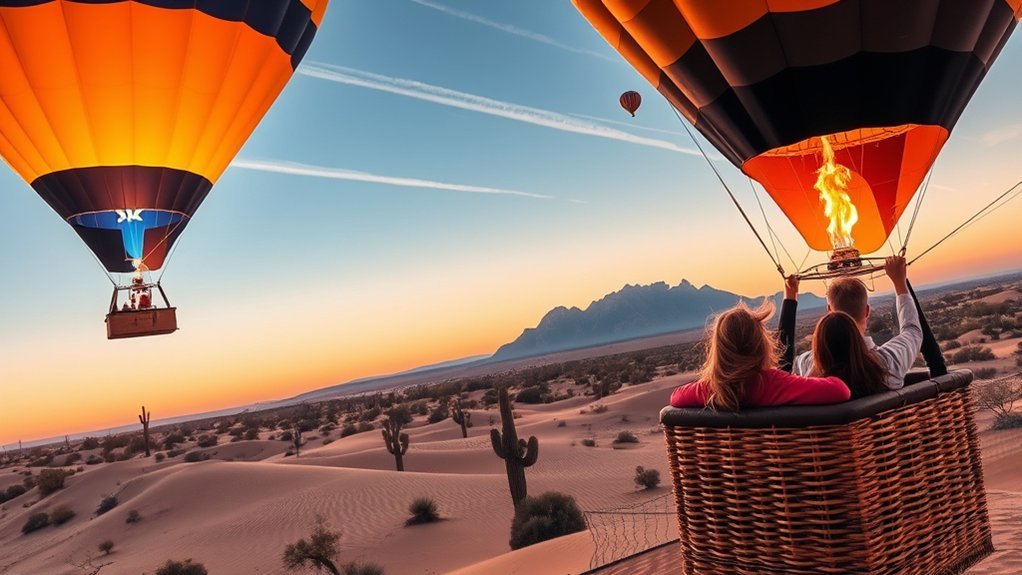
When the burners hiss and the balloon lifts, you feel a gentle, almost buoyant hush as the city falls away beneath you. The ground does not rush. It slowly recedes, giving way to a wide, quiet sky that sharpens your senses. You notice immediate flight sensations: a soft sway, a whisper of wind, and the warm blast from the burner that punctuates the silence.
Altitude experiences shift subtly. At lower levels, you may glide over saguaro-studded desert, washes, rooftops, open lots, and desert roads. Higher up, the view becomes broader and quieter as Phoenix geometry shrinks into neighborhoods, highways, golf courses, and mountain shadows. The balloon moves with the air around it, so the ride often feels smoother than many people expect.
When the burner hisses, the city recedes into a hush: warm blasts, soft sway, and widening desert horizons.
- You may smell creosote, dust, and warm fabric as the valley opens below.
- You may hear only wind, occasional burner roars, and distant traffic softened by altitude.
- You may feel sun on your face and cool air on your neck.
- You may spot birds, desert washes, mountain ridges, and long morning shadows.
- You may sense freedom in the wide, unfolding horizon.
Pro Tip: Keep your phone or camera attached with a wrist strap or stored in a secure pocket. The best photos often happen right after lift-off and again when the sun clears the horizon.
Safety Guidelines and Pilot Qualifications
Floating above the desert reminds you that joy in the air depends on careful preparation. You’ll notice pilots and crew checking burners, fuel, seams, lines, radios, weather, and instruments before passengers board. The hiss of propane and the smell of canvas become reassuring parts of the routine because each step has a purpose.
Local operators should use trained pilots who understand balloon handling, passenger safety, landing-site selection, and desert weather patterns. A responsible pilot watches wind speed, wind direction, visibility, thermal activity, and landing options throughout the experience. Crews brief you clearly, point out safety equipment, and invite questions so you feel informed rather than restricted. That balance of procedure and calm communication is what lets you enjoy the view with confidence.
Who Should Avoid a Balloon Ride
A balloon ride is gentle for many passengers, but it is not suitable for everyone. Most operators have restrictions for pregnancy, very young children, people who cannot stand for the full flight, and passengers who cannot safely climb into or out of the basket. Some operators may also have height, weight, mobility, or medical-condition policies.
Before booking, ask the company about passenger requirements if you have back, knee, hip, balance, heart, or recent surgery concerns. You may need to stand for the ride, hold a landing position, absorb a bumpy landing, and walk across uneven desert ground afterward. Honest questions before booking help prevent disappointment on flight morning.
What to Wear, Bring, and Expect After Landing
Curious what to wear and what to keep in your pocket before you step into the basket? Choose practical clothing: layers for cool desert mornings, sturdy closed-toe shoes that grip dust, and a light jacket or windbreaker you can remove when the sun warms the valley. Avoid loose scarves, dangling jewelry, open shoes, and large bags that can get in the way inside the basket.
Bring essential items that keep you comfortable without weighing you down. Sunglasses, a small water bottle, sunscreen, your phone in a secure pocket, and a light scarf or hat can all help. After landing, expect anything from a soft thud to a bumpier touchdown depending on wind and terrain. You may smell hot nylon and desert brush, hear cheers from the crew, and take a short walk across scrubby earth to the recovery vehicle. Many rides end with photos, coffee, juice, or a small toast, depending on the company.
- Sunglasses
- Water bottle
- Phone secured in a pocket or strap
- Sunscreen
- Sturdy closed-toe shoes
How to Choose a Phoenix Balloon Company
The best Phoenix balloon company for you is not always the cheapest one. Look for clear safety communication, experienced pilots, recent reviews, transparent weather policies, and honest passenger requirements. A good operator explains what happens if weather cancels the flight, how many passengers share a basket, where you meet, what is included, and what you should not bring.
Also compare the style of ride. Some companies focus on romantic private flights, while others offer larger shared rides, group events, or gift certificates. If photography matters, ask how crowded the basket is and whether the flight normally launches near open desert views. If comfort matters, ask about basket compartments, standing time, pickup distance, and post-flight transportation.
Frequently Asked Questions
Are Phoenix balloon rides suitable for pregnant passengers?
No. Pregnant passengers usually should not fly in a hot air balloon because landings can be unpredictable. Operators commonly restrict pregnant passengers for safety. A better option is to watch the sunrise launch from the ground or choose a scenic desert overlook.
Can infants or toddlers fly in a balloon?
No. Infants and toddlers generally cannot fly because they may not be tall enough to see over the basket, follow commands, stand safely, or use the required landing position. Each operator sets its own minimum age, height, and safety rules.
Is there Wi-Fi or cell service during the flight?
You should not expect reliable Wi-Fi or steady cell service during the flight. Your phone may connect at times, but service can vary by altitude, location, carrier, and terrain. Download directions, tickets, and contact details before you leave.
Do balloon companies offer gift certificates?
Yes. Many balloon companies offer gift certificates for birthdays, anniversaries, proposals, holidays, and visitor experiences. Check the expiration policy, weather-rescheduling rules, passenger restrictions, and whether the certificate covers taxes, fees, pickup, or private-flight upgrades.
Are pets allowed to accompany passengers?
No. Pets usually are not allowed in hot air balloon baskets because of burner noise, heat, movement, landing forces, and limited space. Service animal policies can vary, so contact the operator directly before booking if you need accommodation guidance.
What happens if the weather is bad?
The operator may delay, reschedule, or cancel the flight if wind, storms, visibility, or other conditions are unsafe. This is normal in ballooning. Review the company’s cancellation and rescheduling policy before you buy.
Can you sit down during a hot air balloon ride?
Usually no. Most passenger baskets are designed for standing during the flight. You may need to stand for the full ride, hold the basket handles, and use the landing position when instructed. Ask the operator before booking if standing is difficult for you.
Conclusion
You’ll rise before dawn, breathe the cool desert air, and watch the balloon envelope bloom like a giant sunrise over Phoenix. You’ll feel the gentle lift, smell propane heat, and hear only wind, burner bursts, and distant morning sounds as the Sonoran Desert spreads beneath you. After landing, you’ll trade stories with the crew and carry home the memory of a quiet, radiant ride that turns the desert into something almost otherworldly.