Alaska’s backcountry can feel limitless, but responsible travel takes more than simply packing out your trash. Leave No Trace means making decisions that protect vegetation, water, wildlife, cultural resources, and other visitors while also following the rules for the exact park, preserve, refuge, forest, state park, or public land you visit.
Quick Answer
Practice Leave No Trace in Alaska by planning for local rules and weather, traveling and camping on durable surfaces, packing out trash and food scraps, leaving natural and cultural objects in place, minimizing fires, giving wildlife plenty of space, securing bear attractants, and respecting other visitors. Always follow the specific land manager’s rules.
Key Takeaways
- The seven Leave No Trace principles apply across outdoor activities, but Alaska’s local regulations can differ significantly from one land unit to another.
- Use existing trails where practical, but in trail-less backcountry choose durable surfaces and follow area-specific guidance instead of creating new paths.
- Pack out trash, food scraps, toilet paper where required, and every other item you brought with you.
- Keep food, garbage, toiletries, and other scented items secure from bears and away from your sleeping area.
- Human-waste and campfire rules vary by location, so check the managing agency before your trip.
- Never approach or feed wildlife, and follow current Alaska fishing, camping, closure, and fire regulations.
At a Glance
| Time Required | Plan before departure and follow these practices throughout your outing. |
| Difficulty | Easy habits in developed areas; more planning is needed for remote backcountry travel. |
| Tools Needed | Trip information, navigation tools, reusable containers, trash bags, appropriate human-waste supplies, secure food storage, and bear spray where appropriate. |
| Cost | Many Leave No Trace practices cost nothing, although camping fees, permits, waste systems, bear-resistant storage, and other required gear vary by destination. |
Understanding Leave No Trace Principles
The seven Leave No Trace principles provide a framework for reducing outdoor impacts. They are:
- Plan Ahead and Prepare
- Travel and Camp on Durable Surfaces
- Dispose of Waste Properly
- Leave What You Find
- Minimize Campfire Impacts
- Respect Wildlife
- Be Considerate of Other Visitors
In Alaska, applying those principles requires extra attention to local conditions. A route may cross tundra, gravel bars, forest, wetlands, or areas without maintained trails. Camping and food-storage rules can also differ among land managers. The National Park Service’s Alaska Leave No Trace guidance therefore emphasizes both low-impact practices and checking the requirements for the specific place you plan to visit.
Note: Leave No Trace principles are an outdoor-ethics framework. They do not replace park regulations, permit conditions, wildlife closures, fire restrictions, fishing regulations, or other legal requirements.
Planning Your Trip Responsibly
Responsible travel starts before you reach the trailhead. Identify who manages the land and check current camping rules, closures, food-storage requirements, fire restrictions, weather, trail conditions, and permit or fee requirements.
Alaska State Parks notes that regular recreational activities such as camping and hiking generally do not require a special park-use permit, although fees and location-specific rules may still apply. Federal lands can follow different systems, and some backcountry areas have additional requirements.
Prepare for rapidly changing weather and the possibility of limited cell service. Bring navigation appropriate to the trip, extra layers, sufficient food and water, and emergency equipment suited to your destination. In remote areas, do not depend solely on a phone for navigation or emergency communication.
Pack reusable bottles, containers, and bags when practical so you create less trash. Repackage food before departure to reduce unnecessary packaging and make food easier to secure in bear-resistant storage when required.
If you choose accommodations, tours, or local guides, look for operators that explain concrete conservation practices rather than relying only on broad “eco-friendly” claims. Follow local community guidance, closures, access restrictions, and rules protecting cultural sites.
Pro Tip: Save the land manager’s current regulations and emergency information before leaving reliable internet service. Rules for camping, fires, waste, fishing, and food storage can differ even between nearby recreation areas.
Staying on Designated Trails and Traveling on Durable Surfaces
Using an established trail is usually the lowest-impact choice when a trail exists. Walk through the middle of the established path rather than widening it to avoid mud or puddles.
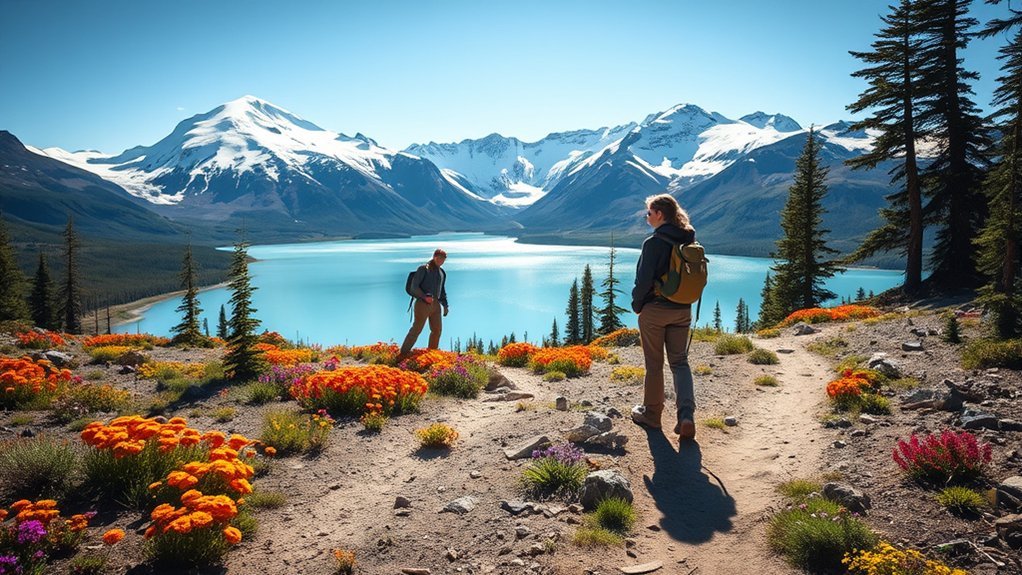
However, Alaska has large trail-less backcountry areas, so “stay on designated trails” is not a universal rule. The broader principle is to travel and camp on durable surfaces. The National Park Service recommends existing trails where possible and durable surfaces such as rock, gravel, sand, and other surfaces that can tolerate use when traveling or camping away from developed routes.
In popular areas, concentrating use on established routes helps prevent new damage. In remote or previously unimpacted areas, local guidance may instead call for dispersing travel so repeated footsteps do not create a new trail.
When choosing a backcountry campsite, use an existing impacted site when appropriate or select a durable surface. Avoid unnecessarily moving rocks, cutting vegetation, digging trenches, or constructing furniture. Also avoid camping where you see clear signs of bear activity, concentrated animal food sources, or established wildlife travel routes.
Leave What You Find
Leave rocks, antlers, plants, fossils, artifacts, historic objects, and other natural or cultural features where you find them unless the managing agency specifically allows otherwise. Photographing an object gives you a record without removing part of the landscape.
Do not carve trees, build unnecessary rock cairns, rearrange a campsite for decoration, or create new structures from branches and stones. Cleaning mud and seeds from footwear and equipment between areas can also help reduce the accidental movement of non-native species.
Wildlife Encounters and Safety
Wildlife encounters are one of the memorable parts of traveling in Alaska, but protecting animals and people requires distance and restraint. Never approach wildlife for a photograph, never feed animals, and follow any posted minimum-distance or closure requirements.
- Give wildlife space: Use binoculars or a zoom lens rather than moving closer. If an animal changes its behavior because of you, increase your distance.
- Avoid surprising bears: The Alaska Department of Fish and Game recommends making noise, especially where vegetation or terrain limits visibility.
- Stay alert for bear signs: Watch for tracks, scat, digging, carcasses, concentrated fish, and other signs of bear activity.
- Do not run from a bear: If a bear notices you, remain calm, face it, group together if possible, talk calmly, and follow current ADF&G bear-encounter guidance.
- Carry bear spray appropriately: If you carry it, keep it immediately accessible rather than buried in a backpack and know how to use it before an emergency.
In a May 2026 safety update, ADF&G advised choosing purpose-made bear spray or bear deterrent with an EPA registration and checking the canister’s condition and expiration date. The agency also recommends practicing the motions needed to access and deploy it. Bear spray is a deterrent, not a substitute for proper food storage, awareness, and avoiding close encounters.
Warning: Food, garbage, toiletries, pet food, cooking odors, and other scented items can attract bears. Follow the destination’s food-storage rules and never keep food in your tent in bear country.
Store Food and Scented Items Securely
Keep a clean camp and secure anything that could attract wildlife. Depending on the area, this may involve a required bear-resistant food container, food locker, or another approved storage method. Cook and store food away from your sleeping area when local guidance calls for it.
The rules can be strict in heavily used bear habitat. For example, Denali requires bear-resistant food containers for most overnight backcountry trips. Check the exact requirements for your destination rather than assuming one storage method works everywhere in Alaska.
Waste Management in the Wilderness
Pack out everything you bring in, including wrappers, food scraps, crumbs, damaged gear, fishing line, hygiene products, and other trash. “Biodegradable” food is still food and can attract wildlife, so orange peels, apple cores, and similar scraps should not be left behind.
Human Waste
There is no single human-waste method that applies to every Alaska destination. Always check the local rule before your trip.
- Some areas allow catholes about 6 to 8 inches deep and roughly 200 feet from water, camp, and trails.
- In sensitive tundra, Alaska NPS guidance notes that deep digging can damage fragile ground or disturb archaeological resources, so a shallower method may be appropriate where the land manager directs it.
- Some high-use, alpine, coastal, or environmentally sensitive areas require visitors to pack out solid human waste.
- Toilet paper and hygiene products should be packed out wherever the land manager requires it, and packing them out is generally the lowest-impact option.
For example, Kenai Fjords National Park requires human waste to be packed out from coastal areas and the Exit Glacier Area. This is why destination-specific instructions matter.
Dishwashing and Wastewater
Do not wash dishes, yourself, or equipment directly in lakes and streams. Carry water away from the natural water source, strain food particles from dishwater, pack those particles out, and use only a small amount of soap when necessary. “Biodegradable” soap should still be kept out of natural water.
Minimize Campfire Impacts
A camp stove usually creates less impact and is often the better choice for cooking. Before building any fire, check the current rules and restrictions for the exact location. Fires may be prohibited even where old fire rings are visible.
Where a campfire is legal, keep it small, use only permitted fuel, and follow the land manager’s instructions for fire rings, fire pans, dead-and-down wood, ash disposal, and extinguishing. Never cut live vegetation for fuel.
Extinguish the fire completely before leaving. Coals and ashes should be cold, and temporary wildfire restrictions always take priority over general campfire advice.
Be Considerate of Other Visitors
Leave No Trace also protects the experience of other people. Keep unnecessary noise low, give others space at campsites and viewpoints, yield appropriately on shared trails, and avoid blocking routes while taking breaks.
In remote areas, do not leave navigation markers, rock arrows, flagging, or other objects unless an authorized land manager has installed them. Let natural sounds dominate whenever safety does not require you to make noise. In bear country, making your presence known can be appropriate even though unnecessary loud noise should otherwise be minimized.
Frequently Asked Questions
What Should I Do if I Encounter an Injured Animal?
Keep your distance and do not attempt to capture, feed, move, or treat a wild animal yourself. Note the location and what you observed, then contact the appropriate ranger, land manager, or Alaska Department of Fish and Game office. For an immediate threat to human safety, use the local emergency system or call 911 where service is available.
Can I Camp Anywhere in Alaska’s Wilderness?
No single rule covers all of Alaska. Some backcountry areas allow dispersed camping, some direct visitors to established sites, and others require permits, reservations, bear-resistant food storage, or special waste practices. Identify the land manager and check the current rules for your exact destination before camping.
Are Fires Allowed in All Areas of Alaska?
No. Fire rules vary by land unit, campground, season, and current wildfire conditions. Some backcountry areas prohibit fires entirely, while other locations allow them only in specified places or under certain conditions. Check current restrictions before lighting any fire and use a camp stove when fires are prohibited or unnecessary.
How Can I Minimize My Impact While Fishing?
Follow the current Alaska Department of Fish and Game regulations and emergency orders for the exact water, species, season, gear, and harvest limit. Barbless hooks and catch-and-release are required or appropriate in some fisheries but are not universal statewide rules. Pack out fishing line, hooks, bait containers, and other trash, and never leave fish waste where it creates a wildlife conflict.
What Should I Do With Leftover Food Scraps?
Pack them out with the rest of your trash. Do not leave fruit peels, nutshells, crumbs, leftovers, or other food in the wilderness. Food scraps can attract bears and other wildlife even when the food is biodegradable.
Do I Need a Bear-Resistant Food Container?
It depends on where you are going. Some Alaska backcountry areas require approved bear-resistant food containers, while others provide food lockers or allow another approved storage method. Check the managing agency’s current requirements and include garbage, toiletries, and other scented items in your storage plan.
Can I Use Biodegradable Soap in an Alaska Lake or Stream?
Do not put biodegradable soap directly into a lake, river, or stream. Carry washing water away from the natural water source, use as little soap as necessary, strain out food particles, and follow the land manager’s wastewater guidance.
Sources
- Leave No Trace: The 7 Principles — official framework for Leave No Trace outdoor ethics.
- National Park Service: Leave No Trace in Alaska — Alaska-specific guidance on durable surfaces, camping, waste, wildlife, food storage, and campfires.
- Alaska Department of Fish and Game: Traveling in Alaska’s Bear Country — bear encounters, avoiding surprises, food attractants, and deterrent guidance.
- Alaska Department of Fish and Game: Know Your Bear Spray — May 2026 guidance on choosing, carrying, practicing with, and checking bear spray.
- Alaska State Parks: Permits — current information on recreational permits and park-specific requirements.
- Alaska Department of Fish and Game: Statewide Sport Fishing Regulations — statewide fishing rules and the need to follow applicable area-specific regulations.