Disclosure: As an Amazon Associate, we earn from qualifying purchases. If you click a link on this page and make a purchase, we may receive a small commission at no extra cost to you.
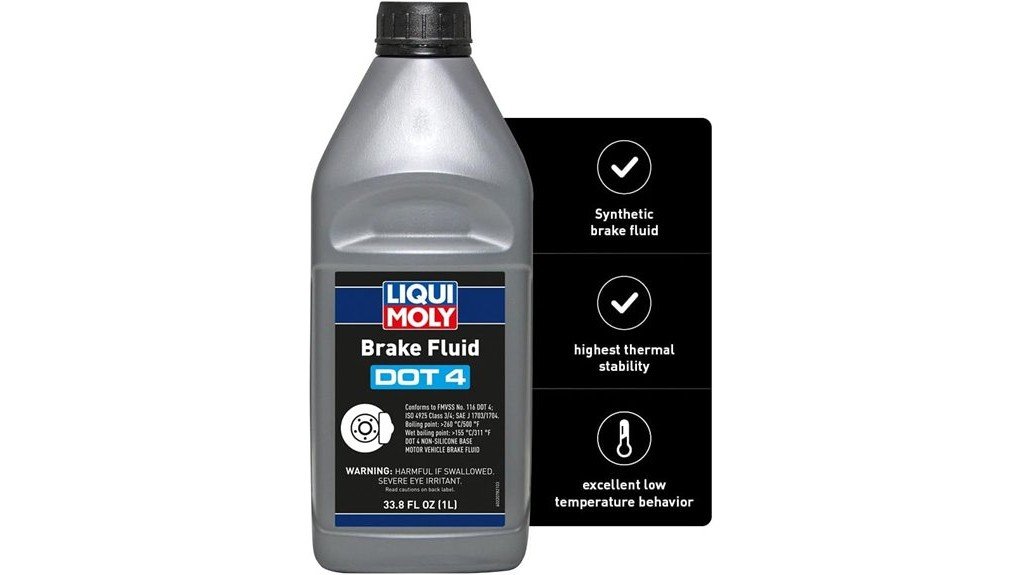
Brake fluid is a safety-critical maintenance item, so the correct specification matters more than brand recognition. LIQUI MOLY DOT 4 Brake Fluid, 1 Liter, part number 22078 is a glycol-based synthetic fluid for hydraulic systems that allow its listed DOT 4, ISO, and SAE specifications. It offers corrosion and oxidation protection, moisture-related vapor control, and a practical one-liter package for a fluid change. The tradeoff is simple: standard DOT 4 is not right for every vehicle, especially systems that require a low-viscosity Class 6 fluid, silicone DOT 5, or a mineral-oil hydraulic fluid.
Quick Verdict
Rating: 8/10, recommended with compatibility checks
Best For: Drivers performing a scheduled fluid change on a car, motorcycle, or hydraulic clutch system that specifically permits this standard DOT 4 formulation.
Bottom Line: The verified 1-liter LIQUI MOLY formula gives you recognized specifications, protective additives, and broad use across compatible disc, drum, ABS, and clutch systems. Its main limitation is that you must confirm the exact fluid class and viscosity requirement before opening the bottle.
| Specification | Verified Detail |
|---|---|
| Brand | LIQUI MOLY |
| Product | Brake Fluid DOT 4 |
| Amazon-linked model | 22078 |
| Package | 1 liter, pack of 1 |
| Base chemistry | Glycol ethers, alkyl polyglycols, and glycol ether esters |
| Specifications and approvals | FMVSS 116 DOT 3 and DOT 4; ISO 4925 Class 3 and Class 4; SAE J1703 and J1704 |
| DOT 4 dry boiling benchmark | At least 230°C (446°F) in LIQUI MOLY’s technical guide |
| DOT 4 wet boiling benchmark | At least 155°C (311°F) in LIQUI MOLY’s technical guide |
| Suitable systems | Compatible hydraulic disc, drum, ABS brake, and clutch systems when the manufacturer permits the listed specification |
| Formula protection | Corrosion inhibitors, oxidation protection, lubricating action, and moisture-related vapor suppression |
| Mixing note | Manufacturer states it is miscible with high-quality synthetic brake fluids, but optimum performance is achieved when used unmixed |
| Storage note | Keep tightly sealed and protected from moisture; LIQUI MOLY lists a two-year shelf life for the closed container |
Before You Buy: Read the owner’s manual, reservoir cap, or service information. Do not use this fluid in a system that requires silicone DOT 5, a mineral-oil hydraulic fluid, or a low-viscosity DOT 4 Class 6 product unless the vehicle manufacturer explicitly allows this formulation.
Why Choose LIQUI MOLY DOT 4 Brake Fluid?
The main reason to choose this fluid is its clearly documented chemistry and specification coverage. LIQUI MOLY lists a synthetic glycol-based formula with protection against corrosion and oxidation, plus additives that help limit vapor formation as moisture enters the fluid over time.
The product also meets recognized FMVSS, ISO, and SAE requirements. That gives you a stronger basis for selecting it than broad claims such as “universal” or “high performance.” The correct question is not whether the fluid fits most cars. The correct question is whether its listed specifications match your exact vehicle.
The one-liter bottle is practical for many complete fluid services, although the amount needed varies by vehicle and bleeding method. Check your service manual before buying so you do not run short during a flush.
What Is LIQUI MOLY DOT 4 Brake Fluid?
LIQUI MOLY Brake Fluid DOT 4 is a hydraulic fluid that transfers force from the brake pedal or clutch pedal through the system. The Amazon-linked version is a one-liter bottle identified as model or part number 22078.
Its formulation uses glycol ethers, alkyl polyglycols, and glycol ether esters. These compounds provide the fluid base, while inhibitors help protect metal components and reduce oxidation at higher temperatures. The manufacturer also highlights low-temperature behavior, elastomer compatibility, and lubricating action inside the hydraulic circuit.
This is maintenance fluid, not a repair product. Fresh fluid cannot correct a leaking caliper, damaged hose, worn master cylinder, air leak, or badly worn friction parts.
Key Benefits of LIQUI MOLY DOT 4 Synthetic Brake Fluid
- Recognized specification coverage: It lists FMVSS 116 DOT 3 and DOT 4, ISO 4925 Class 3 and Class 4, and SAE J1703 and J1704.
- Heat resistance: LIQUI MOLY’s technical guide places standard DOT 4 at a minimum dry boiling point of 230°C and a minimum wet boiling point of 155°C.
- Moisture management: The glycol-based fluid absorbs small amounts of water into solution, while special scavengers help reduce vapor-bubble formation.
- Component protection: Corrosion and oxidation inhibitors support metal parts, seals, and moving hydraulic components when the fluid is used as specified.
- Broad compatible applications: The manufacturer supports use in suitable disc, drum, ABS brake, and hydraulic clutch systems.
Pro Tip: Buy enough sealed fluid to complete the job in one session. Open the bottle only when you are ready to bleed the system, keep the cap closed between pours, and avoid saving a partly used bottle for an unknown future service.
Fit and Compatibility
Compatibility is the deciding factor. Use this product only when the vehicle manufacturer permits a fluid matching its listed standards. Suitable applications can include hydraulic disc brakes, drum brakes, ABS systems, and hydraulic clutch systems.
Do not assume that every product labeled DOT 4 has the same viscosity. Some newer ABS, ESP, or traction-control systems require a low-viscosity ISO 4925 Class 6 fluid. LIQUI MOLY sells a separate SL6 DOT 4 product for that type of requirement, so check the manual rather than substituting standard DOT 4.
The manufacturer says this fluid is miscible with high-quality synthetic brake fluids, but it also says optimum performance is achieved when the product is used unmixed. If the existing fluid is unknown, contaminated, or outside the required specification, a full professional flush is safer than a casual top-off.
Materials and Formulation
The glycol-based formulation is designed to remain fluid across a wide temperature range and to lubricate moving parts within the hydraulic circuit. Its additives protect against corrosion and oxidation, both of which can shorten component life when moisture and heat are present.
Brake fluid is hygroscopic, which means it absorbs moisture from the air. This behavior helps prevent free water droplets from collecting in the system, but it also lowers the fluid’s boiling point over time. That is why storage, service intervals, and a tightly sealed container matter.
The product is not intended for mineral-oil-based central hydraulic systems. Follow the label and vehicle instructions for compatibility, handling, and disposal.
Performance Under Heat and Moisture
Fresh brake fluid faces high temperatures during repeated stops, towing, mountain descents, or spirited driving. A fluid’s dry boiling point describes its resistance to boiling before meaningful moisture absorption. LIQUI MOLY’s technical guide lists at least 230°C for the DOT 4 class.
The wet boiling point represents performance after the fluid has absorbed a defined amount of water. The same guide lists at least 155°C for DOT 4. This lower figure explains why old fluid can become a safety concern even when the reservoir still looks full.
These values are DOT 4 classification benchmarks in the manufacturer’s technical guide, not an independent laboratory test of the specific Amazon bottle. For severe track use or unusually high thermal loads, compare product-specific test data and follow the vehicle or brake-system manufacturer’s recommendation.
Who Should Buy It?
Best For
- Your manual permits standard DOT 4 fluid matching the listed FMVSS, ISO, or SAE specifications.
- You want a verified one-liter bottle for a scheduled brake or hydraulic clutch fluid service.
- You value corrosion protection, oxidation resistance, and a well-documented glycol-based formulation.
Skip If
- Your vehicle requires low-viscosity Class 6, silicone DOT 5, or mineral-oil hydraulic fluid.
- You need a racing fluid with product-specific boiling points well above standard DOT 4 minimums.
- Your brake system has a leak, sudden pedal change, or mechanical fault that needs diagnosis first.
How It Performs in Real Use
For a Scheduled Fluid Change
The one-liter package is convenient when you are replacing old compatible fluid rather than topping off a small amount. A full exchange removes more moisture and contamination, but the required volume depends on the vehicle and bleeding process.
For Repeated Stops and Mountain Driving
The DOT 4 boiling benchmarks give you more heat margin than a lower-specification fluid. However, driving conditions, fluid age, pad condition, and system design all affect brake performance. Do not treat fluid choice as a substitute for proper brake inspection.
For ABS-Equipped Vehicles
LIQUI MOLY lists this product for suitable ABS systems. The limitation is viscosity: some modern electronic brake systems require a low-viscosity Class 6 fluid, so “ABS compatible” does not remove the need to check the exact specification.
For Hydraulic Clutch Service
The manufacturer also supports compatible hydraulic clutch systems. Use it only when the clutch reservoir or service manual calls for a matching glycol-based brake fluid specification.
How to Use and Store It Correctly
- Confirm the specification: Match the manual, reservoir cap, and service information before purchase.
- Use clean tools: Keep funnels, bleeder equipment, and reservoir openings free of oil, dirt, and water.
- Protect painted surfaces: Brake fluid can damage automotive paint. Rinse a spill promptly with plenty of water, following the product instructions.
- Keep the bottle sealed: Moisture enters quickly when the cap is left open.
- Follow the correct bleeding sequence: Use the vehicle’s service procedure, especially on systems that require scan-tool activation or pressure bleeding.
- Dispose of it properly: Used brake fluid is hazardous waste and should not be mixed with waste oil or poured onto the ground.
LIQUI MOLY’s technical guide says brake fluid may need replacement within one to three years depending on its quality and the application. Your vehicle manufacturer’s interval takes priority.
Pros and Cons
Pros
- Verified 1-liter, pack-of-one Amazon listing with model number 22078.
- Meets multiple FMVSS, ISO, and SAE brake-fluid specifications.
- Glycol-based synthetic formulation with corrosion and oxidation inhibitors.
- Manufacturer supports suitable disc, drum, ABS, and hydraulic clutch systems.
- Moisture scavengers and strong DOT 4 boiling benchmarks support routine road use.
Cons
- Standard DOT 4 viscosity may not meet vehicles that require ISO Class 6 fluid.
- The manufacturer’s public guide gives DOT 4 class minimums, not independent product-specific boiling test results for this bottle.
- Opened fluid absorbs moisture, so leftover product is less useful for long-term storage.
Is It Worth the Price?
LIQUI MOLY DOT 4 is worth considering as a premium-brand maintenance fluid when your vehicle permits its exact specifications. You get a verified one-liter package, a documented glycol-based formula, recognized approvals, and useful corrosion and oxidation protection.
The value is weaker when you only need a small top-off or when your system requires a more specialized low-viscosity or high-boiling formulation. In those cases, the correct specification matters more than buying this particular brand.
How It Compares to Alternatives
LIQUI MOLY SL6 DOT 4 is the closer match for vehicles that specifically require a low-viscosity ISO Class 6 fluid. Bosch ESI6 targets broad DOT 3, DOT 4, and DOT 5.1 replacement coverage with low cold-temperature viscosity, while ATE Typ 200 offers higher published boiling points for performance-focused use.
The standard LIQUI MOLY DOT 4 reviewed here makes the most sense when your manual calls for a conventional Class 4 glycol-based fluid and you want a straightforward one-liter service bottle. Do not choose an alternative solely because its numbers are higher. Seal compatibility, viscosity, and the manufacturer’s approved specification still come first.
Frequently Asked Questions
Is the Amazon-linked product really a one-liter bottle?
Yes. The Amazon listing identifies it as LIQUI MOLY DOT 4 Brake Fluid, 1 Liter, pack of 1, with model or part number 22078.
Can I use it in any vehicle that says DOT 4?
Not automatically. Check the full specification and viscosity requirement because some vehicles need low-viscosity ISO Class 6 DOT 4 fluid rather than a standard Class 4 product.
Is it compatible with ABS brakes?
The manufacturer supports its use in suitable ABS systems. Your manual still needs to allow the listed DOT 4, ISO, SAE, and viscosity characteristics.
Can I mix it with existing brake fluid?
LIQUI MOLY says it is miscible with high-quality synthetic brake fluids, but optimum performance is achieved when it is used unmixed. If the existing fluid is unknown or contaminated, use a proper flush instead of guessing.
What do the 230°C and 155°C figures mean?
LIQUI MOLY’s technical guide lists at least 230°C as the DOT 4 dry boiling benchmark and at least 155°C as the wet benchmark. The wet figure matters because absorbed moisture lowers boiling resistance over time.
How long can I store an unopened bottle?
LIQUI MOLY’s technical guide lists a two-year shelf life for a closed container. Check the bottle markings and keep it tightly sealed, dry, and protected from unsuitable temperatures.
Will fresh fluid fix a soft brake pedal?
It may help only when degraded fluid or air introduced during service is part of the problem. A suddenly soft pedal can also indicate a leak or component failure, so stop driving and have the system inspected.
Can I pour used brake fluid into waste oil?
No. LIQUI MOLY identifies brake fluid as hazardous, water-polluting waste that should not be added to waste oil. Use an approved local disposal facility.
The Bottom Line
LIQUI MOLY DOT 4 Brake Fluid earns an 8/10 recommendation for owners whose vehicles permit its standard Class 4 glycol-based specifications. Its strengths are verified specification coverage, a practical one-liter bottle, and protective additives, while its key limitation is compatibility with vehicles that require a different fluid chemistry or lower viscosity.
Buy it for a planned service on a confirmed compatible system. Skip it and choose the manufacturer-specified alternative when the manual calls for Class 6, silicone DOT 5, mineral oil, or a specialized performance fluid.
Ready to Buy?
Confirm your vehicle’s required specification, then check the latest product details before you decide.