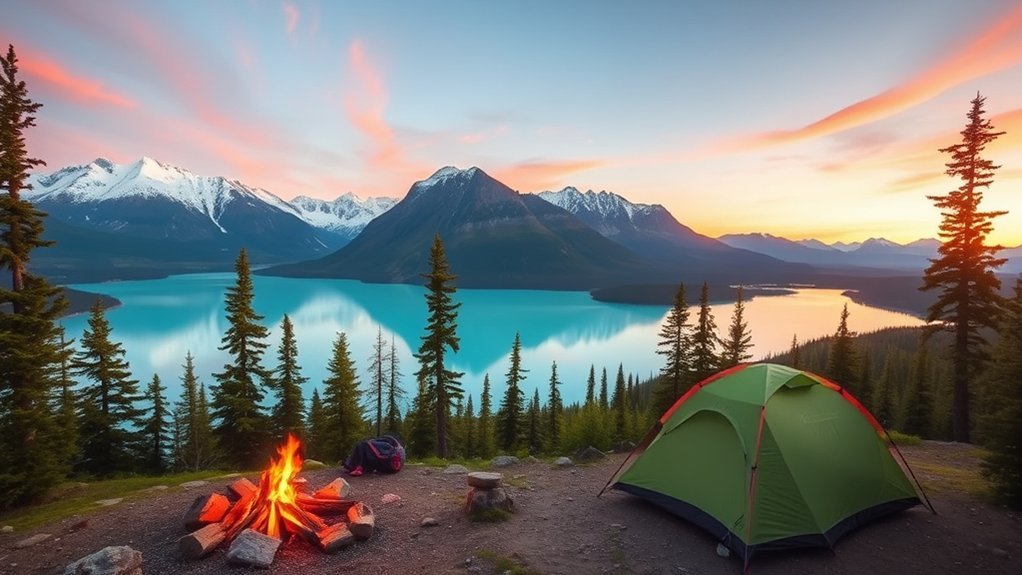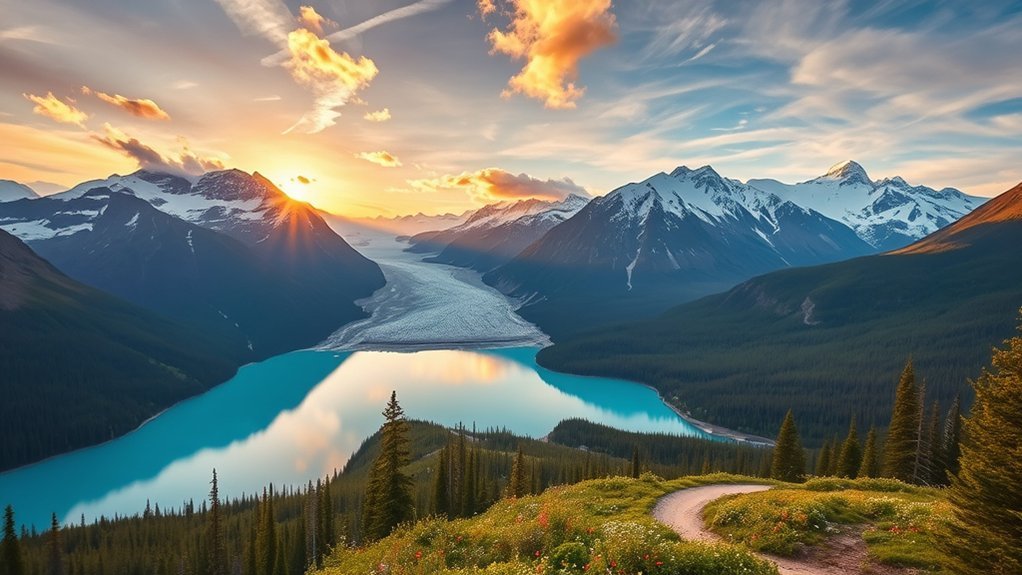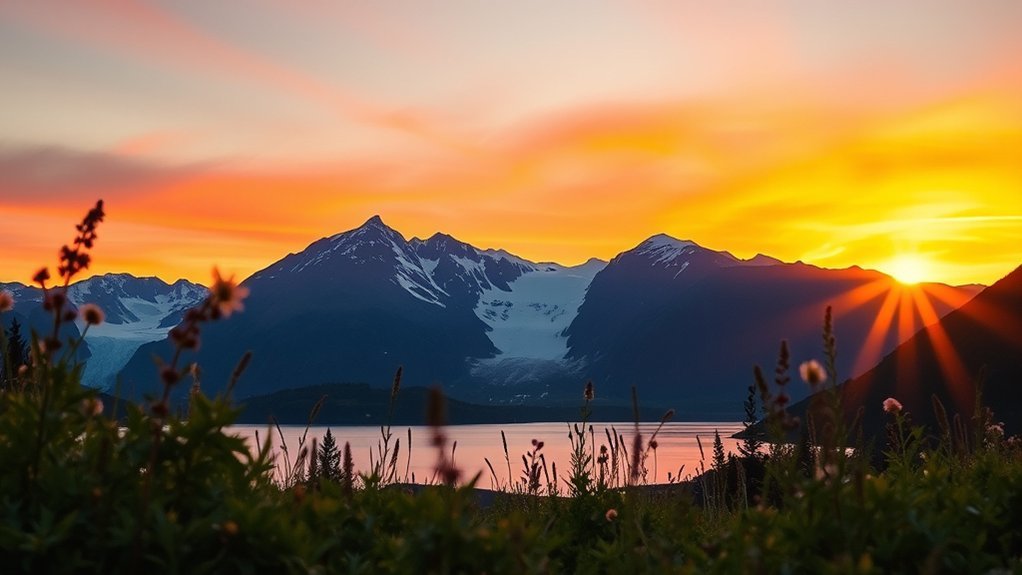
Alaska’s midnight sun gives you more time to hike, paddle, photograph landscapes, attend summer events, and explore after dinner. However, the experience changes greatly by latitude. The sun remains above the horizon in Arctic communities such as Utqiaġvik, while Fairbanks has bright overnight twilight and southern cities still experience a sunset.
Quick Answer
The best time to experience Alaska’s midnight sun is late May through early July, with the strongest effect around the June 20–21 solstice. Choose Fairbanks for easy access and all-night twilight, or fly to Utqiaġvik for continuous sun above the horizon. Southern cities have very long days, but the sun still sets.
Key Takeaways
- Late May through early July is the best general window, with maximum daylight near the June solstice.
- Utqiaġvik has true midnight sun for weeks; Fairbanks has 24 hours of usable light, including overnight civil twilight.
- Anchorage, Juneau, and most southern destinations have long summer days but still experience sunset.
- Fairbanks is the easiest base for festivals and late-night activities, while Utqiaġvik requires a separate flight and more advance planning.
- Pack an eye mask, layered clothing, rain protection, insect repellent, and sun protection.
- Check current park, road, weather, flight, and tour information shortly before departure.
Understanding the Midnight Sun Phenomenon
The midnight sun, also called polar day, occurs when the sun remains above the horizon at midnight. It happens because Earth’s axis is tilted. During northern summer, the North Pole tilts toward the sun, giving high-latitude places extremely long days. NASA’s explanation of Earth’s axial tilt shows why daylight increases as you travel north.
True midnight sun occurs north of the Arctic Circle. Much of Alaska lies south of that line, so the phrase is also used informally for summer nights that never become fully dark. In Fairbanks, for example, the sun briefly sets, but civil twilight keeps the sky bright enough for outdoor activity.
Note: Continuous daylight does not guarantee a visible sun. Clouds, fog, rain, mountains, and nearby buildings can block it even when it remains above or just below the horizon.
Alaska Midnight Sun by Region
The farther north you travel, the longer the daylight lasts. Use this comparison to choose the experience that fits your trip.
| Location | Peak-Summer Light | Best For |
|---|---|---|
| Utqiaġvik | True midnight sun from roughly early May to early August; exact times vary slightly by year. | An Arctic experience, Iñupiat culture, birding, and continuous sun. |
| Fairbanks | About 24 hours of usable light from May 17 to July 27, including civil twilight. | Easy access, summer-solstice events, hiking, paddling, and late-night photography. |
| Denali area | Very long days and bright twilight, but the sun drops below the horizon. | Mountain scenery, bus trips, hiking, and wildlife viewing. |
| Anchorage | About 19 hours of daylight near the June solstice, followed by a long twilight. | A convenient city base, road trips, coastal scenery, and accessible trails. |
| Juneau | Roughly 18 hours of daylight near the solstice; the sun still sets. | Glaciers, rainforests, marine tours, and long sightseeing days. |
Fairbanks receives 70 straight days of usable daylight from May 17 through July 27, although part of that light is civil twilight rather than direct sun.
Best Locations to Experience the Midnight Sun
Fairbanks
Fairbanks offers the best balance of strong midnight-sun conditions, transportation, lodging, restaurants, tours, and summer events. According to Explore Fairbanks, its broader Midnight Sun Season runs from April 22 to August 20, while the brightest period with 24 hours of usable light runs from May 17 to July 27.
Walk beside the Chena River, visit Pioneer Park, tour the Fountainhead Antique Auto Museum, or use Fairbanks as a base for Chena River State Recreation Area. Late-night hiking, cycling, golfing, and paddling are popular around the solstice.
Fairbanks also hosts summer-solstice traditions such as the Midnight Sun Festival, Midnight Sun Run, and Midnight Sun Baseball Game. Dates can change from year to year, so check the official event calendar before booking nonrefundable travel.
Utqiaġvik (Formerly Barrow)
Utqiaġvik is the northernmost city in the United States and offers Alaska’s most distinct midnight-sun experience. During its polar-day season, the sun circles low across the northern sky but does not pass below the horizon.
Visit the Iñupiat Heritage Center, learn about the community’s history, and arrange a local tour if you want to see Point Barrow. The official Travel Alaska guide to Utqiaġvik also highlights local culture and seasonal community events.
Utqiaġvik is an active Iñupiat community rather than a themed tourist destination. Ask before photographing people, cultural activities, subsistence-harvest areas, or private property. Community celebrations such as Nalukataq may occur in June, but timing depends on local events and harvest conditions.
Warning: Do not walk alone toward Point Barrow or along remote coastal areas. Polar bears may enter the area, sea ice and weather can change quickly, and there may be no immediate shelter. Use a reputable local guide and follow all local instructions.
Denali National Park and Denali State Park
Denali’s long summer days give you extra time for scenic bus trips, ranger programs, photography, and hiking. Savage River, Mountain Vista, trails near the park entrance, and pullouts along the publicly accessible part of Denali Park Road are practical choices.
For the 2026 summer season, buses travel no farther than East Fork at Mile 43, and Eielson Visitor Center is closed. The National Park Service expects full-length bus service to resume in 2027, but you should verify the latest Denali conditions and access information before every trip.
Denali Viewpoint South is not inside Denali National Park. It is a separate roadside stop in Denali State Park along the Parks Highway. On a clear day, it can provide a wide view of North America’s highest peak and the Alaska Range.
Anchorage and Southcentral Alaska
Anchorage does not have continuous sun above the horizon, but its long June days make it easy to combine city attractions, coastal walks, nearby trails, and scenic drives. It is a better choice if you want long daylight without adding a separate Arctic flight.
Nearby destinations such as the Matanuska-Susitna Valley and Kenai Peninsula also offer long evenings. Mountains can block the low sun earlier than published sunset times, so choose an open western or northern viewpoint for late-night photography.
Ideal Time to Visit Alaska for the Midnight Sun
Best Months for the Experience
Late May through early July is the best overall window. The days are longest, most seasonal tours are operating, trails are opening, and solstice events take place around June 20 or 21.
- Late May: Long daylight with fewer visitors in some areas, but snow, mud, ice, or limited services may remain.
- June: The strongest daylight, major solstice events, active tour schedules, and high demand for lodging.
- Early July: Very bright nights with generally broader trail and road access, but more mosquitoes and peak-season crowds.
- Late July to August: Plenty of daylight remains, but true midnight-sun conditions fade. Darker nights gradually return.
If continuous sun is your main goal, plan Utqiaġvik for late May or June. If you want festivals, road access, and a wider choice of activities, Fairbanks around the solstice is usually the easiest option.
Daylight Duration Differences
Published sunrise and sunset times do not tell the whole story. Civil twilight begins or ends when the sun is only a few degrees below the horizon, leaving enough natural light for many outdoor activities. That is why Fairbanks can have 24 hours of usable light even though the sun technically sets.
In Utqiaġvik, the sun remains above the horizon for weeks. In Anchorage and Juneau, it sets for several hours, but twilight shortens the period of true darkness. Mountains, clouds, and fog can reduce the amount of visible sunlight in every region.
Weather Considerations for Visitors
Long daylight does not mean warm or dry weather. Alaska’s conditions vary sharply by region:
- Interior Alaska: Fairbanks can have warm afternoons, cool nights, thunderstorms, mosquitoes, and periods of wildfire smoke.
- Denali: Rain, wind, cold temperatures, and even summer snow are possible.
- Utqiaġvik: Expect cooler Arctic temperatures, wind, fog, and rapid changes near the ocean.
- Coastal and Southeast Alaska: Prepare for cool air, rain, wet trails, and low clouds.
Check the local forecast and any wildfire-smoke or park alerts each day. Carry enough clothing to stay warm if the temperature drops while you are away from your hotel or vehicle.
Activities to Enjoy During the Midnight Sun
The extra daylight makes flexible scheduling possible, but businesses, museums, parks, and tour operators still keep normal operating hours. Confirm closing times before planning a midnight visit.
| Activity | Why It Works Well | Planning Note |
|---|---|---|
| Hiking | You can avoid the busiest part of the day and enjoy soft evening light. | Tell someone your route and return time; do not let daylight tempt you into an unplanned long hike. |
| Kayaking or canoeing | Rivers and lakes can stay scenic well into the evening. | Wear a personal flotation device, check wind and water conditions, and use a qualified outfitter when needed. |
| Wildlife viewing | Long viewing hours give you more flexibility. | Sightings are never guaranteed. Use binoculars or a telephoto lens and maintain official distances. |
| Photography | The low-angle sun can produce warm light and long shadows near midnight. | Scout your location earlier and avoid trespassing or approaching wildlife for a photo. |
| Festivals and sports | Fairbanks schedules runs, baseball, music, food, and street events around the solstice. | Verify the year’s dates, ticket rules, road closures, and parking arrangements. |
Tips for Adjusting to the Extended Daylight
Continuous brightness can make it difficult to notice when you are tired. It can also delay sleep if light enters your room late at night.
- Keep a regular schedule: Go to bed and wake up at roughly the same local times each day.
- Darken the room: Close blackout curtains and use a comfortable eye mask.
- Lower indoor light: Dim lamps and screens during the hour before bed.
- Set an activity cutoff: Choose a firm time to end hiking, driving, or sightseeing even if the sky remains bright.
- Limit late caffeine and alcohol: Both can interfere with sleep quality.
- Use an alarm: Long daylight can make meals, medication schedules, and tour times easier to overlook.
Pro Tip: Ask your hotel or rental host whether the sleeping area has true blackout curtains. Even with them, pack an eye mask because light can enter around curtain edges.
Packing Essentials for Your Midnight Sun Adventure
- Waterproof outer jacket and rain pants
- Warm fleece, sweater, or lightweight insulated layer
- Moisture-wicking base layers
- Comfortable waterproof walking or hiking shoes
- Broad-brimmed hat and UV-protective sunglasses
- Broad-spectrum sunscreen used according to its label
- Insect repellent and, for buggy areas, a head net
- Reusable water bottle and trail snacks
- Eye mask and earplugs
- Portable battery pack and charging cable
- Offline maps or downloaded park information
- Binoculars or a telephoto lens for wildlife
- Any required medicine, with extra supply for weather-related delays
Cool weather does not remove the need for sun protection. Follow current FDA sunscreen guidance, cover exposed skin when practical, and remember that water, snow, and other bright surfaces can add reflected light.
Accommodations and Transportation Options
Fairbanks
Fairbanks is accessible by air, road, and seasonal rail service. A downtown hotel works well for restaurants and events, while a cabin or lodge outside town provides a quieter setting. A rental car offers the most flexibility for late-night viewpoints, but never drive when tired simply because the road is still bright.
Denali
Stay near the park entrance if you want simple access to buses, visitor facilities, and nearby trails. Reserve summer bus seats and lodging early. Private vehicles can use only the public portion of Denali Park Road during normal summer operations, so do not plan the trip as a self-drive journey deep into the park.
Utqiaġvik
Utqiaġvik is not connected to the rest of Alaska by highway. Visitors normally arrive on a commercial flight, and weather can delay or cancel service. Reserve flights, lodging, airport transportation, and local tours before arrival. Leave schedule flexibility before any onward international flight or cruise.
Recommended Trip Lengths
- Fairbanks only: Two to four nights allows time for events, museums, local trails, and a weather backup.
- Fairbanks and Denali: Five to seven nights provides a more comfortable pace and at least one full Denali day.
- Utqiaġvik add-on: Allow at least two nights when possible because flights and tours are weather-dependent.
- Anchorage road-trip base: Four to seven nights works well for city attractions and day trips around Southcentral Alaska.
Safety Considerations While Enjoying the Midnight Sun
Bright skies can create a false sense that you have unlimited time. Set a turnaround time, monitor your energy, and carry the same emergency supplies you would use on any remote trip.
- Wildlife: Never feed or approach an animal. In Denali, stay at least 300 yards from bears and 25 yards from other wildlife.
- Bear preparation: Carry accessible bear spray where permitted, learn how to use it, and make noise in areas with limited visibility.
- Moose: Give moose a wide escape route. Back away if one lowers its head, pins its ears, or approaches.
- Polar bears: In Arctic coastal communities, follow local guidance and use a guide outside developed areas.
- Limited cell coverage: Download maps, share your route, and do not depend on a phone for rescue.
- Cold and rain: Hypothermia is possible in summer, especially when clothing becomes wet.
- Water: Wear a personal flotation device and avoid cold, fast, unfamiliar water without proper training or a guide.
- Driving fatigue: Stop when tired. Brightness does not prevent fatigue or improve reaction time.
- Hydration: Drink regularly during activity, especially in wind or dry Interior conditions.
The National Park Service’s Denali safety guidance notes that cell coverage is limited near the park entrance and recommends bear spray for hikers. Check destination-specific rules because wildlife distances and bear-spray restrictions can vary by location and transportation provider.
Frequently Asked Questions
Can I see the northern lights during the midnight sun?
Normally, no. The sky is too bright during the peak midnight-sun period. Around Fairbanks, useful darkness for aurora viewing generally begins returning in mid-to-late August and continues into spring. Aurora activity may occur in summer, but you usually cannot see it against the bright sky.
Are there cultural festivals during the midnight sun?
Yes. Fairbanks holds solstice events such as the Midnight Sun Festival, Midnight Sun Run, and Midnight Sun Baseball Game. Utqiaġvik may hold Nalukataq, an important Iñupiat community celebration, in June. Confirm current dates and attend local cultural events respectfully.
Is the midnight sun different across Alaska?
Yes. Utqiaġvik has continuous sun above the horizon for weeks. Fairbanks has a brief technical sunset but 24 hours of usable light around the solstice. Anchorage, Juneau, and other southern locations have long days and extended twilight, but the sun still sets.
What wildlife might I see during this period?
Depending on your destination, you may see moose, bears, caribou, eagles, migratory birds, marine mammals, or smaller tundra wildlife. Sightings are never guaranteed. Use binoculars, keep the required distance, and never block an animal’s path.
How does the midnight sun affect wildlife behavior?
There is no single response shared by all wildlife. Activity depends on species, food, temperature, breeding cycles, human disturbance, and predators. Some animals remain active during bright overnight hours, but visitors should not assume that a particular time guarantees a sighting.
Does the sun really stay up all night everywhere in Alaska?
No. True midnight sun occurs north of the Arctic Circle. Farther south, the sun sets, but long twilight can prevent the sky from becoming fully dark. Mountains and clouds can also hide the sun before its official sunset time.
How can I sleep when it stays light outside?
Use blackout curtains and an eye mask, keep a regular bedtime, dim indoor lighting before bed, and stop outdoor activities at a planned hour. Ask about room-darkening curtains before booking accommodations.
Can I drive from Fairbanks to Utqiaġvik?
No. Utqiaġvik has no highway connection to Fairbanks or Anchorage. The Dalton Highway reaches Deadhorse, which is a different destination far east of Utqiaġvik. Most visitors fly to Utqiaġvik and arrange transportation within the community.
Sources
- NASA Space Place: What Causes the Seasons? — explains Earth’s axial tilt and seasonal daylight.
- Explore Fairbanks: Midnight Sun Season — supports Fairbanks daylight periods and midnight-sun activities.
- National Park Service: Denali Current Conditions — supports current road, bus, and visitor-center information.
- National Park Service: Denali Safety — supports wildlife distances, bear-spray advice, weather risks, and cell-service limitations.
- Travel Alaska: A Local’s Guide to Utqiaġvik — supports destination, cultural, and local-tour guidance.
- U.S. Food and Drug Administration: Sunscreen Guidance — supports sun-protection recommendations.