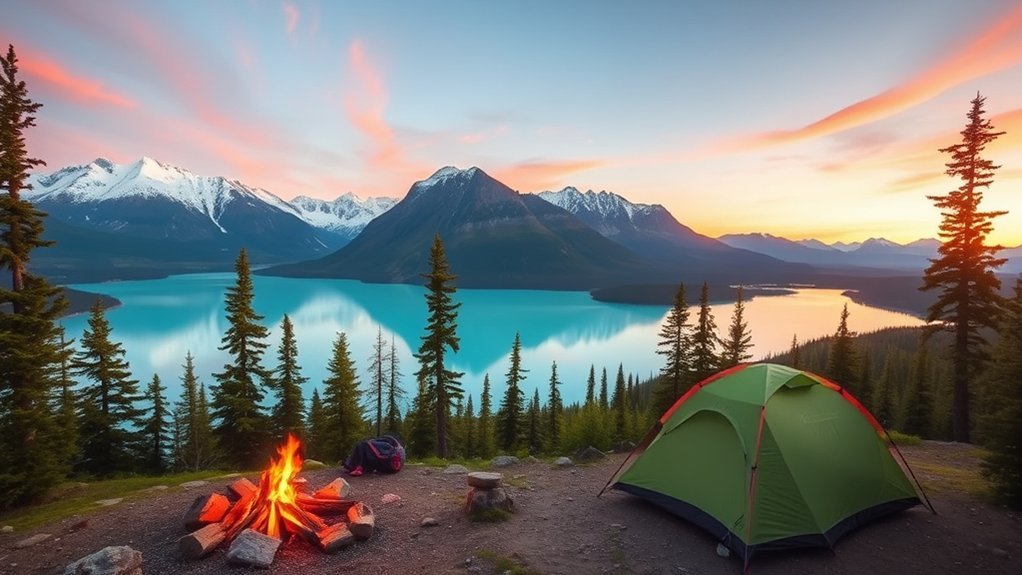
Camping in Lake Clark National Park and Preserve is very different from pulling into a developed national park campground. Most of this remote Alaska park is trail-free wilderness, reached by small aircraft or boat, with no standard campsite facilities waiting for you. Careful planning, bear-safe food storage, reliable navigation, and enough supplies for weather delays are essential.
Quick Answer
Lake Clark National Park camping is mostly primitive backcountry camping rather than developed campground camping. Ordinary recreational camping and backpacking do not require an NPS entrance fee or permit, but strict food-storage, wildlife, fire, sanitation, closure, and coastal bear-safety rules apply. Most visitors must also arrange transportation by small plane or boat.
Key Takeaways
- Most camping in Lake Clark is primitive wilderness camping with no picnic tables, drinking water, showers, or developed campground facilities.
- NPS does not charge an entrance fee or require a recreational permit for ordinary camping or backpacking.
- Approved bear-resistant food storage is required in designated areas, and bear-resistant electric fencing is required for Cook Inlet coastal camping from May 1 through November 1.
- Lake Clark is not connected to Alaska’s road system, so most campers arrive by small aircraft and must plan for weather-related delays.
- Bring navigation backups, rain protection, emergency communication, enough food and fuel, and the skills to be self-sufficient in remote wilderness.
Overview of Lake Clark National Park
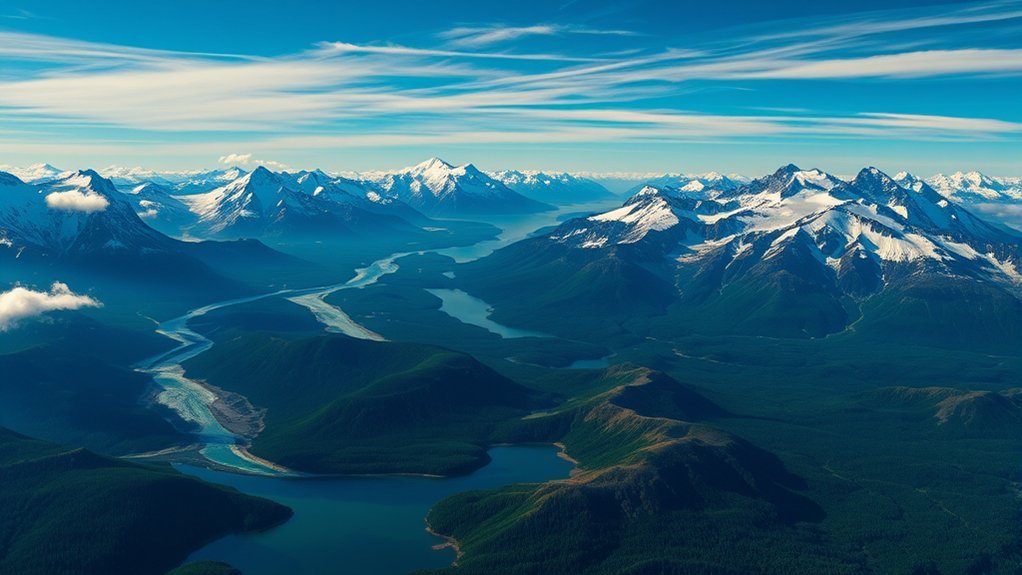
Lake Clark National Park and Preserve protects 4,030,006 acres of Alaska Peninsula wilderness. Mountains, glaciers, volcanoes, tundra, forests, lakes, rivers, and the Cook Inlet coast support brown bears, black bears, moose, salmon, birds, and many other species.
At more than 4 million acres, Lake Clark rewards campers with extraordinary freedom—but that freedom comes with the need for serious wilderness self-reliance.
The park is also unusually remote. It is not connected to the road system. According to the National Park Service, travel takes place primarily by small aircraft, although boats can reach some areas.
Only a limited maintained trail network exists around Port Alsworth. Elsewhere, hiking may involve tundra, dense brush, river crossings, bogs, beaches, steep slopes, and route-finding without a constructed trail.
Where You Can Camp in Lake Clark
It is more accurate to think in terms of camping areas and wilderness destinations than conventional campgrounds. Most NPS camping is primitive and has no developed campsite facilities.
Camping Areas and Wilderness Destinations
- Hope Creek at Upper Twin Lake: The park provides a small primitive camping area west of the Richard L. Proenneke Historic Site. Sites are first come, first served, and bear-resistant food storage is provided. Camping limits and other Twin Lakes rules apply.
- Port Alsworth: Port Alsworth is home to park headquarters and the visitor center. A privately operated campground is available in the community, making it a practical base for some visitors.
- Silver Salmon Creek: This Cook Inlet coastal destination is known for bears and fishing. Camping is primitive, and coastal food-storage, bear-fence, closure, and wildlife rules require careful preparation.
- Chinitna Bay: Another major brown-bear viewing area on the Cook Inlet coast. Some areas are seasonally closed, and campers must check current restrictions before choosing a site.
- Lake Clark and nearby wilderness lakes: Backcountry camping is possible in many open public areas, but food-storage rules vary by location and some shorelines fall within mandatory bear-resistant storage zones.
- Tuxedni Bay: The bay offers dramatic coastal scenery but is not a developed campground. Confirm public-land status, current closures, landing conditions, tides, and pickup logistics before planning an overnight stay.
Note: Public and private land are interspersed in parts of the Lake Clark region. Check the park’s current land-status information and never assume that every attractive shoreline or cabin area is open to camping.
Amenities and Facilities
Do not plan your Lake Clark trip around the facilities you might expect at a drive-in national park campground. Most backcountry camping has no restrooms, showers, electricity, potable-water taps, trash service, picnic tables, or established fire rings.
Hope Creek is a notable primitive camping area with some site-specific facilities, while private businesses in Port Alsworth may provide additional services. Elsewhere, you need to carry what you need and properly manage food, water, trash, and human waste.
Treat natural water before drinking it. A filter, purifier, boiling method, or other suitable water-treatment system should be part of your wilderness setup.
Backcountry Camping: What You Need to Know
Lake Clark’s backcountry is remote enough that normal camping inconveniences can become serious problems. NPS advises visitors to be self-sufficient and prepared for bad weather, difficult terrain, river crossings, and transportation delays.
Permits, Fees, and Reservations
For ordinary recreational activities, the National Park Service currently requires no entrance fee, camping fee, reservation, or backcountry permit for camping and backpacking in Lake Clark. See the park’s Permits & Reservations guidance for current details.
That does not mean every activity is free. Air taxis, guides, private campgrounds, lodging, equipment rental, and reservable public-use cabins can have separate charges. Fishing also requires an appropriate Alaska state license.
Closures and Camping Limits
Camping is not allowed inside the Richard L. Proenneke Historic Site. The Twin Lakes area also has seasonal camping-duration limits. From April 15 through September 30, camping within two miles of Upper or Lower Twin Lakes is generally limited to a total of 21 days, while camping at Hope Creek is limited to 14 days unless otherwise authorized.
Coastal destinations can have additional seasonal closures. Always review the park’s current conditions and regulations before your flight.
Plan for Flight Delays
Poor visibility, wind, rain, high water, or other conditions can prevent a small aircraft from reaching your pickup point when planned. Build flexibility into your schedule and carry extra food, medication, and stove fuel rather than assuming your aircraft will arrive at an exact hour.
Pro Tip: Before leaving civilization, agree with your air taxi on your exact pickup location, approximate pickup time, backup communication method, and what happens if weather prevents the flight. Carry a satellite communicator or similar emergency-capable device when traveling beyond reliable cell service.
Essential Gear for Camping in the Wilderness
A Lake Clark camping kit should be designed for wet, windy, cold, remote conditions rather than fair-weather campground camping.
- Strong shelter: Use a tent that can handle persistent rain and strong wind.
- Warm sleep system: Bring an appropriately rated sleeping bag and insulated sleeping pad.
- Waterproof layers: Quality rain gear and waterproof footwear are especially important.
- Cooking stove and fuel: A stove is reliable and creates less impact than depending on a campfire.
- Water treatment: Carry a dependable method for treating drinking water.
- Bear-resistant food storage: Bring an approved BRC when required and whenever practical elsewhere.
- Bear spray: NPS strongly encourages carrying it in bear country. Ask your air taxi how it must be transported and declare it before flying.
- First-aid and repair supplies: Help may be far away, so prepare for minor injuries and equipment failures.
- Navigation backups: Carry detailed maps, compass, offline electronic maps, and spare power.
- Emergency communication: A satellite-based communicator or satellite phone is valuable in areas without dependable cell coverage.
- Extra food and fuel: Carry a weather-delay reserve.
Keep weight manageable, but do not save weight by removing critical rain, navigation, emergency, or food-storage equipment.
Wildlife Encounters: Safety Tips
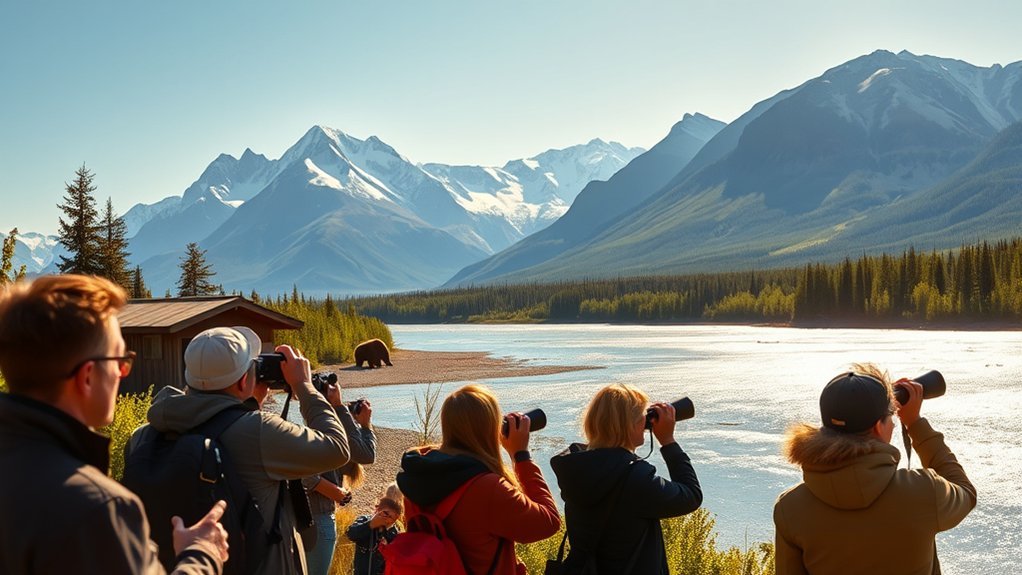
Both brown bears and black bears live in Lake Clark, and the Cook Inlet coast supports especially high concentrations of brown bears. Moose and many nesting birds also deserve generous space.
Warning: When camping within one-half mile of the Cook Inlet coastline, a functional bear-resistant electric fence is required from May 1 through November 1. Coastal camping also requires strict food and trash management. Check the current Lake Clark rules and regulations before your trip.
Bear Awareness Strategies
- Stay alert: Watch for bears, tracks, fresh scat, feeding sites, salmon streams, and travel corridors.
- Avoid surprise encounters: Make your presence known when moving through dense vegetation or other areas with poor visibility.
- Give bears room: Never approach a bear for a photograph or block its travel route.
- Stay together: Groups should remain close together instead of spreading out.
- Do not run from a bear: Stay calm and follow the park’s bear-specific encounter guidance.
- Keep a clean camp: Separate sleeping, cooking, and food-storage areas where practical.
- Do not surrender food: Prevent bears from learning that people are a source of food or fish.
Bear-Resistant Food Storage Rules
Current food-storage regulations require food, beverages, food containers, garbage, and harvested fish to be stored using an approved method in designated areas, including within one-half mile of the Cook Inlet coastline and several major lake shorelines.
An approved bear-resistant container is usually the simplest solution. Ordinary coolers, tents, dry bags, stuff sacks, plastic totes, and unmodified kayaks generally do not qualify as approved BRCs. The park makes BRCs available for temporary use through the Port Alsworth Visitor Center.
Avoiding Moose Encounters
Moose are large, fast, and capable of defending themselves aggressively when threatened. Stay at least 25 yards or 25 meters away, and increase that distance if the animal changes its behavior because of you.
Be especially careful around cows with calves. Never get between a mother and her calf. If a moose notices you at close range, speak calmly and back away. Unlike a bear encounter, NPS notes that it can be appropriate to run from a charging moose and put a solid object such as a tree between you and the animal.
Safety Around Birds
Ground-nesting and shoreline birds can be vulnerable to disturbance. Give nests, chicks, feeding areas, and territorial birds room.
- Observe from a distance.
- Do not approach nests or chicks for photographs.
- Keep pets restrained.
- Never feed birds or other wildlife.
- Move away if an animal changes its normal behavior because of your presence.
Campfire Regulations and Cooking Tips
Campfires are currently allowed in many parts of Lake Clark without a permit, but they are not allowed everywhere. Current park rules prohibit campfires inside the Richard L. Proenneke Historic Site and within 100 yards of the Priest Rock public-use cabin. Temporary state or local burn bans may also apply in the park.
Check current restrictions before lighting any fire. If fires are allowed, use only appropriate fuel such as natural firewood or charcoal. Do not burn garbage, plastics, aerosol cans, batteries, or other manufactured waste.
Use only dead and downed wood. Never cut live vegetation or standing trees for firewood. Keep the fire small and make sure it is completely cold before leaving.
For most wilderness meals, a lightweight stove is faster, cleaner, and more dependable than a campfire, particularly during wet weather.
Navigating Lake Clark: Maps and Navigation Tools
Navigation deserves more preparation here than in a park with a dense network of marked trails. Outside the maintained Tanalian Trails near Port Alsworth, much of the park involves cross-country route-finding.
Offline Navigation Apps
Apps such as Gaia GPS, CalTopo, AllTrails, Komoot, and other offline mapping tools can supplement your navigation system, but no phone app should be your only way to find your route.
Download maps before your flight, put your phone in a waterproof case, carry a power bank, and bring an independent backup.
Topographic Map Resources
The National Park Service specifically warns that its general park brochure map is for orientation rather than backcountry navigation. Use detailed topographic mapping instead. The park’s Maps page directs visitors to downloadable USGS topographic maps and also provides land-status information.
A paper topo map and compass remain valuable even if you use GPS. Know how to identify your position from terrain, lakes, ridges, rivers, and other features before relying on electronic navigation in a remote area.
Allow far more time than mileage alone suggests. Brush, bogs, route errors, river crossings, steep terrain, and weather can make progress slow.
Seasonal Considerations for Camping
Lake Clark is open year-round, but most visitors arrive between June and October. For many campers, June through September offers the most practical combination of daylight, access, and relatively mild temperatures.
- Spring: Snow, breakup conditions, cold water, mud, and difficult aircraft or river access can complicate trips.
- Summer: Long daylight hours support hiking and paddling, but expect rain, mosquitoes, bears, and rapidly changing weather.
- Early fall: Cooler weather, fall colors, shorter days, and fewer insects can be appealing, but storms and snow become more likely.
- Late fall and winter: These seasons demand specialized cold-weather travel skills, equipment, and transportation planning.
The park has different coastal and interior climates. The coast is generally wetter, while the interior can experience larger temperature swings. NPS warns that weather can change rapidly and snow can occur outside the winter months.
Family-Friendly Activities in the Park
Families can have an extraordinary Lake Clark experience, but this is not a typical drive-up family campground. Choose activities according to children’s ages, stamina, wilderness experience, and ability to follow wildlife-safety instructions.
Port Alsworth provides access to the maintained Tanalian Trails and can be a more manageable base than a fully remote backcountry drop-off. Families may also enjoy ranger information, wildlife observation from safe distances, fishing, photography, and carefully planned paddling or guided activities.
If fishing, obtain the required Alaska fishing license for anyone who needs one and follow current state regulations.
Cold water, wind, waves, weather delays, bears, river crossings, and isolation can make seemingly simple outings serious. Paddlers should wear appropriate personal flotation devices and only enter conditions suitable for their experience.
A guided trip from an authorized commercial operator can reduce some logistical demands for families unfamiliar with remote Alaska, although guides do not eliminate wilderness hazards.
Leave No Trace Principles for Outdoor Ethics
Because much of Lake Clark has no constructed trail or campground, Leave No Trace practices are especially important.
- Plan ahead: Know regulations, closures, land ownership, food-storage requirements, and weather before arrival.
- Travel on durable surfaces: Use rock, gravel, sand, dry tundra, established paths, or other resilient surfaces when practical rather than creating unnecessary new impacts.
- Choose camps carefully: Avoid bear travel corridors, salmon streams, feeding areas, fragile vegetation, private land, and closed areas.
- Pack out trash: Do not leave food scraps, packaging, burned garbage, fishing debris, or toilet paper behind.
- Manage human waste correctly: Current park rules require solid human waste to be packed out in certain sensitive areas, including within one-half mile of the Cook Inlet coastline and around specified historic sites and NPS facilities. Elsewhere, when conditions allow catholes, follow the current park sanitation rules.
- Leave natural and cultural features alone: Do not move, build, carve, collect, or alter objects or vegetation.
- Respect wildlife: Observe animals without approaching, feeding, surrounding, or displacing them.
- Minimize fire impacts: Use a stove when practical and follow current fire restrictions.
Frequently Asked Questions
What are the best months for camping in Lake Clark National Park?
June through September is the main practical camping window for many visitors because days are long and conditions are generally milder. NPS notes that most visitors come between June and October. Even in summer, prepare for cold rain, wind, rapid weather changes, and possible transportation delays.
Are there fees or permits for camping in the park?
The National Park Service does not currently charge an entrance fee or require an ordinary recreational camping or backpacking permit at Lake Clark. Transportation, guides, private camping, lodging, and reservable public-use cabins can have separate costs.
Can I bring my pet while camping?
Yes. Pets are permitted but must be leashed or otherwise physically restrained at all times. NPS strongly recommends leaving pets at home because loose or reactive dogs can create dangerous encounters with bears, moose, wolves, and other wildlife and can disturb nesting animals.
Are there developed campgrounds in Lake Clark?
Do not expect conventional NPS campgrounds with paved sites, hookups, showers, or standard amenities. Most camping is primitive. Hope Creek at Upper Twin Lake is a small primitive camping area, and a private campground operates in Port Alsworth.
Are guided tours available in the park?
Yes. Authorized commercial operators provide services such as guided bear viewing, hiking, backpacking, photography, paddling, fishing, and other wilderness trips. Use the National Park Service commercial-service directory when choosing an operator.
Can I buy camping food and supplies in Port Alsworth?
Do not depend on Port Alsworth for groceries. NPS specifically notes that the community has no grocery store. Arrive with the food, medication, fuel arrangements, and critical equipment you need, including a reserve for possible weather delays.
Do I need a bear-resistant container?
Approved bear-resistant storage is mandatory in designated areas, including within one-half mile of the Cook Inlet coastline and several major lake shorelines. BRCs are strongly useful throughout bear country, and the Port Alsworth Visitor Center makes containers available for temporary use.
How do campers get to Lake Clark National Park?
Lake Clark is not connected to Alaska’s road system. Most visitors arrange transportation by small fixed-wing aircraft, while boats can reach some locations. Your destination determines whether a wheeled or float-equipped aircraft is appropriate.
Conclusion
Lake Clark National Park camping offers extraordinary access to one of America’s largest and least-developed wilderness landscapes, but it demands more preparation than a typical campground trip. Arrange transportation carefully, arrive fully supplied, expect weather delays, carry dependable navigation and emergency equipment, and understand the park’s bear, food-storage, fire, sanitation, and closure rules before leaving civilization.
Most importantly, choose a trip that matches your wilderness experience. A carefully planned stay near Port Alsworth or Hope Creek can be very different from a remote coastal or cross-country backcountry expedition. Respect the land, wildlife, private property, and current park regulations so that your visit remains safe and low-impact.
Sources
- National Park Service — Camping and Backpacking — primitive camping, wilderness travel, campsites, access, and backcountry preparation.
- National Park Service — Permits & Reservations — camping permits, entrance fees, recreational reservations, and trip itineraries.
- National Park Service — Food Storage Requirements — bear-resistant container rules and designated food-storage areas.
- National Park Service — Camping Along the Cook Inlet Coast — coastal bear safety, electric fencing, food storage, closures, and weather planning.
- National Park Service — Laws & Policies — current park regulations, camping limits, fire rules, closures, and Superintendent’s Compendium.
- National Park Service — Weather — coastal and interior climate, rapid weather changes, rain, snow, wind, and seasonal conditions.