Cooking burgers on a George Foreman grill is fast because the upper and lower plates heat the patty at the same time. The key is to treat cooking time as a starting point, then use a food thermometer: ground beef should reach 160°F (71°C), while ground turkey or chicken should reach 165°F (74°C).
Quick Answer
For a fresh beef burger on a preheated George Foreman grill, start checking after about 4–7 minutes for a typical 5-ounce, 1/2-inch patty. Thicker or larger burgers may take longer. Do not rely on color or a “rare/medium” time chart; cook ground beef to 160°F and ground poultry to 165°F.
At a Glance
| Typical cooking time | About 4–7 minutes for a fresh 5-ounce, 1/2-inch beef patty; model and thickness matter |
| Difficulty | Easy |
| Tools needed | George Foreman grill, drip tray, food thermometer, plate, and heat-safe utensil |
Choose the Right Meat for Foreman Grill Burgers
For a juicy beef burger, 80% lean ground beef with 20% fat is a common choice. George Foreman cooking charts for several classic models also use 80/20 beef as a reference for juicy burgers, although leaner meat can work if you prefer less fat.
Chuck is a practical choice because it naturally has good beef flavor and enough fat for moisture. Sirloin is leaner and can cook drier, so watch the temperature closely. Ground turkey and chicken also work, but they must reach a higher safe temperature than beef.
Lamb and bison can be used for different flavors. Whatever meat you choose, start with fresh or properly thawed ground meat and keep raw meat separate from ready-to-eat toppings.
Preparing the Patties
Shape patties gently so the meat stays tender. Equal size and thickness matter more than making a perfectly smooth patty because consistent patties cook at a similar rate.
Portion the meat, form it loosely into a ball, then flatten it into a disc. A 5- to 6-ounce patty works well for many buns; just remember that thicker patties need more time than thin ones.
A shallow dimple in the center can help limit puffing as the meat cooks. Make the raw patty slightly wider than the bun because it will shrink during cooking.
Seasoning the Meat
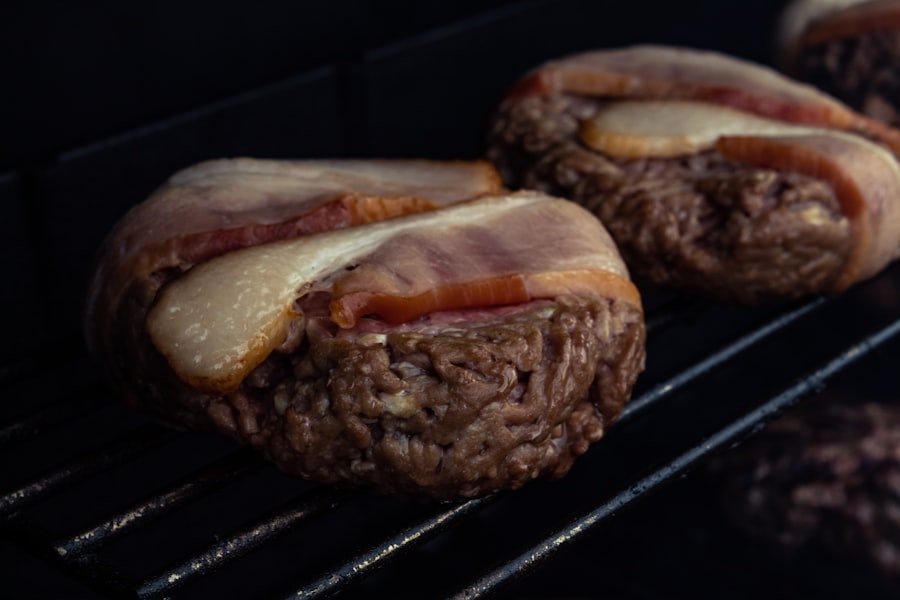
Salt and black pepper are enough for a classic burger, but you can add other seasonings if you want more flavor. Garlic powder, onion powder, smoked paprika, or a small amount of cayenne all work well.
Worcestershire sauce or soy sauce can add savory flavor, while chopped parsley or cilantro can add freshness. Avoid aggressively kneading seasonings into the meat; mix only enough to distribute them, then shape the patties.
Season just before cooking, especially when using salt. This keeps the process simple and helps you avoid overworking the ground meat.
Preheating the Foreman Grill
Preheat the grill with the lid closed before adding the patties. George Foreman models vary: some use a ready or preheat indicator light, while others have adjustable temperature controls, so the George Foreman model manual directory is the best reference for your specific grill.
| Burger type | Time guideline | Safe minimum internal temperature |
|---|---|---|
| Fresh beef patty, about 5 oz and 1/2 inch thick | About 4–7 minutes on common classic models | 160°F (71°C) |
| Larger or thicker beef patty | Longer than a thin 5 oz patty; check by temperature | 160°F (71°C) |
| Ground turkey or chicken burger | Varies by patty thickness and grill model | 165°F (74°C) |
Many Foreman grills have nonstick plates, so extra oil is usually unnecessary. If your manual allows oil, use only a light coating. Avoid aerosol nonstick spray on models whose manual warns that it can damage or reduce the performance of the coating.
How Long to Cook Burgers on a George Foreman Grill
For a fresh 5-ounce beef patty around 1/2 inch thick, a common starting range is about 4–7 minutes on a fully preheated contact grill. Larger, thicker, colder, or more densely packed patties can take longer, so time alone should never decide when the burger is finished.
The safe endpoint for ground beef is 160°F according to USDA Food Safety and Inspection Service guidance. Ground turkey and chicken should reach 165°F.
Warning: Do not use rare, medium-rare, or medium temperature targets for ground-beef burgers. Ground meat can carry bacteria throughout the patty, so cook beef burgers to 160°F and ground-poultry burgers to 165°F.
George Foreman grills cook from both sides at once, which is why they can finish a burger faster than an open skillet or outdoor grill. The exact cooking time still varies by model, patty thickness, starting temperature, and how many patties are on the grill.
Flipping the Patties
You normally do not need to flip a burger on a George Foreman contact grill because both grill plates heat the food at the same time. The George Foreman GRS6090B manual, for example, states that there is no need to flip food halfway through cooking.
Keep the lid closed so the upper plate stays in contact with the patty. Do not press hard on the lid or flatten the burger with a spatula because that can squeeze out juices.
Adding Cheese
Add cheese after the burger has reached its safe internal temperature. The hot patty and grill will help soften and melt the cheese without requiring you to cook the beef longer than necessary.
American and cheddar melt easily, while pepper jack adds heat. Blue cheese, gouda, or brie can also work if you prefer a stronger flavor. Keep the cheese off the upper grill plate so it does not stick to the cooking surface.
Checking for Doneness
A food thermometer is the most reliable way to tell when a burger is done. Insert the probe into the thickest part of the patty; for a thin burger, inserting it from the side can give a more accurate center reading.
The USDA safe minimum temperature chart lists 160°F for ground beef, pork, veal, and lamb, and 165°F for ground poultry. Measure before serving.
Pro Tip: For a thin patty, slide the thermometer probe in from the side so the tip reaches the center without passing through the burger.
Do not judge safety by color or clear juices. USDA research shows that a ground-beef patty can brown before it reaches a safe temperature, and a safely cooked burger can still look pink. The USDA guidance on cooked ground-beef color explains why temperature is the better test.
Resting the Burgers
Let the burgers rest briefly after removing them from the grill. A short rest gives the hot juices time to settle before you place the patty on the bun.
About five minutes is enough for a typical burger. Keep the patties on a clean plate, not on the plate or tray that held raw meat.
Assembling the Perfect Burger
Start with a toasted bun if you want more texture and less sogginess. Place the cooked patty on the bottom bun, then add the cheese and toppings you like.
Lettuce adds crunch, tomato adds moisture, pickles add acidity, and onions add sharpness. Mayonnaise, mustard, or ketchup can go on either bun. If the burger is tall, a skewer can help hold it together while serving.
Tips and Tricks for Better Foreman Grill Burgers
Small details make a noticeable difference. Use patties of similar size, preheat the grill fully, and avoid overcrowding so the lid can sit evenly on the food.
- Do not press the patties. Heavy pressure squeezes out moisture and can make the burger drier.
- Use the drip tray. Foreman grills are designed to drain fat and juices away from the cooking plates.
- Match the manual to your model. Cooking times and temperature controls differ across George Foreman grills.
- Keep raw and cooked food separate. Use a clean plate for finished burgers.
- Change the bun or toppings for variety. Brioche and pretzel buns, avocado, a cooked egg, or pineapple can all change the flavor and texture.
If a burger is not yet at the safe internal temperature, close the grill and continue cooking, then check again. If it has already reached the safe temperature but seems dry, shorten the cooking time on the next batch and check the center earlier.
Key Takeaways
- Preheat the Foreman grill before adding burgers and use the ready indicator or model instructions.
- Handle ground meat gently and keep patties even in size and thickness.
- A typical fresh 5-ounce, 1/2-inch beef patty often falls near the 4–7 minute range, but thickness and grill model can change the time.
- Cook ground beef to 160°F and ground poultry to 165°F, measured with a food thermometer.
- You usually do not need to flip burgers on a two-sided Foreman contact grill.
Frequently Asked Questions
What is a Foreman grill?
A Foreman grill is an electric contact grill with heated upper and lower plates, so it cooks food from both sides at the same time. Many models also use a sloped cooking surface and drip tray to move rendered fat and juices away from the food.
How long does it take to cook a burger on a Foreman grill?
A fresh 5-ounce, 1/2-inch beef patty often takes about 4–7 minutes on common classic Foreman models. Thicker patties may take longer, so use the time only as a guide and confirm that ground beef reaches 160°F in the center.
What temperature should a Foreman grill be set to for cooking burgers?
Use the burger setting or temperature recommended for your specific Foreman model. Some models have a fixed cooking temperature, while others have adjustable controls, so preheat fully and use the model manual instead of assuming one universal grill setting.
How can I tell if a burger is done cooking on a Foreman grill?
Check the center with a food thermometer. Ground beef is safely cooked at 160°F, while ground turkey or chicken should reach 165°F. Color and juices are not reliable enough to replace a temperature check.
Should I flip the burger while cooking on a Foreman grill?
Usually, no. A George Foreman contact grill cooks with heated plates above and below the burger, so both sides cook at once. Keep the lid closed and follow your model manual if it gives different instructions.
Sources
- Spectrum Brands George Foreman user manuals: model-specific operating instructions and cooking charts.
- George Foreman GRS6090B Use and Care Manual: two-sided contact cooking, preheat indicator, drip-tray use, and no-flip guidance.
- USDA FSIS Ground Beef and Food Safety: safe 160°F internal temperature for ground beef.
- USDA FSIS Safe Minimum Internal Temperature Chart: 160°F for ground meats and 165°F for poultry.
- USDA FSIS Color of Cooked Ground Beef: why color is not a reliable doneness test.
”’
print(“imgs”, final_html.count(“