Disclosure: As an Amazon Associate, we earn from qualifying purchases. If you click a link on this page and make a purchase, we may receive a small commission at no extra cost to you.
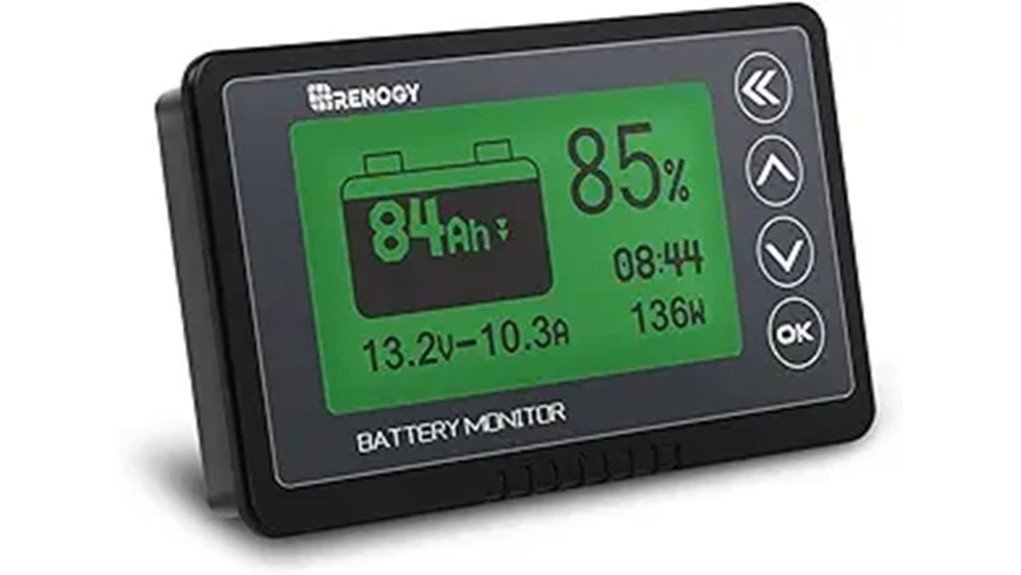
A basic voltage gauge can tell you part of the story, but it cannot show how much current is entering or leaving your battery bank. The Renogy 500A Battery Monitor With Shunt gives you a wired display for voltage, current, consumed power, and estimated remaining capacity. Its wide 10V to 120V range and 500A shunt suit many RV, marine, solar, cabin, and backup-power systems. The main tradeoff is that accurate state-of-charge readings depend on correct shunt wiring and calibration.
Quick Verdict
Rating: 8.5/10, recommended with caveats
Best For: RV, boat, solar, and off-grid battery banks that need a dedicated wired display
Bottom Line: The Renogy RBM500-US gives you broad battery compatibility, a 500A shunt, a long display cable, and ±1% stated measurement accuracy. It is a strong fit when you want local monitoring, but it has no built-in Bluetooth and it only alerts you when a threshold is reached.
| Specification | Detail |
|---|---|
| Brand | Renogy |
| Model | RBM500-US |
| Product Type | Wired battery monitor with external shunt |
| Working Voltage | 10V to 120V |
| Current Range | Up to 500A through the shunt |
| Preset Battery Capacity | 0.1 to 9999.0Ah |
| Stated Accuracy | ±1% for voltage, current, and capacity |
| Compatible Batteries | AGM, GEL, flooded lead-acid, LiFePO4, lithium-ion, and nickel-metal hybrid |
| Display | LCD with adjustable green backlight |
| Display Size | 3.9 × 2.4 × 0.7 inches |
| Display Weight | 2.6 ounces (75 grams) |
| Shielded Display Cable | 20 feet (6 meters) |
| B+ Wire | 3 feet (1 meter) |
| Power Draw | 1 to 2mA standby, 10 to 15mA while working |
| Included Parts | LCD interface, 500A shunt, shielded cable, B+ wire, and transparent shunt holder |
| Connectivity | Wired display, no built-in Bluetooth or app connection |
What Is the Renogy 500A Battery Monitor?
The Renogy 500A Battery Monitor With Shunt is a bank-level energy meter. A shunt sits in the negative side of your battery circuit and measures current flowing into and out of the bank. The LCD then uses that information, along with the battery capacity you enter, to estimate charge level and consumed amp-hours.
This model is designed for systems that need more detail than a simple voltmeter can provide. It can work with common 12V, 24V, and 48V battery banks as long as the system stays within the monitor’s 10V to 120V operating range and the current through the shunt does not exceed 500A.
Key Takeaways
- The 500A rating refers to current passing through the shunt, not the amp-hour size of your battery bank.
- The monitor has stated ±1% accuracy for voltage, current, and capacity measurements.
- The 20-foot shielded cable lets you place the display away from the battery compartment.
- Correct wiring is essential because every charging and load current path must pass through the shunt.
- The programmable alarm warns you about a threshold, but it does not automatically disconnect a charger or load.
Why a Battery Monitor Is Essential for Your System
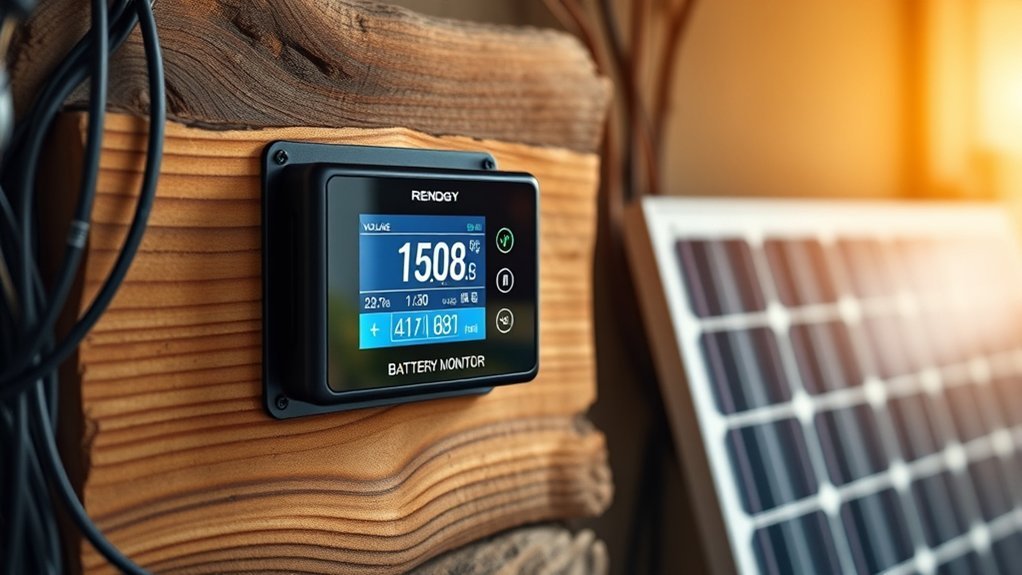
Battery voltage alone can be difficult to interpret, especially when a battery is charging or powering a load. A shunt monitor gives you a clearer view by measuring current direction and amount. You can see when the bank is charging, how much current an appliance is drawing, and how much capacity the monitor estimates remains.
This is useful in an RV, boat, cabin, or solar system where you want to manage energy without opening a compartment or checking a handheld meter. The Renogy display can show voltage, current, consumed power, capacity, and related battery data in one place.
Before You Buy: This monitor does not control your battery, charger, inverter, or loads. Its alarm is a warning. You still need a suitable battery management system, low-voltage disconnect, fuse protection, and correctly sized wiring where your setup requires them.
Who Should Buy It?
Best For
- RV, camper, boat, and off-grid owners who want a dedicated wall-mounted display
- Battery banks using AGM, GEL, flooded lead-acid, LiFePO4, lithium-ion, or nickel-metal hybrid chemistry
- Systems that need a wide 10V to 120V range and can keep peak current below 500A
Skip If
- You want built-in Bluetooth, phone alerts, or cloud-based monitoring
- Your system may send more than 500A through the negative battery path
- You need an automatic disconnect rather than a display and alarm
Top Features of the Renogy 500A Battery Monitor
500A Shunt and Wide Voltage Range
The included shunt can measure up to 500A, while the monitor supports working voltages from 10V to 120V. That range covers many low-voltage battery systems, including common RV and solar-bank configurations. You still need to check your inverter’s possible DC current and any surge demand before deciding that a 500A shunt is large enough.
Adjustable Backlit Display
The LCD uses an adjustable green backlight. It is easy to read in a dim cabin, electrical bay, or control panel. The listing does not claim that the display is waterproof or optimized for direct sunlight, so you should mount it in a dry, protected place with a clear viewing angle.
Useful Battery Data
The screen can show voltage, current, consumed power, battery capacity, and estimated remaining charge. This helps you identify high-draw loads and confirm that charging current is reaching the bank. The percentage reading is an estimate based on current counting, so it becomes less useful when capacity settings or calibration are wrong.
Low Power Use and Data Storage
The monitor draws little power compared with most loads in an RV or off-grid system. Renogy lists 1 to 2mA standby consumption and 10 to 15mA working consumption. It also stores the last test data after power loss, which reduces the need to rebuild every setting after a brief shutdown.
Battery Protection and Alarm Features
You can program high and low alarm thresholds for your battery setup. When an alarm condition occurs, the backlight and displayed value flash to get your attention. This can help you react before the bank moves farther outside your preferred operating range.
The key word is alert. The monitor does not act like a contactor, low-voltage disconnect, or battery management system. It cannot stop an appliance from drawing power or force a charger to shut down. You must respond to the warning or use separate protective equipment that can control the circuit.
How to Set Up Your Renogy Battery Monitor
- Plan the shunt location: Mount the shunt close to the battery bank in a dry, protected area. Leave enough space for secure cable connections.
- Connect the battery side: Connect the shunt’s B- terminal to the negative terminal of the battery bank.
- Move system negatives to the load side: Connect the negative cables for loads and charging sources to the P- side of the shunt. No load or charger negative should bypass the shunt.
- Connect the positive sensing wire: Install the supplied B+ wire as directed in the Renogy manual.
- Route the display cable: Use the 20-foot shielded cable to place the LCD where you can read it easily.
- Enter battery capacity: Program the usable amp-hour capacity for your bank and choose suitable alarm settings for its chemistry.
- Calibrate the state of charge: Fully charge or discharge as directed by the manual, then set the monitor’s full or zero point.
Pro Tip: After installation, turn on one known DC load and check the current direction. If charging appears as discharge, or the reading stays near zero, inspect the shunt orientation and look for a negative cable that bypasses it.
How Accurate Is the Renogy 500A Battery Monitor?
Renogy states ±1% accuracy for voltage, current, and capacity. That is a useful specification for everyday energy tracking, but real-world state-of-charge accuracy depends on more than the meter itself. The battery capacity setting, calibration point, wiring layout, and battery condition all affect the percentage shown on the screen.
Voltage and current readings should remain the most direct measurements. Estimated capacity can drift over time because batteries age and rarely deliver the exact labeled amp-hour capacity under every temperature and load. Recalibrating after a confirmed full charge can improve the displayed percentage.
Good hardware accuracy cannot correct a bypassed shunt, an incorrect capacity setting, or poor calibration.
How It Performs in Real Use
In an RV or Camper
The local display gives you a fast view of current draw without opening the battery compartment. You can turn appliances on one at a time and see which loads have the greatest effect. The long cable also makes it easier to mount the screen near your main control panel.
In a Solar Battery System
The monitor can show net current flowing into or out of the battery bank. During strong solar charging, the reading should move in the charging direction. When loads exceed solar input, it should show net discharge. It does not measure panel production separately unless that energy ultimately passes through the battery shunt.
On a Boat or Marine Battery Bank
A wired display is useful when your batteries sit in a less convenient compartment. However, the product listing does not state a waterproof enclosure rating. Keep the display and shunt protected from spray, condensation, and corrosive conditions.
For Long-Term Monitoring
The monitor is most useful when you check trends, not just one reading. Watching current draw can reveal a load that was left on, while repeated capacity drift may tell you that calibration or the entered bank capacity needs attention. It is not a cell-level diagnostic tool and cannot identify an individual weak cell.
Compatibility and Installation Safety
The RBM500-US supports several battery chemistries, but each chemistry has different safe charge and discharge limits. Use alarm values that match the battery manufacturer’s instructions. Do not copy a lead-acid threshold into a lithium setup without checking the battery manual.
Disconnect power before working on the battery circuit, use correctly rated cables and overcurrent protection, and cover exposed conductive parts. High-current DC systems can create severe heat, arcing, or fire risk when a connection is loose or undersized. A qualified installer is the safer choice when you are not comfortable modifying the main negative battery path.
Pros and Cons
Pros
- Wide 10V to 120V operating range
- Measures up to 500A through the included shunt
- Stated ±1% accuracy for voltage, current, and capacity
- 20-foot shielded cable supports flexible display placement
- Works with several lead-acid and lithium battery chemistries
Cons
- No built-in Bluetooth or phone app
- State-of-charge accuracy requires correct wiring and periodic calibration
- Alarm warnings do not automatically disconnect loads or chargers
Is It Worth the Price?
The Renogy 500A Battery Monitor sits above very basic voltmeters because it includes a high-current shunt, programmable settings, and a remote LCD. It offers strong value when you want a known brand, a long cable, broad battery compatibility, and a display that remains available without a phone.
It is less compelling if app access and historical charts are your main priorities. In that case, a Bluetooth shunt may justify a higher cost. It is also not the best fit when your system needs automatic load control, because this unit only monitors and alerts.
How It Compares to Alternatives
The Victron SmartShunt 500A is a better match when you prefer Bluetooth monitoring and app-based history instead of a dedicated panel display. Renogy’s newer Battery Shunt 300 also adds Bluetooth and app integration, although its product design and current-rating details differ from this wired RBM500-US.
A simpler AILI-style 500A display monitor is worth comparing when you want a basic wired interface. The Renogy makes more sense when you value official documentation, an included 20-foot cable, broad chemistry support, and a clear manufacturer specification table.
Frequently Asked Questions
Can the Renogy 500A monitor be used with a solar system?
Yes. Install the shunt so all charging-source and load negatives pass through it. The display then shows the net current entering or leaving the battery bank, but it does not replace a solar charge controller.
Does 500A refer to battery capacity?
No. The 500A figure is the maximum current rating of the shunt. You program battery capacity separately, and Renogy lists a preset range from 0.1 to 9999.0Ah.
Will the alarm automatically stop battery discharge?
No. The monitor flashes the backlight and displayed value to warn you. You need separate equipment if you want an automatic low-voltage disconnect or charger control.
Can one monitor track a bank with multiple batteries?
Yes, it can monitor multiple batteries as one combined bank when they are connected as a system and every current path goes through the shunt. It will not show separate state-of-charge data for each battery.
Does the monitor need a separate battery?
No separate replaceable battery is required. The display takes power from the connected battery system through its wiring, so it adds a small standby and operating draw.
Why can the state-of-charge percentage become inaccurate?
The percentage can drift when the entered capacity is wrong, the bank has aged, calibration was skipped, or a cable bypasses the shunt. Confirm the wiring and recalibrate at a known full-charge point according to the manual.
Is the display suitable for outdoor mounting?
The product information does not state a waterproof rating. Mount the LCD and shunt in a dry, protected area and avoid direct exposure to rain, spray, or heavy condensation.
The Bottom Line
The Renogy 500A Battery Monitor is a strong choice when you need a wired display, broad battery compatibility, a long cable, and a high-current shunt. Skip it if you need Bluetooth, individual battery data, or an automatic disconnect. Its measurements can be useful and consistent, but the quality of the final state-of-charge estimate depends on careful installation and calibration.