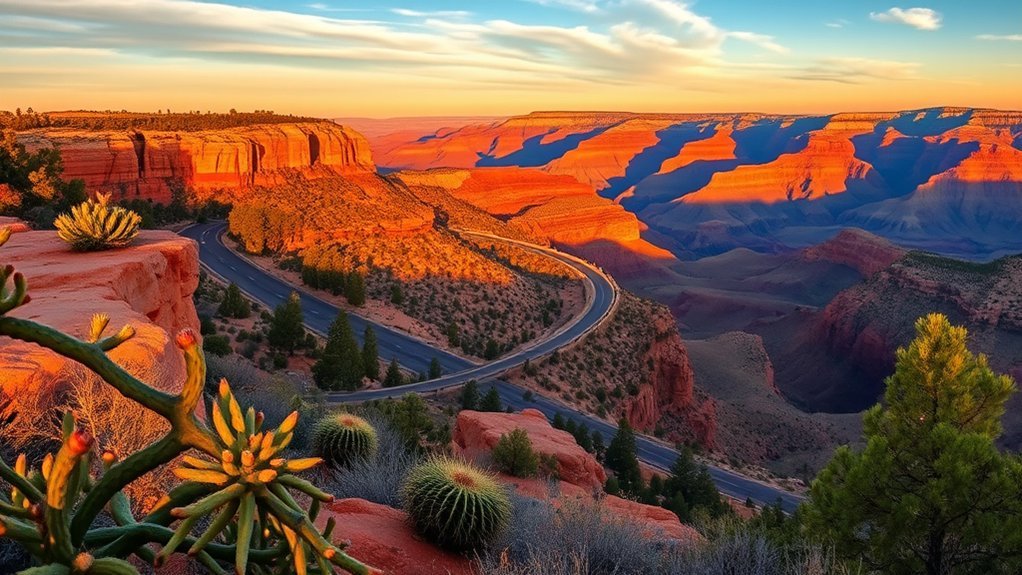
Planning a day trip from Sedona to the Grand Canyon allows you to experience one of the world’s natural wonders and return to the red rocks by bedtime. Located just over two hours north of Sedona, the Grand Canyon’s South Rim is easily accessible for a full day of rim-side walks, panoramic overlooks, and world-class photography. This comprehensive guide details the best driving routes, a step-by-step 1-day itinerary, essential overlook stops, park shuttle logistics, and packing tips to ensure a seamless excursion.
Quick Answer
A day trip from Sedona to the Grand Canyon South Rim covers roughly 114 miles (2 to 2.5 hours each way) via Highway 89A through Oak Creek Canyon to Flagstaff and US-180 North. Depart by 6:00 AM to beat gate congestion, tour iconic overlooks like Mather Point and Desert View Watchtower, walk the paved Rim Trail, and catch sunset before driving back.
Key Takeaways
- Driving Distance: 114 miles (2 hours 15 minutes) each way via scenic Highway 89A and US-180 West.
- Best Return Route: Make it a loop by exiting through the East Entrance along Desert View Drive (AZ-64 East to US-89 South).
- Elevation Difference: The South Rim sits at 7,000 feet—roughly 2,600 feet higher and 10°F to 15°F cooler than Sedona.
- Park Entry: $35 per private vehicle (valid for 7 days) or free with an America the Beautiful Interagency Annual Pass.
- Peak Window: Arrive before 9:00 AM to avoid 45-to-60-minute entrance station queues at the South Entrance (Tusayan).
At a Glance
| Time Required | 10 to 13 hours total (4.5 to 5 hours driving round-trip, 6 to 8 hours in park) |
| Difficulty | Easy to Moderate (paved walks to steep canyon trail switchbacks) |
| Tools & Gear Needed | Sturdy walking shoes, refillable water bottle (2–3L), sun protection, thermal layers, offline maps |
| Cost | $35 per vehicle entry (or $80 Interagency Pass) + fuel and food |
Best Driving Routes From Sedona to the Grand Canyon
When driving from Sedona to the Grand Canyon South Rim, travelers have two main northbound routes and an exceptional eastern loop option for the return trip.
1. Highway 89A via Oak Creek Canyon (The Scenic Route)
Distance: 114 miles | Drive Time: ~2 hours 15 minutes
This is the most popular and scenic route. You will head north out of Sedona on State Route 89A, winding through the towering canyon walls and switchbacks of Oak Creek Canyon before climbing to the pine forests of Flagstaff. From Flagstaff, follow US-180 West through the San Francisco Peaks to Valle, then take AZ-64 North directly into Tusayan and the South Entrance of the park.
2. Interstate 17 to US-180 (The Fast/Winter Route)
Distance: 119 miles | Drive Time: ~2 hours 10 minutes
If you are traveling in icy winter weather or seeking to bypass steep switchbacks, take AZ-179 South out of Sedona to I-17 North into Flagstaff. From there, merge onto US-180 West and continue north on AZ-64. While slightly longer in mileage, highway speeds make the total driving duration nearly identical.
3. The Desert View Scenic Loop (Recommended Return Drive)
Distance: 140 miles | Drive Time: ~2 hours 45 minutes
Instead of driving back the way you came, turn your day trip into a scenic loop. Depart Grand Canyon Village heading east along Desert View Drive (AZ-64 East), stopping at overlooks along the 25-mile park road. Exit through the East Entrance at Desert View, continue east to the historic Cameron Trading Post, then head south on US-89 South back into Flagstaff before descending into Sedona. This adds dramatic views of the Painted Desert and the Little Colorado River Gorge.
Pro Tip: Cellular coverage drops frequently in Oak Creek Canyon and along US-180 between Flagstaff and Valle. Download offline Google Maps or Apple Maps before leaving your Sedona accommodation.
When to Go: Seasons, Light, and Elevation Realities
Selecting the right season and time of day directly impacts your experience with crowds, road conditions, and lighting.
Seasonal Breakdown
- Spring (March to May): Crisp temperatures and clear skies. Snowmelt can leave trails muddy, but crowds are manageable before Memorial Day.
- Fall (September to November): The premier season for a day trip. Moderate daytime temperatures (60°F–70°F), reduced crowd density, and vibrant golden aspens near Flagstaff.
- Summer (June to August): Peak tourist season with heavy entrance gate backups (30–60 minute delays between 9:30 AM and 2:00 PM). Rim temperatures are warm (mid-80s°F), but afternoon monsoon thunderstorms are common in July and August.
- Winter (December to February): Peaceful and dramatic, with snow highlighting the canyon’s red strata. However, roads can be icy, and high winds make the rim bitterly cold.
Warning: The South Rim sits at an elevation of 7,000 feet (2,134 m), compared to Sedona’s 4,350 feet. Temperatures at the rim are typically 10°F to 15°F cooler than in Sedona. Pack warm layers even during summer mornings, and drink extra water to prevent high-altitude dehydration.
Photographic Golden Hours
Because the Grand Canyon spans up to 18 miles across and a mile deep, midday sun flattens rock features and washes out geological color bands. For optimal photography:
- Early Morning: Low-angle light cuts through canyon side-canyons, casting warm amber highlights across the north-facing buttes.
- Late Afternoon / Sunset: Sunsets illuminate the red Supai sandstone and Hermit shale into deep purples and glowing crimsons. Prime sunset viewpoints include Hopi Point, Lipan Point, and Desert View.
Top Viewpoints and Photo Stops Along the South Rim
The South Rim features dozens of distinct viewpoints. For a single-day trip, prioritize these top-tier overlooks:
| Viewpoint | Location / Access | Best Time | Key Highlight |
|---|---|---|---|
| Mather Point | Main Visitor Center (Walk-up) | Sunrise / Early AM | Classic first panoramic view with safety railings and viewing platforms. |
| Yavapai Point | 0.8 miles west of Visitor Center | Morning to Midday | Panoramic view directly down to Phantom Ranch; includes the indoor Geology Museum. |
| Hopi Point | Hermit Road (Red Shuttle Route) | Sunset | Pushes farthest north into the canyon for unobstructed east-west sunset views. |
| Grandview Point | Desert View Drive (Personal Car) | Midday / Afternoon | Dense, layered perspective looking down toward Horseshoe Mesa. |
| Desert View Watchtower | East Entrance (AZ-64) | Late Afternoon | 1932 Mary Colter stone tower with panoramic views of the Colorado River’s eastern bend. |
Short Hikes and Easy Trails for a Day Visit
Because driving to and from Sedona takes roughly 4.5 to 5 hours of your day, your hiking window will be approximately 2 to 4 hours. Choose trails that maximize scenery without causing excessive physical fatigue.
1. Rim Trail: Mather Point to Yavapai Geology Museum
Distance: 1.4 miles round-trip (or 0.7 miles one-way) | Difficulty: Easy (Paved, Flat)
This fully paved, wheelchair-accessible section of the Grand Canyon Rim Trail links the main Visitor Center with the Yavapai Geology Museum. Interpretive bronze markers detail the canyon’s geological layers, offering expansive vistas across to the North Rim with minimal physical strain.
2. South Kaibab Trail to Ooh Aah Point
Distance: 1.8 miles round-trip | Elevation Change: 790 feet | Difficulty: Moderate to Strenuous
If you want to step below the rim, the South Kaibab Trail offers the most immediate panoramic payoff. Unlike the Bright Angel Trail, which winds through a side canyon, South Kaibab descends an open ridgeline. Ooh Aah Point delivers an expansive 360-degree view into the canyon interior.
Note: Access to the South Kaibab Trailhead is closed to private vehicles year-round. You must board the free Kaibab Rim (Orange Route) shuttle from the Grand Canyon Visitor Center to reach the trailhead.
3. En-Route Leg Stretch: Oak Creek Canyon Vista
Located at the top of the switchbacks on Highway 89A between Sedona and Flagstaff, the Oak Creek Vista is an ideal 15-minute rest stop. Walk the paved pathway for views down through the gorge and browse authentic Native American jewelry and crafts sold directly by local Navajo and Hopi artisans.
Step-by-Step 1-Day Itinerary
- 6:00 AM – Depart Sedona: Drive north via AZ-89A through Oak Creek Canyon. Beat early commuters and morning entrance gate backups.
- 8:30 AM – Arrive at South Rim Visitor Center: Park in Lots 1–4. Walk out to Mather Point for early-morning rim views.
- 9:30 AM – Walk the Rim Trail to Yavapai Point: Stroll the paved 0.7-mile path to Yavapai Geology Museum to view topographic relief models and deep-canyon panoramas.
- 11:00 AM – Explore Grand Canyon Village: Take the Village (Blue Route) shuttle to historic landmarks including El Tovar Hotel, Hopi House, and Bright Angel Lodge.
- 12:30 PM – Lunch Break: Dine at the Bright Angel Tavern or El Tovar Dining Room (reservations recommended), or enjoy a pre-packed picnic along the rim benches.
- 2:00 PM – Hopi Point & Hermit Road (Seasonal): Board the Hermit Road (Red Route) shuttle to view dramatic drop-offs at Maricopa Point and Hopi Point.
- 4:30 PM – Scenic Drive East along Desert View Drive: Retrieve your vehicle and drive east on AZ-64, stopping at Grandview Point and Lipan Point.
- 6:00 PM – Sunset at Desert View Watchtower: Climb the historic stone tower (if open) and watch sunset paint the eastern canyon and Colorado River.
- 6:45 PM – Return Drive via Cameron (Loop Route): Exit the East Gate on AZ-64 East to Cameron Trading Post, then take US-89 South to Flagstaff and AZ-89A back to Sedona (arrival around 9:15 PM).
Transportation Options: Drive, Guided Tour, or Shuttle
1. Self-Driving (Recommended for Flexibility)
Renting a vehicle or driving your own car is the most flexible way to visit. It allows you to depart Sedona before dawn, alter your route to include the Desert View loop, and stay for sunset without adhering to a tour group’s schedule.
2. Guided Small-Group Day Tours from Sedona
Multiple outfitters operate full-day guided van excursions departing directly from Sedona hotels. These tours include park admission, interpretive commentary on geology and Indigenous history, lunch, and stops at key overlooks without the stress of navigating or parking.
3. Shuttle Services
Regional shuttle operators (such as Groome Transportation) connect Flagstaff and Phoenix to the Grand Canyon, but direct scheduled public transit between Sedona and the South Rim is limited. Self-driving or booking a dedicated commercial tour remains far more practical for a single-day trip.
“The South Rim free shuttle bus network eliminates parking hassles between Grand Canyon Village, the Visitor Center, and the scenic overlooks along Hermit Road.”
Park Fees and Free Shuttle Navigation
- Vehicle Entrance Fee: $35 per 7-day single vehicle pass, payable at the entrance stations or online via Recreation.gov.
- Interagency Passes: The America the Beautiful Pass ($80 annual) covers entrance to the Grand Canyon and also covers recreation day-use parking throughout Sedona’s Coconino National Forest (Red Rock Pass sites).
- Free Park Shuttles: Once inside the park, leave your car parked at the Visitor Center. Utilize the free park shuttles:
- Village Route (Blue): Connects Visitor Center, campgrounds, grocery store, and historic Grand Canyon Village.
- Kaibab Rim Route (Orange): Connects Visitor Center to Mather Point, Pipe Creek Vista, and South Kaibab Trailhead.
- Hermit Road Route (Red): Operates March 1 to November 30, providing exclusive access to 9 scenic viewpoints along the 7-mile Hermit Road.
What to Pack and Practical Tips for a Smooth Day Trip
- Hydration & Electrolytes: Carry at least 2 to 3 liters of water per person. Free filtered water bottle filling stations are located at the Visitor Center, Bright Angel Trailhead, and Hermit’s Rest.
- Layered Clothing: Pack a fleece or windproof jacket. Morning temperatures at 7,000 feet can be frosty even when Sedona is warm.
- Sun Protection: High-altitude UV rays are intense. Bring a wide-brim hat, polarized sunglasses, and broad-spectrum SPF 50+ sunscreen.
- Footwear: Wear broken-in hiking boots or trail runners with high-traction soles; limestone trail surfaces can be slick with loose gravel.
- Power Bank & Printed Maps: Cold air and navigation apps drain smartphone batteries quickly; carry a portable battery pack.
Frequently Asked Questions
Are there food options open year-round at Grand Canyon Village?
Yes. Grand Canyon Village features year-round dining options, including the historic El Tovar Dining Room, Arizona Steakhouse, Bright Angel Tavern, Maswik Food Court, and the Canyon Village Market & Deli, which offers grab-and-go sandwiches, groceries, and hot coffee.
Can I use my Sedona Red Rock Pass at the Grand Canyon?
No. The Sedona Red Rock Pass ($5/day) is issued by the U.S. Forest Service for parking on Coconino National Forest trailheads and is not valid at Grand Canyon National Park. However, an America the Beautiful Interagency Pass ($80) is valid at both the Grand Canyon and all federal Red Rock fee sites in Sedona.
Are drones allowed for photography along the Grand Canyon Rim?
No. Launching, landing, or operating unmanned aircraft (drones) is strictly prohibited in Grand Canyon National Park under 36 CFR 1.5. Violations carry federal fines up to $5,000 and possible confiscation of equipment.
Is it safe to bring pets on Grand Canyon viewpoint trails?
Leashed pets are permitted on all paved trails above the rim (including the 13-mile South Rim Trail) and within developed campground areas. Pets are strictly prohibited on all trails below the rim (such as Bright Angel or South Kaibab) for safety and heat exhaustion concerns.
Where are the nearest medical facilities to the Grand Canyon South Rim?
The North Country HealthCare Grand Canyon Clinic is located directly in Grand Canyon Village on Clinic Road, providing urgent care and seasonal family practice. For major medical emergencies, Flagstaff Medical Center is the nearest Level 1 Trauma Center, located approximately 80 miles south in Flagstaff.
Can you visit both the Grand Canyon and Sedona in a single day?
While physically possible, it is best to base yourself in Sedona and dedicate a complete 10-to-12-hour day solely to the Grand Canyon. Rushing both destinations into one day leaves little time to hike or enjoy viewpoints beyond brief roadside parking stops.
Conclusion
A day trip from Sedona to the Grand Canyon South Rim is one of the most rewarding excursions in the American Southwest. By departing early, navigating Highway 89A through Oak Creek Canyon, taking advantage of the park’s free shuttle system, and catching sunset along Desert View Drive, you can fully experience the canyon’s majesty in a single day. Prepare for elevation changes, pack your camera and warm layers, and return to Sedona with memories of one of Earth’s greatest geological landscapes.
Sources
- National Park Service: Grand Canyon Entrance Fees & Passes — Official park entrance and vehicle pass rates.
- National Park Service: South Rim Shuttle Bus Routes — Shuttle schedules and Hermit Road operational guidelines.
- U.S. Forest Service: Red Rock Pass Program — Coconino National Forest recreation fee guidelines.
- Arizona Department of Transportation: AZ 511 Travel Info — Real-time Arizona road conditions, closures, and route alerts.