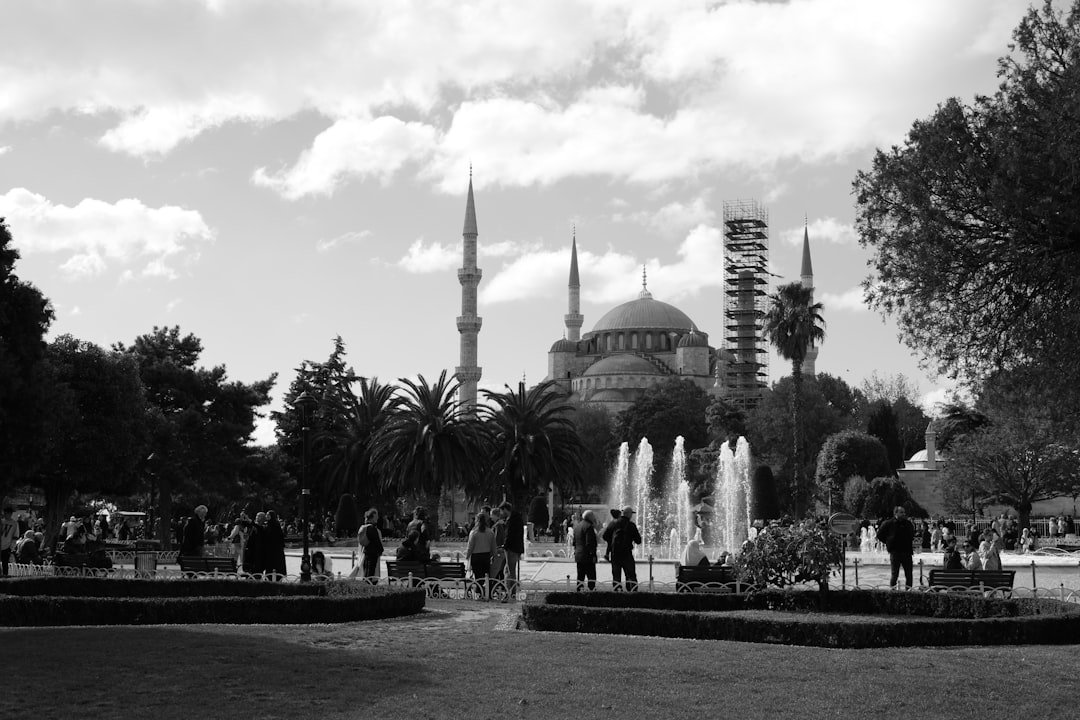
Sultanahmet history is the story of Istanbul in miniature. On this part of the Historic Peninsula, Greek settlement, Roman imperial planning, Byzantine Christianity, Ottoman court life, and modern Türkiye overlap within a compact area around Sultanahmet Square. The result is not one preserved era, but a layered district where the Hippodrome, Hagia Sophia, the Blue Mosque, Topkapı Palace, and underground cisterns reveal different stages of the city’s past.
Quick Answer
Sultanahmet is the historic core of Istanbul’s old imperial center. The area grew from ancient Byzantion into Constantinople, capital of the Roman Empire from 330 CE, then became a center of Ottoman rule after 1453. Its surviving monuments preserve Byzantine, Ottoman, and earlier layers within the UNESCO-listed Historic Areas of Istanbul.
Last checked: October 1, 2026. Dates and figures were verified against official sources.
Key Takeaways
- The Historic Peninsula was settled in antiquity, and Constantine made Constantinople the Roman imperial capital in 330 CE.
- The former Hippodrome explains why Sultanahmet Square was once a center of ceremony, sport, public gatherings, and imperial display.
- Hagia Sophia and the Blue Mosque show two major architectural periods side by side: sixth-century Byzantine and early-17th-century Ottoman.
- Topkapı Palace made the area a center of Ottoman government, education, and court life for nearly four centuries.
- Sultanahmet is one component of the Historic Areas of Istanbul, inscribed on the UNESCO World Heritage List in 1985.
Sultanahmet History: From Byzantion to the Ottoman Capital
The story begins long before the name Sultanahmet existed. The Fatih District Governorate’s history of the peninsula places Megarian settlement around 660-670 BCE at Sarayburnu, the headland beside today’s Sultanahmet area. Earlier archaeological finds show that people had occupied parts of the peninsula long before the Greek city developed.
The settlement became known as Byzantion, or Byzantium in Latinized form. Its position controlled a major waterway between the Black Sea and the Mediterranean and placed it on routes connecting Europe and Asia.
In 330 CE, Constantine the Great transferred the Roman imperial capital to Byzantion and renamed it Constantinople, also called New Rome. The city then became the political center of the Roman Empire and, later, the Eastern Roman or Byzantine Empire.
Constantinople remained the capital of the Eastern Roman, or Byzantine, Empire for more than a thousand years. After Mehmed II conquered the city in 1453, it became the Ottoman capital. The imperial center continued to cluster around the old acropolis and Hippodrome, but new palaces, mosques, schools, fountains, markets, and charitable complexes reshaped the district.
The modern name comes from Sultan Ahmed I, who commissioned the Sultan Ahmed Mosque opposite Hagia Sophia. The mosque’s presence was so dominant that the surrounding area and square became widely known as Sultanahmet.
The Architecture of Sultanahmet
Sultanahmet’s architecture is valuable because major buildings from different empires survive within walking distance of one another. Rather than presenting a single architectural style, the district shows how rulers repeatedly reused the same ceremonial center while adding new religious, political, and civic landmarks.
Hagia Sophia: Byzantine Engineering and Ottoman Layers
Hagia Sophia was built under Emperor Justinian I between 532 and 537. Its vast central dome, marble surfaces, mosaics, and complex system of supporting half-domes made it one of the defining buildings of Byzantine architecture. UNESCO identifies it as one of the architectural masterpieces that gives the Historic Areas of Istanbul their outstanding universal value.
After the Ottoman conquest in 1453, Hagia Sophia became an imperial mosque. Minarets, calligraphic roundels, a mihrab, and other Islamic elements were added over time without erasing every earlier Byzantine feature.
Hagia Sophia later served as a museum and returned to use as a mosque in 2020. Since January 15, 2024, worshippers and cultural visitors have used separate routes, with tourist visits directed through the gallery level where Byzantine mosaics can be seen. The current Hagia Sophia visitor FAQ lists visitor-area admission at €25.
The Blue Mosque: An Early-17th-Century Ottoman Landmark
Across the square, the Sultan Ahmed Mosque represents a different imperial language. Commissioned by Sultan Ahmed I and designed by Sedefkâr Mehmed Ağa, it was built from 1609 to 1616 according to Istanbul Metropolitan Municipality’s Sultanahmet history.
The mosque has six minarets and an interior decorated with more than 20,000 İznik ceramic tiles. Those blue-toned tiles helped give the building its familiar English name, the Blue Mosque. It remains an active place of worship, so tourist access is organized around prayer.
The Hippodrome and the Older Ceremonial Landscape
Sultanahmet Square still follows the general line of the ancient Hippodrome. Septimius Severus began the Roman-era complex, and Constantine greatly enlarged it after making the city his capital. It hosted chariot races, ceremonies, public gatherings, and political events.
Three ancient monuments still mark its spine: the Obelisk of Theodosius, the Serpent Column, and the Walled Obelisk. The surviving objects make the former racecourse easier to read even though most of its seating and structures are now below or beneath the modern square.
Why Sultanahmet Mattered in Byzantine and Ottoman History
Sultanahmet mattered because it concentrated political authority, religion, ceremony, and public life in one part of the city. Under Byzantine rule, the Great Palace, Hippodrome, and Hagia Sophia formed a closely connected imperial landscape. Under the Ottomans, Topkapı Palace, Hagia Sophia, and later the Blue Mosque kept this area at the center of state and religious life.
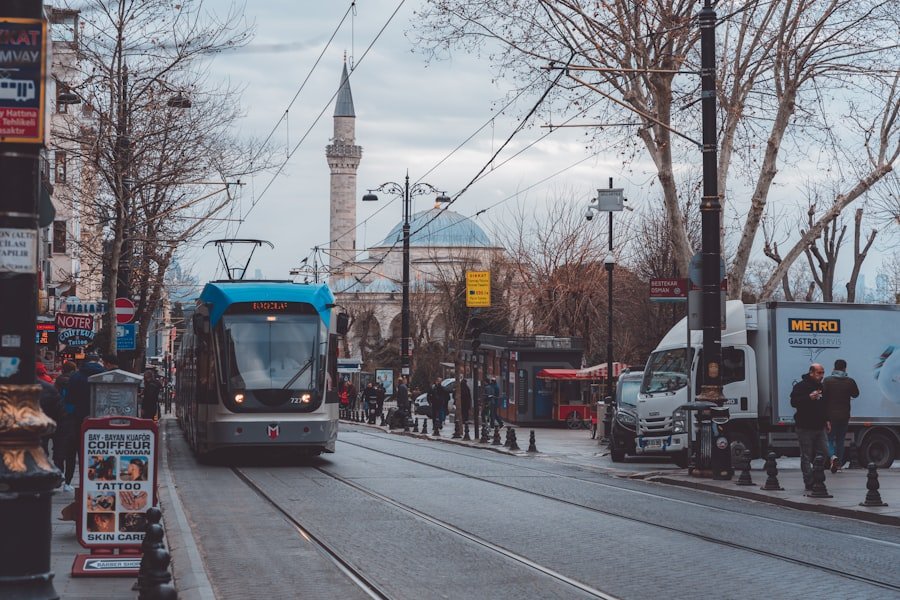
The conquest of Constantinople in 1453 ended Byzantine imperial rule and made the city the capital of the Ottoman Empire. Mehmed II then established Topkapı Palace on the historic peninsula. The official National Palaces history states that construction took place from 1460 to 1478 and that later sultans added buildings across the complex.
The palace became the sultans’ main residence and a center of government, education, and art for nearly four centuries. By the mid-19th century, the imperial residence shifted toward newer Bosphorus palaces, but Topkapı remained one of the clearest surviving expressions of Ottoman court organization.
The old Hippodrome also continued to matter under Ottoman rule, when it was known as At Meydanı, or Horse Square. It hosted festivals, ceremonies, and political gatherings. This continuity shows why Sultanahmet should not be understood as a district that changed completely in 1453; many older spaces continued to serve public and symbolic functions in new ways.
One claim in the original history needs correction: the Treaty of Küçük Kaynarca was not signed in Sultanahmet. The 1774 treaty between the Ottoman and Russian empires was signed at Küçük Kaynarca, about 24 km southeast of Silistra, according to the TDV İslâm Ansiklopedisi account of the negotiations.
In 1985, the Historic Areas of Istanbul were inscribed on the World Heritage List. UNESCO’s listing includes the Archaeological Park on the tip of the Historic Peninsula, together with the Süleymaniye quarter, Zeyrek area, and the land walls. The Sultanahmet component includes landmarks such as the Hippodrome, Hagia Sophia, Hagia Irene, and Topkapı Palace.
The Top Attractions in Sultanahmet
The most important places to see are concentrated around Sultanahmet Square and the eastern end of the Historic Peninsula. Their histories overlap, so visiting them as a group helps you understand how the Roman, Byzantine, and Ottoman city occupied the same ground.
| Attraction | Why It Matters | Visitor Access | Admission |
|---|---|---|---|
| Hagia Sophia | Sixth-century Byzantine church later used as an Ottoman imperial mosque and now an active mosque. | Foreign cultural visitors use the gallery route; worship and tourist circulation are separated. | €25 for foreign tourist gallery access; worship entry is free. |
| Blue Mosque | Early-17th-century Ottoman mosque known for six minarets and İznik tile decoration. | Open to visitors outside worship restrictions; sightseeing pauses for prayer. | Free. |
| Topkapı Palace | Ottoman imperial residence and government center built from 1460 to 1478 and expanded later. | Ticket office 09:00-17:00; closed Tuesday. | Combined ticket: ₺500 domestic, ₺2,750 foreign; includes Topkapı Palace, Harem, and Hagia Irene. |
| Grand Bazaar | Historic covered market west of Sultanahmet that reflects Istanbul’s long commercial tradition. | Generally 08:30-19:00 Monday-Saturday; closed Sunday. | Free. |
Hagia Sophia and the Blue Mosque are the strongest introduction to the district’s religious and architectural history. Their position facing one another makes the shift from Byzantine to Ottoman monumental architecture immediately visible.
Topkapı Palace adds the political story. Its courtyards, kitchens, council spaces, treasury collections, Harem, and sacred relics help explain how the Ottoman court worked. The relic collection includes the Holy Mantle and swords associated with the Prophet Muhammad. The National Palaces visitor page currently lists the combined ticket at ₺500 for domestic visitors and ₺2,750 for foreign visitors, with Tuesday as the regular closed day.
The Basilica Cistern adds a different layer beneath the streets. Built in the Byzantine era, the vast underground reservoir uses rows of columns to support its brick vaults and includes the famous Medusa-head column bases. Nearby, the Istanbul Archaeological Museums and the Museum of Turkish and Islamic Arts deepen the story beyond the most photographed monuments.
The Grand Bazaar is farther west, near Beyazıt rather than directly on Sultanahmet Square. It still fits naturally into a Historic Peninsula visit because its covered streets show the commercial life that developed around the Ottoman capital. Türkiye’s Culture Portal describes a market of about 45,000 square meters with 3,600 shops and lists shopping hours as 08:30-19:00 except Sundays and religious holidays.
The Cultural Significance of Sultanahmet
Sultanahmet remains culturally important because its historic buildings are still used, not simply displayed. Mosques host daily worship, the square functions as public space, museums interpret art and archaeology, and shops and restaurants keep the district connected to everyday urban life.
The area also contains monuments from cultures that once reached far beyond Istanbul. The Serpent Column came from Delphi, while the Egyptian obelisk was re-erected in the Hippodrome under Theodosius I. Their presence shows how Constantinople’s rulers used imported monuments to express imperial continuity and power.
Ottoman culture is especially visible in the mosque complexes, palace collections, calligraphy, ceramics, carpets, manuscripts, and food traditions found across the district. The Museum of Turkish and Islamic Arts, housed in the former İbrahim Pasha Palace, is particularly useful for seeing carpets, manuscripts, metalwork, ceramics, and other objects outside their original settings. Shops and markets around the district also sell ceramics, textiles, and calligraphy-inspired goods, continuing craft traditions in a modern visitor economy.
Food is another accessible part of the district’s culture. Simit, döner kebabs, meze, baklava, Turkish tea, and coffee are widely available, but their importance is not just culinary: cafés, markets, and street vendors continue the long role of the Historic Peninsula as a meeting place for residents, merchants, pilgrims, and travelers.
Sultanahmet’s Influence on Modern Istanbul and Turkey
Sultanahmet influences modern Istanbul mainly through heritage, tourism, religious life, and national memory. Its monuments are used to explain different parts of the city’s identity, from Roman and Byzantine Constantinople to the Ottoman capital and the modern Turkish metropolis.
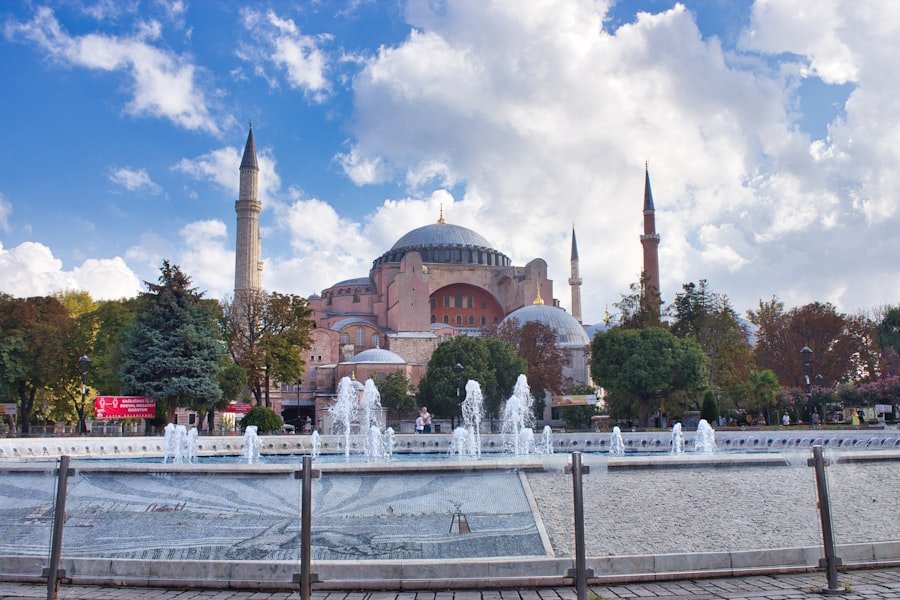
The district is also one of Istanbul’s most visible international tourism zones. That creates a constant tension between access and preservation: millions of people want to experience monuments that were never designed for modern visitor volumes, while many buildings continue to serve religious or civic functions.
Hagia Sophia makes that tension especially clear. It is simultaneously a working mosque, a major historic monument, and part of a World Heritage property. The current visitor route separates cultural tourism from worship while allowing access to the upper gallery and its Byzantine mosaics.
For modern Istanbul, this mix is part of what makes Sultanahmet distinctive. The district is not frozen in the past; its historic buildings continue to acquire new uses, visitor systems, conservation needs, and meanings.
The Restoration and Preservation of Sultanahmet
Preserving Sultanahmet requires more than repairing individual monuments. Conservation has to protect original materials, structural stability, archaeological layers, the historic skyline, and the relationship among buildings that together create the character of the Historic Peninsula.
UNESCO’s World Heritage listing covers four component areas rather than Sultanahmet alone, and its conservation work therefore considers the wider urban setting. UNESCO has continued to monitor issues including restoration, development pressure, visitor conditions, and the protection of the site’s outstanding universal value.
Hagia Sophia is undergoing major conservation work. In April 2026, Türkiye’s Directorate General of Foundations reported that strengthening and conservation of the northeast minaret had been completed, including controlled dismantling and reconstruction of upper sections and reinforcement of lower sections. The official restoration update says the work was documented and designed to preserve original material while improving structural safety.
Restoration also affects what visitors see at any given time. Scaffolding, closed sections, or temporary routes can be part of preserving a monument rather than a sign that its history has been diminished. This is especially important in a district where many structures remain active religious or public spaces.
The Future of Sultanahmet
Sultanahmet’s future depends on balancing public access with long-term conservation. The strongest approach is not to make the district feel new, but to keep its historic fabric legible while managing crowds, maintenance, worship, accessibility, and modern city services.
Digital interpretation can help visitors understand vanished structures such as the Hippodrome seating and Great Palace without rebuilding them physically. Better visitor management can also reduce pressure on fragile interiors while keeping the district accessible.
Local residents and institutions remain part of that future. Sultanahmet works best as a living urban district when conservation protects both monumental landmarks and the surrounding streets, public spaces, smaller historic buildings, and daily patterns that give the area context.
If you’re interested in exploring another aspect of Asian cultural history, you may also enjoy this article on Asian melon, which looks at varieties of melons found in Asia and their cultural significance.
Frequently Asked Questions
What is the history of Sultanahmet?
Sultanahmet developed on the historic peninsula where ancient Byzantion and later Constantinople grew. It became part of the Roman imperial capital in 330 CE, remained central to Byzantine life, and continued as a major political and religious area after the Ottoman conquest of 1453.
What are the main historical landmarks in Sultanahmet?
The main landmarks are Hagia Sophia, the Blue Mosque, the former Hippodrome, Topkapı Palace, Hagia Irene, and the Basilica Cistern. Nearby museums and the surviving obelisks and Serpent Column add important Byzantine, Ottoman, Roman, Greek, and Egyptian layers to the area.
How has Sultanahmet’s history influenced its architecture and culture?
Its architecture records successive imperial periods rather than one style. Byzantine domes, mosaics, cisterns, and ceremonial spaces stand beside Ottoman mosques, palace courtyards, calligraphy, İznik tiles, fountains, markets, and museum collections, creating an unusually dense record of Istanbul’s changing political and religious life.
What role did Sultanahmet play in the Byzantine and Ottoman empires?
Under Byzantine rule, the area around the Hippodrome, Great Palace, and Hagia Sophia was central to imperial ceremony, politics, and religion. Under the Ottomans, Topkapı Palace and major mosques kept the same part of the city closely tied to government, court life, worship, and public events.
How has Sultanahmet evolved over time?
Sultanahmet changed from an ancient settlement area into the ceremonial center of Constantinople and later an Ottoman imperial district. In modern Istanbul it functions as a heritage, religious, museum, and tourism zone, while restoration and visitor-management projects continue to reshape how people experience its monuments.
Is Sultanahmet a UNESCO World Heritage Site?
Sultanahmet is part of the UNESCO-listed Historic Areas of Istanbul, inscribed in 1985. The Sultanahmet Archaeological Park is one component of the property, alongside the Süleymaniye area, Zeyrek area, and the land walls.
Is Hagia Sophia still a museum?
No. Hagia Sophia is an active mosque. Foreign visitors making a cultural visit use a separate paid gallery route, while worshippers use the prayer area; this arrangement has been in place since January 15, 2024.
Sources
- Fatih District Governorate — History of the Historic Peninsula: early settlement, Megarian arrival, and the Byzantion site.
- UNESCO World Heritage Centre — Historic Areas of Istanbul: World Heritage status, component areas, and architectural significance.
- Istanbul Metropolitan Municipality — Sultanahmet: Hippodrome history, Blue Mosque construction, minarets, and İznik tiles.
- DEM Museums — Hagia Sophia visitor FAQ: current visitor-area admission.
- National Palaces — Topkapı Palace: palace history, visiting hours, closed day, and current ticket prices.
- Türkiye Culture Portal — Grand Bazaar: market history and opening schedule.
- TDV İslâm Ansiklopedisi — Treaty of Küçük Kaynarca: negotiation history and signing location.
- Directorate General of Foundations — Hagia Sophia restoration update: 2026 conservation and strengthening work on the northeast minaret.