If you’re looking for ghost towns near Tulsa, Ingalls is the most practical historic stop in this group, while Adamson, Boggy Depot and Doaksville work better as longer road trips. Beer City is much farther away in the Oklahoma Panhandle. These places range from visitor-friendly monuments and trails to cemeteries, foundations and sites where almost nothing remains.
Quick Answer
For a ghost-town trip from Tulsa, start with Ingalls, known for its 1893 outlaw gunfight and reconstructed historic buildings. Adamson and Boggy Depot make longer excursions, while Doaksville is better for a southeastern Oklahoma trip. Beer City is historically fascinating but far from Tulsa and has no town structures left to explore.
Key Takeaways
- Ingalls is the strongest choice for a Tulsa-based ghost-town day trip and has replicas plus a battle monument.
- Adamson preserves the story of Oklahoma coal mining and the deadly 1914 Mine No. 1 collapse.
- Boggy Depot combines history with a present-day park, cemetery, trail and camping facilities.
- Doaksville is an important Choctaw historic site near Fort Towson, with a cemetery, foundations and interpretive walking areas.
- Beer City belongs on an Oklahoma ghost-town history list, but not on a short Tulsa itinerary because the former town site is now agricultural land in the Panhandle.
Why You’ll Love Exploring Oklahoma’s Ghost Towns
Oklahoma’s ghost towns tell stories about mining, railroads, trade, tribal government, settlement and even the unusual liquor towns that operated before statehood. The Oklahoma Historical Society documents former communities ranging from abandoned mining settlements to towns that faded after railroads, highways or economic activity moved elsewhere.
The experience is different at every stop. You may find a cemetery, foundations, a monument or reconstructed buildings rather than an intact abandoned town. That difference is part of the appeal: each place shows a different way a once-active community changed or disappeared.
Top Ghost Towns in Oklahoma to Visit From Tulsa
Not every Oklahoma ghost town commonly mentioned with Tulsa is actually close to the city. If you are planning a road trip, these five are best understood by how well they fit a Tulsa-based itinerary.
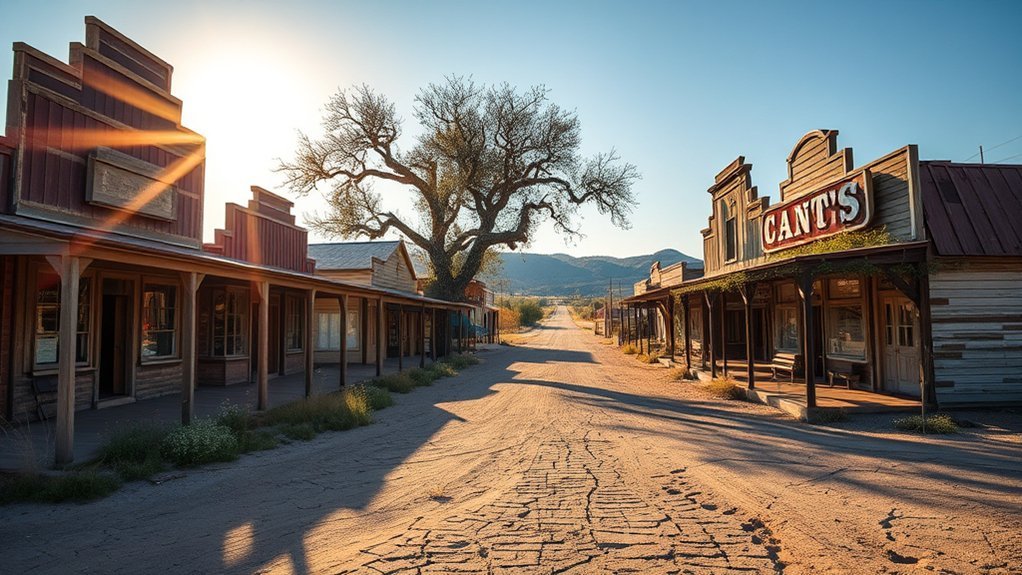
- Ingalls: The best fit for a Tulsa-oriented ghost-town trip. The community is remembered for its connection to the Doolin gang and the deadly 1893 Battle of Ingalls. Visitors can see replicas of historic buildings and a stone monument honoring the lawmen killed during the fight.
- Adamson: A former coal-mining community in Pittsburg County. A monument, small cemetery and a few remnants preserve the memory of the town and the miners lost in the 1914 collapse.
- Boggy Depot: A former transportation and commercial center that is now associated with Boggy Depot Park. The historic town itself has largely disappeared, but visitors can see the cemetery and historical markers while also using the park’s recreation facilities.
- Doaksville: An important Choctaw political and commercial center near Fort Towson. The site includes an old cemetery, archaeological remains and interpretive walking areas.
- Beer City: One of Oklahoma’s strangest ghost-town stories. Founded in No Man’s Land in 1888, it disappeared after the Oklahoma Organic Act of 1890. The former site is now agricultural land, so this is more a history stop than a place filled with ruins.
Note: If your main goal is a short trip from Tulsa, prioritize Ingalls. Adamson and Boggy Depot require more driving, while Doaksville and Beer City are better treated as separate regional road trips rather than quick Tulsa-area excursions.
Historical Significance of Each Ghost Town
Ingalls and the 1893 Gunfight
Ingalls became associated with one of Oklahoma Territory’s best-known outlaw confrontations. On September 1, 1893, deputy U.S. marshals attempted to capture members of the Doolin gang. The confrontation turned into a gun battle in which three deputy marshals were killed. The Oklahoma Historical Society’s Dalton Gang history documents the Ingalls fight, while the present site includes reconstructed buildings and a memorial connected with the event.
Adamson and Oklahoma’s Coal-Mining Era
Adamson developed as a coal-mining community in Pittsburg County. One of its defining events occurred on September 4, 1914, when Mine No. 1 began collapsing. According to the Oklahoma Tourism & Recreation Department’s Oklahoma Ghost Towns guide, most workers escaped, but 14 miners were trapped underground. A monument was later created to honor the victims.
The town’s mining history is part of a much larger story. Coal communities once played a major role in eastern Oklahoma’s economy, but many declined as mines closed and transportation and industry changed.
Beer City and No Man’s Land
Beer City was established in 1888 in the Public Land Strip, commonly called No Man’s Land. At the time, the area lacked the normal territorial government found in neighboring regions. Saloons and dance halls helped give the settlement its colorful reputation.
The Oklahoma Historical Society records that Beer City lasted until the Organic Act of 1890 made the Panhandle part of Oklahoma Territory. Today, the former town site is agricultural land rather than a collection of abandoned Wild West buildings.
Boggy Depot’s Transportation and Tribal History
Boggy Depot developed in the 1830s and became an important commercial and transportation point. Its post office was established in 1849, and the community later served at times as the capital of the Choctaw Nation from 1858 to 1860. During the Civil War, it also served as an important Confederate supply location in Indian Territory.
The Oklahoma Historical Society’s Boggy Depot history explains that the settlement declined as tribal boundaries changed and transportation shifted toward newer communities and railroad routes. The historic site is now part of the landscape around Boggy Depot Park.
Doaksville and the Choctaw Nation
Doaksville became an important trading and political center beside Fort Towson. It served intermittently as the capital of the Choctaw Nation after 1850 and regularly from 1858 to 1863. The town also hosted the 1860 convention that ratified the Doaksville Constitution.
Another major event occurred nearby on June 23, 1865, when Confederate Brigadier General Stand Watie surrendered his command at Doaksville. The Oklahoma Historical Society’s Doaksville history provides additional background on the community’s political and commercial importance.
What You’ll Find in Oklahoma’s Ghost Towns
Do not expect every ghost town to look like a movie set filled with abandoned storefronts. What remains varies greatly from one location to another.
- Ingalls: Reconstructed historic buildings and the Battle of Ingalls monument provide the clearest visual connection to the former town.
- Adamson: The mining memorial, cemetery and scattered remnants are more important than abandoned commercial buildings.
- Boggy Depot: The old town has largely vanished, but its cemetery and historical markers survive within a modern recreation area.
- Doaksville: Expect cemetery headstones, archaeological remains, rock foundations, walking areas and interpretive information rather than a standing historic downtown.
- Beer City: Virtually no recognizable town remains. Its significance comes from its unusual history in No Man’s Land.
Warning: Do not enter abandoned buildings, mine areas or private property simply because a place is described as a ghost town. Structures can be unstable, old mine workings can create hazards, and many historic locations include privately owned land. Picher should not be treated as an urban-exploration destination because tourist access is restricted and environmental cleanup at the Tar Creek Superfund site remains ongoing.
How to Plan a Ghost-Town Road Trip From Tulsa
A better trip comes from choosing one region instead of trying to connect every ghost town in a single day.
- Choose Ingalls for the simplest history-focused outing. It offers a recognizable historic site and works naturally with other Payne County stops.
- Pair Adamson with McAlester and Krebs. This gives you more context for southeastern Oklahoma’s coal-mining history and provides better food and lodging choices than relying on the ghost town itself.
- Combine Boggy Depot with Atoka. Boggy Depot Park adds trails, picnic areas and camping to the historical experience.
- Make Doaksville part of a Fort Towson trip. The nearby Fort Towson Historic Site adds exhibits and interpretation that help explain why Doaksville became important.
- Save Beer City for a Panhandle itinerary. Since little remains at the town site, combine it with museums and other Panhandle attractions rather than driving there solely to look for ruins.
Pro Tip: Visit ghost-town sites in daylight and pair them with an official museum, historic site or state tourism attraction. You will get more historical context and avoid wandering onto private or unsafe property looking for structures that may no longer exist.
Where to Eat and Stay Near Ghost Towns
Because many ghost towns have few or no businesses, plan meals and accommodations around nearby established communities rather than expecting services at the historic site itself.
For Ingalls, Stillwater provides the broadest nearby selection of restaurants and lodging. For Adamson, McAlester and Krebs make practical bases. The official TravelOK ghost-town guide specifically highlights the Italian-food tradition around Krebs, including longstanding stops such as Pete’s Place, Roseanna’s Italian Food and Lovera’s Italian Grocery.
At Boggy Depot, visitors can use Boggy Depot Park, which offers a fishing lake, nature trail, picnic facilities and camping, while Atoka provides additional services. For Doaksville, Fort Towson and Hugo are more useful bases than the historic site itself.
Beer City is different. The old settlement has disappeared into agricultural land in the Panhandle, so travelers should plan food and lodging around established Panhandle communities rather than expecting visitor services at the former town site.
Ghost-Town Safety and Access
Historic does not automatically mean public. Cemeteries, monuments and designated parks may be visitor-accessible, while nearby fields, abandoned houses and other structures can be privately owned. Stay on public roads, marked trails and clearly open historic grounds.
Picher requires special caution. It is one of Oklahoma’s best-known abandoned mining communities, but it is not a normal tourist attraction. TravelOK currently describes the former hometown as inaccessible to tourists, and the U.S. Environmental Protection Agency reports that remediation at the Tar Creek Superfund site remains ongoing. Mining waste, contamination and legacy mine hazards make it a poor choice for casual exploration.
For any remote ghost-town trip, carry water, keep your vehicle fueled, check the weather, use daylight hours and tell someone where you are going. Respect cemeteries and monuments, and photograph old structures from public areas rather than entering them without permission.
Frequently Asked Questions
What Is the Most Famous Ghost Town in Oklahoma?
There is no official ranking, but Picher is one of Oklahoma’s best-known ghost towns because of its lead-and-zinc mining history, environmental contamination, resident relocation and the Tar Creek Superfund cleanup. It is not the best choice for sightseeing, however. For a visitor-friendly historic stop, Ingalls is a better option.
Where to Avoid in Tulsa?
It is not useful to label entire parts of Tulsa as places every visitor should avoid. Conditions vary by location and time. For a ghost-town trip, the more relevant safety rule is to avoid trespassing, unsecured abandoned buildings, isolated mine areas and any property that is not clearly open to visitors.
Are You Allowed to Go to Picher, Oklahoma?
Picher should not be planned as a normal sightseeing stop. TravelOK currently describes the former town as inaccessible to tourists, and EPA cleanup at the surrounding Tar Creek Superfund site remains ongoing. Use nearby public museums and communities to learn about the area instead of entering abandoned or restricted property.
What Is the Most Popular Ghost Town?
Oklahoma has no official “most popular” ghost-town ranking. Picher is widely known, but Ingalls is a stronger sightseeing choice because visitors can see reconstructed buildings and a monument tied to the 1893 gunfight. Doaksville is another worthwhile option for travelers interested in Choctaw and Civil War history.
Which Ghost Town Is Best for a Day Trip From Tulsa?
Ingalls is the strongest choice from this list for a Tulsa-based day trip. Its outlaw history, reconstructed buildings and Battle of Ingalls monument give visitors more to see than sites where only a cemetery or empty farmland remains.
Which Oklahoma Ghost Town Has the Most Historic Remains to See?
Among the places covered here, Ingalls offers the clearest reconstructed town setting, while Doaksville provides cemetery remains, foundations and historical interpretation near Fort Towson. Boggy Depot is especially useful if you want to combine history with a modern park and outdoor recreation.
Conclusion
Exploring Oklahoma’s ghost towns is most rewarding when you know what you are actually going to find. Ingalls gives Tulsa-area travelers a tangible Old West stop, while Adamson preserves coal-mining history, Boggy Depot combines history with outdoor recreation, and Doaksville offers an important look at Choctaw history. Beer City is a fascinating story but a much longer trip with few physical remains. Plan around public historic sites, respect private property and treat Picher as an environmental cleanup area rather than an urban-exploration destination.
Sources
- Oklahoma Historical Society: Ghost Towns — Oklahoma ghost-town history and Beer City.
- Oklahoma Tourism & Recreation Department: Oklahoma Ghost Towns — visitor information and historical details for Ingalls, Adamson, Beer City, Boggy Depot and Doaksville.
- Oklahoma Historical Society: Doaksville — Choctaw political history and development of Doaksville.
- Oklahoma Historical Society: Boggy Depot — Boggy Depot’s tribal, transportation and Civil War history.
- U.S. Environmental Protection Agency: Tar Creek Superfund Site — current cleanup status and environmental context for the Picher area.