The Bernina Express is one of Switzerland’s best-known panoramic rail journeys, linking the high Alps with Tirano in northern Italy. Depending on the service you choose, you can start in Chur or St. Moritz and travel through dramatic mountain scenery, historic railway engineering, glaciers, lakes, and the UNESCO-listed Albula and Bernina railway landscapes.
Quick Answer
The Bernina Express runs from Chur or St. Moritz toward Tirano, Italy, using panoramic coaches on one of Europe’s most scenic railway routes. A valid ticket and a separate mandatory seat reservation are required for the Bernina Express panoramic car. The full Chur–Tirano route is about 144 km.
Key Takeaways
- The Bernina Express travels from Chur or St. Moritz toward Tirano, Italy, over the spectacular Albula and Bernina railway routes.
- A Bernina Express panoramic-car journey requires both a valid travel ticket and a mandatory seat reservation.
- Major highlights include the Landwasser Viaduct, the Albula railway landscape, Lago Bianco, the Bernina Pass, Alp Grüm, and the Brusio Circular Viaduct.
- The highest point of the RhB network is Ospizio Bernina at 2,253 meters above sea level.
- Regional trains use the same Bernina Line between St. Moritz and Tirano and can be a more flexible alternative if panoramic-car seats are unavailable.
- Check the current RhB timetable shortly before travel because schedules, engineering work, and individual Bernina Express departures can change.
History of the Bernina Express and Bernina Line
The railway behind today’s Bernina Express was created during the rapid expansion of Alpine rail transport in the early 20th century. The Albula Line opened in 1904, while the Bernina Line between St. Moritz and Tirano opened in 1910.
The Bernina Line was not originally built as part of today’s Rhaetian Railway operation. RhB later took over the line, with the takeover effective from January 1943. The railway remains notable for crossing demanding Alpine terrain without relying on a rack-and-pinion system.
In July 2008, the Rhaetian Railway in the Albula/Bernina Landscapes was inscribed on the UNESCO World Heritage List. The designation covers the historic railway infrastructure and its relationship with the surrounding landscape rather than the Bernina Express train as a separate attraction.
UNESCO describes the property as two historic railway lines that demonstrate innovative solutions for building railways through severe mountain conditions. The listed Albula Line is 67 km long, while the Bernina section within the World Heritage property is 61 km long.
From Chur to Tirano, the Bernina Express journey passes over 196 bridges and through 55 tunnels, combining historic engineering with high-Alpine scenery.
Route and Highlights of the Bernina Express
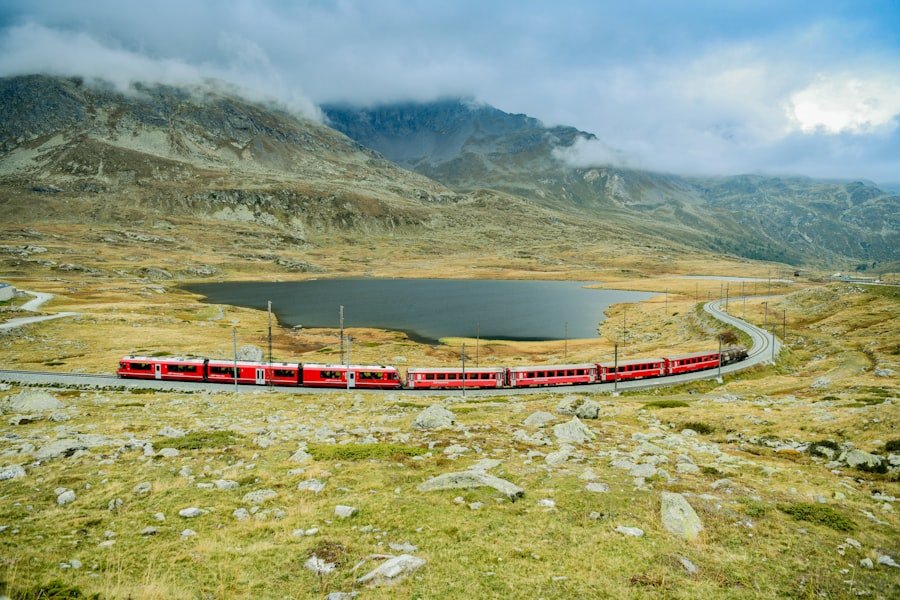
The Bernina Express is not a train to Arosa. Arosa lies on a separate RhB railway from Chur. Bernina Express services instead follow the Albula and Bernina corridors toward St. Moritz, Pontresina, the Bernina Pass, Valposchiavo, and Tirano.
If you begin in Chur, the journey first crosses Graubünden and follows the Albula railway toward the Upper Engadin. One of the most famous structures on this part of the trip is the Landwasser Viaduct near Filisur. RhB lists the curved stone viaduct as 142 meters long and 65 meters high.
The railway then uses tunnels, curves, and viaducts to gain altitude before reaching the Engadin region. Travelers starting in St. Moritz join the journey here rather than riding the Albula section from Chur.
Landwasser Viaduct
The Landwasser Viaduct is one of the signature views on a Chur–Tirano journey. Its stone arches carry the railway across the Landwasser valley before the track enters a tunnel in the rock face. It belongs to the UNESCO-listed Albula railway landscape.
Bernina Massif and Montebello Curve
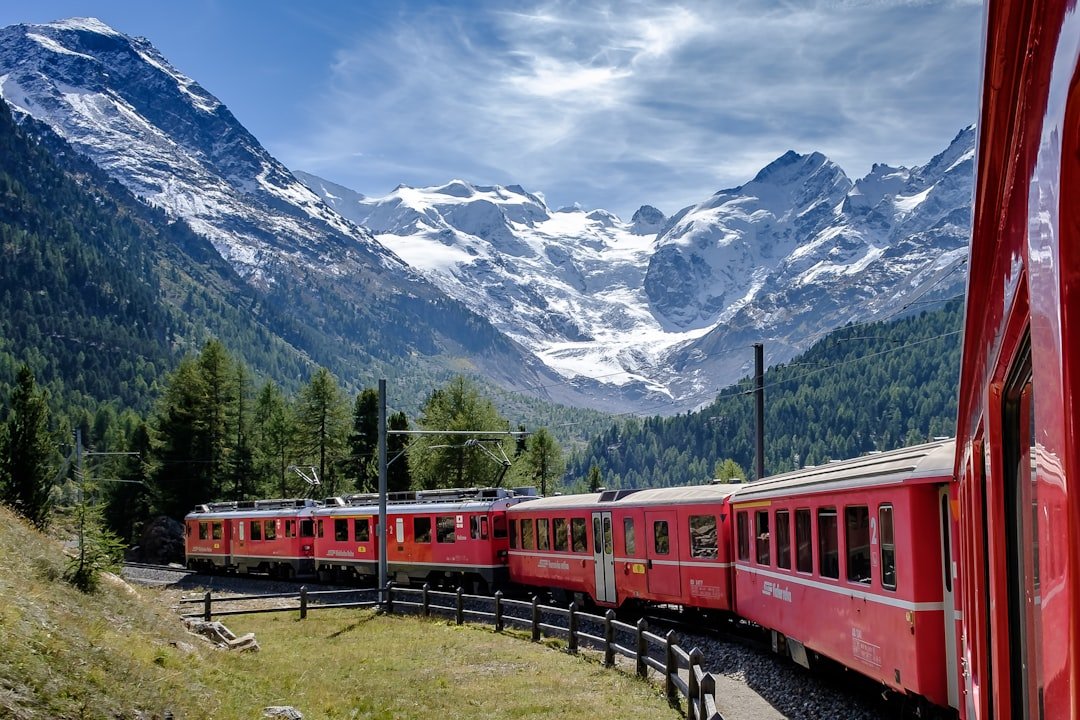
South of the Engadin, the scenery becomes increasingly high-Alpine. The route passes through the Bernina region with views toward glaciers and the Bernina massif. Piz Bernina reaches 4,049 meters and is the highest peak in the Eastern Alps.
Lago Bianco and Ospizio Bernina
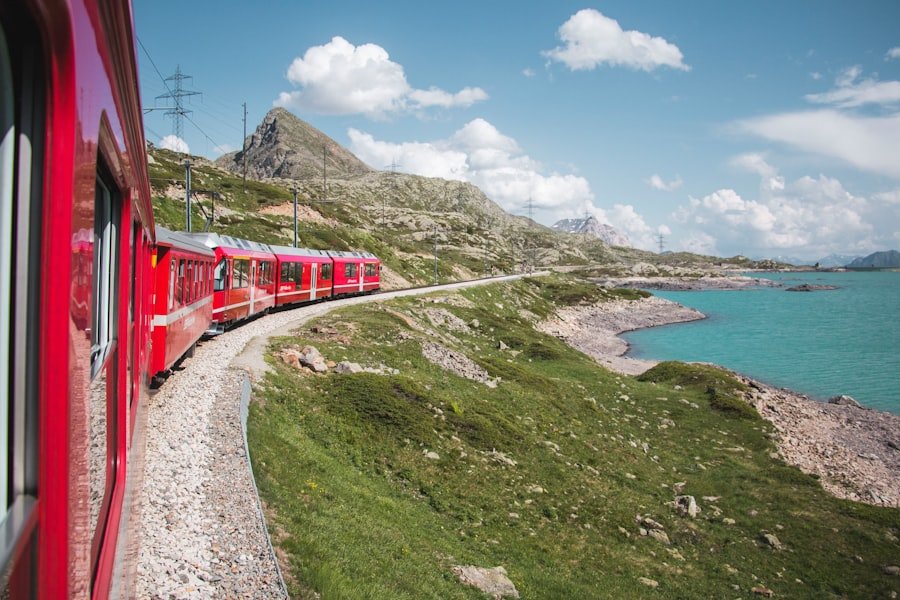
Near the top of the route, Lago Bianco is one of the most recognizable landscapes. The railway reaches Ospizio Bernina at 2,253 meters above sea level, the highest point on the Rhaetian Railway network.
This high point is particularly striking because the train later descends to the much lower landscape around Tirano without using a rack railway.
Alp Grüm and Valposchiavo
After crossing the pass, the train begins its descent toward Valposchiavo. Alp Grüm is a celebrated viewpoint on this side of the Bernina route, with mountain and glacier scenery giving way gradually to greener valleys.
Brusio Circular Viaduct
Farther south, the Brusio Circular Viaduct allows the railway to change elevation through a dramatic open spiral. Passengers can often see other parts of the train curving around the structure.
Arrival in Tirano
The scenery changes again as the train approaches Tirano in Italy. Alpine landscapes give way to a warmer valley environment with vineyards and more Mediterranean vegetation. Tirano can be your final stop or a connection point for onward travel in Italy or for selected Bernina Express Bus journeys toward Lugano.
Bernina Express Tickets, Reservations, and Regional Trains
Understanding the difference between a ticket and a seat reservation is one of the most important parts of planning this trip.
Warning: A travel ticket alone does not guarantee a place in a Bernina Express panoramic car. RhB requires a valid ticket plus a mandatory Bernina Express seat reservation for the panoramic-car journey.
Bernina Express Panoramic Car
The Bernina Express uses panoramic coaches with large windows extending toward the roof. Both first and second class have panoramic windows. First class mainly provides a less dense seating arrangement, wider seats, additional legroom, and more personal space.
If you already have eligible travel coverage such as a Swiss Travel Pass or GA travelcard, you may still need to reserve and pay for the Bernina Express seat separately. Check the conditions applying to your specific pass when booking.
Regional Trains on the Bernina Line
Regular RhB regional trains also operate along the Bernina Line between St. Moritz and Tirano. They travel through the same landscape but do not use Bernina Express panoramic coaches or provide the same onboard service package.
According to RhB, seat reservations on these regional trains are optional rather than mandatory. Regional coaches have conventional windows, and some windows can be opened. That can make regional trains appealing to photographers who want to reduce reflections from glass.
Pro Tip: If Bernina Express panoramic seats are sold out, do not assume you have missed the route. Check the regular RhB timetable. Regional trains use the same Bernina Line between St. Moritz and Tirano and can provide a more flexible journey.
For current booking rules, timetable information, and reservation availability, use the official Rhaetian Railway Bernina Express page.
Tips for Riding the Bernina Express
| Category | Tip |
| Booking | Reserve the Bernina Express panoramic seat early if you need a particular date. Remember that a valid ticket and the seat reservation are separate requirements. |
| Seating | A window position is ideal, but spectacular scenery appears on both sides during different parts of the route. |
| Timing | Choose a departure that keeps most of the scenic journey in daylight and verify the current timetable before travel. |
| Photography | Hold your camera close to the panoramic glass to reduce reflections. A regional train may be preferable if opening windows are important to you. |
| Food | RhB offers snacks and drinks on the Bernina Express, but you should not plan around a full restaurant-car meal. |
Book early when your travel date is fixed, particularly during popular holiday periods. Bernina Express panoramic seats can sell out even when ordinary trains on the railway still have capacity.
Weather in the Alps can change rapidly. Instead of choosing a departure because one time of day is supposedly guaranteed to have clearer skies, check a reliable local forecast close to your travel date and prepare for changing conditions.
Spring, summer, autumn, and winter each create a different experience. Summer offers long daylight hours and greener valleys. Autumn can bring colorful larch forests. Winter emphasizes snow and high-Alpine scenery. Spring conditions vary considerably by elevation because the valleys may already be green while snow remains around the pass.
Which Side Should You Sit On?
There is no single “correct” side for the entire journey. Important scenery appears on both sides, and the train changes direction or orientation depending on the service. A window seat matters more than trying to guarantee one side for every landmark.
Photography Through Panoramic Windows
The panoramic windows are excellent for viewing the landscape but can produce reflections in photographs. Wear darker clothing around your camera, avoid placing bright objects directly behind you, and bring the lens close to the glass without pressing hard against it.
What to Pack for the Bernina Express
You do not need technical hiking equipment simply to ride the Bernina Express, but a few well-chosen items can make the journey more comfortable.
- Layers: Temperatures can differ greatly between Tirano, the Engadin, and the 2,253-meter Bernina high point.
- Light jacket: Useful even when valleys are warm.
- Comfortable shoes: Especially worthwhile if you will walk around Chur, St. Moritz, Pontresina, Poschiavo, or Tirano before or after the train.
- Water: Bring enough for the journey rather than assuming every stop has a refill facility.
- Snacks: Helpful if you want a specific meal or have dietary preferences, even though snacks and drinks are available on the Bernina Express.
- Camera or smartphone: Leave enough storage space and charge the battery before departure.
- Power bank: A useful backup for a long photography-heavy day.
- Sunglasses: Bright snow and high-altitude light can be intense.
- Travel documents: The journey crosses from Switzerland into Italy, so carry the travel documents required for your nationality and itinerary.
Note: RhB says luggage racks are available on the Bernina Express, but storage space is limited. Avoid bringing oversized luggage into the panoramic coach when a smaller bag will meet your needs.
Bicycles, Dogs, and Accessibility
Self-service bicycle transport is not permitted on the Bernina Express panoramic service. RhB advises cyclists to use suitable regional trains on the same route instead.
Dogs are permitted under RhB’s current rules. Small dogs carried in an appropriate transport container may qualify for free travel, while larger dogs require the relevant dog ticket. International pet-document rules can also apply when crossing into Italy.
Some Bernina Express seats are wheelchair accessible. RhB states that these particular spaces must be booked through its Railservice, and passengers who require boarding or alighting assistance should arrange support in advance.
Where to Stay Along the Bernina Express Route
Where you stay depends on whether you want the full Chur experience, an Engadin base, or additional time on the Bernina Line.
Chur
Chur is useful for travelers who want to ride the longer Bernina Express journey and experience the Albula section, including the Landwasser Viaduct. Its old town also makes it practical to arrive the day before an early train.
Hotel Chur is one accommodation option in the city, but compare its current location, room type, cancellation terms, and rates with other hotels before booking rather than choosing purely because of proximity to the railway.
St. Moritz
St. Moritz is convenient if your priority is the Bernina section rather than the full Albula-and-Bernina trip from Chur. It also provides easy access to the Upper Engadin before or after your railway journey.
Kulm Hotel St. Moritz is one of the town’s established luxury properties. Travelers seeking a lower-cost stay will find a broader range of hotels, guesthouses, and apartments elsewhere in St. Moritz and the surrounding Engadin communities.
Pontresina
Pontresina is a strong base for travelers who want to spend more time around the Bernina massif. The village sits close to the railway toward the Bernina Pass and provides access to walking routes and Alpine attractions.
Poschiavo
Poschiavo offers a very different atmosphere from St. Moritz. Staying here lets you slow the journey down and explore Valposchiavo rather than treating the Bernina route as a single continuous train ride.
If you plan to stop overnight and continue later, check whether a Bernina Express panoramic service fits your itinerary or whether regional trains provide a more practical schedule.
Other Activities and Attractions Near the Bernina Express
The railway can be the centerpiece of a larger Graubünden itinerary rather than a stand-alone day trip.
Albula Railway Museum
The Albula Railway Museum in Bergün explores the history and engineering of the Rhaetian Railway and the UNESCO route. It is especially worthwhile if the railway itself is one of your main reasons for taking the trip.
Museum Alpin in Pontresina
Museum Alpin in Pontresina focuses on the mountain environment and Alpine culture, with material related to local flora, fauna, geology, and mountaineering. Opening periods vary seasonally, so check current information before planning a visit.
Hiking and Mountain Excursions
The Engadin and Bernina regions have walks and mountain excursions ranging from easy lakeside routes to serious high-Alpine terrain. If you plan a hike rather than a village walk, check trail conditions, weather, elevation, footwear requirements, and transport schedules separately from your Bernina Express booking.
Winter Sports
St. Moritz and the wider Engadin are major winter-sports destinations. Skiing, winter walking, and other snow activities can be combined with the train journey, but mountain-lift and trail operations vary with weather and season.
Local Food
Regional dishes add another dimension to the trip. In Graubünden you may encounter specialties such as capuns, while the Italian-speaking valleys and Tirano introduce different culinary traditions. Pizzoccheri, a buckwheat-pasta dish strongly associated with nearby Valtellina, is a popular choice on the Italian side of the journey.
Conclusion and Final Thoughts on the Bernina Express
The Bernina Express combines railway engineering, UNESCO-listed landscapes, glaciers, lakes, high mountain passes, and the transition from the Swiss Alps to northern Italy in a single journey. Its value is not simply that it is a panoramic train, but that the railway itself is part of the experience.
For the broadest experience, starting in Chur includes the Albula route and Landwasser Viaduct before reaching the Bernina section. Starting in St. Moritz creates a shorter trip focused on the Bernina Pass, Lago Bianco, Alp Grüm, Valposchiavo, and the descent toward Tirano.
Whichever option you choose, arrange the correct ticket and Bernina Express seat reservation, pack for changing mountain conditions, and check current railway information shortly before departure. If panoramic-car availability or timing does not suit your plans, regional trains offer another way to experience the Bernina Line.
Before booking, check the latest timetable, service notices, ticket conditions, and reservation availability on the official Bernina Express page from Rhaetian Railway.
Frequently Asked Questions
What is the Bernina Express?
The Bernina Express is a panoramic Rhaetian Railway service operating through the Swiss Alps toward Tirano, Italy. Depending on the service, travelers can begin in Chur or St. Moritz. The journey uses the historic Albula and Bernina railway corridors.
What is the route of the Bernina Express?
Longer services operate from Chur toward Tirano and include the Albula railway before continuing through the Engadin and over the Bernina route. Other Bernina Express journeys start in St. Moritz and focus on the section toward the Bernina Pass, Valposchiavo, and Tirano.
How long is the Bernina Express route?
Switzerland Tourism lists the Chur/St. Moritz–Tirano Bernina Express route at about 144 km. A Chur–Tirano journey takes roughly four to four and a half hours depending on the scheduled service, while St. Moritz–Tirano is considerably shorter.
What are the main highlights of the Bernina Express?
Highlights can include the Landwasser Viaduct, Albula railway landscape, Bernina massif, Lago Bianco, Ospizio Bernina, Alp Grüm, Valposchiavo, and the Brusio Circular Viaduct. The exact sequence depends on where you start.
What is the best time to take the Bernina Express?
There is no single best season. Summer offers long daylight and green valleys, autumn can provide colorful foliage, winter emphasizes snow, and spring combines changing conditions at different elevations. Choose according to the scenery and activities you prefer, then check the current timetable.
How can I book tickets for the Bernina Express?
Book through Rhaetian Railway or an authorized rail seller. For the Bernina Express panoramic car, you need both a valid ticket and a mandatory seat reservation. If you already hold an eligible travel pass, check whether it covers the fare while leaving the reservation supplement payable separately.
Is the Bernina Express the same as a regional train?
No. Regional RhB trains use the same Bernina Line between St. Moritz and Tirano but do not use the Bernina Express panoramic coaches or provide the same onboard service. Regional trains can be a useful alternative when panoramic seats are unavailable or when you want a more flexible schedule.
Is a seat reservation required on the Bernina Express?
Yes. RhB requires a seat reservation for travel in a Bernina Express panoramic car in addition to a valid travel ticket. Reservations on regular Bernina Line regional trains are optional.
Which side of the Bernina Express has the best views?
Both sides have excellent views at different points, so no single side is best for the entire journey. A window position is generally more important than choosing one particular side.
Can I take a bicycle on the Bernina Express?
Self-service bicycle transport is not permitted on the Bernina Express panoramic service. RhB recommends using suitable regional trains when traveling with a bicycle on the same railway corridor.
Is the Bernina Express wheelchair accessible?
Some Bernina Express seats are wheelchair accessible. RhB requires these spaces to be booked through Railservice, and boarding or alighting assistance should be arranged in advance when needed.
Sources
- Rhaetian Railway: Bernina Express — route, bridges and tunnels, journey times, panoramic cars, luggage, accessibility, bicycles, dogs, food, and booking information.
- UNESCO World Heritage Centre: Rhaetian Railway in the Albula/Bernina Landscapes — World Heritage status, railway history, route lengths, and engineering significance.
- Rhaetian Railway: History — opening of the Bernina Line and its later takeover by RhB.
- Rhaetian Railway: Infrastructure — Ospizio Bernina elevation and railway infrastructure figures.
- Rhaetian Railway: Bernina Express or Regional Train? — mandatory panoramic-car reservation and differences from regional services.
- Switzerland Tourism: Scenic Train Journeys — Bernina Express route and distance information.