

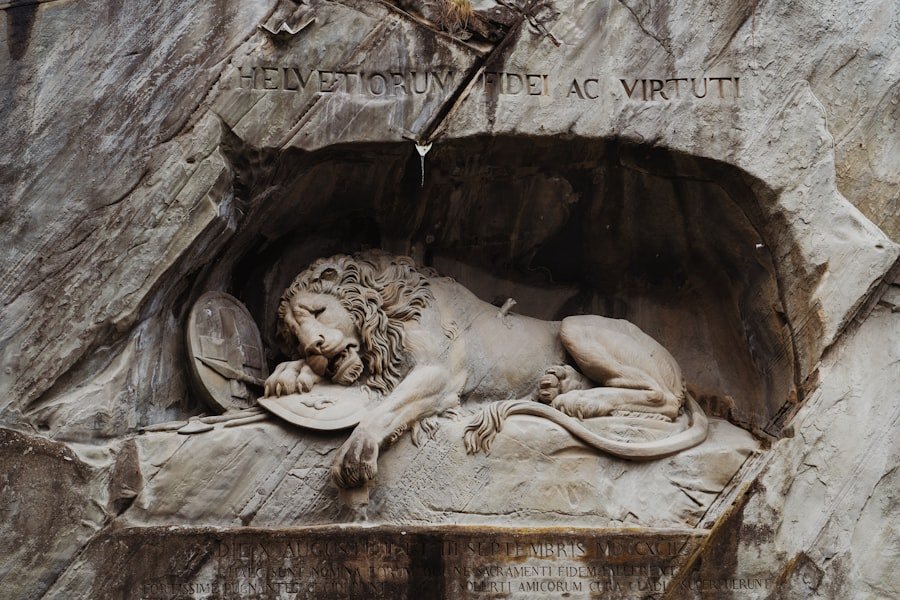
Nestled in the heart of Lucerne, Switzerland, the Lion Monument stands as a poignant tribute to the valor and sacrifice of Swiss Guards who lost their lives during the French Revolution. Carved into a sandstone rock face, this remarkable sculpture depicts a dying lion, symbolizing courage and loyalty. The monument is not merely a work of art; it encapsulates a profound narrative of bravery and tragedy, making it a significant landmark for both locals and tourists alike.
As visitors approach the monument, they are often struck by the lion’s expression, which conveys a deep sense of sorrow and resignation, evoking empathy and reflection. The Lion Monument, also known as the “Lion of Lucerne,” was commissioned in 1792 by the city of Lucerne to honor the Swiss Guards who were massacred in 1792 while defending King Louis XVI during the insurrection in Paris. The sculpture was designed by Danish artist Bertel Thorvaldsen and executed by local sculptor Lukas Ahorn.
Its creation was not only an artistic endeavor but also a cultural statement, reflecting the values of loyalty and sacrifice that resonate deeply within Swiss history. The monument has since become an iconic symbol of Lucerne, attracting thousands of visitors each year who come to pay their respects and appreciate its artistic merit.
Key Takeaways
- The Lion Monument in Lucerne, Switzerland, is a famous tourist attraction that commemorates Swiss Guards who died during the French Revolution.
- The monument holds historical significance and is a symbol of bravery and sacrifice, making it a must-visit for history enthusiasts.
- The Lion Monument is easily accessible by foot, public transportation, or car, and is located near the Old Town of Lucerne.
- Visitors can expect to see a stunning sculpture of a dying lion carved into a rock face, surrounded by beautiful natural scenery.
- When visiting the Lion Monument, it’s important to be respectful of the site and considerate of other visitors, as it is a place of remembrance and reflection.
History and significance of the Lion Monument
The history of the Lion Monument is intertwined with the tumultuous events of the late 18th century, particularly the French Revolution. In 1792, a contingent of Swiss Guards was tasked with protecting King Louis XVI and his family during a period of extreme political upheaval. When revolutionaries stormed the Tuileries Palace, many Swiss Guards were brutally killed in what became known as the Massacre of the Swiss Guards.
The decision to create a monument in Lucerne was driven by both a sense of national pride and a commitment to honor those who had shown unwavering loyalty. The Lion Monument was unveiled in 1821, and its design reflects both classical influences and Romantic ideals.
The lion, carved with meticulous detail, is depicted lying on a shield emblazoned with the fleur-de-lis, symbolizing France. The sculpture’s poignant expression captures the essence of sacrifice, as it appears to be succumbing to its wounds while still embodying strength and dignity. This duality has made the Lion Monument not only a memorial but also a powerful symbol of resilience in the face of adversity.
How to get to the Lion Monument
Reaching the Lion Monument is relatively straightforward, thanks to Lucerne’s well-developed public transportation system. For those arriving by train, Lucerne’s main railway station is conveniently located just a short walk from the monument. Upon exiting the station, visitors can follow signs directing them toward the Old Town area, where the monument is situated.
The scenic walk takes approximately 15 minutes and offers glimpses of Lucerne’s charming architecture and picturesque lake views along the way. For those preferring to use public transport, several bus lines service stops near the Lion Monument.
Alternatively, visitors can opt for a leisurely stroll along Lake Lucerne’s promenade, which not only leads directly to the monument but also allows for breathtaking views of the surrounding mountains and water. This approach enhances the overall experience, as it immerses visitors in Lucerne’s natural beauty before they arrive at this historical site.
What to expect when visiting the Lion Monument
| Aspect | Information |
|---|---|
| Location | Lucerne, Switzerland |
| History | Commemorates Swiss Guards who were massacred during the French Revolution |
| Artist | Bertel Thorvaldsen |
| Size | 10 meters long, 6 meters high |
| Material | Sandstone |
| Visitor Experience | Quiet and contemplative atmosphere |
| Accessibility | Wheelchair accessible |
Upon arrival at the Lion Monument, visitors are greeted by an impressive sight that commands attention. The sculpture itself measures about 10 meters long and 6 meters high, carved into a sandstone rock face that adds to its dramatic presence. The lion’s expression is one of profound sorrow, with its body partially embedded in the rock, creating an illusion that it is both part of nature and a standalone work of art.
Surrounding the monument is a tranquil park area where visitors can sit on benches or stroll along pathways, allowing for moments of reflection amidst the hustle and bustle of tourism. The atmosphere around the Lion Monument is often filled with reverence as people from diverse backgrounds gather to pay their respects. Many visitors take time to read the inscriptions that accompany the sculpture, which provide context about its historical significance.
Photographers frequently capture images of this iconic landmark, attempting to encapsulate its emotional weight and artistic beauty. The site is particularly enchanting during early morning or late afternoon when sunlight casts soft shadows on the lion’s form, enhancing its dramatic features.
Tips for visiting the Lion Monument
To make the most of your visit to the Lion Monument, consider timing your trip during off-peak hours. Early mornings or late afternoons tend to be less crowded, allowing for a more intimate experience with this poignant sculpture. Additionally, visiting during these times provides optimal lighting for photography, capturing the monument in its most flattering light.
It’s advisable to bring a camera or smartphone to document your visit; however, be mindful of other visitors who may also wish to take photographs. Another tip is to combine your visit with a guided tour that delves into Lucerne’s rich history. Many local guides offer insights not only about the Lion Monument but also about other historical sites in Lucerne.
This can enhance your understanding of the cultural context surrounding the monument and provide a more enriching experience overall. Lastly, wear comfortable shoes as you may want to explore nearby attractions after visiting the monument; Lucerne’s cobblestone streets can be uneven and require some walking.
Nearby attractions and activities
The Lion Monument is conveniently located near several other attractions that enrich any visit to Lucerne. Just a short walk away lies the Chapel Bridge (Kapellbrücke), one of Switzerland’s most photographed landmarks. This wooden bridge dates back to the 14th century and features beautiful paintings that depict historical events significant to Lucerne’s history.
Strolling across this bridge offers not only stunning views of Lake Lucerne but also an opportunity to immerse oneself in local culture. Another nearby attraction is the Richard Wagner Museum, situated in the former residence of composer Richard Wagner. This museum showcases Wagner’s life and works through various exhibits and artifacts, providing insight into his influence on music and culture during his time.
For those interested in nature, taking a boat trip on Lake Lucerne can be an unforgettable experience. The lake is surrounded by majestic mountains, including Mount Pilatus and Mount Rigi, both accessible via cogwheel trains or cable cars for those seeking panoramic views.
The best time to visit the Lion Monument
Determining the best time to visit the Lion Monument largely depends on personal preferences regarding weather and crowd levels. Spring (April to June) is often considered an ideal time due to mild temperatures and blooming flowers that enhance the beauty of Lucerne’s parks and gardens. During this season, visitors can enjoy pleasant weather while exploring outdoor attractions without facing large crowds.
Summer (July to August) brings warmer temperatures and longer days, making it an excellent time for outdoor activities around Lake Lucerne. However, this season also attracts many tourists, which can lead to crowded conditions at popular sites like the Lion Monument. If you prefer fewer crowds while still enjoying warm weather, consider visiting during early autumn (September to October).
The fall foliage adds an extra layer of beauty to your experience as you explore Lucerne’s scenic landscapes.
Conclusion and final thoughts
The Lion Monument stands as a testament not only to artistic achievement but also to historical memory and national pride. Its emotional depth resonates with visitors from around the world who come to reflect on themes of sacrifice and loyalty embodied by this magnificent sculpture. As part of a broader exploration of Lucerne’s rich cultural landscape, visiting this monument offers insights into Switzerland’s complex history while providing an opportunity for personal reflection amidst stunning natural beauty.
Whether you are drawn by history, art, or simply seeking a moment of tranquility in a bustling city, the Lion Monument promises an enriching experience that lingers long after your visit has ended. With its strategic location near other attractions and its profound significance, it serves as both a starting point for further exploration and a destination worthy of contemplation in its own right.
If you’re planning a visit to the iconic Lion Monument in Lucerne, Switzerland, you might also be interested in exploring other cultural and culinary experiences during your trip. For instance, you can delve into the delightful world of Asian melon, which offers a refreshing taste of the region’s unique flavors. This can be a perfect addition to your travel itinerary, providing a blend of historical and gastronomical exploration. For more information on this topic, check out this related article: Exploring the Delightful World of Asian Melon.
FAQs
What is the Lion Monument?
The Lion Monument is a famous sculpture in Lucerne, Switzerland, which commemorates the Swiss Guards who were massacred during the French Revolution.
How do I get to the Lion Monument?
The Lion Monument is located in Lucerne, Switzerland, and can be easily reached by public transportation or on foot from the city center.
What are the opening hours of the Lion Monument?
The Lion Monument is open to visitors 24 hours a day, 7 days a week, and there is no admission fee to view the sculpture.
Is there a guided tour available for the Lion Monument?
There are guided tours available for the Lion Monument, which provide visitors with historical information and context about the sculpture and its significance.
What should I expect when visiting the Lion Monument?
Visitors can expect to see a large, impressive sculpture of a dying lion carved into a rock face, surrounded by a peaceful park area.
Are there any restrictions or guidelines for visiting the Lion Monument?
There are no specific restrictions for visiting the Lion Monument, but visitors are encouraged to be respectful of the site and its historical significance.