Beyoglu is one of Istanbul’s most rewarding districts to explore on foot because major landmarks, historic passages, museums, cafés, shopping streets, and waterfront neighborhoods sit within a relatively compact area. A practical walking tour can begin at Taksim Square, follow İstiklal Avenue to Tünel, continue through the sloping streets of Galata, and finish around Karaköy on the Bosphorus waterfront.
Quick Answer
A self-guided walking tour of Beyoglu works well from Taksim Square down İstiklal Avenue to Tünel, then through Galata to Galata Tower and Karaköy. Allow about 3–4 hours with sightseeing stops. Expect busy pedestrian areas, tram tracks, hills, and some uneven stone streets, so comfortable walking shoes are important.
Key Takeaways
- The easiest core route is Taksim Square → İstiklal Avenue → Tünel → Galata Tower → Karaköy.
- İstiklal Avenue runs between Taksim and Tünel; Galata Tower is reached after leaving the avenue and continuing through Galata.
- Beyoglu combines Ottoman-era and late-19th-century architecture with museums, galleries, cinemas, cafés, restaurants, and modern cultural spaces.
- Istanbul Modern now occupies a purpose-built Renzo Piano-designed museum on the Karaköy waterfront that opened in 2023.
- Opening hours, exhibitions, and public-transport service can change, so check official attraction and IETT information on the day of your visit.
At a Glance
| Time Required | About 3–4 hours for the main walk with stops; longer if you enter museums, climb Galata Tower, or stop for a full meal. |
| Difficulty | Easy to moderate. The route is urban but includes slopes, cobblestones, paving stones, and tram tracks. |
| Tools Needed | Comfortable shoes, water, a phone map, and optionally an Istanbulkart for tram, metro, funicular, or other public transport. |
| Cost | Walking the route is free. Museum admission, Galata Tower entry, food, drinks, and public transportation are separate. |
Self-Guided Walking Tour of Beyoglu
This route follows the natural downhill direction from Taksim toward Karaköy, reducing some of the climbing you would face in the opposite direction. The exact distance varies with side-street detours, but most visitors can comfortably turn the route into a half-day outing.
1. Start at Taksim Square
Begin at Taksim Square, one of central Istanbul’s best-known transport and meeting points. From here, enter İstiklal Avenue and begin walking southwest toward Tünel. Starting here also makes it easy to arrive by metro or other public transportation before switching to walking.
2. Walk down İstiklal Avenue
İstiklal Avenue is the main pedestrian spine of the first part of the route. Its architecture reflects several periods of Istanbul’s urban history, while shops, restaurants, churches, cultural institutions, historic passages, and entertainment venues occupy buildings along and around the street.
The red nostalgic tram also travels along the Taksim–Tünel corridor. According to IETT’s history of the nostalgic tram, the restored Tünel–Taksim service returned at the end of 1990.
3. Pause around Çiçek Pasajı and Atlas 1948
Several worthwhile stops sit directly on or just off İstiklal. Çiçek Pasajı is a historic passage whose name recalls an earlier period when flower sellers worked there. Today, it is better known for restaurants and meyhanes than for flower shopping.
Nearby, Atlas 1948 is part of the restored Atlas complex and Istanbul Cinema Museum. The venue continues to host film-related cultural activity on İstiklal Avenue, making it a more relevant entertainment stop than venues that have since relocated outside Beyoglu.
4. Reach Tünel Square
İstiklal Avenue ends around Tünel rather than at Galata Tower. At this point, you can continue walking through Galata or use the historic F2 Tünel funicular if you need to travel between upper Beyoglu and Karaköy.
Note: T2 nostalgic tram and F2 Tünel services can sometimes be temporarily suspended because of official traffic or security arrangements. Check IETT before relying on either service.
5. Continue through Galata to Galata Tower
From Tünel, continue through the sloping streets of Galata toward Galata Tower. The official Galata Tower museum page describes the tower as a Genoese structure built in the mid-14th century as part of Galata’s fortifications.
The streets around the tower contain cafés, small shops, restaurants, and steep lanes. If you plan to enter the tower, allow additional time beyond the basic walking itinerary and check current visiting information before you arrive.
6. Finish in Karaköy and Istanbul Modern
After Galata Tower, continue downhill toward Karaköy. This final section brings you to the waterfront and gives the walking tour a clear finish rather than requiring you to retrace your steps uphill.
One of the area’s major cultural attractions is Istanbul Modern. The museum’s current Renzo Piano-designed building opened at its original Karaköy waterfront location on May 4, 2023. It replaced the older museum arrangement associated with the former Antrepo No. 4 warehouse and provides purpose-built galleries, educational spaces, a library, an auditorium, and waterfront views.
Pro Tip: Walking from Taksim toward Karaköy makes most of the overall route downhill. If you begin near Karaköy instead, the historic Tünel funicular can help you avoid part of the steep climb toward upper Beyoglu.
Historical Landmarks in Beyoglu
Beyoglu contains layers of Genoese, Ottoman, and later urban history. Galata Tower is the most recognizable medieval landmark on this walking route. Built by the Genoese in the mid-14th century, it formed part of the historic Galata fortifications and remains one of the district’s defining landmarks.
Farther uphill, the late Ottoman character of Beyoglu becomes especially visible around İstiklal, Pera, and Tepebaşı. Pera Palace is one well-known example. The hotel began its history in 1895 after construction started in the early 1890s, originally serving travelers associated with the Orient Express era.
İstiklal Avenue itself is also an important historical corridor. Rather than being a single monument, it brings together historic passages, churches, former embassy buildings, hotels, cultural venues, theaters, cinemas, and commercial buildings that show how the district developed over time.
Famous Streets and Neighborhoods
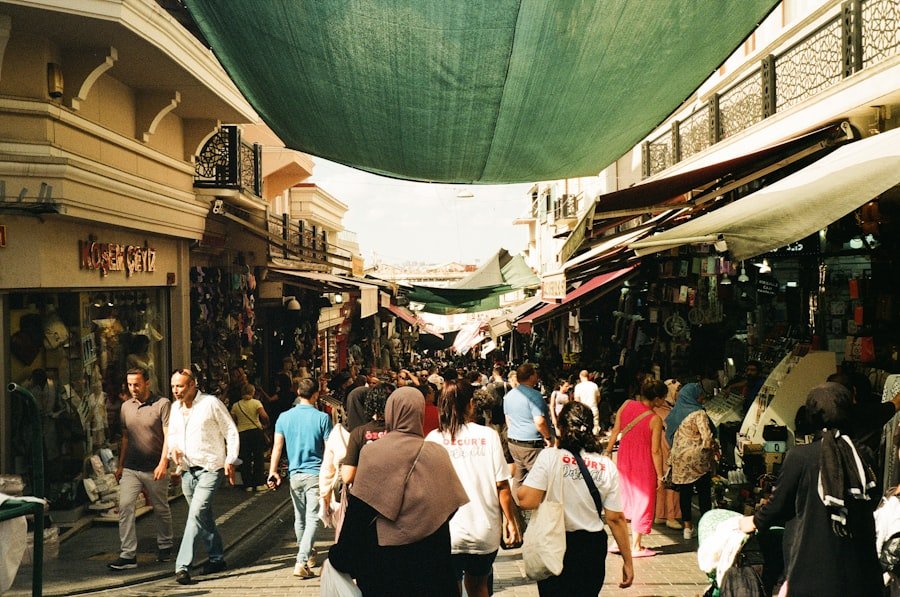
İstiklal Avenue is the most famous walking street in Beyoglu and forms the backbone of this itinerary. It runs from the Taksim area toward Tünel, where walkers can continue through Galata toward Galata Tower and Karaköy.
Side streets provide much of Beyoglu’s character. Around Asmalımescit and Pera, you will find restaurants, historic buildings, galleries, hotels, and cultural institutions. Galata’s narrower and steeper streets feel different again, with the tower acting as the neighborhood’s main visual landmark.
Cihangir is an attractive optional detour rather than a direct stop on the Taksim–Tünel–Galata route. Its residential streets are known for independent cafés, shops, and a relaxed neighborhood atmosphere. Some streets and viewpoints also open toward the Bosphorus, although adding Cihangir will increase both your walking distance and the number of hills.
Cultural and Artistic Attractions
Beyoglu remains one of Istanbul’s major cultural districts. Istanbul Modern is a leading modern and contemporary art institution on the Karaköy waterfront. Its current building was designed by Renzo Piano Building Workshop and opened in 2023, so older descriptions of the museum simply being housed in a converted warehouse are now outdated.
Another important stop is the Pera Museum in Tepebaşı. The museum opened in 2005 inside the former Bristol Hotel building and maintains permanent collections alongside temporary exhibitions, film programs, and educational events.
Independent galleries and project spaces are scattered through Galata, Karaköy, Pera, and other parts of Beyoglu. Their exhibitions change frequently, which means a current gallery search can add unexpected stops to a walking tour.
The Istanbul Biennial also uses changing venues across the city, including many Beyoglu locations in past editions. It is not an annual event. The 18th edition concluded after its 2025 program, while the 19th Istanbul Biennial is scheduled for 2027. Check the official İKSV Biennial website rather than assuming an exhibition is running during your visit.
Culinary Delights of Beyoglu
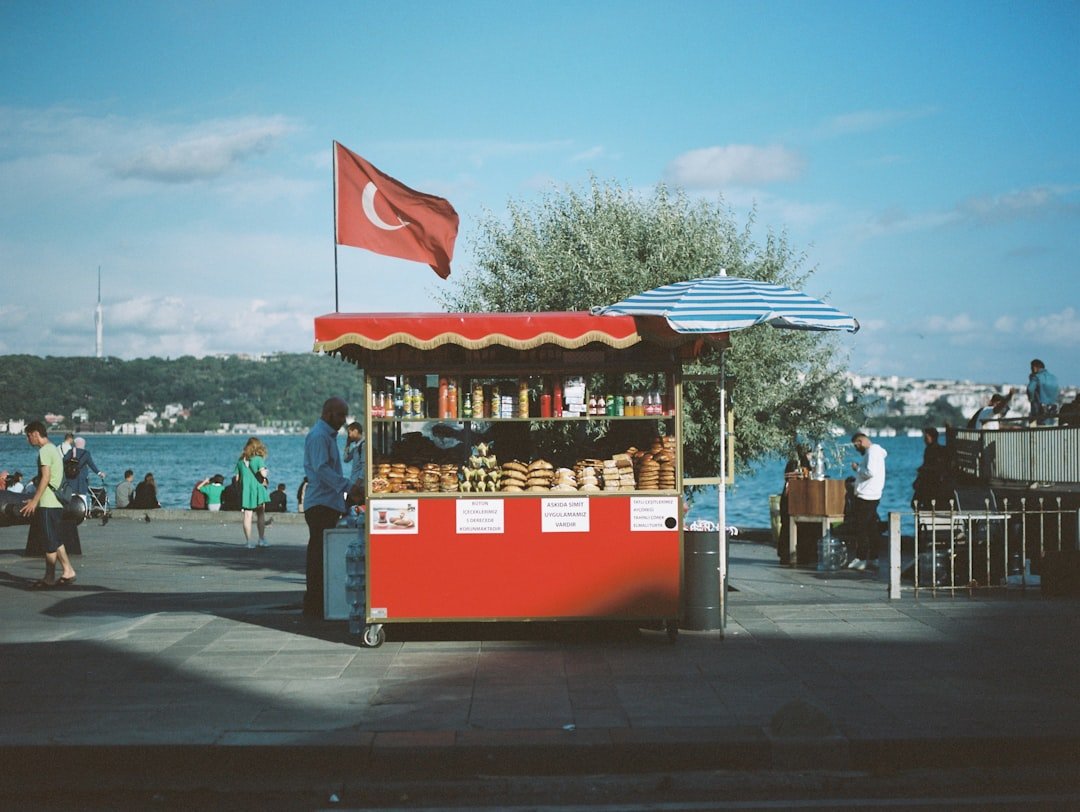
Food is easy to build into a Beyoglu walking tour because the route passes everything from bakeries and quick street-food counters to meyhanes, cafés, contemporary restaurants, and dessert shops. Simit is convenient when you want a light snack without interrupting the walk, while a longer meal can be saved for the side streets around İstiklal, Asmalımescit, Galata, or Karaköy.
Meze is particularly associated with social dining rather than a single dish. A table may include several small plates served together, making it a better choice when you have time for a proper break. Kebabs, grilled dishes, seafood, pastries, Turkish coffee, and desserts are also widely available across the district.
Beyoglu also has international restaurants and modern cafés, so visitors do not need to follow a rigid food checklist. A better approach is to choose a break that fits the point you have reached on the walking route.
If you want a food stop without losing momentum, pause near İstiklal or Galata for something quick and save a longer meal for Karaköy at the end of the walk. This keeps the route practical while still leaving time to enjoy the district’s café and restaurant culture.
Shopping and Entertainment Options
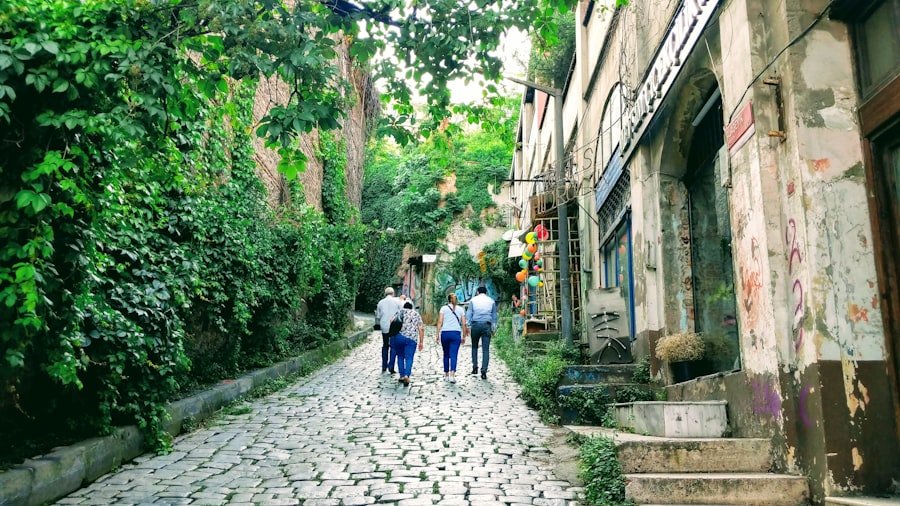
İstiklal Avenue contains international retailers, Turkish brands, bookstores, music shops, specialty stores, and entrances to historic passages. The side streets generally offer more independent shops and can be more interesting for travelers looking for locally distinctive items.
Çiçek Pasajı is worth entering for its architecture and atmosphere, but it should not be described as a modern flower-shopping center. Flower sellers are part of the passage’s history; restaurants and meyhanes became its dominant use over time.
Entertainment options include cinemas, theaters, live performances, exhibitions, and cultural events. Atlas 1948 on İstiklal Avenue is part of the restored Atlas complex and Istanbul Cinema Museum, which reopened after restoration in 2021 and continues to function as a cinema and cultural venue.
Evening activity varies considerably from one street to another. If nightlife is part of your plan, check the current program of individual venues rather than relying on older recommendations, because well-known Istanbul music venues can relocate between districts.
Best Time for a Beyoglu Walking Tour
Late morning is a good choice if you want to see the district before the busiest evening period while still arriving after shops, museums, and cafés begin opening. Late afternoon can also be enjoyable if you want to finish around Galata or Karaköy near sunset and continue into dinner.
Weekends and evenings can be crowded on İstiklal Avenue. If photography, slower walking, or easier navigation matters more than nightlife, start earlier in the day.
Rain changes the experience because stone paving, slopes, and tram tracks can become slippery. Summer heat can also make the exposed parts of the route more tiring, so carrying water and planning indoor breaks is useful.
Tips for a Successful Walking Tour
Wear shoes with good grip. Much of the route is straightforward, but Galata includes sloping streets, and surfaces can change between modern paving, older stone, steps, and tram rails.
Warning: Watch your footing on steep or wet stone streets and when crossing tram rails. Around Karaköy, use proper pedestrian crossings and stay alert to vehicle traffic as you leave pedestrian-only areas.
Carry water, but do not overpack. Cafés and shops are frequent along most of the route, so this is not a walk that requires hiking equipment.
Use a phone map for side streets while remembering the simple orientation: Taksim to İstiklal, İstiklal to Tünel, Tünel through Galata to Galata Tower, and then downhill to Karaköy.
If mobility is limited, plan individual segments rather than assuming the whole route is step-free. Hills, older paving, narrow sidewalks, and building entrances can create accessibility challenges. Public transportation can help bypass some elevation changes.
On crowded streets, use normal big-city precautions with phones, wallets, and bags. Keep valuables secure and stay aware of your surroundings, especially where pedestrian congestion is heavy.
Conclusion and Final Thoughts
A walking tour of Beyoglu works best when it is treated as a connected route rather than a checklist of unrelated attractions. Starting at Taksim, following İstiklal to Tünel, continuing through Galata, and ending in Karaköy creates a logical progression through several different sides of the district.
Along the way, you can combine medieval Galata, late Ottoman-era streets and passages, museums, cinemas, cafés, restaurants, shopping, and contemporary cultural spaces. Optional detours such as Cihangir can make the walk longer, while the nostalgic tram, metro, and historic Tünel provide useful alternatives when you want to reduce the amount of walking.
The most important practical step is to check current opening hours, exhibition schedules, and transportation notices before setting out. With that small amount of planning, Beyoglu is well suited to a flexible half-day walk that can be adjusted around your interests, energy level, and available time.
Frequently Asked Questions
What is Beyoglu?
Beyoglu is a district on Istanbul’s European side that includes areas such as Taksim, Pera, Galata, Cihangir, and Karaköy. It is known for historic architecture, museums, cultural venues, shopping streets, cafés, restaurants, and nightlife.
What is a walking tour of Beyoglu?
A Beyoglu walking tour is a guided or self-guided route through the district’s main streets, historic sites, cultural attractions, and neighborhoods. A practical self-guided route runs from Taksim Square along İstiklal Avenue to Tünel, then through Galata to Galata Tower and Karaköy.
What are the main highlights of a walking tour of Beyoglu?
Popular highlights include Taksim Square, İstiklal Avenue, historic passages such as Çiçek Pasajı, Pera-area cultural venues, Tünel, Galata Tower, the streets of Galata, Karaköy, and Istanbul Modern.
How long does a walking tour of Beyoglu take?
Allow about 3–4 hours for a relaxed Taksim-to-Karaköy walk with sightseeing and short breaks. Entering museums, climbing Galata Tower, shopping, or having a full meal can turn it into a longer half-day or full-day outing.
Are guided walking tours available in Beyoglu?
Yes. Private and group walking tours operate in central Istanbul, including routes through Beyoglu and Galata. Compare the current itinerary, duration, language, included admissions, and meeting point before booking.
Is Beyoglu suitable for walking?
The central route is highly walkable, but parts of Galata and the approach to Karaköy are hilly. Wear supportive shoes, watch for tram tracks and uneven surfaces, and use normal big-city precautions in crowded areas.
Where should I start and finish the walk?
Starting at Taksim Square and finishing in Karaköy is convenient because much of the overall route trends downhill. Karaköy also provides onward access to waterfront transportation and other parts of central Istanbul.
Is the Beyoglu walking route wheelchair or stroller friendly?
İstiklal Avenue is relatively straightforward, but the complete route is not uniformly step-free. Steep Galata streets, older paving, narrow sidewalks, and individual building entrances can be challenging. Check accessibility for specific museums and use public transport to bypass difficult sections when necessary.
Sources
- Türkiye Ministry of Culture and Tourism — Galata Tower — tower history and official visitor information.
- Istanbul Modern — Museum History — current Karaköy building and 2023 reopening.
- Pera Museum — About — museum history, building, and collections.
- IETT — Nostalgic Tram — Taksim–Tünel tram history and route context.
- Türkiye Ministry of Culture and Tourism — Atlas 1948 Istanbul Cinema Museum — restoration and cultural use of the Atlas complex.
- İKSV Istanbul Biennial — current Biennial announcements, editions, dates, and programs.