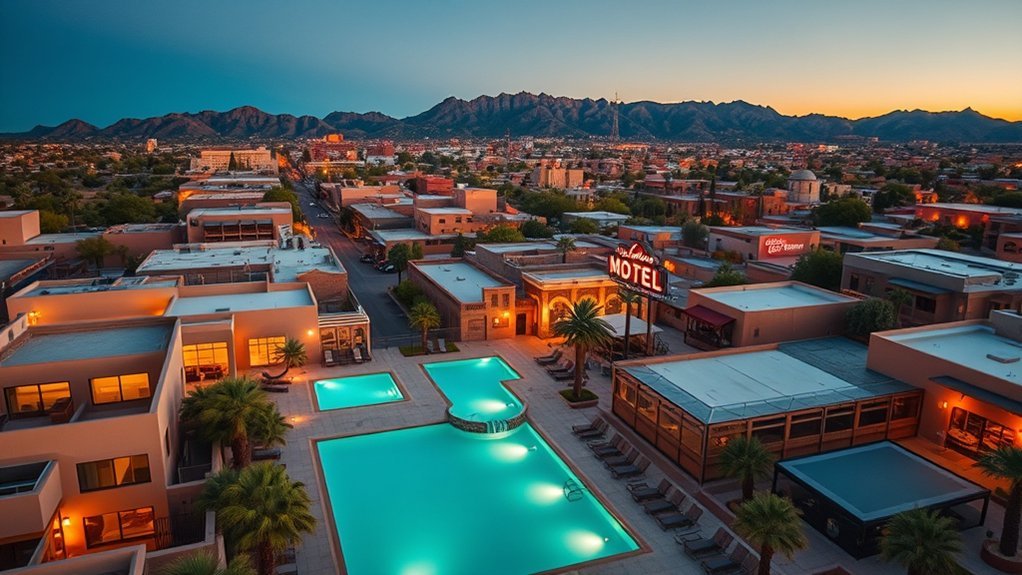
Where you stay in Tucson can change the feel of your entire trip. Downtown works well for restaurants, nightlife, events, and a more car-light visit, while the Catalina Foothills and Oro Valley make more sense for resorts, mountain views, golf, and outdoor-focused days. The best choice depends on what you want close to your hotel, how much driving you are comfortable with, and whether quiet nights or walkable entertainment matter more.
Quick Answer
For most first-time visitors, Downtown Tucson is the easiest all-around base for dining, nightlife, events, and streetcar access. Choose Fourth Avenue or the University area for a lively local atmosphere, Catalina Foothills for upscale resorts and mountain access, Oro Valley for a quieter resort stay, or West Tucson when west-side desert attractions are your priority.
Key Takeaways
- Downtown Tucson is the strongest all-around choice for first-time visitors who value restaurants, entertainment, events, and easier transit.
- Fourth Avenue and the University area suit travelers who want independent shops, bars, campus activity, and the Sun Link streetcar corridor.
- Catalina Foothills is better for upscale resorts, mountain views, and access toward Sabino Canyon and the Santa Catalina Mountains.
- Oro Valley works well for resorts, golf, Catalina State Park access, and travelers who do not mind driving into central Tucson.
- Compare the total stay cost, not just the room rate. Parking, resort charges, pet fees, breakfast, and cancellation rules can materially change the final price.
Tucson Area Comparison
| Area | Best For | Main Advantage | Main Tradeoff |
|---|---|---|---|
| Downtown | First visits, nightlife, dining, events | Walkable entertainment and streetcar access | Nightlife noise and paid hotel parking can matter |
| Fourth Avenue | Local character, bars, cafés, shopping | Between downtown and the University | Fewer obvious hotel choices directly on the avenue |
| University / Main Gate | Campus visits, sports, museums, student energy | Walkable access to the University of Arizona | Can be busy during major university events |
| Catalina Foothills | Resorts, couples, mountain views, hiking | Upscale lodging near the Santa Catalina Mountains | A car is useful for most sightseeing |
| Oro Valley | Quiet resorts, golf, Catalina State Park | Relaxed setting north of central Tucson | Longer drive to downtown nightlife and attractions |
| West Tucson | West-side desert attractions and road trips | Convenient positioning for the Tucson Mountains area | Less convenient for a nightlife-focused trip |
Best Neighborhoods to Stay in Tucson by Vibe and Budget

Tucson is spread out, so the best neighborhood is usually the one that reduces travel to the places you care about most. The city’s tourism organization highlights distinct districts including Downtown, Fourth Avenue, the University area, and Catalina Foothills, each with a different mix of restaurants, entertainment, culture, and outdoor access. You can review the official Visit Tucson district guide while comparing locations.
Downtown Tucson: Best for First-Time Visitors and Nightlife
Stay downtown if you want restaurants, bars, theaters, event venues, and cultural attractions close to your hotel. It is one of the easiest bases for travelers who would rather walk, use the streetcar, or take occasional rideshares than drive for every meal.
The tradeoff is energy. A room near entertainment venues may come with more street or nightlife noise, and hotel parking can add to the total cost of your stay. If you are a light sleeper, check recent room reviews and ask whether quieter rooms are available before booking.
Fourth Avenue: Best for Indie Shops and a Lively Local Feel
Historic Fourth Avenue sits between Downtown Tucson and the University of Arizona area. Visit Tucson describes it as a colorful district filled with independent shops, cafés, restaurants, bars, vintage stores, and nightlife. The official Fourth Avenue guide is useful for seeing what is concentrated along the corridor.
Note: Fourth Avenue is an excellent place to spend evenings, but you do not have to find a room directly on the avenue. A hotel downtown or near the University can still provide convenient access through the Sun Link streetcar corridor.
University, Main Gate Square, and Sam Hughes: Best for Campus Trips
Choose the University area when your plans revolve around the University of Arizona, Arizona Stadium, campus museums, Main Gate Square, or university events. Visit Tucson describes the campus as a walkable activity center with museums, arts, sports, dining, and nearby Main Gate Square.
Sam Hughes, east of campus, has more of a residential neighborhood feel. It can suit travelers looking for a quieter atmosphere near the university, but it does not have the same concentration of conventional hotels as the major commercial districts. Compare exact addresses instead of assuming every property labeled “University area” is equally walkable.
Catalina Foothills: Best for Resorts, Views, and Outdoor Access
The Catalina Foothills are a strong fit if your ideal Tucson stay includes mountain views, pools, golf, resort amenities, restaurants, and easier access toward the Santa Catalina Mountains. Visit Tucson describes the area as a mix of Sonoran Desert scenery, dining, galleries, shopping, golf, and upscale experiences.
This is usually a better choice for travelers with a car. You gain a quieter, more resort-oriented setting but give up some of downtown’s walkability.
Oro Valley: Best for a Quieter Resort Stay
Oro Valley sits north of central Tucson near the Santa Catalina Mountains. It works particularly well for travelers focused on golf, resort time, Catalina State Park, and quieter evenings. It is less convenient if you expect to spend every night downtown, so factor driving time into your decision.
West Tucson: Best for West-Side Desert Attractions
West Tucson can make sense when your itinerary emphasizes the Tucson Mountains and attractions on the western side of the metro area. It is more of a driving-oriented choice than a nightlife base, so it works best when access to desert scenery matters more than walking to restaurants after dark.
Do not assume West Tucson is automatically the cheapest part of the city. Hotel and vacation-rental prices change with dates, events, property type, and amenities, so compare actual total prices for your travel dates.
What About Rincon Heights?
Rincon Heights is close to the University of Arizona and has a more residential character, but it is not one of Tucson’s main hotel clusters. It can work if you find a suitable small lodging or vacation rental, yet travelers comparing conventional hotels will usually find more choices around downtown, the University/Main Gate area, the foothills, and major commercial corridors.
Warning: If hiking is a major reason for choosing the Catalina Foothills, Oro Valley, or another outdoor-focused base, plan around Tucson’s desert heat. National Weather Service climate normals put average summer daily highs around 100°F, and Saguaro National Park advises summer hikers to avoid the hottest part of the day, carry substantial water, and watch for monsoon-related flash flooding.
Top Hotels and Where to Book Them
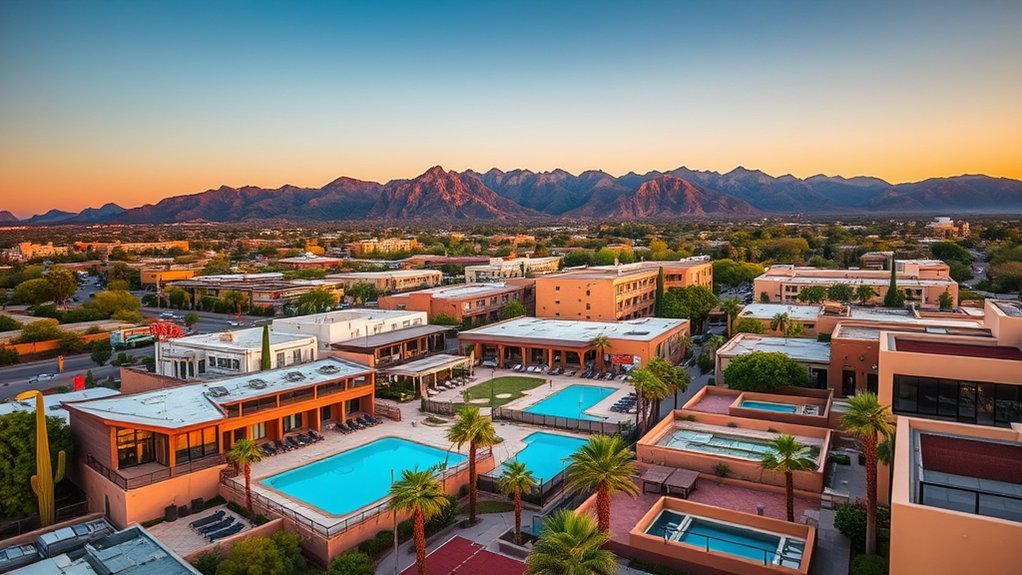
Use hotel names as starting points rather than assuming one property is best for every traveler. Room rates and policies change, so compare the same room type and dates across booking options, then check the property’s official page for current parking, pet, cancellation, and amenity rules.
Downtown: AC Hotel Tucson Downtown
AC Hotel Tucson Downtown is genuinely in Tucson’s Downtown Entertainment District, close to restaurants, nightlife, shops, and cultural venues. Marriott also notes that the entertainment-district location can mean ambient noise, which is worth knowing if you prefer very quiet nights.
Downtown: Hotel Congress
Hotel Congress is a historic downtown choice for travelers who want Tucson character, dining, music, and nightlife built into the stay. The hotel openly notes that its entertainment setting can be loud at times, so it is better suited to guests who value atmosphere over resort-style quiet.
Downtown: Home2 Suites or Hampton Inn
Travelers who want a more conventional downtown stay can also compare Home2 Suites by Hilton Tucson Downtown and Hampton Inn Tucson Downtown. Both offer downtown locations, and their official pages provide current parking, breakfast, and pet-policy details.
University Area: Graduate by Hilton Tucson
Graduate by Hilton Tucson is a practical option for University of Arizona visits. Hilton places it in the campus area near Arizona Stadium and other university attractions. Check its current parking and pet charges when comparing total costs.
Catalina Foothills: The Westin La Paloma Resort & Spa
The Westin La Paloma Resort & Spa is in the Catalina Foothills at the base of the Santa Catalina Mountains. It suits travelers prioritizing pools, resort amenities, golf, mountain views, and a quieter setting over downtown walkability.
Oro Valley: El Conquistador Tucson, A Hilton Resort
El Conquistador Tucson, A Hilton Resort belongs in the Oro Valley conversation, not the downtown category. Hilton describes the resort as being along the foothills of the Santa Catalina Mountains and lists Downtown Tucson about 12 miles away. It is a better match for a resort, golf, pool, or north-Tucson itinerary.
How to Book the Right Tucson Hotel
Once you have chosen an area, compare the complete stay rather than sorting only by the lowest nightly rate.
- Check the exact map location. A Tucson mailing address does not necessarily mean the hotel is close to downtown.
- Compare parking. Downtown hotels may charge for on-site or valet parking, while some resort or suburban properties may structure parking differently.
- Check resort or destination charges. Include mandatory property fees in your real nightly cost.
- Compare cancellation rules. A slightly higher refundable rate may be more useful than a cheaper non-refundable booking if your plans could change.
- Check pet rules individually. Fees, pet limits, maximum weights, and accepted animals vary by property.
- Confirm breakfast and kitchen needs. Free breakfast or an in-room kitchen can meaningfully change the value of a family or extended stay.
- Read the noise information. Downtown nightlife is a benefit for some visitors and a drawback for light sleepers.
- Compare loyalty benefits. Booking direct can offer hotel-program benefits, but compare the full terms instead of assuming it is always the cheapest option.
Pro Tip: Open your itinerary before you book. Mark the three or four places you expect to visit most, then compare hotel locations against those points. Saving a small amount on the room can be a poor trade if it adds long drives, daily parking, or repeated rideshare costs.
Do You Need a Car in Tucson?
You can make a downtown, Fourth Avenue, and University-focused trip relatively car-light. Visit Tucson notes that the roughly four-mile Sun Link streetcar corridor connects the University of Arizona with Main Gate Square, Fourth Avenue, downtown districts, and Mercado San Agustín.
A rental car becomes more useful when your plans include widely separated outdoor attractions, the Catalina Foothills, Oro Valley, Saguaro National Park districts, or several day trips. Tucson is geographically spread out, so the right transportation choice depends heavily on your itinerary.
Frequently Asked Questions
What Is the Best Time of Year to Visit Tucson?
For travelers seeking milder daytime weather, roughly October through April is generally the easiest period for sightseeing and outdoor activities. National Weather Service climate normals show average highs rising from the mid-60s°F in winter to the low-80s°F by April, while normal summer highs are around 100°F. Summer can bring attractive hotel pricing and pool weather, but hiking and daytime outdoor plans require much more heat preparation.
Are Tucson Hotels Pet-Friendly and What Are Typical Fees?
Many Tucson hotels accept pets, but there is no dependable citywide “typical” fee. Policies can vary considerably by property, stay length, animal type, number of pets, and weight. Check the hotel’s current official policy before booking. For example, AC Hotel Tucson Downtown currently lists a one-time pet charge that is higher than the $25–$75 range sometimes quoted in older travel guides.
How Safe Are Tucson Neighborhoods for Solo Travelers?
No Tucson neighborhood should be treated as guaranteed safe at every hour. Conditions can vary by block and time of day. Check current local information for the exact area around your hotel, use well-lit routes at night, keep valuables out of sight, lock your vehicle, and use a rideshare or taxi when a route feels uncomfortable. Solo travelers should apply the same normal urban precautions they would use in another unfamiliar city.
What Transportation Options Are Available From Tucson International Airport?
Tucson International Airport lists taxis, Lyft and Uber, rental cars, Sun Tran public transit, and reserved car or shuttle services. Some hotels and resorts also provide airport transportation, but availability varies by property. Check the official Tucson International Airport transportation information before arrival for current pickup locations and service details.
Do Hotels Offer Excursions or Tours to Nearby Attractions?
Some full-service hotels and resorts may have concierge staff who can help with tours, transportation, or activity planning, but this is not universal. If a specific guided hike, desert tour, museum trip, or regional excursion matters to your vacation, confirm arrangements directly with the hotel or book with a verified local operator rather than assuming a package will be available after arrival.
What Is the Best Area to Stay in Tucson for a First Visit?
Downtown is the easiest default for many first-time visitors because it puts restaurants, entertainment, cultural venues, and the streetcar corridor close by. Choose Catalina Foothills instead if a resort atmosphere and mountain access are more important than downtown nightlife.
Can You Visit Tucson Without Renting a Car?
Yes, particularly if you stay downtown or near the Fourth Avenue and University streetcar corridor and focus your trip on central attractions. A car is much more useful for a trip built around hiking, national-park visits, Oro Valley, the foothills, or multiple attractions spread across the metro area.
Conclusion
The best place to stay in Tucson comes down to what you want outside your hotel door. Choose Downtown Tucson for the easiest mix of restaurants, nightlife, events, and transit; Fourth Avenue or the University area for local energy and campus access; Catalina Foothills for upscale resorts and mountain scenery; Oro Valley for a quieter resort-focused trip; or West Tucson when west-side desert attractions matter most. Before paying, compare the exact location, parking, cancellation terms, pet rules, property fees, and transportation needs so the cheapest room does not become the most inconvenient stay.
Sources
- Visit Tucson: Tucson Districts — neighborhood characteristics and central visitor districts.
- Marriott: AC Hotel Tucson Downtown — verified downtown location, amenities, parking, and pet-policy information.
- Hilton: El Conquistador Tucson Location — verifies its Oro Valley setting and distance from downtown Tucson.
- Tucson International Airport — verified airport taxis, rideshare, rental cars, public transit, and shuttle options.
- National Weather Service Tucson Climate Normals — monthly temperature normals used for seasonal planning.
- National Park Service: Saguaro National Park Hiking Safety — desert heat, hydration, summer hiking, and monsoon safety guidance.