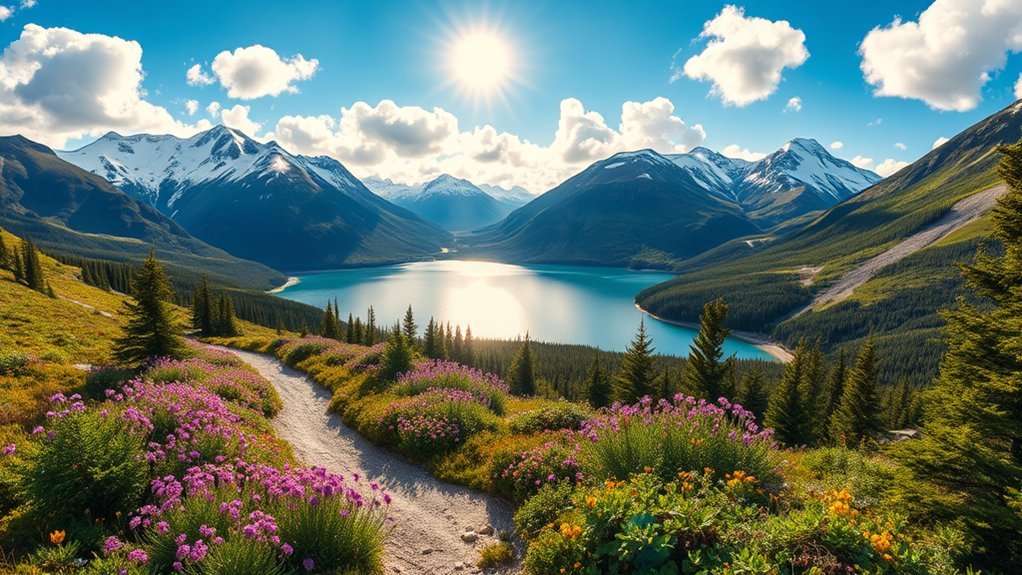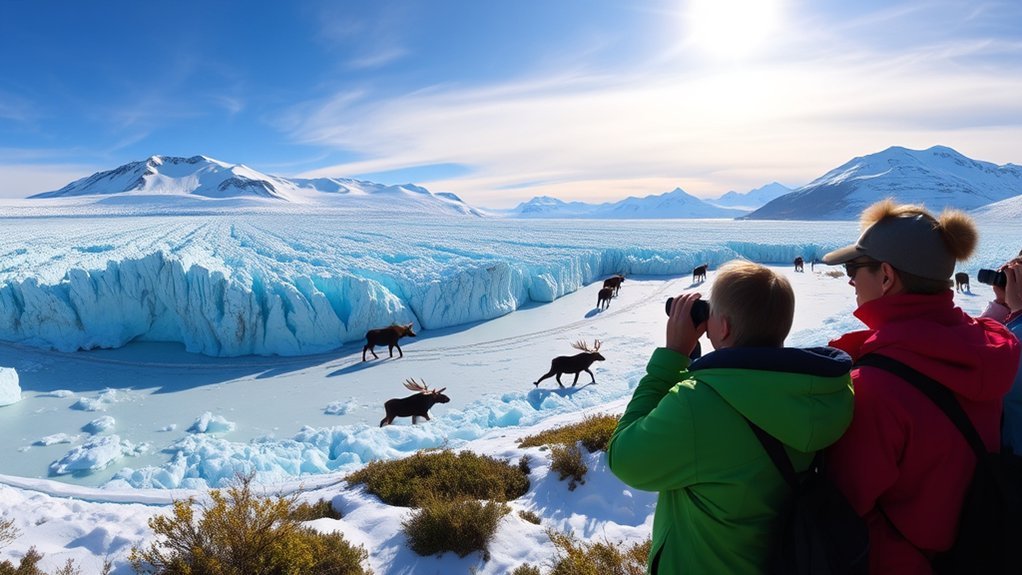
Imagine scanning the slopes and willow-covered valley near Matanuska Glacier and catching sight of a moose, eagle, or other Alaska wildlife. Matanuska Glacier wildlife viewing can add an unforgettable moment to your trip, but sightings are never guaranteed. The safest approach is to watch surrounding habitat from established public viewpoints, keep plenty of space between you and animals, and know how to react differently to bears and moose.
Quick Answer
Wildlife viewing around Matanuska Glacier is best treated as a bonus, not a guarantee. Scan the surrounding forest, river corridor, willow areas, and mountain slopes with binoculars, never approach or feed animals, carry accessible bear spray in bear country, and use established viewpoints rather than trying to get closer for a photograph.
Key Takeaways
- The Matanuska Glacier State Recreation Site at Mile 101 has public glacier viewpoints, but it does not provide access onto the glacier.
- Wildlife is more likely in the surrounding forest, river, willow, and mountain habitat than on the glacier ice itself.
- Never approach wildlife. If an animal changes its behavior because of you, increase your distance.
- Bear and moose encounters require different responses: do not run from a bear, while getting behind solid cover can be appropriate if a moose charges.
- Carry bear spray where you can reach it immediately, not buried inside a backpack.
Overview of Matanuska Glacier Wildlife
Matanuska Glacier lies in a landscape of river valleys, forest, willow, alpine slopes, and rugged mountains. Those surrounding habitats can support a variety of Alaska wildlife. Moose and bears may occur in the broader area, while eagles and other birds can be seen overhead or near suitable river and forest habitat. Mountain animals such as Dall sheep and mountain goats may occur on higher terrain, although you should never assume you will see a particular species during one visit.
The glacier ice itself is not the main wildlife habitat. The current Glacier Access operator notes that wildlife is found in the surrounding area rather than commonly walking onto the glacier, where food is scarce. For wildlife watching, spend more time scanning vegetation, river edges, forest openings, and distant slopes than staring only at the ice.
As you explore, keep an eye out for eagles, songbirds, water-associated birds, moose, and signs of larger mammals. Wildlife can be unpredictable, particularly when animals have young, are feeding, are surprised at close range, or feel blocked from an escape route.
The best wildlife encounter is one in which the animal can continue feeding, resting, or traveling without changing its behavior because of you.
Weather also changes quickly in this part of Alaska. Carry layers, rain protection, water, supportive footwear, and appropriate wildlife-safety equipment. In bear country, the Alaska Department of Fish and Game recommends carrying bear spray securely but where it is immediately accessible and practicing with an inert can before an emergency.
By respecting wildlife and its habitat, you protect both yourself and the animals while getting a more natural viewing experience.
Best Times for Wildlife Viewing
Timing can affect what you see, but there is no single month or hour that guarantees wildlife around Matanuska Glacier. Animals use the landscape throughout the year, and activity varies with food, weather, breeding cycles, daylight, human activity, and individual behavior.
Late spring through early fall is often the easiest period for casual visitors because roads, trails, and viewpoints generally have better access. Alaska State Parks notes that the Matanuska Glacier State Recreation Site remains open until winter snow and ice conditions require closure.
| Season | What to Expect | Safety Consideration |
|---|---|---|
| Spring / Early Summer | Longer daylight and improving trail access can make scanning surrounding habitat easier. | Give mothers with young extra space, especially moose cows with calves. |
| Mid-Summer | Long daylight gives you many hours to watch for birds and mammals around the valley. | Dense vegetation can reduce visibility, so avoid surprising wildlife on brushy trails. |
| Fall | Changing vegetation can improve visibility in some areas, while animal behavior may change seasonally. | Give all wildlife extra room and never place yourself between an animal and its travel route. |
| Winter | Wildlife remains in the region, but short daylight and snow can make observation more difficult. | Check road, trail, weather, and site conditions because snow and ice can close or restrict access. |
Early morning and evening can be productive periods for watching wildlife, but do not assume animals will only be active then. Alaska’s long summer daylight and changing seasonal conditions mean an animal can appear at almost any time.
If you find fresh wildlife activity or an animal repeatedly using one area, avoid crowding it. Never follow wildlife simply because it moves away from you.
Top Wildlife Viewing Spots
The most useful wildlife-viewing locations near Matanuska Glacier are places where you can safely scan a wide area without walking toward animals. Think of wildlife as an added benefit of the scenery rather than something a particular stop guarantees.
Matanuska Glacier State Recreation Site
Start with the Matanuska Glacier State Recreation Site at Mile 101 of the Glenn Highway. According to Alaska State Parks, the Edge Nature Trail provides about a 20-minute forest walk to glacier-viewing platforms. The parking area and trail give you a safe place to scan the surrounding landscape with binoculars.
Note: The state recreation site provides glacier views but does not provide access onto Matanuska Glacier. Glacier viewing and glacier access are separate experiences.
Private Glacier Access Area
The private glacier entrance is around Mile 102. The current operator states that glacier access is available through a guided tour. A glacier tour may give you views of the surrounding valley, but it should not be booked with the expectation of guaranteed wildlife sightings.
If you are there for a scheduled glacier trip, scan the surrounding habitat before and after the tour rather than expecting moose or bears on the ice itself.
Designated Glenn Highway Viewpoints and Pullouts
Safe, designated pullouts along the Glenn Highway can provide broad views of the valley, river, forest, and mountain slopes. These wide views are useful for spotting wildlife from a distance.
Do not stop in a travel lane or on an unsafe shoulder because an animal appears beside the road. Moose can move into traffic suddenly, and the Alaska Department of Fish and Game advises drivers to slow down, stay alert, and scan both sides of the road in moose country.
The Knik River area can offer additional birding and wildlife opportunities elsewhere in the Matanuska-Susitna region, but it should be treated as a separate destination rather than an on-site Matanuska Glacier wildlife viewpoint.
Distant Mountain Slopes
Use binoculars or a long camera lens to scan rocky mountain slopes. Dall sheep and mountain goats occur in suitable mountain habitat in the broader region, but a sighting from a glacier viewpoint is never guaranteed. Do not leave established routes or move toward steep terrain simply to get closer to an animal.
Pro Tip: Scan slowly instead of constantly moving. Look for movement along forest edges, willow patches, riverbanks, and open slopes. Binoculars usually reveal more wildlife than walking closer does.
Essential Wildlife Viewing Gear
Having the right gear can improve both your comfort and your ability to observe animals without approaching them. A basic wildlife-viewing kit for the Matanuska area should prioritize distance, changing weather, and bear-country awareness.
| Gear Item | Purpose | Recommended Type |
|---|---|---|
| Binoculars | Observe wildlife without approaching | Lightweight and weather-resistant |
| Camera | Capture wildlife from a respectful distance | Camera or phone with optical zoom when available |
| Field Guide | Identify birds and mammals | Alaska-focused print guide or offline app |
| Bear Spray | Last-line deterrent in a bear encounter | EPA-registered bear deterrent carried where it is immediately accessible |
| Weather Layers | Adapt to wind, rain, and temperature changes | Insulating layer plus wind/rain shell |
| Supportive Footwear | Improve stability on trails and uneven ground | Hiking or trail shoes suited to conditions |
Quality optics can make the biggest difference because they allow you to appreciate wildlife without disturbing it. Bear spray is different from normal pepper spray; use a product specifically labeled and registered as bear spray, know how the safety works, check its condition, and keep it within immediate reach.
Safety Tips for Wildlife Encounters
Wildlife encounters require more than one universal rule. The right response depends on the species, its behavior, your distance from it, and whether the animal has noticed you.
Warning: Do not use the same response for every animal. Do not run from a bear. If a moose actually charges, however, Alaska wildlife guidance says running to get behind a solid object can be appropriate. Learn the difference before heading out.
Stay Calm and Quiet
When you have already spotted wildlife from a safe location, stay calm, keep voices low, and avoid sudden movements that could disturb the animal. Quiet observation helps animals continue their natural behavior.
That does not mean you should silently surprise a bear while hiking. When traveling through brushy bear habitat or areas with limited visibility, the Alaska Department of Fish and Game recommends making normal human noise and remaining alert. Talking with companions can help bears recognize that people are approaching.
If you’re with a group and watching an animal from a safe location, keep everyone together and prevent people from spreading out around the animal.
Keep Safe Distance
Maintaining a safe distance is essential, but do not depend on a single number for every species and situation. Never walk toward an animal simply because it appears calm.
The Alaska Department of Fish and Game’s wildlife-viewing ethics advise giving wildlife plenty of space and using binoculars, spotting scopes, or telephoto lenses instead of approaching. If your presence causes an animal to stop feeding, stare at you, move away, become agitated, or otherwise change its behavior, increase your distance.
Give mothers with young extra space. Never block an animal’s travel path, surround it with other visitors, follow it after it moves away, or position yourself between a mother and her young.
Know Animal Behavior
Understanding animal behavior can prevent a normal sighting from becoming a dangerous encounter. Different species respond differently to people, and even an animal that appears relaxed can react quickly when surprised.
Moose may become defensive if crowded, especially when a cow has a calf nearby. Bears may react defensively if surprised, protecting food or young, or if they feel threatened.
Never feed wildlife. Human food can alter natural behavior, create dangerous food-conditioning, and harm animals. Alaska wildlife guidance notes that feeding bears, moose, and some other wildlife is illegal except under authorized circumstances.
If You See a Bear
If a bear has not noticed you, stay calm and quietly leave the area without approaching it. Keep your deterrent ready.
If the bear notices you, do not run. Face the bear, remain calm, group up with companions, and talk calmly so it can identify you as human. Keep bear spray accessible and be prepared to use it if necessary.
If a bear approaches, your response can depend on whether its behavior is defensive or non-defensive. Follow the detailed Alaska Department of Fish and Game bear-country guidance rather than relying on a one-line rule.
If a Moose Charges
A moose encounter requires different behavior. If a moose is aware of you but not charging, speak softly and move away slowly. Give it an open route to leave.
If a moose charges, the Alaska Department of Fish and Game advises running if you have a head start and getting behind something solid such as a tree. If a moose knocks you down, curl into a ball, protect your head, and remain still until it has moved a safe distance away.
Responsible Wildlife Viewing Practices
Responsible viewing protects wildlife and usually produces better photographs and observations because the animal remains relaxed and behaves naturally.
- Use optics instead of your feet. Binoculars and zoom lenses give you a closer view without reducing the animal’s space.
- Never feed wildlife. Do not offer snacks, leave food scraps, or deliberately attract animals for photographs.
- Do not touch or pursue animals. If an animal moves away, let it go.
- Stay on established routes whenever possible. This reduces damage to vegetation and lowers the chance of surprising wildlife.
- Keep pets controlled. Dogs can chase, frighten, or provoke wildlife even when they normally respond well to commands.
- Limit observation when an animal appears stressed. Your photograph is never worth forcing an animal to abandon food, cover, young, or a travel route.
Local Regulations and Guidelines
When exploring the Matanuska Glacier area, remember that nearby locations can have different ownership, access arrangements, and rules.
State Recreation Site vs. Glacier Access
The Matanuska Glacier State Recreation Site is along the Glenn Highway at Mile 101. It provides public glacier viewing from the parking area and the Edge Nature Trail, but Alaska State Parks states that it does not provide access onto the glacier.
The nearby private glacier-access entrance has separate rules. The current Glacier Access information states that visitors accessing the glacier must do so through a guided glacier tour. Follow the guide’s directions and any posted restrictions while on that property.
Leave No Trace Principles
Plan ahead and prepare for changing weather, road conditions, and the possibility of encountering wildlife. Use established trails and durable surfaces whenever possible rather than creating new paths through vegetation.
Pack out everything you bring in, including food scraps and other waste. Do not assume that something described as “biodegradable” can safely be left behind. Keep food and garbage secured so they cannot attract wildlife.
Avoid disturbing sensitive habitat, do not introduce plants or other materials into the environment, and respect other visitors who are also trying to enjoy the landscape.
Wildlife Viewing Restrictions
Never feed, crowd, chase, corner, or deliberately provoke wildlife. Stay within designated visitor areas where required and follow instructions from Alaska State Parks, property operators, or tour guides.
Avoid treating an arbitrary distance as permission to remain in place. If wildlife reacts to your presence, you need more space even if you believe you are already far away.
Seasonal weather, wildlife activity, maintenance, or safety concerns can also affect access. The state recreation site may close when winter snow and ice make conditions unsuitable.
Sources
- Alaska State Parks — Matanuska Glacier State Recreation Site — public viewpoints, Edge Nature Trail, location, and no-glacier-access notice.
- Alaska Department of Fish and Game — Wildlife Viewing Ethics — safe observation, pets, feeding, trails, and minimizing disturbance.
- Alaska Department of Fish and Game — The Essentials for Traveling in Bear Country — bear encounters, prevention, and deterrents.
- Alaska Department of Fish and Game — What You Should Know About Bear Spray — current bear-spray selection, carrying, practice, and deployment guidance.
- Alaska Department of Fish and Game — Living With Moose — avoiding confrontations and giving moose adequate space.
- Glacier Access — Matanuska Glacier FAQ — current private-property glacier-access arrangements and information about wildlife around the glacier.
Frequently Asked Questions
What Types of Wildlife Can Be Seen at Matanuska Glacier?
The broader Matanuska area can support moose, bears, eagles, other birds, and mountain wildlife such as Dall sheep and mountain goats. Sightings are never guaranteed, and wildlife is more likely in surrounding forest, willow, river, and mountain habitat than on the glacier ice itself.
Are There Guided Tours Available for Wildlife Viewing?
Guided Matanuska Glacier tours are available for glacier access, but they are not guaranteed wildlife-viewing tours. Wildlife may be seen in the surrounding landscape, so treat any sighting as a bonus rather than an expected part of the glacier tour.
Can I Bring My Pet While Wildlife Viewing?
Pet rules depend on the specific property or tour. Alaska State Parks allows pets at its Matanuska Glacier public-use cabin when they are kept under control, while wildlife-viewing guidance recommends restraining pets or leaving them home. Never allow a dog to chase, approach, or harass wildlife, and follow the rules of the exact site or operator you are visiting.
What Photography Tips Can Enhance Wildlife Viewing Experiences?
Use binoculars first to locate wildlife, then photograph it with optical zoom or a telephoto lens rather than walking closer. Keep your movements slow, avoid surrounding the animal with other photographers, and stop advancing if it looks toward you repeatedly, moves away, stops feeding, or shows signs of stress.
Is Wildlife Viewing Safe for Children and Elderly Visitors?
Wildlife viewing can be enjoyed by families and older visitors when everyone remains together, uses established viewpoints, and keeps well away from animals. The Matanuska Glacier State Recreation Site offers road-accessible public viewing opportunities, but glacier hiking involves separate terrain and safety considerations. Closely supervise children and never allow anyone to approach wildlife for a closer look.
What Should I Do if I Encounter a Bear?
Do not run from a bear. If it has not noticed you, calmly leave the area without approaching. If it sees you, stay calm, group up, talk calmly, and have your bear deterrent ready. Bear behavior and attack responses vary, so follow current Alaska Department of Fish and Game bear-safety guidance.
What Should I Do if a Moose Charges?
If a moose charges and you have a head start, move away quickly and get behind a solid object such as a tree. If the moose knocks you down, curl into a ball, protect your head, and remain still until it has moved away. This differs from bear guidance, where running can trigger a chase response.
Can I Walk Onto Matanuska Glacier From the State Recreation Site?
No. Alaska State Parks states that the Matanuska Glacier State Recreation Site provides public glacier-viewing opportunities but no access onto the glacier. The nearby private glacier entrance operates separately and currently provides glacier access through guided tours.
Conclusion
Wildlife viewing around Matanuska Glacier can be one of the most memorable parts of a visit, especially when you let animals remain wild instead of trying to create a close encounter. Use the public viewpoints and surrounding landscape to scan for moose, bears, birds, and mountain wildlife with binoculars or a zoom lens. Keep food secured, never feed wildlife, carry accessible bear spray in bear country, and remember that bear and moose encounters require different responses. By following Alaska wildlife guidance and the rules of the property you are visiting, you can enjoy the scenery while protecting yourself, other visitors, and the animals that live there.