Driving an electric vehicle across Alabama is much easier when you know where you can charge, which connector your vehicle uses, and how long each stop is likely to take. Alabama now has hundreds of public charging locations, including a growing number of DC fast chargers along major travel corridors, but a successful road trip still depends on checking live station information before you leave.
Quick Answer
EV road trips are practical in Alabama, especially along major interstate corridors, but drivers should plan charging stops before departure. Check live charger status, connector compatibility, charging speed, access hours, and pricing. For longer trips, identify at least one backup charging location instead of depending on a single station.
Key Takeaways
- The U.S. Department of Energy’s Alternative Fuels Data Center currently lists more than 500 public EV charging locations and more than 1,700 charging ports in Alabama.
- Level 2 charging works well for overnight stays, workplaces, shopping stops, and destinations, while DC fast charging is usually the better choice for long highway trips.
- A charger’s connector and power rating must be compatible with your vehicle. Check J1772, CCS, CHAdeMO, or SAE J3400/NACS compatibility before depending on a station.
- Live charger status matters more than a static list. Verify availability, access hours, network requirements, and pricing shortly before you arrive.
- Alabama continues to support EV infrastructure through ADECA-administered state programs and the federal National Electric Vehicle Infrastructure program.
At a Glance
| Time Required | About 10–20 minutes to plan a typical route; charging-stop time varies by vehicle, charger, battery level, and conditions. |
| Difficulty | Easy once you know your EV’s range, connector, and maximum charging capability. |
| Tools Needed | Vehicle navigation or charging app, the DOE Station Locator, your charging-network account or payment method, and any approved adapter your vehicle requires. |
| Cost | Varies by network, charger speed, location, membership, and pricing method. Public DC fast charging generally costs more than home charging. |
Understanding the Current EV Charging Infrastructure in Alabama
Alabama’s EV charging network has expanded well beyond the figures commonly quoted from the early 2020s. The U.S. Department of Energy’s Alternative Fueling Station Counts by State currently lists 563 public electric station locations and 1,767 public charging ports in Alabama. The listed ports include 867 Level 2 ports and 898 DC fast-charging ports, plus a very small number of Level 1 ports. Because stations can open, close, enter maintenance, or change status, treat these figures as a current snapshot rather than a permanent total.
A charging location is not the same thing as a charging port. One location may contain several ports, and each port may support one or more connector types.
Major population centers such as Birmingham, Montgomery, Huntsville, Mobile, and Tuscaloosa have public charging options, but highway coverage is equally important for road trips. Alabama’s infrastructure strategy includes both interstate fast charging and charging at destinations where vehicles remain parked longer.
The Alabama Department of Economic and Community Affairs leads the state’s EV infrastructure planning process and administers both federal and state funding. Its programs include the National Electric Vehicle Infrastructure Formula Program and the Alabama Electric Vehicle Charging Infrastructure Program.
Alabama’s federal NEVI effort is designed to strengthen charging along designated Alternative Fuel Corridors. The state’s FY2022–FY2026 NEVI funding plan covers about $79.3 million in federal formula funds. ADECA also has a state-funded program that can support fast charging away from interstate corridors and Level 2 charging at workplaces, hotels, tourist attractions, shopping areas, and locations near multifamily housing.
Note: Infrastructure funding does not mean every announced charger is already open. For an actual trip, check live station status instead of relying on grant announcements or old charging maps.
Planning an EV Road Trip in Alabama
Planning an Alabama EV road trip starts with three numbers: your vehicle’s realistic highway range, your current battery level, and the distance to a compatible charger. Weather, driving speed, elevation, air-conditioning use, towing, and other conditions can change actual energy consumption, so avoid building a route that depends on reaching every charger with almost no battery remaining.
Use this road-trip planning process
- Start with a useful charge. If practical, leave home or your hotel with enough energy to avoid making your first stop immediately.
- Map your primary fast-charging stops. Use your vehicle’s navigation system, a charging-network app, or the U.S. Department of Energy’s Alternative Fueling Station Locator.
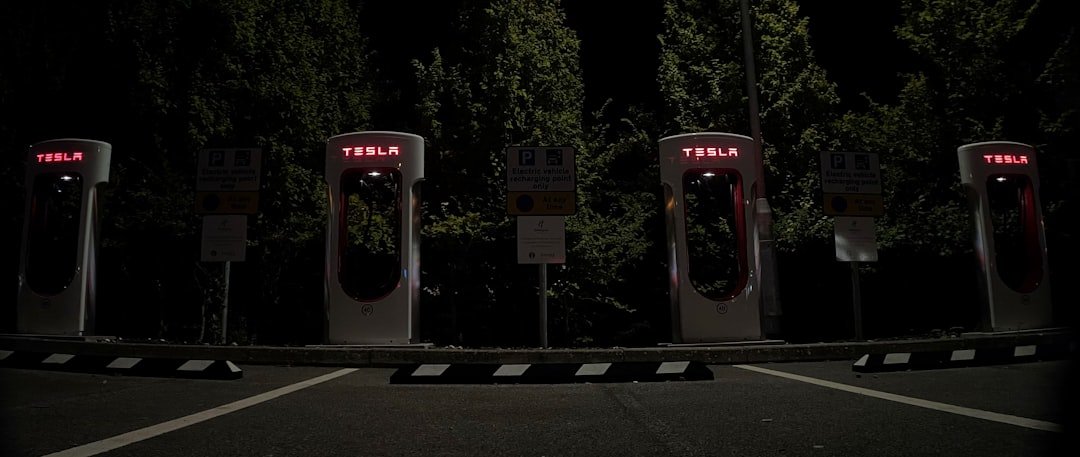
- Check connector compatibility. A DC fast station is useful only if your EV can connect to it directly or through a manufacturer-approved compatible adapter.
- Check charging power. A station may offer several power levels. Your EV will accept only as much power as its battery and charging system allow at that moment.
- Verify access and status. Look at operating hours, network requirements, recent status information, parking restrictions, and whether the charger is inside a hotel, garage, dealership, or other controlled property.
- Choose a backup. Identify another compatible charger before you reach the primary stop.
- Combine charging with a useful break. Restrooms, food, shopping, and a short walk can turn charging time into normal travel time.
Warning: Do not assume a charger shown on an old map is working today. Hardware can be occupied, temporarily unavailable, restricted, or incompatible with your vehicle. Recheck important stops shortly before arrival.
Birmingham to Mobile example
For a Birmingham-to-Mobile trip, Interstate 65 is the direct interstate corridor. Depending on your EV’s range and your chosen network, the Montgomery area and communities farther south can serve as logical places to evaluate charging options. The exact stop should be selected from live charger data rather than a fixed list because availability changes.
Selma can still be part of an Alabama road trip, but it should not be treated as a routine I-65 stop between Birmingham and Mobile. Selma lies west of the direct interstate corridor and normally requires a deliberate detour from the Montgomery area toward US 80.
Pro Tip: When two chargers are available at similar distances, favor the stop with multiple compatible charging ports. A multi-port site gives you more options if one charger is occupied or offline.
Types of EV Charging Stations Available in Alabama
Alabama drivers encounter three main charging categories: Level 1, Level 2, and DC fast charging. They serve different purposes, so the fastest charger is not automatically the best charger for every stop.
| Charging Type | Typical Supply / Speed | Best Use |
|---|---|---|
| Level 1 | 120V AC; roughly 2–5 miles of range per hour in general consumer guidance. | Home charging, overnight parking, or situations where a vehicle will remain plugged in for many hours. |
| Level 2 | 208V or 240V AC; roughly 10–30 miles of range per hour depending on the equipment and vehicle. | Homes, hotels, workplaces, shopping centers, attractions, restaurants, and other longer stops. |
| DC Fast Charging | High-power DC charging; DOE guidance describes roughly 100–200+ miles of range in 30 minutes under suitable conditions. | Interstate travel, highway corridors, and trips where reducing charging time matters. |
Level 1 charging uses a normal 120-volt AC supply and is the slowest option. It can still be useful for drivers who park for a long time, especially overnight. A partially depleted EV may recover meaningful daily driving range while sitting overnight even if Level 1 is too slow for a quick road-trip stop.
Level 2 charging is much more practical for destinations. Hotels, workplaces, shopping centers, parking garages, and attractions can use Level 2 equipment because a vehicle may remain there for several hours. At home, Level 2 can often recharge a typical EV overnight.
DC fast charging is designed for rapid energy transfer and is the most useful category for many long-distance trips. However, a charger’s advertised maximum power does not mean your vehicle will continuously receive that amount. Battery state of charge, battery temperature, vehicle limits, charger limits, and the vehicle’s charging curve all affect actual speed. Many EVs also reduce charging power as the battery approaches a high state of charge.
Know your charging connector
The U.S. charging market includes several connector types. Level 1 and Level 2 charging has traditionally used SAE J1772 on many vehicles, while SAE J3400, commonly associated with the North American Charging Standard or NACS design, is becoming increasingly important. DC fast charging can involve CCS, CHAdeMO, or J3400 connectors.
The safest rule is simple: check the charge port on your specific vehicle and follow its manufacturer’s guidance on adapters. A station being labeled “DC fast” does not guarantee that every EV can use every connector at that station. The U.S. Department of Energy’s EV charging guide explains charging levels, connector terminology, and charging-power differences.
Tips for Efficiently Using EV Charging Stations
Efficient charging is not only about finding the highest power number. A well-planned stop considers the vehicle’s charging capability, current battery level, the charger’s price and connector, and what you can do while the car is plugged in.
- Use live station information. Check status shortly before arrival instead of assuming a charger is available because it appeared during route planning.
- Match the charger to the stop. DC fast charging is useful during highway travel; Level 2 often makes more sense while sleeping, eating, shopping, working, or sightseeing.
- Do not chase a power rating your EV cannot use. A vehicle with a lower maximum DC charging rate will not charge faster simply because the station can deliver much more power.
- Check the price before starting. Networks may charge by energy, time, session, membership level, or another structure permitted in that location.
- Watch for idle or parking fees. Some sites charge extra when a vehicle remains connected after charging or after a grace period.
- Move the vehicle when practical after charging. This keeps the port available for another driver.
- Keep backup payment options. Depending on the network, charging may be started through an app, account, RFID card, credit-card reader, or another supported method.
For home charging, off-peak programs can also reduce costs for qualifying customers. Alabama Power currently offers an EV Night Charging Discount for eligible customers who charge during the program’s off-peak period. Eligibility and program terms can change, so check the utility’s current rules before making a cost comparison.
EV Charging Costs and Incentives in Alabama
There is no single statewide public charging price. The amount you pay can depend on the charging network, power level, location, membership, parking charges, and how the operator bills the session. Free charging still exists at some destinations, but drivers should not assume a public station is free.
Home charging is usually easier to predict because the cost is tied to your electricity rate and the energy your EV consumes. If your utility offers an EV-specific or time-of-use program, shifting charging to lower-cost hours may reduce the cost further.
Alabama also has infrastructure programs rather than one universal consumer incentive. The DOE Alternative Fuels Data Center’s Alabama incentives database lists current state, utility, and private programs, including ADECA charging-infrastructure grants.
For eligible Alabama Power residential customers, the utility currently advertises a $500 rebate for a qualifying Level 2 home charger installation. The program has eligibility, documentation, installation, and timing requirements, so confirm the current terms before purchasing equipment.
What to Do if a Charger Is Busy or Out of Service
A failed charging stop is inconvenient, but it does not have to become an emergency if you planned a backup. If the charger you expected to use is occupied or unavailable, work through these steps:
- Check the station app or charger screen for another available port at the same site.
- Confirm that the problem is not simply a connector, account, payment, or session-start issue.
- If several ports are available, try another compatible unit.
- Use your vehicle navigation or charging app to find the closest compatible backup station.
- Choose the backup based on remaining battery, distance, connector, and current status rather than advertised charging speed alone.
- If your battery is becoming critically low, reduce unnecessary detours and follow your vehicle manufacturer’s low-battery guidance.
- Report malfunctioning equipment through the charging network or station operator when possible so its status can be corrected.
Note: The DOE Station Locator includes station details that can help with route planning, but network apps and vehicle navigation may provide additional live information. Checking more than one source can be useful before a critical charging stop.
Overcoming Range Anxiety on Alabama Road Trips
Range anxiety is the concern that an EV may run out of usable battery before reaching a charger. The most effective way to reduce it is not to memorize every charging station in Alabama. Instead, build a repeatable planning routine that gives you alternatives when conditions change.
Before leaving, identify the chargers that fit your route and your vehicle. Check the distance between stops, connector type, charger power, and the availability of backup sites. During the trip, update the plan if weather, traffic, energy consumption, or station status changes.
Many modern EV navigation systems can recommend charging stops based on the vehicle’s battery level and route. Some can also precondition the battery before fast charging, which can improve charging performance when supported by the vehicle. Features vary by make, model, software version, and network, so learn how your own EV handles route planning before a long trip.
For example, a drive from Huntsville toward Gulf Shores covers enough distance that many EV drivers will need one or more charging stops. Instead of planning around one mandatory station, choose a primary stop and at least one realistic alternative that your vehicle can reach. This creates a margin for an occupied charger, unexpected energy use, or a station outage.
Exploring the Future of EV Charging in Alabama
Alabama’s charging network is still developing. ADECA’s National Electric Vehicle Infrastructure program uses federal funding to support charging projects, while the state’s separate charging-infrastructure program can target non-interstate corridors and destinations where drivers remain parked longer.
This combination matters because a useful statewide network needs more than interstate fast chargers. Travelers also benefit from Level 2 charging at hotels, workplaces, tourist attractions, shopping areas, and multifamily housing, while rural and secondary corridors may need fast charging where private investment has been slower.
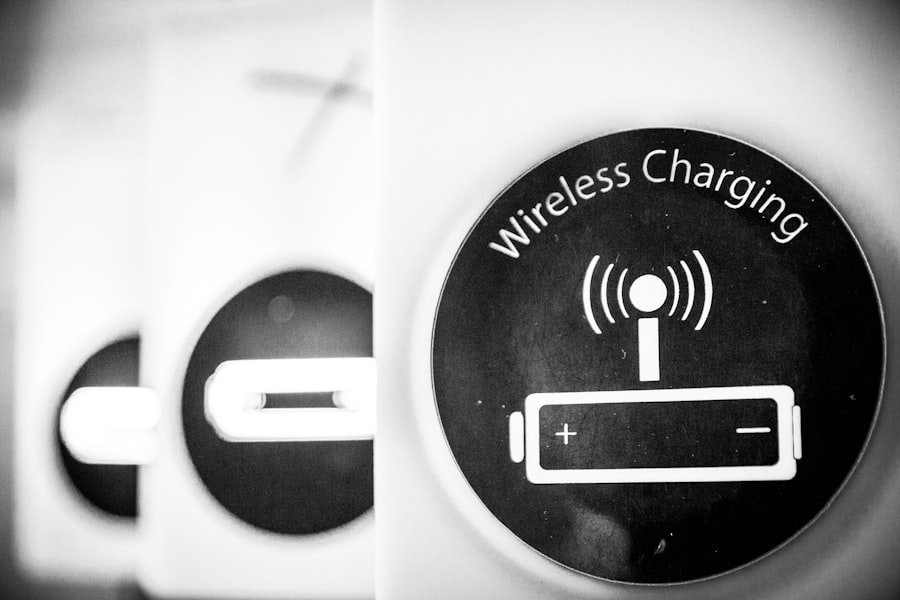
Newer charging technologies are also developing, but they should be separated from what Alabama drivers can routinely use today. Inductive or wireless charging can transfer energy without a conventional charging cable and is commercially available in limited applications. High-powered wireless charging and charging while a vehicle is moving over equipped roadways remain areas of research and demonstration rather than normal Alabama highway infrastructure.
Bidirectional charging is another developing area. Compatible electric vehicles and charging equipment can potentially send stored battery energy to a building or, under suitable interconnection and utility arrangements, back to the electric grid. The U.S. Department of Energy describes vehicle-to-grid, or V2G, as a potential grid-service application, but widespread consumer participation still depends on compatible vehicles, chargers, utility rules, and local programs.
The Benefits of EV Charging Solutions for Alabama Road Trips
A stronger charging network makes electric travel more practical for Alabama residents and visitors. Level 1 charging covers slow, long-duration needs; Level 2 charging works well at homes and destinations; and DC fast charging helps drivers cover longer interstate and regional trips without waiting for an overnight charge.
The biggest improvement for today’s EV traveler is not simply the number of chargers. It is the combination of more charging locations, more ports, better route-planning tools, clearer connector standards, and state and federal investment in highway and destination charging.
Drivers still need to plan differently than they would in a gasoline vehicle. Charging time varies, a listed station can be temporarily unavailable, and connector compatibility matters. By checking live data, keeping a backup charging stop, and understanding how their own EV charges, drivers can make Alabama road trips much more predictable.
Alabama’s infrastructure is also continuing to change. Current station counts, utility programs, network pricing, connector availability, and grant-funded projects can all be updated after this article is published. For that reason, the most dependable approach is to use this guide for planning principles and confirm trip-critical details through official or live charging sources before departure.
If you are exploring travel and lifestyle topics beyond EV charging, you can also read exploring the delightful world of Asian melon for a completely different look at food and everyday travel interests.
Frequently Asked Questions
What is EV charging?
EV charging is the process of supplying electricity to the battery of an electric vehicle through compatible electric vehicle supply equipment, commonly called a charger. Charging can use AC Level 1, AC Level 2, or DC fast-charging equipment depending on the vehicle and location.
What are the different types of EV charging stations?
The main categories are Level 1, Level 2, and DC fast charging. Level 1 normally uses 120V AC and is the slowest. Level 2 generally uses 208V or 240V AC and is common at homes and destinations. DC fast charging delivers much higher power and is normally the most useful option for long road trips.
How many EV charging stations are there in Alabama?
The U.S. Department of Energy’s Alternative Fuels Data Center currently lists 563 public electric station locations and 1,767 public charging ports in Alabama. The number changes as stations open, close, or change operating status, so check the DOE Station Locator for current trip planning.
Can I use EV charging stations for road trips in Alabama?
Yes. Alabama has Level 2 and DC fast-charging options in cities and along travel corridors, and many modern EVs can comfortably make trips across the state with planned charging stops. Check live availability and keep a backup charger for longer routes.
Are there incentives for EV charging infrastructure in Alabama?
Yes, but programs vary by applicant and utility. ADECA administers state and federal charging-infrastructure programs, while utilities may offer separate customer incentives. Alabama Power currently advertises a qualifying $500 residential Level 2 home-charger rebate and an EV night-charging discount. Always check current eligibility and funding before making a purchase.
How do I find EV chargers along an Alabama route?
Use your EV’s navigation system, charging-network apps, or the U.S. Department of Energy Alternative Fueling Station Locator. Filter for your connector and charging type, then check live status, access rules, and a backup location before a critical stop.
Which charging connector does my EV need?
It depends on the vehicle. J1772 has been widely used for AC charging, while DC fast charging can use CCS, CHAdeMO, or SAE J3400/NACS. The U.S. market is changing, so check your vehicle manual or manufacturer’s charging guidance before purchasing an adapter or depending on a specific station.
How long does it take to charge an EV on a road trip?
There is no universal charging time. Level 1 may require many hours, Level 2 is usually better for multi-hour or overnight stops, and DC fast charging can add substantial range in tens of minutes. Actual speed depends on the charger, vehicle, battery temperature, battery state of charge, and the vehicle’s charging curve.
Sources
- U.S. Department of Energy Alternative Fuels Data Center: Station Counts by State — current Alabama public charging locations and charging-port counts.
- U.S. Department of Energy Alternative Fuels Data Center: Electric Vehicle Charging Stations — charging levels, charging speeds, terminology, connectors, and charging factors.
- Alabama Department of Economic and Community Affairs: EV Charging Infrastructure Programs — Alabama EV planning and state/federal infrastructure programs.
- ADECA National Electric Vehicle Infrastructure Formula Program — Alabama NEVI program, federal funding process, and current state planning information.
- U.S. Department of Energy Alternative Fuels Data Center: Alabama Laws and Incentives — current Alabama EV charging grants, programs, utility incentives, and related regulations.
- Alabama Power Electric Vehicle Programs — current residential charging rebate, night-charging discount, public charging, and related customer programs.