If you’re planning hikes around Flagstaff, the right trail depends on elevation, season, distance, and how much climbing you want. Humphreys Peak is a serious high-altitude summit day, Fatmans Loop is short and close to town, and Walnut Canyon pairs canyon scenery with ancestral cliff dwellings. Several places around Flagstaff are easy to confuse on a map, so the guide below separates the real routes, gives current distances and access notes, and helps you choose a hike that matches your time and fitness.
Quick Answer
The best Flagstaff hikes range from the strenuous 10-11 mile Humphreys Peak summit route to short walks at Fatmans Loop, Walnut Canyon, and Sunset Crater. For forest scenery, try Kachina or Schultz Creek. Check elevation, weather, Forest Service alerts, road access, and trail rules before leaving town.
Key Takeaways
- Humphreys Peak is the biggest undertaking here, with roughly 5 to 5.5 miles each way and about 3,420 feet of climbing.
- Fatmans Loop and Sunset Crater’s Lava Flow Trail are separate hikes, not one connected lava-field loop.
- Walnut Canyon offers an easy Rim Trail and a much steeper Island Trail with many stairs.
- High elevation, summer lightning, snow, seasonal roads, and wildfire-related closures can change hiking plans quickly.
- Download a map before leaving reliable service and check the exact land manager’s current rules for dogs, camping, fees, and closures.
Best Flagstaff Hikes at a Glance
| Trail | Distance | Difficulty | Best For |
|---|---|---|---|
| Humphreys Trail No. 151 | About 10-11 miles round trip | Strenuous | Arizona high point |
| Fatmans Loop | 2.5-mile loop | Easy to moderate | Short hike near town |
| Sunset Crater Lava Flow Trail | 1-mile loop | Easy | Volcanic geology |
| Walnut Canyon Rim Trail | 0.7 mile round trip | Easy | Views and accessibility |
| Walnut Canyon Island Trail | About 1 mile round trip | Strenuous | Cliff dwellings |
| Elden Lookout Trail | About 6 miles round trip | Strenuous | Big views near Flagstaff |
| Kachina Trail No. 150 | 5.2 miles end to end | Moderate | High-country forest |
| Schultz Creek Trail | 4.5 miles one way | Moderate | Ponderosa forest |
| Little Elden Trail No. 69 | 6.07 miles end to end | Moderate | Longer forest outing |
| Weatherford Trail No. 102 | 10.44 miles one way | Strenuous | Long high-country trek |
Before You Hike in Flagstaff
Flagstaff itself sits at high elevation, and several trails climb above 8,000 feet. If you are arriving from much lower elevation, slow your pace, hydrate normally, and pay attention to how you feel. The CDC’s high-altitude guidance advises against continuing higher when altitude-illness symptoms are developing or worsening.
Warning: Summer thunderstorms can put exposed ridges and summits at serious lightning risk. The National Weather Service recommends planning mountain hikes early because thunderstorms commonly develop in the afternoon. On major summit hikes, turning around early is safer than trying to beat a storm to the top.
Snow, monsoon damage, wildfire recovery, maintenance work, and muddy roads can also change access. Check the Coconino National Forest road-status page and current alerts before driving to a remote trailhead. Download an offline map and carry enough food, water, sun protection, and warm clothing for the route rather than relying on cell service or trailhead facilities.
Pro Tip: Pick your turnaround time before you start. That simple decision is especially useful on Humphreys, Weatherford, and other high-country trails where elevation, weather, or fatigue may slow you more than expected.
Humphreys Peak via Humphreys Trail No. 151
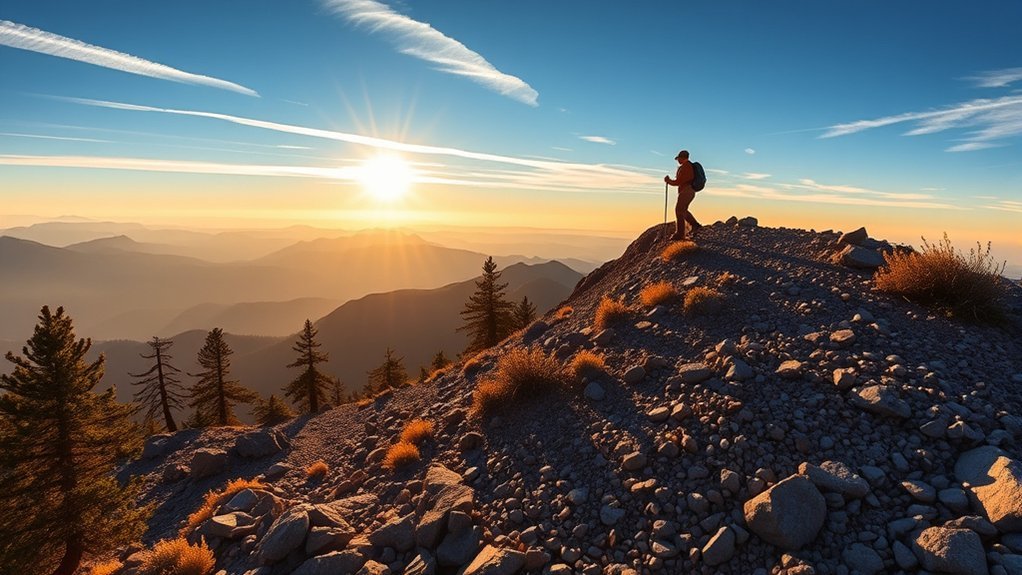
For Arizona’s highest-point hike, use Humphreys Trail No. 151 from the Arizona Snowbowl area. The Forest Service lists the route at roughly 5 to 5.5 miles one way with about 3,420 feet of elevation gain and loss. That makes a summit day roughly 10 to 11 miles round trip. You begin in forest, climb through increasingly open high-country terrain, and eventually reach an exposed alpine environment where wind and weather can feel much harsher than conditions in Flagstaff. Start early, carry layers and enough water for a strenuous day, and use trekking poles if they help you on the long descent. Snow or ice can remain well after lower trails have dried. During summer monsoon season, treat thunder, darkening clouds, or rapidly changing weather as reasons to descend rather than reasons to hurry toward the summit.
Fatmans Loop and Sunset Crater Lava Flow Trail
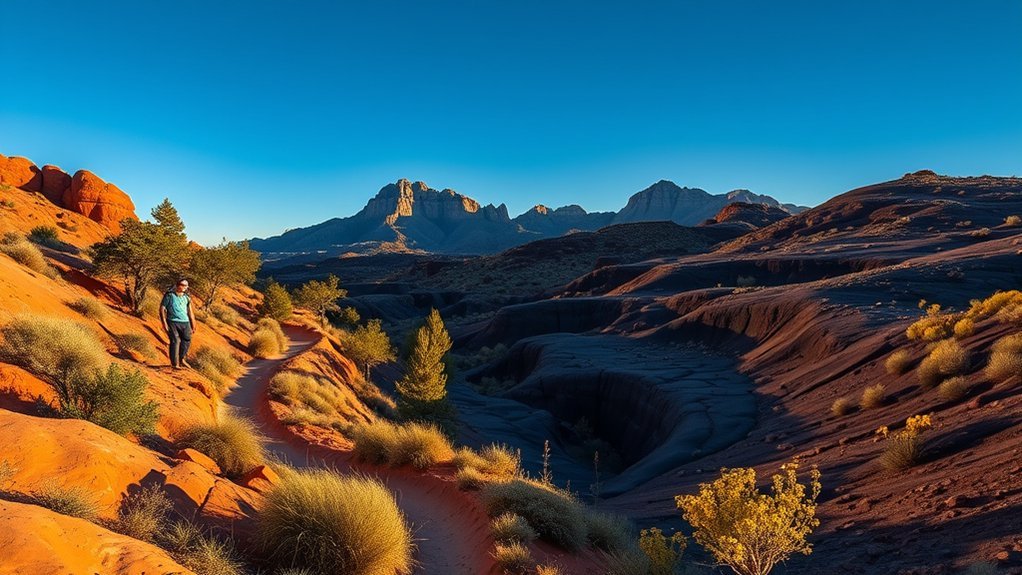
These are two worthwhile short hikes, but they are not one connected loop. Fatmans Loop Trail No. 25 sits on the lower slopes of Mount Elden near Flagstaff. The Forest Service lists it as a 2.5-mile loop with about 600 feet of elevation gain. Most of the walk is approachable, although several short climbs and rocky sections make sturdy shoes useful.
If your goal is to walk beside jagged basalt and see a young volcanic landscape, drive separately to Sunset Crater Volcano National Monument’s Lava Flow Trail. That trail is a 1-mile loop at the Bonito Lava Flow. The upper 0.25-mile loop is paved and accessible, while the longer outer portion crosses rougher volcanic terrain. Stay on designated trails because the lava is sharp and fragile features are protected.
| Feature | Fatmans Loop | Lava Flow Trail |
|---|---|---|
| Distance | 2.5-mile loop | 1-mile loop |
| Elevation | About 600 ft gain | Relatively gentle |
| Terrain | Forest and rocky Mount Elden trail | Cinders and basalt lava |
| Best for | Quick Flagstaff hike | Volcanic geology |
| Location | East Flagstaff | Sunset Crater Volcano National Monument |
Walnut Canyon Rim and Island Trail
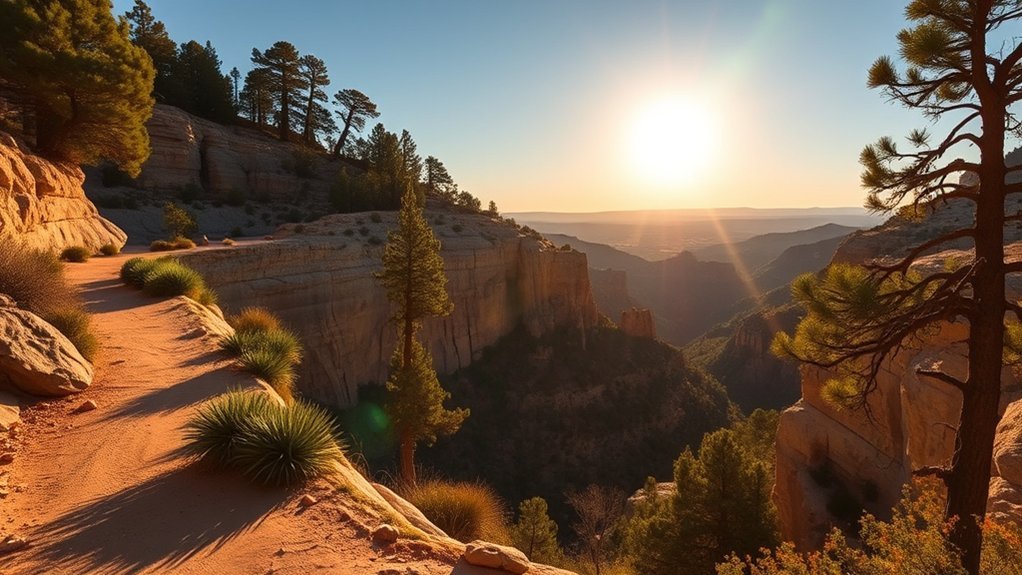
Walnut Canyon National Monument gives you two very different walks from the same visitor area. The Rim Trail is short and relatively easy, while the Island Trail descends into the canyon to pass ancestral cliff dwellings. Unlike Forest Service trails, both routes are accessible only during monument operating hours, so check the official Walnut Canyon visitor information before leaving Flagstaff.
Canyon Rim Views
The Rim Trail is about 0.7 mile round trip and takes you to canyon overlooks and cultural sites along a fairly level route. The first section to the initial overlook is paved and accessible. This is the better choice if you want broad views without committing to the Island Trail’s steep stair climb. Stay on the designated path to protect archeological resources, fragile soils, and vegetation. Morning and late-afternoon light can add contrast to the canyon walls, but remember that visitors must begin the Rim Trail by the park’s posted cutoff time.
Island Trail Cliff Dwellings
The Island Trail is approximately 1 mile round trip. Although short, the National Park Service rates it strenuous because it drops into the canyon and requires you to climb back up many stairs at roughly 7,000 feet of elevation. Along the route you can see cliff dwelling rooms associated with Native communities whom archeologists historically called Sinagua. Look closely at masonry and alcoves, but never climb on, touch, lean against, or remove material from cultural features. Entry to the Island Trail closes before the monument itself closes, and snow or ice can temporarily shut the trail in winter.
- Rim Trail: 0.7 mile round trip, easy and fairly level
- Island Trail: about 1 mile round trip, strenuous because of stairs and elevation
- Facilities: visitor center and restrooms
- Important: trail access is limited to monument operating hours
Elden Lookout and Inner Basin Trail: Two Separate Hikes
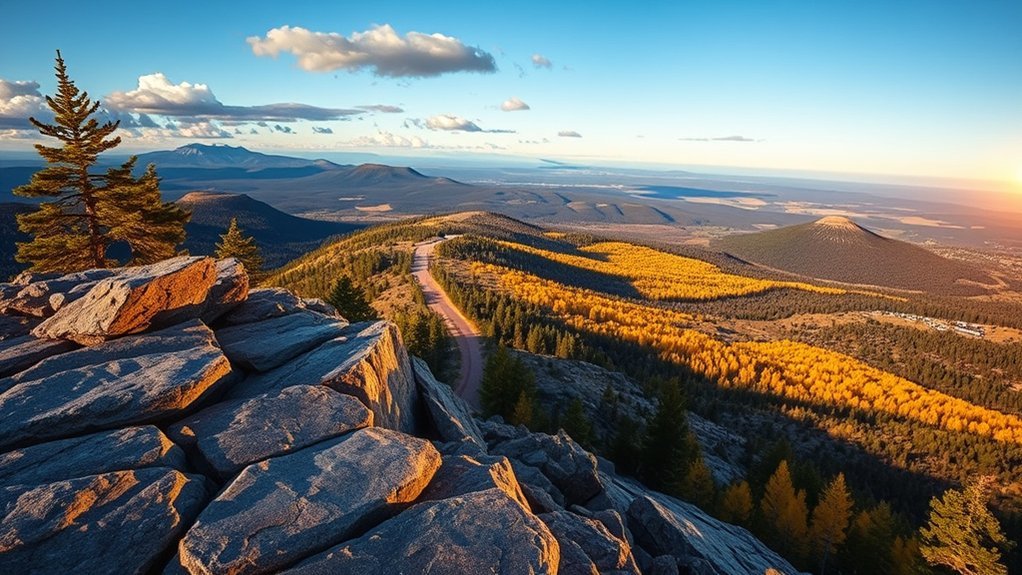
Elden Lookout Trail and Inner Basin Trail are not a connected 2-4 mile route. Elden Lookout Trail No. 4 climbs about 3 miles with roughly 2,392 feet of elevation gain, making an out-and-back hike close to 6 miles. It is a steep Flagstaff workout with expanding views as you climb.
Inner Basin Trail No. 29 is a separate San Francisco Peaks hike known for high-elevation forest and aspen scenery. Its standard Lockett Meadow access is reached from a completely different trailhead area.
Note: As of August 16, 2026, Lockett Meadow Road, Forest Road 552, is closed to all traffic, including foot and bicycle traffic, because of maintenance work expected through November 2026. Do not plan the normal Lockett Meadow approach until the Forest Service lifts the closure.
Kachina Trail No. 150
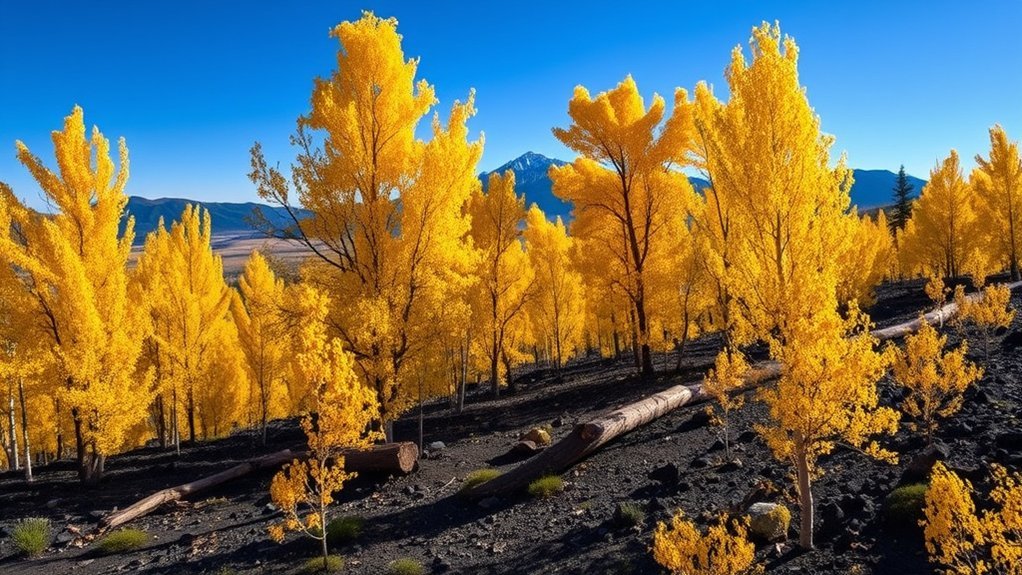
Kachina Trail No. 150 runs for about 5.2 miles through high-country forest along the San Francisco Peaks and has about 1,188 feet of elevation gain and loss. It is a scenic point-to-point trail rather than a summit scramble. Expect roots, rocks, forest openings, meadows, and elevation changes that feel more demanding if you have just arrived in Flagstaff.
Trail Route and Terrain
The trail moves through mixed forest and open areas below the high peaks rather than climbing to a summit. Packed soil alternates with rocky stretches and exposed roots, so watch your footing after rain, snowmelt, or freeze-thaw cycles. Because Kachina is a linear route, decide before starting whether you are hiking only part of it as an out-and-back, arranging a shuttle, or linking it with other officially mapped trails. Carry an offline map and stay on the established tread, especially where meadow crossings and connecting paths make the route less obvious.
- Forest singletrack with roots and rocks
- High-elevation meadows and openings
- About 5.2 miles end to end
Views and Highlights
The appeal here is the changing high-country landscape rather than a single “Kendrick Peak Overlook.” Forest openings provide views toward the San Francisco Peaks and surrounding volcanic country, while seasonal wildflowers and autumn foliage can add color closer to the trail. Wind and temperature can shift quickly at this elevation, so keep a light insulating or wind-resistant layer handy even when Flagstaff feels warm.
Note: Kendrick Mountain Trail #22 is a separate 9.2-mile round-trip hike in Kendrick Mountain Wilderness. It is not an extension of Kachina Trail.
Lava River Cave and the Bonito Lava Flow: Separate Volcanic Stops
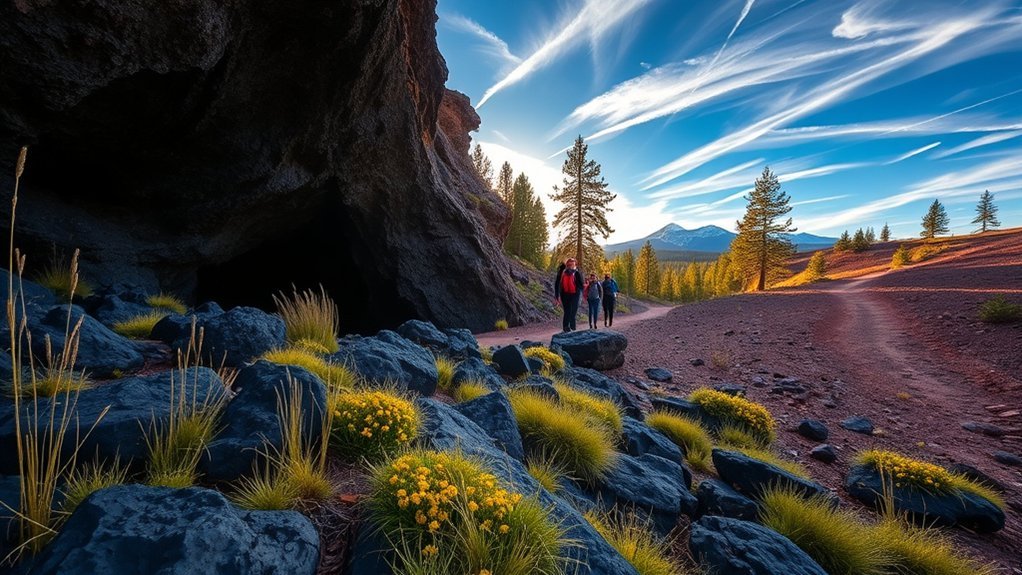
Lava River Cave is a mile-long lava tube formed roughly 700,000 years ago. It is not connected by trail to Sunset Crater’s Bonito Lava Flow. Inside, expect total darkness, rough basalt, low or uneven sections, and temperatures that stay roughly 35°F to 45°F in both summer and winter. Bring warm clothing, gloves, sturdy shoes, and two or three independent light sources. A helmet can add protection from accidental bumps in low sections, but reliable lighting and careful movement remain essential.
Lava River Cave stays roughly 35°F to 45°F year-round, so a warm layer and backup lights matter even on a hot summer afternoon.
- Route basics: the lava tube itself is about 1 mile long; reaching the far end and returning can make the underground portion nearly 2 miles.
- Safety tips: carry two or three dependable light sources, warm layers, gloves, and shoes with good traction.
- What you’ll see: basalt walls, cooled lava features, dark passages, and an unusual underground volcanic landscape.
If you also want to see the Bonito Lava Flow, drive separately to Sunset Crater Volcano National Monument and choose the Lava Flow Trail, A’a Trail, or another designated NPS route. Do not treat the cave and the monument as one continuous hiking loop.
Schultz Creek Trail and Lake Mary: Separate Areas
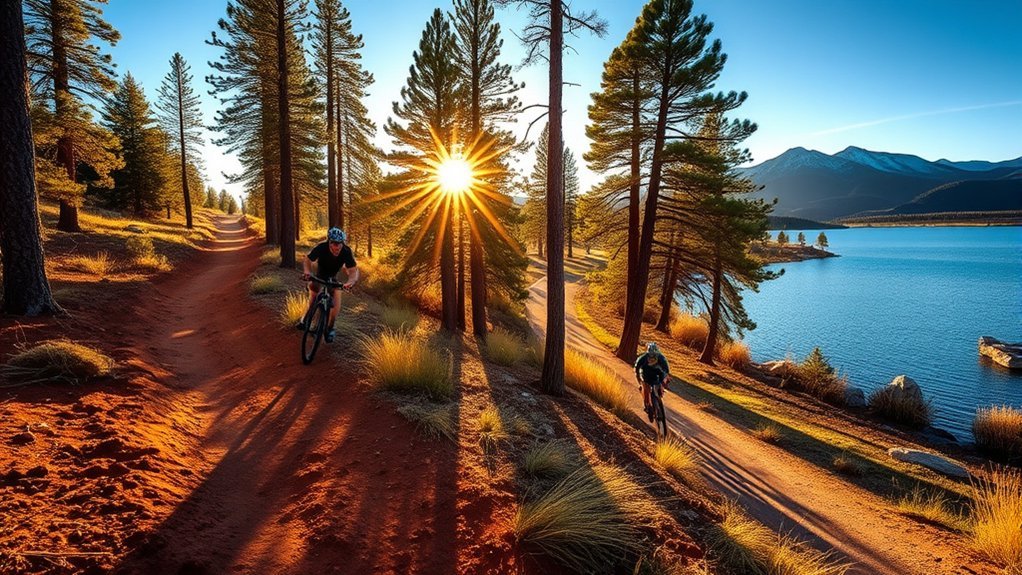
Schultz Creek Trail No. 152 is a roughly 4.5-mile one-way multiuse trail in the Mount Elden/Dry Lake Hills and Schultz Tank trail systems. It is known more for its ponderosa forest setting and gradual mountain terrain than for a lakeside loop. Expect hikers, runners, mountain bikers, and other trail users, and follow posted right-of-way guidance at busy times.
Lake Mary is not connected to Schultz Creek by a short hiking loop. Upper and Lower Lake Mary sit southeast of Flagstaff and work better as separate recreation stops. If you want a forest hike, choose Schultz Creek. If you want a picnic or water-oriented outing, plan Lake Mary separately. Current Forest Service listings can include temporary closures or restrictions in the Schultz area, so check the trail page before your hike rather than relying on an old downloaded route.
Little Elden Trail No. 69
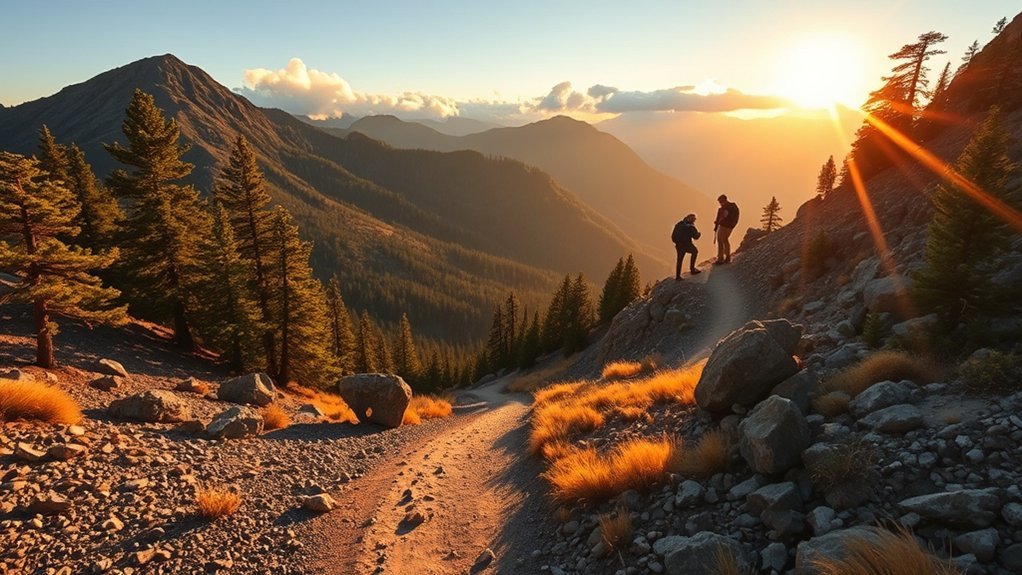
Little Elden Trail No. 69 is an official moderate trail connecting parts of the Mount Elden/Dry Lake Hills and Schultz Tank trail systems. The Forest Service lists it at about 6.07 miles with roughly 1,091 feet of elevation gain. The route winds through Gambel oak and ponderosa pine on the north side of Little Elden Mountain.
Trail Basics and Access
Because Little Elden is part of a larger network, your total mileage depends on where you enter, where you turn around, and whether you connect to another mapped trail. Download the current Forest Service map before setting out and verify the road you plan to use for trailhead access. Bring your own drinking water and do not assume water, food, or other services will be available along the route.
- Length: about 6.07 miles end to end
- Difficulty: moderate
- Day-hike permit: no ordinary day-use hiking permit is listed for the trail
- Water: carry your own drinking supply
Terrain and Difficulty
The official Little Elden Trail is primarily a moderate forest route, not an exposed scramble up an unofficial “West Ridge.” Expect normal mountain-trail obstacles such as rocks, roots, gradual climbing, and occasional rougher sections. Snow, ice, erosion, or recent storms can increase the difficulty. If a route shown on an unofficial app leaves the established trail and heads onto an unnamed ridge, do not assume it is a maintained Forest Service path.
| Feature | Little Elden Trail No. 69 |
|---|---|
| Surface | Natural forest trail with rocks and roots |
| Grade | Moderate overall |
| Technicality | Generally nontechnical hiking |
| Gear hint | Grippy hiking shoes; poles optional |
| Best fit | Hikers comfortable with several miles at elevation |
Views and Wildlife
Forest openings can reveal Mount Elden, surrounding ridges, and parts of the greater San Francisco Peaks landscape. Mule deer, elk, jays, woodpeckers, and raptors live in northern Arizona, but wildlife sightings are never guaranteed. Watch quietly from a distance, never feed animals, and keep food secured rather than leaving packs unattended.
- Oak and ponderosa forest
- Ridge and mountain views through openings
- Possible deer, elk, small mammals, and bird sightings
Dry Lake Hills Trail System
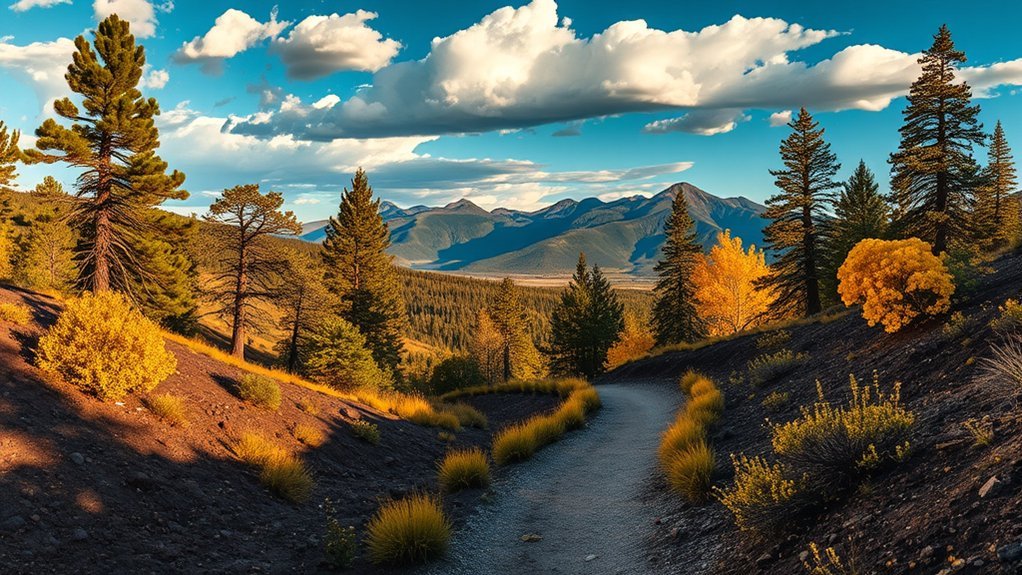
Dry Lake Hills is a trail network rather than one official 4-6 mile “Dry Lake Hills and Lower Lake Loop.” The system northwest of Flagstaff includes multiple named Forest Service trails and junctions, so distance and elevation gain change significantly depending on the route you build. This makes the area useful when you want to tailor a hike, but it also makes a downloaded map important. Expect ponderosa forest, volcanic terrain, ridgelines, and routes ranging from moderate outings to much steeper climbs.
Lower Lake Mary is a separate recreation area southeast of town. Do not add it to a Dry Lake Hills itinerary as if the two form one continuous hiking loop. If you want both experiences, plan them as separate drives.
| Distance | Elevation Gain | Difficulty |
|---|---|---|
| Route-dependent | Route-dependent | Moderate to strenuous depending on connectors |
Weatherford Trail No. 102
Weatherford Trail No. 102 is a long high-country trail, not a 2-3 mile downhill connector into Flagstaff’s urban trail system. The Forest Service lists it at about 10.44 miles with roughly 3,740 feet of elevation gain and loss. From the Schultz Tank area, it climbs through changing forest zones toward the high San Francisco Peaks and eventually connects with the Humphreys Trail system.
Because this is a lengthy route at elevation, plan it as a serious mountain outing. Carry an offline map, extra layers, adequate food and water, and a firm turnaround time. Summer lightning is an important concern higher on the route. Mountain bikes are not permitted within the Kachina Peaks Wilderness, so do not plan Weatherford as an unrestricted mountain-bike descent into town.
- Distance: about 10.44 miles one way
- Elevation change: about 3,740 feet
- Difficulty: strenuous
- Tips: start early, carry navigation, and check weather and Forest Service alerts before committing to the high country
Frequently Asked Questions
Are dogs allowed on these trails, and are leashes required?
Rules depend on the land manager, but you should plan to keep your dog leashed. Coconino National Forest guidance tells visitors to keep pets properly leashed, and many individual trail pages require leashes. National Park Service sites are stricter. At Walnut Canyon, leashed pets are allowed on the Rim Trail but not the Island Trail, while Sunset Crater limits pets to specified areas such as the paved portion of the Lava Flow Trail. Always check the exact trail page before bringing a dog.
Are Flagstaff trailheads accessible by public transportation?
Some city parks and urban trails can be reached or approached using Flagstaff’s Mountain Line bus network, but most remote Forest Service and high-country trailheads are not direct public-transit destinations. Check the current Mountain Line trip information for city routes, and plan on a vehicle, rideshare, bicycle connection, or arranged shuttle for many mountain trailheads.
What permits or fees are needed for hiking or overnight camping?
There is no universal permit required for ordinary day hiking on Coconino National Forest trails, but individual recreation sites, national monuments, developed campgrounds, and special-use areas may charge fees or have additional rules. Overnight camping is more complicated. A current Forest Service order restricts camping and campfires in mapped Flagstaff-area National Forest lands through April 30, 2027, subject to the order’s exceptions. Check current Forest Service alerts and the exact campground or backcountry area before planning an overnight trip.
What wildlife precautions should hikers take around bears and rattlesnakes?
Keep food and scented items secured, never feed wildlife, and give animals room. If you encounter a black bear, Arizona Game and Fish advises you not to run. Back away slowly while facing the bear and allow it an escape route. If it keeps approaching, make yourself look large and make noise; EPA-registered bear spray can be used if necessary. If you see a rattlesnake, stop, give it a wide berth, and let it move away. Never try to handle or move a snake.
Are any Flagstaff-area trails wheelchair or stroller accessible?
Yes. At Sunset Crater Volcano National Monument, the upper 0.25-mile portion of the Lava Flow Trail and the Bonito Vista Trail are accessible for wheelchairs, walkers, and strollers. At Walnut Canyon, the first part of the Rim Trail to the first overlook is paved and accessible. The Island Trail is not wheelchair accessible because of steep terrain and stairs. Surface conditions can change, so check current accessibility information before visiting.
When is the best time to hike around Flagstaff?
Lower and mid-elevation Flagstaff trails can be enjoyable across much of the year, but conditions vary sharply with elevation. High-country routes may hold snow into late spring or early summer, while July and August bring monsoon thunderstorms and lightning risk. Fall is popular for cooler temperatures and aspen color. Check the forecast, trail alerts, and forest-road status for the specific hike rather than choosing a date by season alone.
Which Flagstaff hikes are best for beginners?
For a shorter introduction, consider Walnut Canyon’s 0.7-mile Rim Trail or Sunset Crater’s 1-mile Lava Flow Trail. Fatmans Loop is also relatively short, although its 600 feet of climbing and Flagstaff’s elevation make it more demanding. Avoid choosing Humphreys Peak, Weatherford, or the Walnut Canyon Island Trail simply because their trailheads look convenient; those routes require considerably more effort.
Sources
- Coconino National Forest: Humphreys Trail No. 151 — official distance, elevation change, route, and trail information.
- Coconino National Forest: Trails — official Flagstaff-area trail listings and current trail-system information.
- Coconino National Forest: Lava River Cave — cave length, temperature, lighting, and preparation guidance.
- National Park Service: Walnut Canyon Hiking Trails — Island and Rim Trail distance, difficulty, access, and visitor guidance.
- National Park Service: Sunset Crater Hikes and Trails — Lava Flow Trail distance, accessibility, volcanic terrain, and designated-trail rules.
- Coconino National Forest: Alerts — current closures, restrictions, fire-related orders, and access changes.
Conclusion
Flagstaff gives you everything from easy volcanic walks to one of Arizona’s most demanding summit days, but choosing the correct route matters. Use Fatmans Loop or Walnut Canyon for shorter outings, Kachina or Schultz Creek for longer forest miles, and Humphreys or Weatherford when you are prepared for serious elevation and weather exposure. Check current alerts, start high-country hikes early, carry reliable navigation, respect closures and cultural sites, and leave enough time and energy for the return trip.