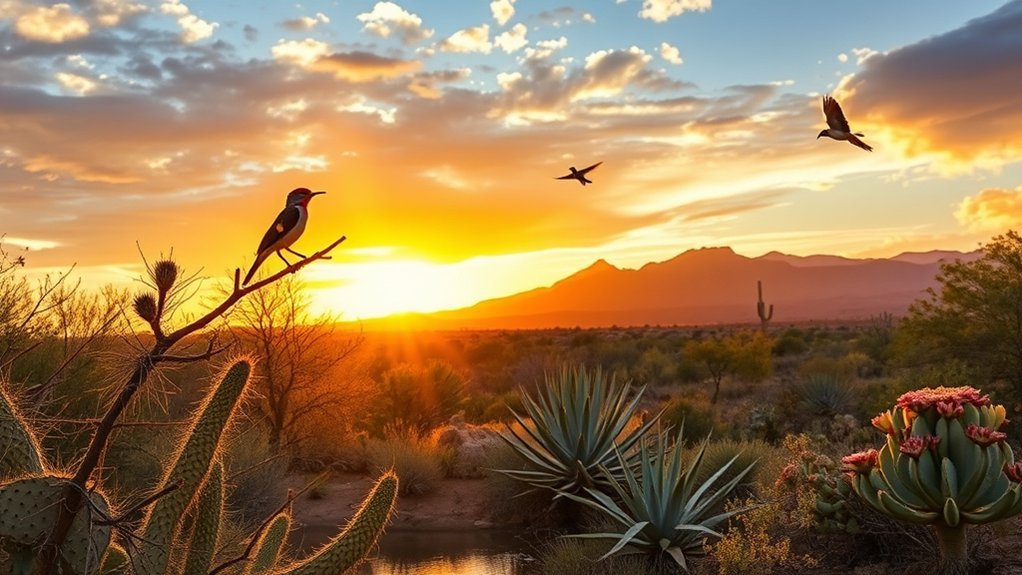
Southeast Arizona is one of North America’s premier birding destinations, boasting over 500 recorded bird species across its unique convergence of four major biogeographic zones: the Sonoran Desert, Chihuahuan Desert, Rocky Mountains, and the Madrean Sky Islands. From the vibrant Elegant Trogon nesting in sycamore canyons to over a dozen hummingbird species crowding montane feeders, the region offers an unparalleled field experience driven by dramatic elevational gradients and rich riparian corridors.
Quick Answer
The best birding in Southeast Arizona occurs during two peak windows: spring migration (late April to mid-May) for Neotropical migrants and the monsoon “second spring” (late July to August) for peak hummingbird diversity and Mexican specialties. Key hotspots include Madera Canyon, Cave Creek Canyon, Ramsey Canyon, and the San Pedro River corridor.
Key Takeaways
- Biogeographical Crossroads: Confluence of Sierra Madrean highlands and Sonoran/Chihuahuan lowlands allows tropical Mexican species to reach their northernmost range limits.
- Two Distinct Summer Peaks: May brings transient warblers and nesting trogons, while late July–August monsoons trigger a secondary breeding pulse and peak hummingbird variety.
- Vertical Stratification: You can observe desert scrub species (Verdin, Gambel’s Quail) and high-elevation mixed conifer breeders (Red-faced Warbler) within a 45-minute drive.
- Crucial Water Corridors: Cottonwood-willow riparian galleries host North America’s densest nesting populations of raptors and riparian obligates.
Why Southeast Arizona Is a Birding Mecca
Southeastern Arizona sits at the ecological crossroads of four distinct biomes: the Sonoran and Chihuahuan deserts in the lowlands, and the Rocky Mountain and Sierra Madre Occidental cordilleras in the highlands. This geographic intersection creates an ecological phenomenon known as the Madrean Archipelago—isolated forested mountain ranges (“Sky Islands”) rising abruptly from arid desert valleys.
Because elevation varies dramatically from 2,000 feet in desert washes to over 9,000 feet on mountain peaks, distinct ecological life zones are stacked closely together. Within an hour’s drive, birders can travel through low desert scrub, semi-desert grasslands, oak woodlands, pine-oak forests, and dense subalpine mixed-conifer stands. This compressed vertical stratification allows high species turnover and supports localized Mexican specialty birds found nowhere else in the United States.
Best Seasons to Visit for Key Species
Timing a trip to Southeast Arizona depends heavily on your target species. The region features a unique double-spring dynamic due to the summer monsoon rains.
- Spring Migration & Early Breeding (Mid-April to Late May): The traditional peak period. Neotropical migrants funnel through riparian corridors, and breeding specialties like the Elegant Trogon, Sulphur-bellied Flycatcher, and Buff-breasted Flycatcher arrive on territory. Mountain temperatures are comfortable, and song activity is high.
- The Monsoon “Second Spring” (Late July to Late August): Summer rains break the dry heat, transforming the desert and foothills into lush greenery. This is the premier season for hummingbird diversity (often 14 to 15 species in a single weekend), rare dispersing Mexican vagrants, Yellow-billed Cuckoos, and elusive grassland sparrows such as the Cassin’s and Botteri’s Sparrows.
- Fall Migration (September to October): A steady movement of raptors, empidonax flycatchers, and warblers moving south along the mountain ranges and river corridors.
- Winter Birding (December to February): The lowlands and agricultural valleys fill with hundreds of thousands of wintering sparrows, longspurs, and raptors, alongside massive flocks of Sandhill Cranes roosting at Whitewater Draw. Montane lakes and wetlands host diverse overwintering waterfowl.
Pro Tip: If your priority is seeing the maximum number of hummingbird species and Mexican rarities like the Plain-capped Starthroat or Berylline Hummingbird, book your trip between July 25 and August 15 during the height of the summer monsoons.
Top Hotspots: Sky Islands and Mountain Sites
The Madrean Sky Islands provide critical cool refugia for montane species and high-elevation breeding specialties. These mountain ranges are among the most famous birding destinations in the world:
- Madera Canyon (Santa Rita Mountains): Accessible south of Tucson, Madera Canyon offers world-class birding along an paved elevational gradient. Lower oak-juniper zones host Painted Redstarts, Arizona Woodpeckers, and Hepatic Tanagers, while higher trails into Carrie Nation Amphitheater produce Elegant Trogons and Flame-colored Tanagers. Public feeding stations at the Santa Rita Lodge offer exceptional views of Broad-billed, Rivoli’s, and Black-chinned Hummingbirds.
- Cave Creek Canyon (Chiricahua Mountains): Often referred to as the “Yosemite of Arizona,” this dramatic canyon near Portal, AZ, is renowned for its sheer bio-diversity. Look for Whiskered Screech-Owls and Elf Owls in the sycamores, Mexican Chicketts at higher elevations, and Blue-throated Mountain-gems along Cave Creek.
- Huachuca Mountains (Ramsey, Miller, and Ash Canyons): Located near Sierra Vista, the Huachucas are the epicenter of U.S. hummingbird watching. Ramsey Canyon Preserve, managed by The Nature Conservancy, is famous for Berylline and White-eared Hummingbirds, while Miller Canyon regularly hosts nesting Spotted Owls. Ash Canyon Bird Sanctuary is the top North American site for the rare Lucifer Hummingbird.
- Mount Lemmon (Santa Catalina Mountains): Rising above Tucson to 9,157 feet along the Catalina Highway, Mount Lemmon allows birders to ascend from Sonoran Desert cacti to Canadian-zone fir forests in under an hour. Key targets include Olive Warblers, Red-faced Warblers, Yellow-eyed Juncos, and Mountain Pygmy-Owls at sites like Bear Wallow and Rose Canyon Lake.
Top Hotspots: Riparian Corridors and Lowland Areas
Desert riparian systems are rare biological lifelines, comprising less than one percent of the western landscape while supporting over half of all breeding bird species in the Southwest:
- San Pedro Riparian National Conservation Area: Stretching over 40 miles along the upper San Pedro River, this lush cottonwood-willow gallery is one of the most vital migratory corridors in the interior West. It hosts dense populations of Gray Hawks, Yellow-billed Cuckoos, Southwestern Willow Flycatchers, and Summer Tanagers. Key access points include the San Pedro House and Charleston Road crossing.
- Patagonia-Sonoita Creek Preserve & Roadside Rest: Managed by The Nature Conservancy, Patagonia-Sonoita Creek protects rare perennial stream habitat harboring Gray Hawks, Thick-billed Kingbirds, and Rose-throated Becards. Nearby, the famous “Patagonia Roadside Rest” area is legendary for discovering rare vagrants along steep cliff faces and mesquite benches.
- Sweetwater Wetlands (Tucson): A masterfully engineered water-reclamation facility that provides an oasis for waterbirds, rails, and marshland species right within the Tucson city limits. It consistently yields Sora, Virginia Rail, Common Gallinule, and rare wintering warblers.
- Whitewater Draw Wildlife Area (Sulphur Springs Valley): The premier wintering site for 20,000+ Sandhill Cranes. Watching thousands of cranes take flight against the backdrop of the Swisshelm Mountains at sunrise is one of North America’s greatest avian spectacles.
Target Species and Where to Find Them
To maximize your field checklist, match specific microhabitats and elevation bands to regional specialty birds:
- Elegant Trogon: Found in mid-elevation pine-oak and sycamore canyons (4,500–6,500 ft). Best located in Madera Canyon, Cave Creek Canyon, and South Fork in the Chiricahuas by listening for their resonant, barking territorial call between May and July.
- Montezuma Quail: A secretive, cryptically patterned game bird inhabiting grassy oak-juniper savannahs. Top sites include the rolling hills of Patagonia, Box Canyon (Santa Ritas), and the grasslands surrounding Sonoita.
- Red-faced Warbler: An eye-catching montane wood-warbler breeding above 7,000 feet in steep, shady mixed-conifer ravines. Look in high elevations of the Chiricahuas (Rustler Park), Santa Catalinas (Summerhaven), and Huachucas (Carr Canyon).
- Gray Hawk: A Neotropical raptor strongly tied to mature Fremont cottonwood stands along lowland river corridors. Abundant along the San Pedro River, Santa Cruz River in Tubac, and Patagonia-Sonoita Creek.
- Desert Specialists (Verdin, Cactus Wren, Gilded Flicker, Gambel’s Quail): Abundant across Sonoran saguaro-palo verde stands and desert washes, including Saguaro National Park and the foothills around Tucson.
Practical Tips for a Successful Birding Trip
Field birding in the desert Southwest requires strategic timing, adequate hydration, and appropriate equipment to ensure comfort and safety.
Best Times to Go
Daily bird activity peaks during the first three hours after sunrise before desert heat sets in. Structure your day around early morning excursions, take a midday break to check shaded hummingbird feeding stations, and resume field exploration in the late afternoon.
| Season | Peak Species Focus | Primary Strategy |
|---|---|---|
| Spring (Apr–May) | Warblers, trogons, flycatchers, tanagers | Dawn stakeouts along riparian corridors and mid-elevation canyons. |
| Monsoon (Jul–Aug) | Peak hummingbirds, cuckoos, Mexican vagrants | Monitor feeding stations; bird foothill canyons after morning rain breaks. |
| Fall (Sep–Oct) | Migrant raptors, passerines, shorebirds | Scan agricultural fields, sewer ponds, and mountain ridge hawk-watches. |
| Winter (Dec–Feb) | Sandhill Cranes, wintering sparrows, raptors | Sunrise arrival at Whitewater Draw; open grassland drives in Sulphur Springs. |
Essential Gear Checklist
When packing for Southeast Arizona’s varied terrain, bring optics and protective gear suited to shifting microclimates:
- Optics: A 8×42 or 10×42 binocular with strong light-gathering capacity for dark canyon interiors. A spotting scope is invaluable for grasslands (Sulphur Springs) and wetland basins.
- Navigation & Logging: Download offline map regions in the eBird Mobile and Merlin Bird ID apps, as canyon bottoms frequently have zero cellular coverage.
- Layered Clothing: Morning temperatures in high mountain passes like Rustler Park can start near 40°F, while desert floors exceed 95°F by midday.
- Sun & Heat Protection: Wide-brim sun hat, UV-rated clothing, polarized sunglasses, and broad-spectrum sunscreen.
- Hydration System: A minimum of one gallon of water per person per day during summer outings.
Warning: Desert dehydration occurs rapidly. Always carry extra water, stay alert for venomous fauna (Western Diamondback Rattlesnakes) along rocky trails, and never drive through flooded desert washes during summer monsoon storms.
Frequently Asked Questions
Do I need special permits for birding on public lands in Southeast Arizona?
Most public birding areas on Coronado National Forest and BLM lands are free to access, though certain developed day-use sites (such as Madera Canyon and Sabino Canyon) require an America the Beautiful Pass or a local Forest Service recreation pass. If traversing Arizona State Trust Land, you must purchase an annual recreational permit online prior to entry.
What are recommended local birding organizations and guided tours?
The Tucson Audubon Society is the premier regional authority, offering weekly field trips, habitat restoration updates, and the annual Southeast Arizona Birding Festival held each August. Other trusted resources include local nature centers like the Friends of Cave Creek Canyon and the Southwestern Research Station in Portal.
Are there reliable birding apps with offline maps for the region?
Yes. The Cornell Lab’s Merlin Bird ID (with the US: Southwest bird pack downloaded) and eBird Mobile are the gold standards for offline identification, sound ID, and checklist logging. For topographic trail navigation in deep canyons with no cell service, pair them with apps like Gaia GPS or OnX Backcountry with pre-downloaded offline map layers.
What health and safety precautions should birders take in the Arizona desert?
The primary environmental hazards are extreme heat, severe dehydration, and sudden flash flooding during the July–August monsoon season. Drink water continuously before feeling thirsty, wear electrolyte replenishment packs, inspect logs before sitting down to avoid rattlesnakes or scorpions, and remain aware of dust storms that can transport Coccidioides fungus spores (the cause of Valley Fever).
Where are the best base towns for lodging and dining during a birding trip?
Tucson serves as an ideal base for Mount Lemmon, Saguaro National Park, and Sweetwater Wetlands. Sierra Vista (“Hummingbird Capital of the U.S.”) provides quick access to the Huachuca canyons and the San Pedro River. Patagonia is ideal for Sonoita Creek and the Santa Cruz Valley, while Portal offers immediate access to Cave Creek Canyon in the Chiricahuas.
Conclusion
Southeast Arizona’s extraordinary convergence of Sky Island mountains, lush riparian corridors, and seasonal climatic pulses makes it one of the most rewarding birding destinations in the world. Whether you visit in early May to catch vibrant Neotropical warblers and calling trogons, or in August to experience the flurry of the monsoon hummingbird influx, strategic timing and habitat awareness will maximize your species count. Plan your outings for the early morning hours, respect delicate desert ecosystems, and utilize regional resources like eBird and local Audubon networks to make the most of this exceptional avian crossroads.
Sources
- Tucson Audubon Society — Regional bird-finding guides, conservation initiatives, and Southeast Arizona species checklist data.
- eBird (Cornell Lab of Ornithology) – Arizona — Real-time sighting updates, seasonal abundance charts, and hotspot directories.
- U.S. Forest Service – Coronado National Forest — Sky Island trail maps, recreation passes, and habitat management reports.
- Bureau of Land Management (BLM) – San Pedro Riparian NCA — Riparian conservation data, access points, and seasonal corridor management.