London weather in January is typically cold, damp, cloudy, and changeable, but severe winter conditions are not the norm. The city’s maritime climate keeps temperatures relatively moderate, although frost, strong winds, cold rain, and occasional snow are all possible. January also brings short days, so planning outdoor sightseeing around daylight can make a noticeable difference to your trip.
Quick Answer
London weather in January is cold, damp and often cloudy rather than severely wintry. At Heathrow, the Met Office’s 1991–2020 January normals are 8.4°C for the average daily maximum, 2.7°C for the minimum, 58.8 mm of rain and about 11.5 days with at least 1 mm of rainfall. Snow is possible but uncommon.
Last checked: October 1, 2026. Dates and figures were verified against official sources.
Key Takeaways
- Heathrow averages about 6.8 January days with air frost, so below-freezing nights are possible even though daytime temperatures are usually above freezing.
- January averages about 61 hours of sunshine at Heathrow, so grey conditions are common but clear winter spells also occur.
- Daylight increases steadily through January, giving you noticeably more sightseeing time by the end of the month.
- Layers, a water-resistant outer layer, gloves and comfortable water-resistant footwear are more useful than dressing only for extreme cold.
- January 2027 includes the New Year’s Day Parade, London Art Fair, London Short Film Festival and Burns Night events.
Average Temperature in London in January
January is one of London’s coldest months, but average daytime temperatures normally remain above freezing. The Met Office 1991–2020 Heathrow climate normals give an average January maximum of 8.42°C (47.2°F) and an average minimum of 2.68°C (36.8°F).
Those values are long-term averages rather than a forecast. Individual January days can be substantially warmer or colder, and clear nights can fall below 0°C. Heathrow averages about 6.8 days of air frost during January.
| January measure | Heathrow 1991–2020 normal |
|---|---|
| Average daily maximum | 8.42°C (47.2°F) |
| Average daily minimum | 2.68°C (36.8°F) |
| Air-frost days | 6.80 days |
| Rainfall | 58.83 mm |
| Days with at least 1 mm rain | 11.53 days |
| Sunshine | 61.09 hours |
Conditions also vary across Greater London. Dense built-up areas can retain more heat than open suburban or rural surroundings, while exposed locations can feel colder in the wind. Treat the Heathrow figures as a useful London benchmark rather than an exact temperature for every neighbourhood.
Typical Rainfall in London in January
January is damp, but rain does not normally fall every day. Heathrow’s 1991–2020 normal is 58.83 mm of January rainfall, with about 11.53 days recording at least 1 mm.
That rainfall-day figure is more useful than simply counting every trace of drizzle. A day can contain a short shower and remain usable for sightseeing for most of the time, while another weather system can produce several hours of steady rain.
Carry a compact umbrella or wear a water-resistant jacket, especially if your plans involve long walks. Water-resistant footwear is also useful because wet pavements can remain uncomfortable long after a shower has ended.
Does It Snow in London in January?
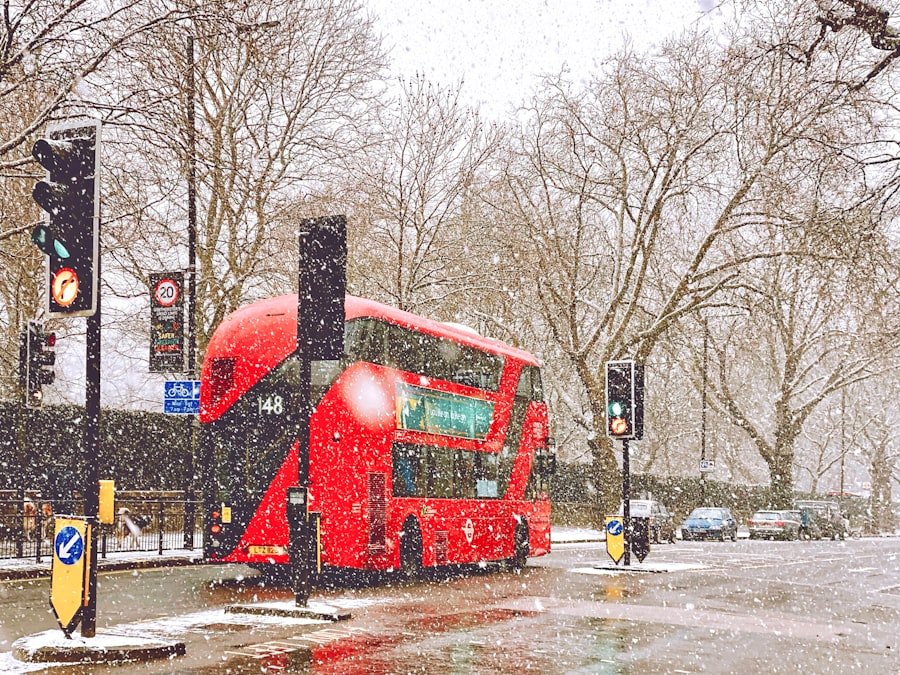
Snow is possible in London during January, but rain is much more common. Heavy or long-lasting snow should not be assumed when planning a winter visit, and many January trips pass without meaningful snowfall.
WeatherSpark’s Heathrow precipitation climatology estimates about 0.1 January day with snow alone and another 0.1 day with mixed rain and snow. Its definition excludes trace precipitation, so brief flurries may not appear in that figure.
When snow does settle, freezing temperatures can make pavements slippery and transport may be affected. However, snow is not a dependable part of a London January, so plan primarily for cold rain, frost and wet ground rather than a snow-covered city.
Wind and Storms in London in January
January can feel colder than the thermometer suggests when wind accompanies low temperatures. The Met Office Heathrow normal gives a January monthly mean wind speed at 10 metres of 8.15 knots, roughly 9.4 mph.
That number describes mean wind rather than gusts. Individual windy spells and winter storms can produce much stronger gusts, so there is no useful fixed “average January gust” that tells you what every day will feel like.
If disruptive weather is expected during your trip, use the Met Office weather warnings service. Warnings can cover wind, rain, snow, ice, fog and other hazards and are issued according to expected impact and likelihood.
Daylight Hours in London in January
London has short winter days in January, especially at the beginning of the month. The useful part for travellers is that daylight increases steadily as the month progresses, giving you more time for parks, viewpoints and outdoor landmarks later in January.
How Early Does It Get Dark?
As a concrete reference, London sunrise and sunset data for January 2026 shows sunrise at 8:06 AM and sunset at 4:02 PM on January 1. By January 31, sunrise was 7:40 AM and sunset was 4:48 PM.
That increased day length means late-January visitors gain more than an hour of daylight compared with New Year’s Day. Exact solar times shift slightly from year to year, but the same seasonal pattern applies.
How to Use the Short Daylight
Schedule outdoor sights and photography between late morning and mid-afternoon when possible. Museums, galleries, shopping, restaurants and theatre work well later in the day, while illuminated landmarks can be enjoyable after sunset.
Low winter sunlight also produces long shadows, especially on clear days. That can create attractive conditions around the Thames, bridges and historic buildings even though January has far fewer sunshine hours than spring or summer.
Historical Weather Patterns and a Warming Climate
London January weather varies considerably from year to year. Some winters contain cold spells, frost and snow, while others remain relatively mild and wet, so a long-term average cannot predict a particular trip.
The broader UK climate is warming. The Met Office State of the UK Climate 2025 reports that the decade 2016–2025 was 0.51°C warmer than the 1991–2020 period across the UK.
That is a national climate trend, not a promise of mild weather in London on any particular January day. Cold snaps and frost can still occur, which is why packing for a range of conditions remains sensible.
What to Wear in London in January
The easiest way to dress for London in January is to use layers. You may spend part of the day outside in cold wind and rain, then move into heated museums, restaurants, shops or Underground trains.
- Base layer: Wear a comfortable long-sleeved top; add a thermal layer if you feel the cold easily or expect long outdoor periods.
- Mid-layer: A jumper, fleece or cardigan provides insulation and is easy to remove indoors.
- Outer layer: Choose a warm coat or jacket that gives useful protection from wind and rain.
- Footwear: Comfortable water-resistant shoes or boots are practical for wet pavements and long walking days.
- Accessories: Pack gloves, a scarf and a warm hat for colder mornings and evenings.
- Rain protection: Carry an umbrella or use a hooded waterproof layer so a passing shower does not force you to abandon your plans.
Avoid dressing only for the day’s forecast high. Temperatures usually fall after sunset, and an exposed riverside walk can feel much colder than a sheltered street or indoor attraction.
Things to Do in London in January
January’s weather makes a mixed indoor-and-outdoor itinerary especially practical. Museums, galleries and West End theatres give you weatherproof options, while clear days are ideal for parks, riverside walks and outdoor landmarks.
For January 2027, Visit London’s January events guide lists several confirmed seasonal dates:
- January 1: London’s New Year’s Day Parade through central London. Visit London describes the parade as free to watch.
- January 20–24: London Art Fair at the Business Design Centre in Islington.
- January 22–31: London Short Film Festival, with screenings and programmes at venues around the city.
- January 25: Burns Night, with Scottish-themed dinners and events at venues across London.
West End productions also run throughout January. For a winter itinerary, pair an outdoor attraction during the brighter part of the day with a museum, gallery or performance after sunset.
How January Weather Compares With December and February
January sits in the middle of London’s meteorological winter. Heathrow’s 1991–2020 normals show that January has a slightly lower average daytime maximum than December and February, while February is noticeably drier and sunnier on average.
| Month | Avg. max | Avg. min | Rainfall | Rain days ≥1 mm | Sunshine |
|---|---|---|---|---|---|
| December | 8.79°C | 3.08°C | 57.05 mm | 10.77 | 54.96 hours |
| January | 8.42°C | 2.68°C | 58.83 mm | 11.53 | 61.09 hours |
| February | 8.98°C | 2.65°C | 44.96 mm | 9.50 | 78.81 hours |
January therefore is not simply “wetter than February but drier than December.” At Heathrow, its average rainfall total is slightly higher than December’s, and it also has more days with at least 1 mm of rain.
Frequently Asked Questions
What is the average temperature in London in January?
The Met Office’s 1991–2020 Heathrow normals give an average January daily maximum of 8.42°C and an average minimum of 2.68°C. These are long-term averages, so individual days can be warmer or colder, and overnight temperatures can fall below freezing during cold spells.
How much does it rain in London in January?
Heathrow’s 1991–2020 January normal is 58.83 mm of rainfall. The station averages 11.53 days during the month with at least 1 mm of rain, so you should expect a reasonable chance of wet weather without assuming that every day will be rainy.
How many hours of daylight does London get in January?
London has roughly eight hours of daylight near the start of January, with the days becoming steadily longer throughout the month. In January 2026, daylight increased from 7 hours 56 minutes on January 1 to just over 9 hours 7 minutes on January 31.
Does it usually snow in London in January?
Snow can occur in London in January, but it is much less common than rain. Brief flurries or mixed precipitation are more realistic expectations than prolonged heavy snow, so travellers should prepare mainly for cold rain, frost, wet pavements and occasional icy conditions.
What should I wear in London in January?
Wear warm layers with a wind-resistant and water-resistant outer layer. Comfortable water-resistant shoes, gloves, a scarf and a hat are useful for long outdoor periods, while removable layers make it easier to stay comfortable inside heated museums, shops, restaurants and Underground trains.
What to Expect from London Weather in January
Expect a winter city break built around cool days, colder evenings, short daylight and a realistic chance of rain. Average conditions are manageable with sensible clothing, and snow is uncommon enough that it should be treated as a possibility rather than something to plan around.
The most practical approach is to use the brighter middle of the day for outdoor sights and keep flexible indoor options for wet or windy periods. With warm layers, rain protection and comfortable footwear, January weather does not prevent you from enjoying London’s museums, historic streets, parks, theatres and seasonal events.
For more London travel information, visit Tagline Today.
Sources
- Met Office — Heathrow long-term averages: 1991–2020 temperature, rainfall, frost, sunshine and wind normals.
- WeatherSpark — London Heathrow climate: long-term precipitation type and snow-frequency context.
- Timeanddate — London sunrise and sunset: January daylight, sunrise and sunset times.
- Met Office — Weather warnings guide: severe-weather warning coverage and lead time.
- Met Office — State of the UK Climate: recent UK warming trend.
- Visit London — January 2027: confirmed January 2027 events and dates.