Planning a visit to the Royal Observatory Greenwich now requires a little more preparation than it once did. The historic Observatory, Prime Meridian, Flamsteed House and major timekeeping exhibits are currently open, but the site is in the middle of the First Light transformation project. Opening hours, attraction access and even which buildings are available are changing through 2026–2028, so checking the latest schedule before travelling is essential.
Quick Answer
Royal Observatory Greenwich is open now, but the visitor plan is changing. In September 2026 it opens 10am–6pm, while standard hours are 10am–5pm. The historic site closes temporarily from 2 November 2026; the Meridian Courtyard is due to reopen in summer 2027, with the wider First Light project completing in spring 2028.
Key Takeaways
- Book Royal Observatory tickets online in advance when possible; current standard prices are £24 for adults, £12 for children aged 4–15 and £18 for students, while under-4s are free.
- The Peter Harrison Planetarium is currently closed for the First Light transformation. A temporary planetarium experience is available at the National Maritime Museum.
- The Observatory sits at the top of a steep hill in Greenwich Park. Cutty Sark DLR, Maze Hill, Greenwich station and Greenwich Pier are useful arrival points, but buses can reduce the uphill walk.
- Highlights include the historic Prime Meridian, John Harrison’s marine timekeepers, Flamsteed House, the Octagon Room, Camera Obscura and the Great Equatorial Telescope.
- The historic Observatory closes temporarily from 2 November 2026. The Meridian Courtyard is planned to reopen in summer 2027, with the wider transformation due to finish in spring 2028.
Warning: If you are planning a trip after 1 November 2026, do not rely on older guides saying the Royal Observatory is open year-round. Royal Museums Greenwich says the site will close temporarily from 2 November 2026 as part of the First Light transformation. Check the official First Light project page before making travel plans.
Best Time to Visit and How Long to Spend
If you are visiting during the Observatory’s current operating period, arriving close to opening time is a practical choice. It gives you more time for the historic galleries, Prime Meridian, telescope and views before the busiest part of the day. Weather also matters because the Observatory sits on a hill in Greenwich Park, and part of the experience is outdoors.
In September 2026, the published opening hours are 10am–6pm, with last entry at 5pm. Standard hours are 10am–5pm, with last entry at 4.15pm, although early closures can occur on specific dates. Always confirm your date on the official Royal Museums Greenwich opening-times page and the Observatory’s closure notices.
Royal Museums Greenwich does not impose a fixed time limit once you are inside. For planning purposes, allow roughly two to three hours for a relaxed visit to the main historic attractions. A focused visitor can see the headline sights more quickly, while history and astronomy enthusiasts may want longer, especially if adding a paid tour or talk.
Summer and early autumn provide longer daylight for Greenwich Park and skyline views. A colder or wet-weather visit can still work well because much of the historic collection is indoors, but comfortable shoes and weather protection are useful for the uphill approach.
Tickets and Prices
All visitors need a ticket to enter the paid Royal Observatory site. Royal Museums Greenwich recommends booking online in advance to guarantee an entry time, particularly during busy periods and special events.
- Adult: £24
- Child age 4–15: £12
- Student with valid ID: £18
- Child under 4: Free with a paying adult
- Members: Free admission under current membership terms
Free admission is also available for a carer accompanying a disabled visitor. Prices and ticket products can change, so check the official booking page before purchasing.
If you also plan to visit Cutty Sark, the Royal Museums Greenwich Day Pass can be more convenient than buying the two paid attractions separately. The National Maritime Museum and Queen’s House are nearby and normally offer free general admission, although advance booking may still be recommended.
Getting to the Royal Observatory Greenwich
The Royal Observatory is in Greenwich Park in southeast London. Getting to Greenwich itself is straightforward, but the final approach deserves attention because the Observatory is at the top of a steep hill.
DLR
Cutty Sark for Maritime Greenwich is the closest Docklands Light Railway station. It is about 0.6 miles (1 km) from the Observatory. The route passes through historic Greenwich and then climbs through Greenwich Park.
Mainline Train
Maze Hill is the closest mainline rail station at about 0.6 miles (1 km). Greenwich station is about 0.8 miles (1.3 km) away. Both routes involve an uphill section if you approach the Observatory through the park.
Bus
Buses can be especially useful if you want to reduce the steep climb. Royal Museums Greenwich lists routes 53, 54, 202 and 380 among the buses that stop closest to the Royal Observatory near the top of Greenwich Park.
Riverboat
Arriving by Thames riverboat is one of the most scenic ways to reach Greenwich. Greenwich Pier is about 0.7 miles (1.1 km) from the Observatory. Allow roughly 20 minutes for the walk, remembering that the final section is uphill.
Driving and Parking
Parking is available inside Greenwich Park and is managed by The Royal Parks. Royal Museums Greenwich also operates parking at the National Maritime Museum on certain days, but that car park is downhill from the Observatory. Check current parking access and restrictions before travelling.
Pro Tip: If someone in your group has limited mobility, do not automatically follow the shortest walking route from central Greenwich. The main path is steep. Buses approaching the top of Greenwich Park or the less-steep accessible route can make the visit much easier.
Exploring the Grounds and Exhibits
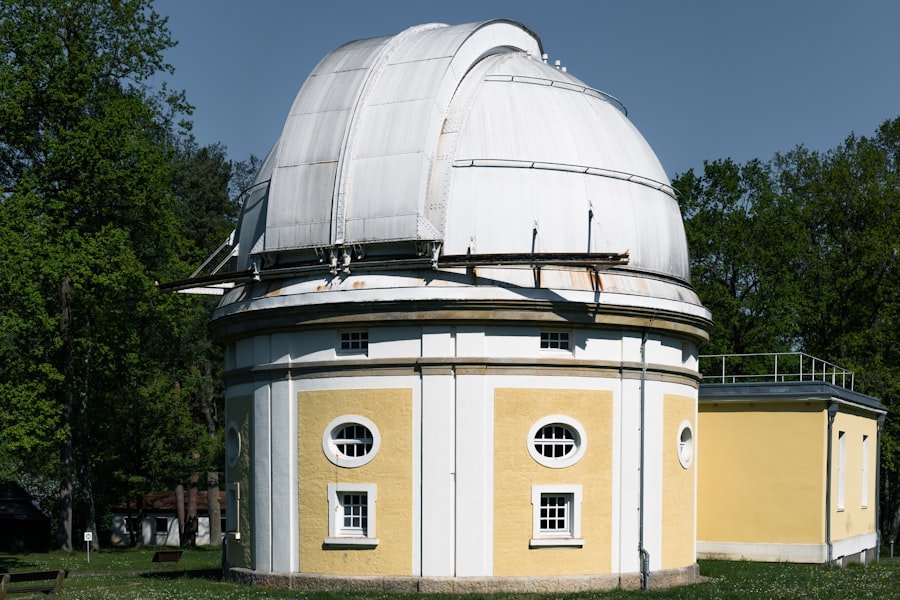
Once you reach the Royal Observatory Greenwich, the hilltop location immediately becomes part of the experience. The site combines historic scientific buildings, timekeeping instruments, astronomy exhibits and broad views over Greenwich Park and London’s skyline.
Flamsteed House is the oldest part of the Observatory and was built as both a workplace and home for the first Astronomer Royal. Inside, the Time and Longitude displays explain one of the most important scientific problems of the age: how sailors could determine their east-west position accurately while at sea.
John Harrison’s marine timekeepers are among the site’s most important objects. Harrison spent decades developing increasingly accurate clocks that could keep reliable time aboard a moving ship. Comparing local time with the reference time carried by a chronometer allowed navigators to calculate longitude much more accurately.
Other highlights include the historic Octagon Room, the Camera Obscura, the Meridian galleries and the Great Equatorial Telescope. The 28-inch Great Equatorial is the largest refracting telescope of its kind in the UK. It was installed in 1893 and remains one of the most visually impressive instruments at Greenwich.
During the current 2026 visitor programme, Luke Jerram’s Mirror Moon installation is also displayed at the Observatory. Because exhibits and accessible areas are changing during the First Light works, check the official site before relying on an older attraction list.
Visiting the Peter Harrison Planetarium
The Peter Harrison Planetarium should no longer be planned as part of a normal Royal Observatory visit. The planetarium and Astronomy Centre have been closed since 8 September 2025 as part of the First Light transformation project.
Note: The planetarium experience has not disappeared from Greenwich. During the refurbishment, Royal Museums Greenwich is operating a temporary planetarium at the National Maritime Museum as part of Astronomers Take Over.
The temporary experience includes 360-degree projected shows presented by astronomers, with opportunities for questions after selected presentations. It is downhill from the Royal Observatory at the National Maritime Museum, so visitors who want both the historic Observatory and a planetarium show should plan the two venues as separate parts of their Greenwich day.
The wider First Light refurbishment is due to continue until spring 2028. Anyone visiting during this period should check the latest programme because the location, ticketing and availability of astronomy experiences can change as the project progresses.
Attending a Guided Tour
A guided tour can add useful context to the clocks, telescopes and scientific history of the Royal Observatory. Current public programmes include staff- or volunteer-led talks and ticketed tours focusing on the Observatory’s most important objects and its history of astronomy, time and navigation.
As of September 2026, Royal Museums Greenwich advertises Royal Observatory Treasures Tours and Lunar Tours in addition to regular explainer activities. The schedule and prices can change, so check the official tours and talks page for your date.
Public tours should not be confused with the Observatory’s separate private experiences. Bespoke private out-of-hours tours may be available by advance arrangement for visitors or groups seeking a more exclusive visit.
If you prefer to explore independently, Royal Museums Greenwich also provides an audio guide covering areas such as Flamsteed House, the Octagon Room, Harrison’s clocks and the Meridian Courtyard. Bringing your own headphones can make this option easier.
Participating in Special Events and Workshops
Royal Observatory Greenwich hosts talks, demonstrations, tours and seasonal astronomy programmes throughout the year, but the schedule is changing during the First Light transformation. Rather than assuming that an older stargazing night or workshop is still operating, check the current What’s On calendar for your exact date.
Current programmes can include live science demonstrations, conversations with Observatory Explainers, themed tours and family astronomy activities. Some are included with normal admission, while others require an additional ticket.
For example, the September 2026 programme includes Moon-focused activities and tours. These short-term programmes are useful additions if their timing matches your visit, but they should be treated as date-specific events rather than permanent attractions.
If an activity is important to your trip, reserve it before travelling. Limited-capacity talks and tours can have different booking requirements from general Observatory admission.
Enjoying the Views from the Prime Meridian Line
One of the Royal Observatory’s defining attractions is the historic Prime Meridian in the Meridian Courtyard. The Greenwich Meridian was internationally adopted as the world’s Prime Meridian in 1884, establishing the Observatory’s reference line as historic zero degrees longitude.
Visitors can stand across the marked line with one foot in the eastern hemisphere and one in the western hemisphere. Entry to the marked Meridian line inside the courtyard is included with Royal Observatory admission.
Greenwich’s historic Prime Meridian was internationally adopted in 1884, helping create a common global reference for longitude and time.
There is an interesting modern detail that many visitors miss. Satellite navigation does not use exactly the same reference line as the historic Airy Meridian marked in the courtyard. Modern geodetic systems use the IERS Reference Meridian, which passes about 102.5 metres east of the historic Greenwich line. That is why a phone or GPS receiver may not display exactly 0° longitude while you are standing on the famous marker.
You can read more about the distinction on Royal Museums Greenwich’s official Prime Meridian guide.
The courtyard also offers impressive views across Greenwich Park toward the London skyline. Many visitors spend time on the hill outside the Observatory before or after their timed entry, especially on clear days.
Learning About the History of the Royal Observatory Greenwich
The Royal Observatory was founded by King Charles II in 1675 to improve astronomy and navigation, particularly the difficult problem of determining longitude at sea. John Flamsteed was appointed the first Astronomer Royal and moved into the new Observatory the following year.
Christopher Wren and Robert Hooke were involved in the design of the original building. Flamsteed House became both a scientific workplace and a residence for the Astronomer Royal, while successive astronomers expanded Greenwich’s role in star observation, navigation and accurate timekeeping.
Later Astronomers Royal included Edmond Halley, James Bradley and George Biddell Airy. Airy’s Transit Circle, first used in the 1850s, eventually defined the Greenwich Meridian that delegates selected as the international Prime Meridian in 1884.
The Observatory also became central to Greenwich Mean Time. Accurate astronomical observations, clocks and telegraph signals helped Greenwich time spread beyond astronomy into navigation, railways and everyday civil timekeeping.
Royal Museums Greenwich’s history of the Royal Observatory provides a detailed chronology of the institution and the Astronomers Royal.
Taking Part in Family-Friendly Activities
The Royal Observatory can work well for families because its biggest ideas are easy to turn into simple questions: Why do we need time zones? How do sailors know where they are? Why is Greenwich longitude zero? How does a giant telescope work?
Children often enjoy standing across the Meridian Line, seeing the huge Great Equatorial Telescope, exploring the Camera Obscura and looking at astronomy-related displays. Current family programmes and temporary installations can add hands-on elements, but activities vary by date.
Families with babies or younger children should know that buggies are not permitted inside Flamsteed House because its galleries are narrow. An external buggy park is provided. Baby-changing facilities are available on site.
Children under four currently receive free admission with a paying adult, while standard child tickets apply from age four through 15.
After the indoor exhibits, Greenwich Park gives children space to take a break. The National Maritime Museum is also nearby and can be useful for extending a family day, particularly while astronomy programming is temporarily operating there during the Observatory transformation.
Accessibility and the Greenwich Park Hill
The steep location is one of the most important practical details to understand before visiting. The direct route from the National Maritime Museum to the Royal Observatory generally takes about 10–15 minutes on foot but includes a steep hill and steps.
Royal Museums Greenwich also identifies a less-steep route that can take about 25 minutes and may be more suitable for wheelchair users. Buses 53, 54, 202 and 380 approach the Observatory from the upper side of Greenwich Park and can help visitors avoid the main hill climb.
Accessibility within the historic buildings varies. A lift gives level access to parts of Flamsteed House, including the Time and Longitude and Time and Greenwich galleries, but the Octagon Room is not accessible by that lift. Cobblestones, stairs and narrow historic doorways can also affect movement through some areas.
Limited wheelchairs can be reserved in advance, and assistance dogs are welcome. Free admission is available for carers accompanying disabled visitors.
Because the First Light transformation includes major accessibility improvements, arrangements will change as work progresses. Check the official accessibility guide shortly before your visit.
Shopping and Dining at the Royal Observatory Greenwich
The Observatory has the Meridian Shop, where visitors can browse astronomy, Greenwich, timekeeping and Prime Meridian-themed souvenirs, books and gifts.
Food arrangements are more limited than older guides may suggest during the current transformation period. Royal Museums Greenwich advises visitors that refreshments can be purchased from stalls just outside the main Observatory entrance. For a larger café stop, Parkside Café is downhill at the National Maritime Museum.
Picnic tables are available in the Astronomers’ Garden, making a simple packed lunch another option when conditions and access permit. Greenwich town centre also has numerous cafés and restaurants within walking distance, although remember that returning to the Observatory means climbing the hill again.
What Else to Visit in Greenwich
The Observatory sits within one of London’s richest clusters of historic attractions, so it is easy to combine it with another stop if you have a full day.
- National Maritime Museum: Downhill from the Observatory and currently home to temporary astronomy experiences, including the replacement planetarium programme.
- Queen’s House: A historic royal building and art gallery near the National Maritime Museum.
- Cutty Sark: The preserved 19th-century sailing ship close to Greenwich Pier and Cutty Sark DLR.
- Greenwich Park: Useful for walks, skyline views and a break between indoor attractions.
If both the Royal Observatory and Cutty Sark are priorities, compare the Royal Museums Greenwich Day Pass with separate tickets before booking.
Tips for Making the Most of Your Visit
- Book before travelling. Timed online tickets help guarantee admission during the period the historic site remains open.
- Check the date twice. The Observatory has scheduled early closures on some dates, and the whole historic site closes temporarily from 2 November 2026.
- Do not build your itinerary around the Peter Harrison Planetarium. It is closed; use the temporary planetarium at the National Maritime Museum instead.
- Allow for the hill. The climb from central Greenwich is steeper than many first-time visitors expect.
- Wear comfortable shoes. A Greenwich day often combines park paths, cobblestones, stairs and museum floors.
- Bring headphones. The free audio-guide option can add useful historical context.
- Prioritize your must-sees. The Prime Meridian, Harrison timekeepers, Flamsteed House and Great Equatorial Telescope are strong starting points.
- Look at accessibility information in advance. Some historic areas have stairs or restricted access.
- Keep time for the view. The hill outside the Observatory is worth enjoying even if your timed entry is approaching.
If you’re planning a trip to London and looking for more travel inspiration, you might want to check out this article on exploring the delightful world of Asian melon. It’s always fun to discover new and exotic fruits while traveling.
Frequently Asked Questions
What is the Royal Observatory Greenwich?
The Royal Observatory Greenwich is a historic astronomy and timekeeping site in Greenwich Park, London. Founded by Charles II in 1675, it played a major role in astronomy, navigation, Greenwich Mean Time and the establishment of the historic Prime Meridian.
What can I see at the Royal Observatory Greenwich?
Current highlights include the historic Prime Meridian Line, Flamsteed House, John Harrison’s marine timekeepers, the Octagon Room, Camera Obscura, time and longitude galleries and the 28-inch Great Equatorial Telescope. Access to individual areas can change during the First Light transformation.
How do I get to the Royal Observatory Greenwich?
Useful public-transport options include Cutty Sark DLR, Maze Hill and Greenwich railway stations, Greenwich Pier and local buses. The Observatory is at the top of a steep hill in Greenwich Park, so visitors with limited mobility should review the accessible routes or use a bus that approaches the top of the park.
What are the opening hours of the Royal Observatory Greenwich?
In September 2026, the Observatory is scheduled to open from 10am to 6pm, with last entry at 5pm. Standard hours are 10am to 5pm, with last entry at 4.15pm. Special early closures occur on some dates, and the historic site closes temporarily from 2 November 2026.
Is there an admission fee to visit the Royal Observatory Greenwich?
Yes. Current standard admission is £24 for adults, £12 for children aged 4–15 and £18 for students with valid ID. Children under four are free with a paying adult. Members receive admission under their membership benefits, and carers accompanying disabled visitors can receive free admission.
Are there guided tours available at the Royal Observatory Greenwich?
Yes. Public talks and tours are offered on selected dates and currently include programmes such as Royal Observatory Treasures Tours and Lunar Tours. Separate bespoke private out-of-hours tours may also be available. Check the official schedule because timings and prices can change.
Is the Peter Harrison Planetarium open?
No. The Peter Harrison Planetarium and Astronomy Centre have been closed since 8 September 2025 for the First Light transformation. A temporary planetarium experience is operating at the nearby National Maritime Museum while refurbishment continues.
How long should I spend at the Royal Observatory Greenwich?
For most visitors, around two to three hours is a useful planning estimate for the historic Observatory. You can spend less time if you only want the headline attractions or longer if you add a tour, read the galleries closely or combine the visit with other Greenwich museums.
Will the Royal Observatory close in November 2026?
Yes. Royal Museums Greenwich says the remaining historic Observatory will close temporarily from 2 November 2026 for the First Light transformation. The Meridian Courtyard is planned to reopen in summer 2027, and the full project is due to be completed in spring 2028.
Sources
- Royal Museums Greenwich — Plan your visit to the Royal Observatory — current tickets, visitor information, food, tours and opening guidance.
- Royal Museums Greenwich — First Light transformation — 2026 closure, summer 2027 Meridian Courtyard reopening and spring 2028 project timeline.
- Royal Museums Greenwich — Accessible travel to the Royal Observatory — stations, buses, walking distances, hill routes and parking.
- Royal Museums Greenwich — What is the Prime Meridian? — 1884 Meridian history and the modern IERS Reference Meridian.
- Royal Museums Greenwich — Great Equatorial Telescope — telescope size, installation and historical details.
- Royal Museums Greenwich — History of the Royal Observatory and Astronomers Royal — founding, John Flamsteed and the Observatory’s scientific history.