Dubai public transport gives residents and visitors several practical ways to move around the city without relying on a car. The Roads and Transport Authority (RTA) operates an integrated network that includes the Dubai Metro, public buses, Dubai Tram, and marine services such as abras, Dubai Ferry, and Dubai Water Taxi.
Quick Answer
Dubai public transport is easiest when you use a nol card and plan trips through RTA’s S’hail service. The Metro handles many long cross-city journeys, buses fill network gaps, the Tram serves Dubai Marina, JBR, and Al Sufouh, while marine services cover selected Creek, Canal, and Marina routes.
The best option depends on where you are going. Metro trains are usually the fastest choice along major corridors, buses reach areas beyond the rail network, the Tram is useful around Dubai Marina and Jumeirah Beach Residence, and abras provide inexpensive crossings in Old Dubai.
Key Takeaways
- Dubai’s operating Metro network uses the Red and Green Lines and spans roughly 90 km with 53 stations.
- A nol card is the simplest payment method for Metro, Tram, buses, and supported RTA transport services.
- Regular Metro opening hours vary by day, and Sunday service starts later than on other days.
- Dubai Water Taxi, abras, and Dubai Ferry are different services with different routes and fares.
- Check RTA or S’hail before traveling because bus, marine, holiday, and special-event schedules can change.
Dubai Metro carried about 136.5 million riders in the first half of 2026, making it the largest single mode in RTA’s reported transport ridership mix during that period.
Modes of Public Transportation in Dubai
Dubai’s public transport network combines rail, road, and marine services. Each mode works best for a different type of trip.
| Mode | Best For | Typical Coverage | Payment |
|---|---|---|---|
| Dubai Metro | Fast cross-city travel | Airport, Downtown, Deira, Bur Dubai, Sheikh Zayed Road, Expo area | nol |
| Dubai Bus | Areas not directly served by rail | Citywide network and Metro feeder routes | nol |
| Dubai Tram | Dubai Marina, JBR, Media City, Palm Jumeirah area | 11 stations between JLT and Al Sufouh | nol |
| Abra / Marine Transport | Creek crossings and selected waterfront trips | Dubai Creek, Canal, Marina and selected marine routes | Varies by service |
RTA also operates taxis, while licensed ride-hailing services provide another option when rail or bus routes are inconvenient. These services are useful for late-night journeys, door-to-door trips, or destinations that require a long first- or last-mile connection.
Dubai Public Transport Fares and nol Cards
The nol system is central to Dubai public transport. You tap the card when entering and leaving applicable services, and the system calculates the fare based mainly on the number of fare zones crossed.
Dubai is divided into seven public-transport zones. RTA allows qualifying transfers between different modes, such as Metro and bus, when the transfer is made within the permitted transfer window.
Current nol Fare Examples
| Journey | Silver Card | Red Ticket |
|---|---|---|
| Within 1 zone | AED 3 | AED 4 |
| 2 adjacent zones | AED 5 | AED 6 |
| More than 2 zones | AED 7.50 | AED 8.50 |
RTA advises riders to keep at least AED 7.50 on a standard nol card before starting a journey. Tap the card at the entry reader and again when leaving so the correct fare can be calculated. Failing to tap out can result in an incorrect or higher deduction.
Children aged 5 and below can travel free on Dubai Metro, Tram, and public buses under RTA’s current fare rules. Gold Class costs more than regular travel, so check the current fare table if you plan to use Gold cabins.
Pro Tip: Check your nol balance before leaving your hotel or accommodation. Keeping more than the minimum AED 7.50 balance avoids problems if your trip crosses several zones or you need an unexpected transfer.
Navigating Dubai’s Metro System
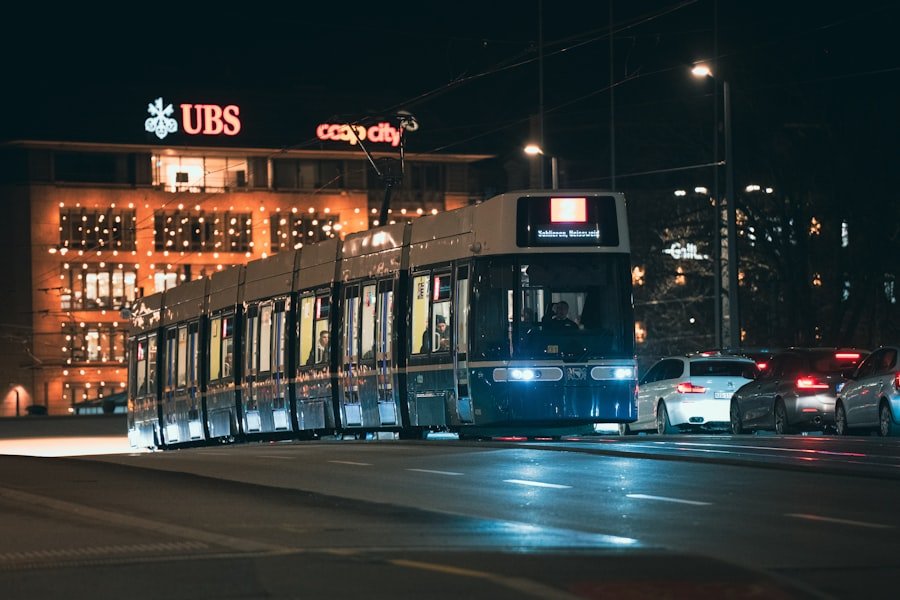
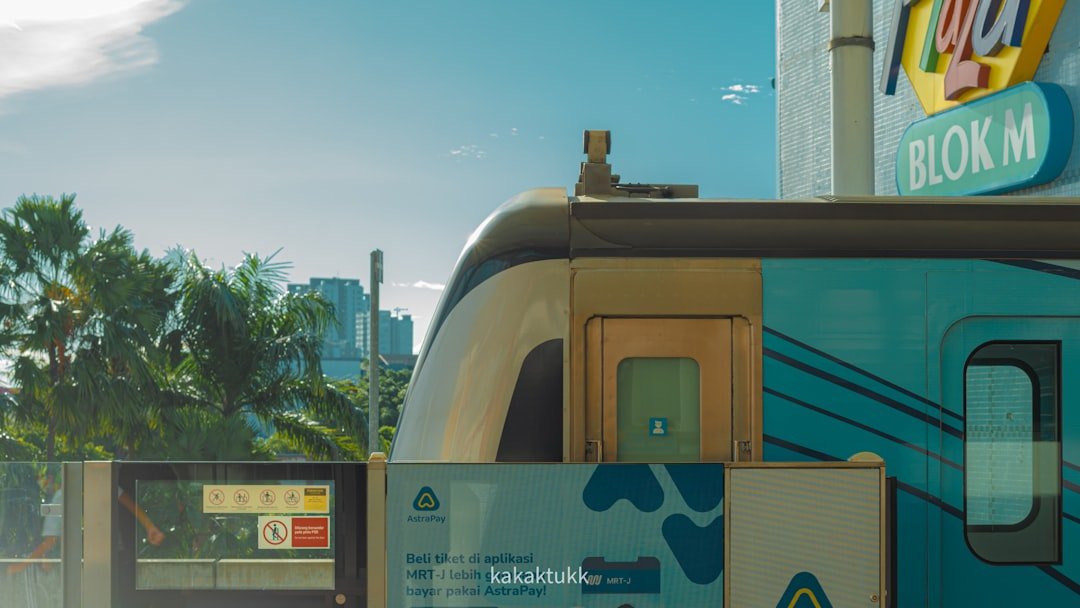
Dubai Metro is the backbone of the city’s public transport network. It is fully automated and driverless, with air-conditioned trains and stations. The operating network consists of the Red and Green Lines, including the Route 2020 extension that serves areas toward Expo City Dubai.
The Red Line serves major locations including Dubai International Airport, Burj Khalifa/Dubai Mall, Business Bay, Mall of the Emirates, Dubai Marina-area connections, Ibn Battuta, and Expo 2020. The Green Line focuses more heavily on Deira, Bur Dubai, Dubai Healthcare City, Al Jadaf, and Creek.
Regular Dubai Metro Hours
| Day | Regular Station Hours |
|---|---|
| Monday–Thursday | 5:00 AM–12:00 midnight |
| Friday | 5:00 AM–1:00 AM the following day |
| Saturday | 5:00 AM–12:00 midnight |
| Sunday | 8:00 AM–12:00 midnight |
Note: These are regular RTA station hours. First and last train times can differ by station and destination, while Ramadan, public holidays, New Year’s Eve, and major events can have special schedules. Check RTA’s timetable or S’hail on the day you travel.
Using the Metro From Dubai International Airport
The Red Line serves Dubai International Airport at Airport Terminal 1 and Airport Terminal 3 stations. This makes the Metro convenient for travelers staying near Downtown Dubai, Deira, Bur Dubai, Sheikh Zayed Road, or areas farther along the Red Line.
Terminal 2 does not have its own Metro station, so passengers using Terminal 2 normally need a bus, taxi, or another connection to reach the rail network.
Metro stations have signs and digital information displays, and trains include designated cabins or areas such as Gold Class and women-and-children sections. Always enter the cabin appropriate for your ticket and passenger category.
Using Dubai’s Bus Network
Dubai’s public buses extend the RTA network far beyond Metro and Tram corridors. They are particularly useful for residential districts, first- and last-mile connections, and destinations where a Metro station is not within comfortable walking distance.
RTA reported a fleet of more than 1,300 public buses in its recent strategic planning information. During 2026, it also began phased deployment of 637 new buses that comply with Euro 6 low-emission standards. The deployment includes 40 electric buses.
Because routes and service patterns change as new neighborhoods develop, a static route count can quickly become outdated. Use RTA’s S’hail journey planner to check the best route, stop, transfer, current departure information, and any service changes before starting your trip.
Many buses connect directly or indirectly with Metro stations, creating useful multimodal journeys. Tap your nol card when boarding and again when leaving where required so the correct fare is calculated.
Exploring Dubai by Water Taxi, Abra, and Ferry
Dubai’s marine network includes several different services, and they should not be treated as interchangeable.
Dubai Water Taxi
RTA currently describes Dubai Water Taxi as an air-conditioned service focused on Dubai Marina. Its Marina service connects stops including Marina Terrace, Marina Walk, Dubai Marina Mall, and Marina Promenade. Current published fares for these Marina segments start at AED 7, with the full Marina route costing up to AED 21 depending on the number of stops.
Traditional and Modern Abras
Abras are the classic choice for short trips across Dubai Creek. RTA’s motorized traditional abra routes link areas such as Bur Dubai and Deira, and the published fare for the traditional motorized Creek crossing is AED 1 per passenger in cash.
Other modern or heritage abra services operate on different routes and use different fares. For example, some air-conditioned and petrol heritage abra routes are priced from AED 2.
Dubai Ferry
Dubai Ferry is better suited to longer marine journeys and sightseeing than a basic Creek crossing. RTA operates multiple Ferry routes, including services that provide views of Dubai’s waterfront and coastline.
Note: Marine transport payment methods and schedules vary by service. Some traditional abra trips use cash, while other marine services have separate tickets or booking arrangements. Check the exact route before boarding rather than assuming every boat uses the same nol fare system.
Getting Around Dubai by Tram
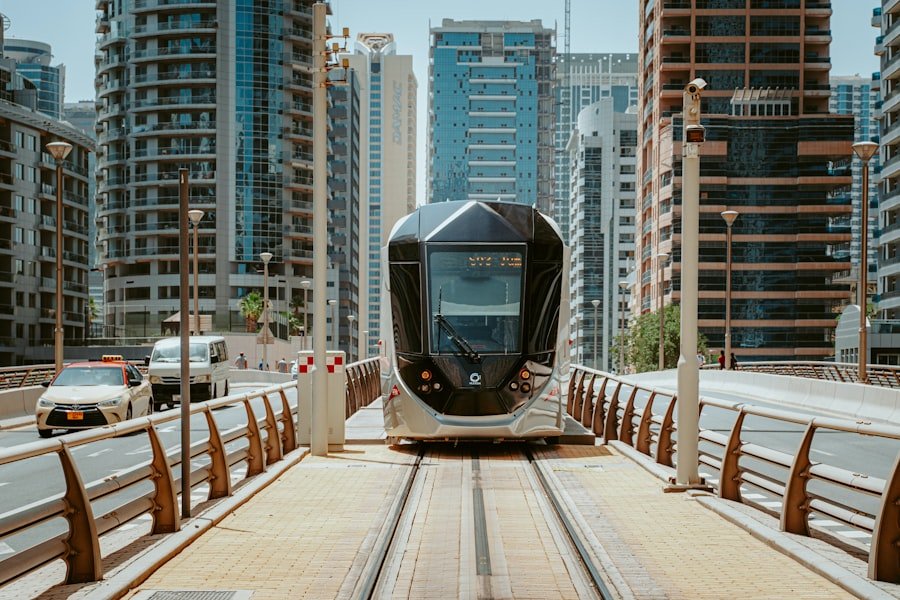
Dubai Tram is especially useful around Dubai Marina, Jumeirah Beach Residence (JBR), Dubai Media City, Palm Jumeirah, Knowledge Village, and Al Sufouh. The system runs for roughly 11 km and serves 11 stations.
Al Sufouh is a Tram station and terminus; it is not the Metro interchange described in the original article. Transfers between the Tram and the Red Line are available in the Dubai Marina/Jumeirah Lakes Towers area through nearby stations, including the connections around Sobha Realty and DMCC.
The Tram also gives passengers access to the Palm Jumeirah area, where they can continue toward other local transport options.
Regular Dubai Tram Hours
- Monday–Saturday: approximately 6:00 AM–1:00 AM the following day.
- Sunday: approximately 9:00 AM–1:00 AM the following day.
As with the Metro, special-event and holiday schedules may differ. Check RTA before traveling late at night.
Tips for Using Public Transport in Dubai
A few practical habits can make public transport in Dubai much easier, especially for first-time visitors.
- Get a nol card early: It simplifies Metro, Tram, and bus travel and removes the need to buy a separate ticket for every journey.
- Keep enough balance: RTA advises keeping at least AED 7.50 on a standard nol card before starting a trip.
- Tap correctly: Remember to check in and check out so the system can calculate the correct fare.
- Use S’hail: The RTA journey-planning service provides route, mode, timing, and transfer information and is more reliable than relying on an old static route list.
- Check Friday and Sunday schedules: Operating hours are not identical every day.
- Allow time for walking: Some attractions, malls, hotels, and Tram connections still require a walk after leaving the station.
- Follow cabin rules: Pay attention to signs for Gold Class and women-and-children cabins.
- Recheck holiday schedules: RTA may extend, shorten, or otherwise adjust Metro, Tram, bus, and marine services during major events and public holidays.
Accessibility
RTA has designed much of its public-transport infrastructure for People of Determination. Metro and Tram facilities include features such as lifts, wide access gates, tactile guidance, wheelchair spaces, and audio or visual information. Public buses also include accessibility features designed to help wheelchair users board and travel more comfortably.
If you need a specific accessible route, check the station and journey details before departure because the exact facilities can vary by location and transport mode.
Future Developments in Dubai’s Public Transport System
Dubai is already building and approving major expansions rather than merely discussing possible future Metro lines.
Dubai Metro Blue Line
The Blue Line is under construction and will add 30 km and 14 stations to Dubai’s Metro network. It will connect with the existing Red and Green Lines and serve areas including Dubai Festival City, Dubai Creek Harbour, International City, Dubai Silicon Oasis, Academic City, Mirdif, and Al Warqa.
RTA is targeting September 9, 2029 for the line’s opening.
Dubai Metro Gold Line
Dubai approved the Gold Line in April 2026. The planned fully underground Metro line will extend about 42 km and include 18 stations. It is designed to connect with the Red and Green Lines as well as Etihad Rail at selected locations.
The planned inauguration date is September 9, 2032.
Cleaner Buses and Higher Public-Transport Use
RTA’s 2026 bus deployment includes Euro 6 vehicles and 40 electric buses. RTA has also stated a longer-term goal of moving the public-bus fleet toward electric and hydrogen power.
Dubai’s share of trips made by public transport and shared mobility reached 22.3% in 2025. RTA’s stated target is to raise that share to 25% by 2030.
The scale of the system is already significant. During the first half of 2026, Dubai Metro carried about 136.5 million riders, public buses carried 85.1 million, Dubai Tram carried 3.8 million, and marine transport carried 8.1 million passengers.
If you’re also browsing other TaglineToday features, the site’s separate article about Asian melon covers a different food topic.
Frequently Asked Questions
What are the main modes of public transport in Dubai?
The main RTA public transport modes are Dubai Metro, public buses, Dubai Tram, and marine transport. Marine options include traditional and modern abras, Dubai Ferry, and Dubai Water Taxi. Taxis and licensed ride-hailing services are also widely available for door-to-door journeys.
How does the Dubai Metro operate?
Dubai Metro is a fully automated, driverless rail network built around the Red and Green Lines. Passengers normally use a nol card, tap in at the entry gate, ride to their destination, and tap out so the correct zone-based fare can be deducted.
What time does Dubai Metro open and close?
Regular station hours are 5:00 AM to midnight Monday through Thursday, 5:00 AM to 1:00 AM the following day on Friday, 5:00 AM to midnight on Saturday, and 8:00 AM to midnight on Sunday. First and last train times can vary by station, and special-event schedules may differ.
How much does Dubai public transport cost with a nol card?
For a standard Silver nol card, current regular fares are AED 3 within one zone, AED 5 across two adjacent zones, and AED 7.50 for journeys crossing more than two zones. Other ticket and card types have different prices.
What is Dubai’s public bus system like?
Dubai’s RTA bus network provides extensive city coverage and connects many neighborhoods with Metro stations. Buses are air-conditioned, use nol payment, and are particularly useful for destinations outside the main rail corridors. Routes change periodically, so RTA’s S’hail journey planner is the best place to check a current trip.
What are water taxis and abras in Dubai?
They are different marine services. Traditional abras are best known for inexpensive crossings of Dubai Creek, while Dubai Water Taxi currently serves selected Dubai Marina routes in air-conditioned vessels. Dubai Ferry provides longer marine and sightseeing journeys.
Can I take the Metro from Dubai International Airport?
Yes. The Red Line serves Airport Terminal 1 and Airport Terminal 3. Terminal 2 does not have its own Metro station, so passengers using Terminal 2 need another transport connection to reach the rail network.
Are there other forms of transport in Dubai?
Yes. In addition to Metro, buses, Tram, abras, Ferry, and Water Taxi, Dubai has RTA taxis, licensed ride-hailing services, shared mobility options, and other first- and last-mile services. The best choice depends on your destination, travel time, budget, and proximity to a rail or bus stop.
Sources
- Dubai Roads and Transport Authority — Public Transport Timetables — Metro, Tram, marine, and bus operating schedules.
- Dubai Roads and Transport Authority — nol Fares — official fare zones, Silver Card fares, Red Ticket fares, and travel-pass information.
- Dubai Roads and Transport Authority — About nol Cards — check-in, check-out, and minimum-balance guidance.
- Dubai Roads and Transport Authority — Marine Transport — abra, Dubai Ferry, Water Taxi routes, fares, and passenger information.
- Dubai Roads and Transport Authority — First-Half 2026 Ridership Report — current Metro, Tram, bus, marine ridership, bus deployment, and 2030 mobility target.
- Dubai Roads and Transport Authority — Dubai Metro Gold Line — Gold Line length, stations, investment, connections, and planned opening date.