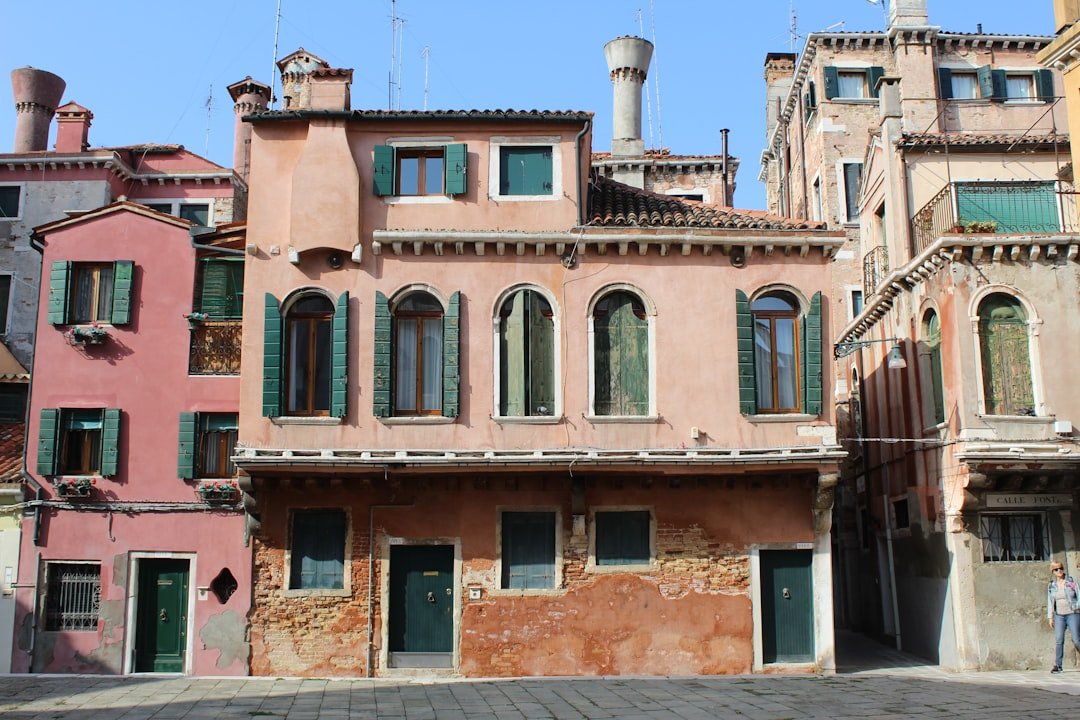
Florence gives you an unusual mix of river reflections, Renaissance architecture, hilltop panoramas, gardens, street scenes, markets, and museum interiors within a compact historic center. The best photo spots in Florence range from famous viewpoints such as Piazzale Michelangelo to quieter Oltrarno streets, and the right time of day can completely change the shot.
Quick Answer
The best photo spots in Florence include Ponte Vecchio, Piazzale Michelangelo, the Duomo, San Miniato al Monte, Boboli Gardens, Oltrarno, the Uffizi, and the Arno riverbanks. For classic skyline shots, go around sunrise or sunset; for Ponte Vecchio itself, photograph it from Ponte Santa Trinita.
Key Takeaways
- Ponte Vecchio is one of Florence’s signature subjects, but the best full-bridge view is from nearby Ponte Santa Trinita.
- Piazzale Michelangelo and San Miniato al Monte give you two of the strongest panoramic views over the Florence skyline.
- The Duomo works well both as a street-level architecture subject and as a viewpoint from Brunelleschi’s Dome or Giotto’s Bell Tower.
- Oltrarno, Mercato Centrale, and the historic center are better for details, people, markets, doorways, and everyday street scenes.
- Boboli Gardens combines formal landscaping, sculpture, fountains, and elevated views, but current access notices should be checked before visiting.
- Photography rules are stricter inside museums and religious monuments than on public streets, especially for flash, tripods, selfie sticks, and commercial shooting.
Ponte Vecchio: Florence’s classic river photo
The Ponte Vecchio, or “Old Bridge,” is one of Florence’s most recognizable landmarks. The present bridge was rebuilt in 1345 with three broad segmental arches. Butchers were ordered to move their shops onto the bridge in the 15th century, and in 1593 Grand Duke Ferdinand I ordered that they be replaced by goldsmiths and jewelers. Jewelry shops still line the bridge today. You can read the official regional history at Visit Tuscany.
Walking across Ponte Vecchio is useful for photographing shopfronts, architectural details, and views along the Arno, but standing on the bridge does not give you the classic photograph of the bridge itself. For that, walk west to Ponte Santa Trinita and look back toward Ponte Vecchio. This angle places the entire bridge, its stacked shops, and the river in one frame.
Sunset can produce warm color on the buildings and reflections on the Arno. Blue hour, just after sunset, is also effective because the sky may retain color while the bridge and riverside lights begin to glow. Early morning is better if you want fewer people and cleaner street-level compositions.
Pro Tip: For the classic Ponte Vecchio photograph, do not stop only on the bridge. Photograph it from Ponte Santa Trinita, then walk back along the river and try lower angles that include reflections.
The breathtaking view from Piazzale Michelangelo
The panoramic view
Piazzale Michelangelo is Florence’s most famous panoramic terrace. From here, you can frame the Duomo, Palazzo Vecchio, the Arno, Ponte Vecchio, Santa Croce, and the surrounding hills in one broad cityscape. Visit Tuscany identifies the piazzale as Florence’s best-known viewpoint and notes that it can be reached from the city by the Rampe del Poggi as well as by road.
Sunset is popular because the low light warms the rooftops, but it is also one of the busiest times. Sunrise or early morning normally gives you more room to compose a photograph without a dense crowd along the railing. If sunset is your priority, arrive well before the sun reaches the horizon so you can choose a position.
A touch of art
The square also contains bronze copies of Michelangelo works, including David and the four allegorical figures from the Medici Chapels. These can work as foreground subjects while the historic center spreads out behind them. The replicas are part of the 19th-century design of Piazzale Michelangelo rather than original Michelangelo sculptures.
A serene environment
The paths around the hill make it possible to continue beyond the main terrace instead of leaving after one skyline photograph. Changing your elevation and foreground can give you a less familiar view of the same skyline. From Piazzale Michelangelo, you can also continue uphill to San Miniato al Monte for another panoramic perspective.
The stunning architecture of the Duomo
The Duomo di Firenze, officially the Cathedral of Santa Maria del Fiore, dominates the center of Florence. The first stone was laid in 1296. The cathedral was consecrated in 1436 after the completion of Filippo Brunelleschi’s dome, while the façade seen today is a 19th-century neo-Gothic design. The official Opera di Santa Maria del Fiore provides the cathedral’s construction history.
Brunelleschi’s dome was built between 1420 and 1436. Opera del Duomo describes it as the largest masonry vault in the world. Its stone-and-brick structure is one of Florence’s strongest visual anchors, so you can use the dome as a subject from narrow streets, nearby piazzas, riverbanks, gardens, and distant hills.
At street level, a wide-angle lens or your phone’s wider camera can help fit the cathedral into the frame, but keep the camera as level as possible if you want to reduce leaning vertical lines. Another option is to deliberately use the surrounding buildings as a frame and photograph only part of the façade, dome, or bell tower.
Inside the cathedral, the dome is decorated with the Last Judgment fresco cycle by Giorgio Vasari and Federico Zuccari. Photography is generally allowed under current visitor rules, but flash, tripods, and selfie sticks are prohibited. Religious spaces also require respectful behavior and appropriate dress. Check the official visitor information before your visit because access rules and restoration work can change.
Photograph Florence from above
Two of the strongest elevated photography options are Brunelleschi’s Dome and Giotto’s Bell Tower. The dome climb involves 463 steps with no elevator. Giotto’s Bell Tower has 414 steps and also has no elevator. Both climbs can be difficult for people with vertigo, claustrophobia, cardiovascular problems, or mobility limitations.
2026 Note: Giotto’s Bell Tower is currently undergoing major restoration work. The top terrace remains accessible, but Opera del Duomo warns that some views can be partly reduced during the work.
The hidden gems of the Oltrarno neighborhood
| Hidden Gem | Location | Why It Is Worth Photographing |
|---|---|---|
| Piazza Santo Spirito | Central Oltrarno | A lived-in neighborhood square with market activity, café life, architecture, and local street scenes. |
| Brancacci Chapel | Santa Maria del Carmine | A major Renaissance fresco cycle begun by Masolino and Masaccio and later completed by Filippino Lippi. |
| Giardino Bardini | Costa San Giorgio | Terraces, greenery, seasonal flowers, stairways, and elevated Florence views. |
| Le Volpi e l’Uva | Piazza dei Rossi 1 | A small Florence wine bar near Ponte Vecchio that can add an intimate Oltrarno detail stop between outdoor photo locations. |
The Oltrarno neighborhood lies south of the Arno and has a different visual rhythm from the busiest streets around the Duomo. Artisan workshops, shutters, small squares, narrow lanes, and traditional storefronts make it useful for detail photography and street scenes.
Instead of looking only for famous monuments, watch for craftsmen’s windows, bicycles against old walls, stone doorways, laundry, handwritten signs, and light entering side streets. These smaller details can make a Florence photo set feel more personal than a collection made only from major landmarks.
One of Oltrarno’s major sites is the Pitti Palace, the former grand-ducal residence. Behind it are the Boboli Gardens. The Brancacci Chapel is another important stop; MUS.E identifies its fresco cycle as a major Renaissance work associated with Masolino and Masaccio.
The picturesque Boboli Gardens
The Boboli Gardens spread behind Pitti Palace and cover more than 33 hectares, or roughly 82 acres. Work began in 1549 to a design by Niccolò Pericoli, known as Tribolo, for Duchess Eleonora di Toledo. Later architects and Medici rulers continued to expand and reshape the garden. The official Uffizi Galleries history describes Boboli as one of the major examples of an Italian formal garden.
For photography, Boboli offers long avenues, hedges, statues, fountains, terraces, gravel paths, changing elevation, and open views. The Fountain of Neptune, the Amphitheatre, the Viottolone, the Kaffeehaus area, and the garden’s sculpture can all give you a different composition from Florence’s dense street scenes.
The Buontalenti Grotto is one of Boboli’s best-known architectural features. It was developed in the late 16th century and is decorated with artificial rock formations, shells, sculpture, and elaborate surfaces.
Current Visitor Notice: As of September 2026, Uffizi Galleries states that special visits to the Buontalenti Grotto are temporarily suspended from September 1, 2026 through December 31, 2030. Check the official Boboli notices before planning a visit specifically around the grotto.
Boboli’s paths are often sloped and surfaced with gravel or earth, so allow more time than the map may suggest. Carry water in hot weather and use comfortable footwear. For photographs, morning and late afternoon usually produce more directional light than the middle of the day.
The charming streets of the historic center
Discovering hidden details
Florence’s historic center rewards slow walking. Narrow streets can create natural frames around towers, domes, bicycles, arches, shop signs, and people moving through small pools of light. Cafés and gelaterias also provide everyday street scenes that contrast with the city’s monumental architecture.
Instead of trying to fit every building into the frame, look for fragments: a carved doorway, a row of shutters, a church tower between buildings, or warm light falling across stone. These smaller compositions are often easier to photograph in crowded streets.
A stroll along Via de’ Tornabuoni
Via de’ Tornabuoni is known for elegant façades, historic palaces, and luxury boutiques. Reflections in shop windows can produce layered street photographs, while the long straight street gives you repeated architectural lines and changing light as the sun moves.
It is busiest during normal shopping hours. Early morning gives you cleaner architecture shots, while evening adds window light and more pedestrian activity.
Where history meets culture
Via della Vigna Nuova and the streets between Santa Maria Novella, Piazza della Repubblica, Piazza della Signoria, and the Arno provide plenty of detail subjects. The goal is not simply to photograph another monument but to show how Renaissance buildings, shops, residents, and visitors share the same streets.
The beauty of the Florence skyline from San Miniato al Monte
San Miniato al Monte sits above Piazzale Michelangelo and provides another strong Florence skyline viewpoint. The abbey was built between the 11th and 13th centuries and is one of the city’s important examples of Florentine Romanesque architecture. Its white-and-green marble façade also makes a strong photographic subject in its own right.
You can reach the abbey by continuing uphill from Piazzale Michelangelo. From the terrace area, the Duomo, Palazzo Vecchio, rooftops, Arno corridor, and hills form a broad layered cityscape. Because it is higher than Piazzale Michelangelo, the perspective changes even though many of the landmarks are the same.
Late afternoon and sunset are attractive, but do not ignore the church itself. Details in the façade, cemetery, cypress trees, geometric marble, and surrounding walls can produce quieter images than the skyline view.
San Miniato is an active religious site, so photograph respectfully and follow any on-site restrictions, especially during services.
The colorful markets of Mercato Centrale
Mercato Centrale sits in Florence’s San Lorenzo district. The 19th-century iron-and-glass market hall combines traditional food-market activity on the ground floor with a first-floor food hall and restaurants. It is a useful photography stop when you want color, ingredients, signage, food preparation, hands at work, and busy indoor scenes rather than another skyline.
Fresh produce, cheese, meat, bread, and local specialties can create strong detail photographs. The upper level offers a more contemporary food-hall atmosphere. Because businesses and visitors are close to the camera, ask permission before making an identifiable close-up of a vendor or customer, especially when you are standing at a stall.
Food subjects generally look better when photographed near natural window light than directly under mixed indoor lighting. If you are using a phone, tap on the food or person’s face to set exposure and avoid using flash unless the venue explicitly allows it.
The romantic atmosphere of the Arno River at sunset
The Arno is one of Florence’s strongest photography elements because it gives you open sky, reflections, bridges, long sightlines, and changing light. As sunset approaches, the stone buildings and bridges can take on warmer tones while the water reflects parts of the sky.
Ponte Vecchio is the most famous bridge subject, but walking along the river lets you change the foreground and distance. Ponte Santa Trinita is particularly useful for the classic Ponte Vecchio composition, while viewpoints farther east or west can create less familiar bridge sequences.
Stay for a short time after sunset. Blue hour often gives you more balanced exposure between the sky and illuminated buildings than the final minutes of direct sunlight. A wet evening can also add reflections to stone streets near the river.
The impressive art and sculptures at the Uffizi Gallery
The Uffizi is one of Florence’s major art museums, but its history is more complex than a single founding date. Cosimo I de’ Medici commissioned Giorgio Vasari to design the Uffizi building for Florence’s administrative and judicial offices, with construction beginning in 1560. Francesco I later developed a gallery for the Medici collections, including the Tribuna in the 1580s. The Gallery was officially opened to the general public in 1769. The Uffizi Galleries provides the institution’s official history.
For art photography, highlights include Botticelli’s Birth of Venus, Leonardo da Vinci’s paintings, Raphael, Caravaggio, and Michelangelo’s Holy Family, better known as the Doni Tondo. The Uffizi also contains important ancient sculpture, but it is inaccurate to describe its Michelangelo holdings as a collection of Michelangelo sculptures.
Photography can be possible inside the museum for personal or study purposes, but current Uffizi rules prohibit flash, selfie sticks, light stands, tripods, and professional equipment. Works temporarily on loan can have additional restrictions. Commercial or publication uses may require authorization.
Note: Museum rules can change and individual exhibitions may have stricter limits. Check the current Uffizi visitor rules before relying on a tripod, flash, large bag, or professional camera setup.
The unique perspectives from Florence’s historic buildings
Florence’s elevated buildings give you views that are impossible to get at street level. Rather than assuming every historic church has a public rooftop, plan around viewpoints with established visitor access.
Brunelleschi’s Dome gives you a high view across the city after a 463-step climb. Giotto’s Bell Tower has 414 steps and several openings before the summit terrace, letting you photograph the dome from a close but elevated position. The bell tower can actually be the better choice if your priority is having Brunelleschi’s dome inside the photograph instead of standing on it.
These viewpoints are physically demanding and have no elevator. Time-slot, bag-storage, and access rules apply, so book through the official Opera del Duomo system rather than assuming you can arrive with a large camera bag and climb immediately.
Rooftop terraces at hotels and restaurants can provide other perspectives, but access varies by property and may require a reservation or purchase. Treat them as optional additions rather than guaranteed public viewpoints.
How to plan a Florence photo walk
You do not need to photograph every location in one day. Florence is compact, but constantly stopping for photographs makes even short walking distances take much longer.
For early light: begin near the Duomo or Ponte Vecchio before the busiest daytime crowds arrive. Use the quiet streets for architecture and details.
For midday: move into shaded streets, markets, churches, galleries, or Oltrarno. Harsh overhead light is less important when your subject is indoors or protected by narrow buildings.
For late afternoon: work toward the Arno or climb toward Piazzale Michelangelo and San Miniato al Monte.
For sunset and blue hour: choose one major viewpoint rather than rushing between several. Piazzale Michelangelo is best for the full skyline, while Ponte Santa Trinita is stronger if Ponte Vecchio is the main subject.
Simple photography tips for Florence
- Arrive early: sunrise and early morning usually give you more working space at famous locations.
- Use architectural frames: arches, doorways, narrow streets, trees, and bridge railings can add depth.
- Keep vertical lines under control: tilting a phone or wide-angle lens sharply upward can make buildings appear to lean.
- Expose for highlights: bright marble and sunset skies can lose detail quickly. On a phone, tap the bright area and slightly reduce exposure if needed.
- Try a polarizing filter outdoors: it can reduce glare and deepen some reflections or sky tones, but rotate it while looking through the viewfinder because the effect changes with your angle to the sun.
- Stay after sunset: blue hour can produce a better balance between city lights and the remaining color in the sky.
- Respect people and worship: street photography may be part of travel photography, but close-up portraits and religious interiors deserve extra care.
Florence’s strongest photographs often come from pairing one famous landmark with a specific viewpoint, time of day, or foreground instead of simply photographing the attraction from its entrance.
If you’re looking for the best photo spots in Florence, use the locations above as a working shortlist rather than a checklist you must complete. Choose a few panoramic views, a few street-level locations, and at least one indoor or garden setting. That mix will give you a more varied record of Florence than photographing every landmark from the same eye-level angle.
Frequently Asked Questions
What are the best photo spots in Florence?
Top choices include Piazzale Michelangelo, Ponte Vecchio, Ponte Santa Trinita, the Duomo, San Miniato al Monte, Boboli Gardens, Oltrarno, the Arno riverbanks, and the Uffizi. Giotto’s Bell Tower and Brunelleschi’s Dome are also strong elevated viewpoints if you are comfortable with the stairs.
What is the best time of day to take photos in Florence?
Early morning is best for quieter streets and fewer people. Late afternoon through sunset is strong for warm light, especially from the Arno and hilltop viewpoints. Stay through blue hour if you want illuminated buildings against a sky that still has color.
Are there photography restrictions in Florence?
Outdoor public-space photography is generally straightforward, but museums, churches, exhibitions, and private properties can set their own rules. The Uffizi currently allows many personal-use photographs but prohibits flash, tripods, selfie sticks, light stands, and professional equipment. The Duomo complex also restricts flash, tripods, and selfie sticks. Always follow current on-site instructions.
What are some tips for taking great photos in Florence?
Start early, photograph important landmarks from more than one viewpoint, use streets or arches as foreground frames, watch your vertical lines when using a wide lens, expose carefully for bright marble, and remain after sunset for blue-hour light. A polarizing filter can sometimes help control glare outdoors.
Are there hidden gems in Florence that are good for photography?
Yes. Explore Oltrarno, Piazza Santo Spirito, the streets around San Niccolò, Giardino Bardini, side streets between the Duomo and Arno, and smaller piazzas away from the main visitor routes. These places are especially good for doors, workshops, bicycles, local street life, and architectural details.
Where is the best place to photograph Ponte Vecchio?
Ponte Santa Trinita is one of the best straightforward viewpoints because you can photograph the full Ponte Vecchio across the Arno. Sunset and blue hour are especially attractive, while early morning generally gives you fewer people along the river.
Can I currently visit the Buontalenti Grotto in Boboli Gardens?
Uffizi Galleries currently states that special visits to the Buontalenti Grotto are temporarily suspended from September 1, 2026 through December 31, 2030. Check the official Boboli Gardens notices before planning a visit around this feature.
Sources
- Visit Tuscany — Ponte Vecchio — history of the bridge, its shops, and the change to goldsmiths and jewelers.
- Visit Tuscany — Piazzale Michelangelo — panoramic viewpoint, access, and Michelangelo replicas.
- Opera di Santa Maria del Fiore — Plan Your Visit — official Duomo access, photography rules, climbs, and visitor requirements.
- Uffizi Galleries — Boboli Gardens History — founding, design, and development of the gardens.
- Uffizi Galleries — Rules and Regulations — current museum photography and visitor restrictions.
- MUS.E — Brancacci Chapel — official information on the chapel and Renaissance fresco cycle.