Florence has world-famous museums and monuments, but you do not need a large sightseeing budget to enjoy the city. Ponte Vecchio, Piazza della Signoria, the Florence Cathedral nave, Piazzale Michelangelo, historic neighborhoods, markets, churches, gardens, and river walks can all be enjoyed without buying a standard admission ticket. The key is knowing which places are genuinely free and which are free only on special museum days.
Quick Answer
The best free things to do in Florence include crossing Ponte Vecchio, exploring Piazza della Signoria and the Loggia dei Lanzi, entering the main Florence Cathedral, walking through Oltrarno, visiting Piazzale Michelangelo and the Rose Garden, exploring markets and street art, and visiting free churches such as San Miniato al Monte.
Key Takeaways
- Ponte Vecchio, Piazza della Signoria, Piazzale Michelangelo, the Arno riverbanks, Oltrarno, and Florence’s public squares are free to explore.
- Entry to the main Cathedral of Santa Maria del Fiore is free, but climbing Brunelleschi’s Dome and visiting most other Duomo monuments requires a paid pass.
- Boboli Gardens and the Medici Chapels are normally ticketed, but qualifying free-admission days can make them free.
- The Rose Garden, San Miniato al Monte, Santo Spirito, and the Biblioteca delle Oblate add strong no-cost experiences beyond the headline sights.
- Check official opening hours before visiting churches, museums, and gardens because schedules can change for worship, holidays, restoration work, or special events.
What Is Actually Free in Florence?
Not every attraction commonly included in a “free Florence” list is free every day. This quick guide separates genuinely free experiences from places where free entry depends on the date.
| Experience | Free? | What to Know |
| Ponte Vecchio | Yes | Walking across the bridge costs nothing. |
| Piazza della Signoria and Loggia dei Lanzi | Yes | The outdoor square and sculpture loggia can be explored without a museum ticket. |
| Florence Cathedral | Main cathedral only | The cathedral nave is free. The dome, bell tower, museum, Baptistery, and Santa Reparata require the appropriate pass. |
| Piazzale Michelangelo and Rose Garden | Yes | Both provide excellent city views without an admission charge. |
| Boboli Gardens | Usually no | Normally ticketed, with free admission available on qualifying museum-free days and for eligible visitors. |
| Medici Chapels | Usually no | A state museum that participates in designated free-admission days. |
Cross the Ponte Vecchio
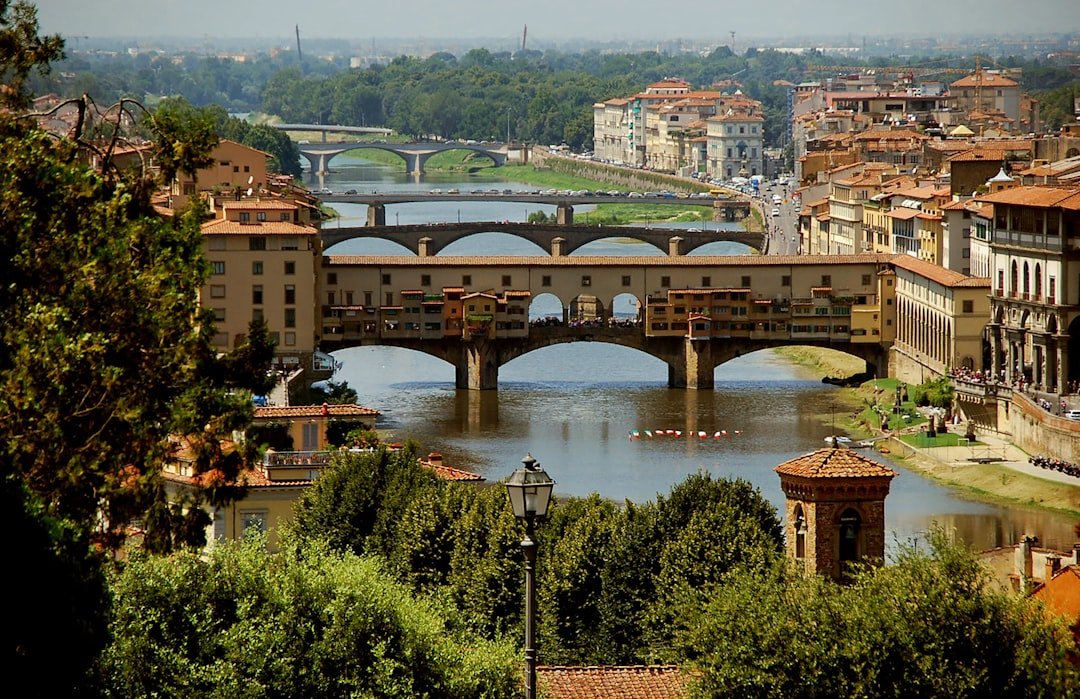
The Ponte Vecchio, or “Old Bridge,” is one of Florence’s best-known landmarks and one of its easiest free experiences. The bridge crosses the Arno on a site used for crossings since ancient Florence. After a destructive flood in 1333, the present three-arched bridge was built in 1345.
Its small masonry shops are one of the features that make it instantly recognizable. Butchers and fishmongers once traded here. In 1593, goldsmiths replaced those earlier businesses, helping create the jewelry-shopping tradition that continues today.
The Vasari Corridor also passes above part of the bridge. Built in 1565, the elevated passage connected the Medici family’s government center with their residence across the river. You do not need to enter the corridor to appreciate Ponte Vecchio itself; crossing the bridge and enjoying the river views remains completely free.
For a quieter experience, visit early in the morning. Around sunset, the bridge becomes much busier, but the changing light over the Arno makes the surrounding riverbanks especially photogenic.
Wander Through Piazza della Signoria
A Symbol of Florentine Pride
Piazza della Signoria has long been Florence’s political and civic center. In front of Palazzo Vecchio stands a copy of Michelangelo’s David. The original, once displayed in the square, is now protected inside the Galleria dell’Accademia.
A Free Open-Air Collection of Sculpture
The square itself offers far more than one David. Bartolomeo Ammannati’s Fountain of Neptune dominates one part of the piazza, while the nearby Loggia dei Lanzi acts as a free open-air sculpture gallery.
The Loggia dei Lanzi contains major works including Benvenuto Cellini’s Perseus and Giambologna’s Rape of the Sabine Women. You can experience these works without buying a ticket to the nearby Uffizi Gallery.
A Living Part of Florence
Piazza della Signoria is still a functioning public square rather than a museum courtyard. Residents, visitors, performers, and walking groups move through it throughout the day. The surrounding cafés charge for food and drinks, but exploring the piazza itself costs nothing.
Visit the Florence Cathedral
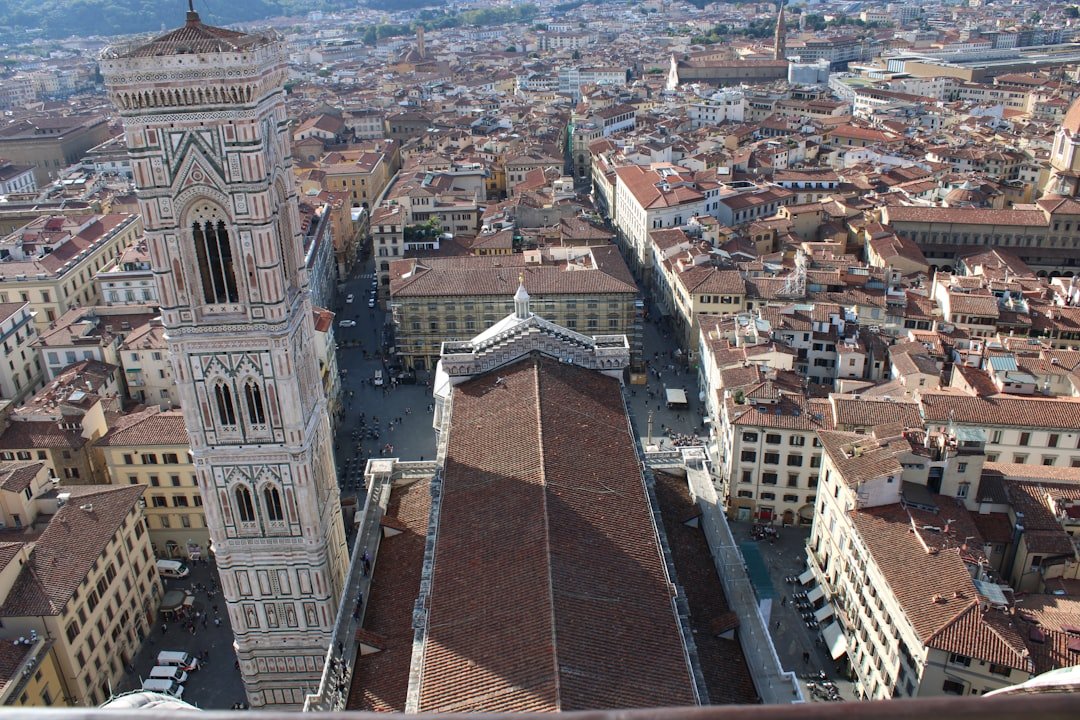
The Cathedral of Santa Maria del Fiore is one of the most important free interiors you can visit in Florence. The vast Gothic church was completed with Filippo Brunelleschi’s famous dome and was consecrated in 1436. Its exterior combines white, red, and green marble, while the interior includes monumental Gothic arches, stained glass, decorated floors, and the enormous dome above the crossing.
According to the Opera di Santa Maria del Fiore, admission to the main cathedral is free and does not require a standard entrance ticket.
Note: “The Duomo is free” does not mean the entire Duomo complex is free. Climbing Brunelleschi’s Dome, entering Giotto’s Bell Tower, the Baptistery, the Opera del Duomo Museum, and Santa Reparata requires the appropriate paid pass. As of September 2026, the standard adult Brunelleschi Pass is €30.
If your goal is a completely free visit, enjoy the cathedral nave and admire the dome from ground level. The paid dome climb includes 463 steps and no elevator, so it is a separate experience rather than part of normal free cathedral admission.
Explore the Boboli Gardens on a Free-Admission Day
| Location | Behind Pitti Palace, Florence |
| Area | More than 33 hectares, or about 82 acres |
| Development began | 1549 for Duchess Eleonora of Toledo |
| Highlights | Historic sculptures, fountains, grottos, formal gardens, and panoramic viewpoints |
| Admission | Normally ticketed; free on qualifying free-admission days and for eligible categories |
The Boboli Gardens are a landmark of Italian garden design. Created behind Pitti Palace for the Medici court, the gardens combine carefully planned avenues with fountains, grottos, sculptures, terraces, and long views over Florence.
Work began in 1549 under Niccolò Tribolo for Duchess Eleonora of Toledo. Bartolomeo Ammannati, Bernardo Buontalenti, and later designers continued developing the gardens. Among the best-known features are the Buontalenti Grotto, the Fountain of Neptune, the Viottolone avenue, and the Ocean Fountain area.
Boboli should not, however, be described as an everyday free attraction. The Uffizi Galleries’ official ticket information lists a standard same-day adult Boboli ticket at €10 as of September 2026. Admission can be free on the first Sunday of the month and other occasions designated by Italy’s Ministry of Culture.
Pro Tip: If Boboli is outside your budget or your visit does not fall on a free-admission day, use the free Rose Garden below Piazzale Michelangelo for greenery and excellent skyline views.
Stroll Through the Oltrarno Neighborhood
Cross the Arno and you enter Oltrarno, literally the area “beyond the Arno.” Walking its streets is free and provides a different perspective on Florence. The neighborhood is known for historic workshops, artisan traditions, small streets, local squares, cafés, churches, and residential life.
You can look through workshop windows displaying leather goods, jewelry, woodwork, restoration projects, and ceramics without paying an entrance fee. Buying the finished products is optional.
Piazza Santo Spirito is one of the neighborhood’s natural gathering places. The Basilica di Santo Spirito, designed by Filippo Brunelleschi and begun in 1444, has free access to the main basilica under its current visitor policy. Important works include Filippino Lippi’s Virgin and Child with Saints. A separate museum route leads to Michelangelo’s youthful wooden Crucifix and may carry a small admission charge.
Admire the Street Art in Florence
Discover Street Art While You Walk
Florence is famous for Renaissance painting and sculpture, but contemporary art also appears on walls, shutters, signs, and small corners of the city. Exploring it costs nothing because much of the work can be seen directly from public streets.
Oltrarno and the San Niccolò area are particularly useful places to keep your eyes open. Rather than looking only at major monuments, watch for small interventions that interact with Florence’s architecture and street furniture.
Look for Verified Florence Street Artists
The City of Florence’s street-art guide highlights artists and projects connected with names such as Clet, Blub, Exit/Enter, Ache77, James Boy, and others.
Clet is especially recognizable for playful alterations to traffic signs, while other artists use painted figures, paste-ups, murals, and graphic interventions. Part of the fun is noticing these works unexpectedly while walking between Florence’s historic attractions.
Street Art Beyond the Historic Center
Florence’s urban-art scene is not limited to the most heavily visited streets. Municipal projects have also brought murals to parks and neighborhoods outside the tight historic core. If street art is one of your main interests, the official city guide provides useful starting points for exploring these projects.
Take a Leisurely Walk Along the Arno River
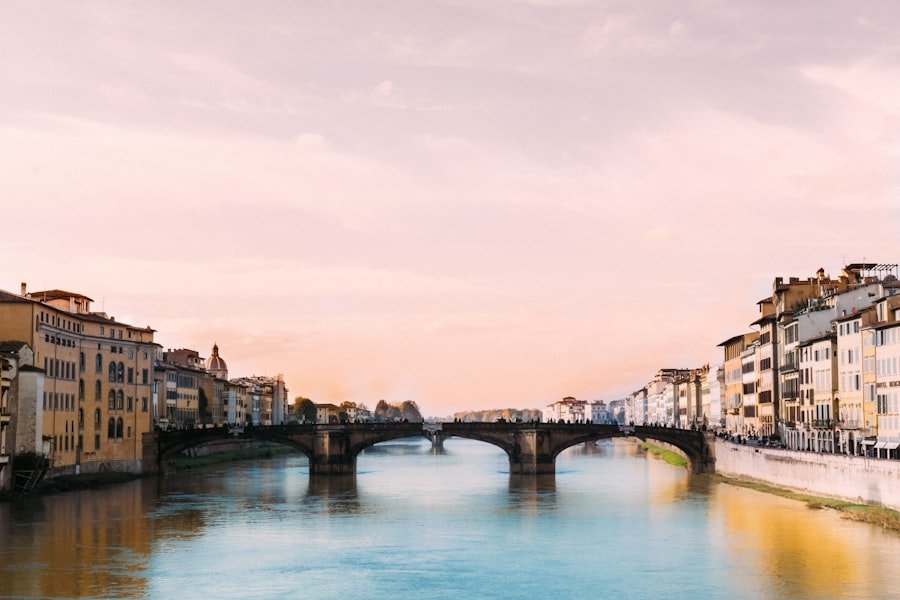
Walking beside the Arno is one of the simplest free ways to see Florence from a different angle. The river passes through the historic center beneath a sequence of bridges, with towers, churches, palaces, and embankment buildings creating a changing skyline.
Ponte Vecchio is the obvious focal point, but do not spend the entire walk on the bridge itself. Walk east or west along the river and turn back toward Ponte Vecchio to see the bridge as part of the larger cityscape.
Early morning usually offers quieter streets and softer light. Around sunset, reflections on the Arno can be beautiful, although the central sections become busier. Benches and public spaces along the route make it easy to stop without spending money at a café.
Visit the San Lorenzo Market and Mercato Centrale
Browsing Florence’s markets can be free even though shopping and eating are not. It is useful to understand that “San Lorenzo Market” can refer to two connected but different experiences.
The indoor Mercato Centrale occupies a nineteenth-century iron, cast-iron, and glass building. Its ground floor includes vendors selling produce, meat, fish, bread, and other foods. The upper level has prepared-food businesses and restaurants.
Outside the building, the San Lorenzo street market is more focused on clothing, leather goods, souvenirs, and other merchandise. Walking through either area and looking at the displays costs nothing.
If you do decide to eat, you may encounter Florentine specialties in and around the market district. Lampredotto, for example, is traditionally prepared from the cow’s fourth stomach and commonly served as a sandwich. Food purchases are optional and should not be counted as part of a zero-cost itinerary.
Explore the Historic Medici Chapels on a Free Museum Day
The Medici Chapels form the burial complex of Florence’s Medici dynasty beside the Basilica of San Lorenzo. The museum includes the Medici Crypt, the lavish Chapel of the Princes, and Michelangelo’s New Sacristy.
The New Sacristy is especially important because Michelangelo designed both its architecture and major sculptures. His celebrated figures associated with the Medici tombs include Day, Night, Dawn, and Dusk.
The Chapel of the Princes presents a very different visual experience, with extensive colored marble and hard-stone decoration reflecting Medici power and grand-ducal patronage.
Important: The Medici Chapels are not normally free. Standard adult admission is €11 as of September 2026. The museum participates in designated free-admission days, including the first Sunday of each month.
Enjoy the Panoramic Views From Piazzale Michelangelo
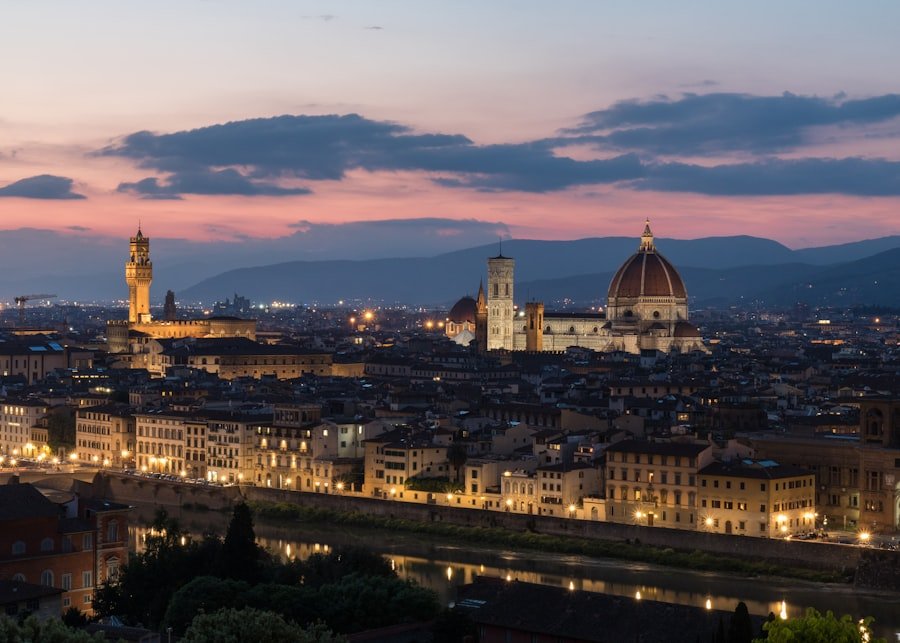
Piazzale Michelangelo is one of Florence’s classic free viewpoints. Architect Giuseppe Poggi designed the terrace as part of the major urban changes made when Florence served as capital of the Kingdom of Italy. Work on the square was completed in 1875.
From the terrace you can identify the dome of Santa Maria del Fiore, Palazzo Vecchio’s tower, Santa Croce, the Arno, Ponte Vecchio, and the surrounding hills. At the center is a monument featuring bronze copies of Michelangelo’s David and figures connected with the Medici Chapels.
Sunset is popular because the historic center catches warm evening light, but it is also the busiest period. Sunrise or morning can provide the same broad skyline with fewer people.
Walk Through the Rose Garden
Just below Piazzale Michelangelo, the Giardino delle Rose is one of the strongest genuinely free additions to a Florence itinerary. Its hillside terraces look directly toward the historic center.
The garden contains roses, greenery, works by Belgian artist Jean-Michel Folon, and a small Japanese garden donated by Florence’s sister city Kyoto. It is open throughout the year, although hours change by season. In 2026, for example, the city lists longer opening hours during spring and summer than in winter.
A simple strategy is to walk uphill through the Rose Garden, continue to Piazzale Michelangelo, and then climb a little farther to San Miniato al Monte.
Visit San Miniato al Monte
The Basilica of San Miniato al Monte stands above Piazzale Michelangelo on one of Florence’s highest historic sites. Its white-and-green marble façade and Romanesque interior make it worth the additional uphill walk.
Inside are a medieval inlaid floor, an apse mosaic of Christ giving a blessing, the Chapel of the Cardinal of Portugal, a raised presbytery, an eleventh-century crypt, and other historic works. The church is also associated with Gregorian chant during certain religious services.
Because this is an active place of worship, visitor hours differ from those of a normal tourist attraction. Check the current schedule and avoid disrupting Mass or other services.
Step Inside Santo Spirito
If you are already exploring Oltrarno, the Basilica di Santo Spirito deserves more than a passing glance. Brunelleschi’s design creates a clear, balanced Renaissance interior that feels very different from the heavily decorated façades elsewhere in Florence.
The main basilica is currently free to enter. A separate paid museum route provides access to additional spaces, including the sacristy containing Michelangelo’s wooden Crucifix. This makes Santo Spirito a useful example of a Florence attraction where a meaningful visit can be free even though an optional section costs extra.
See Florence From the Biblioteca delle Oblate
The Biblioteca delle Oblate occupies a former religious and hospital complex close to Piazza del Duomo. The public library includes a historic cloister and an upper terrace with a distinctive view toward Brunelleschi’s dome.
This is a useful stop when you want a quieter perspective on central Florence without paying for a rooftop attraction. Library hours differ by day, and it is closed on Sundays under the current schedule, so check before making a special trip.
Take in the Beauty of Florence’s Public Squares
Florence’s public squares are free outdoor spaces where architecture, history, and everyday life overlap. Piazza della Repubblica provides a large pedestrian gathering area surrounded by cafés and historic buildings. You can enjoy the architecture and street activity without buying anything.
Piazza Santa Croce provides another broad urban space in front of the Basilica of Santa Croce. Events, markets, and cultural activities are sometimes held here, although individual events or entry to the basilica may have separate charges.
Piazza Santo Spirito has a more neighborhood-oriented character, while Piazza Santissima Annunziata offers an elegant Renaissance setting. Moving between several squares on foot gives you a strong sense of Florence’s urban design without paying admission.
Use Florence’s Free Museum Days Wisely
Italy’s Domenica al Museo program provides free admission to participating state museums on the first Sunday of each month. In Florence, this can turn normally paid attractions into legitimate free experiences.
In 2026, state-museum free admission also applies on specified national dates such as April 25, June 2, and November 4 at participating institutions. Policies can change, so verify the individual museum’s official page before planning a trip around one of these dates.
A “free museum day” can save a substantial amount of money, but it can also attract much larger crowds. Choose one priority museum rather than trying to rush through several.
Boboli Gardens, the Medici Chapels, the Accademia, the Uffizi, and other state institutions may participate in these free days. By contrast, privately managed, municipal, university, and foundation museums can follow different admission rules.
Follow a Free One-Day Walking Route
If you want to spend a full day sightseeing without buying attraction tickets, Florence’s compact center makes it possible.
- Start early on Ponte Vecchio before the heaviest crowds arrive.
- Walk to Piazza della Signoria and explore the sculptures in the Loggia dei Lanzi.
- Continue to Piazza del Duomo and enter the main Florence Cathedral when visitor access is open.
- Browse Mercato Centrale and the surrounding San Lorenzo market area without making a purchase.
- Walk through Oltrarno and Piazza Santo Spirito.
- Cross toward San Niccolò and climb through the Rose Garden.
- Finish at Piazzale Michelangelo and San Miniato al Monte for late-afternoon or evening views.
This route combines a medieval bridge, Renaissance sculpture, a cathedral interior, markets, neighborhood streets, gardens, churches, and panoramic viewpoints without requiring a standard sightseeing ticket.
Note: “Free” here refers to admission. Transport, food, drinks, shopping, guided tours, and optional paid sections of attractions can still add to your daily cost.
Frequently Asked Questions
What are the best free things to do in Florence?
Some of the best genuinely free experiences are Ponte Vecchio, Piazza della Signoria and the Loggia dei Lanzi, the main Florence Cathedral, Piazzale Michelangelo, the Rose Garden, San Miniato al Monte, Oltrarno, the Arno riverbanks, Florence’s public squares, and browsing the city’s markets.
Are there free museums in Florence?
Most major Florence museums charge normal admission. However, participating Italian state museums offer free admission on the first Sunday of each month through Domenica al Museo, as well as certain other designated free days. Check the official museum page before visiting because eligibility and access procedures vary.
Is the Florence Duomo free?
Entry to the main Cathedral of Santa Maria del Fiore is free. Brunelleschi’s Dome, Giotto’s Bell Tower, the Baptistery, the Opera del Duomo Museum, and Santa Reparata require the appropriate paid pass. The free cathedral therefore should not be confused with free access to the entire Duomo complex.
Can I visit Ponte Vecchio for free?
Yes. Ponte Vecchio is a public bridge, so walking across it and enjoying the views over the Arno costs nothing. Shopping in its jewelry stores or taking a separate ticketed tour of the Vasari Corridor costs extra.
Are Boboli Gardens free?
Not normally. Boboli Gardens has standard paid admission. It can be free on qualifying state-museum free-admission days, including the first Sunday of the month, and for visitors who qualify for statutory free admission.
Are there free walking tours in Florence?
Commercial tours advertised as “free walking tours” commonly use a tip-based model, so they should not automatically be treated as zero-cost activities. A genuinely free alternative is to take a self-guided walk linking Ponte Vecchio, Piazza della Signoria, the Duomo, Oltrarno, the Rose Garden, Piazzale Michelangelo, and San Miniato al Monte.
Sources
- FeelFlorence — Florence Low Cost — official city guidance on free churches, gardens, activities, and visitor resources.
- Opera di Santa Maria del Fiore — Cathedral — official information confirming free entry to the main cathedral.
- Opera di Santa Maria del Fiore — Official Ticket Prices — current Duomo-complex pass prices and free cathedral policy.
- Uffizi Galleries — Tickets — official Boboli Gardens admission and free-admission information.
- Musei del Bargello — Medici Chapels — official history, visitor information, admission, and free-day policy.
- FeelFlorence — Florence Is Also Street Art — official City of Florence guide to local street artists and urban-art projects.