Positano offers striking photographs from its upper roads, narrow stairways, beaches, waterfront, and surrounding trails. The strongest images come from choosing a clear viewpoint, matching it to the light, and allowing enough time for the town’s steep layout. This guide shows you where to shoot, what each location offers, and how to plan an efficient photo walk.
Quick Answer
The best photo spots in Positano include the viewpoints along Via Cristoforo Colombo, Spiaggia Grande, the Church of Santa Maria Assunta, the ferry pier, Fornillo Beach, upper stairways, and the Path of the Gods near Nocelle. Start early for quieter streets, then return for late-afternoon glow or blue-hour lights.
Key Takeaways
- Via Cristoforo Colombo provides the classic elevated view of the tiled church dome, stacked houses, and sea.
- Spiaggia Grande is the easiest place to frame the entire cliffside town from below.
- Fornillo Beach and the coastal path offer quieter waterfront scenes than the main beach.
- The official CAI 327 section of the Path of the Gods runs 5.3 km from Bomerano to Nocelle.
- Early morning is best for fewer people, while late afternoon and blue hour add warmer façades and glowing town lights.
- Organized portrait, wedding, editorial, commercial, or drone shoots may be subject to municipal authorization rules.
What’s in This Article
- Charming Streets and Panoramic Viewpoints
- Spiaggia Grande
- Fornillo Beach and the Coastal Path
- Views from the Path of the Gods
- The Ferry Pier and Waterfront
- The Church of Santa Maria Assunta
- The Amalfi Coastline from the Water
- Late-Afternoon and Blue-Hour Photos
- How to Plan a Positano Photo Walk
- Frequently Asked Questions
- Sources
Positano sits within the UNESCO-listed Amalfi Coast, a landscape shaped by steep mountains, coastal settlements, and terraced gardens near the sea. The town’s peach, pink, cream, and terracotta buildings rise above the Tyrrhenian Sea, creating layers that work especially well in wide photographs.
The steep layout also affects how you explore. Roads, pedestrian lanes, staircases, and small openings between buildings reveal different views as you move downhill. Rather than rushing between every viewpoint, choose a few locations that give you a mix of elevated panoramas, street details, landmarks, beach scenes, and evening light.
Terraced slopes around the coast support lemons, olives, grapes, and other Mediterranean plants. Flowers, citrus trees, painted doors, ceramic signs, and stone walls can add a clear sense of place to close-up photographs between the larger postcard views.
Charming Streets and Panoramic Viewpoints
Products Worth Considering

Dual Cold Shoe Mounts: Attach microphones, lights, and accessories for enhanced photography or vlogging.

【MORE PLACES. MORE PHONE ANGLES】: TP02 combines a clamp, magnetic back, and tabletop tripod with a 360° adjustable pivot. Choose the mounting location first, then refine the phone angle without rebuilding the setup—giving everyday users and solo creators more ways to film hands-free where a floor tripod may be inconvenient.

Hidden Phone Tripod Mount with Cold Shoe: The phone tripod comes with a smartphone holder with a cold shoe mount, allows you to mount a microphone or led video light for selfie Vlog
Via Cristoforo Colombo Viewpoints
The public viewpoints along Via Cristoforo Colombo provide some of Positano’s most recognizable elevated compositions. From openings along the road, you can frame the colorful hillside, the majolica-tiled dome of Santa Maria Assunta, Spiaggia Grande, and the sea in one image.
Arrive early when you want fewer pedestrians and vehicles in the frame. The road is active, so remain on the pedestrian side, keep bags and tripods out of the traffic flow, and do not step into the road for a wider angle.
Pro Tip: Use a person, wall, railing, plant, or overhanging branch as a foreground element instead of zooming tightly into the hillside. This gives the photograph more depth and helps distinguish it from a standard postcard view.
Stairways, Alleys, and Hidden Corners
Positano’s narrow lanes give you more personal photographs than the broad viewpoints alone. Look for flower-covered balconies, painted doors, ceramic street signs, arched passages, small shrines, shopfronts, and stone steps leading toward the sea.
Move slowly and watch how buildings create natural frames around the dome or water. A short staircase may reveal several different compositions depending on whether you shoot upward, downward, or through an opening between buildings.
Street Details and Local Life
Homes, cafes, family-run restaurants, and small shops sit close together throughout the town. Coffee cups, linen displays, ceramics, market details, and delivery scenes can help your photographs show Positano as a working community rather than only a scenic background.
Ask before taking a close portrait of a resident, worker, or shopkeeper. Do not photograph through residential windows or enter private stairs, terraces, gardens, courtyards, or hotel spaces without permission.
Spiaggia Grande

Spiaggia Grande, also called Marina Grande, gives you the classic view from the waterline back toward Positano. The official municipal description highlights the sea, Li Galli, the stacked houses, and the tiled dome of Santa Maria Assunta within the same panorama.
Stand near the shoreline and point your camera toward the hillside for the widest town view. Rows of umbrellas, small boats, beach activity, and reflections can create foreground interest. Move a few metres in either direction to separate the church dome from nearby roofs.
Early morning generally provides more open space and fewer people. Midday produces strong colors but also hard highlights on pale buildings and water. Reduce exposure slightly on a phone or camera to protect the bright sky and white façades.
Later in the day, the buildings may pick up warmer tones before the town moves into blue hour. The exact light changes with the season, weather, and shadows from the surrounding cliffs, so check the sun’s direction for your travel date rather than relying on one fixed time.
Fornillo Beach and the Coastal Path
Fornillo Beach offers a more relaxed setting than Spiaggia Grande. It is useful when you want rocky cliffs, beach umbrellas, boats, and waterfront details without placing the full central hillside in every frame.
You can reach the Fornillo area from the main waterfront by following the pedestrian route known as Via Positanesi d’America. Along the way, look back toward the sea and photograph the coastline through railings, plants, stone arches, and openings in the path.
The route includes slopes and steps. Wear shoes with grip, keep your camera secured when passing other walkers, and avoid setting up equipment where the walkway narrows.
Views from the Path of the Gods
The official CAI route 327 links Bomerano, a hamlet of Agerola, with Nocelle above Positano. From the trail, you can photograph cliffs, terraced slopes, old rural structures, the Sorrento Peninsula, Li Galli, Capri, and the coastline far below.
Path of the Gods at a Glance
| Official Route | CAI 327, Bomerano to Nocelle |
| Official Distance | 5.3 km for the CAI-listed trail section |
| Walking Time | About 2 hours one way; allow 3–4 hours with photography breaks |
| Elevation | 184 m ascent, 356 m descent; altitude ranges from 437 to 630 m |
| Difficulty | CAI category E for excursion hiking; uneven and exposed in places |
| Cost | The trail itself is free; transport and guide costs are separate |
You may see longer distance estimates in travel guides because some itineraries include the approach to the trailhead, the route beyond Nocelle, a staircase descent, or onward walking into central Positano. Check what each measurement includes before planning your transport and daylight.
Clear mornings often provide the best long-distance visibility, while spring wildflowers and autumn light can add seasonal color. Bring water, sun protection, and shoes with reliable grip. Keep both hands free on rough or exposed sections rather than walking while looking through your camera.
Warning: The trail has uneven ground and exposed sections. Stay on marked routes, keep away from cliff edges, and do not hike during thunderstorms, heavy rain, extreme heat, or when local authorities report unsafe conditions.
The Ferry Pier and Waterfront
Positano’s ferry pier and waterfront combine boats, reflections, beach activity, and the cliffside town. The area works for both wide photographs and tighter details such as ropes, painted hulls, ticket signs, wakes, and passengers arriving from the sea.
Use boats as foreground elements while keeping the church dome or hillside visible behind them. A faster shutter speed can freeze moving ferries and splashing water, while a slower handheld exposure may show gentle movement in calm reflections.
Boarding areas can become crowded quickly. Do not block ticket offices, gangways, luggage routes, emergency access, or passengers waiting for a boat. Ferry movements and sea conditions also change, so remain behind any barriers and follow crew instructions.
The Church of Santa Maria Assunta

The Church of Santa Maria Assunta is Positano’s most recognizable architectural landmark. It is an active parish church, not a cathedral. Its yellow, green, and blue majolica-tiled dome can be seen from the beach, waterfront, nearby lanes, and upper roads.
From Spiaggia Grande, place the dome within the wider hillside. From upper viewpoints, use it as the visual anchor between the buildings and sea. Around the church square, photograph the façade, bell tower, paving, arches, and movement through the surrounding lanes.
Follow posted visitor rules and check the parish’s current opening and service information before entering. Dress respectfully, silence your phone, avoid flash where prohibited, and never interrupt Mass, weddings, funerals, prayer, or other services for a photograph.
The Amalfi Coastline from the Water
A boat gives you a sea-level perspective that is impossible to reproduce from Positano’s streets. As the boat moves away from shore, the full vertical scale of the town becomes clearer, with the beach, dome, houses, terraces, and mountains stacked above one another.
The wider UNESCO-listed Amalfi Coast includes steep coastal terrain, terraced landscapes, coves, rocky points, and historic settlements. A boat journey may also give you distant views toward nearby towns and the Li Galli islands.
Protect your camera or phone from spray and use a wrist or neck strap. A fast shutter speed helps reduce blur caused by the moving boat. Keep the horizon level and leave space around Positano so the town does not feel cramped against the edge of the frame.
The coastal road also provides dramatic views, but its bends, traffic, and limited stopping areas make casual roadside photography risky. Stop only at legal, marked viewpoints and never stand in a traffic lane or lean over an unprotected edge.
Late-Afternoon and Blue-Hour Photos
Late-afternoon light can warm Positano’s pale façades and deepen the color of the sea. The exact effect changes throughout the year because the surrounding cliffs may block direct sunlight before the published sunset time.
Useful late-day locations include Spiaggia Grande, the ferry pier, upper roadside viewpoints, and terraces where you have permission to stand. Arrive before the light changes so you can choose your composition without rushing or occupying a narrow space for too long.
Stay after sunset for blue hour, when the sky remains deep blue and lights appear across the cliffside. On a phone, tap the brightest buildings and lower the exposure slightly. On a camera, brace against a stable surface or use a tripod only where it will not block pedestrians.
Products Worth Considering

【Lightweight and Portable】4 section leg can adjust tripod height from 20.4''/52cm to 64.1''/163cm; it can be folded to 15.5''/39.5cm to make it easy to put it in the carrying bag; the net weight with the ball head included is only 2.53lbs/1.15 KG.

100% LIFETIME PROTECTION: Enjoy reliable performance with lifetime coverage, guaranteeing your tripod is always protected against any defects or issues.
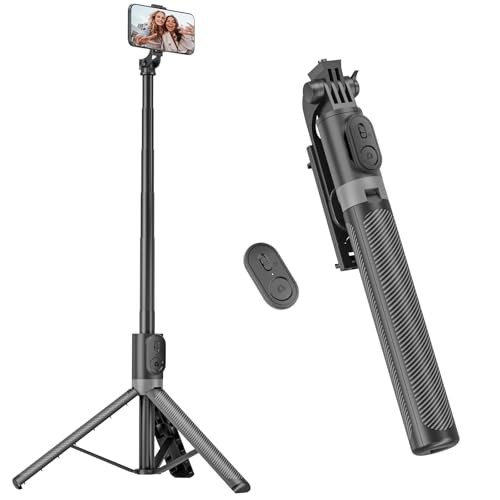
[Versatile Design] RISEOFLE 71'' Phone Tripod and Selfie Stick combo is the perfect accessory for all your cell phone photography needs.The high-quality aluminum alloy telescopic pole allows you to extend effortlessly and smoothly, and turns into a tripod with just one pull. Its sturdy yet lightweight design provides stability and reliability, ensuring that your phone or camera stays safe during use. Ideal for Selfies/Live/Video Recording/Travel
How to Plan a Positano Photo Walk
Positano has many stairs, so the most efficient route usually begins higher in town and works downhill. Starting near Via Cristoforo Colombo lets you photograph the elevated panorama before descending through the lanes toward the church and beach.
Products Worth Considering

◆Simple and Comprehensive Storage: It can accommodate the universal student digital camera with the limiting size of 4.33 x 3.07 x 2.3 in, for for Kodak PIXPRO FZ55, FZ45/ for CAMKORY/ for Lecran/ for VAHOIALD/ for Lecnippy/ for Canon PowerShot ELPH 180 and ELPH 190/ for Sony DSC-W800 and DSC-W830 and more brand digital cameras, External demison: 4.53x3.27x2.36 inches, with zipper mesh pocket fit charger and USB cable, to meet your various kinds of needs.(case only)

COMPACT FIT FOR SMALL DIGITAL CAMERAS — Internal dimensions: 5.11" x 3.74" x 2.28" . Fits small digital cameras, point-and-shoot models, and compact cameras. Compatible with most non-4K cameras with non-retractable lenses. Please check your camera dimensions before purchase — not suitable for large 4K cameras or cameras with protruding lenses.(case only)

Secure Your Gear: The NOMATIC McKinnon Accessory Straps are designed to keep your camera gear secure and organized. This set includes two durable straps that can be used to secure and bundle various travel essentials
A Practical Three-to-Four-Hour Route
- Via Cristoforo Colombo: Begin with the classic elevated town, dome, and sea view.
- Upper lanes and stairways: Photograph doors, flowers, ceramics, signs, and framed glimpses of the water.
- Santa Maria Assunta: Capture the dome from the surrounding square and nearby passages.
- Spiaggia Grande: Walk to the shoreline for the full town panorama.
- Ferry pier: Add boats, reflections, and waterfront movement.
- Fornillo or blue hour: Continue along the coastal path if you have energy, or remain near the waterfront for evening lights.
If you are staying near the beach, reverse the route and begin at Spiaggia Grande before the waterfront becomes busy. Save the ferry pier, beach, or an upper viewpoint for late afternoon or blue hour.
What to Carry
- A phone or compact camera that is comfortable to carry on stairs
- A wide or standard lens for the hillside and street scenes
- A secure strap and a small bag that keeps your hands free
- Water, sun protection, and comfortable shoes with grip
- A lens cloth for sea spray, dust, or fingerprints
- A small power bank if you use your phone for maps and photographs
Simple Camera and Phone Tips
- Keep vertical buildings straight by holding the camera level rather than tilting sharply upward.
- Lower exposure slightly when the sky, water, or pale façades are losing detail.
- Use a person, boat, doorway, railing, or plant as a foreground layer.
- Take both horizontal and vertical versions of important compositions.
- Clean your phone lens before photographing bright lights or sunsets.
- During blue hour, steady the device against a wall or railing instead of increasing digital zoom.
Stairs and Accessibility
Many famous Positano routes involve steep slopes, uneven paving, or long stairways. Travelers with limited mobility should confirm current access with the Positano Tourism Office and focus on viewpoints that can be reached from road level or with local transport. Do not assume that every beach, alley, or hiking viewpoint has step-free access.
Note: Positano publishes a broad photo and video regulation. Before arranging a staged portrait, wedding, private event, editorial, advertising, commercial, film, video, or drone shoot, confirm the current authorization, timing, fee, and public-space requirements with the municipality. Do not assume an organized session is exempt.
Respect residents when photographing homes, balconies, doorways, and private courtyards. Keep entrances, stairs, roads, church doors, shopfronts, and ferry routes clear. A considerate photographer gets better images without turning a narrow public space into a temporary set.
The best photo spots in Positano are not limited to one famous overlook. The town gives you different stories from Via Cristoforo Colombo, the alleys, Spiaggia Grande, Fornillo, the church, the ferry pier, the water, and the trails above the coast. Choose a manageable route, follow the light, and spend enough time at each location to refine your composition.
Frequently Asked Questions
What are the best photo spots in Positano?
The best photo spots include the public viewpoints along Via Cristoforo Colombo, Spiaggia Grande, the Church of Santa Maria Assunta, the ferry pier, Fornillo Beach, the upper stairways, Nocelle, and viewpoints along the Path of the Gods.
Where is the classic elevated Positano photo taken?
The classic elevated composition is available from public viewpoints along Via Cristoforo Colombo. Look for a safe pedestrian position where you can frame the church dome, stacked houses, beach, and sea without stepping into the road or entering a private terrace.
When is the best time to take photos in Positano?
Early morning is usually best for quieter lanes and beaches. Late afternoon can warm the façades, while blue hour adds glowing town lights and a deep-blue sky. The cliffs affect direct sunlight, so check the sun direction and weather for your date.
Are the main Positano photo spots free?
Public roads, pedestrian lanes, squares, shoreline viewpoints, and the Path of the Gods can generally be photographed without an admission ticket. Beach clubs, boat rides, transport, private terraces, guided sessions, and some attractions may charge separately.
Are there hidden or quieter photo spots in Positano?
Quieter options include Fornillo Beach, the coastal path from the main waterfront, upper stairways away from Spiaggia Grande, and small openings between buildings. Stay on public routes and do not enter residential stairs, hotel terraces, or private gardens without permission.
Is the Path of the Gods suitable for a casual photo walk?
It is a real hiking route rather than a paved town walk. The official CAI 327 section is 5.3 km and has uneven, exposed terrain. Reasonable fitness, suitable footwear, water, weather awareness, and comfort with heights are important.
Can you use a tripod or drone in Positano?
Use a small tripod only where it does not block pedestrians, roads, businesses, church access, or ferry operations. Positano’s municipal regulation states that drone use is not permitted without specific authorization, even when the operator holds other required credentials. Confirm current rules before the shoot.
Are there photography tours or workshops in Positano?
Private photographers and guided photo sessions may be available, but providers, prices, meeting points, and cancellation terms change. Verify the photographer’s recent work, image-delivery terms, usage rights, and whether the planned session requires municipal authorization.
Sources
- Comune di Positano: Spiaggia di Marina Grande — supports the official description of the main beach and panoramic town view.
- Comune di Positano: Beaches — supports information about Spiaggia Grande, Fornillo, Arienzo, and Laurito.
- Parish Community of Santa Maria Assunta — supports the church’s correct name, status, and history.
- CAI Monti Lattari: Path of the Gods, Route 327 — supports the official trail route, distance, time, difficulty, and elevation data.
- UNESCO World Heritage Centre: Costiera Amalfitana — supports the description of the protected coastal and terraced landscape.
- Comune di Positano: Photo and Video Regulation — supports authorization, organized-shoot, public-space, and drone guidance.