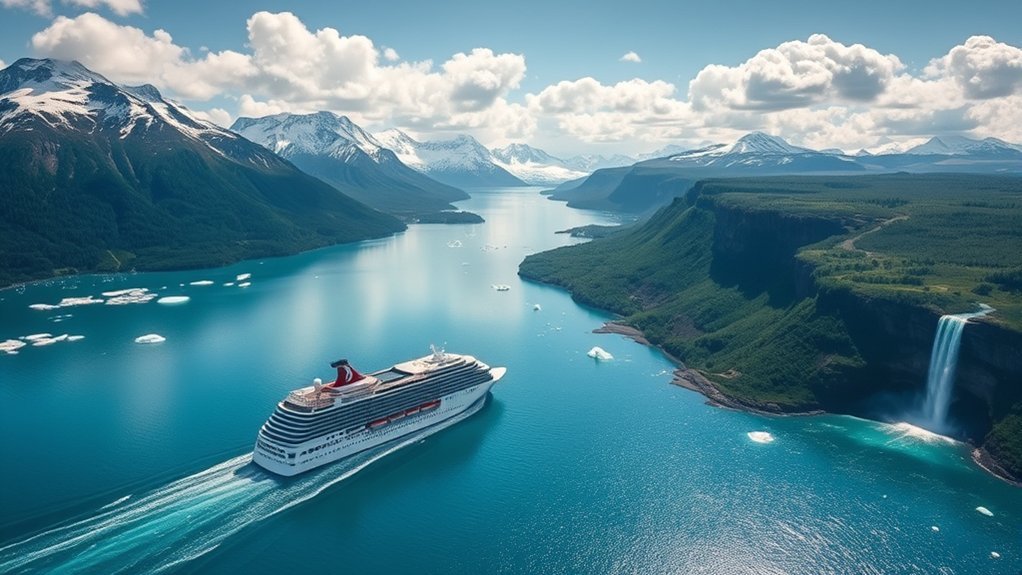
Alaska does not have to be a luxury-only destination. The biggest savings usually come from choosing one road-connected region, traveling outside the June-through-August peak, booking major expenses early, cooking some meals, and spending more time on Alaska’s free or low-cost public lands. The key is to plan around Alaska’s long distances instead of trying to see the whole state in one trip.
Quick Answer
Yes, you can visit Alaska on a budget by staying in one road-connected region, traveling in May or September, booking early, cooking some meals, and prioritizing free public lands. For 2026 trips, verify Denali road access, ferry schedules, rail fares, licenses, and activity fees before booking because Alaska logistics can change.
Key Takeaways
- Choose one region instead of paying to move repeatedly between distant parts of Alaska.
- May and September can provide lower prices than peak summer, but some seasonal services may be reduced.
- Public transit and camping can be genuinely inexpensive; scenic rail trips and remote tours usually require a larger budget.
- Most Alaska national parks do not charge an entrance fee, but transportation, camping, parking, reservations, and tours can still cost extra.
- Check current 2026 conditions before committing money, especially for Denali, ferries, fishing, and seasonal transportation.
Planning Your Trip: When to Visit Alaska
Timing has a major effect on both your experience and your budget. June through August is Alaska’s main peak travel period, with long daylight hours, broad availability of tours, and generally mild conditions compared with the rest of the year. Those advantages also bring stronger demand for flights, accommodations, rental cars, cruises, and activities.
For lower prices, consider May or September. Current Travel Alaska budget guidance says May shoulder-season prices for flights and accommodations can run about 20% to 40% below peak-summer rates. The tradeoff is that some attractions, campgrounds, transportation services, and tours operate on shorter seasonal schedules.
Traveling in May or September can reduce two of the biggest Alaska expenses: transportation and lodging.
Early fall also gives you a chance to see the Northern Lights. Dark enough nights generally return in late August, with the Interior and Fairbanks offering some of the strongest viewing opportunities. Winter can provide even lower accommodation prices in some areas, but it requires cold-weather preparation and a completely different itinerary.
Note: A cheaper shoulder-season hotel is not a bargain if the activity you traveled for has already closed. Check operating dates for parks, ferries, tours, campgrounds, and transportation before buying nonrefundable airfare.
Build Your Alaska Budget Around One Region
One of the easiest ways to overspend in Alaska is to underestimate its size. Moving between Southcentral Alaska, the Interior, Southeast Alaska, and remote areas can require long drives, ferries, trains, or additional flights.
For a lower-cost first trip, choose a region with several attractions close enough to combine:
- Southcentral: Base your trip around Anchorage and the Kenai Peninsula for road-accessible hiking, coastal scenery, Seward, Girdwood, and Kenai Fjords.
- Interior: Build the trip around Fairbanks and Denali, keeping long-distance movement relatively simple.
- Inside Passage: Focus on a small number of Southeast communities and compare ferry and air connections carefully instead of trying to visit every port.
Pro Tip: Spend more days in fewer places. Cutting one long-distance transfer can save money on transportation while giving you more time for free hiking, sightseeing, markets, museums, and wildlife viewing.
Affordable Transportation Options
Transportation is one of the largest Alaska expenses, so compare the full trip cost rather than assuming one mode is always cheaper.
| Option | Budget Use | What to Know |
|---|---|---|
| Anchorage People Mover | Excellent for city travel | Current full fare is $2 for one ride or $5 for a day pass. Check official People Mover fares. |
| Fairbanks MACS Transit | Good for destinations served by fixed routes | Check current routes and schedules before relying on transit for a specific attraction. |
| Rental car | Can work well for two or more travelers sharing costs | Compare the total of rental rate, taxes, fuel, parking, insurance, and one-way fees. |
| Alaska Railroad | Best treated as a scenic experience | For 2026, adult Adventure Class is $133 one way from Anchorage to Seward and $205 from Anchorage/Wasilla to Denali. See current Alaska Railroad fares. |
| Alaska Marine Highway | Useful for communities on the ferry network | Passenger, vehicle, route, and sailing details affect the price. Use the official AMHS fare search rather than relying on a generic ferry price. |
Do not build your itinerary around hitchhiking. Alaska’s distances can be enormous, services can be widely separated, and an unscheduled ride is not dependable transportation for reservations, lodging check-ins, or flights.
Note: The Alaska Railroad can be one of the highlights of a trip, but it should not automatically be classified as the cheapest way to move between destinations. Compare it as an experience as well as transportation.
Budget-Friendly Accommodations
Accommodation prices change significantly by destination and season. Instead of relying on one statewide hotel range, compare several lodging styles and book early.
| Accommodation | Current Planning Benchmark | Best For |
|---|---|---|
| Hostels | Travel Alaska currently describes typical rates around $40–$60 per night. | Solo travelers and travelers who need an inexpensive town base. |
| Motels and Hotels | Highly variable; peak-season Alaska lodging is commonly $200 and up. | Travelers prioritizing convenience and private facilities. |
| Bed & Breakfasts / Vacation Rentals | Prices vary by location, dates, and amenities. | Couples, families, and longer stays; a kitchen can reduce restaurant spending. |
| State Park Campgrounds | Generally about $10–$45 per night, depending on the facility. | Travelers with camping gear who want one of the lowest-cost options. |
| Public-Use Cabins | Some public cabins can cost much less than conventional hotels. | Groups comfortable bringing bedding, food, cooking supplies, and other required gear. |
Camping can provide the biggest lodging savings, especially when you already own appropriate equipment. If you must rent camping gear and a larger vehicle solely to carry it, calculate those costs before assuming camping is automatically cheaper.
Exploring National Parks on a Dime
Alaska’s national parks can be surprisingly budget-friendly. Most of the state’s national parks do not charge an entrance fee. Denali is the major exception, with a standard $15 per-person entrance fee for visitors age 16 and older.
Kenai Fjords National Park is particularly useful for a lower-cost itinerary because it charges no entrance fee. Its Exit Glacier area also has a small tent-only campground with no camping fee, although space is first-come, first-served and availability is limited.
Free Park Admission Days
The National Park Service publishes entrance-fee-free dates each year for parks that normally charge admission. Beginning in 2026, those fee-free days apply to U.S. citizens and residents; other visitors continue to pay normal applicable fees. Check the current National Park Service pass information before planning a trip around a fee-free date.
Remember that free entrance does not make every park activity free. Parking, buses, campgrounds, tours, boat transportation, reservations, or concession services may still have separate charges.
Budget-Friendly Camping Options
Camping is one of the strongest ways to control accommodation costs in Alaska. State-park campsites generally cost far less than peak-season hotel rooms, and some federal recreation areas have free or inexpensive options.
Backcountry rules differ by park. For example, backpacking in most of Denali’s backcountry requires a free permit, while other Alaska parks have different reservation, food-storage, and permit systems. Always check the specific park rather than assuming backcountry camping is permit-free.
Warning: Alaska camping requires serious food-storage and wildlife-safety planning. Follow the rules for the exact park or campground, keep food and scented items secured, and never approach wildlife for a closer view or photograph.
Affordable Guided Tours
A guided tour is not automatically a budget option. Compare the total price with what is actually included: transportation, admission, equipment, meals, wildlife interpretation, and hotel pickup can all vary.
Denali offers a good example of how choosing the right service can reduce costs. In 2026, the non-narrated East Fork Transit bus costs $33.50 for adults, while children age 15 and younger ride free with a reservation. The park entrance fee is separate.
2026 Denali Update: Because of the Pretty Rocks Landslide, buses travel only as far as East Fork at Mile 43 of the Denali Park Road during summer 2026. Check the National Park Service Denali transit page before booking.
Free and Low-Cost Outdoor Activities
Many of Alaska’s best experiences involve being outside rather than buying admission to an attraction. Good lower-cost options include:
- Hiking: Explore established trails around Anchorage, the Kenai Peninsula, Fairbanks, Denali, and other road-accessible areas. Confirm parking or day-use charges before arriving.
- Wildlife Watching: Look for wildlife from safe public viewpoints, trails, roadsides, and park transportation. Sightings are never guaranteed, and animals need plenty of space.
- Scenic Drives: A planned road trip can combine transportation and sightseeing, especially when several people share the vehicle cost.
- Beach and Waterfront Walks: Coastal towns provide plenty of scenery without requiring a cruise or paid excursion every day.
- Northern Lights Viewing: During the darker season, independent aurora viewing can cost little if you already have safe transportation to an appropriate dark location.
- Fishing: Fishing can be cheaper than booking a charter when you have suitable gear, but licenses and current regulations still apply.
If you plan to fish, check the Alaska Department of Fish and Game before casting. Residents age 18 and older and nonresidents age 16 and older generally need a sport fishing license, and fishing for king salmon can require an additional stamp.
Eating Well Without Overspending
Food costs can climb quickly if every meal comes from a restaurant. A simple strategy is to grocery shop for breakfast, snacks, trail lunches, and several dinners, then reserve part of your budget for the Alaska meals you most want to try.
Local Markets and Grocers
Supermarkets are usually the easiest place to compare prices for everyday groceries. Local markets are still worth visiting for produce, seafood, baked goods, crafts, and regional specialties, but do not assume every local product will cost less than a chain-store equivalent.
If your accommodation has a refrigerator or kitchen, buying enough groceries for several meals can reduce both restaurant spending and the time spent looking for food in smaller communities.
Affordable Dining Options
For meals out, compare food trucks, counter-service restaurants, cafés, diners, bakeries, and daily specials before choosing a full-service restaurant. Lunch can sometimes provide a less expensive opportunity to try local seafood than a large dinner.
Instead of trying to eat every meal cheaply, decide which Alaska foods matter most to you and spend deliberately on those experiences. A grocery-store breakfast and packed lunch can make room in the same day’s budget for fresh seafood at dinner.
Discounted Tours and Attractions
Paid excursions can become the largest discretionary part of an Alaska budget. Save by choosing one or two high-priority experiences rather than booking a tour every day.
- Book Early: Alaska’s official tourism guidance recommends early booking, particularly for summer travel.
- Compare Shoulder-Season Dates: May and September can have lower rates, although schedules may be shorter.
- Check the Operator’s Inclusions: A higher price may include transportation or equipment that would otherwise cost extra.
- Compare Narrated and Non-Narrated Options: In places such as Denali, a simpler transportation service can cost substantially less than a narrated tour.
- Ask About Legitimate Discounts: Senior, child, military, resident, or group pricing may exist, but confirm eligibility directly with the operator.
Visitor centers can also help you identify free ranger programs, walking routes, public lands, current transportation options, and seasonal events without relying entirely on paid tours.
Packing Essentials for Budget Travelers
Packing carefully can prevent expensive last-minute purchases. Alaska weather can change quickly, so bring layers instead of depending on one heavy garment.
- A waterproof outer layer.
- Warm insulating layers appropriate for your season and region.
- Comfortable, broken-in walking or hiking shoes.
- A reusable water bottle.
- A small daypack.
- Sun protection and insect protection when appropriate.
- Refillable snack containers or lightweight food storage.
- Charging cables, battery pack, and enough phone storage for photos.
If you are camping, budget for the gear required by the specific campground and conditions. Buying or renting equipment after arrival can erase part of the savings from a cheap campsite.
Hidden Alaska Costs to Budget For
A good Alaska budget includes more than airfare, hotel, and tours. Before booking, check for:
- Rental-car taxes, insurance, fuel, and parking.
- State-park parking or day-use charges.
- Campground reservation fees.
- Checked baggage charges, especially when carrying outdoor gear.
- Ferry vehicle charges in addition to passenger fares.
- Fishing licenses and stamps.
- Park transportation that is separate from the entrance fee.
- Airport transfers and hotel shuttles.
- Food in remote areas where grocery choices may be limited.
- Optional gratuities and equipment rentals on guided activities.
Price these items before comparing two itineraries. A hotel that costs slightly more but includes breakfast, parking, and an airport shuttle may have a lower total trip cost than a cheaper room without those benefits.
Travel Insurance: Is It Worth It?
Travel insurance may be useful for an Alaska trip because transportation and tours can involve large nonrefundable payments, while weather or other disruptions can affect complicated itineraries.
Do not assume every policy covers every cancellation, medical bill, delay, or lost bag. Benefits depend on the policy’s covered reasons, limits, exclusions, deductibles, documentation requirements, and effective dates.
Before buying a policy, compare:
- Trip cancellation and interruption: Which reasons qualify for reimbursement?
- Emergency medical coverage: What expenses and providers are covered?
- Medical evacuation: Particularly relevant when your itinerary includes remote areas.
- Travel delays: Check minimum delay periods and reimbursement limits.
- Baggage: Check per-item and total limits, especially for cameras and outdoor equipment.
Insurance is therefore less about automatically receiving reimbursement and more about buying protection that matches the financial risks in your particular itinerary.
Sample Itineraries for Every Budget
Lower-Cost Southcentral Week
Spend the first part of the trip in Anchorage using public transit where practical. Hike, explore public spaces, visit markets, and grocery shop before heading south. Spend several nights camping, hosteling, or using a simple rental on the Kenai Peninsula. Explore road-accessible scenery and Exit Glacier, then return to Anchorage. Keep paid excursions optional rather than scheduling one every day.
Mid-Range Interior Week
Spend two nights in Fairbanks, then several nights around Denali before returning to Fairbanks. Use inexpensive city transit when it matches your plans, choose lodging with breakfast or cooking facilities, and use the Denali non-narrated transit bus instead of automatically booking a more expensive narrated tour. Fill remaining days with hiking, viewpoints, ranger activities, and independent sightseeing.
Budget Trip With One Big Splurge
Another approach is to save aggressively on most days, then choose one signature Alaska experience. Camp or stay in a hostel, make breakfast and lunch yourself, hike free trails, and limit shopping. Use the savings for the glacier cruise, scenic rail journey, flightseeing trip, wildlife excursion, or special meal that matters most to you.
This approach often creates a more memorable trip than spending moderately on numerous activities you were not particularly excited about.
Frequently Asked Questions
What are the best ways to save money on souvenirs in Alaska?
Set a souvenir budget before shopping, compare several vendors, and buy one meaningful locally made item instead of many generic gifts. Markets and direct-from-artist purchases can also make it easier to understand who produced an item and where your money is going.
How can I find local events or festivals for free entertainment?
Check official destination calendars, visitor centers, community pages, libraries, and tourism offices shortly before your trip. Alaska communities regularly host markets, arts events, music, seasonal celebrations, and public programs, but dates can change from year to year.
Are there budget-friendly ways to fish in Alaska?
Independent shore or river fishing can cost less than a charter when you already have appropriate gear, but licenses and regulations still apply. Alaska residents age 18 and older and nonresidents age 16 and older generally need a sport fishing license, and king salmon can require an additional stamp. Check current area regulations before fishing.
Where can I shop for affordable local crafts?
Try seasonal markets, community festivals, visitor-center recommendations, and shops that sell work directly from Alaska artists. Anchorage Market is one established seasonal option. Compare prices and focus on a small number of items rather than assuming every tourist-area shop has the same pricing.
How can I save on winter gear rentals in Alaska?
Compare rental prices before arrival, ask whether your tour or accommodation supplies specialized winter clothing, and avoid renting equipment twice for overlapping activities. For basic layers that you will use repeatedly, bringing your own can be cheaper than daily rental charges.
What is the cheapest time to visit Alaska?
May and September are often strong choices for travelers balancing lower prices with access to summer-style activities. May can offer substantial savings compared with peak summer, while September combines lower demand with darker nights suitable for aurora viewing. Always confirm seasonal operating dates.
Do I need a rental car for a budget Alaska trip?
Not always. Anchorage and Fairbanks have public transit, while trains, ferries, shuttles, and tours serve selected destinations. A rental car becomes more useful when several people share the cost or when your itinerary includes trailheads and communities poorly served by scheduled transportation.
What should budget travelers know about Denali in 2026?
The Denali Park Road remains closed beyond Mile 43 in summer 2026 because of the Pretty Rocks Landslide. Non-narrated buses travel to East Fork at Mile 43. The 2026 adult transit fare is $33.50, children age 15 and younger ride free with a reservation, and the park entrance fee is separate.
Sources
- Travel Alaska: Alaska on a Budget — shoulder-season savings, one-region planning, lodging, camping, and general budget guidance.
- Municipality of Anchorage: People Mover Fares and Passes — current Anchorage public-transit fares.
- Alaska Railroad: Train Fares — official 2026 rail pricing.
- Alaska Marine Highway System: Fares — current ferry fare and booking guidance.
- National Park Service: Denali Transit Buses — 2026 East Fork transit fares, destinations, and Mile 43 access.
- Alaska Department of Fish and Game: Sport Fishing Licenses — license, age, king salmon stamp, and harvest-record requirements.