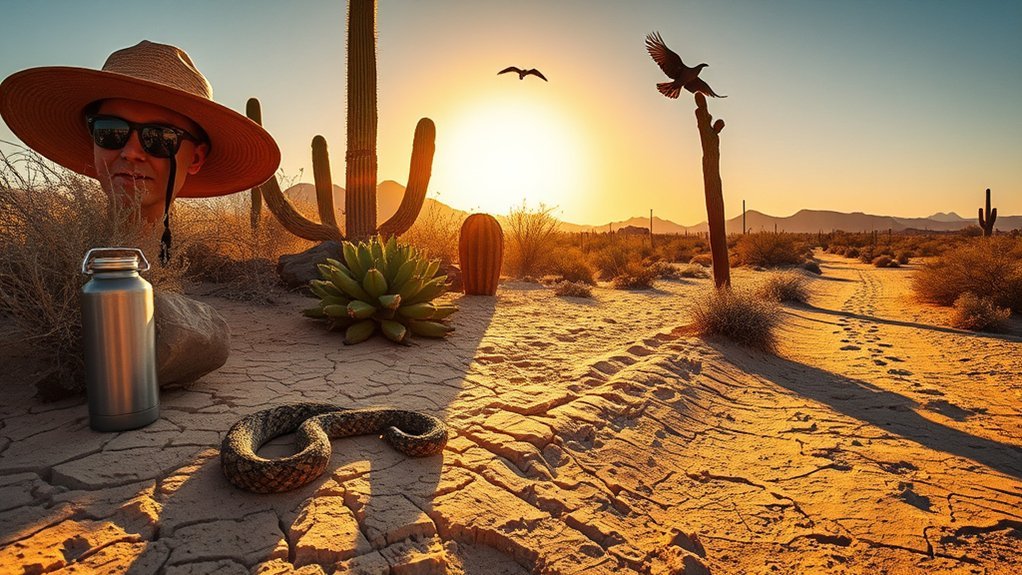
Arizona in August gives you two very different travel experiences: severe desert heat at lower elevations and much cooler mornings in mountain towns. It also falls inside Arizona’s monsoon season, so a clear morning can change into lightning, heavy rain, flash flooding, strong wind, or blowing dust later in the day. A good trip depends on choosing the right region, starting early, and keeping indoor or higher-elevation backup plans ready.
Quick Answer
Arizona in August is extremely hot in Phoenix, Tucson, and other low-desert areas, while Flagstaff and higher mountain towns are milder. August also brings active monsoon weather. Plan outdoor time near sunrise, avoid exposed hikes during storm buildup, and use hot afternoons for museums, meals, or rest.
Key Takeaways
- Start hikes, bike rides, and outdoor sightseeing at sunrise or soon after.
- Choose Flagstaff, Prescott, the White Mountains, or other higher-elevation areas for cooler weather.
- Treat thunder, flash-flood warnings, flooded roads, and blowing dust as reasons to stop or change plans.
- Remember that Sedona and the Grand Canyon’s inner canyon can still be dangerously hot.
- Pack more water than you expect to need, plus sun protection, rain protection, and a charged phone.
What’s in This Article
- August Weather in Arizona at a Glance
- Monsoon Season: What to Expect and How to Stay Safe
- Phoenix Valley Weather in August
- Tucson and Southern Arizona Weather in August
- Northern Arizona and Flagstaff Weather in August
- Grand Canyon Weather in August
- Sedona, Prescott, and High-Country Escapes in August
- Outdoor Activities That Work in August
- Indoor and Air-Conditioned Options for Hot Afternoons
- Notable Festivals, Concerts, and Food Events
- Driving in Monsoon Rain and Dust Storms
- Wildfire, Smoke, and Closure Checks
- Packing List and Practical Gear for August Travel
- Planning Tips: Timing Your Days and Staying Safe
- Frequently Asked Questions
August Weather in Arizona at a Glance
August weather changes sharply with elevation. Low-desert cities stay very hot day and night. Mountain locations cool more after sunset, but they can still get strong thunderstorms, lightning, hail, and flash floods.
The figures below are climate averages, not a trip forecast. Actual temperatures and rainfall can vary widely from one year or neighborhood to another.
| Location | Typical August High | Typical August Low | What It Means for Your Trip |
|---|---|---|---|
| Phoenix | 105.1°F | 83.6°F | Outdoor activity needs very early timing. Evenings can stay hot. |
| Tucson | 98.6°F | 75.2°F | Still very hot, with a stronger August rainfall normal than Phoenix. |
| Flagstaff | 79.3°F | 50.6°F | Milder days and cool nights, but afternoon storms remain a major concern. |
| Phantom Ranch, Grand Canyon | 103°F | 75°F | The inner canyon is much hotter than the rim and is not a cool escape. |
Phoenix, Tucson, and Flagstaff figures use 1991–2020 National Weather Service normals. The Phantom Ranch figures come from the National Park Service’s long-term inner-canyon averages. Check the local forecast for each stop rather than using one statewide forecast.
Note: Arizona’s official monsoon season runs from June 15 through September 30, but that does not mean it rains everywhere each day. Storm coverage, timing, and intensity can change quickly.
Monsoon Season: What to Expect and How to Stay Safe
Arizona’s monsoon is a seasonal wind and moisture pattern, not one individual storm. In August, that pattern can support thunderstorms with brief heavy rain, lightning, strong outflow winds, hail, blowing dust, and rapid temperature changes.
Watch for flash floods in washes, low roads, slot canyons, and narrow creek corridors. Move to higher ground when water rises, and never drive around a barricade or through a flooded roadway.
Typical Monsoon Patterns
Moisture often moves into Arizona from the south and southeast. Strong daytime heating then helps clouds and thunderstorms build. Many days begin sunny, but clouds may grow by late morning or afternoon.
Do not depend on a fixed storm hour. Afternoon and evening storms are common, yet storms can form earlier, continue after dark, or develop far upstream from your location. Check the National Weather Service forecast, radar, and alerts before every outdoor plan.
- Scan the sky before leaving a safe building or vehicle.
- Know where the nearest substantial shelter is located.
- Download maps before entering areas with weak cell service.
- Keep a simple emergency kit in your vehicle and daypack.
Flash Flood Risks
Flash floods can form within minutes. A storm does not need to be directly overhead. Rain falling miles away can rush through a dry wash, canyon, or creek channel later.
Avoid slot canyons, narrow gorges, washes, low-water crossings, and creek beds when storms are possible. If water begins rising, move to higher ground immediately. Do not wait to see whether the flow becomes stronger.
Warning: Never enter a flooded road. Water can hide damaged pavement, and moving water can push a vehicle off the roadway. Turn around and choose another route.
Heat and Lightning Safety
Monsoon humidity can make high temperatures feel harder on your body. Drink water before you feel thirsty, reduce your pace, take shade breaks, and stop early if anyone develops weakness, dizziness, nausea, headache, confusion, or unusual fatigue.
At the first sound of thunder, enter a substantial building or a fully enclosed, hard-top vehicle. Tents, picnic shelters, open overlooks, lone trees, and rocky overhangs do not provide reliable lightning protection. Wait at least 30 minutes after the last thunder before returning outside.
- Carry water, a hat, sunscreen, and a map of your return route.
- Leave exposed ridges, summits, lakes, and viewpoints before a storm reaches you.
- Travel with another person when possible and share your route.
- Do not shelter under an isolated tree.
If you can hear thunder, you are close enough to be struck. Move indoors or into a hard-top vehicle.
Phoenix Valley Weather in August
Phoenix has very hot August days and warm nights. The 1991–2020 normal average high is 105.1°F, and the normal average low is 83.6°F. Normal August rainfall is only 0.93 inch, but a single thunderstorm can still produce dangerous local flooding or wind.
Schedule walks, desert gardens, and easy outdoor sightseeing as close to sunrise as possible. Use the middle of the day for indoor attractions, meals, swimming at a supervised facility, or rest.
Late-Day Monsoon Storms
Storms around Phoenix can arrive quickly with strong wind, blowing dust, lightning, and short bursts of heavy rain. Watch radar and alerts before driving, hiking, photographing storms, or attending an outdoor event.
If you plan an evening walk, start with a short route and keep a fast path to a building or vehicle. Protect phones and cameras from dust and rain, but do not delay shelter to save equipment.
Extreme Daytime Heat
Pavement, vehicles, and exposed rock can become dangerously hot. Shade helps, but it does not remove the heat risk. Never leave a child, adult who needs assistance, or animal inside a parked vehicle, even for a short stop.
| Time of Day | Typical Concern | Best Approach |
|---|---|---|
| Sunrise to midmorning | Heat rises quickly | Use this window for short outdoor plans and finish early. |
| Late morning to late afternoon | Extreme heat and storm buildup | Stay in air conditioning and watch alerts. |
| Evening | Lingering heat, lightning, dust, or flooding | Choose flexible plans near shelter and avoid flooded roads. |
Tucson and Southern Arizona Weather in August
Tucson is usually a little cooler than Phoenix, but it is still very hot. National Weather Service normals for August are 98.6°F for the average high, 75.2°F for the average low, and 1.98 inches of rain.
Mountain drives can offer relief. Higher areas such as Mount Lemmon may be much cooler than central Tucson, but thunderstorms, lightning, hail, rockfall, and wet roads can affect mountain travel. Check road and recreation conditions before climbing in elevation.
Plan desert hikes for first light. Use afternoons for museums, shaded restaurants, indoor markets, or a scenic drive only when weather and road conditions are safe.
Northern Arizona and Flagstaff Weather in August
Flagstaff is one of Arizona’s most comfortable August bases. Its 1991–2020 normal average high is 79.3°F, and its normal average low is 50.6°F. Bring a light layer for early mornings and evenings.
Cooler temperatures do not remove monsoon danger. Northern Arizona commonly gets afternoon and evening thunderstorms during the season. Lightning, flash floods, hail, gusty wind, and debris flows can affect trails and roads.
- Hike or bike early on forested trails, then return before storm buildup.
- Use museums, galleries, shops, or Lowell Observatory programs during unsettled weather.
- Carry a rain shell, but remember that rain gear does not protect you from lightning.
- Check forest orders, fire restrictions, and trail closures before leaving town.
Grand Canyon Weather in August
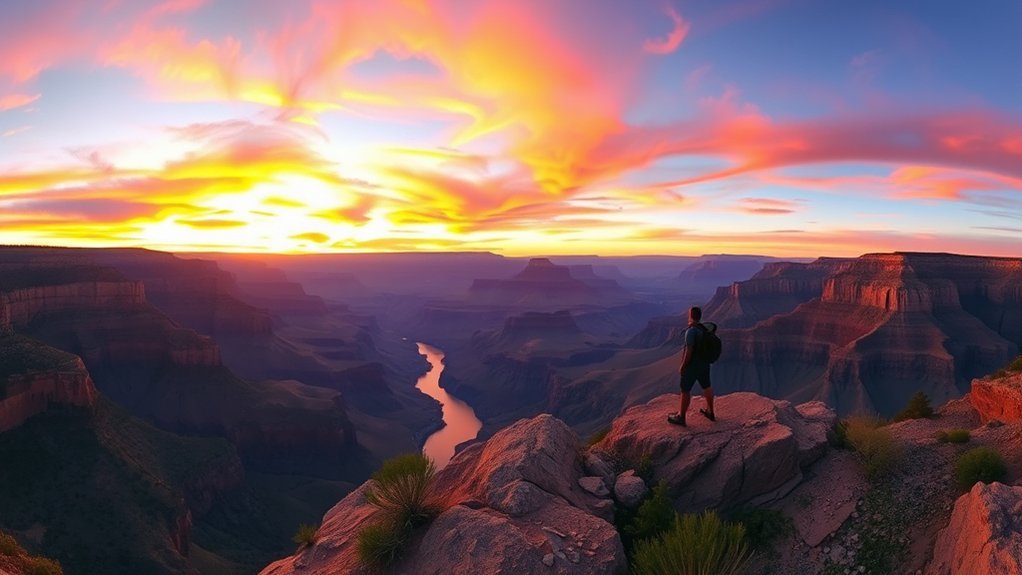
The Grand Canyon has large temperature differences between the rim and the inner canyon. The rim may feel mild in the morning, while the canyon floor can be dangerously hot. The National Park Service lists an average August high of about 103°F at Phantom Ranch.
Summer thunderstorms often build between late morning and evening. They can produce lightning, heavy rain, rockfall, and flash flooding. The National Park Service advises visitors to avoid strenuous inner-canyon hiking between 10 a.m. and 4 p.m. during summer heat.
Warning: Do not treat a rim forecast as an inner-canyon forecast. Temperatures rise as you descend, and climbing back to the rim requires more time and effort than hiking down.
For a safer August visit, focus on rim viewpoints, short paved walks, shuttle stops, ranger programs, and sunrise or sunset viewing. Check current park alerts, water availability, trail status, and weather before any hike below the rim.
Sedona, Prescott, and High-Country Escapes in August
Sedona and Prescott are often cooler than Phoenix, but neither should be treated as cool at midday. Sedona’s exposed red rock can become very hot, and narrow canyons or creek corridors can flood during distant storms.
Prescott and nearby higher country offer pine forests, lakes, shaded trails, and cooler evenings. Storms can still bring lightning, hail, high wind, and slippery roads, so start early and keep your return route simple.
Sedona: Cooler Red Rock Hikes
Choose short, shaded routes and begin near sunrise. Creekside areas may feel cooler, but do not enter a canyon or drainage when storms are possible. Red rock becomes slick when wet.
- Carry enough water for delays and an unplanned return.
- Use sun protection even on partly cloudy mornings.
- Turn around when clouds build, thunder begins, or runoff appears.
- Avoid exposed ridges and overlooks during storm activity.
Prescott and High Country: Pine Retreats
Prescott, Payson, Show Low, Pinetop-Lakeside, and other mountain communities can provide cooler air and shaded recreation. Look for lake loops, forest walks, cabins, small inns, horseback rides, or guided activities that fit the forecast.
Use marked routes, respect closures and fire restrictions, and pack out your trash. Unpaved roads can become muddy or damaged after heavy rain.
Outdoor Activities That Work in August
Choose activities that match the temperature, elevation, and storm forecast. Early hikes, shaded nature walks, higher-elevation drives, lake visits, and short sunrise viewpoints usually work better than long exposed routes.
Water-based recreation can help you cool down, but only use legal, open, and supervised areas. Avoid rivers, washes, swimming holes, and slot canyons during or after heavy rain. Fast water, debris, and changing releases can create hazards.
- Take a short dawn hike with a firm turnaround time.
- Walk a shaded urban trail near buildings or transportation.
- Paddle a lake only when wind, lightning, water, and launch conditions are safe.
- Book a guided activity only if the operator confirms that summer weather allows it.
- Use a higher-elevation sunset viewpoint with a quick route to shelter.
Pro Tip: Set both a turnaround time and a weather trigger before you start. Turn back at that time, at the first thunder, or when clouds begin building quickly, whichever comes first.
Indoor and Air-Conditioned Options for Hot Afternoons
Use the hottest hours for indoor stops. Museums, aquariums, science centers, galleries, historic buildings, shopping areas, food halls, and guided indoor tours can keep your day moving without adding heat strain.
Reserve timed tickets where needed, and keep one flexible option that does not require a long outdoor line. A late lunch, hotel break, or indoor pool can also make the rest of the day safer.
Carry a light layer because strong air conditioning can feel cold after hours outdoors. Keep drinking water even when you are inside.
Notable Festivals, Concerts, and Food Events
Arizona’s August event schedule changes every year. Indoor concerts, evening markets, cultural programs, food events, and mountain-town festivals can work well, but outdoor schedules may change because of heat, lightning, wind, or flooding.
Use the Arizona Office of Tourism event calendar and the official venue page to confirm the date, start time, parking, bag rules, weather policy, and refund terms.
- Choose events with indoor seating or a clear shelter plan.
- Avoid long afternoon lines in direct sun.
- Check whether water stations, shade, and re-entry are available.
- Recheck the organizer’s page on the day of the event.
Driving in Monsoon Rain and Dust Storms
Monsoon travel can change from dry pavement to heavy rain, standing water, strong crosswinds, or near-zero visibility in a short distance. Check AZ511 before longer drives and again after a storm.
If you see a dust storm ahead, do not drive into it. Exit the highway or reach a safe location before visibility drops. If you cannot avoid the dust and can safely leave the roadway, follow Arizona Department of Transportation guidance:
- Check traffic around you and begin slowing down.
- Pull completely off the paved roadway. Do not stop in a travel lane or on the shoulder if a safer off-road area is available.
- Set the parking brake.
- Turn off all vehicle lights, including emergency flashers.
- Take your foot off the brake so the brake lights are not illuminated.
- Keep your seat belt fastened and wait for the storm to pass.
In heavy rain, increase following distance and avoid sudden braking. Never cross a flooded wash, ignore a closure sign, or drive around a barricade.
Wildfire, Smoke, and Closure Checks
Monsoon rain can reduce fire activity in one area while lightning starts new fires elsewhere. Smoke, debris flows, burned-area flooding, and emergency closures can affect roads, forests, and trails even when the weather at your hotel looks calm.
Before visiting public land, check the managing agency’s official alerts, fire restrictions, and closure notices. During smoky conditions, reduce outdoor effort if the air irritates your eyes or lungs, and follow local health guidance.
Note: Recently burned slopes can produce dangerous debris flows during intense rain. Stay out of closed areas and follow evacuation instructions immediately.
Packing List and Practical Gear for August Travel
Pack for severe heat, strong sun, cool mountain evenings, blowing dust, and sudden rain. Keep essential safety items with you rather than buried in checked luggage or the bottom of a packed vehicle.
- Breathable shirts, loose shorts, light pants, and a change of dry clothing
- A wide-brim hat, UV-blocking sunglasses, and broad-spectrum sunscreen
- Refillable water containers and electrolyte supplies for longer outings
- A compact rain shell and a zippered dry bag for electronics
- Trail shoes with grip for loose, wet, or rocky surfaces
- A headlamp, basic first-aid kit, whistle, and portable phone charger
- A paper or downloaded offline map
- Extra water, snacks, medication, and a flashlight in the vehicle
- A light jacket for Flagstaff and other high-elevation evenings
Do not rely on one small bottle for a desert hike. Your needs rise with heat, distance, sun exposure, elevation, and personal health factors.
Planning Tips: Timing Your Days and Staying Safe
Build each day around heat, elevation, and storm risk. The safest plan is often an early outdoor activity, an indoor afternoon, and a flexible evening.
- Check the forecast, radar, alerts, road conditions, and park or forest notices before leaving.
- Start exposed hikes at first light and finish well before the hottest hours.
- Do not begin a slot-canyon, wash, or inner-canyon hike when thunderstorms are possible.
- Tell someone your route and expected return time.
- Keep at least one indoor or lower-effort backup plan for every day.
- Move pets and service animals off hot pavement and provide water and shade.
- Change plans without hesitation when officials issue a warning or closure.
You can still enjoy Arizona in August, but flexibility is part of the trip. A shorter safe outing is better than forcing a plan through heat or storm danger.
Frequently Asked Questions
Is August a good time to visit Arizona?
Yes, if you can handle heat, plan around storms, and choose regions carefully. August can be a good value and a strong time for mountain towns, indoor attractions, and early-morning sightseeing. It is a poor time for long, exposed low-desert or inner-canyon hikes.
How hot is Arizona in August?
It depends on elevation. Phoenix’s normal August high is 105.1°F, Tucson’s is 98.6°F, and Flagstaff’s is 79.3°F. The Grand Canyon’s inner canyon is much hotter than the rim, with an average August high near 103°F at Phantom Ranch.
What time do Arizona monsoon storms happen?
Afternoon and evening storms are common, but there is no guaranteed storm hour. Clouds can build by late morning, storms can continue after dark, and distant rainfall can send water into a canyon or wash later. Check the forecast and radar throughout the day.
Are mosquitoes a major problem statewide in August?
Mosquito activity varies by location and recent rainfall. You may notice more mosquitoes near standing water, irrigated areas, and wet lowlands after storms. Use an effective repellent, wear light long sleeves when practical, and avoid camping beside stagnant water.
Can I bring a camper or RV to public lands during monsoon season?
Often, yes, but rules and road conditions vary by agency and site. Check the official land-manager page before arrival. Avoid washes, low spots, narrow drainages, and soft dirt roads that can flood or become impassable. Follow fire restrictions and closure orders.
Do national parks require reservations or permits in August?
Requirements differ by park, campground, trail, and activity. Some camping, backcountry trips, tours, and timed-entry systems require advance booking. Check the exact park’s official National Park Service page and Recreation.gov before you travel.
Is it safe to drive rural roads after heavy monsoon rain?
Do not assume a rural road is safe after rain. Washouts, mud, debris, loose rock, damaged pavement, and hidden water can block the route. Follow closure signs, check AZ511 and local agency notices, and turn back when conditions are uncertain.
Are service animals allowed at outdoor summer events?
Under the Americans with Disabilities Act, public-facing businesses and state or local government programs generally must allow trained service dogs in areas open to the public, with limited exceptions. Check the venue layout and weather policy, and plan for shade, water, rest breaks, and hot pavement. Emotional-support animals do not have the same ADA access rights.
Conclusion
Arizona in August rewards careful timing. Use early mornings for outdoor plans, hot afternoons for air-conditioned stops, and evenings only when heat and storm conditions allow.
Pack for sun, rain, dust, and elevation changes. Check forecasts and closures every day, turn around at flooded roads, and leave exposed areas when thunder begins. With a flexible route, you can enjoy desert scenery, mountain towns, and summer events without treating the weather as an afterthought.
Sources
- National Weather Service: Monsoon Safety — monsoon dates, flash floods, lightning, dust storms, and emergency preparation.
- National Weather Service Phoenix: August Climate Data — 1991–2020 Phoenix August temperature and rainfall normals.
- National Weather Service Tucson: Monthly Normals — 1991–2020 Tucson August temperature and rainfall normals.
- National Weather Service Flagstaff: Climate Summaries — Flagstaff climate normals and northern Arizona monthly reports.
- Grand Canyon National Park: Hike Smart — inner-canyon heat, summer hiking timing, and August Phantom Ranch temperatures.
- Arizona Department of Transportation: Pull Aside, Stay Alive — current dust-storm and monsoon driving guidance.